The Short Answer
The best cordless leaf blower for most homeowners is the EGO Power+ LB7654 kit, which pairs a 765 CFM turbo mode and 200 MPH air speed with up to 90 minutes of average runtime on its included 5.0Ah battery — the strongest combination of power, control, and stamina in the current handheld class. If you already own DeWalt 20V tools, the DeWalt 20V MAX XR DCBL722P1 is the quiet, lightweight pick at 66 dB and 5.4 pounds bare. For maximum handheld muscle, the Milwaukee M18 FUEL Dual Battery 2824-20 delivers 600 CFM on two M18 packs. Budget and comfort buyers should look at the EGO LB5302 (530 CFM, about 7 pounds with battery), while large properties call for the Milwaukee M18 FUEL Dual Battery Backpack Blower 3009-20 with its 650 CFM and harness-carried batteries. We did not hands-on test these blowers; every recommendation below is justified by manufacturer specifications, dealer spec sheets, and reputable test publications that did run them.
Quick Picks
Short on time? These are our top recommendations — each button takes you to the exact product on Amazon.
Comparison at a Glance
| Product | Key Specs | Best Use Case | Standout Feature | Amazon Link |
|---|---|---|---|---|
| EGO Power+ LB7654 765 CFM Leaf Blower Kit Best Overall |
765 CFM; 200 MPH; 56V 5.0Ah kit | Large yards | 765 CFM turbo | Check Price |
| DeWalt 20V MAX XR DCBL722P1 Leaf Blower Kit Best Quiet Pick / Best for DeWalt Owners |
450 CFM; 125 MPH; 66 dB(A) | Quiet, light-duty clearing | 66 dB(A) at 5.4 lb bare | Check Price |
| Milwaukee M18 FUEL Dual Battery Blower 2824-20 Most Powerful Handheld |
600 CFM; 145 MPH; 2x M18 bare tool | Heavy handheld clearing | Dual-battery power envelope | Check Price |
| EGO Power+ LB5302 530 CFM Leaf Blower Kit Best Lightweight / Best Value |
530 CFM; 110 MPH; 56V 2.5Ah kit | Patios and small lawns | ~7 lb ready to work | Check Price |
| Milwaukee M18 FUEL Dual Battery Backpack Blower 3009-20 Best for Large Properties |
650 CFM; 155 MPH; 20.5 N | Large properties | 20.5 newtons blowing force | Check Price |
Detailed Reviews
1. EGO Power+ LB7654 — Best Overall
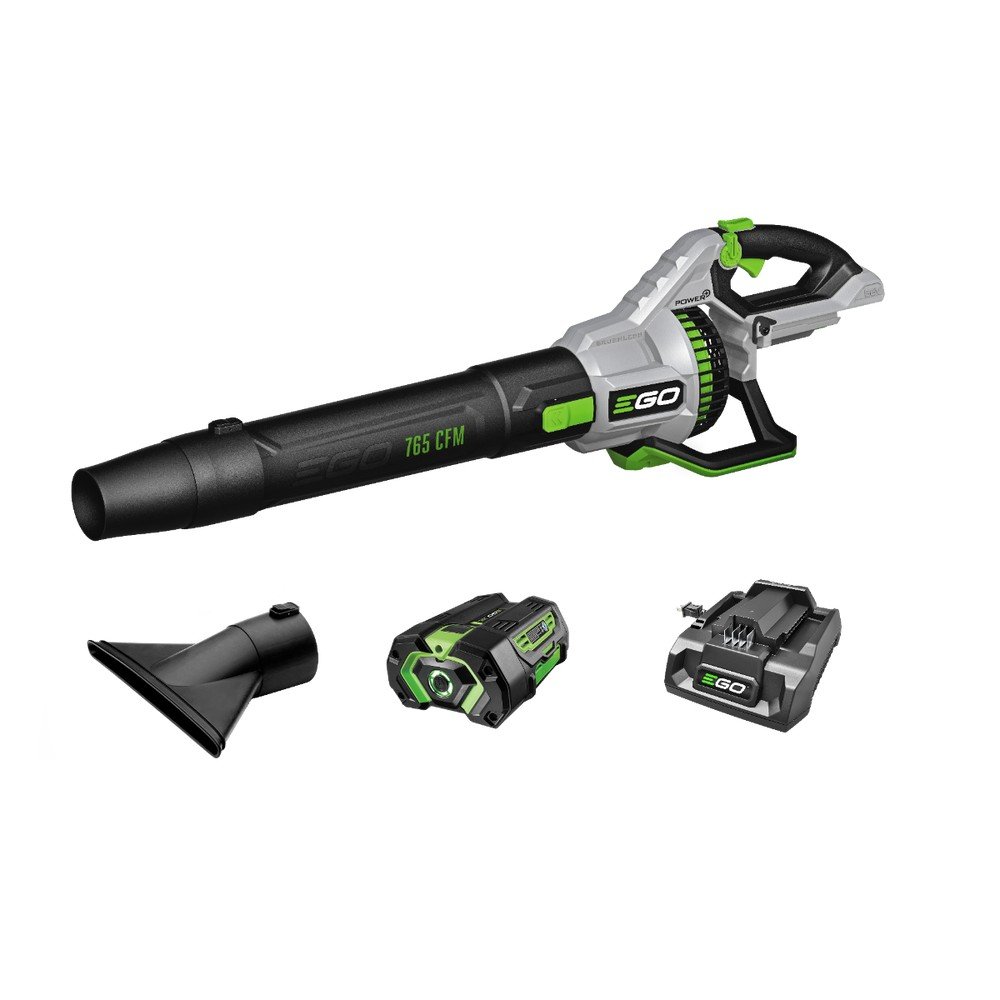
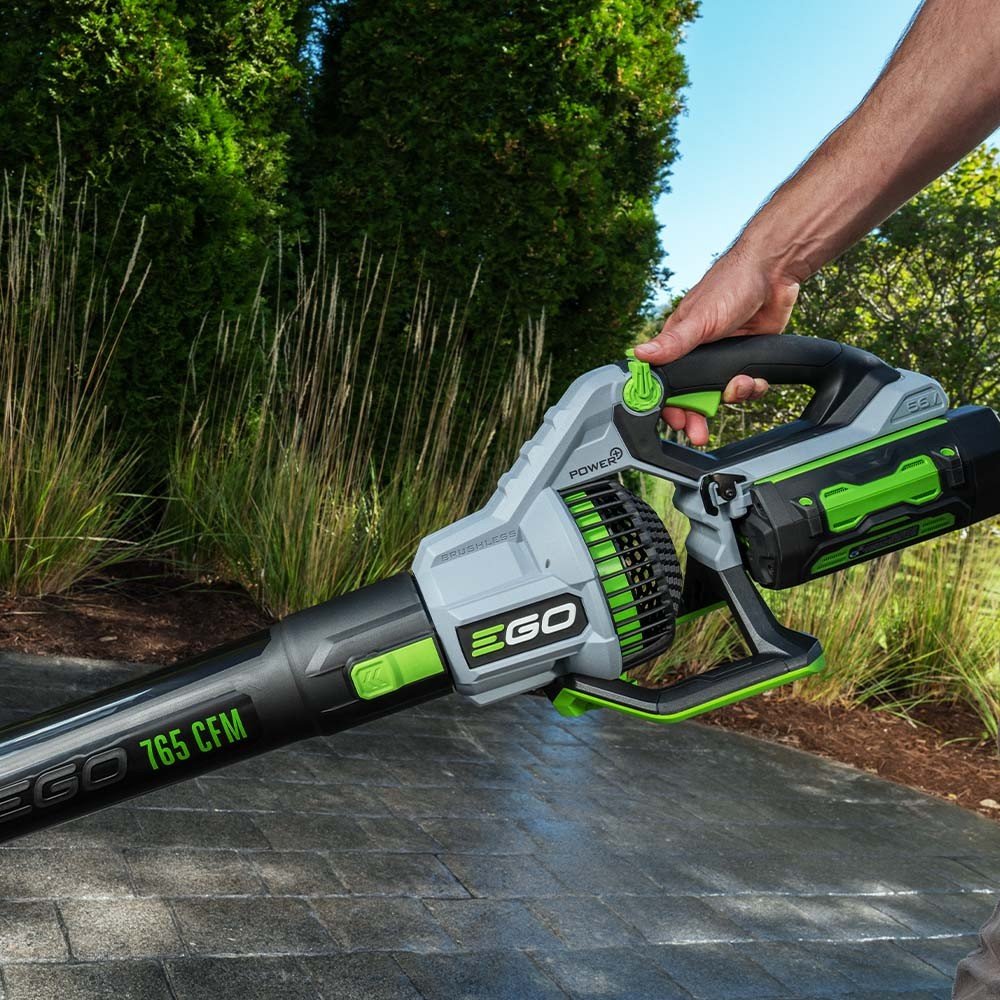
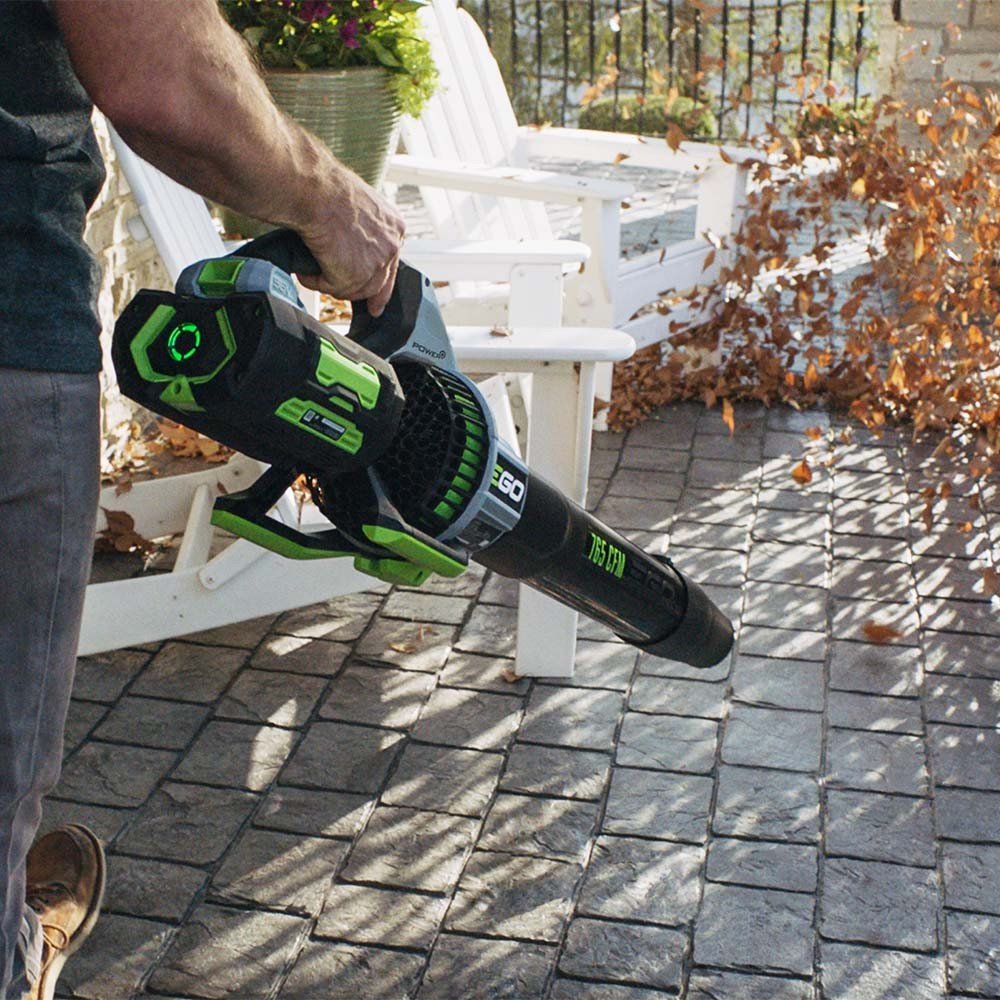
EGO Power+ LB7654 765 CFM Leaf Blower Kit
It solves the two problems that define cordless blowers: moving power and session length. Turbo mode's 765 CFM is the highest airflow in this roundup's handheld class, with a 260–580 CFM variable dial and cruise control for feathering around mulch beds.
- 765 CFM turbo mode and up to 200 MPH with the tapered nozzle
- Variable-speed dial (260–580 CFM) plus cruise control and brushless motor
- Kit includes 5.0Ah ARC Lithium battery and charger; IPX4 weather-resistant
Important limitation: Turbo is a burst mode — EGO's own figures drop to ~15 minutes at full turbo versus ~150 minutes on low, so headline runtime depends entirely on the setting you use.
- Airflow: 765 CFM (turbo)
- Air speed: Up to 200 MPH
- Battery: 56V 5.0Ah (included)
Best for: larger yards and anyone who wants one blower that handles both delicate beds and wet, matted leaves.
Specifications: 765 CFM turbo mode · up to 200 MPH with tapered nozzle · variable-speed dial 260–580 CFM plus cruise control · 56V ARC Lithium, 5.0Ah battery and charger in kit · manufacturer-claimed up to 90 minutes average runtime (~15 min turbo, ~150 min low per dealer sheet) · high-efficiency brushless motor · IPX4 weather-resistant construction · tapered and spread nozzles included · shoulder strap · 4.6 lb bare tool / ~9.5 lb with 5.0Ah battery · 64 dB · 5-year limited tool warranty, 3-year battery warranty.
The LB7654 earns best overall because it solves the two problems that define cordless blowers: moving power and session length. Turbo mode's 765 CFM is the highest airflow in this roundup's handheld class, and the 200 MPH figure is measured with the tapered nozzle — the narrow tip that concentrates air for scraping wet, matted leaves off the lawn. But the more important number is the dial: 260–580 CFM of variable control, with cruise, means you can feather the airflow down around mulch beds and flower borders instead of blasting bark chips across the lawn at full tilt. That control is what separates a usable blower from a frustrating one.
Runtime is where the included 5.0Ah battery pays for itself. EGO claims up to 90 minutes of average runtime on a charge; the dealer breakdown is more honest — around 15 minutes at full turbo, roughly 150 at the lowest setting. In practice you will live between those extremes: low speed for sweeping the driveway, turbo in short bursts for the stubborn piles. If your yard is heavy on autumn leaves, budget for a second battery rather than expecting one charge to do everything at turbo.
The IPX4 rating deserves a sentence because it is genuinely rare in this class: the blower is rated against water splashes, so clearing wet leaves in drizzle is within its design brief, not a warranty gamble. The 5-year tool and 3-year battery warranty are the longest coverage in this roundup.
Buy it if: you want one blower that handles a typical suburban lot — driveway, patio, lawn edges, and real autumn leaf volume — with batteries you can also use on EGO mowers, trimmers, and snow blowers.
Think twice if: your property is small enough that 765 CFM is theatre rather than utility (see the LB5302 below), or you are already invested in DeWalt 20V or Milwaukee M18 and don't want a second battery ecosystem.
Verdict: The most complete cordless handheld package available — power at the top end, control at the low end, and the longest warranty backing it.
2. DeWalt 20V MAX XR DCBL722P1 — Best Quiet Pick / Best for DeWalt Owners
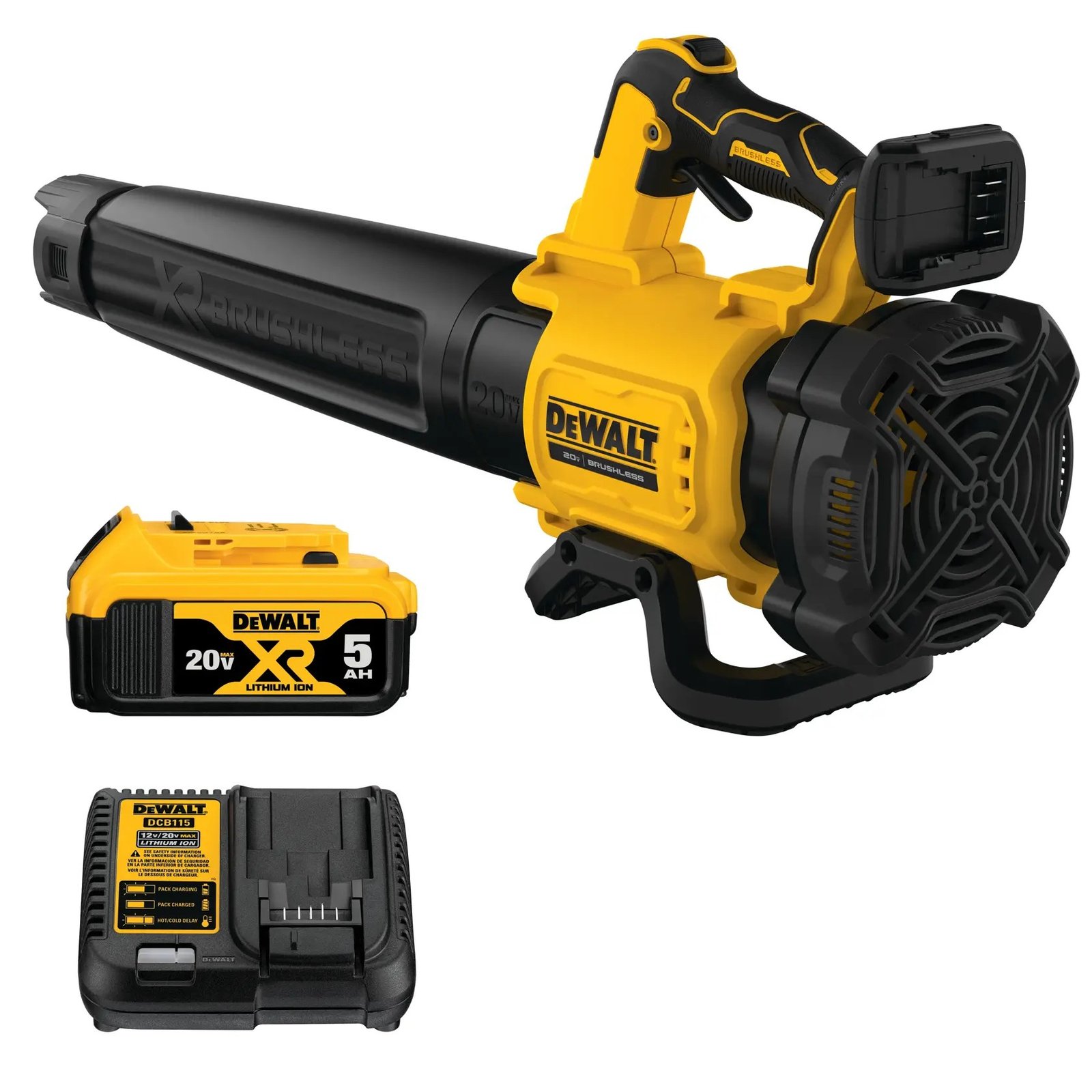
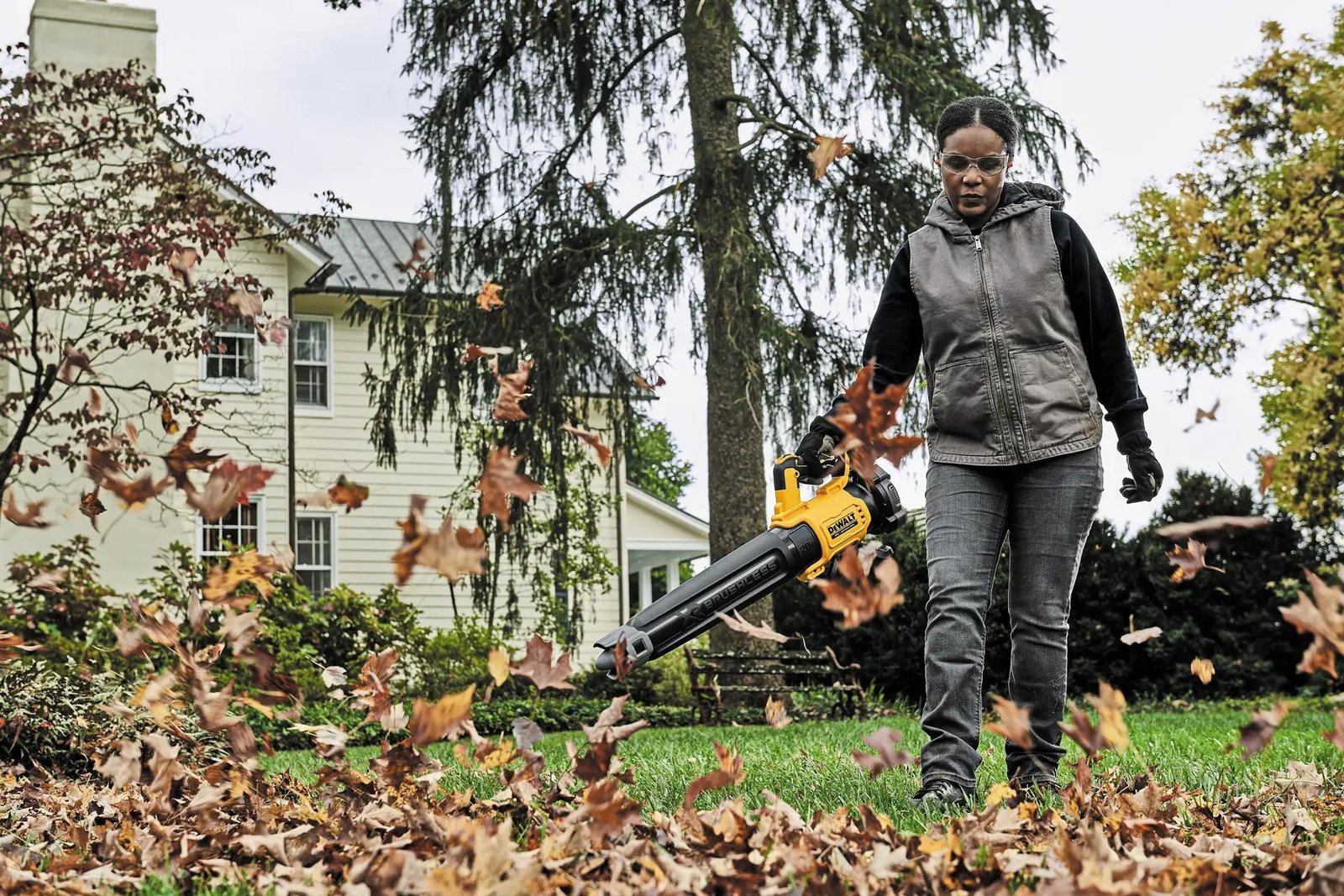

DeWalt 20V MAX XR DCBL722P1 Leaf Blower Kit
Not the most powerful here, but it wins on weight and noise: 5.4 lb bare, 66 dB(A), and the axial fan design stretches low-speed runtime to a retailer-reported ~87 minutes.
- Lightest ready-to-work blower in this roundup (6.8 lb with battery)
- Quiet 66 dB(A) operation for noise-restricted or early-morning use
- Kit includes 5.0Ah DCB205 battery and charger; batteries fit the whole 20V MAX platform
Important limitation: That ~12-minute figure on the highest setting is real — this blower wants to live on medium, and 450 CFM is mid-pack for heavy wet leaves.
- Airflow: Up to 450 CFM
- Air speed: Up to 125 MPH
- Battery: 20V MAX 5.0Ah (included)
Best for: DeWalt 20V MAX owners and noise-sensitive neighbourhoods.
Specifications: up to 450 CFM · up to 125 MPH with concentrator nozzle · 66 dB(A) · 20V MAX XR brushless · kit includes 5.0Ah DCB205 battery and charger · up to 87 minutes runtime on lowest speed, ~12 minutes on highest (retailer product data) · variable trigger with speed lock · 5.4 lb bare tool / 6.8 lb with battery · 3-year limited warranty · also accepts DEWALT 60V packs per Home Depot listing (compatibility note, batteries sold separately).
DeWalt's blower is not the most powerful here — 450 CFM is solidly mid-pack — but it wins on two axes that matter more than raw airflow for a lot of buyers: weight and noise. At 5.4 pounds bare and 6.8 with the battery, it is the lightest ready-to-work blower in this roundup, and 66 dB(A) makes it the neighbour-friendly choice for early-morning or noise-restricted use. The axial fan design is tuned for efficiency rather than peak numbers, which is exactly why the low-speed runtime stretches to 87 minutes — longer than any other pick here at comparable settings.
The platform argument is the real reason this blower exists on your shortlist. If you already own DeWalt 20V MAX tools, your batteries fit this blower, and that changes the economics completely: the bare-tool SKU (DCBL722B) drops the cost of entry to the tool alone. If you don't own the platform, buy the kit (DCBL722P1) and start with the included 5.0Ah pack.
One honest caveat: that ~12-minute figure on the highest setting is real. This blower wants to live on medium speeds with the speed lock engaged; running it pinned at maximum the whole session will have you swapping batteries mid-yard. Match the speed to the task.
Buy it if: you own DeWalt 20V batteries, noise matters (close neighbours, HOA rules, early starts), or you want the lightest full-size blower here.
Think twice if: your yard buries you in wet autumn leaves every October — 450 CFM is enough for maintenance but slow for heavy clearing; the EGO or Milwaukee picks move more air.
Verdict: The smart platform buy: adequate power, the best noise figure, and the lightest carry — especially if your garage already speaks DeWalt.
3. Milwaukee M18 FUEL Dual Battery Blower 2824-20 — Most Powerful Handheld
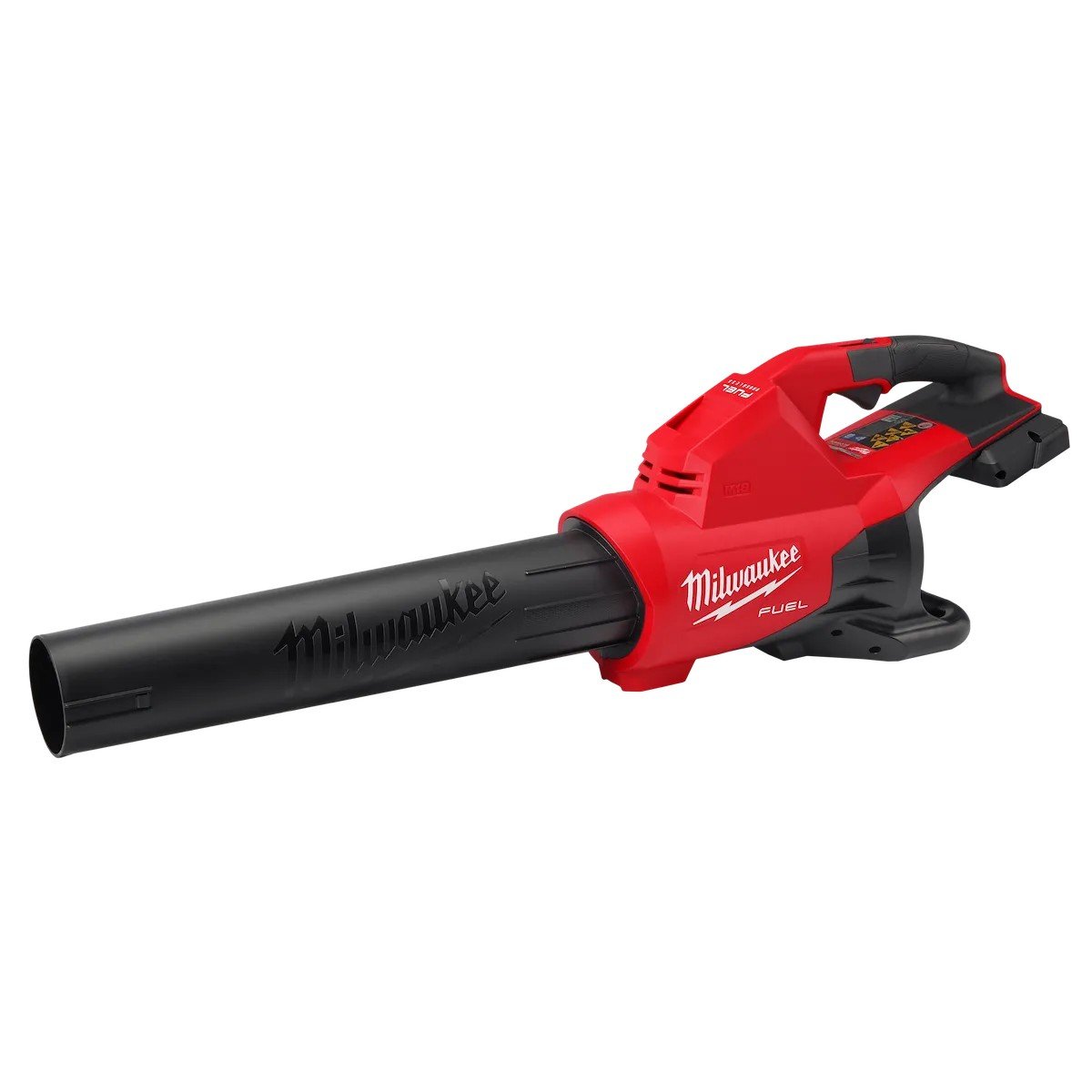
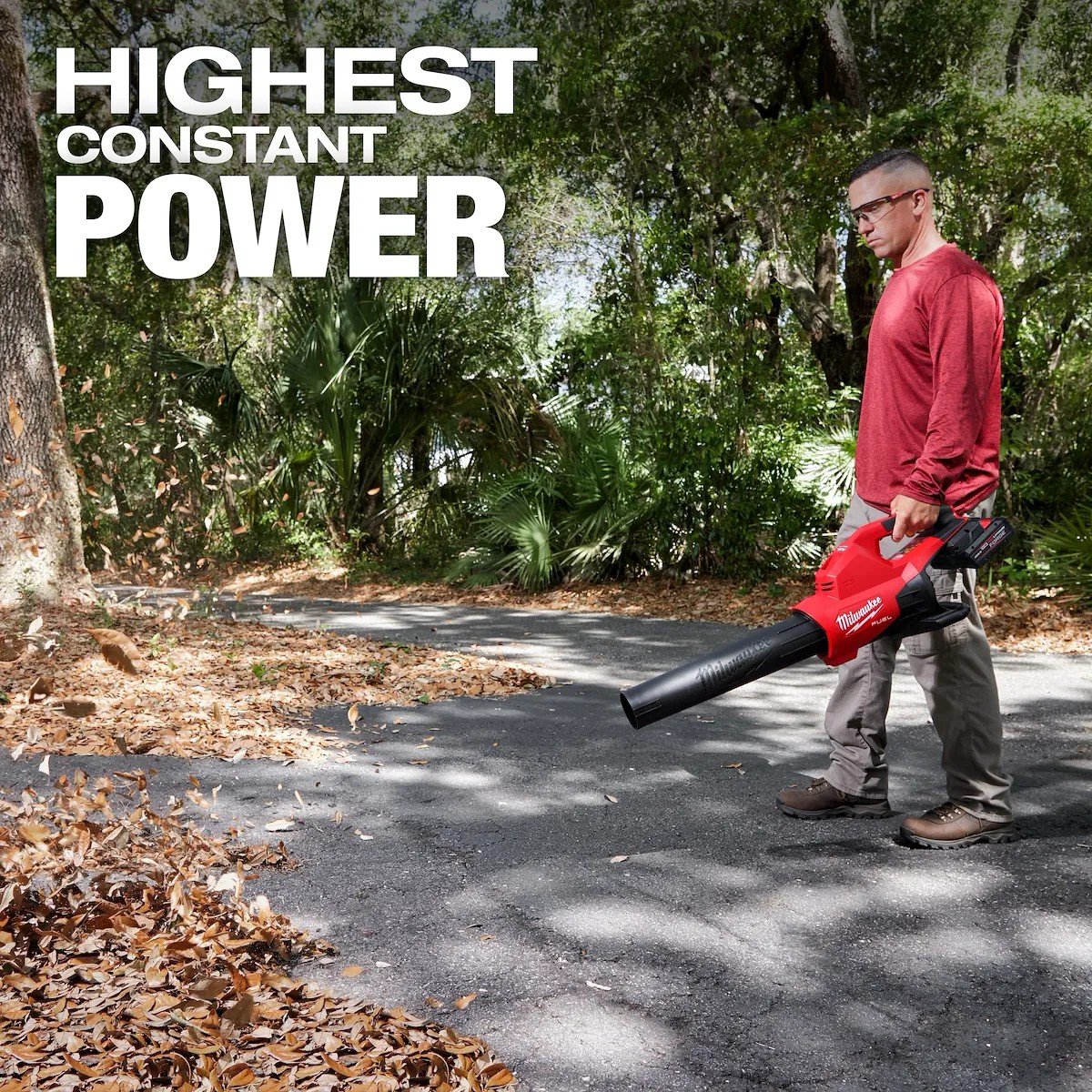
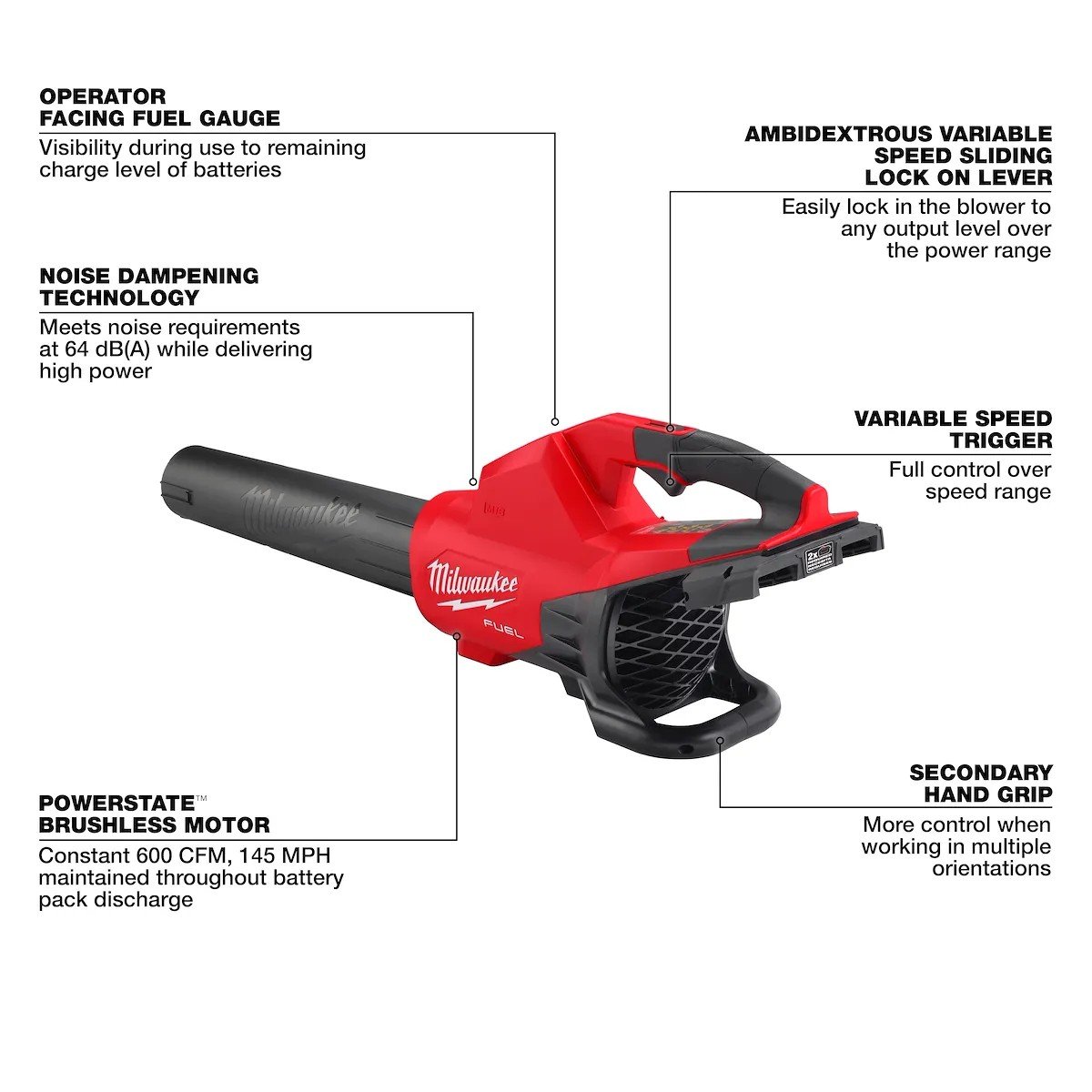
Milwaukee M18 FUEL Dual Battery Blower 2824-20
Two M18 packs in series give the 2824-20 a power envelope no single 18V/20V blower can match: 600 CFM and 145 MPH, with full throttle in under one second.
- 600 CFM / 145 MPH from the POWERSTATE brushless motor
- Ambidextrous variable-speed sliding lock-on for long sessions
- Part of the 250+ tool M18 system with REDLINK PLUS electronics
Important limitation: Useless without two M18 batteries (sold separately), and at its best only with HIGH OUTPUT packs — two 6.0Ah HO packs also make it heavy; not the blower for wrist or shoulder issues.
- Airflow: 600 CFM
- Air speed: 145 MPH
- Battery: 2x M18 (not included)
Best for: M18 platform owners who found single-battery handhelds wanting.
Specifications: 600 CFM · 145 MPH · POWERSTATE brushless motor · requires TWO M18 REDLITHIUM batteries to operate (effectively a 36V tool) · kit variant 2824-20-48-11-1862 includes two M18 REDLITHIUM HIGH OUTPUT 6.0Ah packs · ambidextrous variable-speed sliding lock-on · full throttle in under one second · REDLINK PLUS electronics · part of the 250+ tool M18 system.
This is the blower for people who tried a single-battery handheld and found it wanting. Two M18 packs in series give the 2824 a power envelope no single 18V/20V blower can match: 600 CFM and 145 MPH, with Milwaukee claiming output "higher than all handheld gas blowers" — that is a manufacturer claim, not a verified independent result, but the direction of travel is clear: dual-battery handhelds have closed the gap that single-pack tools still leave open. The sliding lock-on lever (usable with either hand) is a small ergonomic win that matters on long sessions, and full throttle in under a second means the tool responds like a gas blower when you squeeze.
The trade-offs are platform lock-in and weight. This tool is useless without M18 batteries, and it is at its best with HIGH OUTPUT packs — standard M18 packs will run it but won't deliver the full performance envelope. Two 6.0Ah HO packs are also heavy; this is not the blower for someone with wrist or shoulder issues. Buy the kit if you're new to M18; buy the bare tool (2824-20) if your workbench already holds the batteries.
Buy it if: you are invested in Milwaukee M18, you want the strongest handheld cordless available, or your yard demands gas-class muscle without the fuel and noise.
Think twice if: you are buying your first battery platform — starting from zero, the Milwaukee dual-battery buy-in is the most expensive route in this roundup. Also skip if light weight is a priority.
Verdict: The handheld power crown, with a dual-battery tax attached. For M18 owners it is the obvious upgrade; for everyone else, do the platform maths first.
4. EGO Power+ LB5302 — Best Lightweight / Best Value
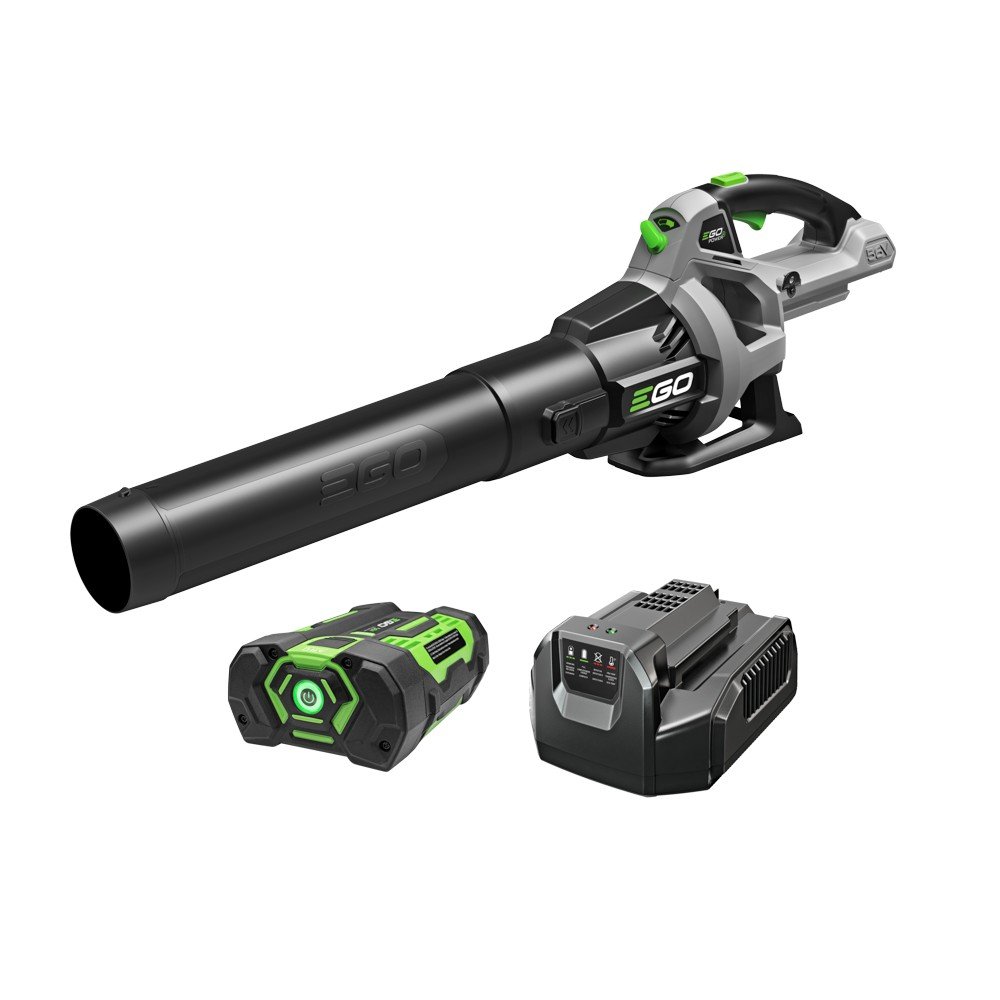
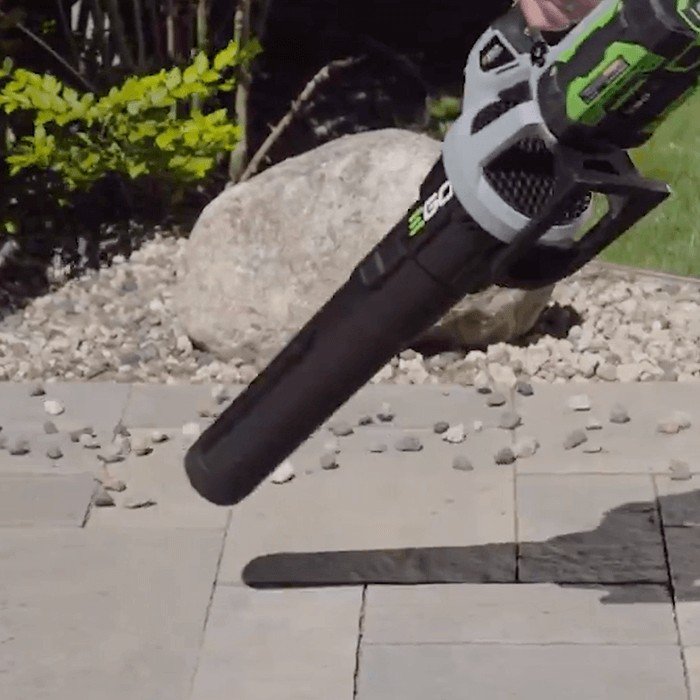
EGO Power+ LB5302 530 CFM Leaf Blower Kit
EGO's answer for patios, decks, small lawns and the weekly driveway sweep: roughly seven pounds ready to work with a genuinely useful 530 CFM and a simple three-step turbo dial (250 / 400 / 530 CFM).
- Lightest blower here with real clearing power (~7 lb with battery)
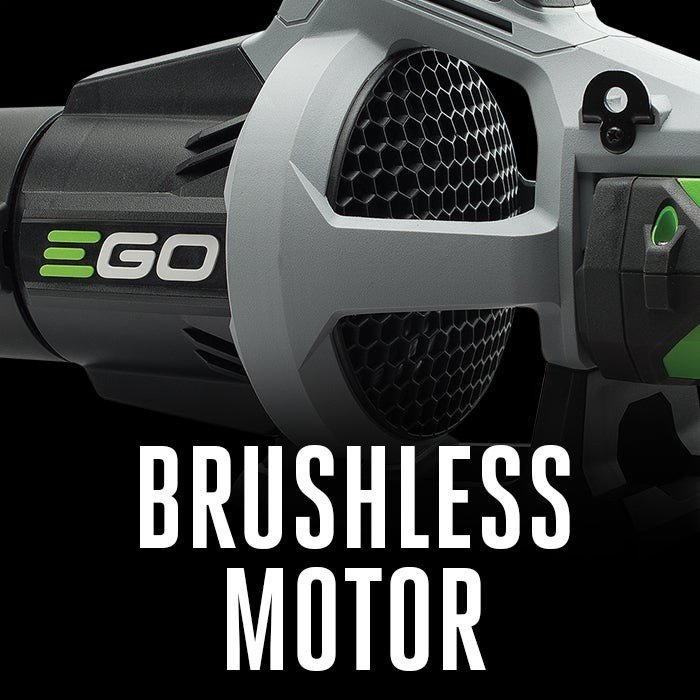
- Three-step dial matches airflow to the task; brushless motor, IPX4 construction
- Kit includes 2.5Ah battery and charger, interchangeable with every EGO 56V tool
Important limitation: The 2.5Ah battery is the honest compromise — for a quarter-acre of autumn leaves it will feel under-gunned; step up to the LB7654 or plan on a second battery.
- Airflow: 530 CFM (turbo)
- Air speed: Up to 110 MPH
- Battery: 56V 2.5Ah (included)
Best for: modest outdoor spaces and buyers who value light weight or the lowest-cost entry into the EGO platform.
Specifications: 530 CFM · 3-speed turbo dial: 250 / 400 / 530 CFM · 56V ARC Lithium, 2.5Ah battery and charger in kit · brushless motor · IPX4 weather-resistant construction · noise ≤65 dB · ~7–7.4 lb with the included battery.
Not every yard needs 765 CFM. The LB5302 is EGO's answer for patios, decks, small lawns, and the weekly driveway sweep — and it is a better fit for those jobs than its bigger sibling in one important way: at roughly seven pounds ready to work, it is the lightest blower here with a genuinely useful 530 CFM. The three-step turbo dial (250 for beds, 400 for dry hard surfaces, 530 for the wet stuff) gives you the same task-matching logic as the LB7654's variable dial in a simpler package.
The 2.5Ah battery is the honest compromise: it keeps the weight down and the price of the kit down, but runtime is shorter than the LB7654's 5.0Ah setup. For a patio and driveway this is a non-issue. For a quarter-acre of autumn leaves it is the wrong tool — step up to the LB7654 or plan on a second battery. The good news of the EGO platform: the 2.5Ah pack is interchangeable with every other EGO 56V tool, so it never becomes dead weight.
Buy it if: your outdoor space is modest, you value light weight (older users, smaller frames, anyone who dreads a heavy tool), or you want into the EGO platform at the lowest kit cost.
Think twice if: you have mature trees and a real leaf season — 530 CFM on a 2.5Ah pack will feel under-gunned by November. This is a maintenance blower, not a clearing blower.
Verdict: The right-sized tool for small spaces: genuinely light, genuinely capable at 530 CFM, and the cheapest route into EGO's 56V system.
5. Milwaukee M18 FUEL Dual Battery Backpack Blower 3009-20 — Best for Large Properties
Milwaukee M18 FUEL Dual Battery Backpack Blower 3009-20
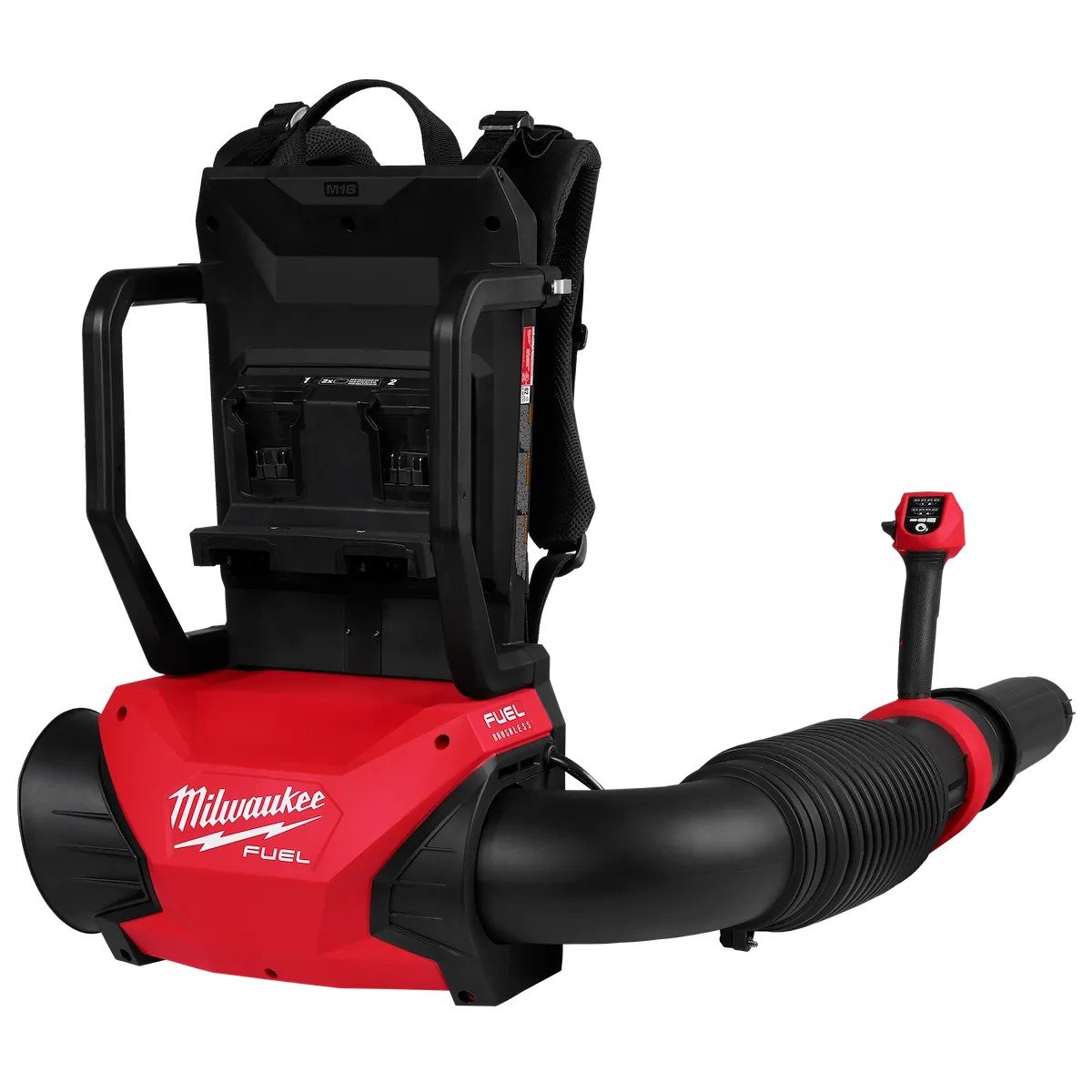
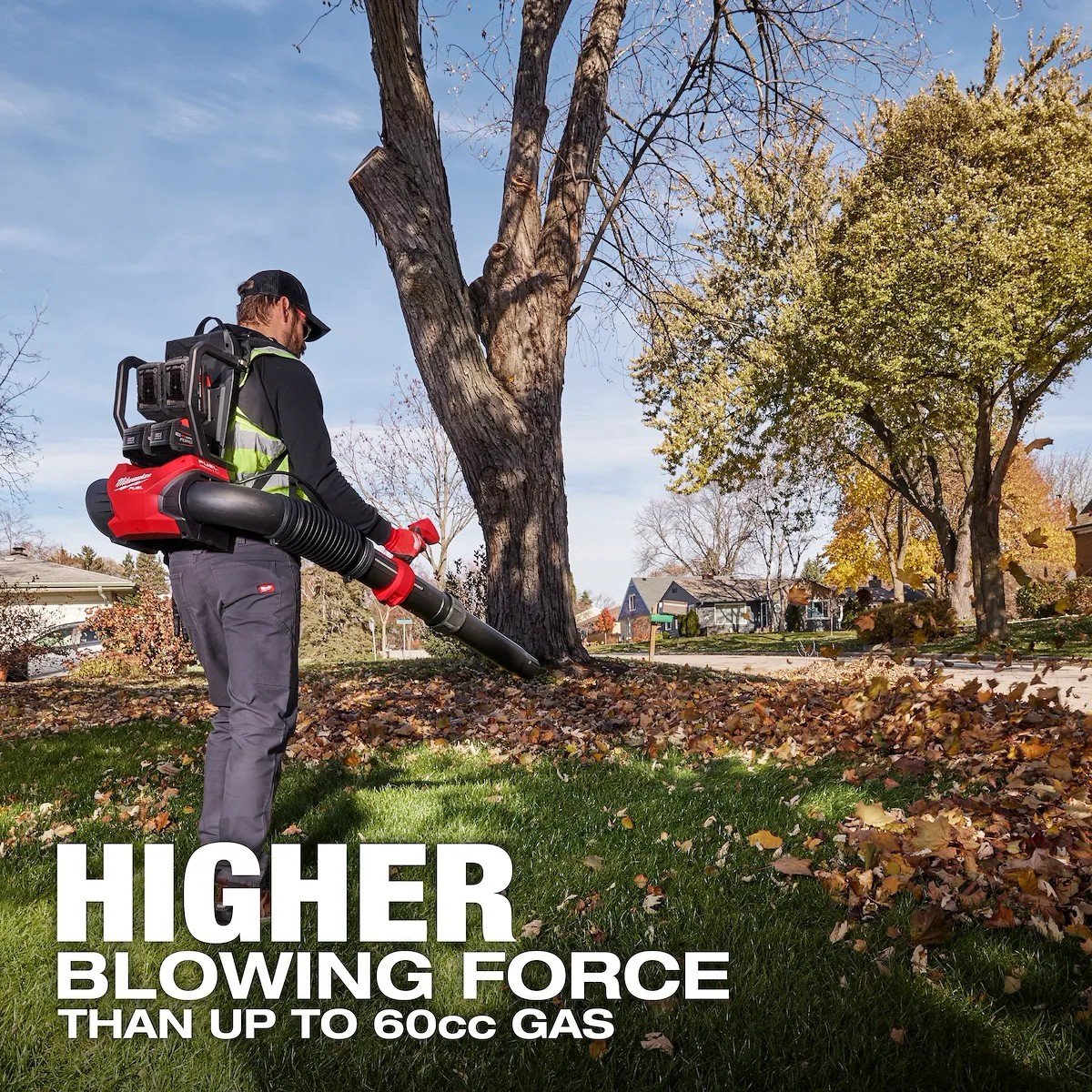
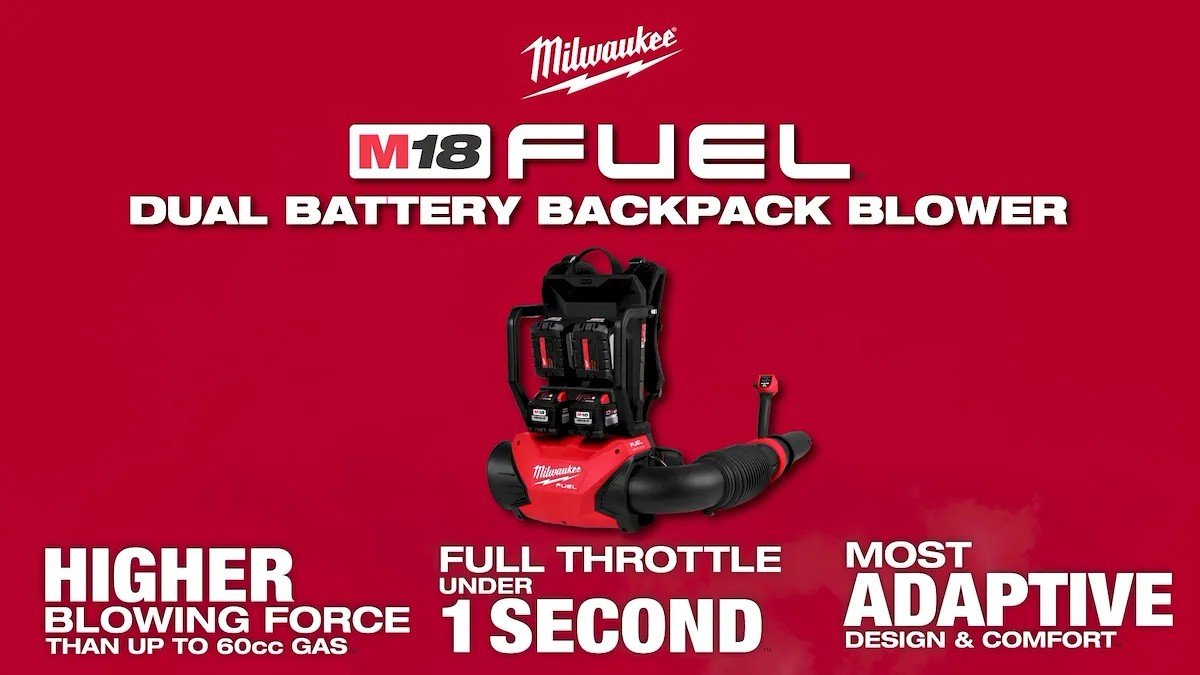
When the property crosses into acre-plus territory, endurance is the question. The backpack format moves the weight onto shoulders and hips, and the 3009 publishes 20.5 newtons of blowing force — the metric that predicts whether a blower rolls a wet pile rather than ruffling it.
- 650 CFM / 155 MPH with 20.5 N of blowing force (manufacturer figures)
- Runs 2 M18 packs, with two extra terminals accepting up to 4 for extended runtime
- Fully adjustable harness, telescoping nozzle, and a quiet 62 dB(A) at 50 ft
Important limitation: Bare tool only — the full 4x HD12.0 kit (3009-24HD) is a major additional spend, and with four packs fitted the rig weighs around 32 lb on your back.
- Airflow: 650 CFM
- Air speed: 155 MPH
- Battery: 2–4x M18 (not included)
Best for: acre-plus properties and professional-length clearing sessions.
Specifications: 650 CFM · 155 MPH · 20.5 newtons of blowing force · POWERSTATE brushless · requires minimum 2× M18 REDLITHIUM batteries; two extra terminals accept up to 4 packs · 30–60 minutes continuous with 4× HD12.0 packs (mode-dependent) · 62 dB(A) at 50 ft bystander distance · full throttle in under one second · mode select + variable-speed trigger · fully adjustable harness · telescoping nozzle · kit 3009-24HD includes four HD12.0 packs and two dual-bay rapid chargers.
When the property crosses into acre-plus territory, handheld ergonomics stop being the question — endurance is. The backpack format moves the weight (tool plus up to four batteries) onto your shoulders and hips, leaving your arm to aim rather than carry. The 3009's headline figure is not CFM but the 20.5 newtons of blowing force Milwaukee publishes — the only pick here with a force figure, and the metric that actually predicts whether a blower will roll a wet pile rather than just ruffle it. Milwaukee claims force "higher than up to 60cc gas"; again, treat that as the manufacturer's claim, but the dual-battery architecture makes it plausible in a way single-pack tools can't match.
The adjustable battery setup is clever: run two packs for lighter weight on quick cleanups, load all four terminals for extended clearing. With four HD12.0 packs, expect 30–60 minutes of continuous work depending on the mode — the wide range is honest, because nobody runs a backpack blower at a single speed. At 62 dB(A) measured at 50 feet, it is also quieter than the handhelds here at their operator-ear figures — though those measurements aren't directly comparable, the direction is encouraging for larger lots with neighbours.
The catch, as ever, is buy-in. The full kit with four HD12.0 batteries and two chargers is the most expensive package in this roundup by a wide margin. This is a tool for big properties and for people already deep in M18 — not a first blower.
Buy it if: your property is large, you clear serious leaf volume, you want the weight on your back rather than your arm, or you run a small landscaping side business on battery.
Think twice if: your yard is under half an acre — this is vast overkill — or the total kit cost makes you wince. A handheld plus a second battery does the same small yard for far less.
Verdict: The endurance pick. For big properties it changes the job from a workout into a walk; for small yards it is a very expensive walk.
How to Choose a Cordless Leaf Blower: Buying Guide
CFM, MPH, and newtons: read the numbers in the right order
Every blower box leads with two numbers — CFM (cubic feet per minute, air volume) and MPH (miles per hour, air speed) — and shoppers naturally assume bigger is better. The truth is more useful: CFM moves piles, MPH scrapes surfaces. High CFM with a wide nozzle clears a driveway of dry leaves fast; high MPH through a tapered concentrator nozzle lifts wet, stuck-down leaves off grass. A blower with huge CFM but a wide, lazy airstream will disappoint on a damp November lawn.
The number manufacturers rarely print is the most honest one: blowing force, measured in newtons. Milwaukee publishes 20.5N for its backpack blower, and force is the only figure that combines volume and speed into actual push. When comparing blowers, treat CFM as your primary sort, check that MPH is adequate for stuck debris (anything over ~120 MPH with the concentrator is workable), and if a force figure exists, let it settle close calls.
Battery platform maths: voltage × amp-hours, minus weight
A cordless blower is really a battery with a fan attached. Two numbers decide what the battery can do: voltage (the platform — 20V, 56V, dual-18V) sets the power ceiling, and amp-hours (2.5Ah, 5.0Ah, 12.0Ah) set the fuel tank. A 5.0Ah pack holds roughly twice the energy of a 2.5Ah pack on the same platform — but it also weighs roughly twice as much, and on a handheld blower you feel every ounce.
This is why the platform question comes before the blower question. If your garage already holds DeWalt 20V or Milwaukee M18 batteries, the marginal cost of that brand's blower is far lower than the kit price suggests — and your existing packs become spares that extend runtime. If you're starting from zero, compare kit prices (tool + battery + charger), not bare-tool prices, and favour the platform whose other tools (mower, trimmer, chainsaw) you'd actually buy later. A battery ecosystem is a five-year commitment; the blower is just the first date.
Runtime reality: turbo is a burst mode, not a setting
Read every runtime claim on this page as a range, because that's what it is. The EGO LB7654's ~15 minutes at full turbo versus ~150 minutes at low speed is not a contradiction — it's physics. Turbo exists for ten-second bursts on the stubborn pile; the dial exists for everything else. When estimating whether one battery covers your yard, plan on medium speeds for the bulk of the work and treat turbo as a reserve. If your autumn cleanup is genuinely heavy, the honest answer is two batteries, not a bigger blower — a second pack costs less than the jump to the next performance class and eliminates the mid-job recharge wait entirely.
Noise: decibels, neighbours, and the 66 dB club
Leaf blowers are a neighbourhood diplomacy issue as much as a tool issue. The picks here range from ≤65 dB (EGO LB5302) to 66 dB(A) (DeWalt) — all dramatically quieter than gas blowers, which is the entire point of going cordless. Two caveats: first, decibel figures from different makers use different test setups, so treat cross-brand comparisons as directional, not precise. Second, check local rules — some municipalities and HOAs restrict blower hours or noise levels regardless of power source. A quiet blower used at 7am is still a 7am blower.
Handheld vs backpack: match the format to the property
Handheld blowers suit properties up to about half an acre and anyone who values grab-and-go simplicity. Backpack blowers earn their keep above that: the harness carries the weight, the batteries multiply, and the sustained output handles real leaf volume. The crossover point is honest physical feedback — if you finish autumn cleanup with a dead arm and a half-charged battery, you're a backpack candidate. Below that threshold, a backpack is an expensive way to do a fifteen-minute job.
Warranty and service network are part of the purchase
Cordless tools live or die by battery support. EGO's 5-year tool / 3-year battery warranty is the strongest here; DeWalt's 3-year limited warranty is the industry standard for pro-sumer tools. Beyond the paper, consider where you'd take a failed battery in year two — brands with broad retail and dealer presence (all three brands here qualify) make warranty claims a counter visit rather than a shipping saga.
Cordless Blower Types: Handheld, Backpack — and What About Corded and Gas?
Handheld cordless is the default for a reason: one tool, one or two batteries, no cords, no fuel. Four of the five picks here are handhelds. They cover everything from patios to half-acre lots.
Backpack cordless (the Milwaukee 3009-20) trades grab-and-go for endurance: harness-carried weight, multi-battery capacity, and sustained high output for large properties.
Corded electric still exists and still makes sense for one narrow case: a tiny yard directly adjacent to an outdoor outlet, where the buyer wants the cheapest possible blower and never wants to think about batteries. The cord is the whole downside — range, tangling, and the ritual of working around it.
Gas remains the choice for commercial crews running eight-hour days, where refuelling beats recharging. For homeowners, gas now loses on noise, maintenance, emissions, and — with dual-battery flagships like the Milwaukee 2824 — increasingly on power too. Unless you're mowing-adjacent to a landscaping business, cordless has won the residential argument.
Kit vs Bare Tool: The ASIN Trap Cordless Buyers Fall Into
This is the most expensive mistake in cordless tools, and it is baked into how the products are sold. Almost every blower here exists in two variants: a kit (tool + battery + charger, e.g. DeWalt DCBL722P1, EGO LB7654, Milwaukee 2824-20-48-11-1862) and a bare tool (tool only, e.g. DCBL722B, LB7650, 2824-20). The model numbers differ by a suffix, the listings look nearly identical, and the bare tool is always cheaper — because it contains no battery.
Buy the bare tool without owning the platform and you own a very expensive paperweight until a battery arrives. Buy the kit when you already own four batteries and you've paid for a fifth you didn't need. On Amazon, these variants are separate ASINs — and under Amazon's attribution rules (live since April 2026), a link must resolve to the exact variant reviewed. That is why every product link in this guide is built per-variant at publication time, and why the affiliate-link manifest records the kit-vs-bare split for each pick. When you shop, read the "included components" line before the price.
Common Mistakes to Avoid
- Sorting by CFM alone. A 765 CFM blower with a wide nozzle and a 450 CFM blower with a concentrator can feel surprisingly close on stuck leaves. Read CFM, MPH, and the nozzle story together.
- Buying the bare tool by accident. See above — check the suffix, check "included components," check the box contents photo.
- Expecting turbo runtime. Turbo is a burst mode. Size your battery expectations (or your second battery) around medium-speed work.
- Ignoring the platform lock-in. The cheapest blower today can become the most expensive if it drags you into a battery ecosystem whose other tools you don't want.
- Storing batteries badly. Lithium packs hate heat, freezing sheds, and sitting at 100% for months. Charge to roughly half for long storage, keep them indoors, and use the maker's charger only — DeWalt, for example, specifies not charging below 40°F or above 104°F.
- Blowing debris at people, pets, and traffic. Keep bystanders well clear (the Milwaukee manual specifies 50 feet), wear eye protection, and never point the tube at yourself to clear a clog.
- Buying for October in April. Match the blower to your heaviest real use — the leaf season you actually get — not the fantasy of effortless clearing. An oversized blower on a patio is just a loud, heavy way to move dust.
SERP Danger Rebuttal: Bad Advice We Found in Search Results
"Just buy the highest CFM — it's the only number that matters." CFM without MPH and nozzle context is half a specification. A high-CFM blower with a wide, diffuse airstream will lose to a lower-CFM blower with a focused concentrator nozzle on wet, matted leaves. Blowing force (newtons), where published, is the tiebreaker — and it's the number almost nobody in the SERP explains.
"Battery blowers can't touch gas." This was true five years ago; it is marketing nostalgia now. Dual-battery flagships like the Milwaukee 2824 (600 CFM handheld) and 3009 (650 CFM backpack) publish figures that meet or exceed single-stage gas handhelds, and multiple test publications bench-test them head-to-head with gas. Single-pack 20V blowers still trail gas on sustained heavy clearing — the honest version of this claim is "cheap battery blowers can't touch gas," which is true and useful.
"A bigger Ah battery fixes a weak blower." Amp-hours buy runtime, not power. A 12Ah pack on a 450 CFM blower gives you a 450 CFM blower for longer — it does not make it a 600 CFM blower. Voltage and motor set the ceiling; capacity sets the session length. Buy power with the tool, buy time with the battery.
"All brushless motors are the same." "Brushless" describes the motor type, not its quality. Fan design (EGO's turbine-style engineering, DeWalt's axial fan), electronics, and battery management differ enormously between a £40 generic blower and the picks here — which is exactly why the generic options that flood video roundups don't appear in this guide.
Battery Safety: Charging and Storing Lithium Packs
Cordless blowers are safe tools, but their batteries deserve the same respect as any high-energy lithium pack. The guidance below is drawn from manufacturer safety material surfaced during research (EGO and DeWalt publish charging guidance; Milwaukee's manual covers operating clearances) — your tool's manual takes precedence over any summary.
- Charge with the maker's charger only, on a hard, non-flammable surface, attended or at least in an occupied building. EGO advises against charging its batteries outdoors.
- Respect temperature limits. DeWalt specifies not charging below 40°F or above 104°F; heat is the enemy of lithium longevity and safety alike. Don't leave packs baking in a car boot or garden shed in summer.
- Remove batteries for storage and store them indoors, ideally around half charge for long idle periods — not full, not flat.
- Inspect before use. A swollen, cracked, or heat-damaged pack is done — do not charge it, do not use it; follow the maker's disposal guidance.
- Keep the 50-foot rule in mind during use (per Milwaukee's manual): bystanders, pets, and windows at a distance; eye protection on.
FAQs
For patios and driveways, 400–530 CFM is plenty. For lawns with real leaf volume, look at 600 CFM and up. Above ~650 CFM you're in backpack or dual-battery territory — match the number to the property, not the ego.
For residential use, yes — the current generation has closed the gap. Single-pack 20V/40V blowers handle maintenance and light clearing; dual-battery and 56V flagships (600–765 CFM) handle heavy leaf seasons. Only commercial all-day clearing still favours petrol.
It depends entirely on speed: roughly 12–15 minutes at full turbo versus 80–150 minutes at low speed on the 5.0Ah-class packs in this guide. Plan around medium speeds, and buy a second battery before you buy a bigger blower if runtime is the constraint.
Cordless is quieter than petrol as a class. Among the picks here, the EGO LB5302 (≤65 dB) and DeWalt DCBL722 (66 dB(A)) are the quietest — but maker test methods differ, so treat the ranking as directional. For genuinely noise-restricted areas, check local ordinances, not just the spec sheet.
CFM (cubic feet per minute) is air volume — how much air the blower moves, which clears large areas and piles. MPH is air speed — how fast it moves, which scrapes stuck debris. You need both; volume without speed is a gentle breeze, speed without volume is a narrow jet that covers nothing.
If your property is around half an acre or less, no — a handheld does the job with less fuss and cost. Backpacks earn their keep on larger properties and heavy leaf volume, where harness-carried weight and multi-battery capacity turn a workout into a walk.
Final Verdict
For most buyers the decision is short. Typical suburban lot with trees? EGO LB7654 — the strongest all-round package of power, control, and runtime. Already on DeWalt 20V? DCBL722P1 — quiet, light, and your batteries already fit. Want maximum handheld muscle on Milwaukee? 2824-20. Small space or light hands? LB5302. Big property? 3009-20 backpack. Whichever you choose, buy the right variant — kit if you're new to the platform, bare tool only if your shelf already holds the batteries — and size your expectations around medium-speed runtime, not the turbo headline.
Final Recommendations
Best Overall: EGO Power+ LB7654 765 CFM Leaf Blower Kit — highest handheld airflow here, with a proper variable dial and a 5.0Ah kit battery
Best Quiet Pick / Best for DeWalt Owners: DeWalt 20V MAX XR DCBL722P1 Leaf Blower Kit — lightest and quietest pick, on the huge DeWalt 20V MAX platform
Most Powerful Handheld: Milwaukee M18 FUEL Dual Battery Blower 2824-20 — dual-battery 600 CFM handheld for existing M18 owners
Best Lightweight / Best Value: EGO Power+ LB5302 530 CFM Leaf Blower Kit — genuinely useful 530 CFM at roughly seven pounds, in a full kit
Best for Large Properties: Milwaukee M18 FUEL Dual Battery Backpack Blower 3009-20 — backpack endurance with up to four M18 packs and 20.5 N of force
Related Guides
- Taming hedges as well as leaves? (best hedge trimmer) covers the other half of autumn cleanup.
- How to choose without the jargon — (cordless hedge trimmer guide) explains battery platforms in depth.
- The wider outdoor power equipment hub.
- Keeping the whole garden in order.