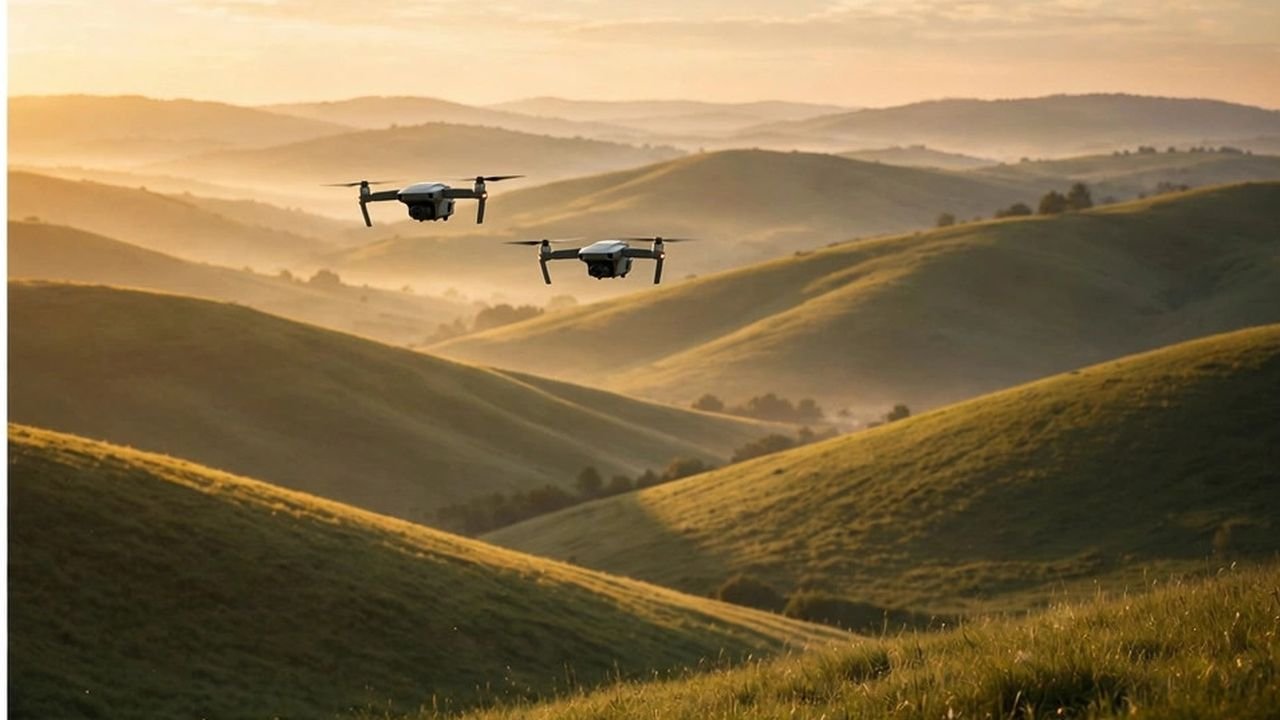
The DJI Mini 3 vs Mini 3 Pro question looks simple: two drones, nearly identical bodies, one cheaper than the other. But the differences that matter — obstacle sensing, camera ceiling, transmission range, and intelligent flight modes — decide whether you save money or regret it.
This guide answers the Mini 3 vs Mini 3 Pro matchup in full, then widens the lens. Because in 2026, nobody should buy a Mini 3 or Mini 3 Pro without also understanding the Mini 4 Pro, the Mini 5 Pro, and the DJI Flip. All five sit at or under the 250-gram line that decides what the FAA asks of you as a recreational pilot, and each one serves a genuinely different buyer. Below: a direct answer, a five-drone comparison table, detailed per-drone verdicts, the registration rules that actually apply, and the buying mistakes we see most often.
The Short Answer: DJI Mini 3 vs Mini 3 Pro
Buy the DJI Mini 3 Pro if obstacle avoidance matters to you at all, you shoot video you might want to slow down or grade, or you plan to keep the drone for years. Its tri-directional obstacle sensing, 4K/60 video, 48 MP stills, and O3 transmission make it the more capable and safer aircraft.
Buy the DJI Mini 3 if your budget is the deciding factor and you fly in open spaces where obstacle sensing is a nice-to-have rather than a need. You still get the same 1/1.3-inch sensor and f/1.7 lens, true vertical shooting for social video, and — thanks to the simpler airframe — the longest standard-battery flight time in the lineup.
Consider stepping outside this pair if you're a first-time pilot who wants maximum crash protection (look at the Mini 4 Pro or the Flip), or an image-quality obsessive willing to deal with registration paperwork (the Mini 5 Pro's 1-inch sensor is in a different league — with one important weight caveat explained below).
Quick Picks
Short on time? These are our top recommendations — each button takes you to the exact product on Amazon.
At a Glance: Which DJI Drone Fits You
- Best for tight budgets and first flights: DJI Mini 3 — the cheapest way into the Mini line, longest flight time, no obstacle sensing.
- Best value with real safety tech: DJI Mini 3 Pro — tri-directional sensing, 4K/60, and intelligent tracking at a previous-generation price.
- Best for nervous beginners and flying near people: DJI Flip — folding propeller guards, palm-launch simplicity, forward sensing.
- Best all-rounder for most pilots: DJI Mini 4 Pro — omnidirectional obstacle sensing, 4K/100 slow motion, 10-bit D-Log M, still under 249 g.
- Best image quality in the class: DJI Mini 5 Pro — 1-inch sensor, 4K/120, forward LiDAR; US buyers should plan to register it.
Full Comparison: Every Current DJI Sub-250g Drone
| DJI Mini 3 | DJI Mini 3 Pro | DJI Flip | DJI Mini 4 Pro | DJI Mini 5 Pro | |
|---|---|---|---|---|---|
| Takeoff weight | Under 249 g | Under 249 g | Under 249 g | Under 249 g | 249.9 g ± 4 g (production units reported at 252–253 g) |
| Image sensor | 1/1.3-in CMOS, 12 MP output | 1/1.3-in CMOS, 48 MP | 1/1.3-in CMOS, 48 MP | 1/1.3-in CMOS, 48 MP | 1-in CMOS, 50 MP |
| Max video | 4K/30 HDR | 4K/60 (4K/30 HDR) | 4K/60 HDR | 4K/60 HDR, 4K/100 slow-mo | 4K/60 HDR, 4K/120 slow-mo |
| Colour profiles | Normal | Normal, D-Cinelike | Normal, D-Log M (10-bit) | Normal, D-Log M + HLG (10-bit) | D-Log M + HLG (10-bit) |
| Obstacle sensing | Downward only | Forward, backward, downward | Forward + downward (forward off during tracking) | Omnidirectional | Omnidirectional + forward LiDAR |
| Subject tracking | No | ActiveTrack 4.0 | AI tracking (no controller needed) | ActiveTrack 360° | ActiveTrack 6.0 |
| Transmission | DJI O2 (10 km) | DJI O3 (12 km) | DJI O4 (13 km) | DJI O4 (20 km) | DJI O4+ (20 km) |
| Max flight time | 38 min | 34 min | 31 min | 34 min | 36 min |
| Standout trait | Cheapest entry; longest flight | Value pick with sensing | Prop guards; palm launch | Safest all-rounder | Best camera, needs registration |
| Product | Key Specs | Best Use Case | Standout Feature | Amazon Link |
|---|---|---|---|---|
| DJI Mini 3 (DJI RC-N1) Best budget first drone |
Under 249 g · 1/1.3-in CMOS · 4K/30 HDR | Budget first flights, open landscapes | Cheapest entry; longest flight | Check Price |
| DJI Mini 3 Pro (DJI RC) + Fly More Kit Plus Best value with real safety tech |
Under 249 g · 1/1.3-in CMOS · 4K/60 | Value creators wanting safety tech | Tri-directional sensing at a last-gen price | Check Price |
| DJI Flip (RC-N3) Best for nervous beginners |
Under 249 g · 1/1.3-in CMOS · 4K/60 HDR | Beginners, flying near people | Prop guards; palm launch | Check Price |
| DJI Mini 4 Pro Fly More Combo Plus (DJI RC 2) Best all-rounder |
Under 249 g · 1/1.3-in CMOS · 4K/60 HDR, 4K/100 | All-round creators wanting maximum safety | Safest all-rounder; omnidirectional sensing | Check Price |
| DJI Mini 5 Pro Fly More Combo with DJI RC 2 Best image quality |
≈250 g · 1-in CMOS 50 MP · 4K/60 HDR, 4K/120 | Low-light and cinematic work | Best camera; needs FAA registration | Check Price |
Ranges are manufacturer figures under ideal FCC conditions; real-world range is far shorter and always limited by line-of-sight rules. Flight times are maximums with the standard battery; expect 20–30% less in wind.
DJI Mini 3 vs Mini 3 Pro: The Detailed Breakdown
This is the matchup most shoppers start with, and the one our primary research covers deepest. The two drones share a body, a sensor size, a lens, and a gimbal — but they are different aircraft where it counts.
Camera: same sensor size, different ceiling
Both drones use a 1/1.3-inch CMOS sensor with an f/1.7 aperture and a 24 mm-equivalent lens, and both shoot true vertical video by rotating the camera 90 degrees — genuinely useful for TikTok, Reels, and Shorts.
The Pro pulls ahead in output. It captures full 48 MP stills and records 4K at up to 60 fps, with 4K/30 HDR and a D-Cinelike flat profile for grading. The standard Mini 3's 48 MP sensor is pixel-binned down to 12 MP photos, video tops out at 4K/30, and slow motion is limited to 1080p/120 at best. The Pro also pushes ISO to 6400 versus 3200 on the Mini 3, which shows up in cleaner sunrise, sunset, and dusk footage.
Practical takeaway: if your footage lives on social media and you shoot in daylight, the Mini 3's camera is honestly enough. If you print stills, shoot at the edges of the day, or want slow-motion flexibility in 4K, the Pro's ceiling is meaningfully higher.
Obstacle sensing: the single biggest difference
The DJI Mini 3 has no obstacle avoidance — only downward vision positioning for stable hovering. The Mini 3 Pro adds tri-directional obstacle sensing (forward, backward, and downward) with APAS 4.0, which can route the drone around obstacles automatically.
For a first-time pilot, this is the feature most likely to save the aircraft. Trees, branches, and building edges are the classic first-drone killers, and the Pro will simply stop before hitting what it can see. It is not a force field — thin branches and wires can still evade the sensors — but it changes the risk profile of every flight. If you plan to fly anywhere with obstacles, treat the Pro's sensing as the core of its value, not a bonus.
Transmission: O2 vs O3
The Mini 3 uses DJI's older O2 transmission (up to 10 km claimed); the Mini 3 Pro uses O3 (up to 12 km claimed). In practice, both far exceed the distance you'll legally fly — recreational flights must stay within visual line of sight. Where O3 matters is signal robustness: a stronger, cleaner live feed in areas with Wi-Fi congestion and interference, which is exactly where beginners tend to fly (parks, suburbs, tourist spots).
Flight time and batteries: the Mini 3's quiet win
With fewer sensors and a simpler board, the Mini 3 flies longer: up to 38 minutes on the standard battery versus 34 on the Pro. Both accept an Intelligent Flight Battery Plus that stretches endurance dramatically (51 and 47 minutes respectively) — but the Plus battery pushes both drones over 250 g, which costs you the registration exemption. For most recreational pilots, the standard battery plus a spare is the better buy than one Plus battery.
Intelligent flight modes
Both drones offer QuickShots — one-tap cinematic moves (Dronie, Helix, Rocket, Circle, Boomerang). Only the Pro adds the FocusTrack suite (ActiveTrack subject tracking, Spotlight, Point of Interest), MasterShots (automated multi-shot cinematic sequences), and Hyperlapse. If you want the drone to film you — cycling, running, driving — while it handles the flying, you need the Pro or newer.
Build details worth knowing
Because the Mini 3 launched about six months after the Pro, DJI folded in small refinements: the standard Mini 3 has proper landing legs (the Pro lands on its belly), which makes takeoffs and landings from rough ground less awkward. Minor, but real.
Verdict on the pair: the Mini 3 Pro is the better drone in almost every dimension that affects footage quality and safety. The Mini 3 is the better buy only when the price gap matters more than those dimensions — for a careful pilot flying open landscapes and posting to social, it remains a lot of drone for the money.
The Rest of the Mini Lineup, Compared
Before you decide between the two Mini 3s, check the matchups below. Several of them change the answer.
DJI Mini 3 vs Mini 4 Pro
This is the "should I just get the newer one" question, and the Mini 4 Pro wins on paper in nearly every category: omnidirectional obstacle sensing (a full safety bubble versus the Mini 3's none), O4 transmission (20 km claimed), 4K/60 HDR with 4K/100 slow motion, 10-bit D-Log M and HLG for serious grading, ActiveTrack 360°, waypoint missions, and built-in Remote ID — all while staying under 249 g. What the Mini 3 keeps: a lower entry price and four extra minutes of claimed flight time. Choose the Mini 3 if budget dominates and you fly open areas. Choose the Mini 4 Pro if you want a drone that protects a beginner from their own mistakes and grows with your skills.
DJI Mini 4 Pro vs Mini 5 Pro
The current flagship debate. The Mini 5 Pro's headline is its 1-inch sensor (50 MP) — roughly 65% larger than the 1/1.3-inch class — which delivers visibly better dynamic range and low-light performance, plus 4K/120 slow motion, a 225° roll gimbal, forward LiDAR for night obstacle detection, O4+ transmission, and 42 GB of internal storage. The Mini 4 Pro counters with a cleaner ownership story: it is safely under 249 g (no registration for recreational US flying), officially sold through DJI's US channels with full warranty support, and deeply discounted as the previous generation.
Two US-specific caveats shape this matchup. First, weight: DJI lists the Mini 5 Pro at 249.9 g ± 4 g, but independent weighings of production units report 252–253 g — and the FAA applies no tolerance to the 250 g threshold, so US buyers should plan to register it ($5 at FAADroneZone) and comply with Remote ID. Second, availability: the Mini 5 Pro was not sold through DJI's own US store at launch and remains subject to an evolving FCC situation (more below); it is purchasable through US retail and Amazon marketplace sellers, but warranty handling is less straightforward than the Mini 4 Pro's. Choose the Mini 4 Pro for peace of mind and value. Choose the Mini 5 Pro if low-light image quality is the job and you accept the registration and warranty trade-offs. our DJI Mini 4 Pro vs Mini 5 Pro deep dive
DJI Flip vs Mini 4 Pro
The real cross-shop for cautious beginners. The Flip solves safety with integrated folding propeller guards and palm-launch simplicity — it's the drone you can fly indoors, at events, or near people with far less anxiety — plus AI subject tracking that works without a controller. The Mini 4 Pro solves safety with omnidirectional obstacle sensing that protects the aircraft in open-air flying, and it adds the stronger camera package (4K/100 slow motion, 10-bit D-Log M/HLG, waypoint missions, 20 km O4 link).
Know the Flip's trade-offs: its forward sensing switches off during AI tracking, so tracking near trees carries real crash risk; flight time is shorter (31 minutes claimed); and the guards add drag that the Mini 4 Pro doesn't pay. Choose the Flip if you fly close to people, indoors, or at gatherings. Choose the Mini 4 Pro for open-space flying where obstacle avoidance and camera flexibility matter more than guards.
DJI Flip vs Mini 5 Pro
A less common comparison, but a real one for vloggers weighing simplicity against image quality. The Flip is the approachable tool: guards, palm launch, no-fuss tracking, under 249 g. The Mini 5 Pro is the image-quality tool: 1-inch sensor, 4K/120, LiDAR — with the registration requirement and the more complex US buying picture. They barely overlap as use cases: Flip for easy, social, people-adjacent flying; Mini 5 Pro for footage-first creators.
A note on "DJI Mini 4 vs Flip" searches
There is no "DJI Mini 4" (non-Pro) — DJI skipped straight from the Mini 3 line to the Mini 4 Pro. If you searched "DJI Mini 4 vs Flip," you almost certainly mean the Mini 4 Pro vs Flip matchup covered above.
Which Drone for Which Pilot: Five Verdicts
DJI Mini 3 — the budget first drone
Ideal buyer: a first-time pilot on a tight budget who flies in open spaces and posts to social media. Strengths: lowest entry cost in the line; longest standard-battery flight time (38 min claimed); same 1/1.3-inch sensor and true vertical shooting as its pricier siblings. Limitations: no obstacle sensing, no subject tracking, 4K capped at 30 fps, older O2 transmission. Buy it if the price gap to the Pro outweighs safety tech for the way you fly — and fly it like the unguarded aircraft it is.
coming soon
DJI Mini 3 (DJI RC-N1)
The cheapest way into DJI's Mini line, and the longest standard-battery flight time of the group. Ideal for a careful first-time pilot flying open landscapes and posting to social.
- Lowest entry cost in the Mini lineup
- 38-minute claimed flight time — longest standard battery here
- 4K HDR video with true vertical shooting for social
Important limitation: No obstacle sensing and no subject tracking — fly it like the unguarded aircraft it is.
- Weight: Under 249 g
- Sensor: 1/1.3-inch CMOS, 48 MP
- Video: 4K/30 HDR, 2.7K/60
Best for: First-time pilots on tight budgets flying open spaces
DJI Mini 3 Pro — the value pick with real safety tech
Ideal buyer: the budget-conscious creator who wants 4K/60, obstacle sensing, and tracking without paying current-generation money. Strengths: tri-directional sensing with APAS 4.0; 48 MP stills; 4K/60 and D-Cinelike; O3 transmission; MasterShots and FocusTrack. Limitations: a generation behind on transmission and sensing coverage; belly landings. Buy it if you want the cheapest route to a genuinely capable camera drone and don't need the Mini 4 Pro's omnidirectional bubble.
coming soon
DJI Mini 3 Pro (DJI RC) + Fly More Kit Plus
The value pick of the line: tri-directional obstacle sensing, 4K/60 and intelligent tracking at a previous-generation price. The cheapest route to a genuinely capable camera drone.
- Tri-directional obstacle sensing with APAS 4.0
- 4K/60 video and 48 MP stills with D-Cinelike
- FocusTrack, MasterShots and True Vertical Shooting
Important limitation: A generation behind on transmission (O3) and sensing coverage — no omnidirectional bubble.
- Weight: Under 249 g
- Sensor: 1/1.3-inch CMOS, 48 MP
- Video: 4K/60, 4K/30 HDR
Best for: Budget-conscious creators who want sensing and tracking without current-gen money
DJI Flip — the beginner's confidence drone
Ideal buyer: nervous first-timers, indoor/event flyers, and vloggers who want the drone to handle itself. Strengths: full folding prop guards; palm launch with controller-free AI tracking; forward + downward sensing; under 249 g. Limitations: forward sensing disables during tracking; shortest flight time (31 min claimed); guards add drag; camera ceiling below the Mini 4 Pro. Buy it if flying near people or indoors is your reality — the guards change where you're willing to fly.
coming soon
DJI Flip (RC-N3)
The beginner's confidence drone: folding propeller guards, palm launch and controller-free AI tracking. The guards change where you're willing to fly — indoors, events, near people.
- Full folding propeller guards for confident flying
- Palm launch with AI subject tracking, no controller needed
- Under 249 g with forward + downward sensing
Important limitation: Shortest flight time here (31 min claimed); forward sensing disables during tracking.
- Weight: Under 249 g
- Sensor: 1/1.3-inch CMOS, 48 MP
- Video: 4K/60 HDR
Best for: Nervous first-timers, indoor/event flyers, vloggers
DJI Mini 4 Pro — the all-rounder we'd recommend to most people
Ideal buyer: the pilot who wants one drone that does nearly everything safely. Strengths: omnidirectional obstacle sensing; 4K/60 HDR + 4K/100 slow motion; 10-bit D-Log M/HLG; ActiveTrack 360°; waypoint missions; O4 transmission; built-in Remote ID — all under 249 g. Limitations: previous generation; real-world battery life well under the claimed 34 minutes in wind. Buy it if you want the safest, most complete sub-250 g package with clean US warranty support.
coming soon
DJI Mini 4 Pro Fly More Combo Plus (DJI RC 2)
Our pick for most pilots: omnidirectional obstacle sensing, a genuinely strong camera and clean US warranty support. The safest, most complete sub-250 g package with the standard batteries.
- Omnidirectional obstacle sensing — the first in the Mini line
- 4K/60 HDR plus 4K/100 slow motion, 10-bit D-Log M/HLG
- ActiveTrack 360°, waypoint missions, O4 transmission
Important limitation: Real-world battery life runs well under the claimed 34 minutes in wind; the Plus batteries push it over 249 g.
- Weight: Under 249 g (standard battery)
- Sensor: 1/1.3-inch CMOS, 48 MP
- Video: 4K/60 HDR, 4K/100 slow-mo
Best for: Most pilots — the one-drone-does-nearly-everything pick
DJI Mini 5 Pro — the image-quality flagship (with paperwork)
Ideal buyer: creators who shoot in difficult light and will trade convenience for footage. Strengths: 1-inch 50 MP sensor; 4K/120 slow motion; forward LiDAR night sensing; O4+; 42 GB internal storage; longest flight time (36 min claimed). Limitations: production units weigh 252–253 g — US buyers should register with the FAA; not sold through DJI's US store at launch (retail/marketplace purchase, less straightforward warranty); subject to an unresolved FCC proposal on LiDAR drones. Buy it if image quality is the job and you accept the registration step and the evolving US regulatory picture. our best camera drones roundup
coming soon
DJI Mini 5 Pro Fly More Combo with DJI RC 2
The image-quality flagship: a 1-inch 50 MP sensor, 4K/120 slow motion and forward LiDAR night sensing. For footage-first creators who accept the registration step and the evolving US situation.
- 1-inch 50 MP sensor — best low-light image quality in the class
- 4K/120 slow motion and 10-bit D-Log M/HLG
- Omnidirectional sensing plus forward LiDAR; 42 GB internal storage
Important limitation: Production units weigh 252–253 g — US buyers must register; US buying and warranty picture is murkier.
- Weight: 249.9 g ± 4 g (register in the US)
- Sensor: 1-inch CMOS, 50 MP
- Video: 4K/60 HDR, 4K/120
Best for: Footage-first creators who trade convenience for image quality
What to Know Before You Buy
FAA registration and the 250-gram line
In the United States, recreational pilots must register any drone weighing 250 grams or more with the FAA, and every recreational pilot must pass the free, online TRUST safety test and carry proof when flying (source: faa.gov/uas/recreational_flyers). The Mini 3, Mini 3 Pro, Mini 4 Pro, and Flip all sit under 249 g with their standard batteries, so recreational flying needs no registration — just TRUST, visual line of sight, and standard airspace rules.
The Mini 5 Pro is the exception. DJI advertises 249.9 g ± 4 g, but production units have been independently weighed at 252–253 g, and the FAA applies no tolerance to the 250 g threshold. If your aircraft weighs 250 g or more, register it: $5 at FAADroneZone, covering all your recreational drones. Any drone flown for commercial purposes — paid photography, real estate, inspections — must be registered regardless of weight, and paid work requires a Part 107 Remote Pilot Certificate.
Two battery warnings: the Intelligent Flight Battery Plus options for the Mini 3, 3 Pro, 4 Pro, and 5 Pro all push their drones over 250 g. Longer flight time costs you the registration exemption. And no weight trick exempts you from the rules that always apply: fly below 400 feet, keep visual line of sight, and check airspace before every flight.
The Mini 5 Pro's US situation, plainly stated
US buyers should know the context. The Mini 5 Pro was not sold through DJI's own US store at launch; it is available through US retailers and Amazon marketplace sellers. In December 2025 the FCC placed newly authorized foreign drones on its Covered List, which restricts new authorizations and imports — the Mini 5 Pro was authorized before that action and remains legal to buy, sell, and fly. Separately, an August 2026 FCC proposal (PS Docket 26-189) would retroactively strip sales authorization from previously cleared drones with LiDAR sensors, which includes the Mini 5 Pro; the comment period closed September 2, 2026 and the outcome was still pending at the time of writing. Owning and flying an already-purchased drone is not affected by the proposal — it concerns future sales. This is an evolving situation: check current status before buying, and weigh the warranty implications of where you purchase. our DJI FCC situation explainer
Beginner, traveler, or creator: matching the drone to the mission
- First drone, learning to fly: Mini 3 (cheapest lessons) or Flip (guarded lessons). Obstacle sensing on the 3 Pro/4 Pro is the next safety tier up.
- Travel and hiking: any of the five — the whole line folds small. The sub-249 g models (everything except the Mini 5 Pro's real-world weight) keep paperwork minimal across most countries' rules too, though always check local regulations before traveling.
- Social video: Mini 3 is enough; true vertical shooting is standard across the line.
- Serious video and low light: Mini 4 Pro for the balanced package, Mini 5 Pro if the 1-inch sensor's low-light advantage justifies registration and the US buying caveats.
Combos vs. standalone: what the bundles add
DJI sells these drones standalone, with a controller, and as Fly More Combos (extra batteries, charging hub, propellers, carrying case; the Mini 5 Pro's combo adds ND filters). Rule of thumb: one battery is never enough — real flight time runs 20–30% below claimed figures in wind — so a combo or a spare battery is the practical minimum. Just remember the Plus-battery weight trade-off above, and confirm you're comparing the exact bundle variant when you shop, since controller options (RC-N1, RC 2, RC-N2/N3) change what's in the box. our best budget drones guide
7 Mistakes Buyers Make With DJI Mini Drones
- Buying the Plus battery for "more flight time" without knowing it costs the sub-250 g exemption. Great for endurance, bad if registration-free flying was the point.
- Assuming the Mini 5 Pro needs no registration. Production units weigh 252–253 g. Register it.
- Choosing the Mini 3 to save money, then flying it into a tree. No obstacle sensing means you are the sensing system. Be honest about your skill level and flying spots.
- Overbuying for social-only use. If everything you shoot goes to TikTok in daylight, the Mini 3's camera is enough — the Pro's 48 MP stills won't show up on a phone screen.
- Ignoring the controller in the bundle. An RC 2 (built-in screen) versus a phone-based controller changes the daily experience and the price. Compare identical variants.
- Buying the Mini 5 Pro in the US without understanding the warranty picture. Retail and marketplace purchases don't carry the same support simplicity as DJI-direct models. Know your seller.
- Skipping TRUST because the drone is "under 250 g." The weight exemption covers registration, not the safety test. TRUST is legally required for every recreational flight.
Frequently Asked Questions
These FAQs answer the buyer concerns that recur across competitor content and community discussion for these matchups. They are editorially generated from SERP research, not from keyword-volume data.
If obstacle avoidance, 4K/60 video, or subject tracking matter to you, yes — those are the Pro's defining upgrades and the main reasons buyers regret the cheaper model. If you fly open areas in daylight and post to social, the Mini 3 delivers most of the experience for less.
No. The Mini 3 has only downward vision positioning for stable hovering. The Mini 3 Pro adds forward, backward, and downward sensing; the Mini 4 Pro and 5 Pro add full omnidirectional coverage.
For the Mini 3, Mini 3 Pro, Mini 4 Pro, and Flip: no, for recreational flying — all are under 249 g with standard batteries. For the Mini 5 Pro: yes, plan to register, since production units weigh 252–253 g. Every recreational pilot still needs the free TRUST test regardless of drone weight.
It was not sold through DJI's own US store at launch, but it is sold through US retailers and Amazon marketplace sellers. An FCC proposal concerning LiDAR-equipped drones could affect future US sales; the outcome was pending at the time of writing. Check the current situation before buying.
The Mini 5 Pro upgrades to a 1-inch 50 MP sensor (better low light and dynamic range), 4K/120 slow motion, forward LiDAR obstacle sensing, O4+ transmission, and 42 GB of internal storage. The Mini 4 Pro keeps the cleaner ownership story: safely under 249 g, full US warranty support, and lower pricing as the previous generation.
The Flip is the more forgiving first drone thanks to its propeller guards and palm-launch simplicity, especially for indoor or near-people flying. The Mini 4 Pro is the more capable long-term drone with omnidirectional sensing and a stronger camera. Nervous beginner: Flip. Beginner who wants to grow: Mini 4 Pro.
The DJI Flip supports palm-launch AI tracking without a controller. The Mini models require a controller (or phone) for normal flight.
By claimed figures with the standard battery: Mini 3 (38 min), then Mini 5 Pro (36 min), then Mini 3 Pro and Mini 4 Pro (34 min), then Flip (31 min). Expect real-world flight times 20–30% lower in wind. Plus batteries extend endurance on all five but push each over 250 g.
Final Verdict
The DJI Mini 3 vs Mini 3 Pro decision comes down to one question: how much is obstacle avoidance worth to you? The Pro's tri-directional sensing, 4K/60 camera, and tracking modes make it the better aircraft for almost everyone — the Mini 3 only wins when budget is the binding constraint and your flying is open, careful, and social-first.
But the smarter move in 2026 is to choose from all five. Most pilots should land on the Mini 4 Pro: omnidirectional sensing, a genuinely strong camera, and a clean sub-249 g, warranty-supported US purchase. First-timers who fear crashing should look hard at the Flip. Footage-first creators who'll accept a $5 registration and a murkier US buying picture get the best image quality from the Mini 5 Pro's 1-inch sensor. And the Mini 3 remains the honest budget entry — just fly it with the respect an unsensored drone demands.
Whichever you choose: take the free TRUST test, check your airspace, and buy the exact bundle variant you researched. The sky is the easy part. our best drones of 2025 guide
Final Recommendations
Best budget first drone: DJI Mini 3 (DJI RC-N1) — the honest budget entry — most drone for the least money
Best value with real safety tech: DJI Mini 3 Pro (DJI RC) + Fly More Kit Plus — the value pick — real safety tech without the flagship price
Best for nervous beginners: DJI Flip (RC-N3) — the confidence drone — guards and palm launch for nervous first flights
Best all-rounder: DJI Mini 4 Pro Fly More Combo Plus (DJI RC 2) — the all-rounder we'd recommend to most people
Best image quality: DJI Mini 5 Pro Fly More Combo with DJI RC 2 — the image-quality flagship for creators who accept the paperwork
Related Guides
- our best budget drones guide — Best Budget Drones: the cheapest capable drones worth buying
- our DJI Mini 4 Pro vs Mini 5 Pro deep dive — DJI Mini 4 Pro or Mini 5 Pro: the two-drone deep dive
- our best camera drones roundup — Best Camera Drone: top imaging drones ranked
- our best drones of 2025 guide — Best Drones 2025: the full buying guide
- our DJI FCC situation explainer — DJI Drone Ban: the FCC vote explained