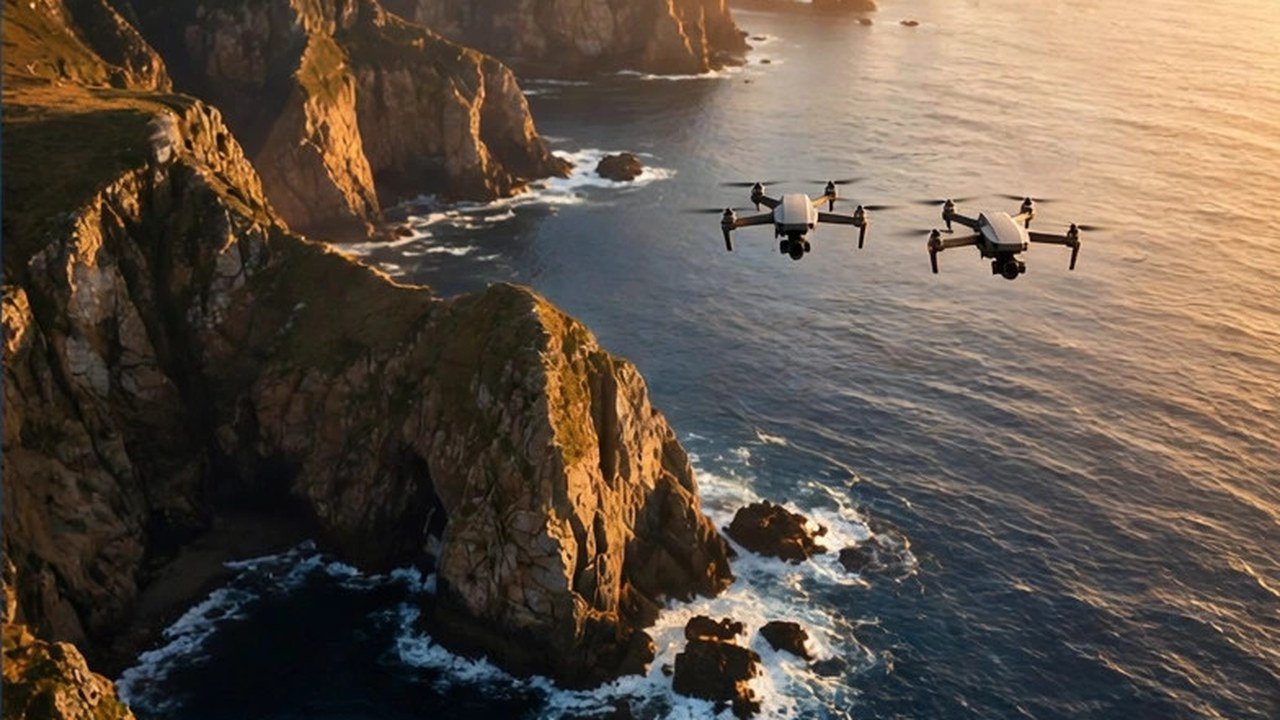
The DJI Mini 5 Pro is the first Mini-series drone with a true 1-inch camera sensor, and that single change reorders the entire sub-250g category. Launched 17 September 2025, it packs a 50MP 1-inch CMOS camera, 4K/120 slow motion, forward-facing LiDAR, and a 225-degree rotating gimbal into an airframe DJI rates at 249.9 grams — the regulatory ceiling that decides whether a recreational pilot needs to register with the FAA.
This review covers everything a buyer needs to decide: what the camera actually delivers, how far real-world flight time falls short of the 36-minute claim, what the weight asterisk means for US registration, how it compares to the Mini 4 Pro and Air 3S, and the one US-specific problem no spec sheet will warn you about. Prices are deliberately omitted — the US distribution picture has been inconsistent, and we'd rather show no price than a misleading one.
The Short Answer: Should You Buy the DJI Mini 5 Pro?
Yes — if image quality is your priority and you can buy one through a channel you trust. The 1-inch 50MP sensor is a genuine generational leap over every previous Mini, the forward LiDAR makes night obstacle sensing meaningfully better, and true vertical 4K (no crop) makes it the best Mini yet for social-first creators. For travellers who want the best possible footage under 250 grams, nothing else in the class is close.
No — if you're a first-time pilot on a budget (older Minis cost less and fly fine), you need rock-solid US warranty support (distribution has been uneven), or you can't stomach registering the drone — because many production units measure 252–253g, over the FAA's zero-tolerance 250g threshold.
The honest caveat: at research time (October 2026), the Mini 5 Pro's US availability remained inconsistent — it was not officially distributed through DJI's own US store, with sales reported through third-party retailers and marketplace sellers. That is not disqualifying, but it changes the warranty math and the checkout math. Verify before you buy.
At a Glance: Who the Mini 5 Pro Is For
- Best for travel and content creators: the smallest airframe ever to carry a 1-inch sensor, with vertical video that needs no cropping. This is the buyer the drone was built for.
- Best for low-light shooters: the 1-inch sensor plus f/1.8 aperture and 12,800 max ISO in standard mode make dawn, dusk, and city-night footage meaningfully cleaner than any previous Mini.
- Best upgrade for Mini 4 Pro owners: the largest single-generation camera jump in Mini history — LiDAR, true vertical shooting, and 4K/120 come with it.
- Still a beginner-friendly drone — with a caveat: omnidirectional sensing, subject tracking, and automated flight modes keep it approachable, but beginners on tight budgets get better value from a Mini 4K or a discounted Mini 4 Pro.
- Who should skip it: pilots who fly in sustained strong wind (249.9g of mass gets pushed around), anyone who needs optical zoom (look at the Air 3S), and buyers who require a clean US retail + warranty story — verify that first.
DJI Mini 5 Pro vs the Alternatives: Spec Table
All figures below are manufacturer-rated specifications (DJI's figures via launch coverage), not our measurements. "Rated" and "real-world" differ — see the flight-time section.
| DJI Mini 5 Pro | DJI Mini 4 Pro | DJI Air 3S | DJI Flip | DJI Mini 4K | |
|---|---|---|---|---|---|
| Launch | Sept 2025 | Sept 2023 | Oct 2024 | Jan 2025 | Apr 2024 |
| Takeoff weight | 249.9 g ± 4 g (units measured 252–253 g) | Under 249 g | 724 g | Under 249 g | Under 249 g |
| Image sensor | 1-in CMOS, 50 MP | 1/1.3-in CMOS, 48 MP | 1-in CMOS 50 MP (main) + 1/1.3-in 48 MP tele | 1/1.3-in CMOS, 48 MP | 1/2.3-in CMOS, 12 MP |
| Lens | 24 mm equiv, f/1.8 | 24 mm equiv, f/1.7 | 24 mm f/1.8 + 70 mm f/2.8 (3x optical) | 24 mm equiv, f/1.7 | 24 mm equiv, f/2.8 |
| Max video | 4K/60 HDR, 4K/120 slow-mo | 4K/60 HDR, 4K/100 slow-mo | 4K/60 HDR, 4K/120 | 4K/60 HDR | 4K/30 |
| Colour profiles | D-Log M + HLG (10-bit) | D-Log M + HLG (10-bit) | D-Log M + HLG (10-bit) | D-Log M (10-bit) | Normal |
| Gimbal | 3-axis, 225° roll, true vertical | 3-axis, true vertical | 3-axis | 3-axis, true vertical | 3-axis |
| Obstacle sensing | Omnidirectional + forward LiDAR | Omnidirectional | Omnidirectional + forward LiDAR | Forward + downward | Downward only |
| Flight time (rated) | 36 min (52 min with Plus battery) | 34 min | 45 min | 31 min | 31 min |
| Transmission | O4+ (20 km FCC / 10 km CE, claimed) | O4 (20 km FCC) | O4 (20 km FCC) | O4 (13 km FCC) | O3 (10 km FCC) |
| Internal storage | 42 GB | None | 42 GB | 2 GB | None |
| Standout trait | Best camera in the class | Safest budget flagship Mini | Dual cameras, strongest flight | Prop guards, palm launch | Cheapest entry |
Ranges are manufacturer figures under ideal FCC conditions; real-world range is far shorter and always limited by line-of-sight rules. Flight times are maximums with the standard battery — expect real-world numbers to be 20–30% lower in wind.
DJI Mini 5 Pro — Full Review
Quick Picks
Short on time? These are our top recommendations.
The camera: the first 1-inch sensor in a Mini
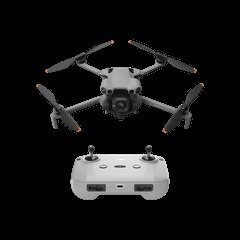
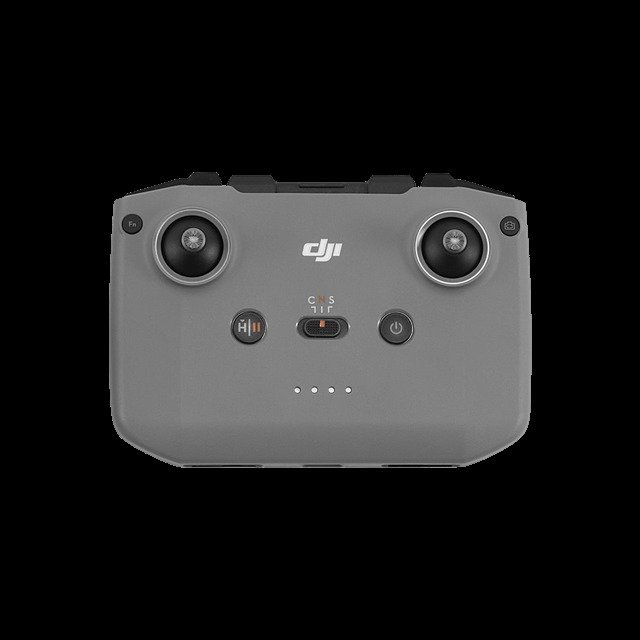
DJI Mini 5 Pro (RC-N3)
The Mini 5 Pro is the first Mini-series drone with a true 1-inch camera sensor, and that single change reorders the sub-250g category: a 50MP 1-inch CMOS behind a 24mm-equivalent f/1.8 lens, 4K/120 slow motion, 10-bit D-Log M and HLG, and low-light performance no previous Mini approaches. Forward-facing LiDAR layered over omnidirectional vision sensing makes night obstacle detection work down to about 1 lux, the 225-degree gimbal shoots true vertical 4K with no crop, and 42GB of internal storage means a forgotten card no longer kills a shoot. Independent reviewers consistently describe the footage as a clear step up from the Mini 4 Pro in mixed light.
- 1-inch 50MP CMOS camera with 4K/120 slow motion and 10-bit D-Log M + HLG — the largest camera jump in Mini history.
- Forward-facing LiDAR plus omnidirectional vision sensing gives night obstacle detection down to about 1 lux.
- 225-degree rotating gimbal delivers true vertical 4K with no crop, plus 42GB internal storage.
Important limitation: US distribution was inconsistent at research time (no official DJI US store sale; third-party channels), so warranty/DJI Care coverage varies by seller. DJI rates takeoff weight at 249.9 g ±4 g and independent weighings report 252–253 g units — over the FAA's zero-tolerance 250 g line, so plan to register. Real-world flight time is 23–33 minutes, not the 36-minute lab rating.
- Image sensor: 1-in CMOS, 50 MP stills (JPEG + DNG RAW)
- Lens: 24 mm equiv, f/1.8, 84° FOV
- Video: 4K/60 HDR, 4K/120 slow motion, 1080p up to 240fps; 10-bit H.265 D-Log M + HLG
- Takeoff weight: 249.9 g ±4 g (independent weighings of production units: 252–253 g)
- Flight time: 36 min rated (standard battery); independent real-world testing 23–33 min
- Obstacle sensing: Omnidirectional vision + forward-facing LiDAR + downward infrared; APAS 6.0
- Transmission: O4+ — up to 20 km FCC / 10 km CE (manufacturer figures)
- Storage: 42 GB internal + microSD
- In the box: Mini 5 Pro ×1, DJI RC-N3 remote controller ×1, Intelligent Flight Battery ×1, storage cover, RC cables (USB-C + Lightning), spare propeller pair, USB-C data cable
Best for: Travellers and content creators who want the best possible image quality under 250 grams and can buy through a channel they trust.
This is the headline, and it earns the billing. The Mini 5 Pro's 1-inch CMOS sensor captures 50MP stills (JPEG and DNG RAW, up to 8192×6144) behind a 24mm-equivalent f/1.8 lens with an 84-degree field of view and a 0.5-metre minimum focus distance. The sensor's light-gathering area is substantially larger than that of the 1/1.3-inch sensor in the Mini 4 Pro — some outlets claim roughly 2.4×, though physical sensor math and several independent reviews put the gain closer to ~1.5–1.7× — one of the largest single-generation camera jumps any consumer drone line has ever made.
Video reaches 4K at 60fps in HDR, 4K at 120fps for slow motion, and 1080p at up to 240fps. It records 10-bit H.265 in D-Log M and HLG, with DJI claiming up to 14 stops of dynamic range — treat that last figure as a manufacturer claim, not a measured result, but independent reviewers consistently describe the footage as a clear step up from previous Minis in mixed light. Standard-mode ISO runs to 12,800; log modes top out at 3,200. A 48mm in-sensor crop mode ("Med-Tele") gives a tighter 2x framing option without moving the drone, and burst, timed, and auto-exposure-bracketing modes cover stills shooters.
Where it shows most: low light and dynamic range. The Mini 4 Pro's smaller sensor is excellent in daylight but falls apart sooner at the edges of the day; the 1-inch sensor holds detail, colour, and shadow cleanliness deeper into dusk and city-night scenes. If you shoot sunrises, sunsets, or night skylines, this sensor alone justifies the upgrade. If you only ever shoot bright-daylight vacation footage, the improvement is real but harder to notice — and the fixed f/1.8 aperture means you'll want ND filters for cinematic shutter speeds in daylight (there's no adjustable aperture at this size and price).
Flight time: rated vs real — read this before you plan around 36 minutes
DJI rates the Mini 5 Pro at 36 minutes with the standard Intelligent Flight Battery (2,788 mAh) and up to 52 minutes with the Intelligent Flight Battery Plus (4,680 mAh). Those are lab figures. Independent published testing puts real-world numbers noticeably lower: aggregated reviewer data lands around 27–33 minutes depending on recording, hover time, and wind, with one well-known reviewer (Philip Bloom) measuring 23–24 minutes in his tests. That's still the best real-world endurance in the Mini class — but plan your flights around 25–30 minutes, not 36.
The Plus battery is the endurance play, and it comes with two costs. First, it's sold separately (check what's in your combo). Second, it pushes takeoff weight to roughly 290g — definitively over the 250g threshold, which costs US recreational pilots the registration exemption and may change the drone's class in other regions. It's also not sold in Europe at all. For most US recreational pilots, the better strategy is the standard battery plus one or two spares: you stay in the sub-250g class, and a battery swap is faster than the downtime the Plus battery is supposed to save.
Obstacle sensing and night safety
The Mini 5 Pro is the first Mini with forward-facing LiDAR — DJI's LADAR (Lidar Assisted Detection and Ranging) system — layered on top of omnidirectional vision sensing (forward, backward, lateral, upward, downward), an underside infrared sensor, and the APAS 6.0 routing system that steers around detected obstacles. The practical payoff is obstacle detection that works in near darkness — down to about 1 lux — where the vision sensors on every previous Mini go blind. Nightscape return-to-home is safer, and the drone can even map its flight path back to the takeoff point without GNSS, using real-time positioning instead (useful off balconies and in GPS-denied spots).
Two honest limits. First, LiDAR faces forward only — sideways tracking shots and backward flight still rely on the vision sensors, so blind spots remain. Second, no sensing system replaces visual line of sight or legal flying behaviour: thin wires, bare branches, and glass can still evade any sensor. Treat LiDAR as a meaningful safety upgrade over the Mini 4 Pro, not an autopilot. Dual-band GNSS (L1 + L5) also improves positioning accuracy and lock speed versus older single-band systems.
Gimbal and vertical shooting
The redesigned 3-axis gimbal rotates up to 225° in roll — the camera can swing from landscape through portrait to angled positions, giving true vertical 4K with no cropping. That matters more than it sounds: every competing approach either crops the frame (losing resolution) or locks you to landscape. For TikTok, Reels, and Shorts workflows, the Mini 5 Pro shoots the native format of the platforms it feeds.
The expanded movement also enables new creative moves, including QuickShot Rotate, and the gimbal can tilt upward around 60° for bridge, structure, and ceiling shots — a capability inspection-minded pilots will appreciate. Wind still moves a 250g airframe, and gusty footage can show buffeting that heavier drones suppress — the most common owner complaint in published reviews. If your work is mostly windy ridgelines and coastlines, the mass deficit is worth weighing against the camera gains.
Transmission and intelligent features
The Mini 5 Pro uses DJI's O4+ (OcuSync 4 Plus) transmission, rated up to 20km under ideal FCC conditions (10km CE) with a 1080p/30 or 60fps live feed. Some early coverage reported the system simply as O4; independent spec breakdowns widely use the O4+ label. Either way, the practical takeaway is a stable, interference-resistant feed in cluttered urban airspace — the generation jump from O3 (Mini 3 Pro) is the one that matters, and you'll only legally fly a fraction of the rated range.
Intelligent features are the full current DJI suite: ActiveTrack 360° subject tracking, Waypoint flights, Cruise Control, MasterShots cinematic auto-sequences, QuickShots, Hyperlapse, and intelligent panoramas. Live-SERP coverage notes improved tracking reliability at speed — but keep expectations adult: subject tracking is a helper, not a cinematographer, and complex environments still confuse it. Remote ID broadcasts out of the box, which is a compliance plus in the US.
Design, weight, and the 250-gram asterisk
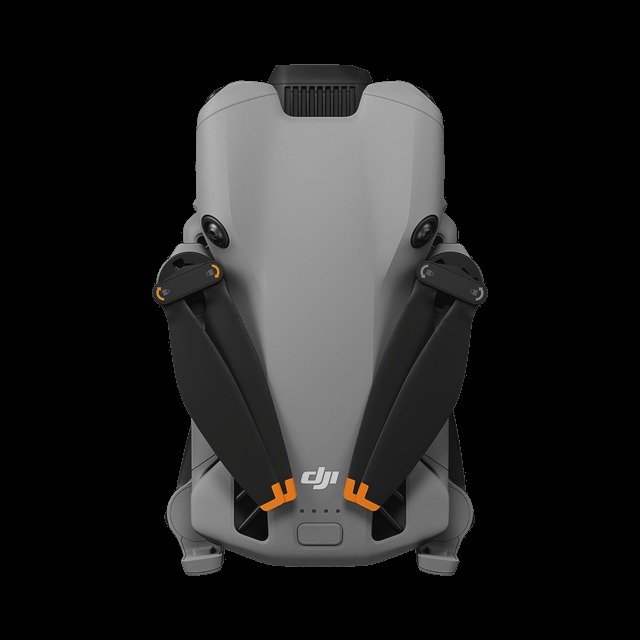
Folded, the Mini 5 Pro measures 157×95×68mm — a little larger than the Mini 4 Pro (148×94×64mm) because the 1-inch sensor and its gimbal need real estate. It's still jacket-pocketable and starts up when you unfold the arms, with the gimbal cover redesigned into a one-piece smart design that's harder to lose. 42GB of internal storage (plus microSD support) means a forgotten card no longer kills a shoot.
The asterisk is the weight. DJI specs the takeoff weight at 249.9g ±4g of manufacturing variance — and the FAA gives zero tolerance above 250g. Independent weighings of production units report 252–253g, and one specialist outlet's review aggregates the same finding. At 252g+, the drone technically requires US recreational registration ($5 at FAADroneZone) and full Remote ID compliance. Canada has clarified the Mini 5 Pro keeps its microdrone status with the standard battery (the ±4g variance is "not considered a big issue" per Transport Canada's inspector), and EASA retains its C0 class in the EU (certification tolerance allows ±3%, so 252–253g stays compliant). Practical advice: weigh your own unit before deciding you're exempt, and budget for registration — it's cheap and it removes the question.
Bundles and controllers
DJI sells the Mini 5 Pro in base, Fly More, and (in some regions) Plus-battery configurations, paired with either the RC-N3 controller (mounts your phone) or the RC 2 (built-in bright screen). Batteries are not interchangeable with older Mini models, and not every Mini 4 Pro accessory carries over — but the RC-N3 and RC 2 controllers ARE compatible with both the Mini 4 Pro and the Mini 5 Pro, so don't assume your controller (and its muscle memory) doesn't migrate; don't assume your batteries and some other spares do.
Controller advice: if you fly regularly, the RC 2 is worth the step up — no phone battery anxiety, no cable fumbling, brighter display in sunlight. If you're comparing discounted or grey-market combos, check which controller is actually included before comparing prices, because the controller is a meaningful chunk of the combo's value. And since availability has been uneven, confirm that DJI Care Refresh coverage applies in your region before you assume it does — coverage and after-sales support have varied by seller in the US.
Buying Guide: How to Buy a Mini 5 Pro
Start with availability, not price. At research time, the Mini 5 Pro was not officially distributed through DJI's own US store, with units reaching buyers through third-party retailers and marketplace sellers. That means: check who the seller is, check what warranty and DJI Care coverage you actually get, and be sceptical of "US" listings priced far from other regions' MSRPs. If official US distribution changes — and the situation has been fluid — re-check before you buy. We omit prices entirely rather than publish one that may not reflect what you can actually buy.
Choose your controller deliberately. The RC-N3 (phone-mounted) costs less; the RC 2 (built-in screen) costs more and is the better long-term tool — brighter screen, no phone battery drain, no cable. Match the controller to how often you'll fly: occasional pilots can save the money; weekly flyers shouldn't.
Battery strategy: standard + spares. The standard Intelligent Flight Battery keeps you in the sub-250g class and is the right call for US recreational pilots. Buy one or two spares instead of one Plus battery: you get more total airtime per dollar, you keep the registration exemption (assuming your unit weighs in under 250g), and the Plus battery isn't even sold in Europe. The Plus battery only makes sense if you genuinely need a single uninterrupted 45+ minute flight and you've accepted the registration and weight-class consequences.
Budget the essentials from day one. ND filters are mandatory for cinematic motion blur in daylight with a fixed f/1.8 aperture — the Fly More combos that include them are usually the better value than buying à la carte. A microSD card is still wise despite the 42GB internal storage: 4K/120 fills storage fast, and a card is your cheapest insurance against a full-internal surprise. DJI Care Refresh, where available, is worth considering for a first drone — the crash math on a 1-inch-sensor aircraft is unforgiving.
Don't pay the "newest" premium blindly. Discounted Mini 4 Pro stock exists in many regions. If your shooting is daylight-only and you value clean US retail and warranty support, a discounted Mini 4 Pro at a lower price is a rational choice over the 5 Pro — the detailed comparison is below.
The DJI Lineup, Positioned
Understanding where the Mini 5 Pro sits in DJI's range prevents overbuying. Mini series (Mini 4K, Mini 4 Pro, Mini 5 Pro): sub-250g, travel-first, increasingly capable — the Mini 5 Pro is now the flagship of the line. The Mini 4K is the budget entry (12MP, 4K/30, downward-only sensing). The Mini 4 Pro is the previous flagship (1/1.3-inch 48MP, omnidirectional sensing, deeply discounted as the older generation). The Mini 5 Pro is the camera flagship of the class.
Air series (Air 3, Air 3S): the mid-size sweet spot — dual cameras on the Air 3S including a real 3x optical telephoto, stronger flight performance (45-minute rated endurance, more wind authority at 724g), still backpackable. The trade: registration is mandatory and the airframe is substantially bigger.
Mavic series (Mavic 3/4 Pro): the professional tier — larger sensors (up to 4/3), triple cameras, cinema-grade video, and prices to match.
The Mini 5 Pro's position is precise: it brings Air-tier imaging (1-inch sensor, 4K/120, 10-bit log) into the Mini form factor. If your question is "Mini or Air," the real question is portability-vs-telephoto: the Mini gives you the camera in a jacket pocket; the Air gives you zoom, wind authority, and endurance at the cost of size and registration. Neither is "better" in absolute terms.
The Lineage Questions: Mini 5 Pro vs Mini 4 Pro and the Rest
Our keyword research shows Mini buyers also ask about the neighbouring matchups — including "dji mini 4 pro drone reviews" and "dji mini 4 pro drone product info and reviews." Here's each one, briefly, with the full Mini 4 Pro analysis linked below.
DJI Mini 5 Pro vs Mini 4 Pro — should you upgrade?
This is the comparison that matters most. The Mini 5 Pro's headline upgrades over the Mini 4 Pro (2023):
- Sensor: 1-inch 50MP vs 1/1.3-inch 48MP — a substantially larger light-gathering area (some outlets claim roughly 2.4×; sensor math and several reviews suggest ~1.5–1.7×). The biggest camera jump in Mini history.
- Video: 4K/120 slow motion vs 4K/100; 4K/60 HDR on both; 10-bit D-Log M + HLG on both.
- Sensing: forward-facing LiDAR added — the first Mini with night obstacle detection; omnidirectional vision on both.
- Gimbal: 225° roll with true vertical shooting vs the Mini 4 Pro's standard vertical rotation.
- Flight time: 36 minutes rated (52 with Plus) vs 34 minutes — a small real-world gain.
- Storage: 42GB internal vs none on the Mini 4 Pro.
- Transmission: O4+ vs O4 (20km FCC claimed on both).
The Mini 4 Pro counters with: safely under 249g (no registration for US recreational flying), official US distribution with straightforward warranty support, and deep discounts as the previous generation. Choose the Mini 4 Pro if daylight footage is enough for you, you want the simplest ownership story, or the discount is large. Choose the Mini 5 Pro if low-light quality, 4K/120, night sensing, or true vertical shooting are the job — the sensor gap is real and visible. For a full Mini 4 Pro review and the complete upgrade analysis, see our DJI Mini 4 Pro or Mini 5 Pro guide.
DJI Mini 5 Pro vs Mini 3 Pro
A two-generation jump: 1/1.3-inch to 1-inch sensor, LiDAR added, 4K/60→4K/120, tri-directional to omnidirectional+LiDAR sensing, O3 to O4+. If you're still on a Mini 3 Pro, the 5 Pro is a different aircraft class for imaging — but check the Mini 4 Pro's discounted price first; it may deliver 80% of the upgrade feeling for considerably less. Our DJI Mini 3 vs Mini 3 Pro comparison covers that generation's trade-offs in full.
DJI Mini 5 Pro vs DJI Mini 4K
The budget question. The Mini 4K is the cheapest way into the DJI Mini line: 12MP stills, 4K/30, downward-only sensing, no obstacle avoidance worth the name. The Mini 5 Pro outclasses it in literally every dimension except price and simplicity. Choose the Mini 4K only if budget dominates and you fly careful, open-area flights. See our DJI Mini 4K drone review for that model's full assessment.
DJI Mini 5 Pro vs DJI Air 3S
The cross-class question: featherweight 1-inch camera vs mid-size dual-camera system. The Air 3S adds a real 3x optical telephoto, 45-minute rated endurance, and far more wind authority at 724g — but requires FAA registration and a backpack. Choose the Air 3S if you shoot landscapes with compressed layers, real estate exteriors, or subjects you can't fly closer to. Choose the Mini 5 Pro if portability and sub-250g paperwork decide. Our DJI Air 3S vs Mini 5 Pro comparison covers this matchup in full.
7 Mistakes Buyers Make With the Mini 5 Pro
- Assuming "under 250g" means no registration. DJI's spec is 249.9g ±4g, and production units have measured 252–253g. The FAA applies no tolerance. Plan to register — it's $5, and it removes the question.
- Trusting the 36-minute figure for flight planning. Independent tests land at 23–33 minutes real-world. Plan shoots around 25–30 minutes and bring spares.
- Buying the Plus battery for the wrong reasons. The 52-minute figure is real, but the battery pushes takeoff weight to ~290g, costs you the sub-250g class, and isn't sold in Europe. Standard battery plus spares wins for most recreational pilots.
- Buying from a marketplace seller and assuming DJI US warranty. With uneven official US distribution, after-sales support varies by seller. Confirm warranty and DJI Care coverage before you pay.
- Treating LiDAR as an autopilot. It's forward-facing only — sideways tracking and backward flight still have blind spots. Wires and thin branches can evade any sensor. Keep visual line of sight.
- Skipping ND filters. The fixed f/1.8 aperture needs ND filters for cinematic shutter speeds in daylight. 4K/120 with a razor-sharp shutter looks like security footage, not cinema.
- Buying the newest instead of the right drone. A discounted Mini 4 Pro, the Air 3S's telephoto, or the Mini 4K's price can each be the correct answer depending on your flying. Match the drone to the job, not the launch calendar.
Bad Advice That's Ranking for This Review — Rebutted
"The Mini 5 Pro is under 250g, so no FAA registration needed." DJI's rated weight is 249.9g with a stated ±4g manufacturing variance, and independent weighings put production units at 252–253g. The FAA's threshold is a hard 250g with no tolerance band. "Sub-250g" is a design target, not a guarantee about your unit. Weigh it; register if it's over.
"52 minutes of flight time with the Plus battery — clearly the best option." The 52-minute figure is real but narrowly useful. The Plus battery adds enough mass to take the drone to ~290g — past the registration threshold — costs extra on top of the combo price, and isn't sold in Europe. For US recreational pilots, two standard batteries give more total airtime, keep the sub-250g class, and cost less.
"The Mini 5 Pro has 25km transmission range." A pre-launch leak-aggregator figure that never came from DJI. The published figure in launch coverage is 20km (FCC) / 10km (CE) on O4+ — and in any case, you'll only ever legally fly a small fraction of it within visual line of sight.
"4K/120 is always better than 4K/60." Slow motion needs light — 120fps halves your per-frame exposure versus 60fps, and in dim conditions the footage gets noisy fast. For most creators, 4K/60 HDR is the workhorse; 4K/120 is a specialty tool for bright, deliberate slow-motion shots. Don't buy the drone for a frame rate you'll rarely light properly.
"42GB internal storage means you don't need a microSD card." 4K/120 chews through storage quickly; 42GB is a session or two, not a library. A microSD card remains the cheapest insurance in the bag — and it's the backup when internal storage fills mid-shoot.
"LiDAR means it can fly safely at night." Forward-facing LiDAR improves night obstacle detection substantially — but sideways and backward blind spots remain, low-light vision sensors still degrade, and regulations (plus common sense) still restrict true night operations in many areas. It's a safety upgrade, not permission.
Frequently Asked Questions
At research time (October 2026), the picture was mixed: the Mini 5 Pro launched globally in September 2025 but was not officially distributed through DJI's own US store, with units reaching US buyers through third-party retailers and marketplace sellers. Independent reviews published through 2026 report varying retail channels. US availability and warranty support have been fluid — verify the seller and what's covered before buying, and re-check at purchase time.
Quite possibly, yes. The FAA requires recreational registration for drones 250g or more, with no tolerance on the threshold. DJI specs the Mini 5 Pro at 249.9g ±4g, and independent weighings of production units report 252–253g — over the line. Weigh your specific unit with its battery; if it's 250g or more, register at FAADroneZone ($5) and comply with Remote ID. Note the Plus battery (~290g takeoff) always requires registration.
Yes — it's the largest single camera upgrade in Mini history. The 1-inch 50MP sensor offers a substantially larger light-gathering area than the Mini 4 Pro's 1/1.3-inch 48MP sensor (some outlets claim roughly 2.4×; sensor math and several reviews suggest ~1.5–1.7×), with visibly better dynamic range and low-light performance, plus 4K/120 slow motion and a 225° gimbal. In bright daylight the difference is subtle; at dawn, dusk, and night it's substantial.
Plan for 25–30 minutes, not the 36-minute rated figure. Independent published testing reports roughly 23–33 minutes depending on recording mode, hover time, and wind — with the heaviest real-world measurements at the low end of that range. The 52-minute Plus-battery figure is a lab maximum with the extended battery (which changes the weight class). Standard battery plus one spare is the practical endurance answer.
If low-light image quality, 4K/120 slow motion, night obstacle sensing, or true vertical shooting are the job — yes; the sensor gap is real and visible. If your flying is daylight-only, you're happy with 4K/60 HDR, and your Mini 4 Pro still flies well, the upgrade is a want, not a need — especially given the Mini 5 Pro's registration asterisk and the Mini 4 Pro's discounts. The full comparison is in the lineage section above, and our dedicated DJI Mini 4 Pro or Mini 5 Pro guide goes deeper.
Yes — drones travel in carry-on luggage (never checked bags, because of the lithium batteries), and the Mini 5 Pro's folding 157×95×68mm size fits easily. Carry batteries in LiPo-safe bags, discharge them partially before flying, and check your airline's battery policy — most cap spare batteries at 100Wh (the Mini 5 Pro's batteries are well under that). The registration question applies at your destination, not just at home: check local drone rules before you fly abroad.
Yes — ActiveTrack 360° locks onto and follows a subject, and DJI's intelligent modes (Spotlight, Point of Interest, MasterShots) automate the camera work. But tracking is forward-facing: it works best on open, predictable paths, and it can lose the subject around tight corners, in crowds, or in low light. Keep the drone in sight, and don't track in areas with obstacles the sensors can't see.
It's approachable but not the cheapest learning tool. Omnidirectional sensing with LiDAR, automated flight modes, and sub-250g simplicity make it forgiving — but a beginner crash on a 1-inch-sensor aircraft is expensive, and beginners on tight budgets get better value from a Mini 4K or a discounted older Mini. Beginners who've outgrown a toy drone and want room to grow into serious imaging: strong fit. Absolute first-timers watching their wallets: start cheaper.
Yes — omnidirectional vision sensing (forward, backward, lateral, upward, downward) plus a forward-facing LiDAR sensor, with APAS routing that steers around detected obstacles. It's the first Mini with night-capable obstacle detection (down to ~1 lux). LiDAR faces forward only, so sideways and backward blind spots remain, and no sensor sees thin wires reliably.
Final Verdict
The DJI Mini 5 Pro is the most capable sub-250g camera drone DJI has built — and the first Mini whose camera genuinely competes with drones twice its size. The 1-inch 50MP sensor is a real, visible upgrade; the forward LiDAR makes night sensing meaningfully better; true vertical 4K and 42GB of internal storage show DJI thought about how creators actually shoot. For travellers and content creators who want the best possible image quality under 250 grams, it currently sits at the top of the class.
It is not without real caveats. Real-world flight time runs 23–33 minutes, not 36. Many production units weigh in over the 250g line, so US buyers should plan to register. US availability and warranty support have been inconsistent, with no official DJI US store distribution at research time — verify the seller before you pay. And the Plus battery, the 52-minute figure, and the registration exemption can't all be true at once.
Buy it if image quality is the job, you travel light, and you've verified availability and weight. Wait or choose the Mini 4 Pro if daylight flying is enough, budget matters, or you want the simplest US ownership story. Either way, this is the Mini generation where the camera stopped being the compromise.
Final Recommendations
Best Sub-250g Camera Drone: DJI Mini 5 Pro (RC-N3) — 1-inch 50MP sensor, forward LiDAR and true vertical 4K in a sub-250g airframe
Product photos: DJI (manufacturer), from DJI's official store product gallery — DJI Mini 5 Pro aircraft and DJI RC-N3 remote controller, the exact base kit reviewed.
Related Guides
- DJI Mini 4 Pro or Mini 5 Pro — the full upgrade analysis and Mini 4 Pro review
- DJI Air 3S vs Mini 5 Pro — cross-class comparison: featherweight camera vs mid-size dual-camera system
- DJI Mini 3 vs Mini 3 Pro — the older generation, for used-market and budget context
- DJI Mini 4K drone review — the cheapest way into the Mini line
- Best Camera Drone — where the Mini 5 Pro sits among all camera drones
- Best Drones 2025 — the wider best-drones roundup
- Best Budget Drones — if the Mini 5 Pro's price tier is more than you need