If you searched "best camera for beginners," you're really asking three questions: which camera should I buy first, will I outgrow it in a year, and am I about to waste money on the wrong system? This guide answers all three with five current mirrorless cameras, every one still in production, every one backed by a lens system with a future.
The honest headline first: for most beginners in 2026, the Canon EOS R50 is the easiest camera to recommend. It pairs genuinely helpful guided menus with flagship-grade autofocus, weighs almost nothing, and shoots oversampled 4K. But "most" isn't "you." If video is the whole point, Sony's ZV-E10 II beats it. If straight-out-of-camera colour matters more than menus, Fujifilm's X-M5 is special. And if the budget is the whole decision, the Canon EOS R100 and OM System OM-5 cover the floor and the trail respectively. Read on for who each one actually suits, and the traps to skip.
The Short Answer: What's the Best Camera for a Beginner?
Buy the Canon EOS R50 if you want the safest all-round first camera: 24.2MP APS-C, AI subject-detect autofocus inherited from Canon's pro bodies, 6K-oversampled 4K video, and a guided interface that teaches as you shoot.
Buy the Sony ZV-E10 II if video is the priority: 4K60 from a 5.6K readout, AI-trained subject tracking, a 3-capsule directional mic, and the largest native lens ecosystem of any beginner system.
Buy the Fujifilm X-M5 if you want beautiful JPEGs without editing: 20 film simulations on a dedicated dial, 6.2K open-gate video, and the smallest body here at 355g.
Buy the Canon EOS R100 if the budget is fixed and small: the cheapest ticket into Canon's RF system, with the same 24MP-class sensor resolution as its bigger sibling and honest stills.
Buy the OM System OM-5 if travel and weather are the brief: IP53 sealing, 5-axis stabilisation up to 7.5 stops, and a Micro Four Thirds lens range that stays small in the bag.
If you're torn between mirrorless and a cheap DSLR: buy mirrorless. Canon, Nikon and Sony have all stopped developing new DSLR bodies and lenses. A new DSLR in 2026 is a ticket into a closed ecosystem. The used market is the one place a DSLR still makes sense, and we'll explain exactly when.
Quick Picks
| Camera | Key Specs | Best Use Case | Amazon Link |
|---|---|---|---|
| Canon EOS R50 Best Overall Beginner Camera |
24.2MP · 4K30 oversampled · 375 g | all-round first camera | Check Price on Amazon |
| Sony ZV-E10 II Best for Video and Vlogging |
26MP · 4K60 10-bit · 377 g | video/vlogging | Check Price on Amazon |
| Fujifilm X-M5 Best for Colour and Style |
26.1MP · 6.2K open gate · 355 g | colour + compact style | Check Price on Amazon |
| Canon EOS R100 Best Ultra-Budget Pick |
24.1MP · cheapest RF entry · 356 g | tightest budget stills | Check Price on Amazon |
| OM System OM-5 Best for Travel and Stabilisation |
20.4MP · 7.5-stop IBIS · IP53 | travel + handheld | Check Price on Amazon |
Best Beginner Cameras Compared
| Canon EOS R50 | Sony ZV-E10 II | Fujifilm X-M5 | Canon EOS R100 | OM System OM-5 | |
|---|---|---|---|---|---|
| Sensor | 24.2MP APS-C CMOS | 26MP APS-C Exmor R | 26.1MP APS-C X-Trans 4 | 24.1MP APS-C CMOS | 20.4MP Micro Four Thirds Live MOS |
| Processor | DIGIC X | BIONZ XR | X-Processor 5 | DIGIC 8 | TruePic IX |
| Video (max) | 4K30 (6K oversampled), 1080p120 | 4K60 (5.6K oversampled), 10-bit | 6.2K/30p open gate, 4K60, 1080p240 | 4K24 (1.55x crop), 1080p60 | 4K30, 1080p120, OM-Log400 |
| Stills burst | 12fps (15fps e-shutter) | 11fps | 8fps mech (30fps e-shutter, 1.25x crop) | 6.5fps (3.5fps w/ AF) | 10fps (30fps e-shutter) |
| Stabilisation | Lens IS + digital (no IBIS) | Digital only, video | Digital only, video | Movie Digital IS only | 5-axis IBIS, up to 7.5 stops |
| Viewfinder | 2.36M-dot EVF | None | None | 2.36M-dot EVF | 2.36M-dot EVF |
| Screen | 3.0" vari-angle touch | 3.0" vari-angle touch | 3.0" vari-angle touch | 3.0" fixed, non-touch | 3.0" vari-angle touch |
| Weather sealing | No | No | No | No | IP53 |
| Weight (w/ battery) | 375g | 377g | 355g | 356g | ~414g |
| Best for | All-round first camera | Video/vlogging | Colour + compact style | Tightest budget | Travel + handheld |
| Watch out for | No IBIS; small grip | No EVF; no IBIS | No EVF; no IBIS | Fixed non-touch screen; cropped 4K | Smallest sensor; older chip |
The 5 Best Cameras for Beginners, Reviewed
1. Canon EOS R50: Best Overall Beginner Camera

Canon EOS R50
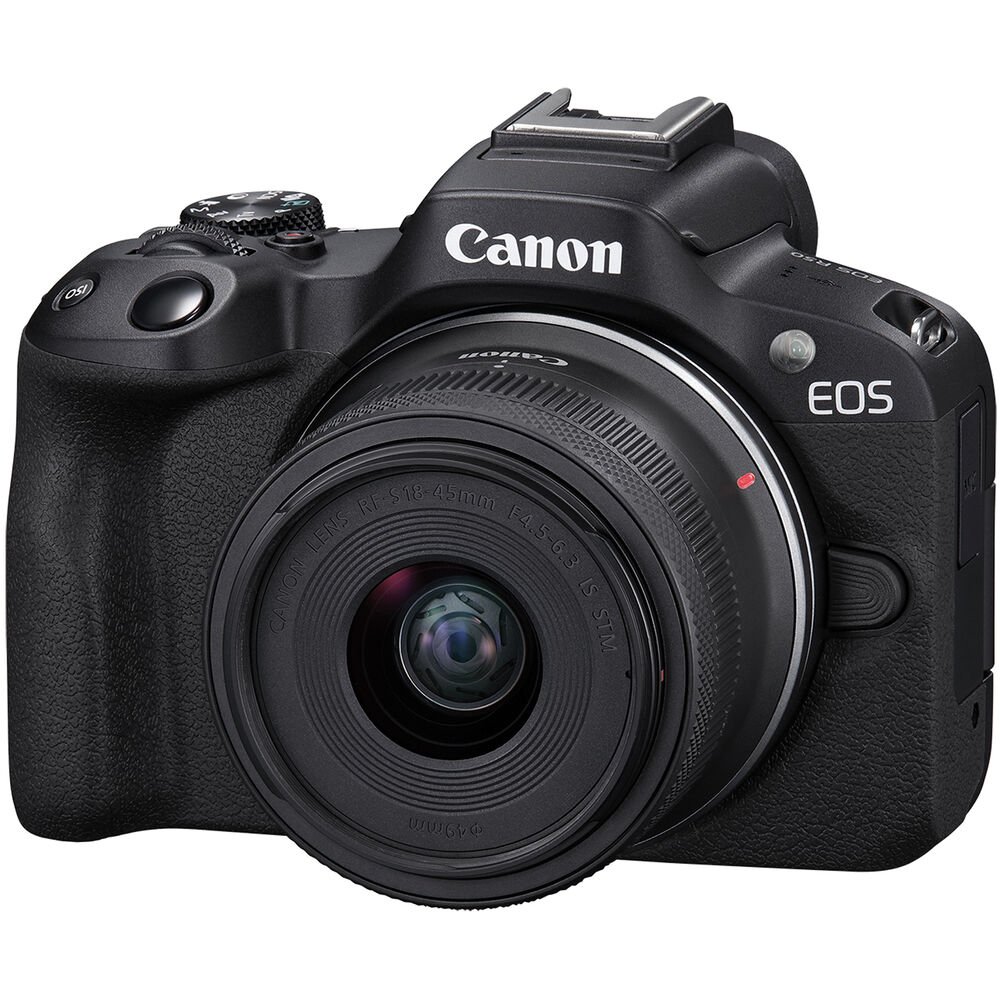
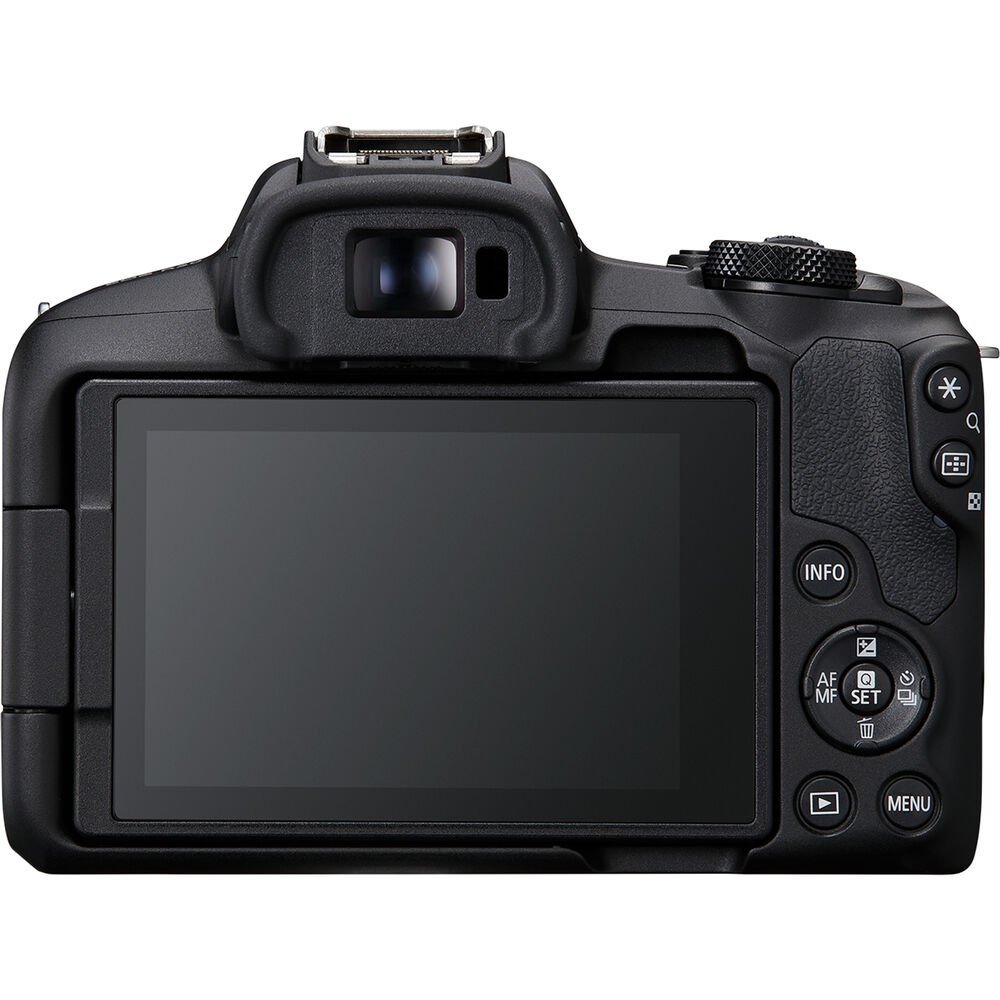
The recommendation we make with the fewest caveats. Canon took the Dual Pixel CMOS AF II system from its professional R-series bodies, deep-learning subject detection for people, animals and vehicles across 651 AF zones, and put it in a 375-gram body with a genuinely beginner-friendly guided interface that visually explains what changing aperture or shutter speed does to your photo, so the camera teaches while you shoot.
- 24.2MP APS-C sensor + DIGIC X; 4K30 oversampled from 6K with no additional crop
- Dual Pixel CMOS AF II with AI subject detection: pro-level autofocus for beginners
- Guided interface that teaches exposure as you shoot
- 3.0-inch vari-angle touchscreen + 2.36M-dot EVF; 12fps (15fps e-shutter) bursts
Important limitation: No in-body stabilisation: you're relying on lens IS or digital stabilisation (which crops). The grip is small; shooters with large hands should try it first.
- Sensor: 24.2MP APS-C CMOS
- Video: 4K30 oversampled, 1080p120
- AF: Dual Pixel CMOS AF II, 651 zones
- Weight: 375 g
Best for: the beginner who wants one camera that does everything well and teaches them as they go. Avoid if: you need IBIS for handheld video, or you shoot mostly video.
The R50 is the recommendation we make with the fewest caveats. Canon took the autofocus system from its professional R-series bodies, Dual Pixel CMOS AF II with deep-learning subject detection for people, animals and vehicles, across up to 651 AF zones, and put it in a 375-gram body with a genuinely beginner-friendly guided interface. That interface is the R50's quiet superpower: it visually explains what changing aperture or shutter speed does to your photo, so the camera teaches while you shoot (photographylife.com announcement coverage; TechSpot).
The sensor is a 24.2MP APS-C CMOS paired with a DIGIC X processor. Video is 4K30 oversampled from 6K with no additional crop, unusually good at this level, plus 1080p up to 120p for slow motion. The 3.0-inch vari-angle touchscreen flips fully forward for vlogging, and there's a 2.36M-dot EVF, which is not a given at this price. Burst shooting runs 12fps with the electronic first-curtain shutter and 15fps fully electronic.
Limitations, honestly: there's no in-body stabilisation: you're relying on lens IS or digital stabilisation, and the digital mode crops noticeably. The grip is small, so shooters with large hands should try it first. The native RF-S lens range is still slimmer than Sony's E-mount catalogue, though full-frame RF lenses mount fine. Battery life is modest (Canon rates around 370 shots via the LCD in smooth mode per photographylife's spec rundown), so budget for a spare.
Best for: the beginner who wants one camera that does everything well and teaches them as they go. Avoid if: you need IBIS for handheld video, or you shoot mostly video, see the Sony below.
2. Sony ZV-E10 II: Best for Video and Vlogging


Sony ZV-E10 II
The 'V' stands for vlogging, and Sony commits to it completely: no viewfinder at all. Instead, arguably the strongest video package under this price ceiling. A 26MP APS-C Exmor R sensor with the BIONZ XR processor, 4K60 oversampled from 5.6K, 10-bit 4:2:2 recording, 759 phase-detect AF points with AI subject detection, and the best built-in audio in this roundup (three-capsule directional mic).
- Strongest video package here: 4K60 (5.6K oversampled), 10-bit, S-Log
- 759-point hybrid AF with AI subject detection
- Best built-in audio in the roundup: directional 3-capsule mic
- E-mount: the largest native mirrorless lens catalogue for future growth
Important limitation: No EVF, so bright-daylight stills shooting is a squinting exercise, and no IBIS (digital stabilisation crops). It's a video camera that takes good photos, not the reverse. No built-in ND filter despite some roundups claiming one.
- Sensor: 26MP APS-C Exmor R
- Video: 4K60 oversampled, 10-bit
- AF: 759-point hybrid, AI
- Weight: 377 g
Best for: YouTube, TikTok, and content creators who shoot mostly video. Avoid if: you primarily shoot stills outdoors in bright light.
The "V" stands for vlogging, and Sony commits to it completely: there is no viewfinder at all. What you get instead is arguably the strongest video package under this price ceiling: a 26MP APS-C Exmor R sensor with the BIONZ XR processor from the FX30 and a6700, 4K60 oversampled from 5.6K, 10-bit 4:2:2 recording, S-Log-capable colour, and 759 phase-detect AF points with AI-trained subject detection (B&H spec data; slrlounge review). The three-capsule microphone with directional pickup is the best built-in audio in this roundup, and the fully articulating screen is made for talking to camera.
For stills it's capable: 11fps bursts, good Sony colour science, and access to the E-mount system, which is the largest native mirrorless lens catalogue a beginner can buy into. That's a genuine long-term advantage: whichever direction your photography goes, E-mount has an affordable lens for it.
Limitations, honestly: no EVF means bright-daylight stills shooting is a squinting exercise, and no IBIS means handheld video relies on digital stabilisation (with its crop). It's a video camera that takes good photos, not a photo camera that takes good video. Buy it for the right reason. One more thing: some roundups claim the ZV-E10 II has a built-in ND filter. It doesn't: B&H's spec sheet lists "Built-In ND Filter: No." Don't buy it expecting one.
Best for: YouTube, TikTok, and content creators who shoot mostly video. Avoid if: you primarily shoot stills outdoors in bright light.
3. Fujifilm X-M5: Best for Colour and Style


Fujifilm X-M5
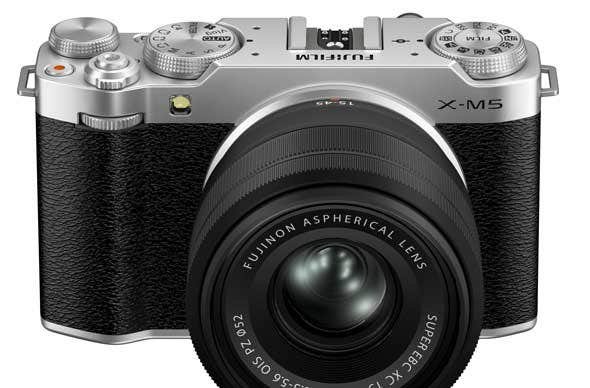
The only camera here with a real point of view: a dedicated Film Simulation dial on the top plate: 20 film-inspired colour profiles, eight on the dial plus three custom slots, so your JPEGs come out with a look that would take a Lightroom preset pack to fake. For a beginner who doesn't want to edit, that's transformative. Underneath it's serious: 26.1MP X-Trans CMOS 4, X-Processor 5, AI subject detection, 6.2K/30p open gate, and the smallest, lightest body here at 355g.
- Film Simulation dial: 20 film-inspired looks, no editing required
- 26.1MP X-Trans 4 + X-Processor 5; 6.2K/30p open gate, 4K60, 1080p240
- Smallest and lightest interchangeable-lens camera here (355g)
- Three built-in mics with selectable directionality; scene-recognising AUTO mode
Important limitation: No viewfinder and no IBIS (digital stabilisation only, in video). X-Trans RAW files need software that handles them well. The retro dial layout delights some beginners and confuses others; it's a personality fit.
- Sensor: 26.1MP APS-C X-Trans 4
- Video: 6.2K/30p open gate
- Colour: 20 film simulations on dial
- Weight: 355 g
Best for: style-conscious shooters who want great-looking photos and video with minimal editing. Avoid if: you need a viewfinder or shoot a lot of handheld video while walking.
The X-M5 is the only camera here with a real point of view. Fujifilm put a dedicated Film Simulation dial on the top plate: 20 film-inspired colour profiles, eight on the dial plus three custom slots, so your JPEGs come out with a look that would take a Lightroom preset pack to fake (PetaPixel; Fujifilm launch materials). For a beginner who doesn't want to edit, that's transformative: the camera makes the aesthetic decisions well.
Underneath, it's serious: a 26.1MP back-illuminated X-Trans CMOS 4 sensor with the X-Processor 5, AI subject detection (faces, animals, birds, vehicles, even drones), and video up to 6.2K/30p open gate, 4K60, and 1080p240 slow motion. It's also the smallest and lightest interchangeable-lens camera here at 355g, with three built-in microphones offering selectable directionality, a first for Fujifilm. The AUTO mode genuinely recognises scenes and sets itself, which first-timers will appreciate.
Limitations, honestly: no viewfinder and no IBIS (digital stabilisation only, in video). The X-Trans sensor's files need software that handles them well for RAW work, though if you're shooting film-sim JPEGs, you won't care. And the dial-driven, retro control layout delights some beginners and confuses others; it's a personality fit.
Best for: style-conscious shooters who want great-looking photos and video with minimal editing. Avoid if: you need a viewfinder or shoot a lot of handheld video while walking.
4. Canon EOS R100: Best Ultra-Budget Pick
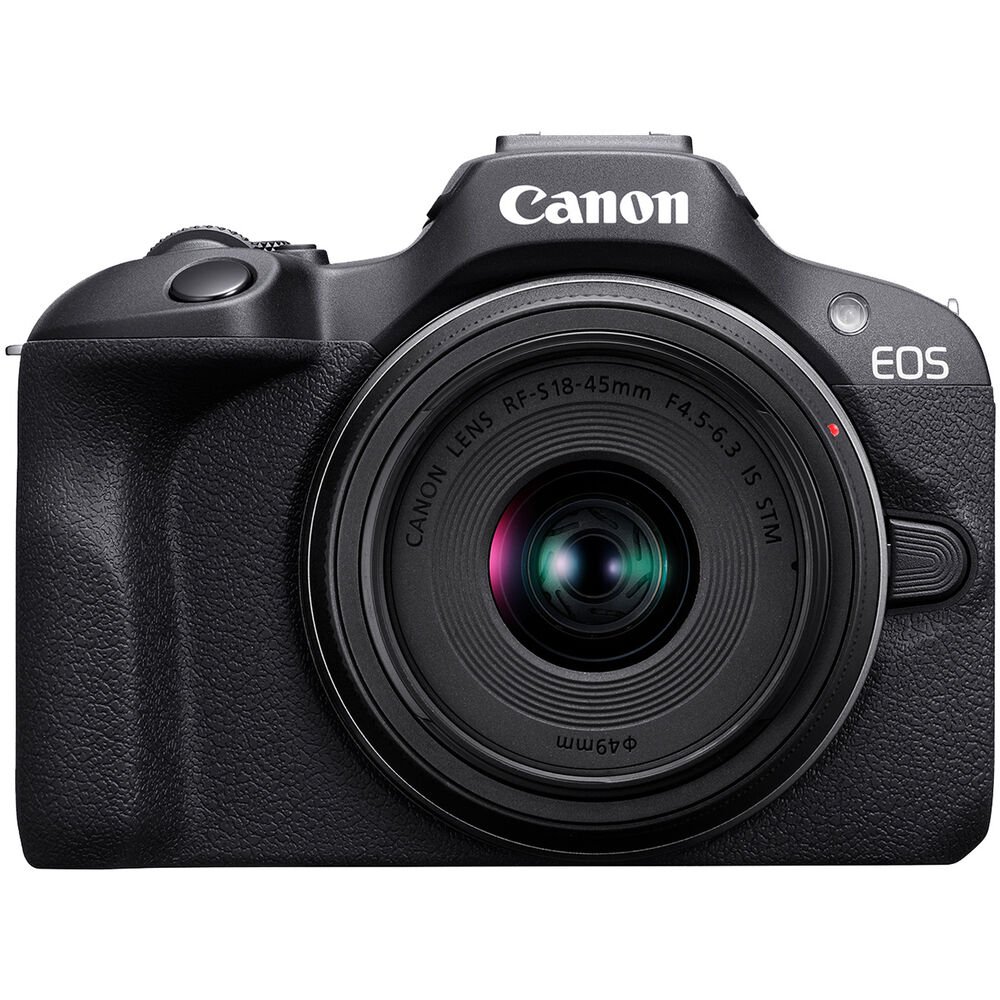


Canon EOS R100
The cheapest way into Canon's RF system, and it's an honest camera: a 24.1MP APS-C sensor with Dual Pixel CMOS AF, a DIGIC 8 processor, and the same 2.36M-dot EVF as its bigger sibling, in a 356g body. For stills (family photos, holidays, learning manual mode) it produces genuinely good images, and it takes the same RF and RF-S lenses as the R50, so your glass investment survives an upgrade.
- Cheapest entry into Canon's RF mirrorless system
- 24.1MP APS-C + Dual Pixel CMOS AF: genuinely good stills
- Same 2.36M-dot EVF as the R50; 356g featherweight
- Lens investment carries over to future RF/RF-S bodies
Important limitation: Fixed, non-touch rear screen. Video is 4K24 with a 1.55x crop and no Dual Pixel AF in 4K (contrast-detect only), making it a stills-first camera. DIGIC 8 means no AI subject detection; 6.5fps (3.5fps with AF). If video matters at all, stretch to the R50.
- Sensor: 24.1MP APS-C CMOS
- Video: 4K24 (1.55x crop)
- Screen: 3.0" fixed, non-touch
- Weight: 356 g
Best for: absolute beginners on the tightest budget who mainly shoot stills. Avoid if: video, vlogging, or a touchscreen matters to you.
The R100 is the cheapest way into Canon's RF system, and it's an honest camera: a 24.1MP APS-C sensor with Dual Pixel CMOS AF, a DIGIC 8 processor, and the same 2.36M-dot EVF as its bigger sibling, in a 356g body (Digital Camera World review; TechRadar). For stills (family photos, holidays, learning manual mode) it produces genuinely good images, and it takes the same RF and RF-S lenses as the R50, so your glass investment survives an upgrade.
The compromises are real and you should know them upfront. The rear screen is fixed and not touch-sensitive, jarring in the smartphone era, and TechRadar's review called it the camera's most head-scratching decision. Video is 4K but limited to 24p with a 1.55x crop and no Dual Pixel AF in 4K (contrast-detect only), so it's a stills-first camera. The DIGIC 8 processor is a generation behind, which means no advanced AI subject detection, and burst shooting tops out at 6.5fps (3.5fps with continuous AF).
Limitations, honestly: this is a camera to buy with eyes open. If video matters at all, stretch to the R50. If even the R100 strains the budget, a used DSLR or used R50 from a reputable dealer will beat it, as covered below.
Best for: absolute beginners on the tightest budget who mainly shoot stills. Avoid if: video, vlogging, or a touchscreen matters to you.
5. OM System OM-5: Best for Travel and Stabilisation

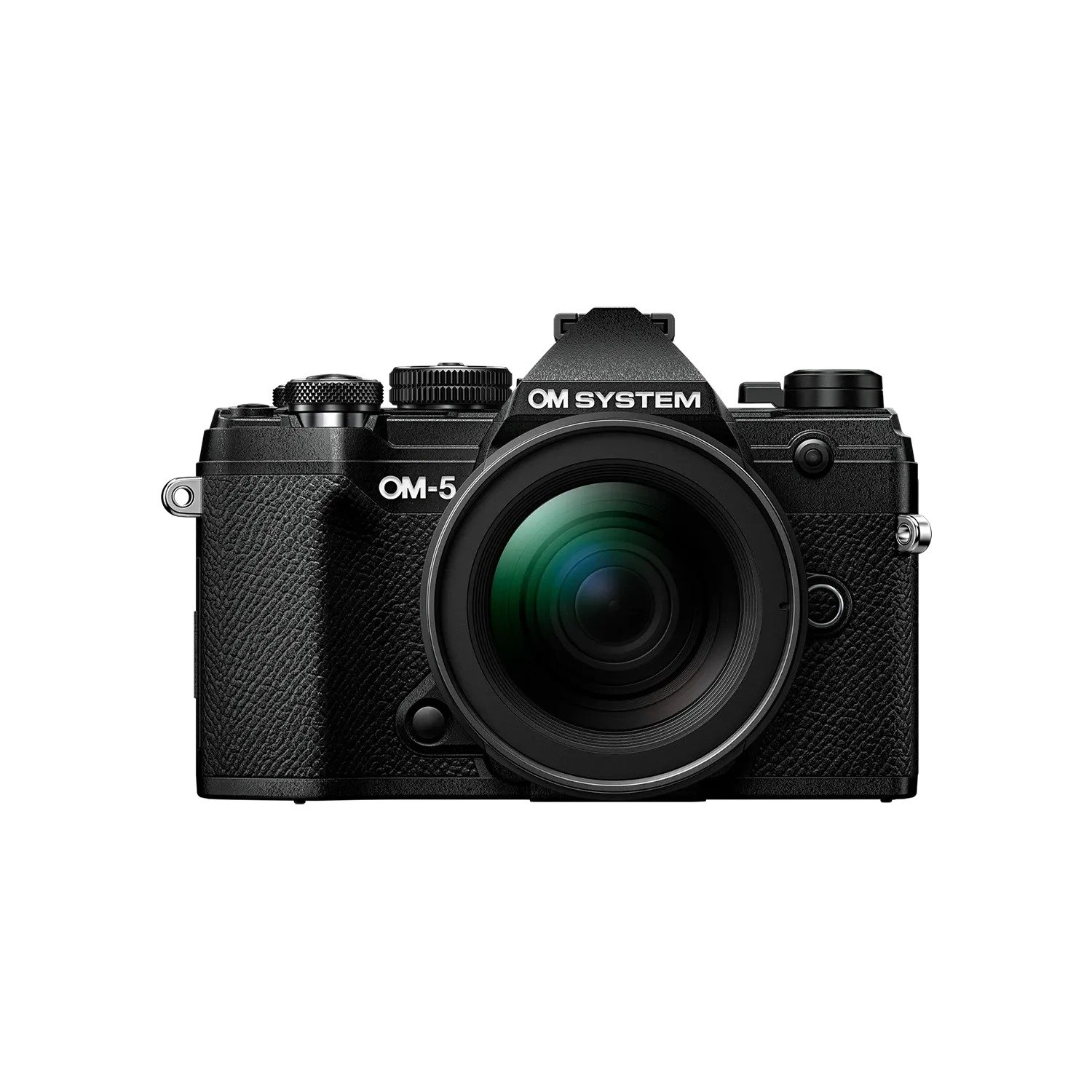

OM System OM-5
Plays a different game: instead of chasing the biggest sensor, it gives you the most camera per gram for travel. The 5-axis in-body stabilisation is rated up to 7.5 stops with Sync IS lenses, the best stabilisation in this roundup by a distance, and the body carries IP53 dust- and splash-proofing, so rain and dust don't end the shoot. The Micro Four Thirds lens ecosystem is mature, small, and affordable.
- 5-axis IBIS to 7.5 stops: best stabilisation here by a distance
- IP53 dust- and splash-proofing; freeze-proof to -10°C
- Computational modes: 50MP handheld high-res, Live ND, focus stacking, Starry Sky AF
- 4K30 + 1080p120 with no 30-minute recording cap; mature compact lens system
Important limitation: The 20.4MP Micro Four Thirds sensor trails the APS-C competition for low-light and dynamic range; TruePic IX lacks AI subject-detection smarts. Micro-USB port (not USB-C) dates it. Buy it for stabilisation, sealing and size, not spec-sheet wins.
- Sensor: 20.4MP Four Thirds Live MOS
- Stabilisation: 5-axis IBIS, 7.5 stops
- Sealing: IP53
- Weight: ~414 g w/ battery
Best for: travellers, hikers and anyone who shoots handheld in bad weather. Avoid if: low-light performance or cutting-edge autofocus is the priority.
The OM-5 plays a different game: instead of chasing the biggest sensor, it gives you the most camera per gram for travel. The 5-axis in-body stabilisation is rated up to 7.5 stops with Sync IS lenses, the best stabilisation in this roundup by a distance, and genuinely useful for handheld low-light shots and video. The body carries IP53 dust- and splash-proofing, so rain and dust don't end the shoot (Engadget announcement coverage; DPReview-cited specs).
The 20.4MP Micro Four Thirds sensor is the smallest here, but the system fights back with computational photography: a 50MP handheld high-res mode, Live ND (long exposures without filters), focus stacking, and Starry Sky AF. Video is 4K30 with OM-Log400 and 1080p120 slow motion, with no 30-minute recording cap. And the Micro Four Thirds lens ecosystem is mature, small, and affordable; the whole kit stays genuinely pocketable in a way APS-C systems don't.
Limitations, honestly: the sensor is a generation behind the APS-C competition for low-light and dynamic range, and the TruePic IX processor lacks the AI subject-detection smarts of newer rivals (no animal/bird tracking like the others). The micro-USB port (not USB-C) dates it. Buy it for stabilisation, sealing and size, not for spec-sheet wins.
Best for: travellers, hikers and anyone who shoots handheld in bad weather. Avoid if: low-light performance or cutting-edge autofocus is the priority.
Buying Guide: How to Choose Your First Camera
Start with what you'll shoot, not the spec sheet. Portraits and family? Any of these. Travel? The OM-5's sealing and stabilisation, or the X-M5's size. Video-first? The ZV-E10 II, no contest. Learning photography as a craft? The R50's guided interface will keep you shooting, and the camera you actually carry beats the one with better specs sitting at home.
Choose the system, not just the body. Lenses outlive bodies. Sony's E-mount has the deepest affordable catalogue; Canon's RF system is growing fast but RF-S options are still thinner; Fujifilm's X-mount is a joy but a smaller universe; Micro Four Thirds glass is tiny and cheap. When reviewers say "buy into a system," this is what they mean.
APS-C is the sweet spot; don't fear it, don't overspend past it. Multiple buying guides converge on this: APS-C delivers excellent image quality in smaller, cheaper bodies, and full-frame advantages (mostly low light) are ones beginners can't yet exploit (solidaitech.com buying guide). The OM-5's Micro Four Thirds sensor goes smaller still and trades some low-light ability for size and stabilisation, a legitimate trade, not a defect.
Buy the kit bundle. The included 18-45mm or 16-50mm kit zooms are capable and versatile enough for your first year. Buying body-only to save a little, then buying a lens separately, rarely makes financial sense for a beginner (solidaitech.com). The one exception: if you already know you want a fast prime, a ~50mm f/1.8 (roughly $150–250 depending on mount, per loiterpoint.com's July 2026 pricing note) transforms portraits more than any body upgrade, but only once you've learned what the kit lens can't do.
Budget for three accessories from day one: a spare battery (mirrorless batteries drain faster than DSLR ones, because the EVF and screen are always on), a 64GB+ SD card, and a UV or clear filter to protect the kit lens. Hold off on the tripod, flash and extra lenses until three to six months of shooting tells you what's actually missing (solidaitech.com).
Consider used, seriously. Camera shutters are typically rated for 100,000+ actuations, so a used body with 20,000 shots has most of its life left. A used R50 or Sony a6400 from a reputable dealer with a shutter-count report often beats a new R100 for similar money. Buy from dealers who grade condition and offer returns; ask for the shutter count (techtippr.com).
Beginner Camera Types Explained
Mirrorless (all five picks above). No mirror box: the sensor feeds the screen and electronic viewfinder directly, so you see your exposure before you press the shutter, genuinely helpful when learning. Lighter bodies, better video, and every manufacturer is developing here. This is the default right answer for a first camera in 2026.
DSLR (e.g. Canon Rebel T7 / 1500D, Nikon D3500). Optical viewfinder, longer battery life, and superb used value. But: no new DSLR bodies or lenses are being developed by the major brands, video and autofocus are a generation behind, and new prices have crept close to entry mirrorless. Verdict: buy new mirrorless; buy a DSLR only used, only cheap, and only if stills are all you want (findingtheuniverse.com DSLR-vs-mirrorless comparison).
Fixed-lens compacts. The premium ones (Fujifilm X100 series, Ricoh GR) are superb but cost more than most of this roundup and can't change lenses. The cheap ones (the sub-$150 "4K digital cameras" flooding marketplaces) pair tiny smartphone-era sensors with inflated megapixel claims. They are the single worst beginner purchase: your phone almost certainly takes better photos. (More on this in the rebuttal section.)
Your phone. Honest footnote: for casual snapshots, a recent flagship phone with computational photography is excellent. Buy a dedicated camera when you want optical zoom reach, low-light control, shallow depth of field on demand, or to learn photography as a skill, not for marginally better daylight snaps.
Head-to-Head: The Comparisons Beginners Actually Ask About
Canon EOS R50 vs EOS R100: is the step-up worth it? Yes, if video or ease of use matters at all. The R50 adds a touchscreen vari-angle display, uncropped 6K-oversampled 4K, AI subject detection, and faster bursts. The R100's only wins are price and slightly lighter weight. If the R100 is your ceiling, it's still a real camera, but check used R50 prices first.
Sony ZV-E10 II vs Fujifilm X-M5: the creator showdown. Both are compact, viewfinder-less, video-strong cameras aimed at creators. Sony wins on autofocus breadth, audio (3-capsule mic), and lens ecosystem; Fujifilm wins on colour science, the film-simulation dial, and 6.2K open gate. Vloggers who talk to camera: Sony. Shooters who want footage that looks finished without grading: Fujifilm.
Any of these vs a used DSLR. A used Canon 6D, Nikon D750 or even a Rebel T7i with a 50mm f/1.8 can be superb value for stills. You lose modern video, subject-tracking AF, and the exposure preview that makes learning faster, but you gain full-frame image quality (6D/D750) or rock-bottom cost. Only buy from reputable used dealers with shutter counts and return policies.
7 Mistakes First-Time Camera Buyers Make
- Buying more camera than their first 18 months needs. Spending well above $1,000 as a beginner typically buys professional features you won't touch for at least your first year and a half (solidaitech.com). Start in this roundup's range; upgrade when your photos tell you what's missing.
- Buying the cheap "4K" compact. Tiny sensor, inflated megapixels, terrible low light, and no lens system to grow into. Your phone beats it. This is the worst-value purchase in beginner photography.
- Ignoring the lens system. The body is temporary; the mount is the marriage. Check that the system has affordable lenses for what you might shoot in year two (portraits, wide-angle, telephoto) before committing.
- Skipping the spare battery and card. Mirrorless cameras eat batteries: 300–400 shots per charge is normal here versus 800+ on old DSLRs. Your first shoot dying at golden hour is a rite of passage you can simply buy your way out of.
- Buying body-only to "save money." The kit lens is fine for year one, and splitting body and lens purchases rarely saves a beginner anything (solidaitech.com).
- Choosing by megapixels alone. 20–24MP is plenty for prints and screens; sensor size, autofocus and lenses matter far more (comparos.in). A camera with stronger autofocus will out-shoot a higher-resolution camera with worse AF in real use.
- Never handling the camera first. Specs don't tell you the grip is too small or the menus drive you mad. If there's a camera store within reach, hold your shortlist before ordering, because ergonomics decides whether a camera gets carried or left at home.
Bad Advice That's Ranking for This Keyword, Rebutted
"This $90 4K digital camera is perfect for beginners." Seen across marketplace listings and thin affiliate roundups: no-name compacts advertised with "4K" and "48MP" that use tiny sensors and heavy software interpolation. A beginner buying one learns nothing about photography and gets worse results than their phone. Rebuttal stands on sensor physics, not snobbery: a 1/2.3"-type sensor cannot collect the light these claims imply.
"The Kodak PIXPRO FZ55 is Wirecutter's and Good Housekeeping's recommended pick." One ranking roundup (broadmag.com, captured in our SERP check) presents this budget compact as its top recommendation while asserting that "Good Housekeeping and Wirecutter consistently recommend compact cameras with these specifications", an endorsement claim we could not verify and that reads as fabricated authority. Treat any roundup that leans on unverifiable "X recommends" claims as a signal to leave.
"Just get a cheap DSLR: mirrorless is overkill for beginners." Still repeated in older buying guides (and comment sections). In 2026 it's bad advice for new buyers: Canon, Nikon and Sony have ended DSLR development, so a new DSLR locks you into a frozen system with worse video and older autofocus. The DSLR's remaining virtue is used value, full stop (findingtheuniverse.com).
"You need full-frame to take good photos." No beginner needs full-frame. APS-C sensors in this roundup produce professional-quality images; full-frame's advantages are real but narrow (low light, extreme shallow depth of field) and cost two to three times as much once lenses are counted. Learn on APS-C; go full-frame when a client or a specific need demands it.
"Buy the most megapixels you can afford." Megapixels are the easiest number to market and among the least important for beginners. Autofocus accuracy, lens quality, stabilisation and, above all, actually carrying the camera decide your results. Every camera here has enough resolution; none is "held back" by it.
Frequently Asked Questions
Buy mirrorless. Mirrorless cameras are lighter, show you a live exposure preview (which teaches faster), have more advanced autofocus, and represent where all manufacturers are investing. No major brand is developing new DSLR bodies or lenses anymore. A DSLR only makes sense bought used and cheap, for stills-focused shooting.
APS-C. It delivers excellent image quality with affordable lenses in compact bodies, and it's what four of the five cameras here use. Full-frame costs far more for advantages beginners typically can't exploit yet. Micro Four Thirds (the OM-5) trades a little low-light ability for smaller lenses and class-leading stabilisation, a fair trade for travel.
Buy the kit bundle almost every time. The included zoom covers your first year of shooting, and splitting the purchases rarely saves money. The one exception is adding a fast prime (like a 50mm f/1.8) later, once you know what the kit lens can't do for you.
Three: a spare battery, a 64GB or larger SD card (UHS-I or better), and a UV/clear filter to protect the kit lens. Skip the tripod, flash and extra lenses until a few months of real shooting tells you what's missing.
The Sony ZV-E10 II: 4K60 oversampled from 5.6K, 10-bit colour, AI subject tracking and the best built-in microphone here. The Fujifilm X-M5 (6.2K open gate) is a strong alternative; the Canon R50 covers casual video well. Avoid the R100 if video matters: its 4K is cropped to 24p without Dual Pixel AF.
Not quite, and we publish both guides. This guide optimises for learning curve, guidance features and value: cameras that teach you. Our best cameras for photography guide optimises for image-making capability regardless of experience, which leads to different picks and a higher budget ceiling. If you're past the beginner stage, read that one next.
Often yes. Shutters are typically rated for 100,000+ actuations, so a used body with 20,000 shots has most of its life remaining. A used R50 or Sony a6400 from a reputable dealer frequently beats a new ultra-budget body for similar money. Always buy graded stock with a stated shutter count and a return policy.
Final Recommendations
Best Overall Beginner Camera: Canon EOS R50: the all-round first camera that teaches while you shoot
Best for Video and Vlogging: Sony ZV-E10 II: the strongest video package for creators
Best for Colour and Style: Fujifilm X-M5: colour and style with zero editing
Best Ultra-Budget Pick: Canon EOS R100: the cheapest honest way into Canon RF
Best for Travel and Stabilisation: OM System OM-5: the travel camera that laughs at bad weather
Final Verdict
The best camera for beginners in 2026 is the Canon EOS R50, not because it wins every spec, but because it removes the most reasons to stop shooting. The guided interface teaches, the autofocus forgives, the 4K is genuinely good, and at 375g it goes everywhere with you. It's the camera we'd hand to a friend starting today.
But the right answer is personal. Video-first creators should take the Sony ZV-E10 II and never look back. If you want your photos to look like film without touching an editor, the Fujifilm X-M5 is the most fun here. Tightest budget, stills only: the Canon EOS R100 is honest value, so check used prices first. And travellers who shoot in real weather should look hard at the OM System OM-5, the only camera here that shrugs at rain and handheld darkness.
Whichever you choose, remember the part no spec sheet covers: the best camera for a beginner is the one you'll actually carry and shoot with every week. Buy it, learn the exposure triangle, and go make bad photos on purpose until they're good.
Related Guides
- Mirrorless Camera for Beginners: the beginner's companion guide to going mirrorless (planned)
- Camera for Beginners: buying advice: what to know before your first camera (planned)
- Best Camera for Photography: when you're ready to move past beginner picks (planned)
- Mirrorless Cameras: the full mirrorless landscape, all levels (planned)
- Budget Friendly Mirrorless Camera: stretching every dollar (planned)
- Best Drones for Beginners 2025: if your "camera" needs wings (planned)