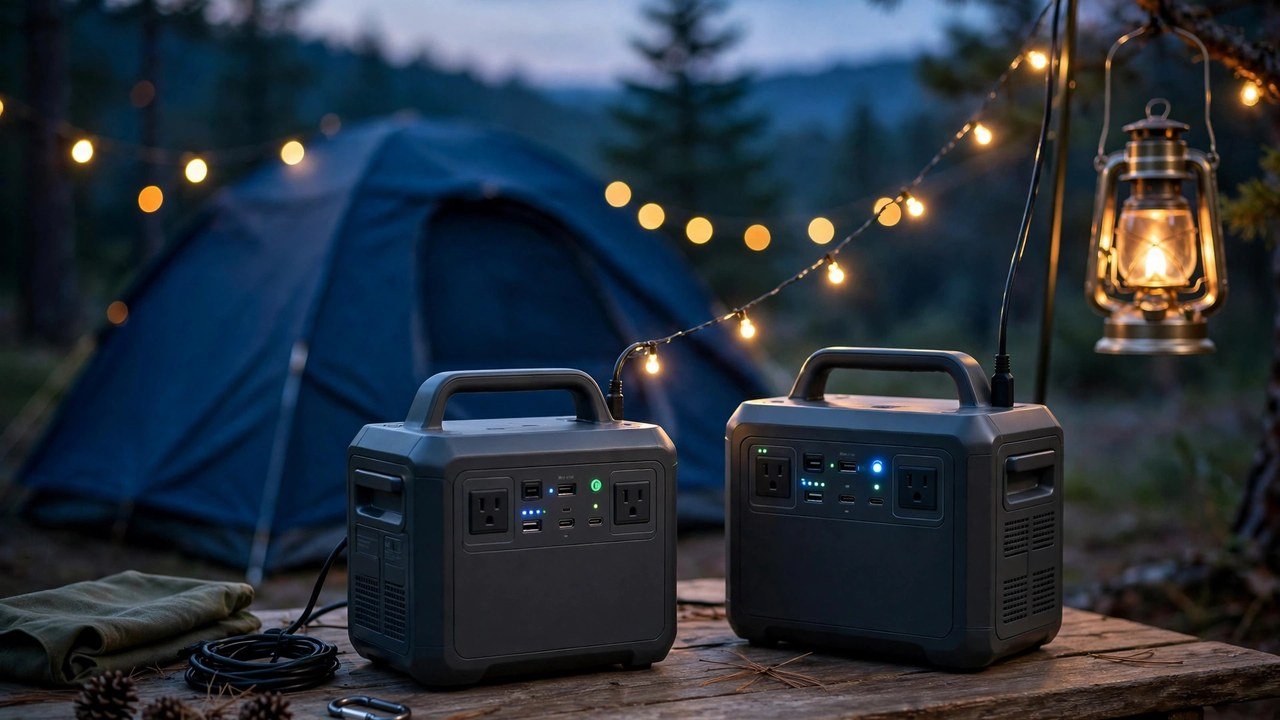
The short version: the EcoFlow Wave 3 is the rare portable air conditioner that also works as a heater, a 6,100 BTU cooler and 6,800 BTU heat pump in a 34-pound box you can run off a wall outlet, a car, solar panels, or an optional 1,024Wh LFP battery for up to 8 hours without a cord in sight. It is also one of the most misunderstood products in its category, because half the internet still quotes the older Wave 2's specs under the Wave 3's name.
This review fixes that. Every specification below was read from EcoFlow's own published spec sheet, every performance claim is attributed to a reviewer who actually used the unit, and every limitation is stated plainly, because a premium-priced climate gadget that cannot cool a living room deserves honest framing, not hype. MoleMarket has not personally tested the Wave 3, and we will not pretend otherwise: this is a research-based review, cross-checked against EcoFlow's documentation and independent hands-on reviews published through October 2026.
The Direct Answer
The EcoFlow Wave 3 is the best portable battery-powered air conditioner you can buy for tents, camper vans, and RVs, and a mediocre one for cooling a house. Its 6,100 BTU of cooling and 6,800 BTU of heating are genuine upgrades over the Wave 2, the switch to a 1,024Wh LiFePO4 battery is a real durability win (4,000 cycles to 80% capacity), and reviewers who lived with it confirm it can drop a small space's temperature 15°F in about 15 minutes.
But the honest caveats matter more than the highlights:
- It is not a room air conditioner replacement. EcoFlow's own rating covers spaces of roughly 118 to 183 sq ft (about 11 to 17 m²). Notebookcheck's hands-on testers concluded it is "only an efficient solution for smaller rooms" and merely "passable" for home use.
- The battery is sold separately. The unit runs plugged in without it; cordless operation requires the Wave 3 add-on battery, which costs nearly as much as the unit itself.
- It is relatively noisy while charging, per hands-on testing, and at full blast you are looking at roughly 2 hours of battery life. The "up to 8 hours" figure is Eco mode, not max cooling.
Buy it if: you camp, vanlife, or RV in hot weather and need genuine air conditioning off-grid; you want heating too (shoulder-season camping changes completely with a heat pump); you already own EcoFlow power stations or solar gear.
Skip it if: you want to cool a bedroom or living room at home (a window unit costs a fraction and cools far better); you need silent operation; your budget cannot stretch to the battery that makes it truly portable.
Quick Picks
Short on time? This is our top recommendation: the button takes you to the exact product on Amazon.
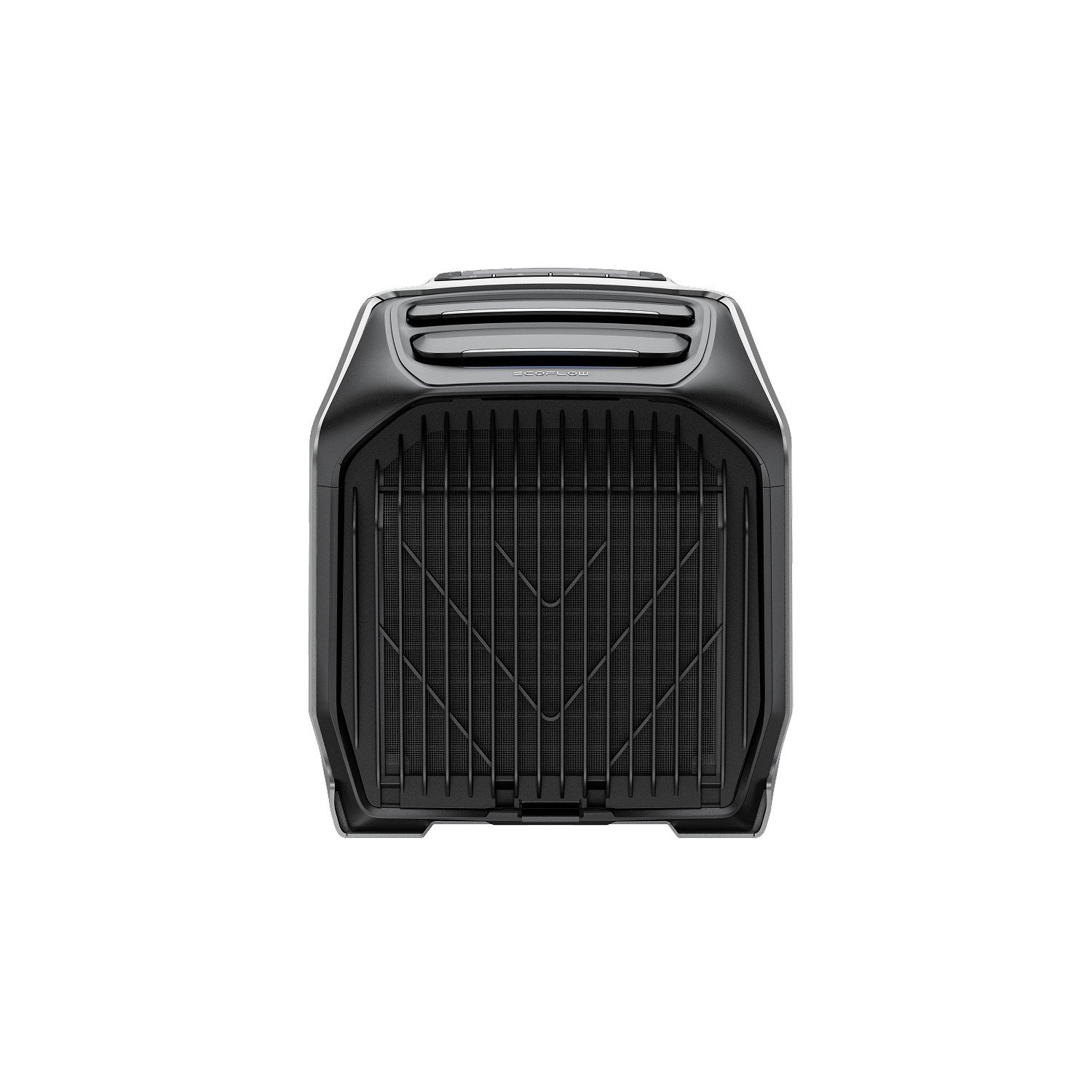
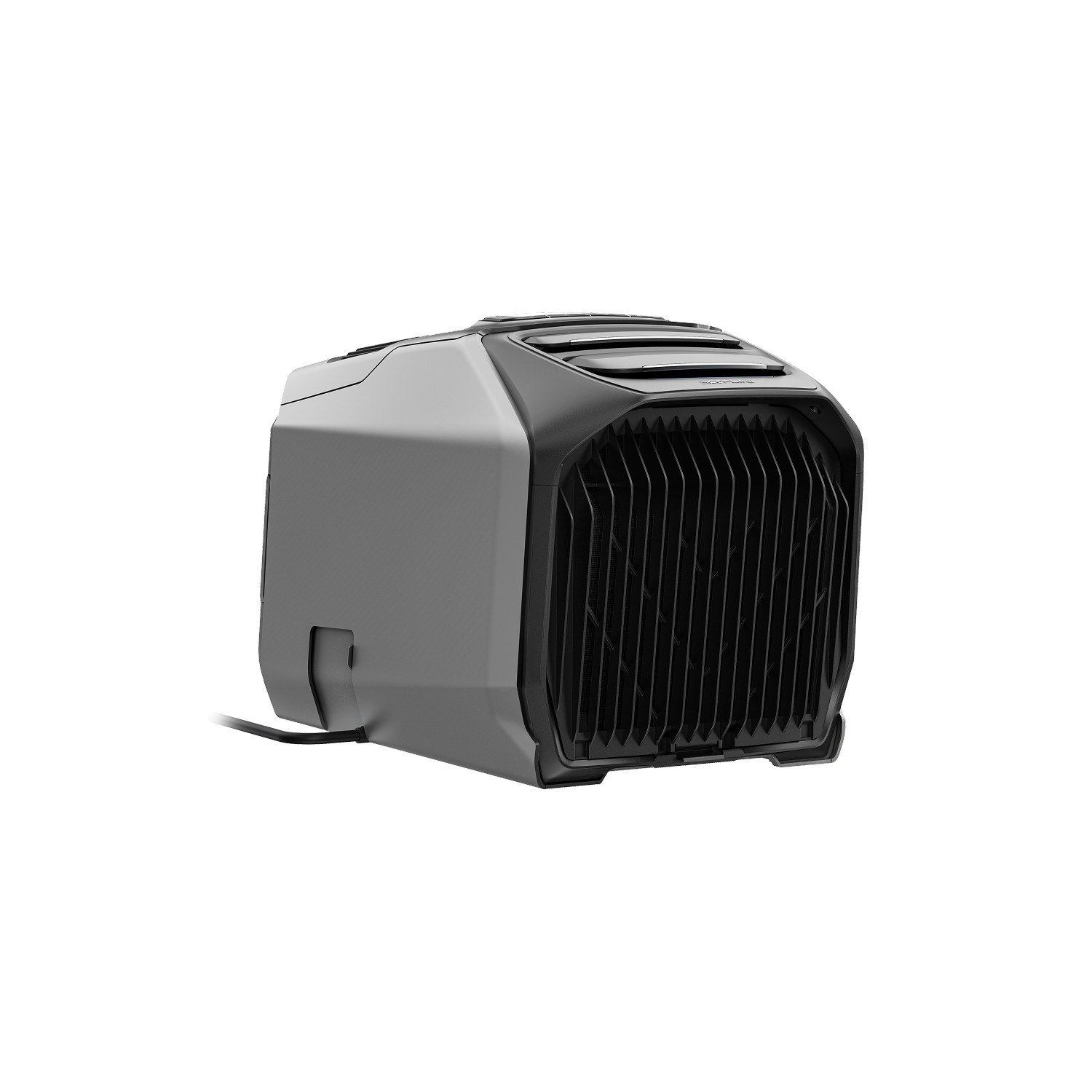

EcoFlow Wave 3 Portable Air Conditioner
The best portable battery-powered air conditioner for tents, camper vans, and RVs: genuine 6,100 BTU cooling plus a 6,800 BTU heat pump in one box, with an optional 1,024Wh LiFePO4 battery for up to 8 hours of cordless runtime in Eco mode.
- Cools and heats: 6,100 BTU cooling and 6,800 BTU heat pump output, up from the Wave 2 on both counts
- Optional 1,024Wh LiFePO4 add-on battery rated for 4,000 cycles to 80% capacity, with 400 W solar input
- Fast pull-down in small spaces: reviewers measured a 10 to 15°F drop in 10 to 15 minutes in a camper van
- Auto, eco, sleep, fan and dehumidify modes, plus app control over Wi-Fi and Bluetooth
- Sleep mode runs at the 44 dB floor, quiet enough for most people to sleep beside
- The add-on battery is sold separately, and cordless operation is impossible without it
- Full-power cooling drains the battery in roughly 2 hours; the 8-hour figure is Eco mode
- Relatively noisy while charging, per hands-on testing
- Unit plus battery weigh roughly 56 lb together, and the dual exhaust hoses are fiddly to store and route
Important limitation: EcoFlow rates the Wave 3 for spaces of roughly 118 to 183 sq ft only. It is a mobility product for tents, vans and RVs, not a room air conditioner replacement, and independent testers call it merely "passable" for home use.
- Cooling / heating: 6,100 BTU (1,800 W) / 6,800 BTU (2,000 W)
- Battery: Optional 1,024Wh LiFePO4 add-on, 2 to 8 hr runtime, about 75 min wall recharge
- Noise: 44 to 58 dB (44 dB sleep mode)
- Weight / size: 34.4 lb (15.6 kg); 519 × 297 × 336 mm
- Refrigerant / airflow: R290 (112 g); 330 m³/h
Best for: Campers, vanlifers and RVers who want real refrigeration off-grid, plus shoulder-season heating from the same box
EcoFlow Wave 3: Comparison Table
| Product | Key Specs | Best Use Case | Standout Feature | Amazon Link |
|---|---|---|---|---|
| EcoFlow Wave 3 Portable Air Conditioner Best Portable Battery-Powered AC |
6,100 BTU cooling · 6,800 BTU heating · optional 1,024Wh LFP battery · 44 to 58 dB | Off-grid air conditioning and heating for tents, camper vans and RVs | Cooling and a heat pump in one battery-capable box, with a 4,000-cycle LFP battery option | Check Price |
EcoFlow Wave 3 at a Glance
| What it is | Portable battery-capable air conditioner + heat pump + dehumidifier |
| Cooling / heating | 6,100 BTU (1,800 W) / 6,800 BTU (2,000 W), EcoFlow's figures |
| Battery | Optional 1,024Wh LiFePO4 add-on; 2 to 8 hr runtime; charges in about 75 min from wall |
| Noise | 44 to 58 dB (44 dB sleep mode) |
| Weight | 34.4 lb (15.6 kg) unit; 21.4 lb (9.7 kg) battery |
| Control | EcoFlow app (Wi-Fi + Bluetooth); auto / eco / sleep / fan / dehumidify modes |
| Refrigerant | R290 (112 g) |
| Best for | Tents, vans, RVs, truck cabs, small off-grid cabins |
| Not for | Whole rooms, apartments, anyone who needs whisper-quiet |
One more thing worth saying up front: if you see a "Wave 3 review" quoting 5,100 BTU of cooling or a 1,159Wh battery, you are reading Wave 2 specs with a Wave 3 headline. We found two ranking pages doing exactly that; see the correction section below.
Full Specifications (From EcoFlow's Own Spec Sheet)
Every number in this table comes from EcoFlow's published Wave 3 specifications page (checked October 2026). Where EcoFlow expresses a figure as a range or a maximum, it is shown as a range or maximum here, not rounded into a false promise.
| Specification | EcoFlow Wave 3 |
|---|---|
| Cooling capacity | 1,800 W (6,100 BTU) |
| Heating capacity | 2,000 W (6,800 BTU) |
| Temperature setting range | 16 to 30 °C (60.8 to 86 °F) |
| Refrigerant | R290, 112 g |
| Air volume | 330 m³/h |
| Rated cooling power, AC / DC | 690 W / 640 W |
| Rated heating input power, AC / DC | 645 W / 606 W |
| Cooling efficiency (EER-ish), AC / DC | 2.6 / 2.8 |
| Heating efficiency (COP-ish), AC / DC | 3.1 / 3.3 |
| AC input | 100 to 240 V ~ 50/60 Hz, 820 W max |
| Add-on battery input | 700 W max |
| Operating temperature | 5 to 50 °C (41 to 122 °F) |
| Unit water resistance | IPX4 |
| Noise level | 44 to 58 dB |
| Control | EcoFlow app, Wi-Fi (2.4G/5G) + Bluetooth |
| Runtime with add-on battery | 2 to 8 hours (mode-dependent) |
| Unit weight | About 15.6 kg (34.4 lb) |
| Unit dimensions | 519 × 297 × 336 mm (20.4 × 11.7 × 13.2 in) |
| Add-on battery: capacity / chemistry | 1,024 Wh (51.2 V, 20 Ah), LiFePO4 (LFP) |
| Cycle life | 80%+ capacity after 4,000 cycles |
| Max input power | 1,000 W |
| Solar input | 11 to 60 V, 13 A max, 400 W max |
| Car charging input | 12 V/24 V, 8 A max, 200 W max |
| USB-C output | Up to 140 W max |
| USB-A output | 18 W max |
| Max output power | 858 W max |
| Battery water resistance | IP65 |
| Battery weight / dimensions | About 9.7 kg (21.4 lb) / 516 × 281 × 111 mm |
EcoFlow's headline marketing claims for the unit (a 15°F (8°C) temperature drop in 15 minutes of cooling, a 17°F (9°C) rise in 15 minutes of heating, up to 8 hours of cordless use, and a roughly 75-minute full charge from a wall outlet) are EcoFlow's claims, stated here as EcoFlow's claims. Independent testers corroborate the fast temperature swing and the Eco-mode runtime (one reviewer measured roughly 7 hours in Eco mode), while measuring only about 2 hours at full power. That gap between Eco mode and full power is the single most important number to internalize before buying.
EcoFlow Wave 3 vs Wave 2: What Changed
The secondary question behind most "Wave 3 review" searches is really "should I upgrade from the Wave 2, or buy the older one cheaper?" Here is the verified comparison (figures from Notebookcheck's side-by-side table, cross-checked against EcoFlow's spec sheets). The Wave 2 is shown for comparison only; it is not a recommended pick in this review.
| Wave 3 | Wave 2 | |
|---|---|---|
| Cooling capacity | 6,100 BTU (1,800 W) | 5,100 BTU (1,500 W) |
| Heating capacity | 6,800 BTU (2,000 W) | 6,100 BTU (1,800 W) |
| Effective cooling area | Up to about 17 m² (about 183 sq ft) | Max about 10 m² (about 108 sq ft) |
| Air volume | 330 m³/h | 290 m³/h |
| Modes | Cool, heat, auto, fan, dehumidify | Cool, heat, fan |
| Add-on battery | 1,024Wh LiFePO4 | NCM (older chemistry) |
| Battery cycle life | 4,000 cycles to 80% | Not published at this level |
| Charging inputs | XT150 + XT60 | XT150 only |
| Weight (unit) | 15.6 kg | 14.5 kg |
| Sleep mode noise | 44 dB | Louder (no published sleep figure) |
Three upgrades genuinely matter. First, cooling power is up about 20%, and the effective area grows from a closet-sized 10 m² to a small-bedroom-sized 17 m². Second, the battery chemistry switch from NCM to LiFePO4 is the kind of boring, important change that decides whether the product is still useful in year five: LFP's 4,000-cycle rating is roughly an order of magnitude better than typical NCM longevity. Third, auto mode and a dedicated dehumidify mode make the unit meaningfully smarter; auto mode switches between heating and cooling to hold your set temperature without babysitting.
The honest counterpoint: the Wave 3 is heavier, the price did not drop at launch, and if you only ever run it plugged into shore power at a campsite, the Wave 2's extra roughly 1,000 BTU matters less than the discount you might find on the older model. But EcoFlow has moved on: the Wave 3 is the current product, it is the one in stock, and it is the one receiving app and firmware attention.
Detailed Review: Design and Build
The Wave 3 looks like what it is: a ruggedized appliance, not a lifestyle object. At 519 × 297 × 336 mm and 34.4 lb before the battery, it is luggable rather than portable in the carry-on sense. EcoFlow includes a handle, and reviewers describe moving it as a deliberate two-hand job once the 21.4 lb battery is clipped underneath. The unit plus battery together weigh roughly 56 lb, which matters if your plan involves carrying it from the car to a tent site.
Build quality is consistently praised in hands-on reviews: dense plastics, a reassuring heft, IPX4 water resistance on the unit itself (splash-proof from any direction, fine for a damp campsite, not for rain exposure), and IP65 on the battery (dust-tight and jet-resistant). The exhaust ducting is the fiddly part of ownership: more than one reviewer flags hose storage and routing as the Wave 3's most annoying physical trait. This is a dual-hose design (intake and exhaust), which is thermodynamically the right choice, since single-hose portables create negative pressure that pulls warm air back in. But it means two hoses to route out of a tent flap, van window, or RV vent every time you set up.
The front panel carries an LCD display and physical buttons; everything else lives in the EcoFlow app. A light strip under the vents indicates the current mode at a glance.
Cooling Performance: Fast, but Bounded
In cooling, the Wave 3 moves 330 m³/h of air through a 1,800 W (6,100 BTU) refrigeration circuit running on R290 refrigerant, a natural, low-global-warming-potential refrigerant that is also more efficient than the R32 used in many budget portables. EcoFlow claims a 15°F (8°C) drop within 15 minutes; hands-on reviewers confirm the fast initial pull-down in small spaces. One reviewer testing in a camper van measured a 10 to 15°F drop in 10 to 15 minutes; another reported holding temperature steadily without the compressor surging.
The boundary conditions matter more than the headline:
- Space size is the whole game. EcoFlow rates the unit for 118 to 183 sq ft. Notebookcheck's testers are blunt: beyond a small room, "it simply lacks the power." In a sun-baked vehicle during the day, they found it could not produce noticeable cooling; in the evening, in a motorhome, caravan, or tent, it brought temperatures down to pleasant levels. Plan your expectations around nighttime and evening use, not midday heat-soak.
- Ducting discipline decides everything. The exhaust hose must vent hot air fully outside, with the run as short and straight as possible and the opening sealed. Reviewers warn that sloppy hose routing, with warm air leaking back in around the flap, can trigger overheating errors or simply waste the cooling you are paying for in battery. This is the number-one setup mistake (see "Mistakes to avoid").
- Humidity is the silent second job. The dedicated dehumidify mode is new to the Wave 3 and genuinely useful in damp climates and tents, where condensation is as miserable as heat. Ubuy's aggregated customer feedback specifically praised the dehumidifying effect on indoor climate.
Rated cooling draw is 690 W on AC (640 W on DC), meaning a mid-size portable power station can run it for a few hours, and the math is honest: 690 W × 3 hours is about 2 kWh, so size your power station accordingly. Our portable power station buyer's guide covers the sizing math in full, and our EcoFlow Delta 2 breakdown covers one of the most popular pairings; both are listed under Related Guides below.
Heating: The Feature That Changes the Calendar
The Wave 3's heat pump delivers 2,000 W (6,800 BTU) of heating, up from the Wave 2's 1,800 W, with a claimed 17°F (9°C) rise in 15 minutes. In practice, a reviewer testing on a sub-50°F spring morning warmed a garage to a cozy 67°F in under 15 minutes. For shoulder-season camping, this is transformative: the same box that cools your van in August heats it in October, at roughly 3× the efficiency of a resistive electric heater (EcoFlow's stated heating efficiency is 3.1 to 3.3, a coefficient of performance around 3).
Two honest limits. First, heat pumps lose effectiveness as ambient temperatures plunge. EcoFlow rates operation down to 41°F (5°C) ambient, and below that you should expect diminished output, not the headline figures. This is physics, not a defect, and it applies to every heat pump on the market. Second, heating draws 645 W (AC), similar to cooling, so the same battery-runtime math applies.
The auto mode deserves a special mention: it watches ambient temperature and switches between heating and cooling to hold your target, hands-free. For vanlifers dealing with 40-degree desert nights that become 85-degree afternoons, this is the closest thing to a real thermostat the category offers.
The Add-on Battery: The Real Product Decision
Here is the purchase math nobody should skip: the Wave 3 without the battery is a good portable AC that needs a cord. The Wave 3 with the battery is a genuinely off-grid appliance. The battery is a separate purchase, and it costs nearly as much as the unit.
What the 1,024Wh LiFePO4 pack buys you, per EcoFlow's spec sheet:
- 2 to 8 hours of runtime, depending on mode. Eco mode stretches toward 8 hours (a reviewer measured about 7 hours); full-power cooling drains it in about 2 hours (Notebookcheck's measured figure). Budget for the middle, not the headline.
- A roughly 75-minute recharge from a wall outlet (EcoFlow's figure; Notebookcheck corroborates "around 75 minutes"), up to 1,000 W input.
- 400 W of solar input (11 to 60 V), so a single 400 W panel can meaningfully extend runtime in daylight.
- 200 W car charging (12/24 V) and compatibility with EcoFlow's Alternator Charger for faster vehicle charging.
- 4,000 cycles to 80% capacity, the LFP chemistry's killer feature. Even at a cycle per week of camping season, that is decades of usable life.
- Bonus power station functionality: 140 W USB-C and 18 W USB-A outputs plus 858 W max output turn the battery into a small power bank for laptops and phones when the AC is not running. It is IP65 rated, so it survives the campsite.
One reviewer-noted annoyance: the unit is relatively noisy while charging, so do not plan on sleeping next to it during a fast top-up. And remember the weight: unit plus battery is about 56 lb. "Portable" means vehicle-portable, not backpack-portable.
Noise, App, and Smart Features
EcoFlow rates the Wave 3 at 44 to 58 dB, with sleep mode at the 44 dB floor. For context, 44 dB is roughly a quiet library, genuinely sleepable for most people, and reviewers confirm the sleep mode is quiet enough to sleep beside. At full cooling tilt it is audibly a small appliance working hard; set expectations accordingly, and do not buy this for a recording studio.
The EcoFlow app (Wi-Fi + Bluetooth) controls modes, temperature, timers, and firmware, and lets you pre-cool the van from the trailhead before you walk back to camp. New software-side features for this generation:
- Auto mode: hands-free switching between heating and cooling around your setpoint.
- Pet Care mode: automatically cools if interior temperature rises above 77°F and sends you a notification. For anyone traveling with dogs, this is a legitimate safety feature, not a gimmick, though it is not a substitute for supervision, and it depends on the app connection working.
- Dehumidify mode: new to the Wave 3, useful in damp tents and humid climates.
- Sleep mode: drops output and noise to the 44 dB floor for overnight use.
Buying Guide: Who Should Buy the Wave 3 (and Who Shouldn't)
Buy it if you:
- Camp, overland, vanlife, or RV in hot weather and want real air conditioning off-grid: not a fan, not a mister, actual refrigeration.
- Camp in shoulder seasons: the heat pump earns its keep from spring through fall, not just summer.
- Already own EcoFlow power stations, solar panels, or the Alternator Charger: the ecosystem integration (shared charging, app) is genuinely convenient.
- Need spot cooling for a truck cab, small workshop, boat cabin, or yurt: any small, defined space near power.
Think twice if you:
- Want to cool a bedroom, living room, or apartment: a window unit will outperform it at a fraction of the total cost. The Wave 3 is a mobility product; buying it for a fixed room is paying a portability premium you will not use.
- Need silence: 44 dB sleep mode is fine, but full-power cooling is not subtle, and charging is noisier still.
- Cannot stretch to the battery: without it, you have bought an expensive portable AC tethered to an outlet, and the value proposition collapses.
- Camp only in mild weather: a good fan and ventilation cost a small fraction of this.
What to check before you buy: confirm the exact bundle you are ordering (unit-only vs. unit + battery are separate SKUs), check the current price on the listing (EcoFlow runs frequent sales), and verify the Amazon listing is the exact Wave 3 variant. EcoFlow sells the Wave 2 and refurbished units alongside it, and the link in this review is for the Wave 3 unit only.
Portable ACs vs the Alternatives: The Product Landscape
The Wave 3 sits in a small, specific category, battery-capable portable air conditioners, surrounded by cheaper, more powerful alternatives that are not portable at all. Understanding the trade is the whole buying decision:
- Window air conditioners: far more BTU per dollar, far more efficient, quieter indoors with the compressor outside. But they need a window, a fixed install, and grid power. Not portable in any meaningful sense.
- Standard portable ACs (usually single-hose): cheaper than the Wave 3 and often higher BTU, but single-hose designs fight themselves (negative pressure pulls warm air back in), they are loud, and they need a wall outlet. Fine for a rented room; useless off-grid.
- 12V truck / RV rooftop air conditioners: permanently installed, powerful, and expensive once installation is counted. Better for full-time vanlifers who never want to set up ducting again; worse for everyone who wants the AC in a tent this weekend and a cabin next month.
- Evaporative ("swamp") coolers and fans: cheap, quiet, and low-power, but they do not dehumidify (in humid climates they make things worse) and they cannot touch real heat.
- Other battery portable ACs (for example the Zero Breeze Mark 3, the Wave 3's most direct rival): the category is tiny, and EcoFlow's advantages are heating (most rivals are cooling-only), the LFP battery's cycle life, and the app ecosystem. Compare on BTU, battery chemistry, and whether heating matters to you, not on marketing.
The Wave 3's honest position: it is the most capable mobile climate-control box you can buy, and you pay roughly double what a fixed unit costs for that mobility. If you need mobility, the premium is justified. If you do not, it is not.
7 Mistakes to Avoid With the Wave 3
- Buying it to cool a real room. The 183 sq ft ceiling is a hard limit, not a suggestion. Measure your space; if it is bigger, buy a window unit.
- Skipping the battery, then resenting the cord. The unit-only SKU is a fine product, but the cordless freedom is the entire point. Price the bundle before you decide.
- Sloppy exhaust routing. Warm air leaking back in around the hose flap is the top cause of "it doesn't work" complaints. Short, straight hose runs, sealed openings, hoses routed fully outside.
- Expecting 8 hours at full blast. The 8-hour figure is Eco mode. At max cooling, reviewers measured about 2 hours. Size your expectations, and your power station, around your actual mode.
- Running it in a sealed tent with no intake air. Dual-hose still needs makeup air. Crack ventilation opposite the unit or performance sags.
- Ignoring the drain. The Wave 3 dehumidifies as it cools; in humid conditions condensate accumulates. The unit has no-drain functionality in some modes, but check the manual for your climate; water leakage from improper angling has been reported by users.
- Trusting third-party spec tables. As documented below, multiple ranking pages quote Wave 2 specs as Wave 3 specs. Verify against EcoFlow's own spec page.
A Note on the Wrong Specs Floating Around
While researching this review, we found two pages ranking for Wave 3 terms that publish the Wave 2's specifications under the Wave 3's name: one lists 5,100 BTU cooling / 6,100 BTU heating, and another lists 5,100 BTU with a 1,159Wh battery. Both are wrong for the Wave 3. The correct figures, from EcoFlow's own spec sheet, are 6,100 BTU cooling, 6,800 BTU heating, and a 1,024Wh battery, as in the table above.
This matters beyond trivia: if you buy based on the wrong specs, you will underestimate the unit's cooling area (17 m² vs 10 m²) and misunderstand the battery you are paying for (modern LFP vs older NCM). When a spec table does not cite EcoFlow's own page, treat it as unverified.
Frequently Asked Questions
EcoFlow rates the add-on battery at 2 to 8 hours depending on mode. In practice, reviewers measured roughly 7 hours in Eco mode and about 2 hours at full-power cooling.
Yes. EcoFlow supports simultaneous operation and charging via AC wall outlet, car outlet, solar, or the Alternator Charger, so you can top up the battery while the unit keeps cooling.
No. The 1,024Wh LFP add-on battery (Wave 3 EB) is a separate purchase; the unit runs plugged into AC, DC, solar, or a power station without it. Cordless operation requires the battery.
EcoFlow rates it at 44 to 58 dB, with sleep mode at the 44 dB floor, roughly a quiet library, and reviewers confirm it is sleepable in that mode. At full cooling it is audibly working, and hands-on testers note it is relatively noisy while fast-charging.
Yes. It is a dual-hose portable: the exhaust hose must be routed fully outside with a short, straight run and a sealed opening, or hot air leaks back in and performance collapses. Poor ducting is the most common setup mistake.
Yes. The add-on battery accepts up to 400 W of solar input (11 to 60 V), and the unit can run from a solar-fed power station. A single 400 W panel meaningfully extends off-grid runtime in daylight.
Only if you find a deep discount and will always run it plugged in. The Wave 3 cools about 20% harder, covers about 70% more area, heats harder, adds auto and dehumidify modes, and, most importantly, switches the battery to LiFePO4 with a 4,000-cycle rating. For battery-dependent use, the Wave 3 is the clearly better long-term buy.
Honestly, no, not as a primary AC. It is rated for spaces up to about 183 sq ft, and independent testers call it merely "passable" for home use. A window unit will cool a bedroom better for a fraction of the money. The Wave 3 earns its price in tents, vans, and RVs.
Final Verdict
The EcoFlow Wave 3 is the best portable, battery-powered air conditioner and heater you can buy in 2026, and it knows exactly what it is. It cools small spaces fast, heats them too, runs for hours off its excellent LFP battery, and packs the kind of thoughtful software (auto mode, pet care, dehumidification) that makes it feel like a finished product rather than a gadget. Independent testers who lived with it came away convinced, with the same two reservations we have: it is only for small spaces, and the battery you need costs almost as much as the unit.
If your summers happen in a tent, a van, or an RV, and your shoulder seasons happen in the same places, the Wave 3 is worth every penny of its (frequently discounted) price. If your summers happen in a house, buy a window unit and spend the savings on the trip.
Our take: 4.5/5 as a mobile climate solution; 2.5/5 as a home air conditioner. Buy it for the job it was built for.
Final Recommendations
Best Portable Battery-Powered AC: EcoFlow Wave 3 Portable Air Conditioner: cooling and heating for tents, vans and RVs, with an optional 4,000-cycle LFP battery.
Related Guides
- Jackery vs Anker: portable power showdown
- Portable power station buyer's guide: sizing a station to run the Wave 3 (planned, not yet published)
- EcoFlow Delta 2 review: a popular Wave 3 power pairing (planned, not yet published)
- Bluetti power stations compared (planned, not yet published)
- Jackery 1000 review (planned, not yet published)
Methodology note: MoleMarket did not hands-on test the EcoFlow Wave 3. This verdict synthesizes EcoFlow's published specifications (checked October 2026) with independent hands-on reviews from Notebookcheck, RV.com, Trail & Kale, and Cool Curation.
Research date: October 2026. Specifications verified against manufacturer descriptions and retailer spec sheets; availability and variants change; confirm the exact model on the listing before buying. This guide is updated when models are discontinued or specifications change.
Product photos: manufacturer-published images from EcoFlow's official store gallery, showing the exact Wave 3 unit reviewed here. Figures and specifications are the manufacturers' published data.