The short version: for most shooters, the best sound resistant ear plugs are the Mack's Ultra Soft Foam Earplugs in the 50-pair jar, with the highest published noise reduction rating in this guide (NRR 33 dB) at the lowest cost per pair. If foam never fits your ears, the Decibullz Custom Molded Earplugs mold to your exact ear shape, and if you need to hear range commands while protected, the filtered SureFire EP4 Sonic Defenders Plus is the pick.
The Direct Answer: Which Ear Plugs Should You Buy?
Gunfire is one of the loudest sounds you will ever encounter without hearing protection. A single unsuppressed gunshot can reach 140 to 170 decibels, well past the threshold where permanent hearing damage begins. That is why finding the best sound resistant ear plugs for shooting is not a comfort luxury; it is essential safety equipment for every range trip, hunt, and training day.
If you want one recommendation: buy the Mack's Ultra Soft Foam Earplugs (50 Pair Jar). They carry the highest published rating here (NRR 33 dB, per Mack's), and the jar format keeps a fresh pair in every range bag and vehicle. If you run a firing line or teach, get the Howard Leight Laser Lite LL-30: its magenta-and-yellow plugs make compliance checks instant. If generic foam never seals in your ears, get the Decibullz Custom Molded Earplugs and mold the fit to your own ears. On a budget but curious about custom fit, the Radians Custom Molded Earplugs (CEP001-B) kit is the low-cost entry point. And if hearing commands, game sounds, and conversation matters as much as protection, the SureFire EP4 Sonic Defenders Plus filters dangerous impulse noise while letting safe sounds through.
Every product below is a physical ear plug sold on Amazon, selected for its relevance to hunting and shooting. Noise reduction ratings (NRRs) quoted are the manufacturers' published figures, and every ASIN was verified against two independent sources before inclusion.
Quick Picks
Short on time? These are our top recommendations: each button takes you to the exact product on Amazon.
1. Mack's Ultra Soft Foam Earplugs, 50 Pair Jar: Best Overall
Verdict: The best sound resistant ear plugs for most shooters: the highest published noise reduction rating available in a foam ear plug (NRR 33 dB, per Mack's), in a 50-pair jar that makes protection cheap enough to stash everywhere.
Key specifications: NRR 33 dB (per Mack's) · Comfy Cush low-pressure polyurethane foam · Beige · 50 pairs in a resealable jar · Disposable · Made in USA · Model 9250.
Why we selected it: The headline figure is the NRR of 33 dB, which Mack's publishes as the highest noise reduction rating available in this class of ear plug. For shooting, where impulse noise from muzzle blast is the primary hazard, starting from the highest available rating gives you the most margin. Mack's builds these from its Comfy Cush comfort foam, a low-pressure polyurethane formulation designed to expand gently in the ear canal rather than exerting the outward pressure that makes cheap foam plugs uncomfortable after an hour. That matters because the best ear plug is the one you will actually keep in for the entire session: an NRR 33 plug sitting in your pocket protects nothing. The jar itself is a practical piece of kit, a wide-mouth, resealable container that keeps the remaining pairs clean and dry between uses, unlike a torn-open cardboard box. Mack's is, per the company's own labeling, the #1 doctor-recommended ear plug brand in the United States, and the Ultra Soft line is its flagship foam product.
Who should buy it: Shooters who want maximum published noise reduction at the lowest cost per pair. If you burn through ear plugs the way most high-volume shooters do (a fresh pair every range session, spares for guests, pairs stashed in every vehicle), the 50-pair jar format makes more sense than small retail packs. This is also the right choice for shooting instructors, range officers, and club organizers who hand out protection to others; the jar lives happily on a bench or in a range bag and dispenses pairs as needed.
Who should skip it: Shooters who want a reusable plug should look at the Decibullz or the SureFire EP4 instead, and anyone who needs their plugs to be visible for compliance checks should choose the Laser Lite: the beige color here is deliberately discreet.
Strengths: The highest published NRR in this guide, low-pressure foam that stays comfortable through long sessions, and a jar format whose per-pair cost is a fraction of small retail packs. The beige color is neutral and discreet, which hunters in particular tend to prefer over blaze-orange plugs.
Limitations: Disposable foam means ongoing replacement cost versus reusable plugs. The jar is bulkier than a pocket-size pack for carrying on a hunt. And like all foam plugs, these must be rolled and inserted correctly to achieve the rated NRR.
How it compares: Against the Laser Lite, you gain one decibel of rating and discretion, and lose the compliance-check visibility and the cord. Against the Decibullz, you gain rating and simplicity, and lose reusability and a personalized fit.
What to verify before buying: Confirm the listing is the 50-pair jar (model 9250). Mack's sells the same Ultra Soft plug in 5, 10, and 100-pair packs under different listings; the link here is the 50-pair jar reviewed above. Note that older jar artwork shows NRR 32 dB; the current manufacturer rating for this product is 33 dB.
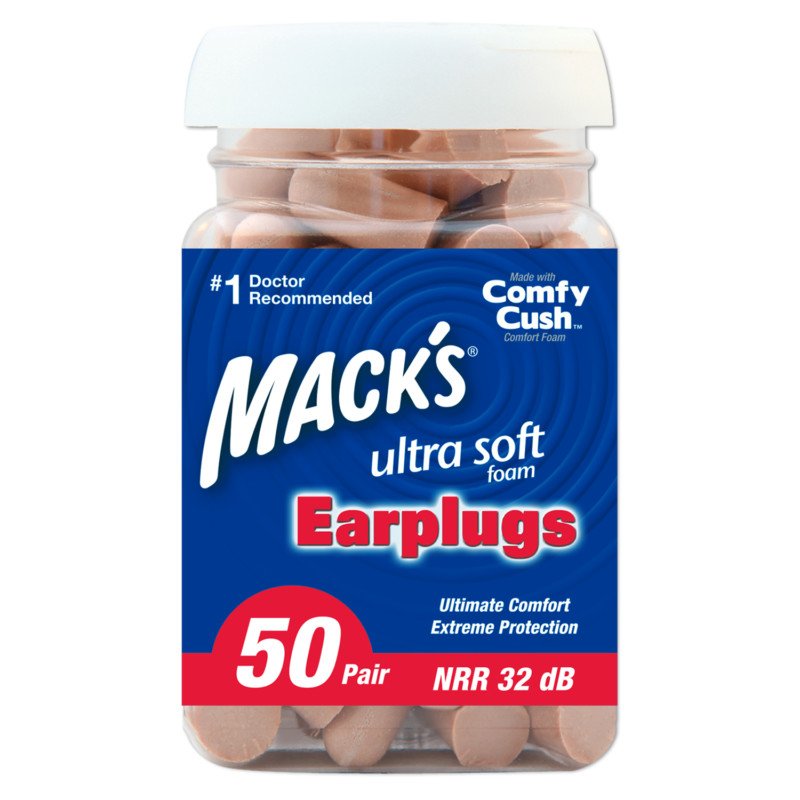
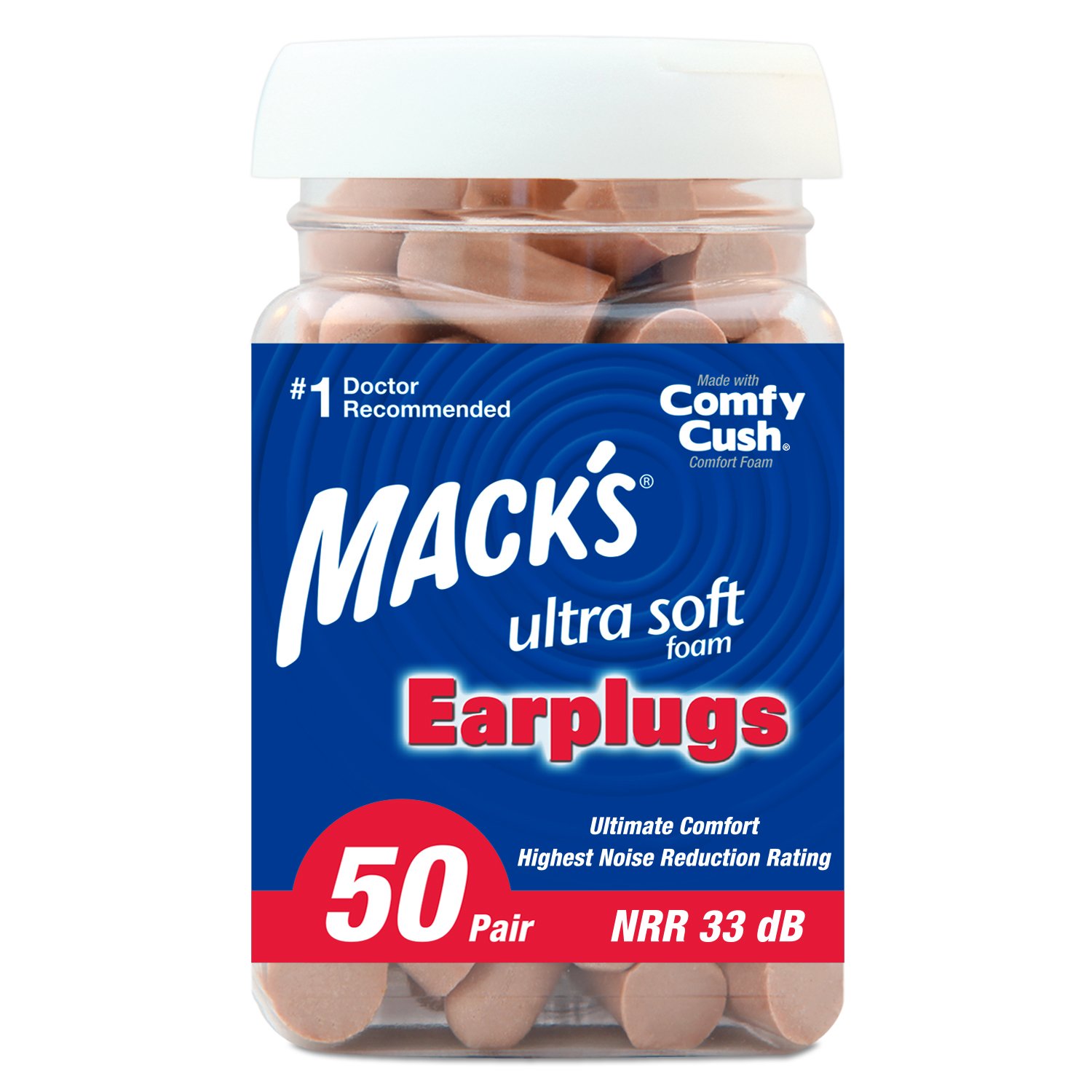
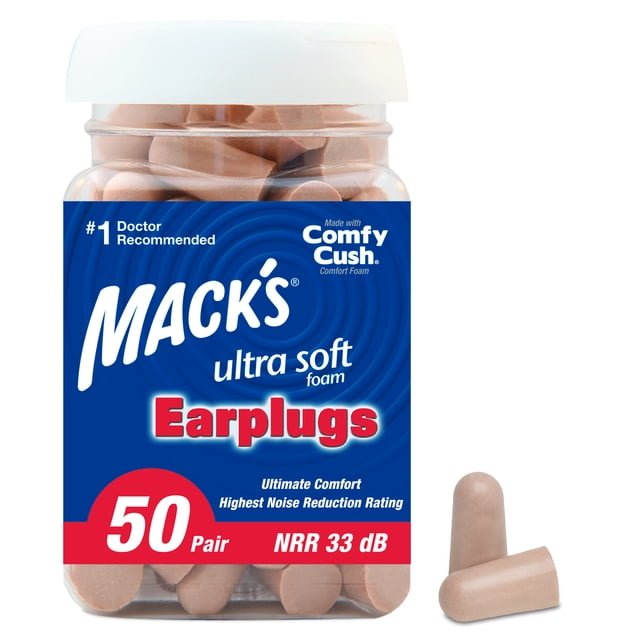
Mack's Ultra Soft Foam Earplugs, 50 Pair Jar
The highest published noise reduction in the guide (NRR 33 dB, per Mack's) in a 50-pair jar that keeps every range bag stocked: maximum foam protection at the lowest cost per pair.
- NRR 33 dB: the highest noise reduction rating available in a foam ear plug, per Mack's
- 50-pair jar is the economical way to keep every range bag, vehicle, and jacket stocked
- Comfy Cush low-pressure foam for extended-wear comfort
- Mack's is the #1 doctor-recommended ear plug brand in the US, per the manufacturer
- Disposable foam means ongoing replacement cost versus reusable plugs
- Beige color is less visible than hi-vis options for compliance checks
- The jar is bulkier than a pocket-size pack for carrying on a hunt
- Foam plugs must be rolled and inserted correctly to achieve the rated NRR
Important limitation: Disposable and technique-dependent: protection relies on a correct roll-and-insert fit, and pairs are single-use, so the jar is a consumable rather than a one-time purchase.
- NRR: 33 dB (per Mack's)
- Foam: Comfy Cush low-pressure polyurethane
- Format: 50 pairs in a resealable jar · beige · disposable · made in USA
Best for: High-volume shooters, instructors, and clubs who want maximum published noise reduction at the lowest cost per pair
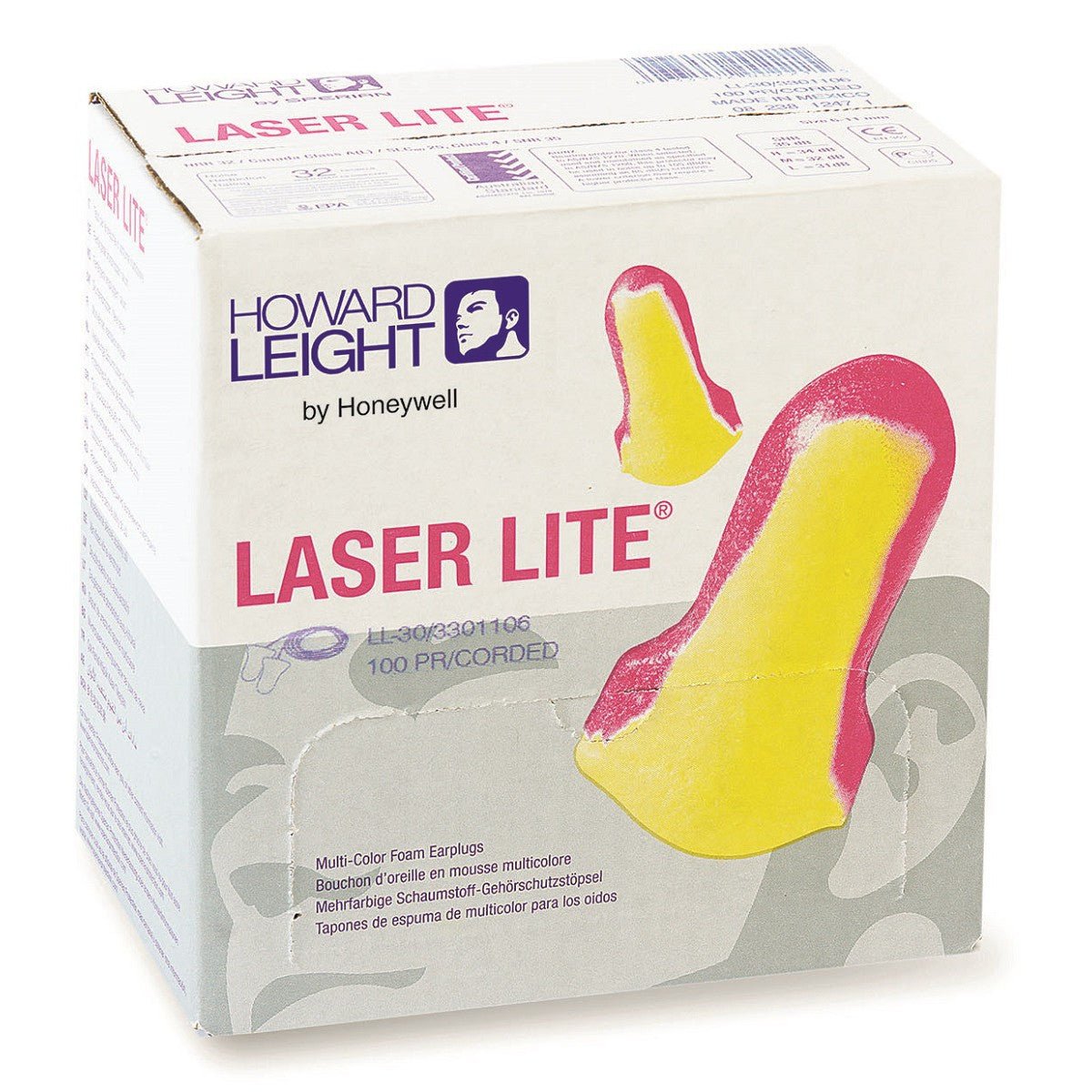
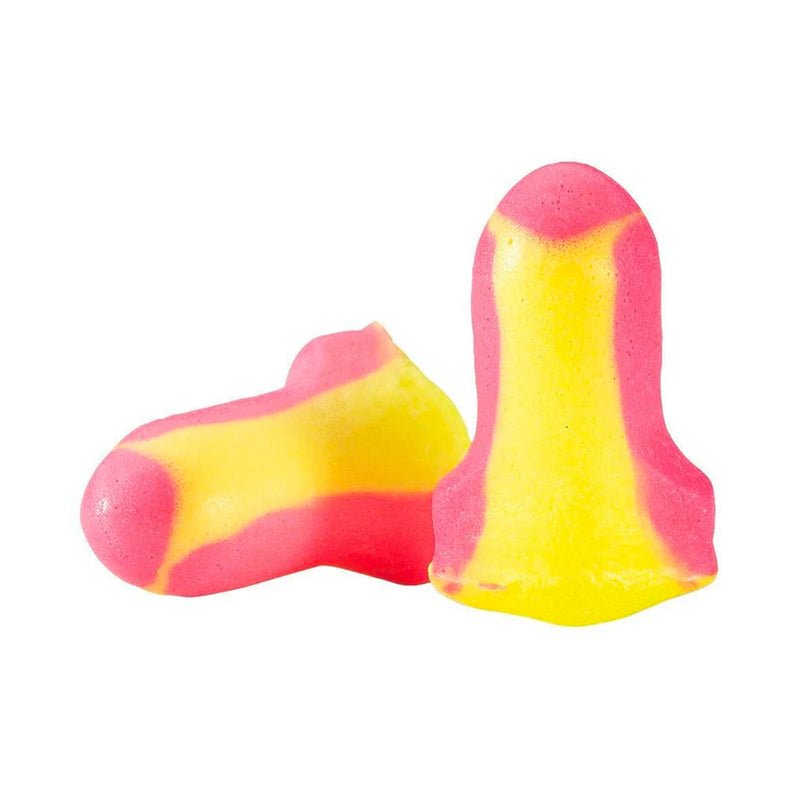
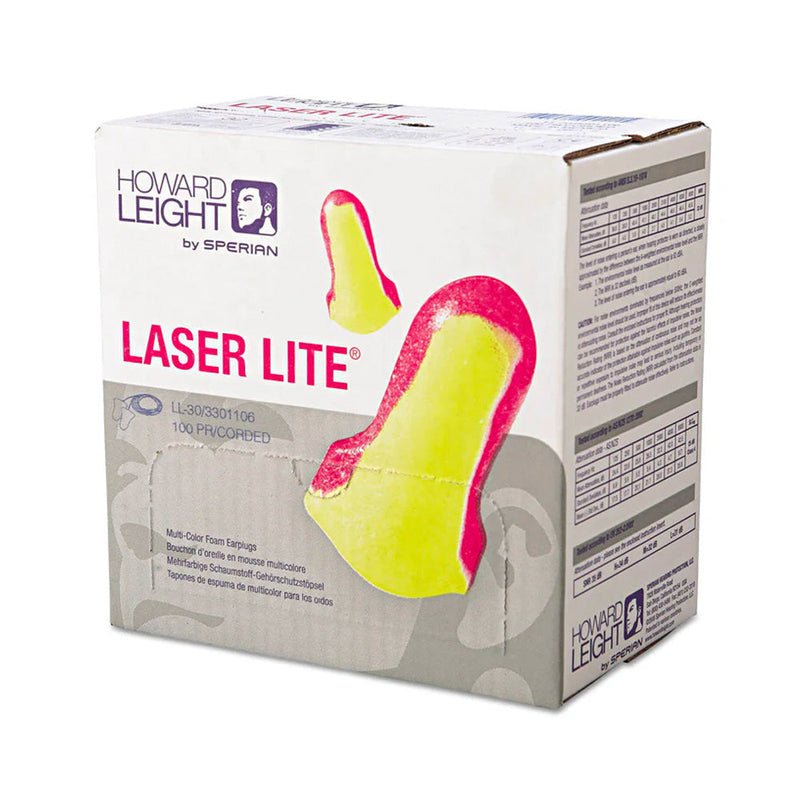
2. Howard Leight Laser Lite LL-30 Corded Earplugs, 100 Pair Box: Best High-Visibility
Verdict: The best ear plugs for supervised shooting: an NRR of 32 dB in a magenta-and-yellow contoured T-shape that makes compliance checks instant and insertion easier for new shooters.
Key specifications: NRR 32 dB (per Howard Leight) · Contoured T-shape polyurethane foam · Magenta/yellow · Corded · 100 pairs per box · Disposable · Model LL-30.
Why we selected it: The Laser Lite's published NRR of 32 dB puts it just below the top tier, but its real distinction is the contoured T-shape. Instead of a simple cylinder you roll and push, the T-shape gives you a built-in handle: Howard Leight says the design aids easy insertion and removal, and the self-adjusting polyurethane foam then expands to fit the canal. For new shooters who struggle with the roll-and-insert technique of classic foam plugs, that handling advantage translates directly into better protection, because a plug that is easy to fit correctly is a plug that achieves its rated NRR. Studies of hearing-protector effectiveness consistently show that fitting technique is the largest variable in real-world attenuation, larger than the differences between reputable products. The foam is a low-pressure formulation designed for long-wearing comfort, with a smooth, soil-resistant skin. The corded LL-30 format keeps pairs together, genuinely useful in instruction settings where students set plugs down and lose them, while the 100-pair box hits the sweet spot between small retail packs and bulk boxes.
Who should buy it: Shooting instructors, range safety officers, and anyone responsible for other people's hearing. The magenta-and-yellow color scheme is not a fashion choice; it is a safety system. On a busy range, an RSO can sweep the line visually and instantly confirm every shooter is wearing protection, something that is impossible with flesh-toned or black plugs. The vivid colors also make dropped plugs easy to find on a range floor.
Who should skip it: Solo hunters who want discretion should choose a neutral-colored or filtered option instead; hi-vis is the opposite of discreet, and the cord can snag in brush. Casual shooters who go a few times a year will not need a 100-pair box.
Strengths: Instant visual compliance checks, a T-shape that helps beginners achieve a correct fit, corded pairs that survive a full day of instruction without getting lost, and a track record built over years of industrial hearing-conservation programs, where the same plugs are issued by the thousand for eight-hour shifts.
Limitations: The hi-vis colors are wrong for hunting. The cord can tangle in storage. The T-shape feels different from classic foam plugs and takes a session to get used to.
How it compares: Against the Mack's Ultra Soft, you trade one decibel of rating and discretion for visibility, a cord, and easier insertion. Against every other pick here, this is the only one designed to be seen.
What to verify before buying: Confirm the listing is the LL-30 corded 100-pair box (the box itself is printed "LL-30, 100 PR/CORDED"). The uncorded LL-1 sibling is a different variant and a different listing.
Howard Leight Laser Lite LL-30 Corded Earplugs, 100 Pair Box
NRR 32 dB in a magenta-and-yellow contoured T-shape that makes compliance checks instant and correct insertion easier for new shooters.
- NRR 32 dB with a contoured T-shape designed for easy insertion, per Howard Leight
- Magenta-and-yellow colors make compliance checks instant: you can see at a glance who is protected
- Corded pairs will not get lost between shooting strings
- Self-adjusting foam fits a wide range of ear canals comfortably
- Hi-vis colors are the opposite of discreet for hunting
- Cord can tangle in storage and snag in brush
- 100-pair box is more than a casual shooter needs
- T-shape feels different from classic foam plugs and takes a session to get used to
Important limitation: The hi-vis colorway that makes this ideal for supervised ranges is wrong for hunting, and the corded format can snag in brush.
- NRR: 32 dB (per Howard Leight)
- Shape: Contoured T-shape polyurethane foam · magenta/yellow
- Format: Corded · 100 pairs per box · disposable · model LL-30
Best for: Instructors, range safety officers, and clubs responsible for other people's hearing
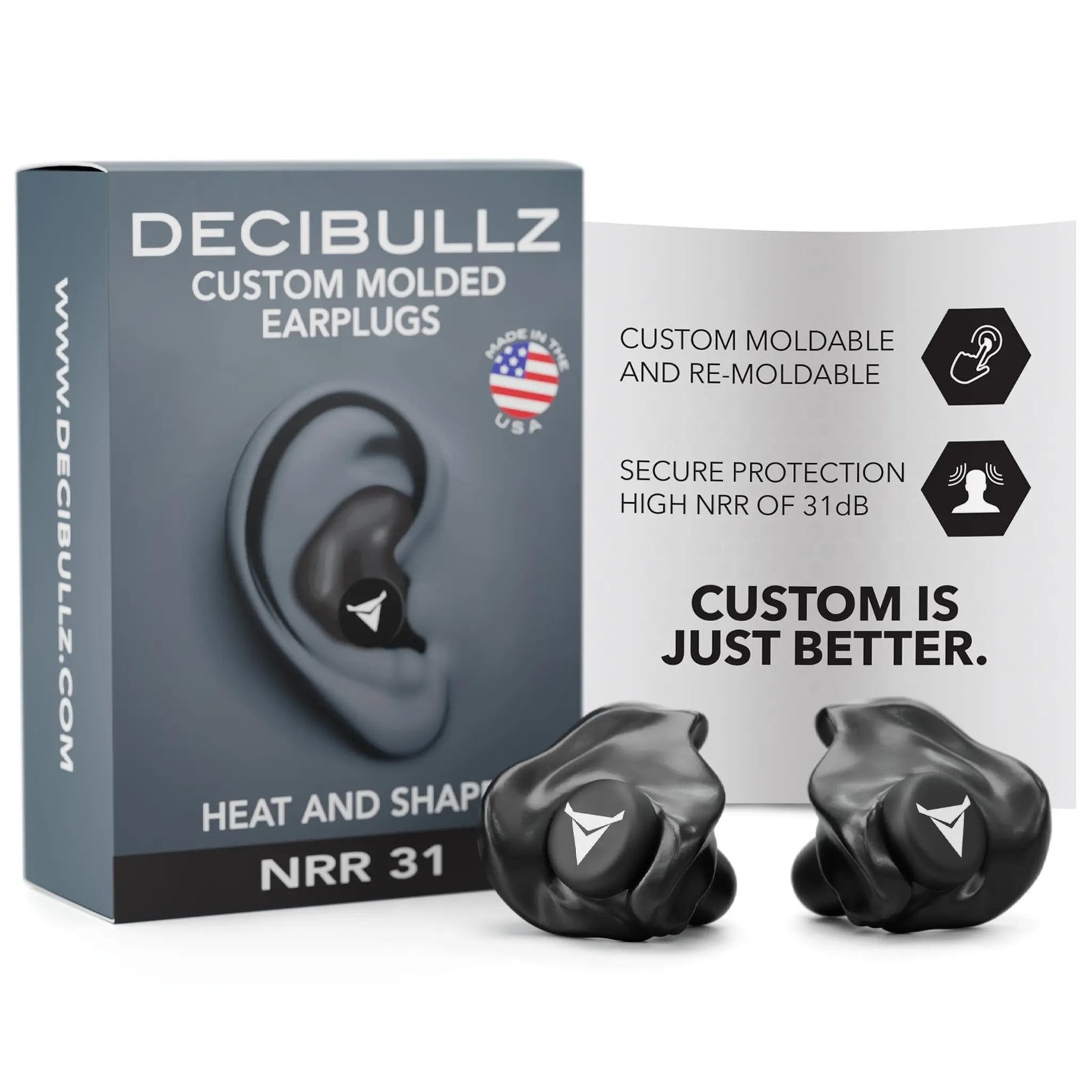
3. Decibullz Custom Molded Earplugs, Black: Best Custom Molded
Verdict: The best custom-molded ear plugs for shooters: thermoplastic plugs you heat and shape to your own ears, with an NRR of 31 dB (per Decibullz), a remoldable fit, and months of reusable service from one pair.
Key specifications: NRR 31 dB (per Decibullz) · User-moldable thermoplastic · Black · Remoldable · Reusable · Includes carrying pouch.
Why we selected it: Decibullz publishes an NRR of 31 dB for these, the highest rating we have seen for a user-moldable plug, and within striking distance of the best foam. The process is straightforward: heat the thermoplastic in hot water, shape it to your outer ear, and let it cool. The key advantage over foam is that the fit is yours alone. The plug fills the unique contours of your ear rather than approximating them, which is why molded plugs tend to stay sealed during jaw movement, talking, and physical activity that can break a foam plug's seal. Anyone who has had a foam plug slowly work loose during a long shooting session knows exactly the failure mode this eliminates. The thermoplastic is remoldable, so if your first attempt is not perfect, you reheat and try again rather than throwing the product away. Being reusable, a single pair can serve for months of regular shooting, which changes the economics: the upfront cost exceeds a jar of foam plugs, but the per-use cost over a season favors the Decibullz, and there is no ongoing waste stream of discarded foam. The black colorway is discreet, and the low profile sits flush enough to work under earmuffs for doubling up.
Who should buy it: Shooters who have never found a foam plug that fits quite right (small ear canals, large ear canals, or ears that reject every generic shape). This is also the right choice for shooters who want a reusable, always-ready option that lives in a pocket or range bag without the waste stream of disposables, and competitive shooters who need consistent, repeatable protection match after match will appreciate that the fit is identical every time once molded.
Who should skip it: Shooters who want the absolute highest rating should stay with top-tier foam, and anyone unwilling to spend the time on a careful molding session should not start here: a rushed molding job produces a poor seal.
Strengths: A genuinely personal fit that stays sealed during movement, remoldable if the first attempt misses, reusable for months, and an NRR that nearly matches foam.
Limitations: The molding process takes time and care to get right (hot water, shaping, cooling). NRR 31 dB is below the best foam plugs in this guide. The upfront cost is higher than any disposable option here, and if the plugs are molded poorly, protection suffers: fit quality depends on the user.
How it compares: Against the Radians kit below, you pay more for a higher rating (31 dB versus 26 dB) and a tougher thermoplastic construction. Against foam, you trade a couple of decibels for fit consistency and reusability.
What to verify before buying: Confirm the listing is the Black colorway of the Custom Molded Earplugs (NRR 31). Decibullz also sells filtered and high-fidelity models under similar packaging; those are different products with different ratings.
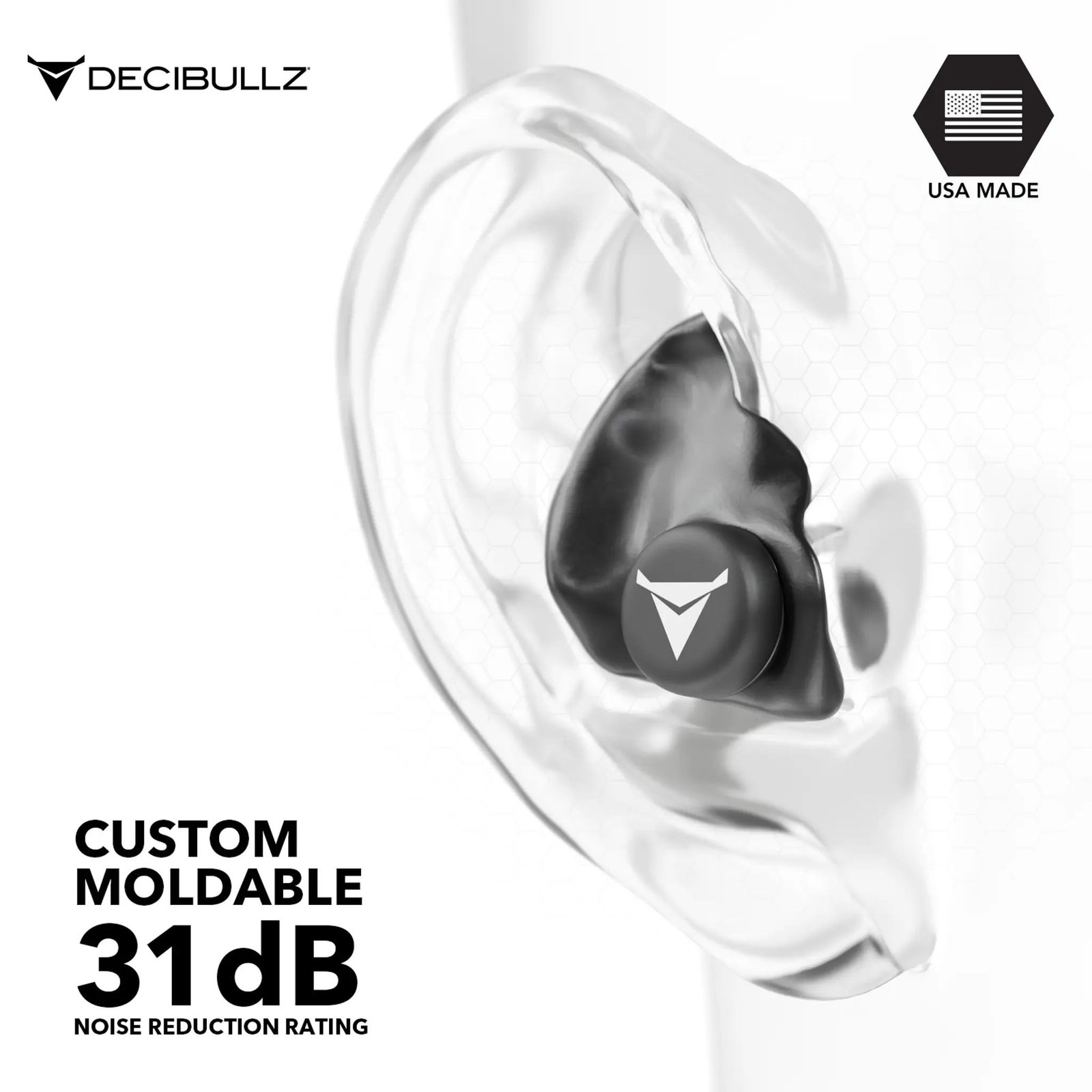
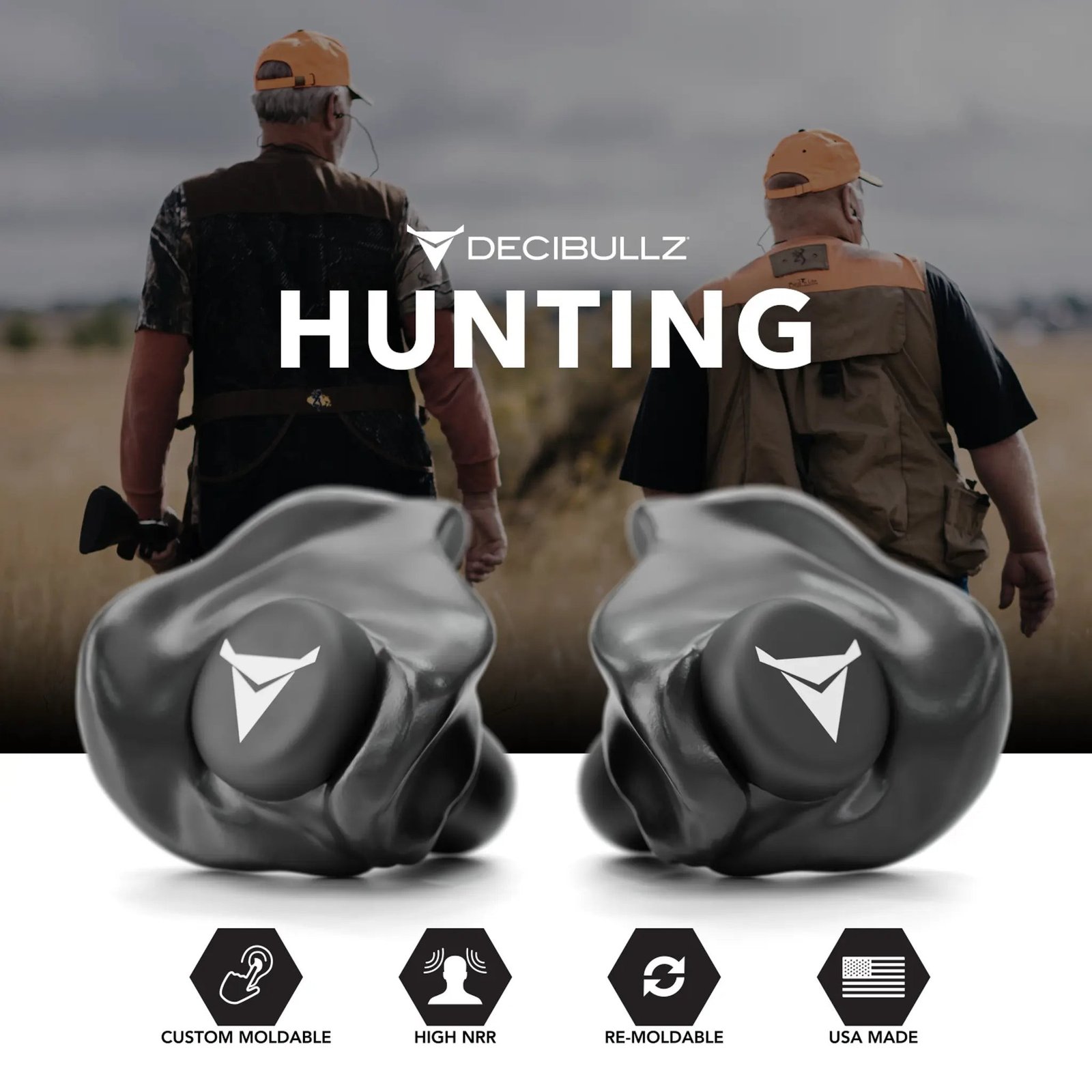
Decibullz Custom Molded Earplugs, Black
User-molded thermoplastic plugs that take the exact shape of your ear, with an NRR of 31 dB (per Decibullz) and a remoldable, reusable fit.
- Custom-molds to your exact ear shape for a personalized fit, with an NRR of 31 dB per Decibullz
- Thermoplastic construction is remoldable: reheat and reshape if the fit is not perfect
- Reusable for months, making them economical over time versus disposables
- Stays put during movement; will not back out like foam can
- Molding process takes time and care to get right (hot water, shaping, cooling)
- NRR 31 dB is below the best foam plugs in this guide
- Higher upfront cost than any disposable option here
- If molded poorly, protection suffers: fit quality depends on the user
Important limitation: Protection depends on the quality of your molding job, and the 31 dB rating sits below the best foam in this guide.
- NRR: 31 dB (per Decibullz)
- Material: User-moldable thermoplastic · black
- Format: Remoldable · reusable · includes carrying pouch
Best for: Shooters whose ears reject generic foam shapes, and anyone who wants one reusable pair that lives in the range bag
4. Radians Custom Molded Earplugs, Blue (CEP001-B): Best Budget Custom Fit
Verdict: The best budget route into custom-molded protection: a do-it-yourself kit that produces ear plugs shaped to your ears for a fraction of the cost of audiologist-made plugs, with an NRR of 26 dB per the manufacturer.
Key specifications: NRR 26 dB (per Radians) · DIY moldable silicone · Blue · Model CEP001-B · Reusable · Kit makes one pair.
Why we selected it: The appeal is simple: custom fit without the custom price. Radians' kit uses a moldable silicone compound that you mix, shape to your ear, and let cure, the same basic principle as plugs costing several times more from an audiologist. The published NRR of 26 dB is honest and respectable; it reflects the reality that putty-style molded plugs seal well but do not achieve the deep-canal attenuation of the best foam. For outdoor shooting (handguns, shotguns, rimfire), where a single layer of protection is the norm, 26 dB of well-fitted protection is meaningful, especially since a molded plug that actually stays sealed outperforms a higher-rated foam plug that has worked loose. That point deserves emphasis because it is the core argument for molded plugs generally: laboratory NRRs assume perfect fit, but field performance depends on the seal surviving hours of wear, conversation, and movement. A custom shape has a structural advantage here that no generic plug can match. The blue color makes the plugs easy to find in a range bag, and the kit format means you are not paying for anything you do not need: no case, no accessories, just the compound and the instructions. Radians has been in the hearing-protection business for decades, and this kit is one of its long-running staples.
Who should buy it: Shooters curious about custom-molded protection but not ready to spend more. It is the entry point to the molded category, and also a smart choice for shooters who split time between shooting and other noisy activities: the comfortable custom fit works as well for mowing, power tools, or concerts as it does on the range.
Who should skip it: Shooters who regularly shoot indoors or use braked rifles should not rely on NRR 26 alone: double up with earmuffs or step up to a higher-rated option in this guide.
Strengths: DIY custom molding at a fraction of audiologist cost, a fit matched to your ear's shape that stays comfortable all day, and a kit that can be remolded during the fitting process if the first attempt is off.
Limitations: NRR 26 dB is the lowest foam-adjacent rating in this guide, not ideal for indoor ranges or magnum calibers alone. Molding requires careful following of instructions; a rushed fit underperforms. Silicone-putty kits have a learning curve for first-timers, and the result is not as durable long-term as thermoplastic molded plugs.
How it compares: Against the Decibullz, you save money and accept a lower rating (26 dB versus 31 dB) and a putty construction instead of remoldable thermoplastic. If you love the fit concept but want a higher rating afterward, the Decibullz is the natural upgrade path.
What to verify before buying: Confirm the listing is the Blue kit, model CEP001-B. Radians sells the same kit in other colors under different listings, and color is part of the variant here.
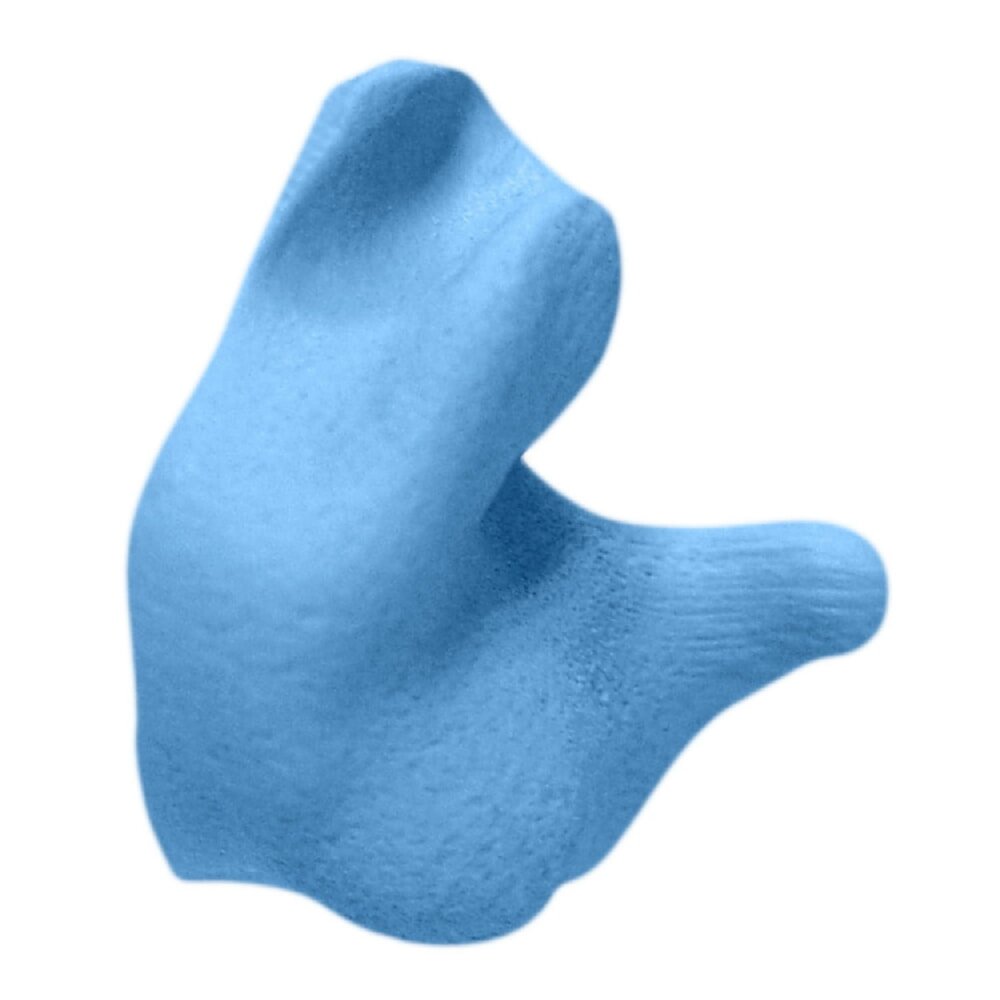
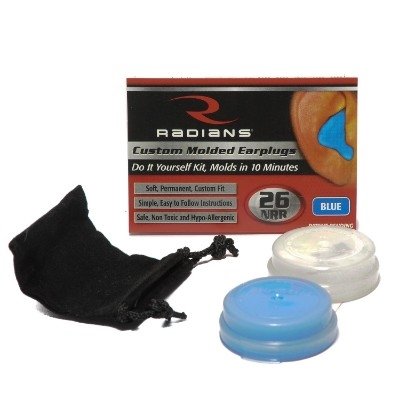
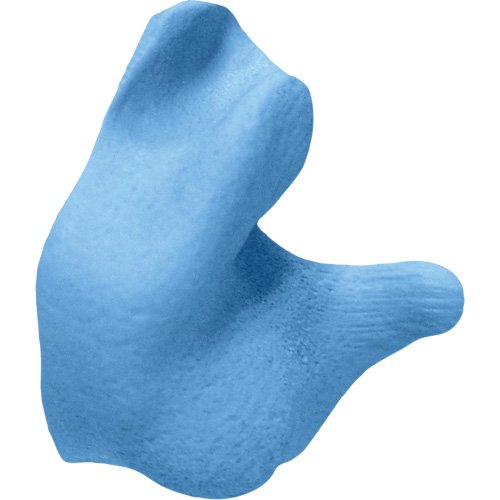
Radians Custom Molded Earplugs, Blue (CEP001-B)
A DIY custom-molding kit at a fraction of audiologist prices: mix, shape, and cure a pair of plugs matched to your ears, with an NRR of 26 dB per Radians.
- DIY custom molding at a fraction of the cost of audiologist-made plugs
- NRR 26 dB per the manufacturer: solid for moderate shooting noise
- Kit makes one pair (two plugs) and can be remolded during the fitting process
- Comfortable for all-day wear since the shape matches your ear
- NRR 26 dB is the lowest foam-adjacent rating in this guide: not ideal alone for indoor ranges or magnum calibers
- Molding requires careful following of instructions; a rushed fit underperforms
- Silicone-putty style kits have a learning curve for first-timers
- Not as durable long-term as thermoplastic molded plugs
Important limitation: At NRR 26 dB this is the lightest foam-adjacent protection in the guide: fine for outdoor shooting, but double up with earmuffs for indoor ranges or braked rifles.
- NRR: 26 dB (per Radians)
- Material: DIY moldable silicone · blue
- Format: Kit makes one pair · model CEP001-B · reusable
Best for: Shooters curious about custom-molded fit on a budget, and anyone splitting time between shooting and other noisy work
5. SureFire EP4 Sonic Defenders Plus, Black, Medium: Best Filtered / Reusable
Verdict: The best filtered ear plugs for shooters who need to hear as well as protect: the EP4 reduces harmful impulse noise while letting safe-level sound through, with an NRR of 24 dB with the filter caps inserted (per SureFire).
Key specifications: NRR 24 dB with filter caps inserted (per SureFire) · Triple-flanged hypoallergenic polymer stem · Black · Medium · Patented EarLock retention rings · Reusable · Includes filter caps, lanyard, and carry case · Model EP4-BK-MPR.
Why we selected it: The EP4's published NRR of 24 dB comes with a context that works in its favor: that rating applies with the filter caps inserted, and the whole point of the design is selective attenuation. SureFire's filter lowers the level of gunshots and other impulse noise above 85 dB while preserving your ability to hear conversations, range commands, and environmental sounds, situational awareness that foam plugs simply cannot offer. The triple-flanged stem creates the seal, while the patented EarLock retention rings use the ear's own anatomy to lock the plug in place: seven contact points that keep it positioned consistently. The plugs are molded from a soft, hypoallergenic medical-grade polymer that SureFire says provides all-day comfort and an extended product life (up to 6+ months, depending on usage and care). Included filter caps insert for additional blocking when you do not need to hear ambient sound, and the low-profile design fits comfortably under supplemental earmuffs for doubling up, the recommended approach for indoor ranges. It is also the pick for shooters tired of the disposable cycle: properly cared for, a single pair can serve for months.
Who should buy it: Shooters who need to hear as well as protect: instructors giving commands, hunters listening for game, competitors hearing range officers. This is the right choice for anyone who has ever pulled out a foam plug to hear a command and forgotten to put it back.
Who should skip it: Shooters whose priority is maximum attenuation for the loudest environments should choose high-NRR foam as their primary plug; the EP4's rating is the lowest in this guide.
Strengths: Real situational awareness while protected, EarLock retention that keeps the plugs seated, months of reusable service from one pair, and a low profile that works under earmuffs, helmets, and hats.
Limitations: NRR 24 dB is the lowest in this guide and insufficient alone for the loudest shooting. The medium size will not fit everyone; sizing matters with flanged plugs, and SureFire offers small and large sizes under different listings. The filter caps are small parts that can be lost.
How it compares: Against every other pick here, the EP4 is the only filtered design: you trade rated attenuation for the ability to hear speech and ambient sound at safe levels. Against foam on cost, one reusable pair replaces hundreds of disposable pairs.
What to verify before buying: Confirm the listing is the Black, Medium EP4 (model EP4-BK-MPR). The EP4 also comes in clear and orange, and in small and large sizes, and the smaller-canal EP3 is a different model: all are different listings from the one reviewed here.
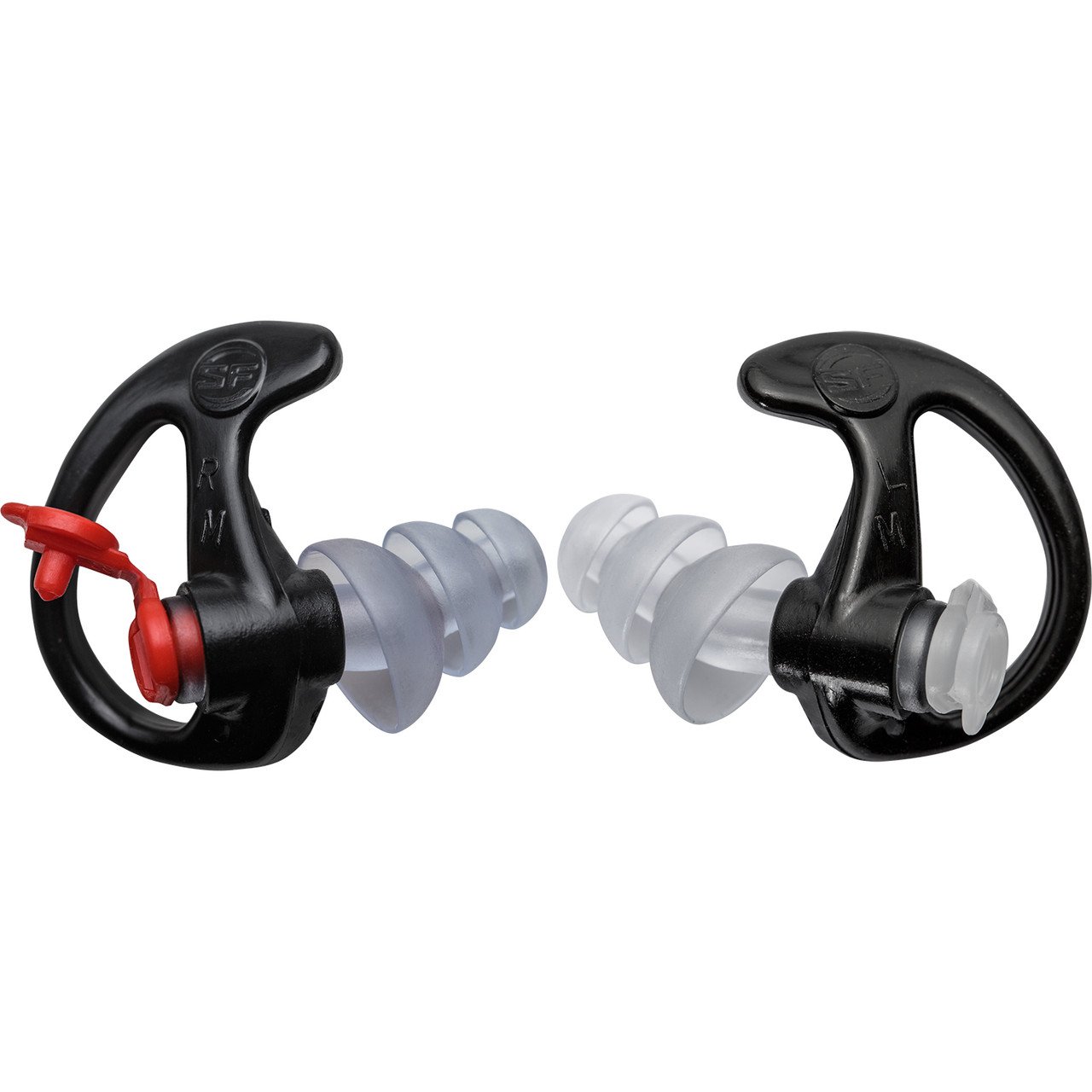
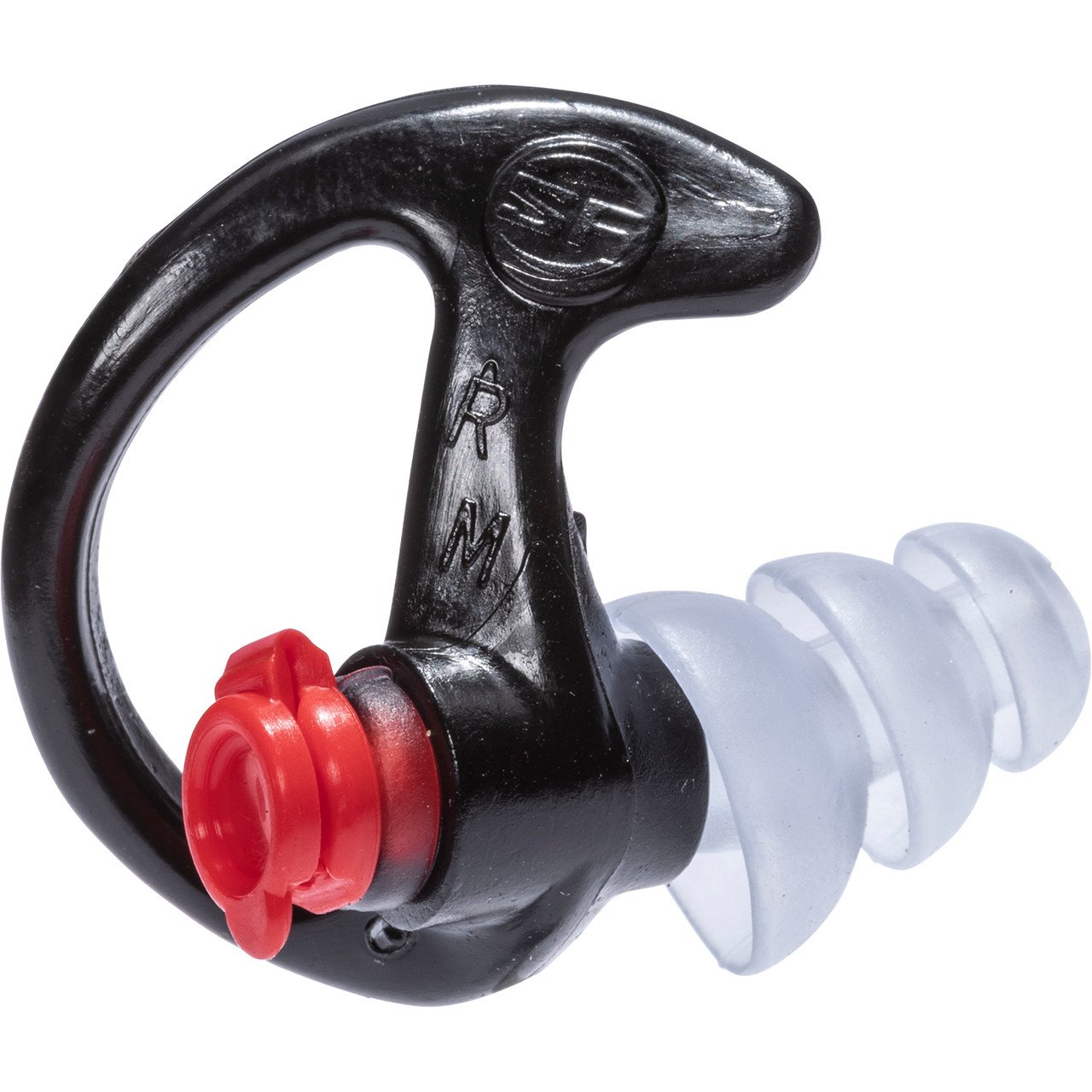
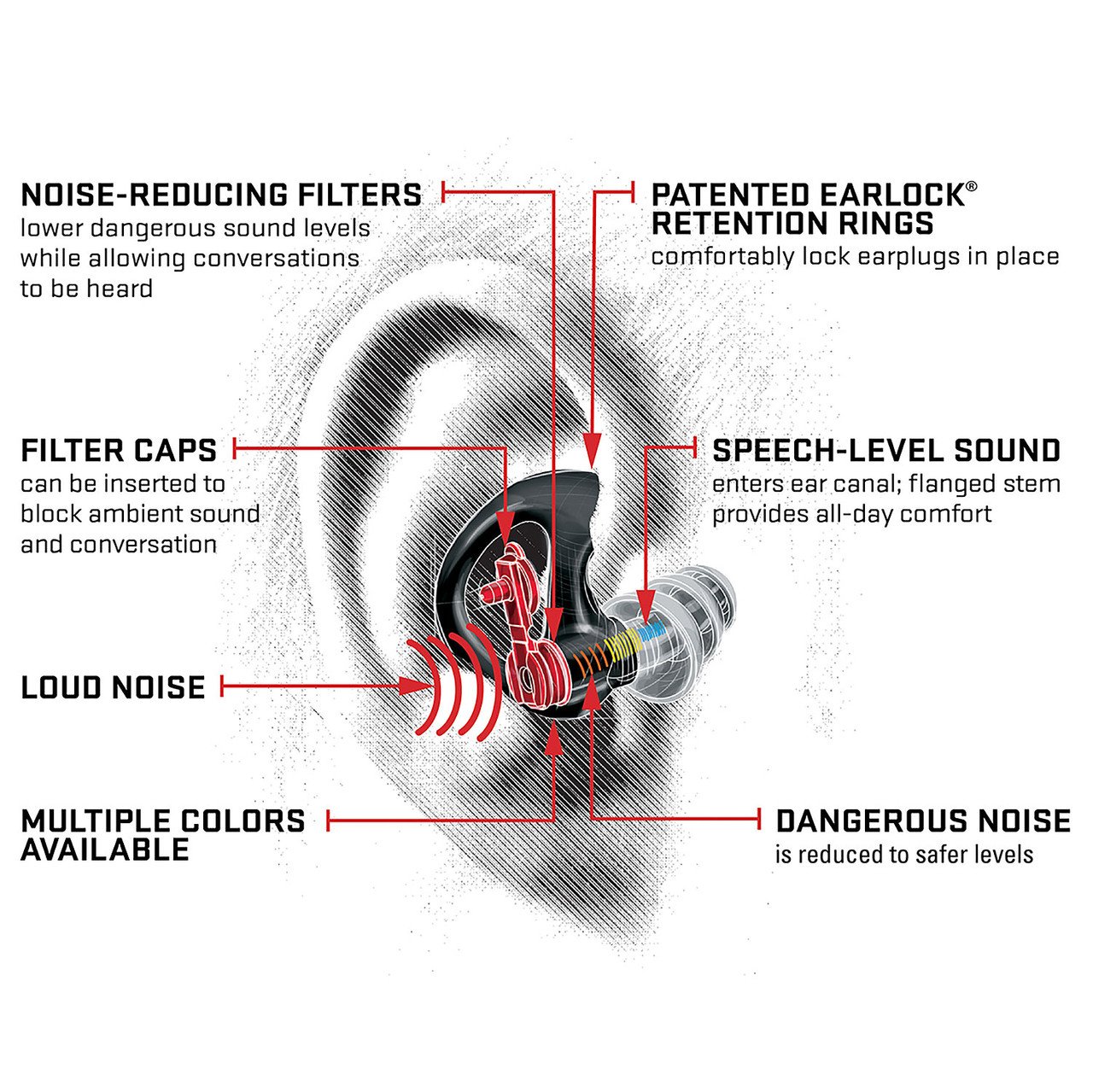
SureFire EP4 Sonic Defenders Plus, Black, Medium
The only filtered pick in the guide: the EP4 reduces harmful impulse noise (NRR 24 dB with filter caps inserted, per SureFire) while letting speech-level sound through, so you can hear range commands.
- Filtered design reduces harmful noise while letting safe sounds through
- Reusable for months: one purchase replaces hundreds of disposable pairs
- Patented EarLock retention rings lock the plugs in place securely
- Low-profile fit works under earmuffs, helmets, and hats
- NRR 24 dB is the lowest in this guide: insufficient alone for the loudest shooting
- Medium size will not fit everyone; sizing matters with flanged plugs
- Higher upfront cost than disposable foam
- Filter caps are small parts that can be lost
Important limitation: Lowest NRR in the guide at 24 dB: wear earmuffs over the top for indoor ranges and the loudest calibers.
- NRR: 24 dB with filter caps inserted (per SureFire)
- Stem: Triple-flanged hypoallergenic polymer · black · medium
- Format: Reusable · EarLock retention rings · includes filter caps, lanyard, and carry case
Best for: Instructors, hunters, and competitors who need to hear commands and game sounds while staying protected
Ear Plug Comparison Table
| Product | Key Specs | Best Use Case | Standout Feature | Amazon Link |
|---|---|---|---|---|
| Mack's Ultra Soft Foam Earplugs, 50 Pair Jar Best Overall |
NRR 33 dB · low-pressure foam · 50-pair jar | Maximum protection for high-volume shooting | Highest published NRR in the guide | Check Price |
| Howard Leight Laser Lite LL-30 Corded Earplugs, 100 Pair Box Best High-Visibility |
NRR 32 dB · T-shape foam · corded 100-pair box | Instruction and supervised ranges | Hi-vis colors make compliance checks instant | Check Price |
| Decibullz Custom Molded Earplugs, Black Best Custom Molded |
NRR 31 dB · moldable thermoplastic · reusable | Shooters who cannot get foam to fit | Custom fit you can remold at home | Check Price |
| Radians Custom Molded Earplugs, Blue (CEP001-B) Best Budget Custom Fit |
NRR 26 dB · DIY moldable silicone · kit makes one pair | Trying custom fit on a budget | Custom shape without the audiologist bill | Check Price |
| SureFire EP4 Sonic Defenders Plus, Black, Medium Best Filtered / Reusable |
NRR 24 dB (caps in) · filtered · reusable | Hearing commands while protected | Filters cut gunfire but pass speech | Check Price |
How We Chose
This guide was compiled through research into the ear-plug products most relevant to hunting and shooting, with selection criteria weighted toward what actually matters on the range. Noise reduction rating was the primary filter (every product here publishes an NRR from 24 to 33 dB), because attenuation is the fundamental job. We then balanced protection against the practical realities of shooting: comfort during long sessions, security of fit during movement, visibility versus discretion, reusability, and cost per use.
We included the three major categories of shooting ear plugs: disposable foam (the highest NRRs and lowest cost), custom-molded (personalized fit and reusability), and filtered (situational awareness). Bulk packaging was preferred where it offered genuine value, and shooting-specific designs were prioritized over generic industrial plugs where the distinction mattered. Every noise reduction figure quoted is the manufacturer's published rating, not a third-party claim, and every product's Amazon listing was verified against two independent sources printing its exact ASIN for the exact variant reviewed.
What we deliberately excluded: electronic ear plugs and earmuffs (a separate category covered elsewhere), generic unbranded foam plugs with no published NRR, and any product whose exact-variant listing we could not verify to that standard.
How to Choose Sound Resistant Ear Plugs for Shooting
Start with the NRR, but understand what it means. The Noise Reduction Rating is a laboratory-derived figure representing the plug's attenuation under ideal fit. Real-world protection is always somewhat less: fit, insertion technique, and ear anatomy all matter. As a rule of thumb, look for an NRR of 28 dB or higher for shooting, and treat anything above 30 as excellent. For indoor ranges, braked rifles, or magnum handguns, plan to double up: foam plugs under earmuffs is the professional standard where noise is most intense.
Match the plug to the shooting you will do. Outdoor handgun, shotgun, and rimfire shooting is well served by any of the foam options here. Hunting adds the discretion requirement: black or neutral plugs rather than hi-vis orange. Instruction and competition add the communication requirement, which is where filtered plugs like the SureFire EP4 earn their keep. If you shoot indoors regularly, prioritize the highest NRR and budget for doubling up.
Fit is protection. An NRR 33 plug inserted poorly protects less than an NRR 26 plug fitted well. Foam plugs must be rolled into a tight cylinder, inserted deep into a straightened ear canal, and held while they expand. Flanged plugs need the right size. Molded plugs need a careful molding process. Whatever you choose, learn the fitting technique: it is the highest-leverage hearing-protection skill there is.
Consider the economics honestly. A high-volume shooter can use several hundred pairs of foam plugs per year. Bulk boxes bring the per-pair cost down and are the right answer for clubs and instructors. For individual shooters, a 50-pair jar plus a reusable option (molded or filtered) for daily use is a sensible combination that balances cost, convenience, and waste.
Do not neglect comfort. The best-protected shooter is the one who keeps protection in for the entire session. Low-pressure foam, correct sizing, and molded fit all serve the same goal: plugs you forget you are wearing. If a plug hurts after an hour, you will eventually stop wearing it, and that is when damage happens.
Frequently Asked Questions
For most outdoor shooting, look for an NRR of 28 dB or higher; three of the five products in this guide meet that bar. Indoor ranges, short-barreled firearms, muzzle brakes, and magnum calibers produce significantly more intense noise; in those environments, the standard professional practice is to double up with foam plugs worn under earmuffs. No single ear plug makes an indoor rifle range hearing-safe on its own for extended sessions.
They solve different problems. Foam plugs offer the highest published NRRs (up to 33 dB) at the lowest cost, making them the default for maximum protection. Custom-molded plugs (NRR 26 to 31 dB in this guide) trade a few decibels of rated attenuation for a personalized fit that stays sealed during movement and talking, plus reusability. Many experienced shooters keep both: foam for the loudest work, molded for all-day comfort.
Standard foam and molded plugs reduce all sound, including speech; that is the tradeoff for maximum protection. If hearing commands, game sounds, or conversation matters, consider filtered plugs like the SureFire EP4, which are designed to reduce harmful impulse noise while letting safe-level sounds through. Alternatively, many shooters briefly loosen one plug to hear a command, then reseat it: workable but imperfect.
Foam plugs are single-use by design. Replace them every shooting session, or sooner if they become dirty, lose their expansion, or no longer seal well. Reusing degraded foam is one of the most common ways shooters unknowingly reduce their protection. Bulk packaging exists precisely so that fresh pairs are always cheap and available.
Foam plugs do not have a formal expiry date, but the polyurethane foam degrades over time: old, hardened plugs will not expand or seal properly. Store them cool and dry, and do not stockpile more than you will use in a year or two. If a plug feels stiff or fails to expand fully, discard it.
Final Verdict
There is no single best ear plug for every shooter, but there is a clear default: the Mack's Ultra Soft Foam Earplugs pair the highest published rating in this guide with the lowest cost per pair, which is why they anchor most shooters' kits. Build outward from there. Add the Laser Lite if you are responsible for other people's hearing, the Decibullz or Radians if fit has always been your problem, and the SureFire EP4 if you need to hear the world while you are protected. Whatever you choose, learn to fit it properly and wear it for every shot: consistent use of a good plug beats occasional use of a perfect one.
Final Recommendations
Best Overall: Mack's Ultra Soft Foam Earplugs, 50 Pair Jar: NRR 33 dB and the lowest cost per pair in the guide.
Best High-Visibility: Howard Leight Laser Lite LL-30 Corded Earplugs, 100 Pair Box: hi-vis T-shape plugs that make compliance checks instant.
Best Custom Molded: Decibullz Custom Molded Earplugs, Black: a remoldable fit shaped to your own ears at NRR 31 dB.
Best Budget Custom Fit: Radians Custom Molded Earplugs, Blue (CEP001-B): custom-molded fit at a fraction of audiologist cost.
Best Filtered / Reusable: SureFire EP4 Sonic Defenders Plus, Black, Medium: filtered protection that still lets you hear range commands.
Related Guides
Companion hearing-protection guides in this series are in preparation and will be linked here as they publish.
Product photos are the manufacturers' own published images (or retailer-hosted brand packshots), used for identification. Noise reduction ratings are the manufacturers' published figures. This article was researched from manufacturer specifications and publicly available product information; no hands-on testing was performed.