By Sarah Bright · Published 2026-10-20
Every miter saw roundup crowns a winner. But winners differ from site to site — so which verdicts actually hold up? This guide takes a different approach: instead of adding one more opinion, we read the major 2026 reviews — Bob Vila's 13-saw hands-on test, Tech Gear Lab's lab testing, Pro Tool Reviews, Family Handyman, and the evidence-led synthesis at Loiter Point — and distilled what the reviewers agree on. Where they converge, you can buy with confidence. Where they diverge, we'll tell you exactly what the disagreement is about, so you can decide which camp your shop belongs in.
We did no hands-on testing of our own — this is a review of reviews, and every claim below is attributed to the outlet that made it. If you want a straight buying guide to 12-inch sliders, see (our 12-inch sliding compound miter saw guide); if you want battery saws only, see (our cordless miter saw comparison); and if you're not sure a miter saw is even the right tool, see (chop saw vs. miter saw explained).
The Short Answer: The Reviewer Consensus
- The reference standard is the DeWalt DWS780. More independent outlets place it at or near the top than any other saw — Tech Gear Lab calls it the most capable saw it tested; Loiter Point names it best overall 12-inch slider; Bob Vila makes it runner-up. When reviewers say "accurate out of the box," this is the saw they mean.
- The "best overall" title most often goes to the Bosch GCM12SD. Bob Vila's hands-on test names it best overall, and it's credited as Pro Tool Reviews' and Popular Mechanics' best overall pick in 2026 coverage. Its Axial-Glide arm — not rails — is the reason: full sliding capacity against a wall.
- The value consensus is the DeWalt DWS779. Reviewers agree it's the 12-inch slider to buy when the DWS780's premium (largely its XPS shadow-line system) isn't worth it to you.
- The budget consensus is the Skil MS6305-00. Tech Gear Lab's testers found its cutting power and precision equal to saws twice its price — the rare budget pick with lab data behind it.
- The premium consensus is the Makita LS1219L. The pick reviewers reach for when money is secondary to out-of-box precision and refinement.
5 Consensus Picks at a Glance
- DeWalt DWS780 — The consensus reference. 12" double-bevel slider, XPS shadow line, 2×14 crosscut; the saw other saws are measured against
- Bosch GCM12SD — Most "best overall" titles. 12" Axial-Glide slider; full capacity against a wall
- DeWalt DWS779 — Consensus value 12" slider. Same capacity class as the DWS780 without the XPS premium
- Makita LS1219L — Premium consensus. 12" direct-drive slider; reviewers praise out-of-box precision
- Skil MS6305-00 — Budget consensus. 10" dual-bevel slider with lab-tested performance above its price
What Reviewers Agree On (and Where They Split)
Agreement 1: Out-of-box accuracy is the real differentiator
Across outlets, the saws that win are the ones that arrive square. Loiter Point's synthesis notes reviewers repeatedly reporting the DWS780 cutting within half a degree of square without adjustment (reported). Homegrail's 12-inch roundup praises the Makita LS1219L for accurate, consistent cuts that don't bog down. The consensus: at this level, motors are all strong enough — what separates saws is whether the fence, detents, and bevel stops hold true under load.
Agreement 2: Cut-line guidance matters more than lasers
Family Handyman singles out DeWalt's XPS shadow-line system — which throws a real shadow of the blade onto the workpiece — as superior to lasers that need calibration. Tech Gear Lab praises the Skil's LED shadow line. Sensible Digs' review criteria treat cut-line guidance as a first-class feature. The consensus has moved: shadow lines beat lasers, and reviewers notice which saws have them.
Agreement 3: The Bosch glide solves a real space problem
Reviewers agree on the physics: a conventional rail slider needs roughly two feet of clearance behind it for the rails to travel. Bosch's Axial-Glide articulated arm folds in place instead, so the GCM12SD runs against a wall with about a foot behind it (Bosch's rating, via Loiter Point). In a garage shop where the bench lives against the wall, reviewers treat this as decisive — it's the most-cited reason for the Bosch's "best overall" titles.
Agreement 4: The DWS779 is the value floor for 12-inch sliders
Nobody reviewing 12-inch sliders disputes this: if you want full 12-inch sliding capacity and dual bevels at the lowest credible price, the DWS779 is the consensus answer. Its trade-off versus the DWS780 (no XPS shadow line, simpler feature set) is universally described as fair.
Agreement 5: The Skil punches absurdly above its price
Tech Gear Lab's verdict is the strongest budget endorsement in the category: "cutting power and precision equal to those of saws twice its price," with a tester quote — "it chewed through a two-by-four like it was nothing" — and measured data (4,960 RPM, 2.67 oz of dust collected in their dust test). No other budget saw has this kind of lab backing in 2026 coverage.
Where reviewers split: Bosch vs. DeWalt for the top spot
Here's the honest disagreement. Bob Vila's hands-on test (13 saws, workshop conditions) names the Bosch GCM12SD best overall and the DeWalt DWS780 runner-up. Tech Gear Lab's lab testing calls the DWS780 the most capable saw it tested. Loiter Point's evidence synthesis names the DWS780 best overall 12-inch slider and the Bosch best space-saver. The split maps cleanly onto shop layout: bench against a wall → Bosch; open station where rails have room → DeWalt. Buy for your shop, not for the trophy. Note what the split is not about: no outlet disputes that both saws are top-tier on accuracy and power. The disagreement is purely about which set of trade-offs — space-saving glide vs. proven rail design with the XPS system — deserves the crown. That's a healthy disagreement, and it's exactly why a consensus view beats any single reviewer's winner.
Head-to-Head: The Consensus Specs
| Saw | Blade / power (manufacturer-rated) | Crosscut @ 90° (rated) | Bevel / miter (rated) | Reviewer consensus |
|---|---|---|---|---|
| DeWalt DWS780 | 12", 15A corded | 2×14 dimensional | 0–49° dual bevel; 60°R miter | Reference standard; XPS shadow line praised |
| Bosch GCM12SD | 12", 15A, 3,800 RPM | Full slider capacity | 47° dual bevel (mfr); 60°R/52°L miter | Most "best overall" titles; wall-clearance winner |
| DeWalt DWS779 | 12", 15A corded | 2×14 dimensional | Dual-bevel slider | Consensus value 12" slider |
| Makita LS1219L | 12", 13A direct drive | Full slider capacity | 0–40°R / 0–60°L miter | Premium pick; out-of-box precision |
| Skil MS6305-00 | 10", 15A corded | ~12.6" (Tech Gear Lab) | 48°L/45°R bevel; 51° miter L/R | Budget star with lab data |
Mobile note: this table stacks on small screens — saw, consensus, and bevel/miter first. All specs manufacturer-rated unless noted; consensus lines attribute the outlet. Verify specs on the current listing before buying.
Quick Picks
Short on time? These are our top recommendations.
Detailed Reviews: What Each Outlet Actually Said
1. DeWalt DWS780 — The Reference Standard
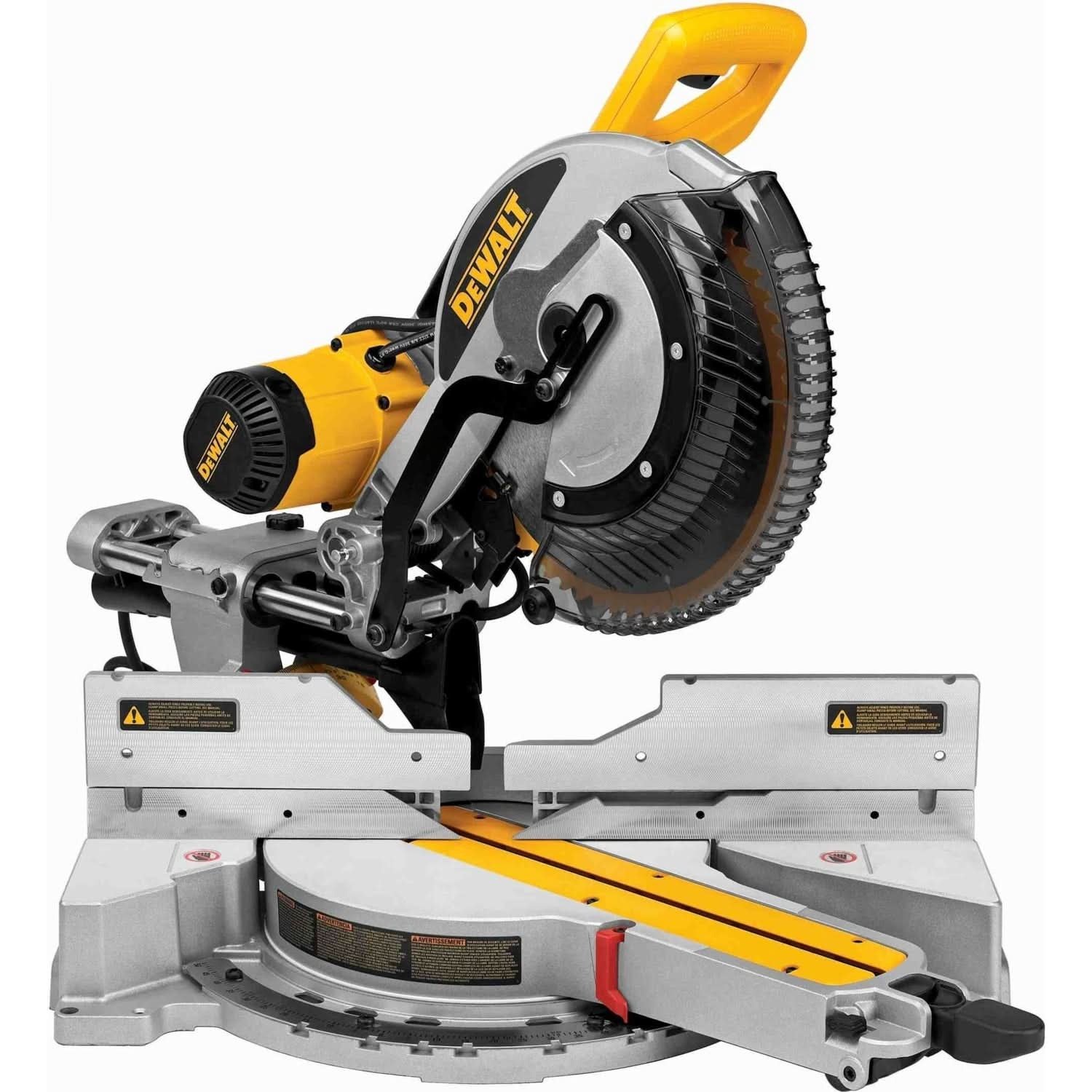
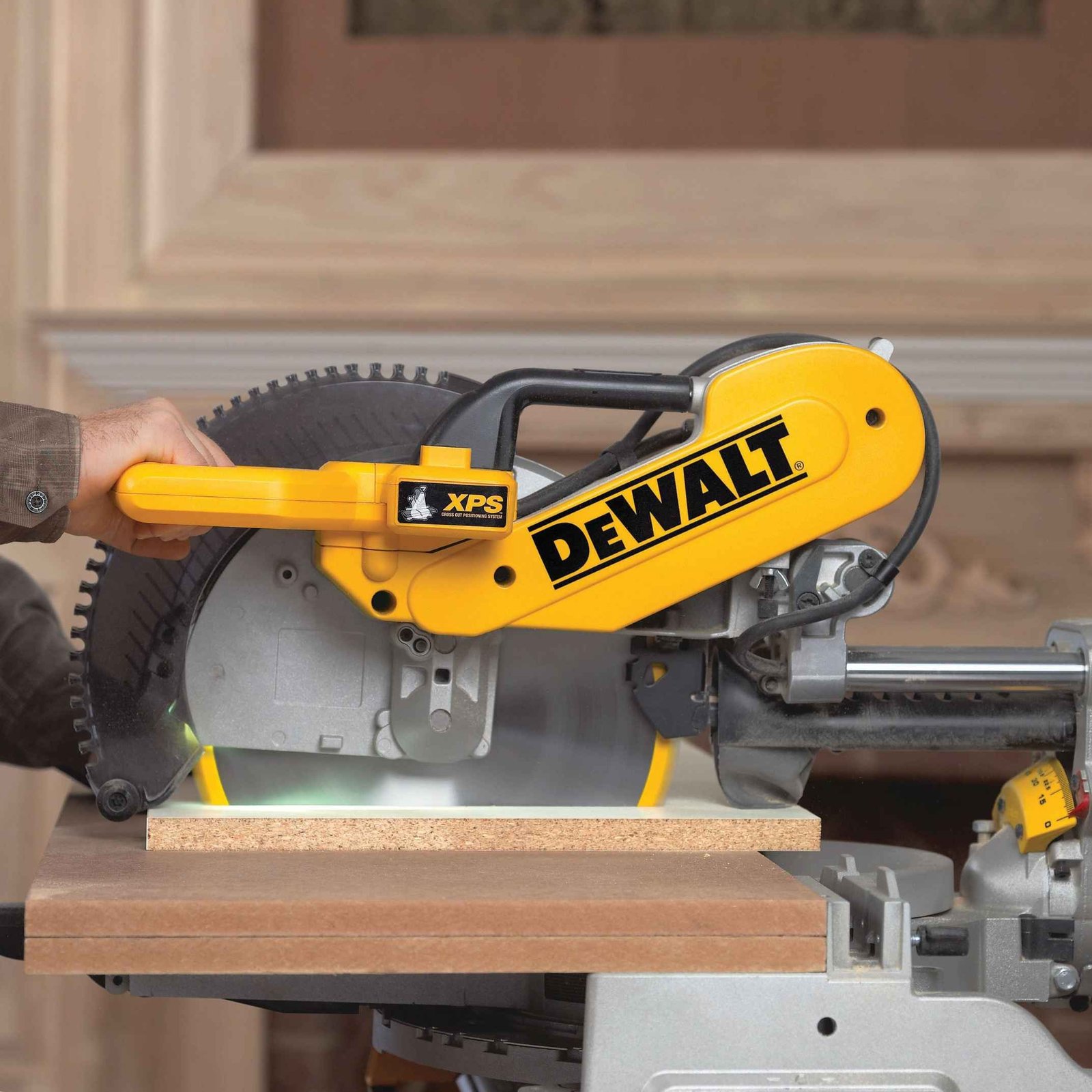
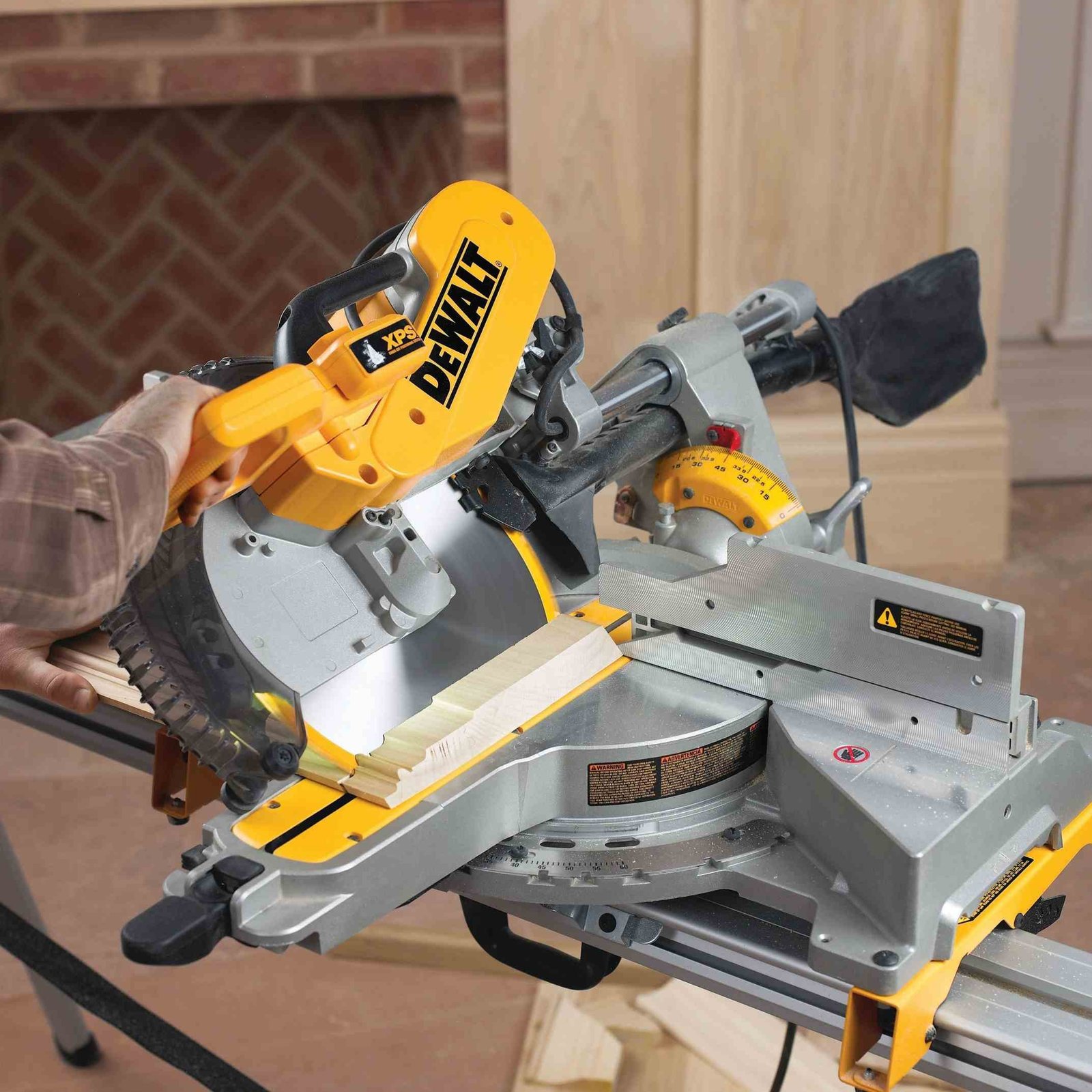
DeWalt DWS780 12" Double-Bevel Sliding Compound Miter Saw
No saw appears at the top of more independent roundups. Tech Gear Lab calls it the most capable saw it tested; Loiter Point names it the best overall 12-inch slider — 'the saw the reviews keep pointing to'; Bob Vila makes it runner-up in a 13-saw hands-on test, and Family Handyman singles out its XPS shadow-line system.
- Arrives close to square — multiple reviewers report cuts within half a degree with no adjustment (reported via Loiter Point)
- XPS shadow line throws a real shadow of the blade onto the workpiece — reviewers consistently prefer it to lasers
- Full 12-inch capacity: 2×14 crosscut at 90° with 0–49° dual bevels and a 60° right miter
Important limitation: Heavy, corded and shop-anchored — reviewers are explicit that this is not a carry-it-up-a-ladder saw, and the XPS premium over the DWS779 pays off mainly for trim work.
- Blade / power: 12 in, 15A corded
- Crosscut @ 90°: 2×14 dimensional lumber
- Bevel / miter: 0–49° dual bevel; 60°R miter
- Cut-line guidance: XPS shadow-line system
Best for: Builders of a fixed miter station who want the accuracy record the most reviewers agree on.
The consensus: No saw appears at the top of more independent roundups. Tech Gear Lab: most capable saw tested, "a well-refined tool built for big jobs." Loiter Point: best overall 12-inch slider, "the saw the reviews keep pointing to… the reference point the others get measured against." Bob Vila: runner-up in a 13-saw hands-on test. Family Handyman: singled out for the XPS shadow-line system.
What it's good at, per reviewers: arriving close to square (multiple reviewers report within half a degree, no adjustment — reported via Loiter Point); the XPS shadow line, which reviewers consistently prefer to lasers; full 12-inch capacity (2×14 at 90°) with 0–49° dual bevels and a 60° right miter.
The honest caveats: it's a heavy, corded, shop-anchored machine — reviewers are explicit that this is not the saw you carry up a ladder. And you're paying for the XPS system over the DWS779; reviewers treat that premium as worth it for trim work, less so for framing.
Buy it if: you're building a fixed miter station and want the accuracy record the most reviewers agree on. Check Price on Amazon
2. Bosch GCM12SD — The Most-Crowned "Best Overall"
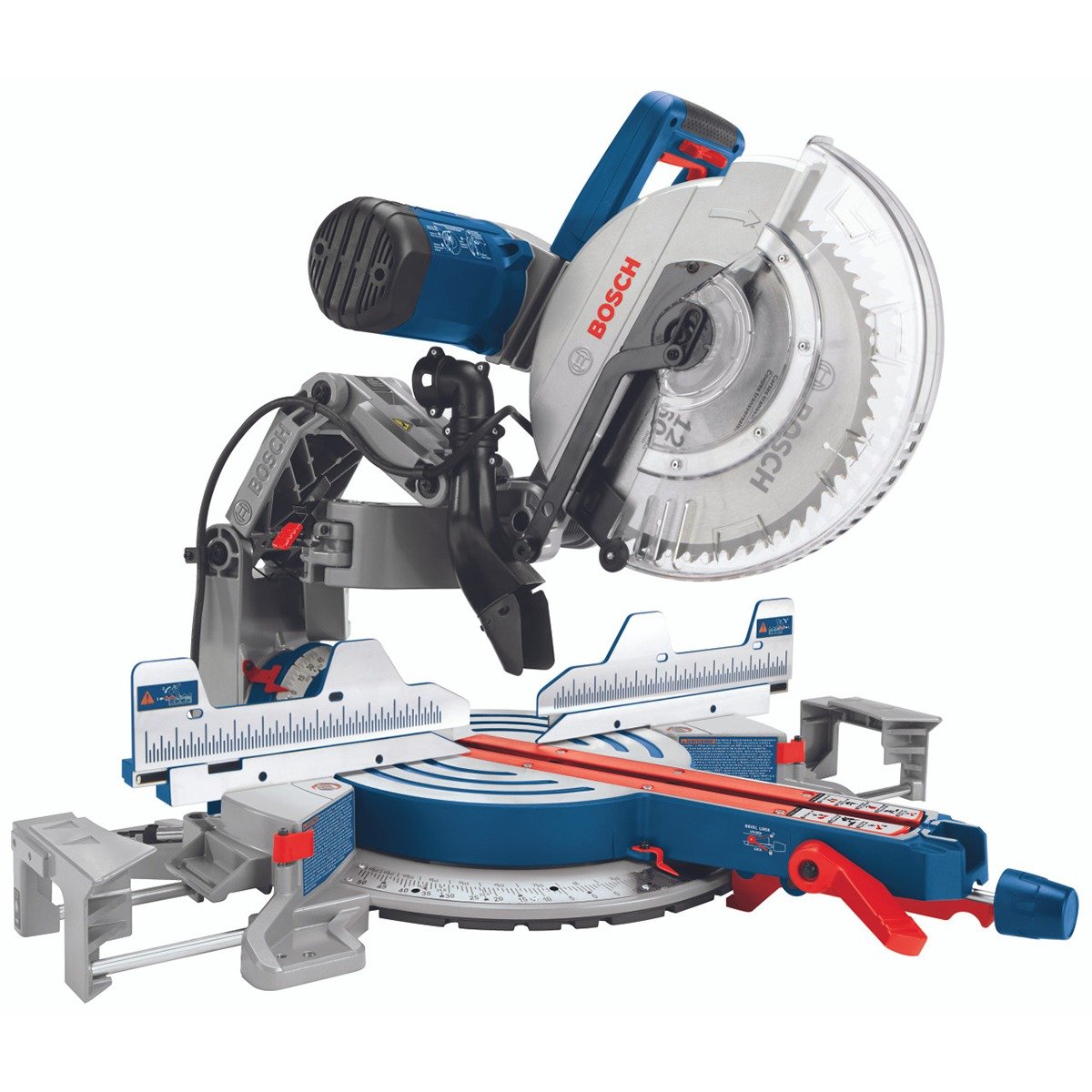
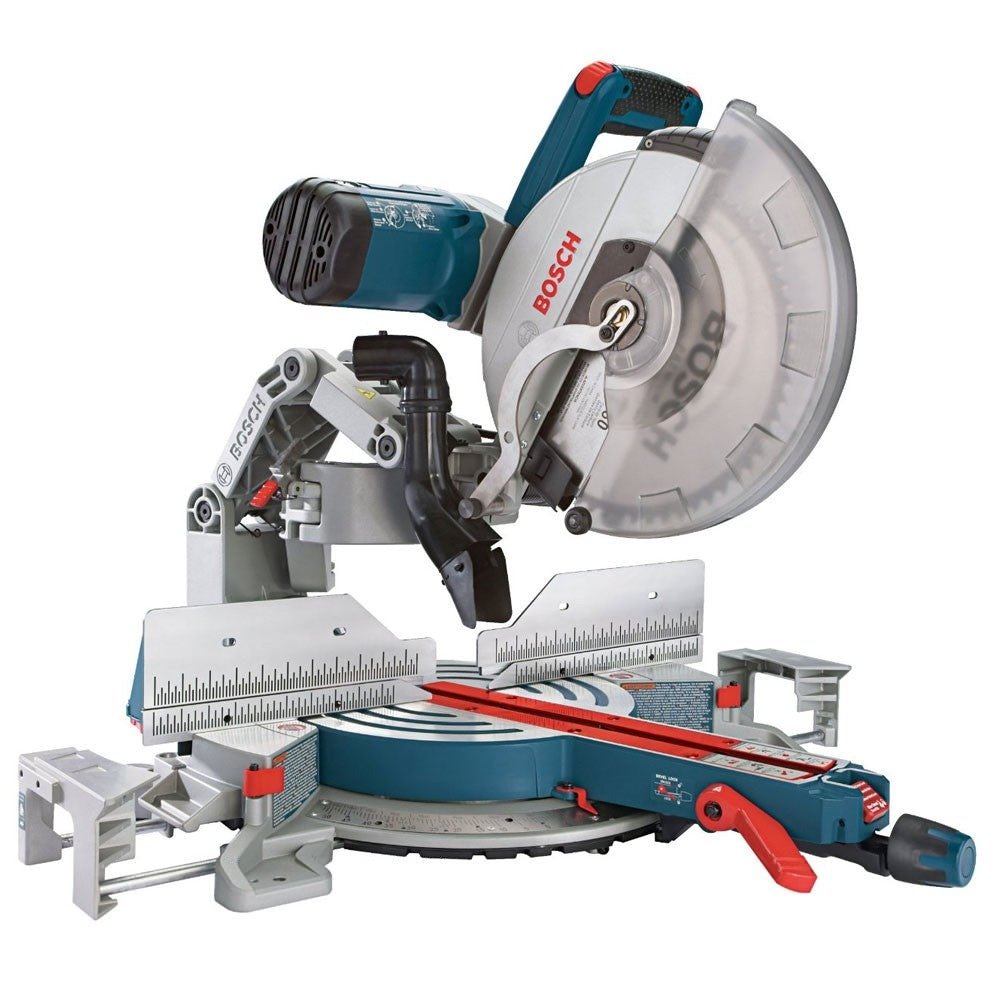
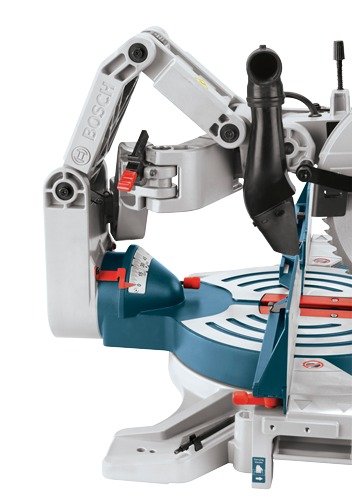
Bosch GCM12SD 12" Axial-Glide Dual-Bevel Sliding Miter Saw
Bob Vila's 13-saw hands-on test names it best overall, citing the powerful motor, smooth cutting action and the space-saving glide design. 2026 coverage credits it as Pro Tool Reviews' and Popular Mechanics' best overall pick, and Greenwashing Index makes it editor's choice. Its Axial-Glide arm folds in place instead of travelling on rails, so it keeps full sliding capacity against a wall.
- Axial-Glide arm — full sliding capacity with the bench against a wall (about a foot behind it, vs roughly two feet for rail sliders)
- The most 'best overall' titles in hands-on testing (Bob Vila; credited to Pro Tool Reviews and Popular Mechanics in 2026 coverage)
- 15A motor with a 3,800 RPM blade speed reviewers describe as hard to bog down
Important limitation: Premium pricing over the DeWalts, and the glide mechanism is proprietary — long-term serviceability is a quieter reviewer footnote.
- Blade / power: 12 in, 15A, 3,800 RPM
- Glide system: Axial-Glide articulated arm — no rear rail travel
- Bevel / miter: 47° dual bevel (mfr, via Greenwashing Index); 60°R/52°L miter (via SlashGear)
Best for: Shops where the bench lives against a wall, or buyers who want the saw that won the most 'best overall' titles.
The consensus: Bob Vila's hands-on test names it best overall, citing powerful motor, smooth cutting action, and the space-saving glide design. 2026 coverage credits it as Pro Tool Reviews' and Popular Mechanics' best overall pick (via SlashGear's brand ranking). Greenwashing Index's roundup makes it editor's choice (5-star).
What it's good at, per reviewers: the Axial-Glide arm — reviewers describe the glide action as smooth and precise, and the wall-clearance advantage as decisive for garage shops. 15-amp power with a 3,800 RPM blade speed that reviewers describe as hard to bog down.
The honest caveats: premium pricing over the DeWalts; the glide mechanism is brilliant but proprietary — long-term serviceability is a quieter reviewer footnote. Verify the bevel spec that matters to you (47° dual bevel per Greenwashing Index; miter 60°R/52°L per SlashGear) against the current listing.
Buy it if: your bench lives against a wall, or you want the saw that won the most "best overall" titles in hands-on testing. Check Price on Amazon
3. DeWalt DWS779 — The Value Consensus
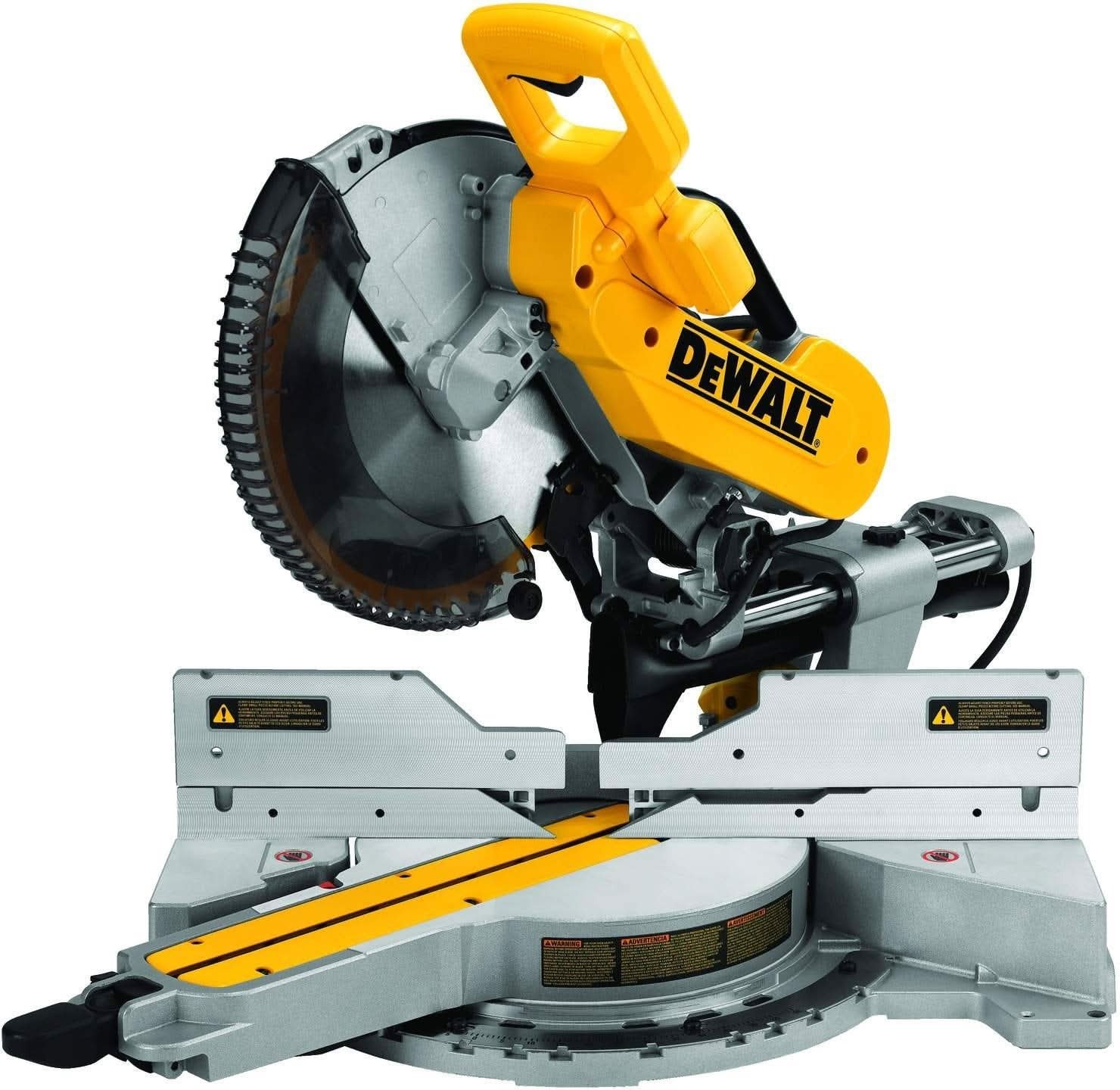
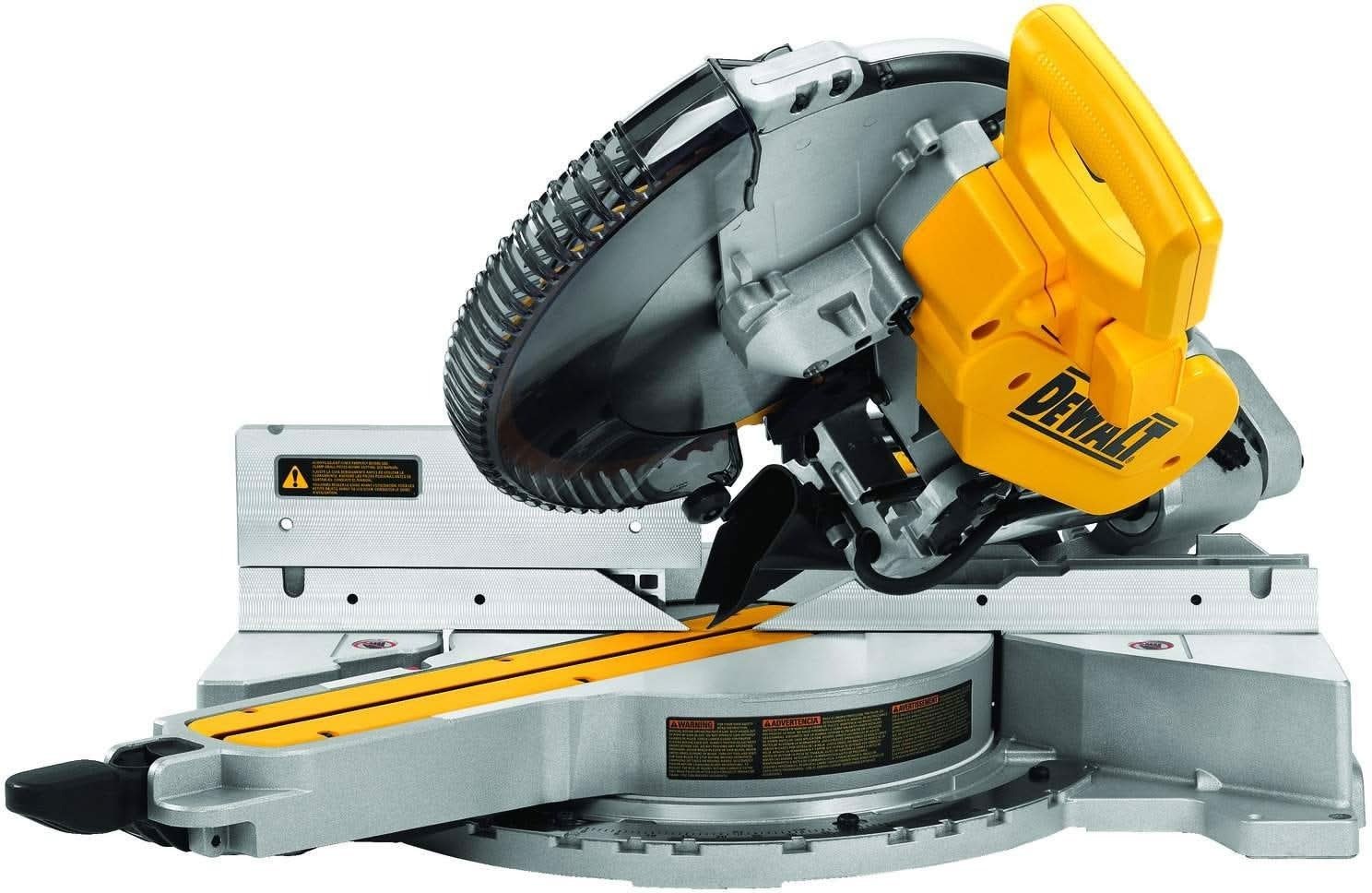
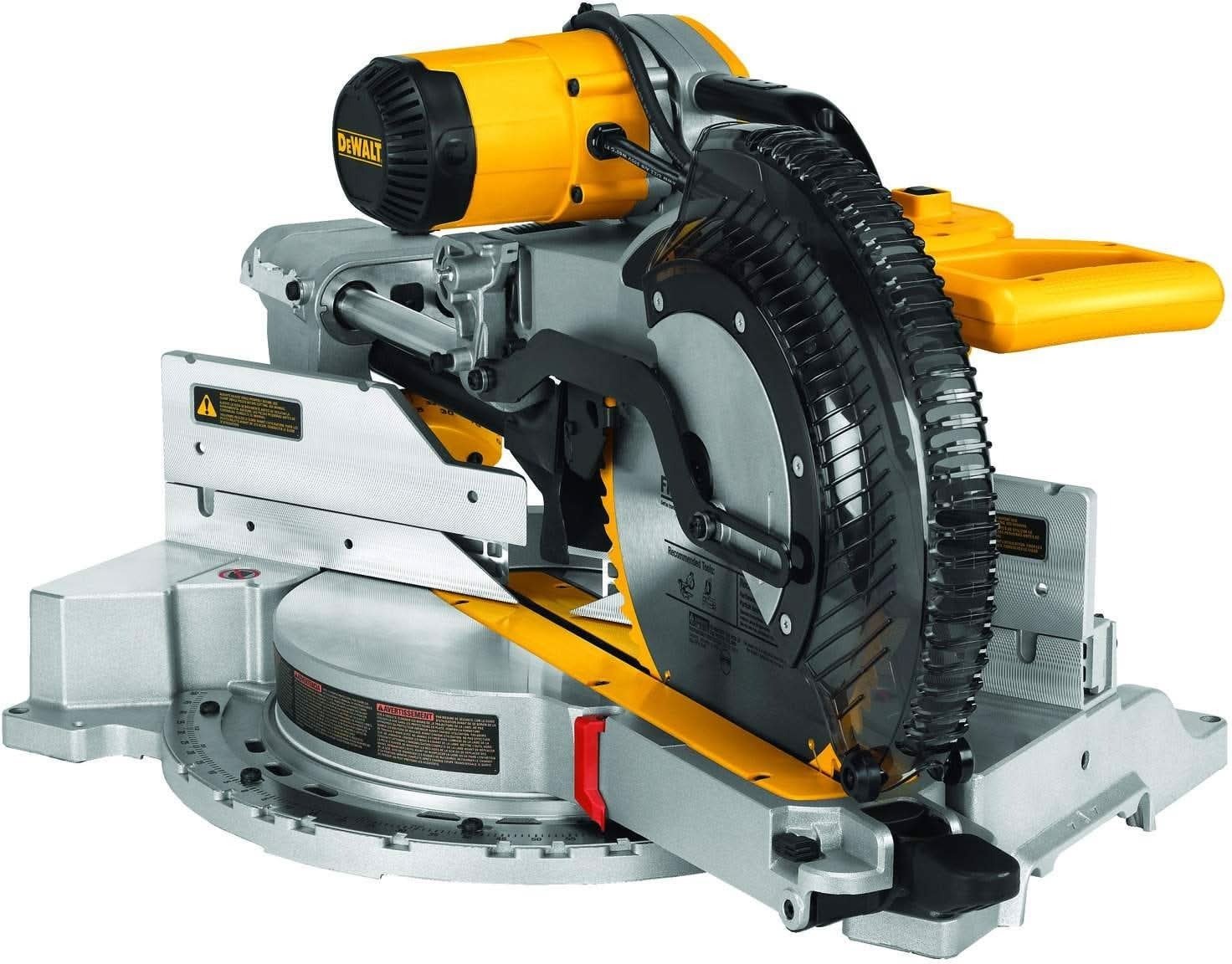
DeWalt DWS779 12" Double-Bevel Sliding Compound Miter Saw
The 12-inch dual-bevel slider reviewers recommend when the budget is the constraint and capacity isn't negotiable. Greenwashing Index names it best value, Sensible Digs lists it among its top sliding compound picks with a 2×14 crosscut at 90°, and Loiter Point's synthesis treats it as the value floor for the class.
- Full 12-inch sliding capacity (2×14 at 90°) and dual bevels at the lowest credible price in the class
- Same DeWalt build language reviewers praise in the DWS780
- The unanimous value floor — nobody reviewing 12-inch sliders disputes it
Important limitation: No XPS shadow line — that is the main thing the DWS780's premium buys; if cut-line visibility matters to your work (trim, fine woodworking), price the gap honestly.
- Blade / power: 12 in, 15A corded
- Crosscut @ 90°: 2×14 dimensional lumber
- Bevel: Dual-bevel sliding design
Best for: Buyers who want 12-inch dual-bevel sliding capacity for the least money a reputable reviewer will sign off on.
The consensus: the 12-inch dual-bevel slider reviewers recommend when the budget is the constraint and capacity isn't negotiable. Greenwashing Index: best value. Sensible Digs: lists it among top sliding compound picks with 2×14 crosscut at 90°. Loiter Point's synthesis treats it as the value floor.
What it's good at, per reviewers: full 12-inch sliding capacity and dual bevels at the category's lowest credible price. Same DeWalt build language reviewers praise in the DWS780.
The honest caveats: no XPS shadow line — that's the main thing the DWS780's premium buys, and reviewers are clear about the trade. If cut-line visibility matters to your work (trim, fine woodworking), price the gap honestly.
Buy it if: you want 12-inch dual-bevel sliding capacity for the least money a reputable reviewer will sign off on. Check Price on Amazon
4. Makita LS1219L — The Premium Consensus
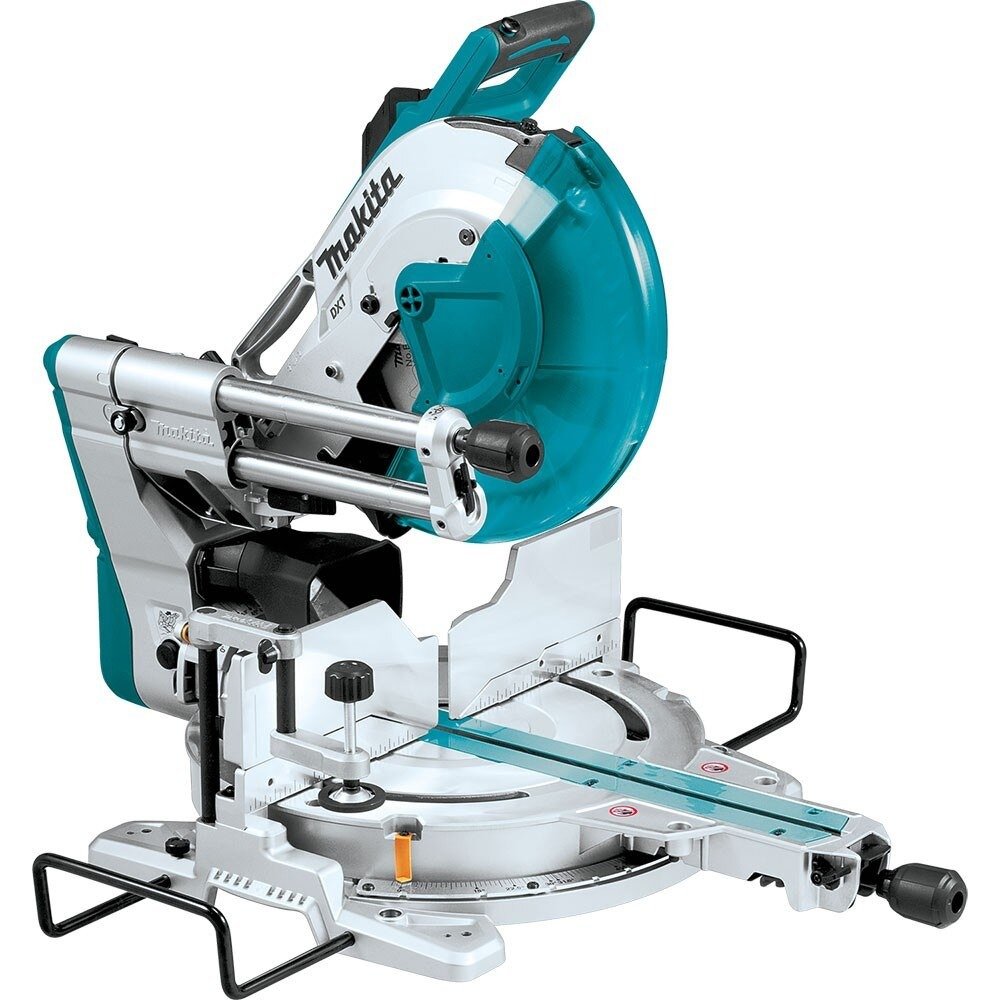
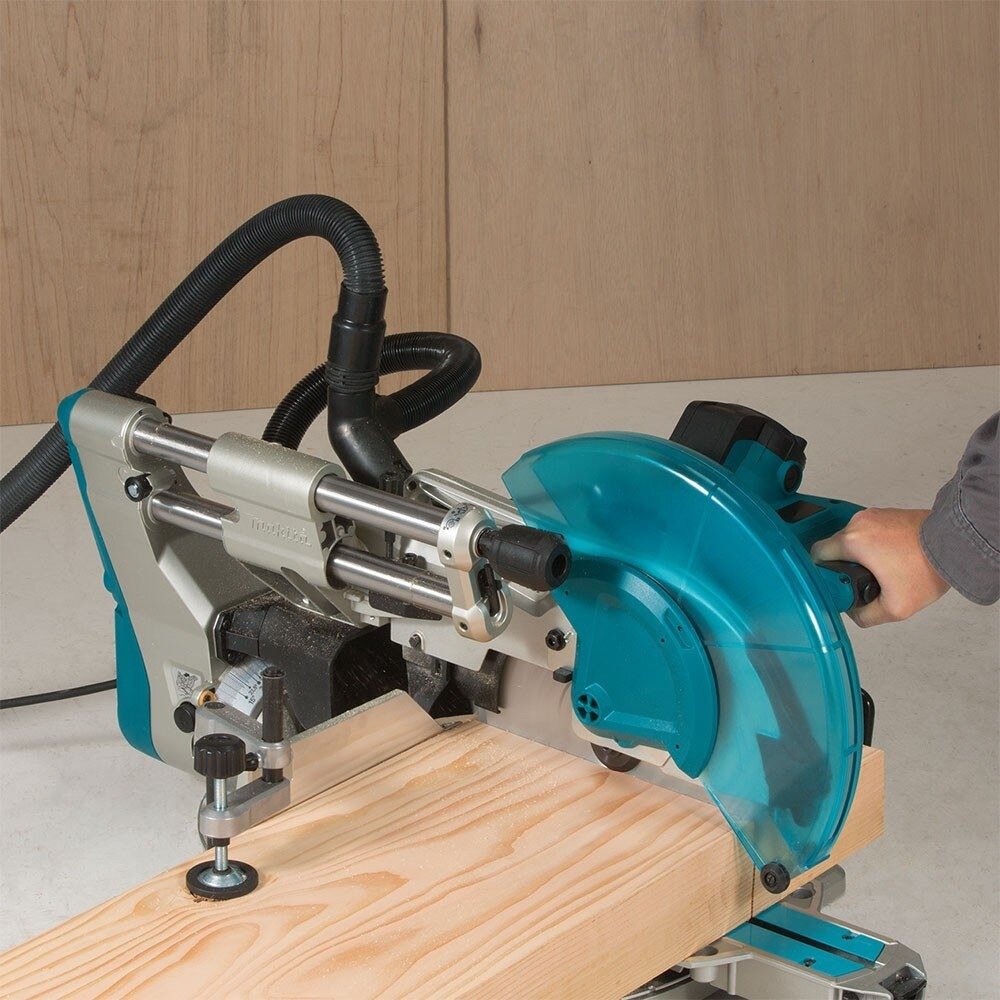
Makita LS1219L 12" Dual-Bevel Sliding Compound Miter Saw with Laser
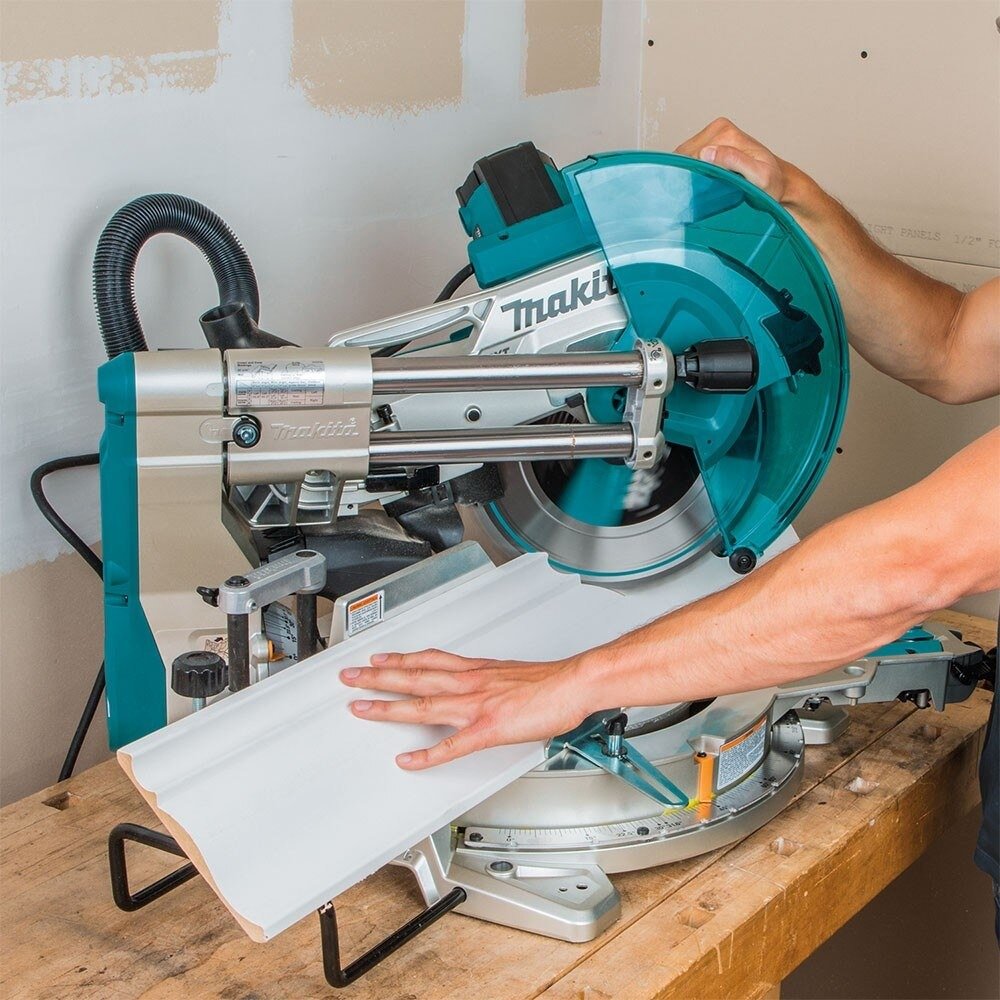
Homegrail's 12-inch roundup names it best overall, praising accurate, consistent cuts, a direct-drive motor that doesn't bog down, soft start, electronic brake, and a precision-machined aluminum base. Reviewers reach for it when money is secondary to out-of-box precision and refinement — the connoisseur's pick in this class.
- Out-of-box precision reviewers single out — accurate, consistent cuts that don't bog down
- Direct-drive motor with soft start and electronic brake, and a precision-machined aluminum base
- Lightweight for its class, with a 0–40°R / 0–60°L miter range and an accessible bevel lock
Important limitation: Premium price, and the poor manual is a consistent reviewer complaint — plan to learn setup from videos, per Homegrail's experience.
- Blade / power: 12 in, 13A direct drive (per Homegrail)
- Miter range: 0–40° right / 0–60° left
- Features: Soft start, electronic brake, laser, machined aluminum base
Best for: Buyers for whom out-of-box accuracy and refinement matter more than saving money.
The consensus: Homegrail's 12-inch roundup names it best overall, praising accurate, consistent cuts, a 13-amp direct-drive motor that doesn't bog down, soft start, electronic brake, and a precision-machined aluminum base — while flagging the poor manual (learn setup from videos, per their experience).
What it's good at, per reviewers: out-of-box precision and refinement; lightweight for its class; 0–40° right / 0–60° left miter range with an accessible bevel lock.
The honest caveats: premium price; the manual complaint is consistent enough to mention. This is the connoisseur's pick, not the value pick.
Buy it if: out-of-box accuracy and refinement matter more than saving money. Check Price on Amazon
5. Skil MS6305-00 — The Budget Star With Lab Data
Skil MS6305-00 10" Dual-Bevel Sliding Compound Miter Saw
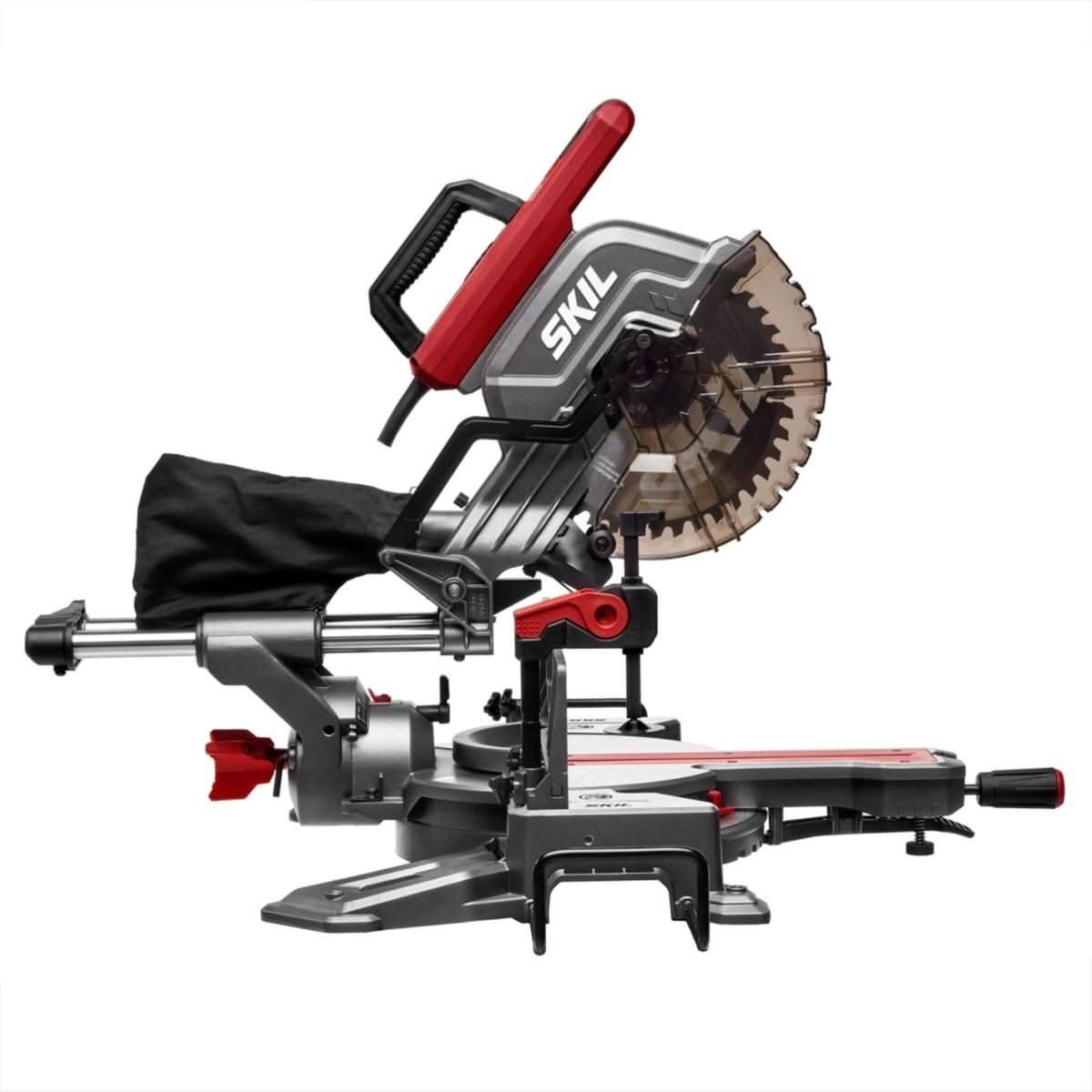
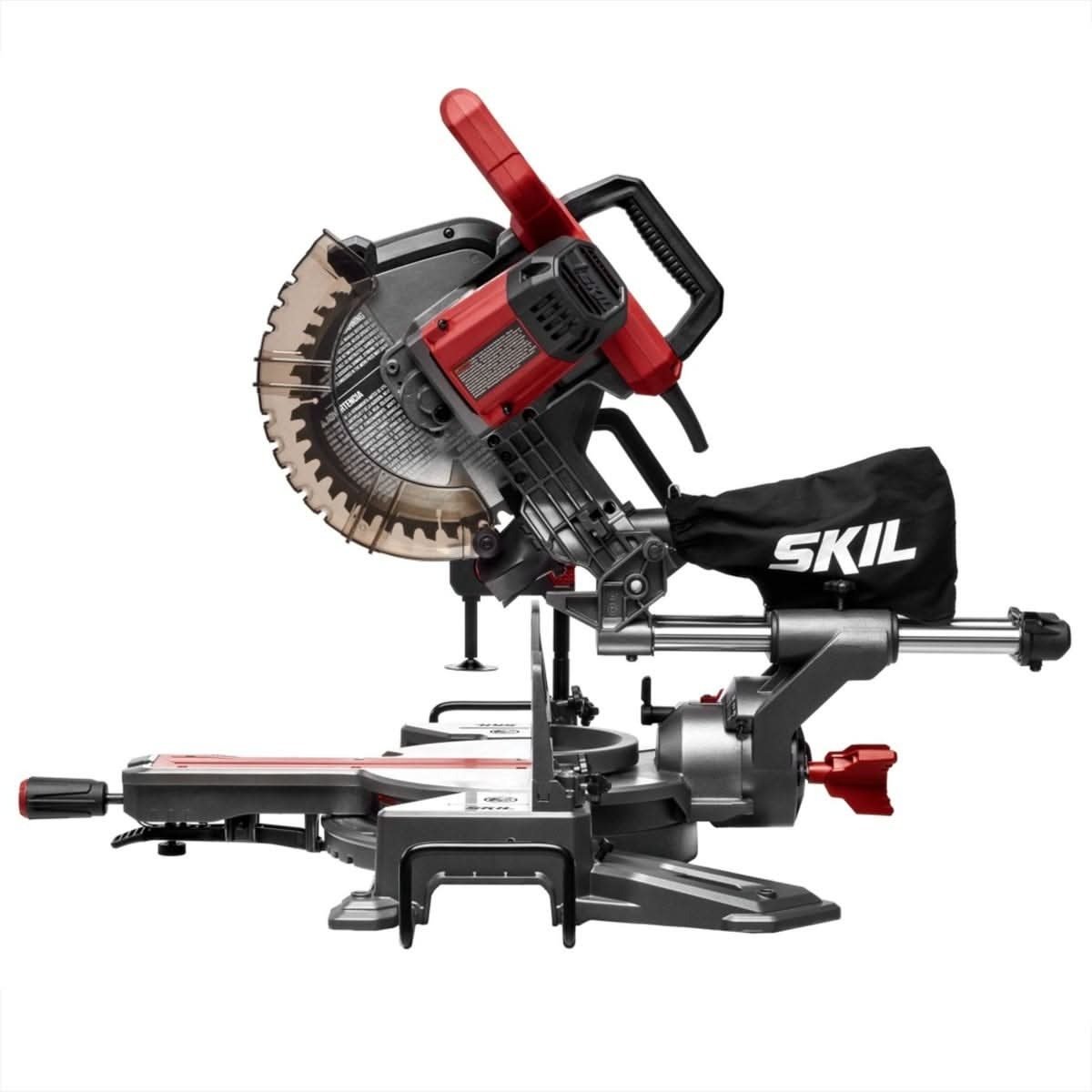
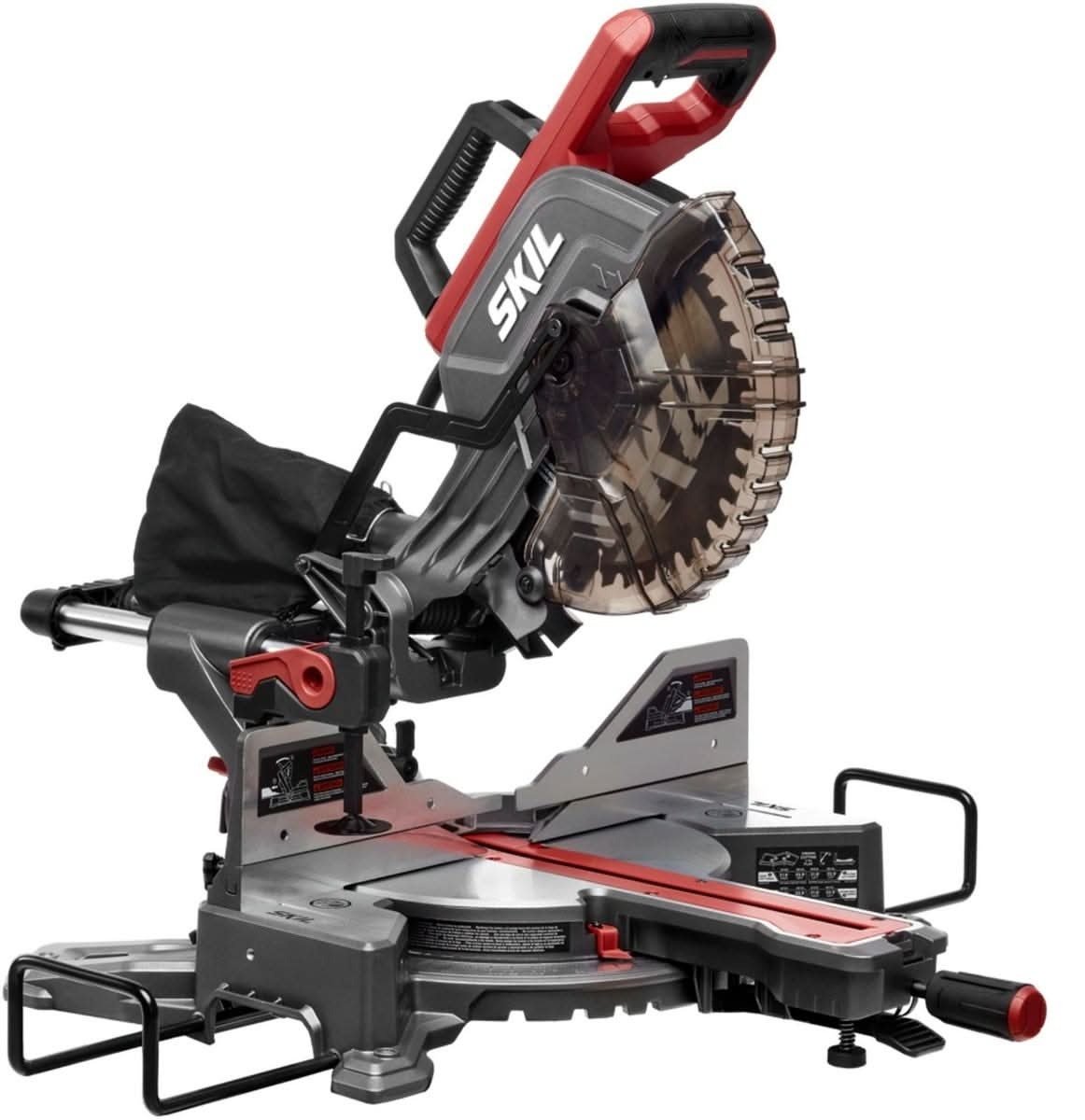
Tech Gear Lab's standout value finding: cutting power and precision 'equal to those of saws twice its price', backed by measured data — 4,960 RPM, crosscuts through 2×12 lumber, a 45° miter on 2×8 described as 'quick, smooth, and easy', and 2.67 oz of dust collected in their dust-collection test, one of the best they measured. The rare budget pick with lab data behind it.
- Lab-measured performance equal to saws twice its price (Tech Gear Lab)
- LED shadow cut line, clearly marked miter angles with plenty of positive stops, and a miter-lock override
- Dust collection that embarrasses pricier saws — 2.67 oz collected in Tech Gear Lab's dust test
Important limitation: It's a 10-inch saw — roughly 12.6-inch crosscut capacity versus the 12-inch picks above, and the bevel range is respectable, not class-leading. If you need 12-inch capacity, this isn't your saw at any price.
- Blade / power: 10 in, 15A corded
- Miter / bevel: 51° miter L/R; 48°L/45°R bevel
- Measured (Tech Gear Lab): 4,960 RPM; ~12.6 in crosscut; 2.67 oz dust collected
Best for: Buyers who want the best-reviewed budget saw in the category, backed by actual lab measurements.
The consensus: Tech Gear Lab's standout value finding — performance "equal to those of saws twice its price," with measured data: 4,960 RPM, crosscuts through 2×12 lumber, 45° miter on 2×8 described as "quick, smooth, and easy," and 2.67 oz of dust collected in their dust-collection test (one of the best they measured).
What it's good at, per reviewers: an LED shadow cut line reviewers like, clearly marked miter angles with plenty of positive stops, miter-lock override, and dust collection that embarrasses pricier saws.
The honest caveats: it's a 10-inch saw — less capacity than the 12-inch picks above (roughly 12.6" crosscut per Tech Gear Lab). Bevel range (48°L/45°R) is respectable, not class-leading. If you need 12-inch capacity, this isn't your saw at any price.
Buy it if: you want the best-reviewed budget saw in the category, backed by actual lab measurements. Check Price on Amazon
How to Read a Miter Saw Review (and Spot a Fake One)
Since this whole article is built on other people's reviews, here's the standard we applied — and the one you should apply to every tool review you read:
- Name the test. "We tested 13 miter saws hands-on in workshop conditions" (Bob Vila) is verifiable. "After 15 years in woodworking and countless hours testing" with no named tester, no photos of a test rig, and no methodology section is not.
- Show the numbers. Tech Gear Lab publishes measured RPM (4,960 on the Skil), dust weights (2.67 oz), and scored categories (Precision and Accuracy 9.5). A review with star ratings but no measurements is decoration.
- Attribute the claim. Every verdict in this guide carries its outlet. If a review's "best overall" has no reasoning you can check — no test described, no runner-up explained — treat the pick as unproven.
- Watch the catalog. Thin affiliate roundups recommend whatever has an affiliate program. The tell: picks that don't appear in any hands-on test, specs copied from Amazon listings, and "reviews" published the same week as a dozen other categories.
- Check the date. Miter saws change slowly, but listings don't — a 2023 review's "best value" may be discontinued. We checked every pick here for current availability signals in 2026 coverage; re-verify at purchase.
Buying Guide: The 6 Decisions Reviewers Say Matter
1. Blade size: 10" vs. 12". 12-inch sliders clear wider boards (2×14 at 90° on the DeWalts); 10-inch saws (Skil) cost less and weigh less. Reviewers treat 12" as the default for a fixed station, 10" for budget or portability.
2. Sliding vs. non-sliding. Sliding adds crosscut capacity dramatically. Non-sliding compound saws (like Makita's 10" compound, Bob Vila's woodworking pick) are simpler and cheaper — fine if you never cut wide stock.
3. Single vs. dual bevel. Dual bevel (both sides) saves flipping long stock. Reviewers treat it as worth the premium for trim and crown work; for basic crosscuts, single bevel suffices. For the full 12-inch slider treatment, see.
4. Cut-line guidance. Shadow line (DeWalt XPS, Skil LED) beats laser, per reviewer consensus — no calibration, no drift.
5. Dust collection. Reviewers consistently dock saws for poor dust control; the Skil's measured 2.67 oz collection is the benchmark cited most. Plan a shop-vac hookup regardless — even the best saw throws fine dust.
6. Corded vs. cordless. Corded for the fixed station (value + sustained power); cordless for the jobsite (mobility). Don't buy cordless for a saw that will never leave the bench — you're paying for batteries you don't need. Full analysis — .
7. The blade it ships with. Reviewers consistently note that stock blades are adequate, not great — a quality 60-tooth (or higher) fine-finish blade is the cheapest accuracy upgrade for trim work, and reviewers treat blade choice as part of the saw's real cost. Factor one into the budget.
8. Warranty as a durability signal. Sensible Digs' review methodology reads warranty length as a durability signal, and it's a reasonable heuristic: brands that warranty longer expect fewer failures. Compare the fine print (tool vs. battery vs. service) rather than the headline years.
Saw Types at a Glance
Sliding compound miter saws (DWS780, GCM12SD, DWS779, LS1219L, MS6305-00) — the category this article covers: the head slides on rails (or Bosch's glide arm) for wide crosscuts and bevels for angled cuts, handling everything from framing lumber to crown molding. Non-sliding compound — simpler, cheaper, less crosscut capacity; fine if you never cut wide stock. Chop saws — a different tool entirely (abrasive wheel, for metal; miter saws are for wood) — see for the full chop-saw-vs-miter-saw breakdown. Cordless sliders — the battery-powered subset, for jobsites without power — see.
DWS780 vs. DWS779: The Comparison Reviewers Keep Making
This is the most useful head-to-head in the category because it's the decision real buyers face: same brand, same 12-inch dual-bevel sliding class, different price. Reviewers agree on the shape of the trade: the DWS780 adds the XPS shadow-line cut indicator and a more refined feature set; the DWS779 gives up the XPS and costs meaningfully less. Both cut 2×14 at 90°. Nobody disputes the DWS780 is the better saw; the dispute — such as it is — is whether the XPS premium is worth it to you. Trim carpenter who lives by the cut line: yes. Framer who cuts by the pencil mark: save the money.
6 Mistakes Buyers Make
- Buying capacity you won't use. A 12-inch slider for cutting 2×4s is money and floor space wasted.
- Ignoring the wall-clearance problem. Measure behind your bench before choosing between rail sliders and the Bosch glide.
- Choosing on motor amps alone. Reviewers agree: at 15A, every reputable saw has enough power — accuracy and detents decide.
- Skipping dust collection planning. Fine dust is the universal reviewer complaint; budget the shop-vac hookup.
- Buying cordless for a bench saw. Batteries are expensive; if the saw never moves, corded wins on value.
- Trusting a single reviewer's winner. The Bosch-vs-DeWalt split proves it: read the consensus, then buy for your shop layout.
SERP Danger Rebuttal: Invented Ratings and Borrowed Expertise
The "miter saws reviews" SERP contains pages that look like reviews and aren't. Examples from this SERP's results: a sliding-compound roundup awarding 4.7- and 4.8-star ratings with no review methodology, no tester names, and no data behind the numbers — and opening with "after 15 years in woodworking and countless hours testing saws on job sites," a biography no reader can verify. Another result's "top 5" mixes books and toys into a tool ranking with invented "9.9 Exceptional" scores.
Our standard, applied in this article: no score without a source, no "tested" without a tester. Every verdict above names the outlet — Bob Vila (13 saws, hands-on), Tech Gear Lab (lab measurements), Pro Tool Reviews, Family Handyman — and where outlets disagree (Bosch vs. DeWalt), we say so instead of inventing a tiebreak. If a review won't show its work, it isn't a review; it's advertising with a star graphic.
FAQs
(provenance: primary keyword "miter saws reviews") — The strongest consensus is the DeWalt DWS780 (most top placements across outlets); the most "best overall" titles go to the Bosch GCM12SD (Bob Vila hands-on, Pro Tool Reviews, Popular Mechanics). They disagree on the top spot — the split follows shop layout, explained above.
(provisional buyer question; the comparison reviewers make most) — Same capacity class; the DWS780 adds the XPS shadow line and refinement. Trim work: DWS780. Budget framing: DWS779.
(provisional; cordless sub-intent) — On capability, reviewers say the gap has closed; on price, corded still wins. Full comparison — .
(provisional) — 10-inch for budget/portability and stock up to ~12" wide; 12-inch sliding for wide boards and trim. See for the 12-inch class in depth.
(provisional; sibling angle) — Different tools: miter saws cut wood with precision angles; chop saws cut metal abrasively. Full breakdown — .
(provisional) — Reviewers treat a stand as near-essential for jobsite work and optional for a fixed bench station. Our 12-inch guide covers stand selection.
(provisional) — Reviewers don't crown a reliability king from test data alone; instead, outlets like Sensible Digs read warranty length as a durability signal, and long-term owner feedback favors the established pro brands (DeWalt, Bosch, Makita, Milwaukee) over budget labels. Buy the saw, not the brand — but buy it from a brand with a service network.
Final Verdict
If this article had to name one saw, the reviewer consensus points to the DeWalt DWS780 — the most-cited, most top-placed saw across independent 2026 reviews, and the accuracy benchmark the category is measured against. But the more useful verdict is conditional, because the reviewers themselves split: bench against a wall → Bosch GCM12SD (the glide is decisive); tightest budget with lab backing → Skil MS6305-00; 12-inch capacity for least money → DeWalt DWS779; money-no-object precision → Makita LS1219L. Read the consensus, buy for your shop — and distrust any "review" that won't show its work.
And use the sibling guides for what this one deliberately doesn't do — for the full 12-inch buying treatment, for every cordless saw compared head-to-head, and if you're still deciding between a miter saw and a chop saw. Each covers its angle; none repeats the others.
Final Recommendations
The Consensus Reference: DeWalt DWS780 12" Double-Bevel Sliding Compound Miter Saw — the most-cited, most top-placed 12-inch slider across independent 2026 reviews
Most 'Best Overall' Titles: Bosch GCM12SD 12" Axial-Glide Dual-Bevel Sliding Miter Saw — the most 'best overall' titles in hands-on testing, and the wall-clearance winner
Consensus Value Pick: DeWalt DWS779 12" Double-Bevel Sliding Compound Miter Saw — full 12-inch dual-bevel sliding capacity at the category's lowest credible price
Premium Consensus Pick: Makita LS1219L 12" Dual-Bevel Sliding Compound Miter Saw with Laser — the premium pick reviewers reach for when precision outranks price
Budget Consensus Pick: Skil MS6305-00 10" Dual-Bevel Sliding Compound Miter Saw — cutting power and precision equal to saws twice its price, with the lab data to prove it
Related Guides
- 12-inch buying guide: (12-Inch Sliding Compound Miter Saw: 6 Best (2026)) — the full buying guide for the 12-inch class; this article's consensus picks link there for depth.
- Cordless deep-dive: (Best Cordless Miter Saw 2026: 6 Picks Compared) — every battery saw compared head-to-head.
- Which tool? (Chop Saw vs Miter Saw: What's the Difference?) — if you're not sure a miter saw is the right tool at all.