
Clearing up "Motorola Edge" first
The name "Motorola Edge" covers a whole family of phones, so let us pin this comparison down before anything else. This article compares the two models a US shopper is actually choosing between in 2026:
- Motorola Edge (2025) — the US-market model launched June 5, 2025, at $549.99 (Motorola.com, Best Buy, Amazon, later via US carriers).
- Samsung Galaxy A17 5G — Samsung's US budget 5G phone launched January 7, 2026, at $199.99 MSRP.
If you have been reading spec-comparison pages that pit the Motorola Edge 60 or Edge 70 against the Galaxy A17 5G, be careful: those Edge variants are international (India/EU) models that Motorola does not sell in the US. They use different chips, different pricing, and their prices are quoted in rupees — none of which tells a US buyer anything useful. (More on this in the SERP danger rebuttal below.)
The short answer
The Samsung Galaxy A17 5G is the smarter buy for most people — it costs roughly a third of the Edge's launch price, has an excellent 6.7-inch Super AMOLED display for the money, and Samsung promises six years of OS and security updates, which is the longest support window in the budget class. Buy it if you want the most phone-per-dollar in 2026 and are comfortable with slower 25W charging and a less premium feel.
Buy the Motorola Edge (2025) if you want a noticeably better display (sharper 1.5K p-OLED, 120Hz, far brighter), a far more versatile camera system (50MP ultrawide with macro plus a 10MP 3x telephoto — the A17 has neither), 68W fast charging with 15W wireless charging, and flagship-grade durability (IP68/IP69, MIL-STD-810H) — and you are willing to pay midrange money for it. Its weakness is software support: Motorola promises two Android OS upgrades and four years of security updates, which trails Samsung badly at this price spread.
Why you can trust this comparison: every specification below was verified against US-market editorial and manufacturer-sourced pages in October 2026. We did not test these phones ourselves, and this article claims no hands-on testing. Where a spec comes from a specific source, we say so. Prices quoted are launch MSRPs (street prices change constantly — check the current listing).
Quick Picks
Short on time? These are our top recommendations.
Comparison table
| Motorola Edge (2025) | Samsung Galaxy A17 5G | |
|---|---|---|
| US launch | June 5, 2025 | January 7, 2026 |
| Launch price (MSRP) | $549.99 | $199.99 |
| Display | 6.7" p-OLED, 1220×2712 (446 ppi), 120Hz, HDR10+, up to 4500-nit peak | 6.7" Super AMOLED, 1080×2340 (385 ppi), 90Hz, up to 800-nit high-brightness |
| Glass | Corning Gorilla Glass 7i | Corning Gorilla Glass Victus |
| Chipset | MediaTek Dimensity 7400 Ultra (4nm) | Samsung Exynos 1330 (5nm) |
| RAM / Storage | 8GB LPDDR4X / 256GB UFS 2.2 | 4GB / 128GB |
| microSD | No | Yes, up to 2TB (hybrid slot) |
| Rear cameras | 50MP f/1.8 main (OIS) + 50MP f/2.0 ultrawide (122°, macro) + 10MP 3x telephoto (OIS) | 50MP f/1.8 main (OIS) + 5MP f/2.2 ultrawide + 2MP f/2.4 macro |
| Front camera | 50MP (autofocus) | 13MP f/2.0 |
| Battery | 5,200mAh | 5,000mAh |
| Charging | 68W wired (charger in box), 15W wireless | 25W wired, no wireless charging |
| Durability | IP68/IP69, MIL-STD-810H, aluminium frame, vegan-leather back | IP54 |
| OS at launch | Android 15 (Hello UI) | Android 16 |
| Update promise | 2 Android OS upgrades + 4 years of security updates (Motorola Customer Care) | 6 years of OS + security updates (Samsung) |
| SIM | Nano-SIM + eSIM | Nano-SIM (+ eSIM / dual-SIM by market) |
| Headphone jack | Not documented for this model | Yes (per Best Buy product Q&A) |
| Colors | Deep Forest (Pantone) | Black, Blue, Gray |
| In the box | Phone, 68W charger, Type-C cable, SIM tool | Phone, cable, guides, SIM tool (charger not included) |
| Amazon Link | Check Price on Amazon | Check Price on Amazon |
Table data verified October 2026 from manufacturer-sourced and editorial spec pages. Launch MSRPs are historical facts, not current prices.
Detailed reviews
1. Motorola Edge (2025) — the premium-feel pick
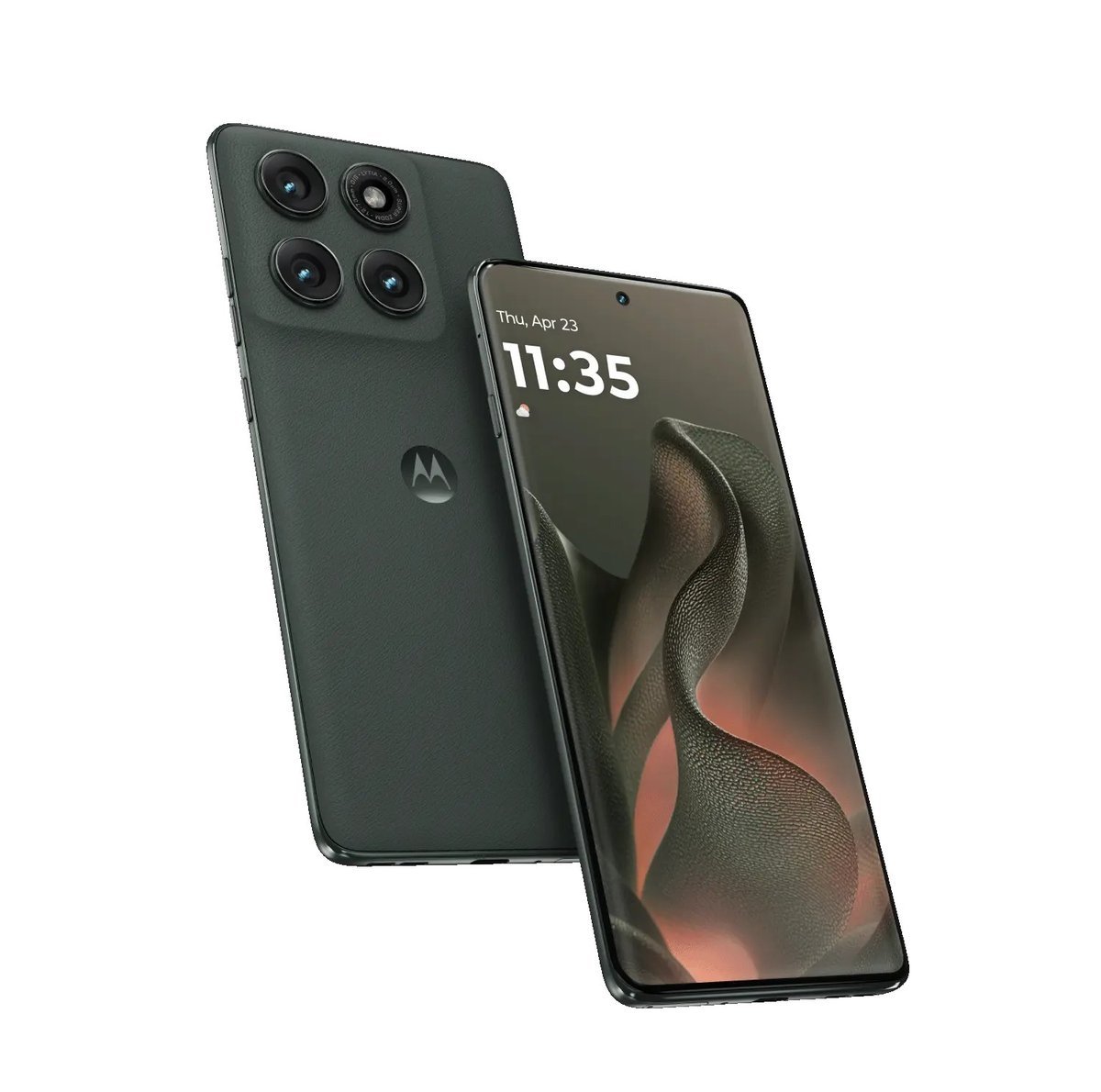
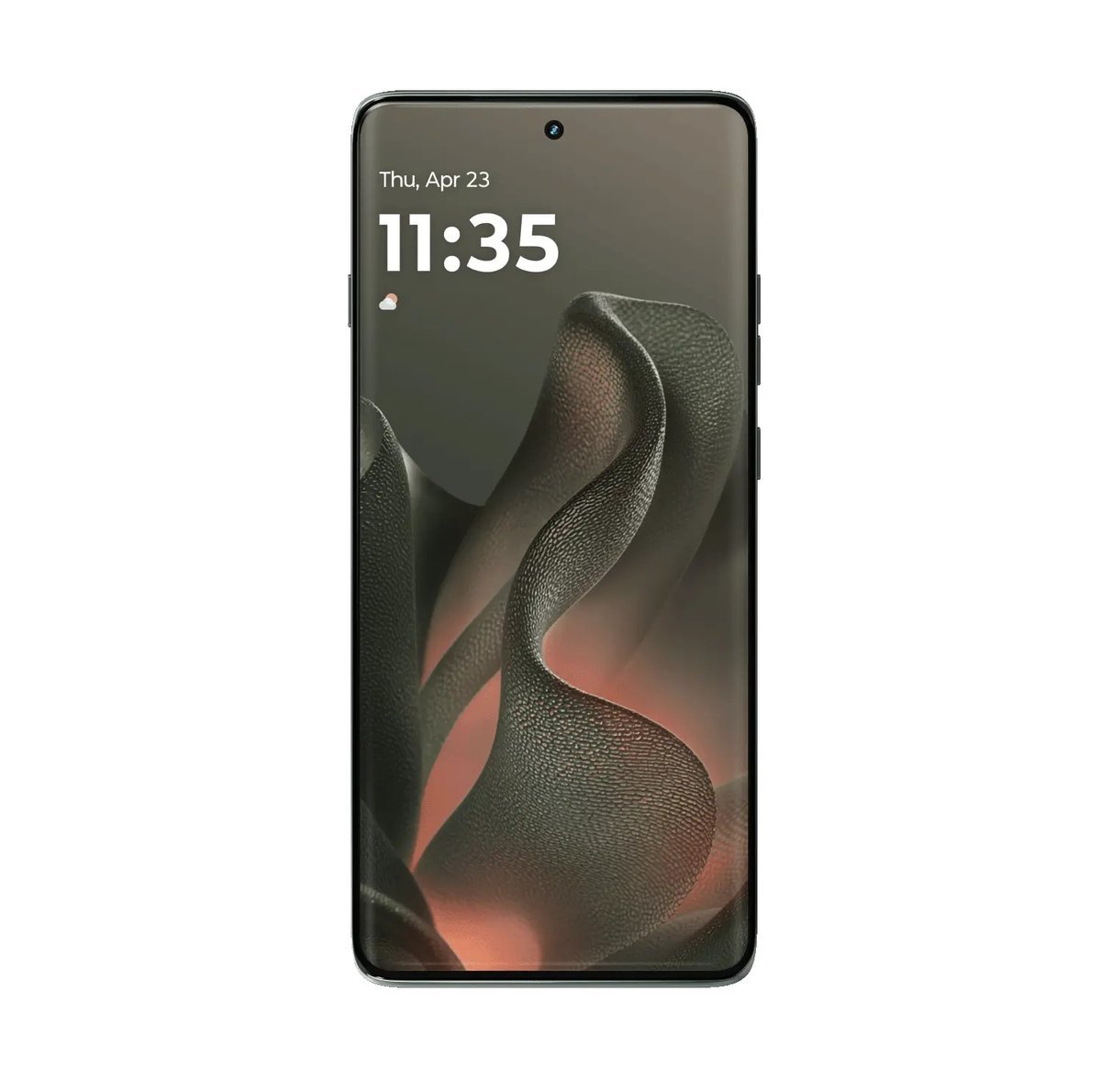
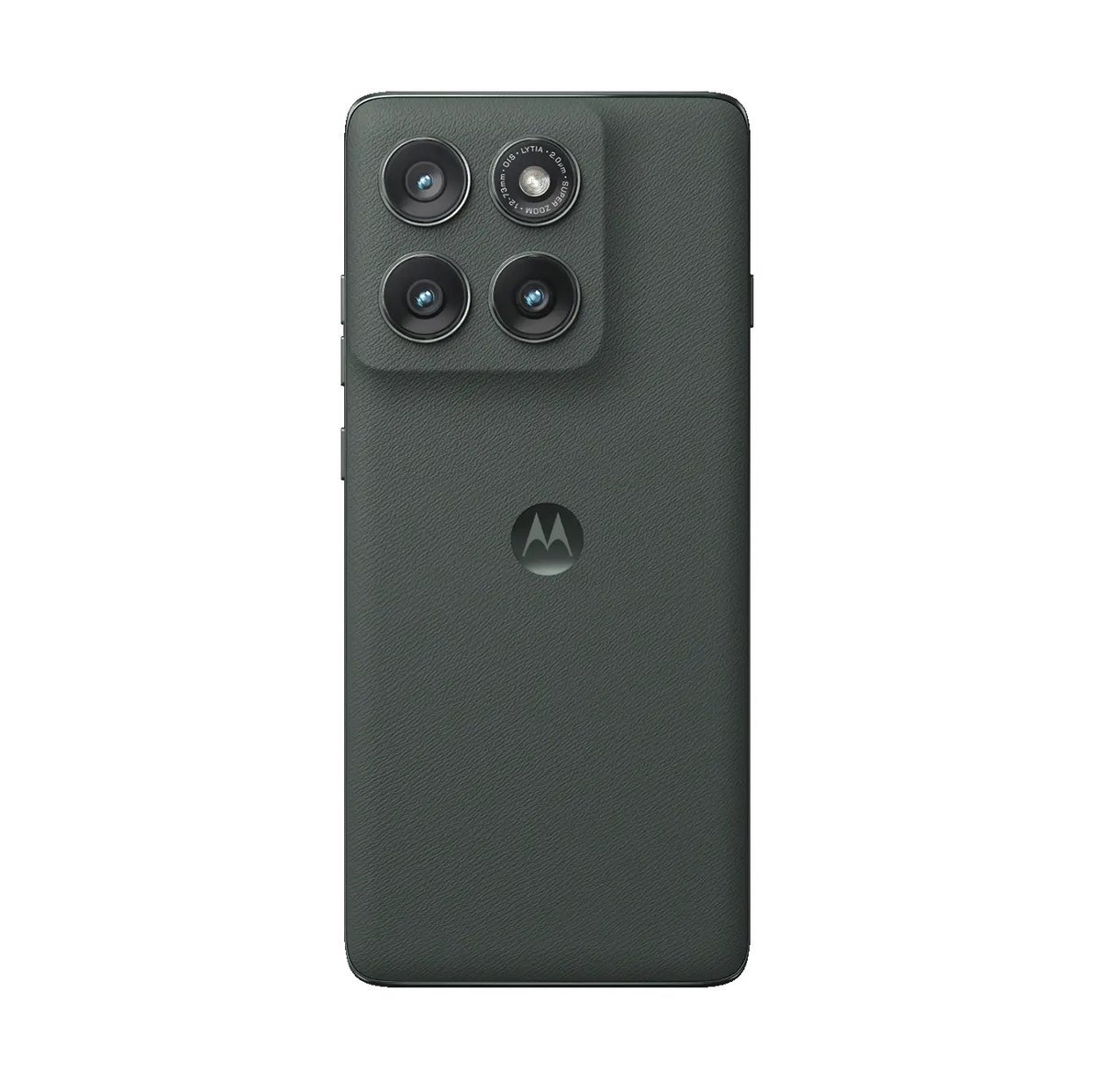
Motorola Edge (2025)
Motorola's US midrange flagship reads like a greatest-hits list: a 6.7-inch p-OLED at 1220×2712, 120Hz and up to 4,500-nit peak brightness; a triple camera with 50MP OIS main, 50MP macro-capable ultrawide and a 10MP 3x telephoto; 68W TurboPower charging with the charger in the box plus 15W wireless; and IP68/IP69 + MIL-STD-810H durability. The Dimensity 7400 Ultra with 8GB RAM and 256GB storage sits a clear tier above the A17.
- Sharpest, brightest screen here: 1.5K p-OLED, 120Hz, 4,500-nit peak
- Only phone here with a 3x telephoto and a 50MP macro-capable ultrawide
- 68W wired + 15W wireless charging, charger included in the box
Important limitation: Software support is the weak spot: two Android OS upgrades and four years of security updates vs Samsung's six years; no microSD slot; launched at $549.99.
- Display: 6.7 in p-OLED, 1220×2712, 120Hz, HDR10+, Gorilla Glass 7i
- Cameras: 50MP OIS main + 50MP ultrawide/macro + 10MP 3x telephoto; 50MP front
- Performance: Dimensity 7400 Ultra; 8GB RAM; 256GB (no microSD)
- Battery / charging: 5,200mAh; 68W wired (charger in box); 15W wireless
- Durability: IP68/IP69, MIL-STD-810H
- Updates: 2 Android OS upgrades + 4 years security
Best for: Buyers who want the best screen, cameras and charging under ~$550 and upgrade every 2–4 years.
The Edge (2025) is Motorola's US midrange flagship, and it reads like a greatest-hits list of features people actually ask for: a genuinely excellent display, a camera system with a real zoom lens, very fast wired charging plus wireless charging, and durability ratings you almost never see under $600.
Display. The 6.7-inch p-OLED panel runs at 1220×2712 (roughly 446 ppi) with a 120Hz refresh rate, HDR10+ support, and a claimed 4500-nit peak brightness. Against the A17's 1080×2340, 90Hz, 800-nit panel, this is the single biggest hardware gap between the two phones — sharper text, smoother motion, and far more usable in direct sunlight. The panel is curved and protected by Gorilla Glass 7i.
Cameras. This is where the Edge earns its price. The triple rear system pairs a 50MP f/1.8 main sensor with optical image stabilisation, a 50MP f/2.0 ultrawide with a 122° field of view that doubles as a macro camera, and a 10MP telephoto with 3x optical zoom and OIS. The front camera is a 50MP unit with autofocus — versus the A17's 13MP. More megapixels do not automatically mean better photos (processing matters more than the count), but the Edge is the only phone here with optical zoom and a high-resolution ultrawide, which gives you genuinely different kinds of shots.
Performance. The MediaTek Dimensity 7400 Ultra (4nm) with 8GB of LPDDR4X RAM and 256GB of UFS 2.2 storage sits a clear tier above the A17's Exynos 1330 with 4GB of RAM. Expect snappier app launches, smoother multitasking, and more headroom for games. (No manufacturer claims benchmark numbers here; chip tiering is per published spec sheets.)
Battery and charging. The 5,200mAh battery is the largest of the two, and the 68W TurboPower wired charging is dramatically faster than the A17's 25W — plus Motorola includes the 68W charger in the box, which Samsung does not. Wireless charging at 15W is also present; the A17 has none.
Durability. IP68 and IP69 dust/water certification plus MIL-STD-810H military-standard testing, an aluminium frame, and a vegan-leather back. The A17 is rated IP54 with a plastic build. If your phone lives a rough life, this matters.
Software support — the weak spot. Motorola's update commitment is two major Android OS upgrades and four years of security updates (per Motorola Customer Care's public answer). That is fine in absolute terms, but the $200 Samsung gets six years of both. Over a 4–5 year ownership, the A17 is the safer long-term bet.
- Good for: Buyers who want the best screen, cameras, and charging under ~$550 and do not keep phones longer than 3–4 years.
- Strengths (per verified sources): Sharper/brighter 120Hz display; telephoto + macro ultrawide camera system; 68W + 15W wireless charging with charger in box; IP68/IP69 + MIL-STD-810H; 8GB/256GB.
- Limitations (per verified sources): Only 2 OS upgrades vs Samsung's 6 years; no microSD slot; launch price was $549.99 — street prices vary, so the value equation depends on current deals.
2. Samsung Galaxy A17 5G — the value pick
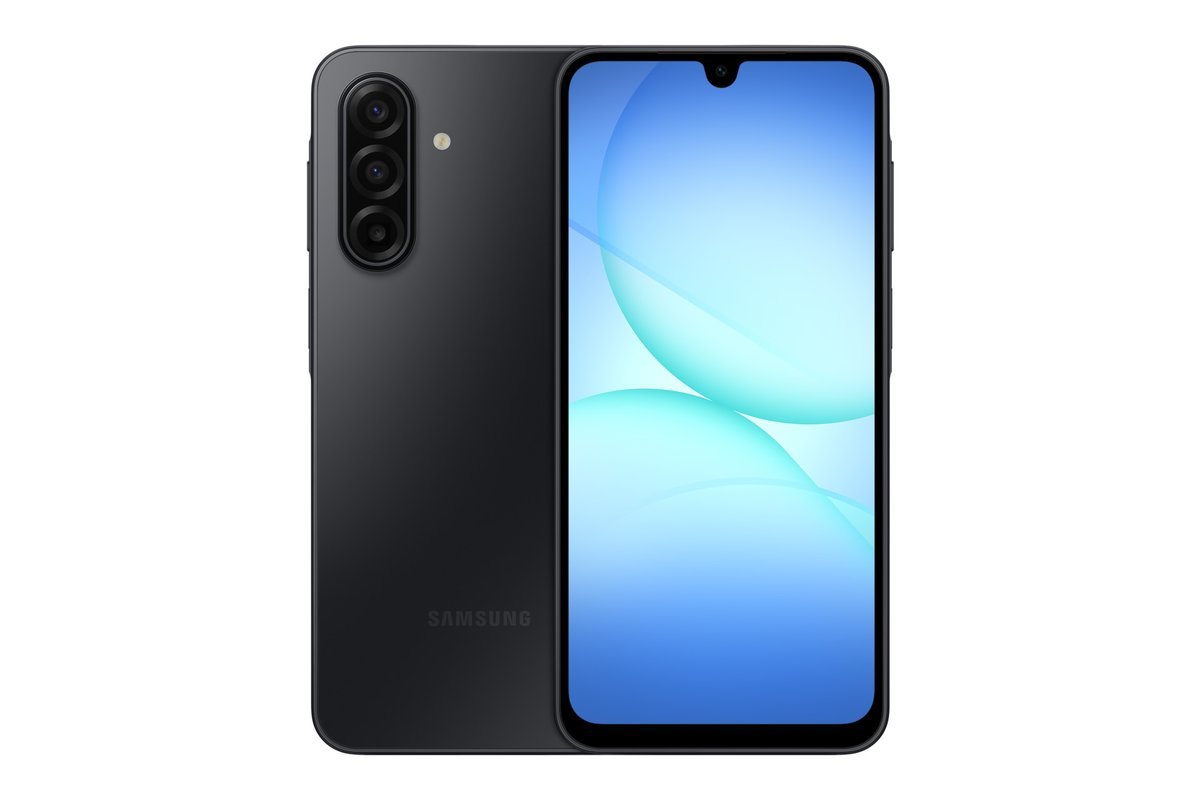
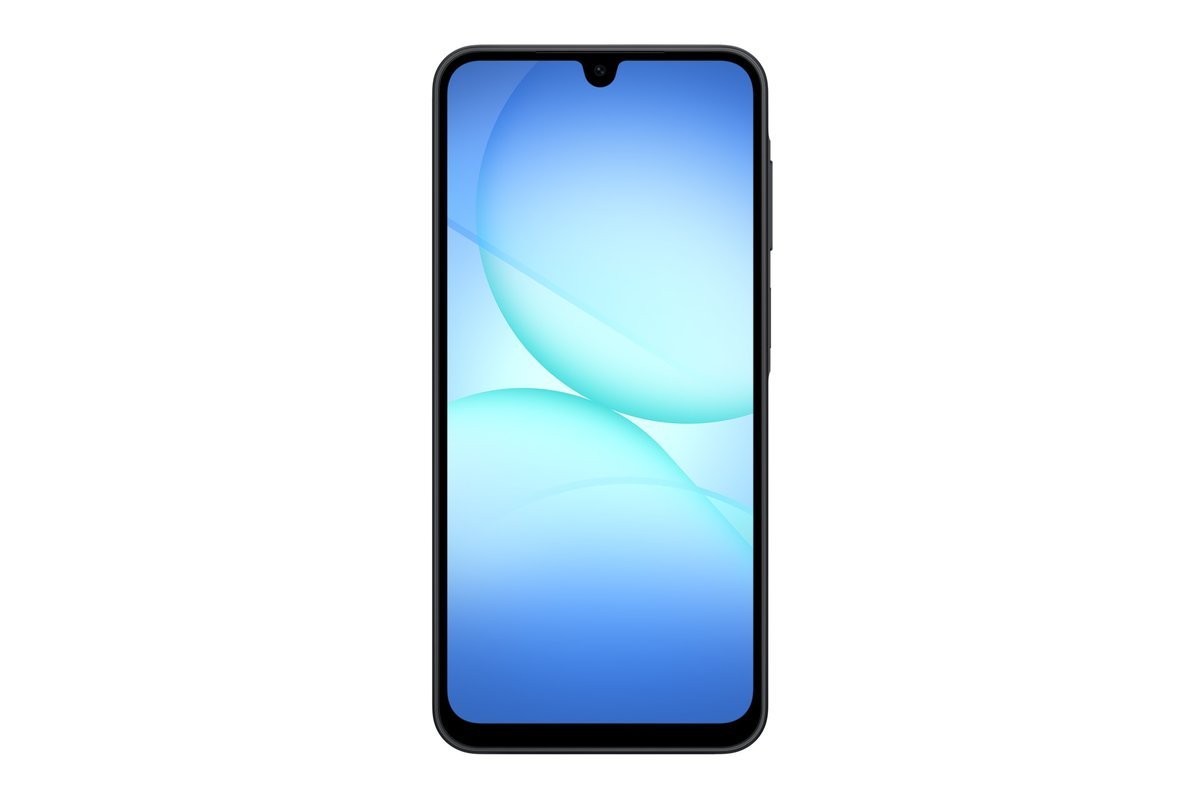
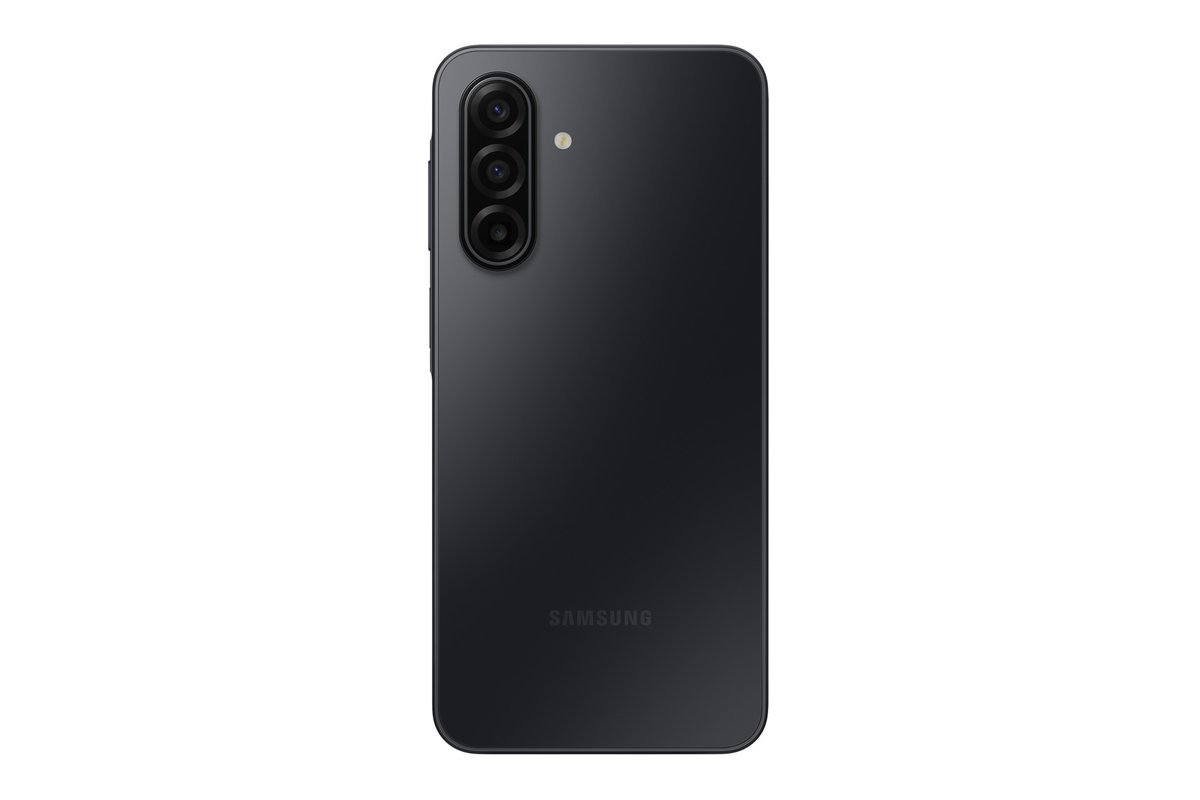
Samsung Galaxy A17 5G
Samsung's budget 5G phone brings a 6.7-inch Super AMOLED 90Hz display and a 50MP OIS main camera to a $199.99 launch price — features rivals at this price rarely match — plus microSD expansion up to 2TB and the longest support promise in the budget class: six years of OS and security updates.
- 6.7in Super AMOLED 90Hz at a $199.99 launch price
- Six years of OS + security updates — best in the budget class
- microSD expansion up to 2TB; 50MP OIS main camera
Important limitation: 4GB RAM limits heavy multitasking; 25W charging only, no wireless charging and no charger in the box; IP54 build is a step below the Edge.
- Display: 6.7 in Super AMOLED, 1080×2340, 90Hz, Gorilla Glass Victus
- Cameras: 50MP OIS main + 5MP ultrawide + 2MP macro; 13MP front
- Performance: Exynos 1330; 4GB RAM; 128GB + microSD up to 2TB
- Battery / charging: 5,000mAh; 25W wired (charger not included); no wireless
- Durability: IP54
- Updates: 6 years of OS + security updates
Best for: Budget buyers and long-term keepers: $199.99 launch price with six years of updates.
The A17 5G is Samsung's answer to a simple question: what is the cheapest phone that still feels like a modern phone? At $199.99 MSRP, it brings a Super AMOLED display, a 50MP OIS main camera, and Samsung's six-year update promise to a price where most rivals ship dim LCDs and two years of updates.
Display. The 6.7-inch FHD+ Super AMOLED at 90Hz with 800-nit high-brightness mode is the A17's headline feature. Under $200, most competitors (Motorola's own Moto G 2026 included) use LCD panels; AMOLED's contrast and color are a visible, everyday upgrade. It is not as sharp (385 ppi) or as fast (90Hz) or as bright as the Edge's panel, but for the price it is outstanding.
Cameras. The 50MP f/1.8 main camera has optical image stabilisation — a feature that is rare at this price and genuinely helps night and indoor shots. The supporting cast is modest: a 5MP ultrawide and a 2MP macro, plus a 13MP front camera. You get one very good camera and two fill-ins. The Edge gives you three genuinely useful ones.
Performance. The Exynos 1330 (5nm) with 4GB of RAM and 128GB of storage handles calls, messaging, maps, streaming, and casual games without complaint. Heavy multitasking and demanding 3D games are where 4GB of RAM shows its limits. Storage is expandable via microSD up to 2TB — a real advantage over the Edge if you hoard photos and offline media.
Battery and charging. 5,000mAh with 25W wired charging. All-day battery is the norm here; the charging speed is the compromise — noticeably slower than the Edge's 68W, and there is no wireless charging. No charger in the box (standard Samsung practice).
Durability. IP54 dust/water resistance and Gorilla Glass Victus on the front — reasonable for the price, a step below the Edge's IP68/IP69.
Software support — the killer feature. Six years of OS and security updates on a $200 phone is, as of 2026, the best support promise in the entire budget class. If you plan to keep your phone for four or more years, this single row of the comparison table outweighs most of the Edge's hardware advantages.
- Good for: Budget buyers, parents buying for kids, anyone who keeps a phone for years and wants it to stay secure.
- Strengths (per verified sources): $199.99 price; Super AMOLED display; 50MP OIS main camera; 6-year update promise; microSD expansion; headphone jack (per Best Buy Q&A); IP54 + Gorilla Glass Victus.
- Limitations (per verified sources): 90Hz display (vs 120Hz); 25W charging, no wireless; 4GB RAM; weaker ultrawide/macro cameras; Best Buy owner reviews (4.4/5 across ~880 reviews as of October 2026, AI-summarised) flag processor speed, heat, and weight as recurring complaints.
Buying guide: how to choose between them
1. Start with the price-tier reality
These phones launched at $549.99 and $199.99 — different tiers entirely. The honest question is not "which is better" but "is the Edge's hardware worth roughly 2.75x the money to you?" If your budget is firmly under $250, the decision is made: the A17 5G is the best $200 phone Samsung sells, and the comparison ends there. The Edge only enters the conversation if you are willing to spend midrange money.
2. How much does the display matter to you?
The display is where you will feel the difference every single day. The Edge's 1.5K, 120Hz, 4500-nit p-OLED is sharper, smoother, and far more sunlight-readable than the A17's 1080p, 90Hz, 800-nit panel. If you read outdoors, watch a lot of video, or simply notice screen quality, the Edge wins decisively. If you mostly use your phone indoors for messaging and social apps, the A17's Super AMOLED is already better than what $200 usually buys, and the gap shrinks.
3. Do you need a zoom lens — or just a good main camera?
Both phones have a 50MP OIS main camera, and for everyday point-and-shoot photos the gap is smaller than the spec sheets suggest. The Edge pulls ahead when you want different shots: 3x optical zoom for concerts, sports, and travel; a 50MP ultrawide that doubles as a macro camera; a 50MP autofocus selfie camera. If your photography is "take a quick photo of the thing in front of me," the A17's single good camera plus computational help is enough. If you enjoy photography, the Edge is the only choice here.
4. Charging speed is a bigger lifestyle factor than it sounds
68W wired charging (with the charger in the box) means the Edge can add most of a day's charge in the time it takes to shower and dress; 15W wireless charging adds overnight convenience. The A17's 25W wired charging is adequate but slow by comparison, with no charger included. If you charge overnight and never think about it, this does not matter. If you top up in a hurry, it matters a lot.
5. Count the years, not just the specs
This is the A17's strongest argument and the one spec-sheet comparisons underweight. Samsung's six-year OS + security promise means a 2026 purchase stays current into 2032. Motorola's two OS upgrades and four years of security support (per Motorola Customer Care) end support around 2029–2030. If you upgrade every 2–3 years, ignore this row. If you keep phones until they die, it is arguably the most important row in the table.
6. Storage habits: the microSD question
The Edge has 256GB of internal storage but no card slot — generous, but fixed. The A17 has 128GB internally but takes microSD cards up to 2TB. If you shoot lots of video, download offline maps and music, or simply hate managing storage, the A17's expandability is a genuine practical advantage the spec sheet buries.
7. Carrier compatibility and buying unlocked
Both phones are sold unlocked in the US (Motorola lists the Edge as universally unlocked for AT&T, T-Mobile, Verizon, and major MVNOs; the A17 5G's US unlocked model, SM-A176U, is carried by AT&T, T-Mobile, Verizon, and prepaid carriers per retailer listings). Buy the unlocked US variant (model SM-A176U for the Samsung; the US XT-series SKU for the Motorola) rather than an international import — imports can lack US 5G bands and warranty coverage. This matters more than most buyers expect: an "Edge 60" bought from an international seller is not the Edge (2025), may not support your carrier's 5G bands, and carries no US warranty.
Product types at a glance
| Type | This comparison | Typical buyer |
|---|---|---|
| Midrange-premium ($400–600) | Motorola Edge (2025) | Wants flagship-adjacent features, upgrades every 2–3 years |
| Budget flagship-killer ($150–250) | Samsung Galaxy A17 5G | Wants maximum value, keeps phone for years |
| Ultra-budget (under $150) | Neither — see our cheap phones guide | Kids, backups, minimal users |
Head-to-head comparisons
Display: Edge wins. 1220×2712 at 120Hz with 4500-nit peak vs 1080×2340 at 90Hz with 800-nit HBM. The gap is visible in sunlight and in fine text.
Cameras: Edge wins on versatility; A17 holds its own on the main sensor. Both have 50MP OIS main cameras. Only the Edge adds a 10MP 3x telephoto, a 50MP macro-capable ultrawide, and a 50MP autofocus front camera.
Performance: Edge wins. Dimensity 7400 Ultra + 8GB RAM vs Exynos 1330 + 4GB RAM — a full tier apart for multitasking and gaming.
Battery and charging: Edge wins on speed, tie on endurance. 5,200mAh/68W + 15W wireless vs 5,000mAh/25W wired. Both are all-day phones; the Edge refills far faster.
Software support: A17 wins decisively. Six years of OS + security updates vs two OS upgrades + four years of security. This is the A17's single biggest advantage and it compounds every year you own the phone.
Durability: Edge wins. IP68/IP69 + MIL-STD-810H vs IP54. (Gorilla Glass Victus on the A17 vs Gorilla Glass 7i on the Edge is closer — both are solid.)
Storage flexibility: A17 wins. microSD up to 2TB vs no card slot.
Value: A17 wins. $199.99 vs $549.99 at launch. The Edge is the better phone; the A17 is the better deal — and for most buyers, the deal is what matters.
5 mistakes buyers make in this comparison
- Comparing the wrong "Edge." The Galaxy A17 5G's most common comparison partners in automated spec pages are the Edge 60, Edge 50 Fusion, and Edge (2021) — none of which is the US-market Edge (2025), and two of which Motorola never sold in the US at all. Verify the exact model name before trusting any comparison.
- Treating rupee prices as US prices. Indian spec-comparison sites (Smartprix, Gadgets360) show ₹ prices for India-only variants. A ₹25,999 Edge 60 tells you nothing about what a US buyer pays for an Edge (2025).
- Ignoring the update-policy gap. A spec-score "winner" that stops getting security updates years earlier is not the better long-term buy. Six years vs two OS upgrades is a ~4-year difference in supported life.
- Overweighting megapixels. Both phones have 50MP main cameras with OIS. The meaningful camera differences are the lenses you do not get on the A17 — telephoto zoom and a usable macro ultrawide — not the megapixel count.
- Assuming "no charger in the box" means a worse deal. Samsung omits the charger (the A17 needs a 25W USB-C PD charger you may already own); Motorola includes a 68W TurboPower charger with the Edge. Factor a ~$20–30 charger into the A17's true cost if you do not own one — still far cheaper overall, but not $199.99 flat.
SERP danger rebuttal: bad advice to ignore
The current top results for "motorola edge vs galaxy a17" are almost entirely automated spec-aggregation pages, not buying advice — and several are actively misleading for a US shopper:
Wrong-model comparisons. Smartprix's top result pairs the Motorola Edge 60 5G (an India/EU model, never sold in the US) against the Galaxy A17 5G, and Gadgets360 pairs the A17 5G against the Motorola Edge 20 Fusion — a 2021 phone running Android 11. PhoneArena compares the 2021 Motorola Edge against the 2025 A17 5G. None of these is the US-market Edge (2025). If the page you are reading does not say "Edge (2025)" with a US launch date, it is not comparing the phone you can buy at Best Buy or Amazon.
Rupee pricing presented without context. The India-focused pages quote prices in ₹ (₹25,999, ₹24,997) for India-only SKUs. These numbers are meaningless for US buyers and say nothing about US carrier pricing, unlocked pricing, or warranty.
Spec-score "verdicts" that ignore what matters. Versus-style pages assign point scores from spec-sheet arithmetic (Edge 2025: 60 points, A17 5G: 53 points in one such comparison). These scores cannot weigh the $350 price gap, cannot value Samsung's six-year update promise, and reward paper specs over ownership experience. A 7-point spec victory that costs 2.75x the money and ends software support years earlier is not a "win" for most buyers.
User ratings with tiny samples. Versus shows a 7.5/10 for the Edge from 2 user reviews and 9.1/10 for the A17 from 9 user reviews — sample sizes far too small to mean anything. We cite only retailer ratings with substantial review counts (Best Buy's ~880 reviews for the A17) and label them as such.
This article's evidence base excludes the automated comparison pages above; model facts come from manufacturer-sourced spec listings and editorial reporting we name.
FAQs
No question keywords were present in this article's keyword cluster (K10748 is the sole keyword); the questions below address the buying decisions behind the primary keyword "motorola edge vs galaxy a17", informed by verified manufacturer and editorial sources.
The Motorola Edge (2025) is the better phone on hardware — display, cameras, charging, durability. The Galaxy A17 5G is the better value at roughly a third of the launch price, with far longer software support. Buy the Edge if your budget reaches ~$550 and you upgrade every few years; buy the A17 if you want maximum value or keep phones long-term.
It depends on which upgrades you will actually use: the 1.5K 120Hz display, 3x telephoto camera, 68W + wireless charging, and IP68/IP69 durability. If those do not matter to you, the A17 5G keeps ~$350 in your pocket and gets security updates years longer.
No. The A17 5G charges at 25W wired only, and no charger is included in the box. The Motorola Edge (2025) supports 68W wired charging (charger included) and 15W wireless charging.
No. The Edge (2025) has 256GB of internal storage with no card slot (per manufacturer-sourced spec listings). The Galaxy A17 5G has 128GB internally but accepts microSD cards up to 2TB.
The Galaxy A17 5G, by a wide margin: Samsung promises six years of OS and security updates. The Motorola Edge (2025) is promised two major Android OS upgrades and four years of security updates (per Motorola Customer Care).
No. The Edge 60 is an international model sold in markets like India and Europe; it is not the same phone as the US-market Edge (2025), which has different specs (Dimensity 7400 Ultra, 68W/15W charging, IP68/IP69) and US carrier certification. US buyers should compare — and buy — the Edge (2025) specifically.
Both are sold as unlocked US models compatible with AT&T, T-Mobile, Verizon, and major prepaid carriers (per manufacturer and retailer listings). Buy the US variant rather than an international import to ensure full 5G band support and warranty coverage.
Final verdict
For most buyers: Samsung Galaxy A17 5G. At $199.99, with a Super AMOLED display, a 50MP OIS main camera, microSD expansion, and an unmatched six-year update promise, it is the rational choice — the best phone-per-dollar in this comparison by a wide margin.
For feature-first buyers: Motorola Edge (2025). If your budget stretches to midrange money, the Edge's 1.5K 120Hz display, triple camera system with 3x telephoto, 68W + 15W wireless charging, and IP68/IP69 + MIL-STD-810H durability are genuinely a tier above. Just go in knowing Samsung will support its $200 phone years longer than Motorola supports its $550 one — and buy the US Edge (2025), not an international Edge 60/70, or the comparison (and the warranty) falls apart.
Final Recommendations
Better Display & Cameras: Motorola Edge (2025) — 1.5K 120Hz display, 3x telephoto, 68W charging and IP68/IP69 — a tier above
Best Value: Samsung Galaxy A17 5G — $199.99 launch price, Super AMOLED screen and six years of updates
Related Guides
- Shopping strictly on price? Our guide to the best cheap phones rounds up the strongest US budget picks, including the Galaxy A17 5G.
- The supporting comparison articles in this cluster (FA1527, FA1528, FA1529, FA1531, FA1532, FA1587, FA1605) cover adjacent phone-versus-phone matchups — see the internal-linking plan for the link map.
Deliberately excluded claims
- Benchmark scores as buying advice. NanoReview user-submitted AnTuTu figures and Versus "spec scores" were found during research but excluded: they are unverified user submissions or spec-sheet arithmetic, not controlled testing, and presenting them as verdicts would mislead.
- Camera quality verdicts. Both phones have 50MP OIS main cameras, but without hands-on testing we do not declare a photo-quality winner — only the verifiable hardware differences (telephoto, ultrawide resolution, front-camera resolution).
- Current street prices. Only launch MSRPs are stated; live prices change constantly and are checked at publication time, not asserted in the draft.
- Battery-life hours. No screen-on-time or endurance claims appear — manufacturer battery-life figures are not published for these models and third-party tests found during research used inconsistent methodologies.
- Headphone jack on the Edge (2025). Not documented in the sources checked; omitted rather than assumed.
- "Edge 60/70" as US alternatives. Excluded from recommendations: they are not sold in the US, and recommending imports would risk band and warranty problems for readers.
Specifications reviewed against manufacturer-sourced and editorial spec pages October 2026. MoleMarket's editorial team researches products from public sources; we do not perform hands-on testing unless stated.