
A same day crown promises a crown in one visit, without a temporary crown and a second appointment weeks later. Two technologies often appear in that promise: CEREC milling and 3D printing. They are not the same method, and the difference matters for material choice, fit, and what a clinic can actually offer in one visit.
The short answer
CEREC is a chairside system that scans the tooth, designs the crown digitally, and mills it from a ceramic block in the clinic, usually in a single visit. 3D printing builds a crown layer by layer from a digital design, usually in a laboratory or in a clinic with printing equipment, and the printed crown may need additional finishing, curing, or laboratory steps before it is ready to fit.
Both methods use digital design. They differ in manufacturing: milling removes material from a block, while printing adds material layer by layer. That manufacturing difference affects which materials are available, how strong the crown is, and whether a true single visit workflow is practical for your case.
What CEREC is
CEREC, a name for a chairside CAD CAM system, combines three steps in the clinic: digital scanning of the prepared tooth, computer aided design of the crown, and milling of the crown from a ceramic or composite block. The crown is then tried in, adjusted, polished or glazed, and bonded, often on the same day.
CEREC crowns are usually made from ceramic materials such as lithium disilicate or zirconia in some systems, depending on the milling unit and block options. The main advantages are speed, no temporary crown in many cases, and a digital fit that can be checked and adjusted in the same visit. The main limits are material options for that milling unit, tooth position and preparation requirements, and whether the clinic has the system and the laboratory workflow to finish the crown well on the day.
A same day crown is not automatically the best crown for every tooth. A complex case, a tooth that needs a core build up, a root canal, or a highly demanding shade match for a front tooth may still suit a laboratory crown better, even if it takes two visits.
What 3D printed crowns are
A 3D printed crown is made by printing, layer by layer, from a resin or ceramic based material, based on a digital scan and design. Printing is increasingly used in dentistry for models, guides, temporary crowns, and, in some workflows, definitive crowns, depending on the material and the regulatory clearance for that material and printer.
Printed crowns differ from milled crowns in a practical way: printing can create complex shapes efficiently, but the printed material must be strong enough, wear resistant enough, and stable enough in the mouth for long term use as a definitive crown. Many printed crowns in current practice are temporary or provisional crowns, used while a definitive crown is made, rather than permanent crowns. If a clinic offers a printed crown as a definitive crown, ask which material it is, whether that material is cleared for definitive crown use, how it compares with milled ceramic for strength and wear, and what the replacement policy is.
This article does not claim that every printed crown is temporary or that every printed crown is definitive. The distinction depends on material and workflow, and it should be stated clearly in any quote or treatment plan.
CEREC versus E4D: a legacy system note
E4D was an earlier chairside CAD CAM system that competed with CEREC for same day crowns. It scanned, designed, and milled crowns in the clinic in a similar workflow to CEREC. E4D is now best understood as a legacy system: it was a real alternative in its time, but it is not a current equal alternative in the same way today, and its availability, support, and material options should not be assumed to match current CEREC systems without verification from a reputable source.
If you see a CEREC versus E4D comparison, read it as a historical comparison of two chairside milling systems, not as a current shopping choice between two equally supported systems. If a clinic still uses an E4D system, ask about parts, support, material options, and whether a laboratory crown would suit your case better. This article does not present E4D as a current product recommendation, because current E4D status was not verified from a reputable primary source during writing, and that gap is recorded honestly in the supporting files.
Back tooth ceramic restoration price: cost factors, not a price list
Price of a posterior ceramic restoration, meaning a ceramic crown or similar restoration on a back tooth, is a cost factor question, not a fixed price list. Back teeth take heavy chewing force, so material strength, crown thickness, and bite balance matter more than for a front tooth, and those factors affect price.
Published guides commonly report a single ceramic crown in a broad range of about 800 dollars to 3,000 dollars in the United States, before insurance, dated 2 November 2026, with same day crowns often falling inside that range at different points depending on material, milling or printing workflow, and laboratory finishing. A back tooth ceramic restoration that also needs a core build up, a root canal, or a new filling underneath will cost more than the crown alone, because those steps are separate work.
Ask for a written quote that names: the restoration type, the material, the manufacturing method (milled chairside, milled in a laboratory, or printed), whether the crown is definitive or provisional, and what is included, such as build up, imaging, and follow up adjustment.
Which workflow might suit which case
- Single back tooth crown, straightforward preparation, patient wants one visit: a CEREC milled crown is often discussed first, subject to material and bite assessment.
- Front tooth crown with demanding shade matching: a laboratory crown, milled or layered, may be discussed first, even if it takes two visits, because shade and translucency work benefits from laboratory time.
- Temporary crown while a definitive crown is made: a printed temporary crown is a common use of printing, and it should be labelled as temporary in the plan.
- Complex case with multiple crowns, bite changes, or gum work: a laboratory workflow with full planning may suit better than a single visit workflow, regardless of technology.
These are starting points for a dental discussion, not a prescription. Your dentist's examination, tooth condition, bite, and shade needs decide the workflow.
Questions to ask your dentist
- Is this crown milled chairside, milled in a laboratory, or printed, and is it definitive or provisional?
- What material will be used, and how does it compare for strength and wear on a back tooth?
- If a printed crown is offered as definitive, what material is it and what is its track record?
- What does the written quote include, and does it name the manufacturing method?
- Would a laboratory crown suit my case better, even if it takes two visits?
This article gives general information only. It is not a diagnosis and it does not replace advice from a dentist who has examined your tooth.
Frequently asked questions
No. CEREC crowns are milled from a block in a chairside system. 3D printed crowns are built layer by layer by printing. Both use digital design, but manufacturing differs, and many printed crowns are temporary rather than definitive.
E4D was an earlier chairside milling system that competed with CEREC. It is best understood as a legacy system today, not as a current equal alternative, unless a clinic can verify current support and material options.
Published guides commonly report about 800 dollars to 3,000 dollars for a single ceramic crown in the United States, dated 2 November 2026, before insurance and before any build up or root canal work that the tooth may also need. Your own written quote decides your price.
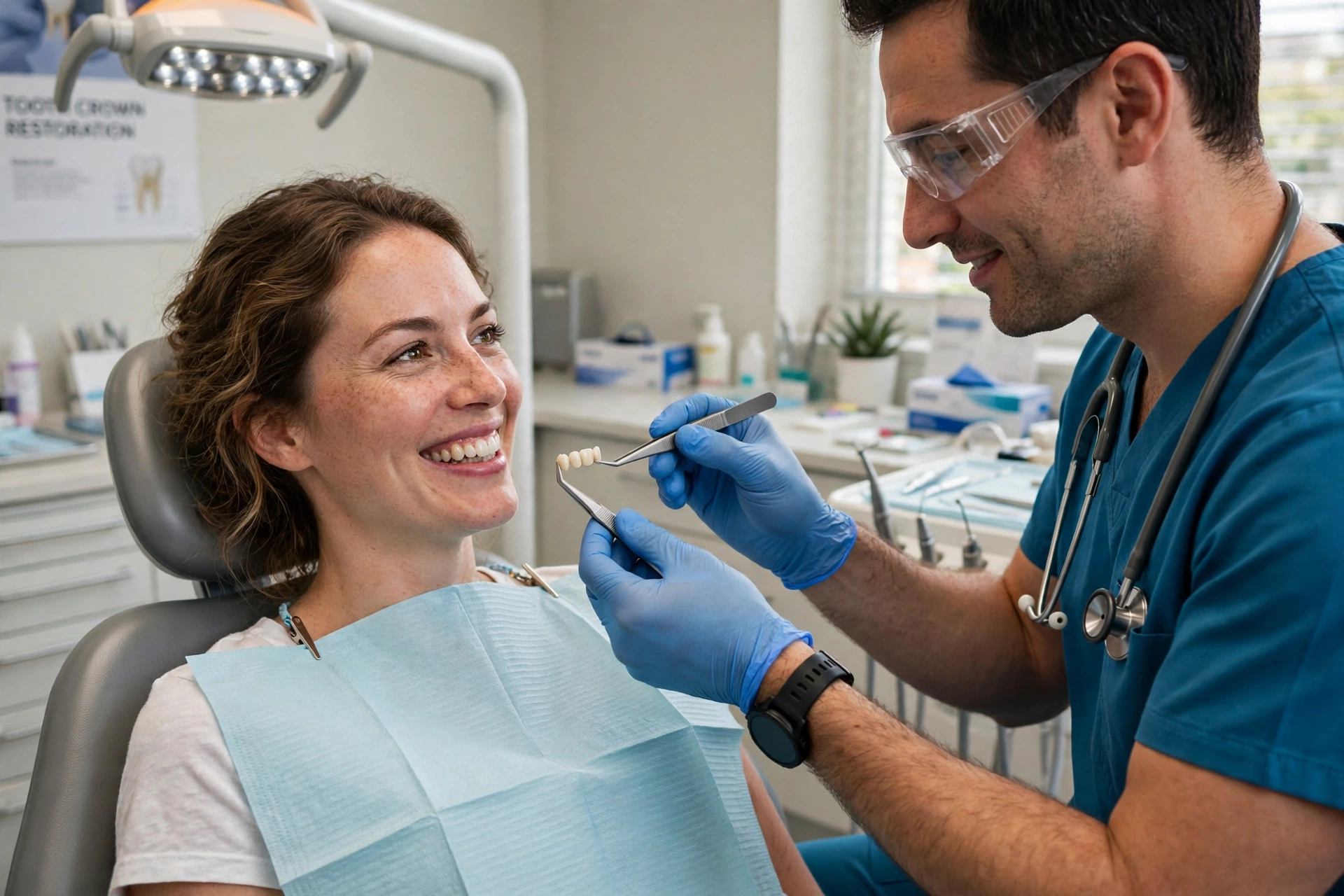
- Image: A person smiling in a dental chair while a dentist holds a small ceramic crown model near the mouth. AI generated image in a photorealistic style. It is not a photograph of a real person.*