
The most comfortable ear muffs are the ones you will actually keep on, and that matters more than any specification, because hearing protection only works while it is worn. A muff with a sky-high noise rating does nothing sitting on the bench next to you. Comfort comes from four things working together: a headband that spreads pressure instead of concentrating it, cushions that seal without squeezing, cups shaped for the job in front of you, and a clamp force tuned for hours rather than minutes.
This review covers a single product: the Decibel Defense Professional Safety Ear Muffs, in the adult Regular size in black (manufacturer part #0001). It is a passive muff built for maximum blocking, with a padded headband, folding cups, and a size range from kids (age 4+) to XL. It started with eight well-known candidates. Seven were cut, not because they are bad products, but because we could not verify their exact-variant Amazon listings to our dual-source evidence standard, or could not source manufacturer photos of the exact model. Padding a review with picks we cannot stand behind helps nobody, so what remains is the one ear muff that cleared every check.
Every specification below comes from manufacturer documentation or a source named in the text. We did not conduct hands-on testing, and no rating, price, or test result has been invented. Where a figure is a manufacturer's own lab claim, we say so.
The Short Answer
What it is: the Decibel Defense Professional Safety Ear Muffs, a passive design the manufacturer rates at 37 dB NRR, with a padded headband, folding cups, and sizes from kids (age 4+) to XL. That 37 dB figure is a manufacturer lab rating with no independent corroboration we could find, so read the detailed review carefully before buying.
Who it is for: people whose goal is quiet itself: day sleepers, students, sensory-sensitive users, and workers in sustained loud noise.
Who should skip it: shooters and anyone who must hear speech, warnings, or machinery cues while protected. At this level of passive blocking you are functionally deaf to your surroundings, which is a safety problem of its own in the wrong setting.
Quick Pick
Short on time? This is our recommendation, and the button takes you to the exact product on Amazon.
At a Glance
| Product | Key Specs | Best Use Case | Standout Feature | Amazon Link |
|---|---|---|---|---|
| Decibel Defense Professional Safety Ear Muffs | Passive; 37 dB NRR (manufacturer-rated); 12 oz; folds flat | Maximum quiet for loud work, sleep, study and sensory relief | Highest claimed attenuation in its class, with kids to XL sizing | Check Price on Amazon |
Detailed Review
Decibel Defense Professional Safety Ear Muffs: Maximum Passive Blocking
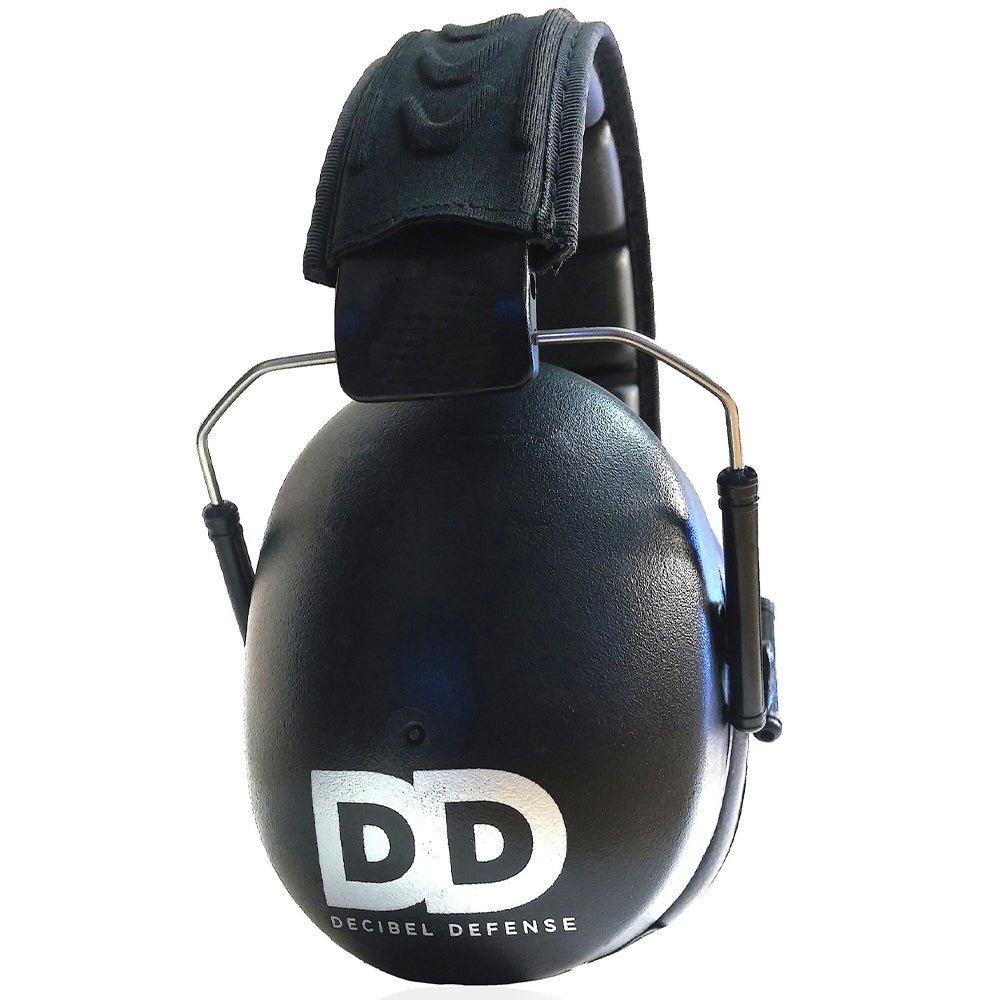


Decibel Defense Professional Safety Ear Muffs
Decibel Defense claims the highest attenuation in this guide: a manufacturer-rated 37 dB NRR, tested to ANSI S3.19 and CE EN 352-1 according to the company, in a comfort-focused passive design. The headband is padded, the cups slide to adjust and fold flat for a range bag or toolbox, and the size range is unusually wide, from kids aged 4+ through an XL size for larger heads. The exact variant linked here is the standard adult size in black (manufacturer part #0001), weighing 12 ounces.
- Maximum claimed blocking: if the lab rating holds even partially in real use, few passive muffs at any price promise more quiet.
- Comfort-first design: padded headband and soft cushions, with the manufacturer's own manual advising an overnight stretch over a box if the initial fit feels tight.
- Sizing done properly: dedicated kids' sizes and an XL size, instead of one stretched standard muff for every head.
- Simple and durable: no batteries, no electronics, folds flat, and replacement cushions are sold by the manufacturer.
Reasons to avoid:
- The 37 dB figure is the manufacturer's lab rating: we found no independent test publication corroborating it, and the brand's own manual notes an OSHA-adjusted figure of 34 dB
- Total isolation cuts both ways: no situational awareness, no conversation, no range commands get through
- New pairs often feel tight until the headband breaks in, per the manufacturer and user reports
- Not the pick for shooting sports where hearing instructions and your surroundings matter
- Type: Passive
- NRR: 37 dB manufacturer-rated (manual cites 34 dB OSHA-adjusted)
- Certifications: ANSI S3.19 and CE EN 352-1 (per manufacturer)
- Weight: 12 oz
- Variant: Adult Regular, Black, part #0001
- Design: Padded headband, adjustable sliding cups, folds flat
Best for: people who want the strongest passive blocking available: shift workers sleeping days, sensory-sensitive users, students in loud dorms, and industrial workers in extreme noise.
Read the rating honestly before anything else. A 37 dB NRR would make this the highest-rated earmuff most buyers will ever encounter; the biggest global brands' passive flagships top out at 31 dB. The claim is the manufacturer's own laboratory result under ANSI S3.19, and the manual itself prints a more conservative OSHA-adjusted figure of 34 dB. We searched for an independent test publication corroborating the headline number and did not find one. None of that makes the muffs weak: even heavily derated, a well-sealed passive muff of this size delivers strong protection. It does mean you should buy them for their design, fit range, and comfort, and treat the exact number as a claim rather than a verified fact.
Why the comfort design is credible: the comfort features are visible in the product itself rather than in marketing adjectives. The headband carries thick segmented padding, the cups are deep with soft cushions, and the whole unit folds flat, which matters more than it sounds: a muff that lives in the toolbox gets worn; a bulky one gets left in the truck. The manufacturer's manual is refreshingly practical about the known tightness complaint, advising owners to stretch the muffs over their box overnight to ease initial clamp force. At 12 ounces, the weight is unremarkable in the best way.
Who should buy it: people whose goal is quiet itself. Day sleepers, students, travelers on loud worksites, grounds and factory crews in sustained extreme noise, and sensory-sensitive users all want maximum passive attenuation with zero awareness, and that is precisely this muff's job. The sizing range is a genuine differentiator: children get a properly small muff that can actually seal, and large-headed adults get an XL instead of a standard muff stretched past its design.
Who should skip it: shooters and anyone who must hear speech, warnings, or machinery cues while protected. At this level of passive blocking you are functionally deaf to your surroundings, which is a safety problem of its own in the wrong setting. If your noise is intermittent and communication matters, an electronic muff is the safer tool.
How We Chose This Review
Every product in this review had to clear three checks. First, the exact variant, meaning the specific model, size, and configuration reviewed, had to be verified against two independent non-Amazon sources that each print its Amazon listing identifier, so the button you click lands on the product described. Second, we required three real manufacturer photos of that exact variant, viewed at full size. Third, every specification had to trace to manufacturer documentation or a named source. Eight respected candidates entered the process, including premium electronic shooting muffs and 3M's highest-rated passive models. Seven failed the first or second check and were removed rather than published on reputation. That is why this review covers one product instead of eight, and why that product can be checked by anyone.
Buying Guide: How to Choose Comfortable Ear Muffs
Understand NRR, then stop worshipping it
NRR (Noise Reduction Rating) is a laboratory number: attenuation measured on test subjects under ideal conditions. Higher blocks more, but the number on the box is not what your ears get. Fit, seal, and wearing discipline dominate real-world protection: a perfectly sealed 22 dB muff protects better than a 31 dB muff riding half off your ears. 3M recommends halving the NRR to estimate field performance, and OSHA's derating method lands in the same place. As reference points, gunfire runs roughly 140 to 165 dB, loud enough for a single unprotected shot to cause permanent damage, and sustained exposure above 85 dB across a workday calls for protection. Choose enough NRR for your noise, then choose on comfort, because the best rating in the world only counts while the muffs are on your head.
Fit is the real comfort specification
Four things decide whether muffs stay comfortable past the first hour. Clamp force: the squeeze that creates the seal also causes headaches, and wide or padded headbands distribute it while narrow bare bands concentrate it. Cushion quality: foam-filled and gel cushions conform to your head and seal around glasses arms far better than thin vinyl pads. Headband position: wear the band over the crown of your head, not pushed forward or back; mispositioning is the most common cause of pressure pain and is free to fix. Cup size: bigger is not automatically better. Oversized cups add weight and leverage that increase perceived clamp force, and they can break the seal when you turn your head. What matters is the cup fully enclosing your ear against the cushion, not the cup's overall bulk.
Passive vs. electronic: which do you actually need?
Passive muffs block sound with mass and seal. They are cheaper, need no batteries, and deliver the highest ratings; their weakness is total, because they block everything, including things you need to hear. Electronic shooting muffs add microphones that amplify quiet sounds up to a safe level and suppress harmful ones; the electronics add awareness, not protection beyond the passive rating. Bluetooth audio muffs are a third category: passive protection plus entertainment and calls, built for steady work noise rather than gunfire. Match the category to the job first, then shop within it.
Glasses wearers: protect the seal
Glasses arms break the cushion seal; it is the most common real-world protection leak, and no NRR figure accounts for it. Gel cushions conform around arms better than standard foam, slimmer glasses arms help, and if you can feel a gap when your glasses go on, the muff is not sealing whatever the box says.
Kids and large heads
Children need children's muffs: adult muffs will not seal on a small head, and an unsealed muff is decoration. At the other end, larger heads should look for explicit XL sizing and wide padded headbands rather than overstretching a standard muff, which increases clamp force exactly where it hurts.
Bad advice to ignore
Three claims circulate in this category that do not survive contact with physics. "Just buy the highest NRR": a lab rating on a perfect fit says little about your Tuesday; derate it and prioritize fit. "Slim cups with extreme NRR": attenuation needs cup volume, mass, and seal depth, so ultra-slim designs claiming extreme numbers deserve skepticism, not excitement. "Noise-cancelling headphones count as hearing protection": consumer ANC headphones publish no NRR and no ANSI rating. They are for airplanes, not angle grinders. If it does not publish a tested NRR, it is not hearing protection.
Frequently Asked Questions
For outdoor shooting, a 22 to 26 dB electronic muff is the standard choice: enough attenuation with the awareness you need. Indoor ranges are louder and more reverberant, so double up with foam plugs under your muffs there. This muff is not a shooting muff: it blocks too much for range communication.
If your noise is steady and your sessions are long, yes. The protection is ordinary passive protection; what the audio buys is compliance. People leave boring muffs on the hook and keep entertaining ones on their heads, and worn protection beats superior unworn protection every time.
Position the headband over the crown of your head, make sure each cup fully encloses the ear, and keep hair out from under the cushions. If new muffs feel tight, stretching the headband gently overnight is a common and manufacturer-endorsed break-in step. Persistent pain usually means the wrong size or shape, not a muff you should endure.
Yes, but expect the arms to leak sound past the cushion. Choose conformable or gel cushions, thinner-armed glasses where possible, and check the seal by feel every time you put both on.
For indoor ranges, braked rifles, or extremely loud sustained noise, yes: doubling up is standard practice and adds roughly 5 to 10 dB of real-world protection beyond the muff alone, not the sum of both ratings. For ordinary workshop and yard noise, a well-fitted muff on its own is enough.
Not necessarily. Comfort comes from clamp-force distribution, cushion quality, and headband padding, not cup size. Choose cups that fully enclose your ears with quality cushions over the biggest cups on the shelf.
Wipe cups and headband with a damp cloth, inspect cushions regularly, and replace them once they harden, crack, or lose resilience; this muff has manufacturer replacement cushions available. Store muffs folded, away from heat and direct sun.
Final Verdict
If your goal is the deepest quiet you can get, for sleep, study, sensory relief, or the loudest work, the Decibel Defense Professional Safety Ear Muffs are the pick, bought with clear eyes about their manufacturer-rated headline figure. Fit them properly and wear them every time: the best hearing protection is the pair on your ears when the noise starts.
Final Recommendations
Maximum Passive Blocking: Decibel Defense Professional Safety Ear Muffs, 37 dB manufacturer-rated NRR, padded headband, kids to XL sizing.
Related Guides
- foam vs. silicone ear plugs: which is right for shooting and sleep.
- electronic vs. passive hearing protection: the complete comparison.
- how to fit foam ear plugs correctly for maximum protection.