
Choosing fish, shrimp and snails for a home aquarium is easier when the animal comes first and the tank size comes second. A species that stays small, tolerates your tap water and gets along with its tank mates will usually succeed. A species bought for color alone, then squeezed into a tank that is too small, too warm, too cold or too bare, usually will not. This guide is built the other way around. It starts with identification, adult size, temperament and tank requirements for the species that readers actually search for, then shows how those species fit together in 5 gallon, 10 gallon, 15 gallon, 20 gallon, 29 gallon, 40 gallon and larger tanks. It is a desk research guide. No species in this guide was tested, purchased or personally kept for this article, and no claim in it should be read as a result of hands on testing.
The most important habit in this guide is also the simplest: buy the adult fish, not the juvenile in the shop. Guppies stay small. Neon tetras stay small. A comet goldfish does not. An angelfish grows tall as well as long. An axolotl is not a fish at all, and it does not belong in a tropical community tank however often it is sold beside tropical fish. If a species in this guide is listed as unsuitable for a tank size, that is not a challenge to prove otherwise. It is a welfare limit, and the honest alternative is given in the same section.
How to use this guide
Read the tank size section that matches the tank you already own before you read the species sections. Then check three things for every species you are considering: adult size, temperature range and temperament. If two species disagree on temperature, do not split the difference and hope. One of them will be living outside its comfortable range. If a species needs a group, do not buy one or two and call it a school. Schooling fish that are kept singly or in tiny numbers are stressed, shy and often sickly, even if they survive. If a species is described as peaceful but predatory toward fry or shrimplets, take that seriously in a breeding or shrimp colony tank. Peaceful toward adult fish is not the same as safe for babies.
Water quality matters more than any single product or decoration. A tank should be fully cycled before fish, shrimp or snails are added, which means the filter bacteria can convert ammonia to nitrite and then to nitrate without ammonia or nitrite spiking after feeding. Test before you add animals, test again after you add them, and change water on a routine the tank actually needs rather than on a calendar you guessed. Shrimp are especially sensitive to copper, to sudden parameter swings and to ammonia and nitrite. No cleanup animal, whether shrimp, snail or algae eating fish, replaces water changes, sensible feeding and a filter sized for the stock.
A note on names, because common names cause real mistakes. Cherry shrimp, blue dream shrimp, bloody mary shrimp and wild type shrimp are color lines of one species, Neocaridina davidi, not four different species with four different care sheets. Amano shrimp are a different species, Caridina multidentata, and they do not breed in freshwater. Ghost shrimp is a trade name that covers several Palaemonetes species and sometimes unrelated shrimp, so the animal you buy may not match the care sheet exactly. Nerite snail covers several species in the genera Neritina and Vittina, sold under one trade name. Where this guide gives a scientific name, use that name when you check a seller listing, and be suspicious of any listing that gives no scientific name at all.
Stocking by tank size: what actually fits
5 gallon tanks and nano tanks
A 5 gallon tank is a shrimp tank, a snail tank or a single betta tank with careful management. It is not a community tank. The supplied keywords include nano fish for a 5 gallon tank, and the honest answer is narrow: a small group of very small, peaceful fish can work in a well planted 5 gallon tank only if the keeper accepts that stocking is light, water changes are frequent and the margin for error is small. Many experienced keepers prefer to keep a 5 gallon tank as a shrimp only or betta only setup, because that removes the two biggest risks in a tiny tank, which are overstocking and incompatible tank mates. Cherry shrimp colonies, a small group of amano shrimp, nerite snails and a single betta are the low conflict choices. Do not put a betta, shrimp and several fish together in 5 gallons and expect all of them to thrive. The betta may eat the shrimp, the fish may nip the betta, and the water quality will punish every mistake quickly.
10 gallon tanks
A 10 gallon tank is where a real community becomes possible, but it is still a small tank. This is the size most often searched for, and the keywords reflect that: best fish for a 10 gallon tank, fish for a 10 gallon tank, best beginner fish for a 10 gallon tank, best schooling fish for a 10 gallon tank, and centerpiece fish for a 10 gallon tank all appear in the supplied set. Good 10 gallon choices include a single betta with snails or, in a well planted tank with a calm betta, a small group of amano shrimp; a group of guppies (with a plan for fry, because guppies breed readily); a school of neon tetras with cherry shrimp and snails in a planted tank; or a small school of cherry barbs or white cloud mountain minnows in cooler water. The centerpiece question deserves a direct answer: in a 10 gallon tank, the centerpiece is usually one betta, one dwarf gourami type fish only if the keeper understands that species separately, or a striking school rather than a large fish. A fish that grows to 15 cm, needs height, or needs a large group does not become a 10 gallon centerpiece by being bought small.
15 gallon and 20 gallon tanks
A 15 gallon tank gives a school room to behave like a school. A 20 gallon tank, especially a 20 gallon long tank, gives even more: longer swimming space, more stable water and room for two compatible groups plus bottom dwellers or invertebrates. The supplied keywords ask repeatedly how many fish fit in a 15 gallon tank, a 20 gallon tank, a 29 gallon tank and a 40 gallon tank. There is no honest single number, because fish differ in adult size, waste output, activity and aggression. The inch per gallon rule, still repeated online, is a rough starting point at best and a misleading one at worst, because it counts a slim 3 cm tetra and a deep bodied, heavy waste producing fish of the same length as if they were the same animal. They are not. A better approach is to stock by group and by adult size: one school of small tetras or rasboras, one bottom group or invertebrate crew, and, if temperament and temperature allow, one centerpiece or one pair, with filtration and water changes matched to the total load.
In a 20 gallon tank, good combinations include neon or cardinal tetras with cherry shrimp in a planted tank (accepting some shrimplet loss), guppies with amano shrimp and nerite snails, cherry barbs with otocinclus and shrimp, or a single betta in a 20 gallon planted community only if the betta is calm and the tank mates are peaceful, short finned and fast enough to avoid trouble. A 20 gallon tank is also the minimum commonly cited for one axolotl, but that is a different kind of 20 gallon tank: cold, low flow, with a bare bottom or fine sand, hides and no tropical tank mates. Do not merge the axolotl tank and the tropical community tank into one plan.
29 gallon tanks
A 29 gallon tank is a genuine step up. It is tall enough for angelfish in a way a 10 or 20 gallon tank is not, although Seriously Fish recommends a larger footprint for adult angelfish, about 100 cm by 40 cm, and that conflict is worth stating plainly: many retailers list 29 gallons as a minimum for angelfish, while the species profile used in this guide recommends a larger tank for adults. The safe reading is that a 29 gallon tall tank can house young angelfish and a small group, but a keeper planning for adults should plan for a larger, taller tank, and should not add small tetras or shrimp that an adult angelfish can eat. A 29 gallon tank also suits larger schools of tetras, a pair of centerpiece fish with compatible tank mates, cherry barbs, and a proper invertebrate crew. Saltwater fish are sometimes asked about for a 29 gallon tank in the supplied keywords, but this guide is a freshwater guide. Saltwater stocking, salinity, live rock and marine compatibility are a different subject and are not covered here, and no freshwater recommendation in this guide should be transferred to a saltwater tank.
40 gallon tanks and larger
A 40 gallon tank suits adult angelfish with suitably sized tank mates, larger schools and a bristlenose pleco with room to grow. Bigger tanks forgive water quality mistakes more readily, but they do not forgive incompatible temperament.
Cold water tanks
Coldwater species here are white cloud mountain minnows, goldfish and axolotls, each with very different needs. Do not mix them on temperature alone: goldfish eat small tank mates, and axolotls need a species only, low flow setup.
Species sections
Betta fish: Betta splendens
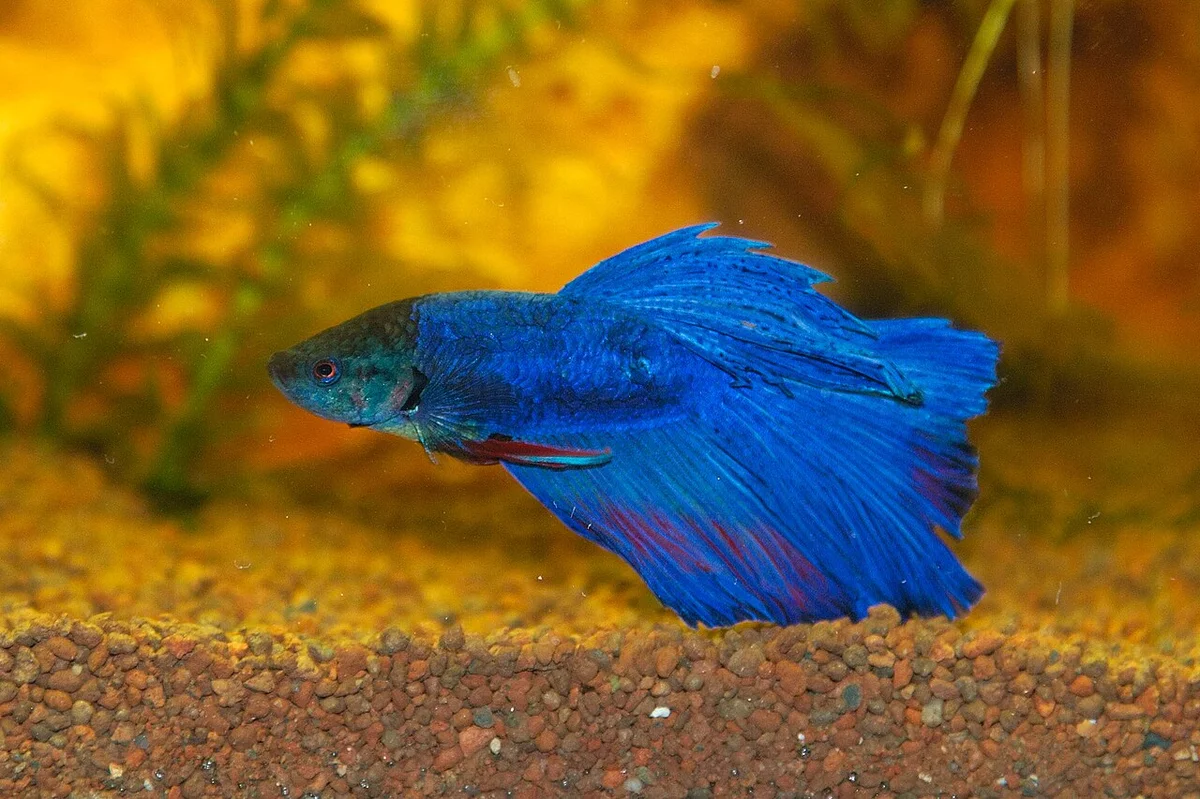
Identification: The betta, also called the Siamese fighting fish, is Betta splendens. Domestic bettas are selectively bred forms of this species, with long fins and colors far beyond the wild form, which is shorter finned and duller. Do not judge a betta by color alone. Fin shape, body condition, swimming ability and behavior matter more, and a long finned male that cannot swim comfortably in current is not a better fish because it looks dramatic in a shop cup.
Adult size: Seriously Fish gives a standard length of about 70 mm, roughly 2.8 inches, for Betta splendens, with an aquarium base of about 45 cm by 30 cm and a volume of about 41 liters, roughly 11 US gallons, for a single male or a pair. Other guides give 6 to 8 cm. The practical point is consistent across sources: a betta is a small fish that still needs heated, filtered, planted space, not a jar or a tiny bowl. Seriously Fish explicitly does not support keeping this species in tiny aquaria or small jars.
Temperament: Male bettas are territorial toward other male bettas and toward fish they read as rivals. That is why the supplied keywords about betta companions, betta buddies, fish that can live with bettas and what can go with a betta fish need a cautious answer. A male betta should never be kept with another male betta. A community betta needs at least a 10 gallon, well planted tank with broken sightlines, calm tank mates that are not bright, long finned or nippy, and a backup plan if the betta does not accept them. In a tank under 10 gallons, a betta is best kept alone, with snails as the usual low conflict addition. Peaceful betta is a phrase that appears in the keywords, but it describes an individual temperament, not a guarantee for the species. Some bettas accept tank mates. Some do not. The keeper must watch and be ready to separate them.
Tank requirements and water: Seriously Fish gives temperature 22 to 30 degrees Celsius (72 to 86 degrees Fahrenheit), pH 6.0 to 8.0 for ornamental strains, and hardness 1 to 15 dGH, noting that wild collected fish likely prefer pH 5.0 to 7.0. In practice, aim for warm, stable, clean water in the middle of that range, with gentle flow, a heater, a lid (bettas can jump), plants and hiding places, and no sharp decor that tears fins. Bettas are labyrinth fish and can breathe air at the surface, but that does not mean they tolerate poor water. It means they can survive brief low oxygen conditions that would kill other fish. It is not a reason to keep them in unfiltered water.
Tank mates and common mistakes: The safest betta tank mates are animals that stay out of the betta's patrol zone and do not resemble a rival: nerite snails, mystery snails in a large enough tank, and, in a planted tank with a calm betta, amano shrimp. Cherry shrimp are often eaten, especially shrimplets, and should not be counted as a reliable betta companion. Algae eaters with a betta are a mixed question. Otocinclus are peaceful and small, but they need a mature, stable tank and a group, and they should not be added to a new or unstable betta tank as a cleanup fix. A pleco that outgrows the tank is not a betta tank mate, it is a future rehoming problem. Do not add a betta to a tank of nippy fish, and do not add bright, flowing finned fish that invite chasing. If fin damage, hiding or loss of appetite appears after a new tank mate is added, separate them rather than waiting for the problem to resolve itself.
Guppies: Poecilia reticulata

Identification: The guppy is Poecilia reticulata, a livebearer from northeastern South America and the southern Caribbean. Males are smaller and far more colorful, with elongated fins in domestic strains. Females are larger, plainer and give birth to live, free swimming fry rather than laying eggs. The supplied keywords are full of guppy varieties: fancy guppies, cobra guppies, fancy tail guppies, exotic guppies, rare guppies, wild type guppies, different guppy types and guppy color charts. Those are varieties and color lines of one species, not separate species, and care does not change fundamentally from one fancy strain to another, although heavily bred strains are often less hardy than wild type or lightly bred fish. Seriously Fish notes that many commercially bred guppies are weakened by inbreeding and overproduction, which is worth remembering when a fancy strain proves fragile despite good water.
Adult size: Seriously Fish gives a standard length of up to 60 mm, about 2.4 inches, with an aquarium base of about 45 cm by 30 cm and a volume of about 41 liters, roughly 11 US gallons. FishBase gives a maximum length of 5.0 cm for males and 6.0 cm for females. In plain terms, guppies are small fish, females larger than males, and a 10 gallon tank is a sensible minimum for a small group.
Temperament: Guppies are very peaceful, according to Seriously Fish, and do well in a quiet community with other livebearers, rasboras, corydoras, small loricariids and tetras, but should not be kept with fin nipping species such as tiger barbs or serpae tetras. That peacefulness cuts both ways: guppies will not defend themselves against nippers, and their flowing fins invite nipping. They are also prolific breeders. A mixed sex group in a planted tank will produce fry continuously. That is a feature if you want a breeding colony, and a problem if you do not have a plan for the fry. Keeping males only avoids fry but can increase harassment of the few males present if numbers are too low, so keep a reasonable group and provide plants and cover.
Tank requirements and water: Seriously Fish gives temperature 17 to 28 degrees Celsius (63 to 82 degrees Fahrenheit), pH 7.0 to 8.5 and hardness 8 to 30 dGH, and describes the guppy as a hard water fish that may manage in soft or acidic conditions but should be kept long term in moderately hard or harder water. That hard water preference matters for keepers with very soft tap water, and it is one reason guppies do well in many US homes with moderately hard water. Feed a varied diet of quality flakes or small pellets plus frozen or live foods, and do not rely on a single flake alone. Guppies are hardy in the sense that they tolerate a range of conditions, but the keywords asking whether guppies are hardy need a qualified answer: wild type and lightly bred guppies are hardy, heavily inbred fancy strains are often less so, and no guppy is hardy against ammonia, nitrite or sudden swings.
Tank mates and shrimp: Guppies will eat shrimp, especially shrimplets, and the supplied keywords ask this directly: do guppies eat cherry shrimp, do guppies eat shrimp, will guppies eat cherry shrimp, can guppies live with shrimp. The honest answer is that adult shrimp in a heavily planted tank can coexist with guppies, but a breeding shrimp colony will lose many babies to guppies, and small shrimp are at risk. Amano shrimp, being larger, fare better than cherry shrimplets, but no fish that can fit a shrimplet in its mouth is fully shrimp safe. If shrimp breeding is the priority, keep a shrimp only tank or choose otocinclus and snails as tank mates instead.
Neon tetras: Paracheirodon innesi
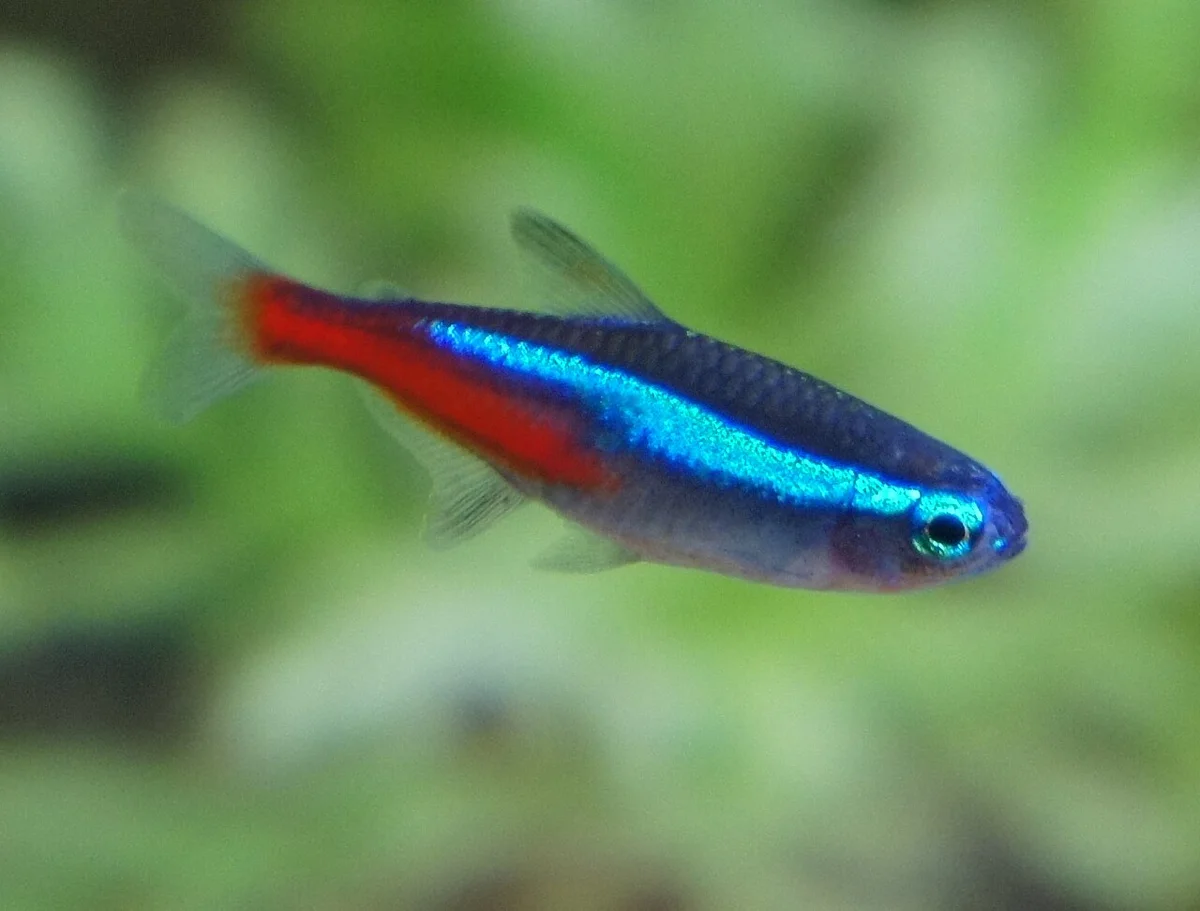
Identification: The neon tetra is Paracheirodon innesi, a small South American characin with an iridescent blue stripe and a red stripe on the rear half of the body. That rear only red stripe is the quickest field mark against the cardinal tetra, whose red stripe runs the full length of the body. Neon tetras are schooling fish. Six is a commonly cited minimum group, and larger groups of eight to twelve show better schooling behavior and less stress, provided the tank is large enough.
Adult size: Sources vary slightly, with adult size commonly given as about 3 to 4 cm, roughly 1 to 1.5 inches. A 10 gallon tank is a sensible minimum for a school, with a 20 gallon planted tank giving a much better display and more stable water. Neon tetras are small, but they are active swimmers that use horizontal space, so a long tank suits them better than a tall, narrow one of the same volume.
Temperament: Peaceful and schooling. Neon tetras are excellent community fish with other peaceful small fish, shrimp (with the usual shrimplet caveat) and snails, provided tank mates are not large enough to eat them and not nippy. They are sensitive during acclimation, and new neon tetras are most at risk in the first days after introduction, especially in a new or unstable tank. Add them to a mature, cycled, planted tank, acclimate slowly, and do not add a full school to a brand new tank on day one.
Tank requirements and water: Neon tetras prefer soft, slightly acidic to neutral water, dimmer lighting and plants, including floating plants that break up light. Published ranges vary, with temperature commonly given as about 20 to 25 degrees Celsius and pH about 5.0 to 7.5 in the sources used for this guide, with some guides narrowing that to 21 to 25 degrees Celsius and pH 6.0 to 7.0. The disagreement is itself useful: neon tetras tolerate a range, but they do best in stable, clean, soft to moderately hard water at the cooler end of the tropical range, not in hard, alkaline water at high temperature. Where sources conflict, this guide reports the range and recommends the middle, stable part of it, rather than pretending to a precision the sources do not support.
Cardinal tetras: Paracheirodon axelrodi
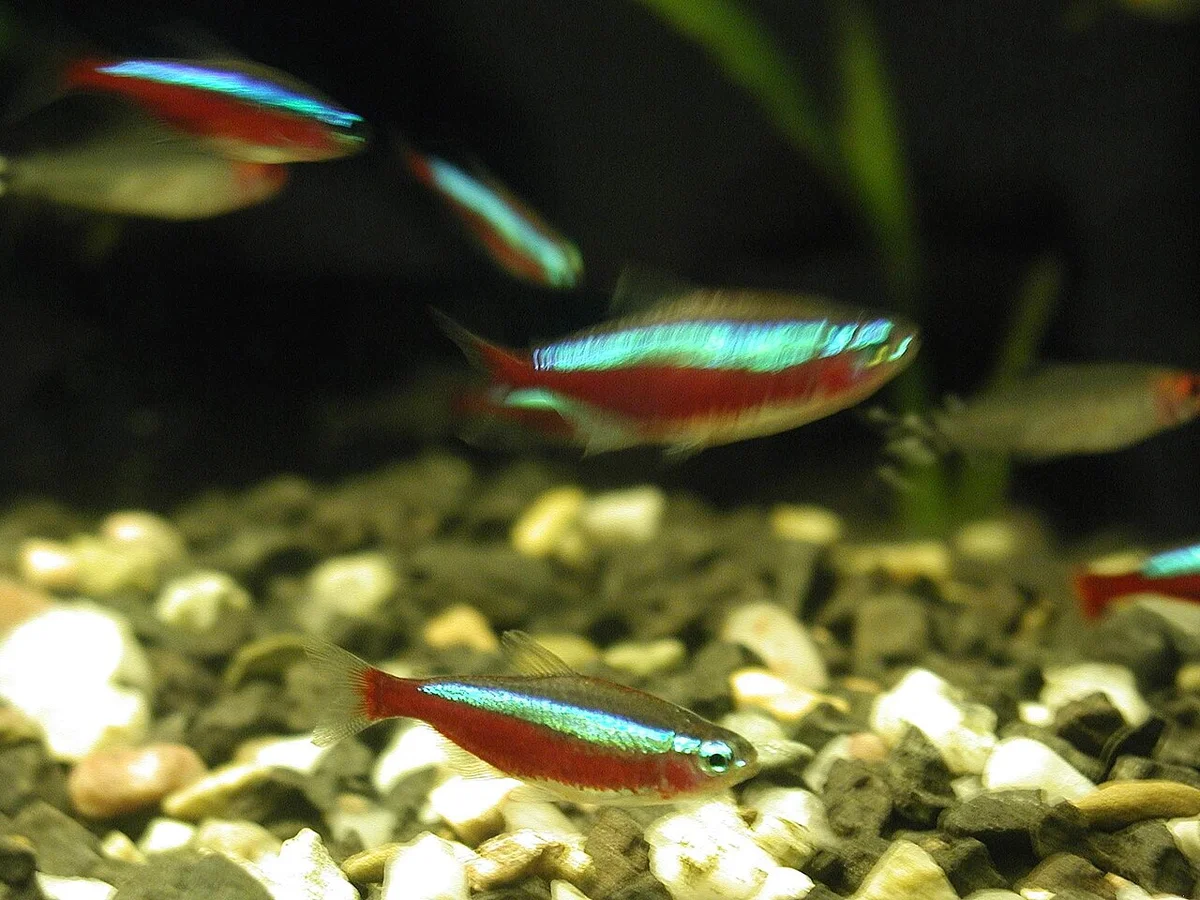
Identification: The cardinal tetra is Paracheirodon axelrodi, closely related to the neon tetra but larger, more intensely colored, and with a red stripe that runs the full length of the body from head to tail, compared with the neon tetra's rear only red. That full length red stripe, plus slightly larger adult size, is the reliable distinction. Green neon tetras, Paracheirodon simulans, are a third, smaller species sometimes confused with both, with a green blue stripe rather than the classic blue and red pattern.
Adult size: Commonly given as about 3 to 5 cm, roughly 1.2 to 2 inches, slightly larger than neon tetras. A 15 gallon tank is a sensible minimum for a school, with 20 gallons or more preferred for a larger group in a planted tank.
Temperament: Peaceful and schooling, like neon tetras, but often described as shyer and more sensitive to water quality, especially to ammonia, nitrite and nitrate spikes. Cardinal tetras are not a good first fish for a new tank. They belong in a mature, stable, planted tank with soft, slightly acidic water, dim lighting and a proper school of six or more, ideally eight to twelve.
Tank requirements and water: Cardinal tetras prefer warmer, softer, more acidic water than neon tetras, with published ranges commonly around 23 to 29 degrees Celsius and pH 4.0 to 7.5 in the broader sources, narrowing to about 23 to 27 degrees Celsius and pH 5.5 to 7.0 in many care guides. Again, where sources differ, this guide gives the range and recommends stable water in the middle of it. The key practical point is the overlap with neon tetras: if you keep both species together, hold the tank at about 23 to 25 degrees Celsius, keep the water soft and clean, and do not push either species to its extreme.
Cherry shrimp and Neocaridina color lines: Neocaridina davidi

Identification: Cherry shrimp are Neocaridina davidi, formerly also sold as Neocaridina heteropoda. The wild form is brownish and translucent. The red cherry, sakura, fire red, painted fire red and bloody mary lines are selectively bred color grades of the same species, not different species. Blue dream, yellow and other color lines are also Neocaridina davidi. That single fact answers a large group of supplied keywords: cherry shrimp grades, cherry shrimp grading, grades of cherry shrimp, neocaridina color charts, neocaridina shrimp colors, bloody mary shrimp versus cherry shrimp, brown neocaridina shrimp and wild type cherry shrimp are all variations within one species. Color grade describes how solid and intense the color is, not a different animal with different water needs.
Adult size: About 2.5 to 4 cm, roughly 1 to 1.5 inches, females larger and more deeply colored than males. A 5 gallon tank can hold a colony, but a 10 gallon or larger planted tank is more stable and is preferred for an active breeding colony.
Temperament: Peaceful, colony animals. Start with ten or more, not two or three, if you want a colony that breeds and behaves naturally. Cherry shrimp graze biofilm, soft algae, detritus and leftover food all day. They do not eat healthy plants, and they do not replace water changes. They are prey for almost any fish large enough to eat a shrimplet, so a shrimp only tank is the safest breeding setup, and a community tank with shrimp should be heavily planted with moss and hiding places, with the understanding that some babies will be eaten.
Tank requirements and water: Cherry shrimp are the most parameter tolerant freshwater shrimp in common trade, but tolerant does not mean indifferent. Published ranges cluster around temperature 18 to 28 degrees Celsius, pH 6.5 to 8.0, general hardness 6 to 12 dGH and carbonate hardness 2 to 8 dKH, with ammonia and nitrite at zero and nitrate kept low, commonly under 20 ppm. Some guides narrow the comfortable temperature to 22 to 25 degrees Celsius and warn that breeding and shell health suffer above about 26 to 28 degrees Celsius. Stability matters more than hitting a perfect number. Keep copper out of the tank entirely: copper in medications, algaecides and some plant fertilisers is lethal to shrimp at levels fish tolerate. Use a sponge filter or a covered intake so shrimplets are not drawn into the filter, drip acclimate new shrimp, and avoid large, sudden water changes that swing temperature, pH or total dissolved solids.
Breeding and color: Females carry 20 to 30 eggs for about two to three weeks, and babies hatch as tiny shrimp, not larvae, so cherry shrimp breed readily in freshwater without a brackish stage. That is the crucial difference from amano shrimp. Keep one color line per tank if you want to keep the color: mixed lines revert toward brown and clear within a few generations, which is normal genetics, not a disease. Leave empty moults in the tank; shrimp eat them for minerals. Do not panic at a moult that looks like a dead shrimp. Check whether it is hollow and translucent (a moult) or a solid, colored body (a dead shrimp) before you act.
Amano shrimp: Caridina multidentata
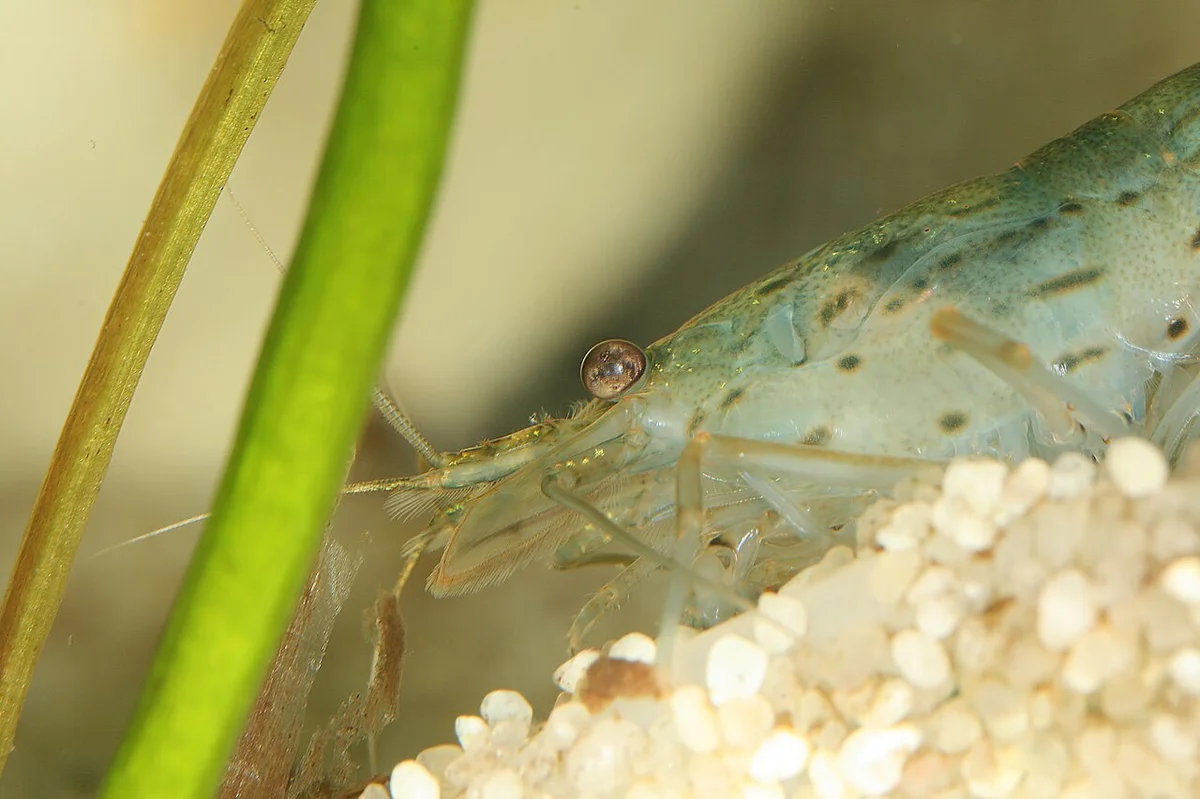
Identification: Amano shrimp are Caridina multidentata, formerly Caridina japonica. They are translucent gray blue with a broken line of small reddish brown dots along the sides, larger and bolder than cherry shrimp, and famous as algae grazers. They are not a color line of cherry shrimp, and they do not interbreed with Neocaridina. The many misspellings in the supplied keywords, amano, amana, amani, amamo and similar forms, all point to this one species, and this section covers them all.
Adult size: Up to about 5 cm, roughly 2 inches, females typically larger than males. A 10 gallon tank is a sensible minimum for a group of three to five or more, with larger planted tanks suiting larger groups.
Temperament: Peaceful, active and social. Keep amano shrimp in a group, not singly. They graze algae, biofilm and detritus, and they are particularly valued for hair algae and soft green algae, although no shrimp eats every kind of algae, and an algae problem caused by excess light or nutrients will not be solved by shrimp alone. Amano shrimp will not eat healthy fish, will not bother tank mates, and are safe with breeding cherry shrimp colonies in the sense that they do not interbreed and do not hunt adult cherry shrimp, although, like any larger shrimp, they are opportunistic scavengers.
Tank requirements and water: Published ranges cluster around temperature 18 to 27 degrees Celsius, pH 6.5 to 7.5 or 6.5 to 8.0 depending on source, with moderate hardness needed for moulting. Amano shrimp tolerate cooler water unusually well for a tropical shrimp, reflecting their origin in fast flowing, clear, well oxygenated streams in Japan, Taiwan and Korea. Keep copper out, cover filter intakes, provide plants, wood and leaf litter for grazing and for cover after moulting, and feed supplemental shrimp food or blanched vegetables even in a tank with visible algae. A clean tank starves shrimp. That is a common beginner error: buying amano shrimp to clean a tank, then watching them decline because there is nothing left to eat and no supplemental feeding is offered.
Breeding: Amano shrimp cannot breed in freshwater in the home aquarium in the normal sense. Females carry eggs, larvae hatch, but the larvae need brackish or salt water to develop, then juveniles migrate back to freshwater. In pure freshwater, larvae die within days. That is why amano shrimp do not overrun a tank, why a group slowly declines over two to three years without replacement, and why most amano shrimp in trade are wild collected or raised through a brackish breeding process. Do not buy amano shrimp expecting a self sustaining colony. Buy them as a standing crew to replace, and budget accordingly.
Ghost shrimp: Palaemonetes paludosus and the ghost shrimp problem
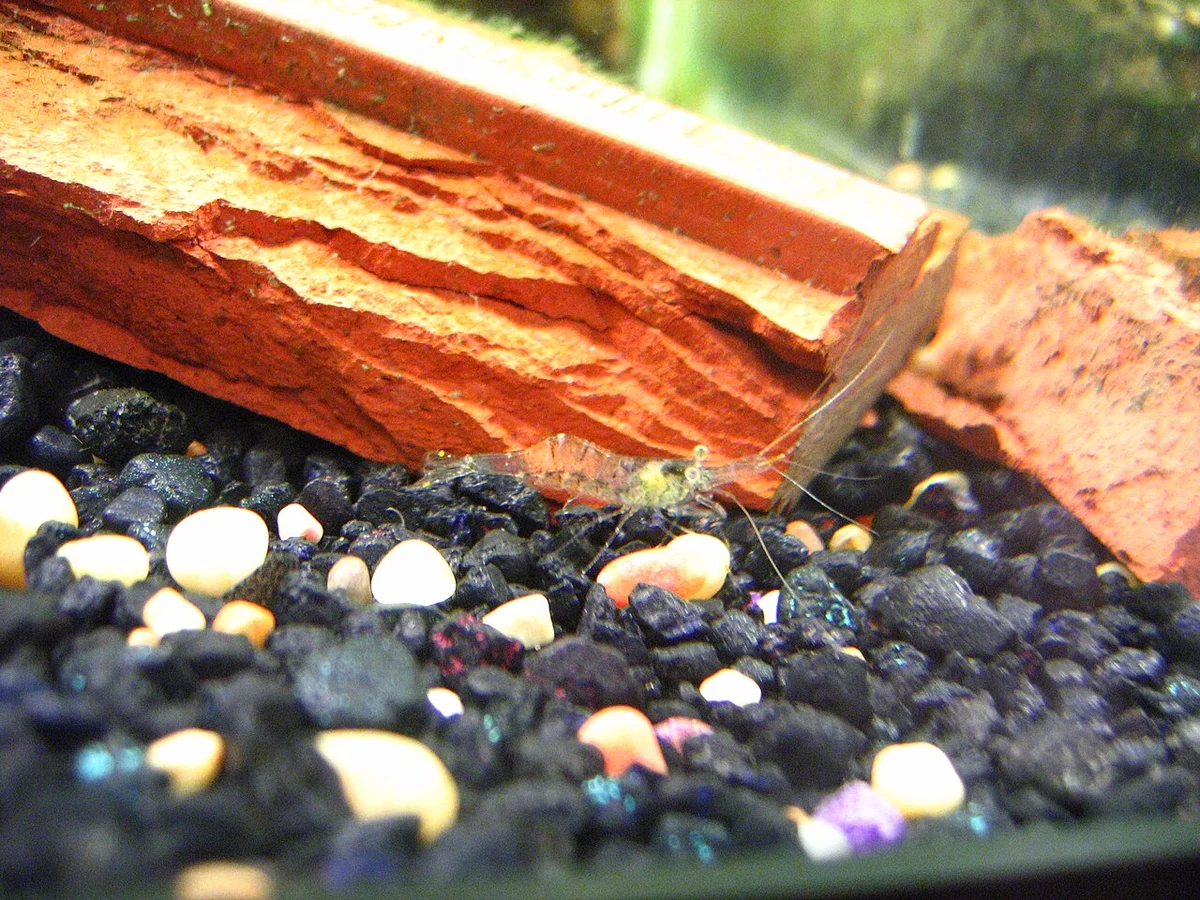
Identification: Ghost shrimp, also called glass shrimp or grass shrimp, are most often identified as Palaemonetes paludosus, a small, nearly transparent freshwater shrimp native to North America. The problem, stated plainly in the sources used for this guide, is that "ghost shrimp" is a trade name, not a reliable species identification. It covers several Palaemonetes species and sometimes unrelated, more aggressive Macrobrachium shrimp. That means the animal you buy as a ghost shrimp may not match the care sheet, may grow larger than expected, or may behave more aggressively than a cherry shrimp. Buy ghost shrimp only from a seller who gives a scientific name, and be cautious if the shrimp are sold by the dozen as live fish food, because those animals often arrive stressed with poor odds.
Adult size: About 3 to 5 cm, roughly 1 to 2 inches, females larger than males. A 5 gallon tank can hold a small group, but a 10 gallon tank gives better stability and room for hiding places.
Temperament: Peaceful in the usual description, but with an important qualification. Ghost shrimp are opportunistic scavengers and mild predators compared with cherry shrimp. They will pick off fry, baby shrimp and weak animals, and they are less purely grazing than Neocaridina. They are suitable with small, peaceful fish, otocinclus, corydoras and snails, but they are not the best choice for a breeding cherry shrimp colony, and they should not be trusted with fry you want to raise. The supplied keywords about ghost shrimp tank mates and ghost shrimp versus amano shrimp need that qualification, not a blanket "peaceful" label.
Tank requirements and water: Published ranges cluster around temperature 18 to 28 degrees Celsius, pH 6.5 to 8.0, with moderate hardness. Ghost shrimp are hardy compared with many dwarf shrimp, but they are still sensitive to copper, ammonia and nitrite, and to sudden swings. They need hiding places, plants and a covered filter intake, and they benefit from a varied diet of algae, biofilm, detritus, sinking pellets and frozen foods, not just leftover fish flakes. Lifespan is commonly given as about one year, sometimes up to two or three years in good conditions, which is shorter than cherry or amano shrimp in many guides. That shorter lifespan, plus the food trade origin of many ghost shrimp, explains why ghost shrimp colonies often seem to fade even in good water.
Caridina shrimp: crystal and bee shrimp, a step up in difficulty
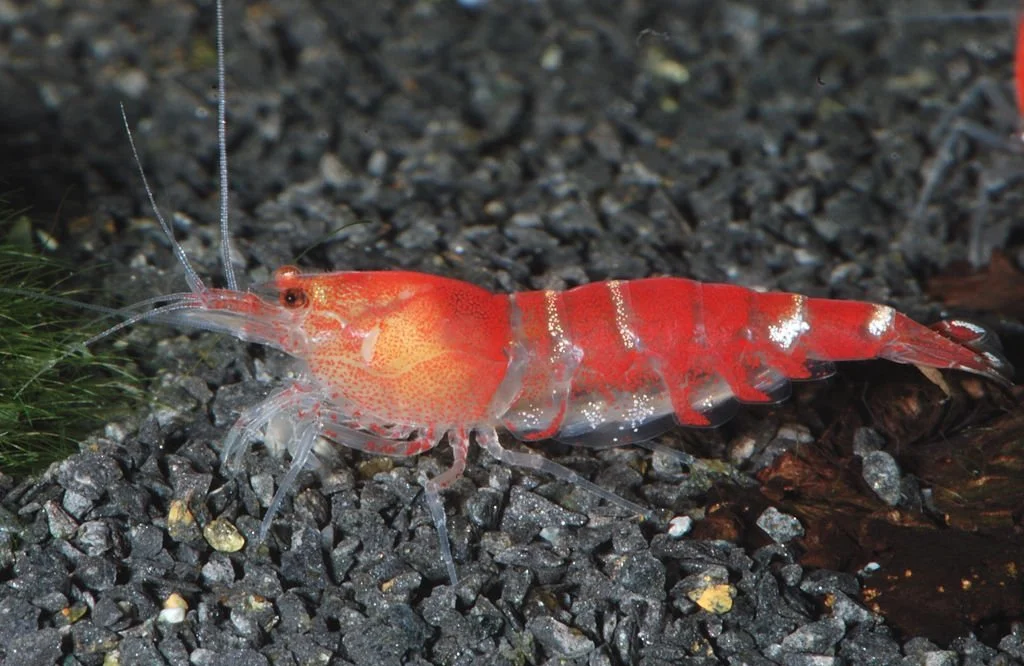
Identification: Caridina shrimp in trade include crystal red, crystal black, Taiwan bee and related lines, commonly sold as Caridina cantonensis or Caridina cf. cantonensis, although taxonomy in this group is still debated and sellers use several names. The supplied keywords include caridina shrimp colors, and the important point is that Caridina color lines are not interchangeable with Neocaridina color lines. They are different genera with different water needs, and they do not interbreed with cherry shrimp in the way two Neocaridina lines do.
Adult size: Similar to cherry shrimp, roughly 2.5 to 3.5 cm, but smaller and more delicate in practice because of their water sensitivity.
Temperament: Peaceful, colony animals, like cherry shrimp, but less forgiving. Caridina shrimp are best kept in a shrimp only tank or with snails and otocinclus, not in a general community tank with fish that eat shrimplets.
Tank requirements and water: Caridina shrimp generally need soft, slightly acidic, stable water, often with lower pH and lower hardness than cherry shrimp tolerate, and with very stable total dissolved solids. Exact targets vary by line and by breeder, and this guide does not invent a single universal Caridina recipe, because breeders disagree and lines differ. The honest guidance is: do not start with Caridina shrimp. Start with cherry shrimp, learn stable water management, copper avoidance and moulting care, then move to Caridina only when you can hold soft, stable water and test hardness and total dissolved solids routinely. If your tap water is hard and alkaline, Caridina shrimp will require remineralised reverse osmosis water or a similar system, which is a commitment, not a casual purchase.
Otocinclus catfish: the small algae eater for a betta tank and a planted community
Identification: Otocinclus, often sold as otos or dwarf suckermouth catfish, are small South American loricariid catfish, commonly Otocinclus vittatus and related species. They are often sold simply as "otocinclus" without a species name, which is a lesser version of the ghost shrimp problem: related species have similar care, but a seller who cannot name the species should be treated with caution.
Adult size: About 4 to 5 cm, roughly 1.5 to 2 inches. Small enough for a 10 gallon planted tank in a group, which is why otocinclus appear so often in the supplied keywords about algae eaters for betta tanks, tank cleaners for bettas and cleaner fish for betta tanks.
Temperament: Peaceful, schooling and shy. Keep otocinclus in a group of six or more, not singly. Single otocinclus hide, stress and often decline. They are safe with shrimp, snails and small peaceful fish, and they are one of the few fish that can genuinely be called shrimp safe for adult shrimp, although shrimplets are still vulnerable to any fish in principle.
Tank requirements and water: Otocinclus need a mature, planted tank with algae and biofilm to graze, stable, clean, well oxygenated water, gentle flow and hiding places. They are not a first week purchase for a new tank, because a new tank has no mature biofilm. They are also sensitive to sudden changes and to poor acclimation, and wild caught otocinclus in particular can arrive thin and stressed. Feed supplemental algae wafers, blanched vegetables and biofilm even if algae is visible, and do not starve them in a clean tank. Temperature and pH should match the community: otocinclus suit tropical community temperatures, roughly 22 to 26 degrees Celsius in most guides, with soft to moderately hard, slightly acidic to neutral water. Do not keep otocinclus with a betta in a small, bare tank. Keep them with a betta only in a well planted 10 gallon or larger tank with a calm betta, a proper oto group and a backup plan.
Bristlenose pleco: Ancistrus species, not a 10 gallon algae eater

Identification: Bristlenose plecos are Ancistrus species, commonly sold as Ancistrus sp. or Ancistrus cirrhosus, with males developing bristle like tentacles on the snout. They are loricariid catfish, like otocinclus, but much larger and longer lived.
Adult size: About 12 to 15 cm, roughly 5 to 6 inches, for common bristlenose plecos. That adult size is the whole story for tank size: a bristlenose pleco needs a 20 gallon tank at minimum, with 30 gallons or more preferred for an adult, plus wood to graze, hiding places and strong filtration. It is not a 10 gallon fish, even though juveniles are sold at 3 to 5 cm and look small in the shop.
Temperament: Peaceful toward most community fish, territorial toward its own kind in small tanks, especially males. Bristlenose plecos are generally safe with shrimp and snails, although they may disturb plants and will eat algae wafers, vegetables and wood fiber as part of their diet. They are not aggressive algae eating machines. They produce significant waste, which is why filtration and water changes matter more, not less, when a pleco is added.
Tank requirements and water: Tropical community water, roughly 23 to 27 degrees Celsius, pH 6.5 to 7.5 in most guides, with wood, caves and plants. Feed algae wafers, blanched vegetables and wood, not just tank algae. The supplied keywords about algae eaters with bettas and tank cleaners with bettas should not be answered with a bristlenose pleco for a small betta tank. A bristlenose pleco in a 10 gallon betta tank will outgrow the tank, dominate the bottom and degrade water quality. The correct small tank algae eaters are otocinclus in a group, amano shrimp and nerite snails, in a tank large enough for each.
Cherry barbs: Puntius titteya
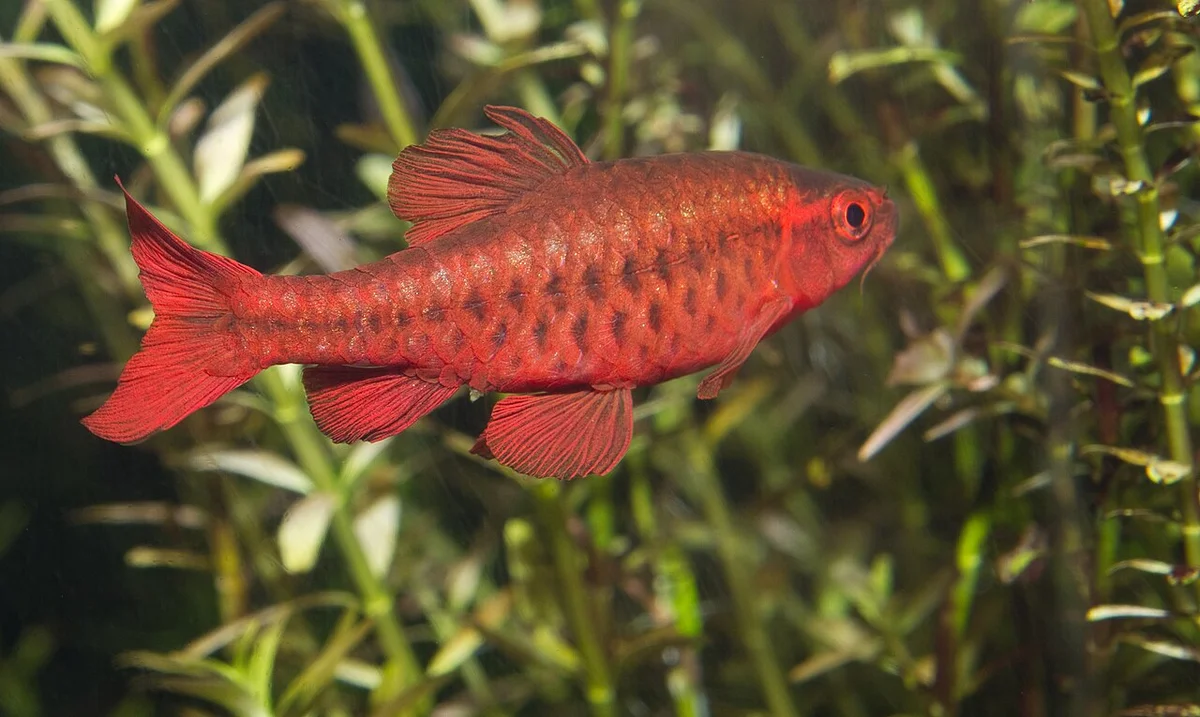
Identification: The cherry barb is Puntius titteya, also sold as Puntius titteya in older literature under the genus Barbus. Males turn cherry red, especially when displaying, while females are browner with a dark lateral stripe. Cherry barbs are often overlooked because they are not as flashy as guppies or tetras, but they are peaceful, hardy and well suited to the tanks in this guide.
Adult size: About 5 cm, roughly 2 inches. A 10 gallon tank can hold a small school, but a 15 or 20 gallon planted tank gives a better display and more stable water.
Temperament: Peaceful and schooling. Keep cherry barbs in a group of six or more. Unlike tiger barbs, cherry barbs are not notorious fin nippers, which is why they appear in the supplied keywords as cherry barb tank mates and as a community choice. They are suitable with tetras, rasboras, peaceful bottom dwellers, shrimp in a planted tank (with shrimplet loss) and snails. They are not suitable with a betta as a default combination, because any barb in a betta tank risks fin nipping and chasing, even a peaceful species, and a betta tank should be stocked conservatively.
Tank requirements and water: Tropical community water, roughly 23 to 27 degrees Celsius, pH 6.0 to 7.5 in most guides, with plants, open swimming space and gentle flow. Cherry barbs accept flakes, small pellets and frozen foods, and they color up best in a planted tank with dark substrate and good water quality. They are a good beginner school for a 10 or 20 gallon tank, and a good alternative to tetras for keepers who want a slightly larger, redder school without the sensitivity of cardinal tetras.
White cloud mountain minnows: Tanichthys albonubes, the coldwater nano fish
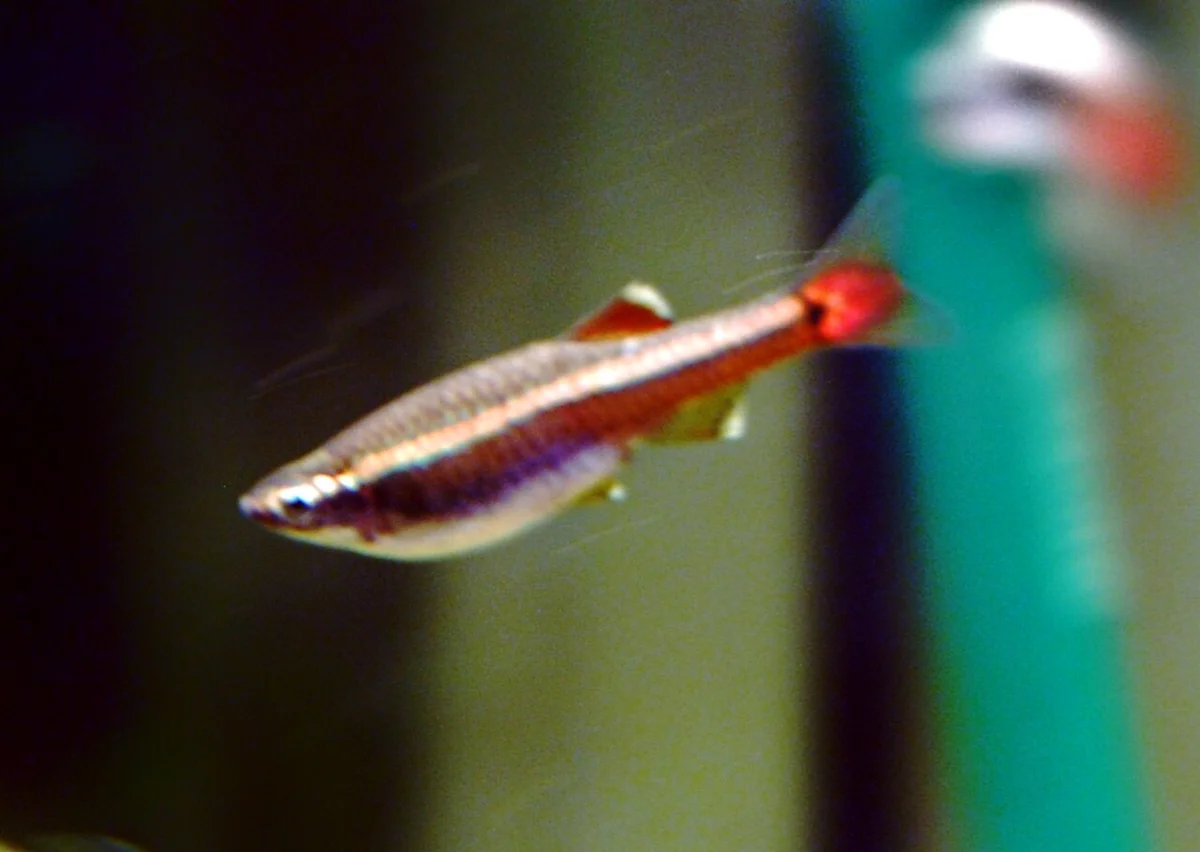
Identification: The white cloud mountain minnow is Tanichthys albonubes, a small, peaceful schooling fish from cool streams in China and Vietnam. It is often sold beside goldfish as a coldwater fish, which is true as far as temperature goes, but misleading as far as tank mates go: white clouds are tiny, goldfish are large and predatory toward small fish, and the two should not be kept together on the basis of temperature alone.
Adult size: About 3 to 4 cm, roughly 1.5 inches. A 10 gallon tank can hold a school, with 15 gallons preferred for a larger group, as in the sources used for this guide which give a minimum tank of about 15 US gallons for a proper school.
Temperament: Peaceful, schooling and active. Keep white clouds in a group of eight or more. They are suitable with other small coldwater fish, shrimp in a planted tank (with shrimplet loss) and snails, but not with goldfish, not with tropical fish that need warm water, and not as a single fish or pair.
Tank requirements and water: Cool water, roughly 18 to 22 degrees Celsius in most guides, with some sources extending that to 16 to 24 degrees Celsius, pH 6.0 to 8.0, and no heater needed in a cool room. In a warm house, a white cloud tank may still need cooling in summer, and a heater set to tropical temperatures defeats the point. White clouds are the correct answer to the supplied keywords about cold water fish, coldwater nano fish, fish for a cold water tank and types of cold water fish for tanks, for keepers who want a small, peaceful, schooling coldwater fish. They are not the answer for keepers who want a large coldwater centerpiece. That role belongs to goldfish in a large tank or pond, not to a 4 cm minnow.
Angelfish: Pterophyllum scalare, the tall centerpiece

Identification: The freshwater angelfish is Pterophyllum scalare, a tall, laterally compressed cichlid from the Amazon, Essequibo, Oyapock and other rivers of northern South America. Adults reach about 15 cm in body length and 20 cm or more in height, according to Seriously Fish, which is why height matters as much as volume. Domestic angelfish are available in silver, black, gold, koi, marble and veil strains, but all are the same species for care purposes, with veil strains needing even more height and gentler flow because of their long fins.
Adult size: About 15 cm body length, 20 cm or more in height. Seriously Fish recommends an aquarium of about 100 cm by 40 cm by 50 cm tall, roughly 200 liters or 53 US gallons, as the smallest to consider for adults. Many retailers list 29 gallons as a minimum, and this guide reports both figures rather than hiding the conflict: 29 gallons is a common retail minimum for young angelfish, 53 gallons with height is the species profile recommendation for adults. Plan for the adult.
Temperament: Generally peaceful toward suitably sized tank mates, but semi aggressive, territorial during breeding, and predatory toward small fish. Seriously Fish notes that angelfish may eat small fish such as tetras. That is not a minor caveat. An adult angelfish will eat neon tetras, cherry shrimp and any fish that fits in its mouth. It should not be kept with small tetras, small shrimp or fry as a planned community, and it should not be kept with fin nipping fish that will damage its long fins. Keep angelfish in a group or pair in a large, tall, planted tank with tall plants such as Amazon swords, gentle flow and tank mates of similar size and peaceful temperament.
Tank requirements and water: Seriously Fish gives temperature 24 to 30 degrees Celsius, pH 6.0 to 7.4 and hardness 0 to 15 dGH. Aim for warm, clean, stable water in the middle of that range, with a tall tank, plants, wood and open swimming space. Angelfish are omnivorous, feeding in the wild predominantly on small crustaceans and other invertebrates, and in captivity they accept quality flakes, pellets and frozen foods. Do not keep angelfish in a 10 gallon tank, a 20 gallon tank or a short tank, even as juveniles for long, because height and territory matter from an early age, and a stunted or stressed angelfish is not saved by good intentions.
Comet and common goldfish: Carassius auratus, the pond fish in a tank

Identification: Common and comet goldfish are Carassius auratus, single tailed, streamlined goldfish, distinct from fancy goldfish, which are deep bodied, double tailed forms of the same species. Comets are long finned, active single tailed goldfish. Both grow large, produce large amounts of waste and live for many years in good conditions.
Adult size: Common and comet goldfish commonly reach 25 to 30 cm, roughly 10 to 12 inches, and can reach larger sizes in ponds. That adult size, not the 3 cm juvenile in the shop, decides the tank. A commonly cited minimum is about 20 gallons for one goldfish, with 10 gallons added for each additional fish, but that minimum is a starting point for juveniles, not a long term home for adults. For adult comets, 55 gallons or more for one fish, and 75 to 100 gallons or a pond for a group, are more realistic figures in the sources used for this guide, and keepers who start with a 20 gallon tank should plan to upgrade or rehome to a pond.
Temperament: Peaceful and social toward their own kind, but predatory toward small fish and shrimp by size, and destructive toward delicate plants. Goldfish are not community fish for a tropical tank. They need cooler water, strong filtration and large volumes, and they will eat anything that fits in their mouths, including small tank mates that were added as "cleaners".
Tank requirements and water: Cooler water, roughly 18 to 24 degrees Celsius, pH 7.0 to 8.0 in most guides, with ammonia and nitrite at zero and nitrate kept low, commonly under 20 ppm, through large, regular water changes. Goldfish waste output is high, so filtration should be oversized, not merely adequate, and feeding should be measured, not generous. Use substrate large enough not to be swallowed, or fine sand that can be sifted safely, and avoid sharp decor. Do not keep goldfish in a bowl, a 5 gallon tank, a 10 gallon tank or a 20 gallon tank as a long term plan. The supplied keywords ask how many goldfish can be in a 20 gallon tank, how many goldfish can live in a 20 gallon tank and how many goldfish in a 20 liter tank. The honest answer is: juveniles temporarily, adults no. If you cannot provide a large tank or a pond for adults, do not buy comet goldfish. Choose white cloud mountain minnows or another small coldwater species instead.
Axolotls: Ambystoma mexicanum, not a fish and not a community animal
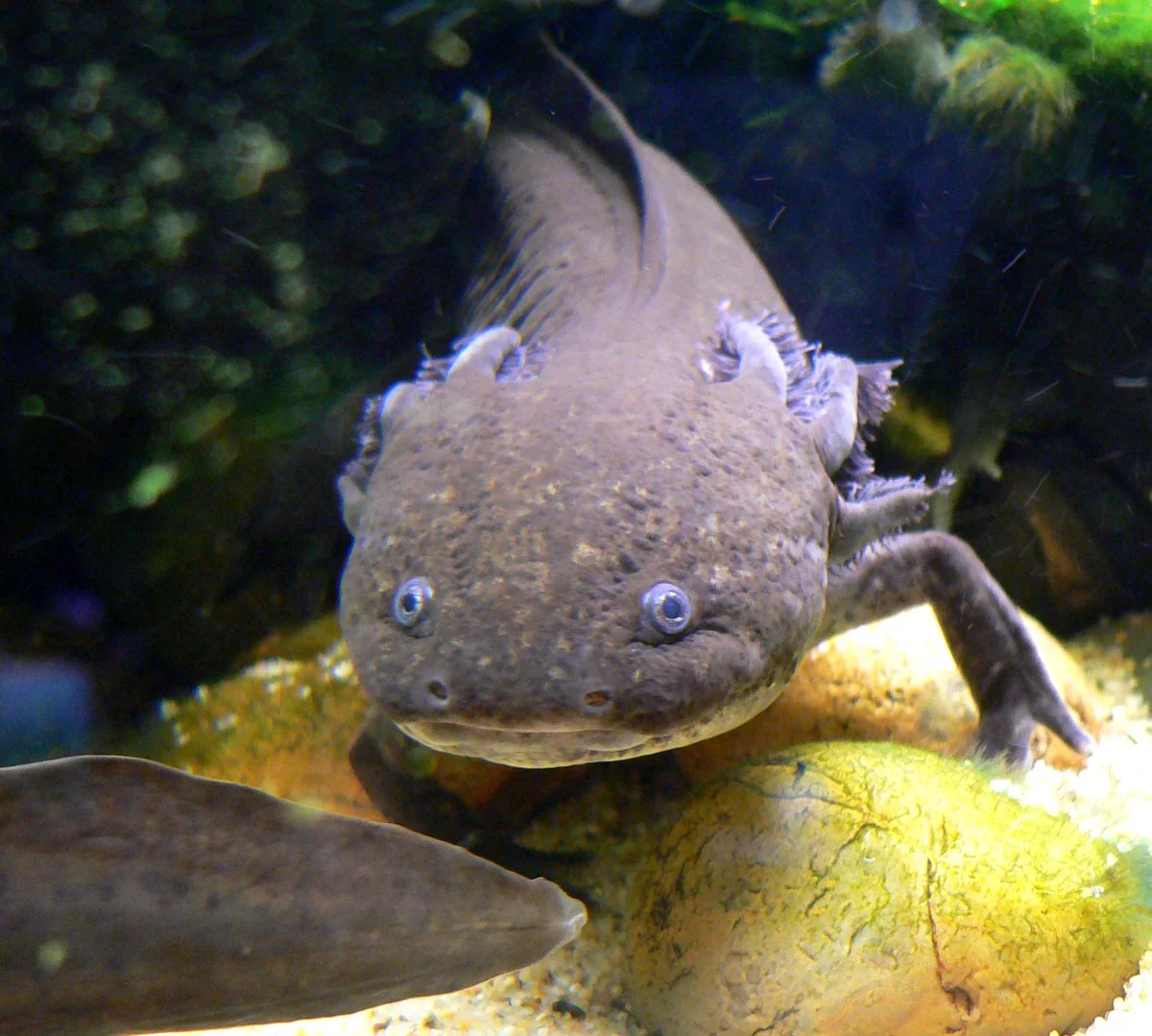
Identification: The axolotl is Ambystoma mexicanum, a fully aquatic salamander from Mexico, not a fish. It retains external feathery gills throughout life, grows to about 25 to 30 cm, and is critically endangered in the wild, although captive bred axolotls are common in trade. That distinction matters for every care decision: axolotls are amphibians, they do not tolerate handling well, they must stay in water to breathe, and they have different temperature, flow and tank mate needs from any fish in this guide.
Adult size: About 25 to 30 cm. A 20 gallon long tank, about 75 liters, is a commonly cited minimum for one axolotl, with about 20 gallons per additional axolotl if more than one is kept, and floor space matters more than height, because axolotls are bottom dwellers.
Temperament: Generally peaceful but opportunistic and solitary by preference. Axolotls should be housed alone, or with same sex, same size axolotls only, with hides and enough space for each animal. Fish tank mates are not recommended: fish nip axolotl gills, causing injury and infection, and axolotls try to eat fish. Mixed size axolotls are a cannibalism risk, especially juveniles, and mixed sex pairs lead to constant breeding and exhaustion of females. The supplied keywords ask repeatedly what can live with an axolotl, whether axolotls can have tank mates, whether axolotls can live with other fish, and whether plecos can live with axolotls. The answer, across the sources used for this guide, is: best kept alone. Do not add plecos, fish or shrimp as planned tank mates. A pleco in particular can damage axolotl skin and gills, and an axolotl can injure or eat smaller animals.
Tank requirements and water: Cold, stable water is the critical factor. Published ideal ranges cluster around 16 to 20 degrees Celsius (60 to 68 degrees Fahrenheit), with stress above about 22 to 24 degrees Celsius and sustained temperatures above 72 degrees Fahrenheit causing stress, fungal infection, loss of appetite and shortened lifespan. No heater is needed in a cool room, and a chiller or cooling fan may be needed in a warm house. Use a bare bottom or fine sand under 1 mm, never gravel or small stones that can be swallowed and cause fatal impaction. Provide at least one hide per axolotl, gentle or low flow filtration, a tight fitting lid, and low light plants that tolerate cool water, such as Anubias, Java fern and mosses, if plants are wanted at all. Feed earthworms, axolotl pellets and frozen foods as appropriate for size, not feeder fish. Ammonia and nitrite must be zero, and water changes should use dechlorinated, temperature matched water.
Snails: nerite snails and mystery snails
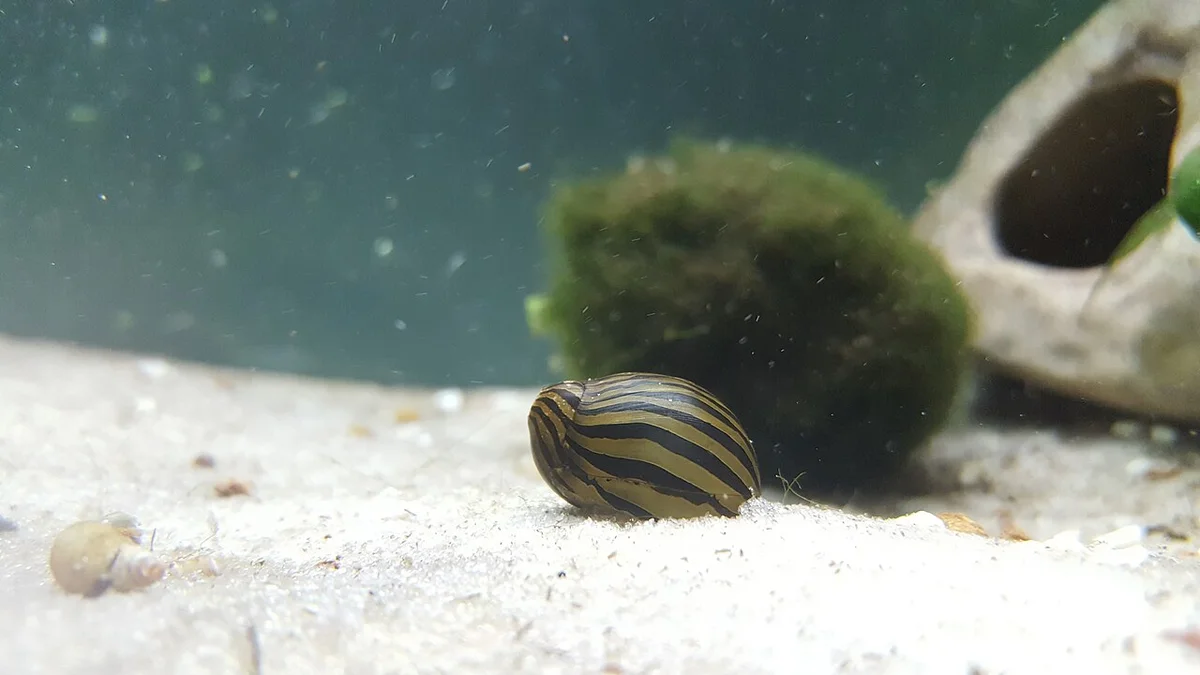
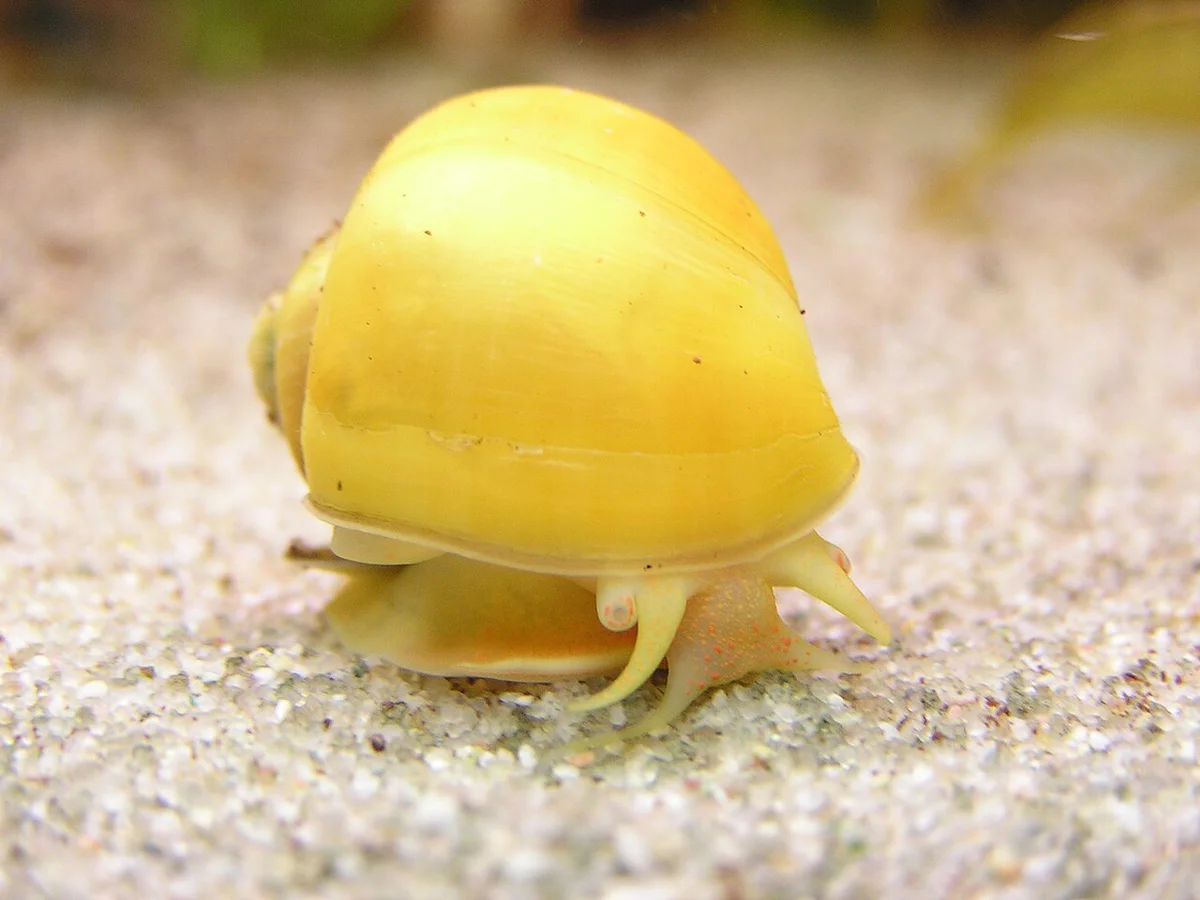
Identification: Nerite snails in trade are several species in the genera Neritina and Vittina, sold as zebra nerites, tiger nerites, horned nerites and similar trade names. Mystery snails are Pomacea bridgesii, also sold as Pomacea diffusa in older literature, large, peaceful apple snails with a rounded shell and a trapdoor operculum. Both are freshwater snails, but they differ in size, breeding and care, and they should not be treated as interchangeable.
Adult size: Nerite snails reach about 2.5 cm, roughly 1 inch. Mystery snails reach about 5 cm, roughly 2 inches, in shell diameter, and need a larger tank and more food than nerites. A 5 gallon tank can hold nerite snails, but a 10 gallon or larger tank is better for mystery snails, especially if more than one is kept.
Temperament: Peaceful. Both nerites and mystery snails are safe with fish, shrimp and each other, with the usual caveat that fish large enough to eat small snails will do so, and that assassin snails, Clea helena, are predatory toward other snails and should not be mixed with nerites or mystery snails if those snails are wanted alive. Snails are not fish food in a community tank plan, and they should not be added to a tank with loaches or puffers that eat snails.
Tank requirements and water: Both need calcium rich, moderately hard, alkaline leaning water for shell health, or shells erode, pit and thin. That is a real conflict with soft water species such as cardinal tetras and Caridina shrimp, and it should be planned, not ignored: a soft, acidic tank that suits cardinals may erode snail shells over time, while a hard, alkaline tank that suits snails and guppies may not suit cardinals. Feed snails supplemental algae wafers, blanched vegetables and calcium rich foods, not just tank algae. Nerite snails are excellent algae grazers, especially on glass and hard surfaces, but they will not eat all algae, and they lay small, hard, white egg capsules on glass, wood and decor that do not hatch in freshwater but are difficult to remove. That is a cosmetic tradeoff to accept before buying nerites. Mystery snails lay egg clutches above the waterline, which can be removed if breeding is not wanted, and they need access to the surface and a lid with a gap for egg laying, plus a lid that prevents escape, because mystery snails can and do leave the water.
Breeding: Nerite snail larvae need brackish water to develop, so nerites do not overrun a freshwater tank, despite laying many egg capsules. Mystery snails breed readily in freshwater if males and females are kept together, so a single mystery snail or a same sex group avoids unwanted clutches. Do not release snails, shrimp or fish into local waterways. Non native aquarium species, including Neocaridina shrimp and mystery snails, are established in several countries, and release is harmful and, in many places, illegal.
Snails in the supplied keywords: The supplied keyword set for this article contains no snail specific keywords, which is worth stating honestly rather than hiding. Snails are included in this guide because the article title and the tank mate questions require them, because betta, shrimp and community keepers ask about snails as tank mates, and because a guide to fish, shrimp and snails that omitted snails would be incomplete. Snail recommendations here are general species guidance, not keyword driven claims, and no snail keyword coverage is claimed in the keyword mapping for this article.
Compatibility at a glance
Compatibility depends on individual temperament, tank size, planting and group size, so this table is a starting guide, not a guarantee. "Yes" means generally compatible in a suitable tank. "With care" means compatible only with the conditions in the species section. "No" means do not plan this combination.
| Combination | Verdict | Main reason |
|---|---|---|
| Betta with nerite or mystery snails | Yes, with care | Snails stay out of the betta's patrol zone, but watch individual bettas and tank size |
| Betta with amano shrimp | With care | Larger shrimp fare better, but a betta may eat shrimp, especially in a small or bare tank |
| Betta with cherry shrimp | With care, often no for breeding | Adults may survive in a planted tank, shrimplets are usually eaten |
| Betta with otocinclus | With care | Only in a planted 10 gallon or larger tank, with a proper oto group and a calm betta |
| Betta with guppies or bright, long finned fish | No as a default | Rival appearance and fin nipping risk, plus chasing |
| Guppies with cherry shrimp | With care | Adults may coexist in a planted tank, shrimplet loss is expected |
| Guppies with amano shrimp | Yes, with care | Larger amano shrimp fare better than small shrimplets |
| Neon tetras with cardinal tetras | Yes, with care | Hold temperature in the overlap, about 23 to 25 degrees Celsius, in a mature planted tank |
| Neon or cardinal tetras with cherry shrimp | With care | Adults may coexist, shrimplet loss is expected, heavily planted tanks help |
| Cherry shrimp with amano shrimp | Yes | Different species, no interbreeding, complementary grazing |
| Cherry shrimp with ghost shrimp | With care | Ghost shrimp are opportunistic and may take shrimplets and weak shrimp |
| Cherry shrimp with snails | Yes | Nerite and mystery snails are safe companions, with shell water needs noted |
| Otocinclus with shrimp and snails | Yes | Peaceful, small and genuinely low risk for adult shrimp |
| Bristlenose pleco with community fish | Yes, in a large enough tank | Adult size and waste output decide the tank, not juvenile size |
| Angelfish with neon tetras or cherry shrimp | No | Adult angelfish eat small fish and shrimp |
| Angelfish with suitably sized peaceful fish | Yes, with care | Tall tank, similar size, no fin nippers, watch breeding territoriality |
| Goldfish with small fish or shrimp | No | Goldfish eat small animals, need large volumes and strong filtration |
| White clouds with goldfish | No | Size and predation risk, despite both tolerating cooler water |
| Axolotl with fish, shrimp or snails as tank mates | No | Gill nipping risk, predation risk, cold and low flow needs differ |
| Axolotl with another axolotl | With care | Same sex, same size only, with hides and space, or keep singly |
Frequently asked questions
Yes, guppies eat shrimplets and small shrimp, and they will eat cherry shrimp babies in a community tank. Adult cherry shrimp in a heavily planted tank may survive, but a breeding colony will lose many babies. Amano shrimp, being larger, fare better. If shrimp breeding is the priority, keep shrimp only, or keep shrimp with otocinclus and snails.
Best kept alone is the answer across the sources used for this guide. Fish nip axolotl gills, axolotls eat fish, and temperature and flow needs differ. Same sex, same size axolotls can sometimes be kept together with hides and space, but fish, shrimp and snails should not be planned as axolotl tank mates.
White cloud mountain minnows are the small, peaceful, schooling coldwater choice in this guide. Common and comet goldfish are coldwater fish, but they grow large and need large tanks or ponds. Axolotls are coldwater amphibians, not fish, and need a species only coldwater setup. Cold water alone does not make species compatible.
The usual causes are copper in medication or fertiliser, ammonia or nitrite in an uncycled or overstocked tank, sudden parameter swings from large water changes, too little mineral content for moulting, and predation that is mistaken for disease. Test ammonia, nitrite, nitrate, pH, hardness and temperature, check every product label for copper, and review recent water changes before assuming disease. Shrimp are early warning animals: when shrimp die and fish look fine, water or chemical causes should be checked first.
Neon tetras are Paracheirodon innesi, with a red stripe on the rear half of the body only. Cardinal tetras are Paracheirodon axelrodi, slightly larger, more intensely coloured, with a red stripe that runs the full length of the body from head to tail. That stripe length, plus slightly larger adult size, is the reliable distinction. Cardinal tetras prefer warmer, softer, more acidic water than neon tetras. If both species are kept together, hold the tank at about 23 to 25 degrees Celsius, keep the water soft and clean, and do not push either species to its extreme.
A male betta must never be kept with another male betta. The safest tank mates are animals that stay out of the betta's patrol zone and do not resemble a rival: nerite snails, mystery snails in a large enough tank, and, in a planted tank with a calm betta, amano shrimp. Cherry shrimp are often eaten, especially shrimplets, and should not be counted as a reliable betta companion. Otocinclus are peaceful and small, but they need a mature, stable tank and a group, and they should not be added to a new or unstable betta tank as a cleanup fix. In a tank under 10 gallons, a betta is best kept alone, with snails as the usual low conflict addition.
Final recommendations
If you own a 10 gallon tank and want the simplest success, choose one of these three plans and do not mix them: a single betta with nerite snails in a heated, planted tank; a school of neon tetras with cherry shrimp and nerite snails in a planted tank; or a group of guppies with amano shrimp and nerite snails, with a plan for fry. If you own a 20 gallon long tank, add a second compatible school or a proper bottom group, keep the water stable, and resist the temptation to fill every gap. If you own a 29 or 40 gallon tank, consider angelfish only if the tank is tall, the tank mates are suitably sized, and you are planning for adults, not juveniles.
Above all, buy the adult animal in your mind, not the juvenile in the shop. Check scientific names, check adult size, check temperature and temperament together, and choose the species that fits the tank, water and companions you already have. That single habit prevents most stocking mistakes, and it is the habit this guide is built to support.
Supporting equipment and food for the species in this guide
This section covers equipment and food that support keeping the species in this guide: testing water before adding animals, making tap water safe, and feeding shrimp a sinking food that reaches the bottom. Read the manufacturer instructions for any product before use, and do not rely on a product to replace cycling, water changes or compatible stocking.
API Freshwater Master Test Kit
A liquid test kit for freshwater pH, high range pH, ammonia, nitrite and nitrate, useful for cycling a tank and for checking water before and after adding fish, shrimp or snails. It is relevant to every species section in this guide, because ammonia and nitrite should be zero before animals are added, and nitrate should be kept low through water changes.
Seachem Prime Water Conditioner, 250 ml
A concentrated water conditioner for freshwater and saltwater, described by the manufacturer as removing chlorine and chloramine and detoxifying ammonia, nitrite and nitrate. It is relevant to water changes with tap water, to new tanks during cycling, and to shrimp tanks where tap water treatment must be checked for copper and other additives. Follow the manufacturer dose, and do not use a conditioner as a substitute for water changes or for fixing an overstocked tank.
Hikari Shrimp Cuisine, 0.35 oz
A small sinking pellet food for freshwater ornamental shrimp, including Caridina and Neocaridina shrimp, relevant to cherry shrimp, amano shrimp and Caridina shrimp sections, where supplemental feeding matters even in a tank with visible algae. Feed small amounts, remove uneaten food, and do not overfeed a shrimp colony, because uneaten food degrades water quality faster than hunger harms shrimp in a planted tank with biofilm.
That is deliberate. A longer list padded with irrelevant equipment would not help a reader choosing species, and this guide does not force a section to reach a set number of products.
Research notes and limits
This guide is desk research from species profiles and care guides listed in research_sources.csv. Where sources conflict, the range is reported and stable water in the middle of the range is recommended. Where a parameter was not reliably sourced, it is omitted or flagged, rather than guessed. No species was tested, purchased or personally kept for this article. Photographs are licensed Wikimedia Commons species photographs, credited in image_licences.csv, showing one individual, not a guarantee for any animal a reader buys. Stocking guidance is general educational information, not veterinary advice.
Image credits: Species illustrations in this guide are licensed Wikimedia Commons photographs. Guppy photograph by Holger Krisp (CC BY 3.0); neon tetra photograph by Corpse89 (CC BY-SA 3.0); amano shrimp photograph by Richard Bartz, Munich Makro Freak (CC BY-SA 2.5); Caridina shrimp photograph by DirkBlankenhaus (CC BY-SA 3.0); bristlenose pleco photograph by The Last 99 (CC BY-SA 3.0 Germany); cherry barb photograph by Brian Gratwicke (CC BY 2.0); white cloud minnow photograph by Corydoras-adolfoi (CC BY-SA 4.0); goldfish photograph by G29 (CC BY-SA 3.0); axolotl photograph by Stan Shebs (CC BY-SA 3.0); nerite snail photograph by Evan Baldonado (CC BY 4.0); mystery snail photograph by MdE (CC BY-SA 3.0 Germany). Betta photograph by Funfood (CC0 1.0); cardinal tetra photograph by Paolo Neo (public domain); cherry shrimp photograph by UnknownM123 (CC0 1.0); ghost shrimp photograph by Enziarro / Joseph Stansbury Rosin (public domain); angelfish photograph by 5snake5 (CC0 1.0). These are species illustrations, not product photographs.
