
A partial denture in the United States typically costs 300 to 5000 dollars or more for one arch, depending on material, how many teeth are replaced, lab work, prep work, and insurance. That wide range is not random, and it is not a quote. A small acrylic partial for one or two front teeth sits at the low end. A cast metal partial for several teeth, or an implant supported partial, sits far higher. The only accurate price for your mouth is a written, itemised quote after a dental examination. Use this guide to understand what moves that quote, what a quote should include, and how to compare quotes fairly.
This is a service cost guide, not a product affiliate article. It contains no product affiliate links, no product recommendation dressed as a cost guide, and no fixed price presented as a quote. All prices below are reported ranges accessed on 2 November 2026, stated per arch unless the text says otherwise, and prices change. Check current fees with the clinic that will treat you. All reported ranges, lab fees, and insurance rules must be rechecked at publication time because dental fees, lab fees, product lines, and insurance rules change, and the ranges in this article must not be carried forward unchecked.
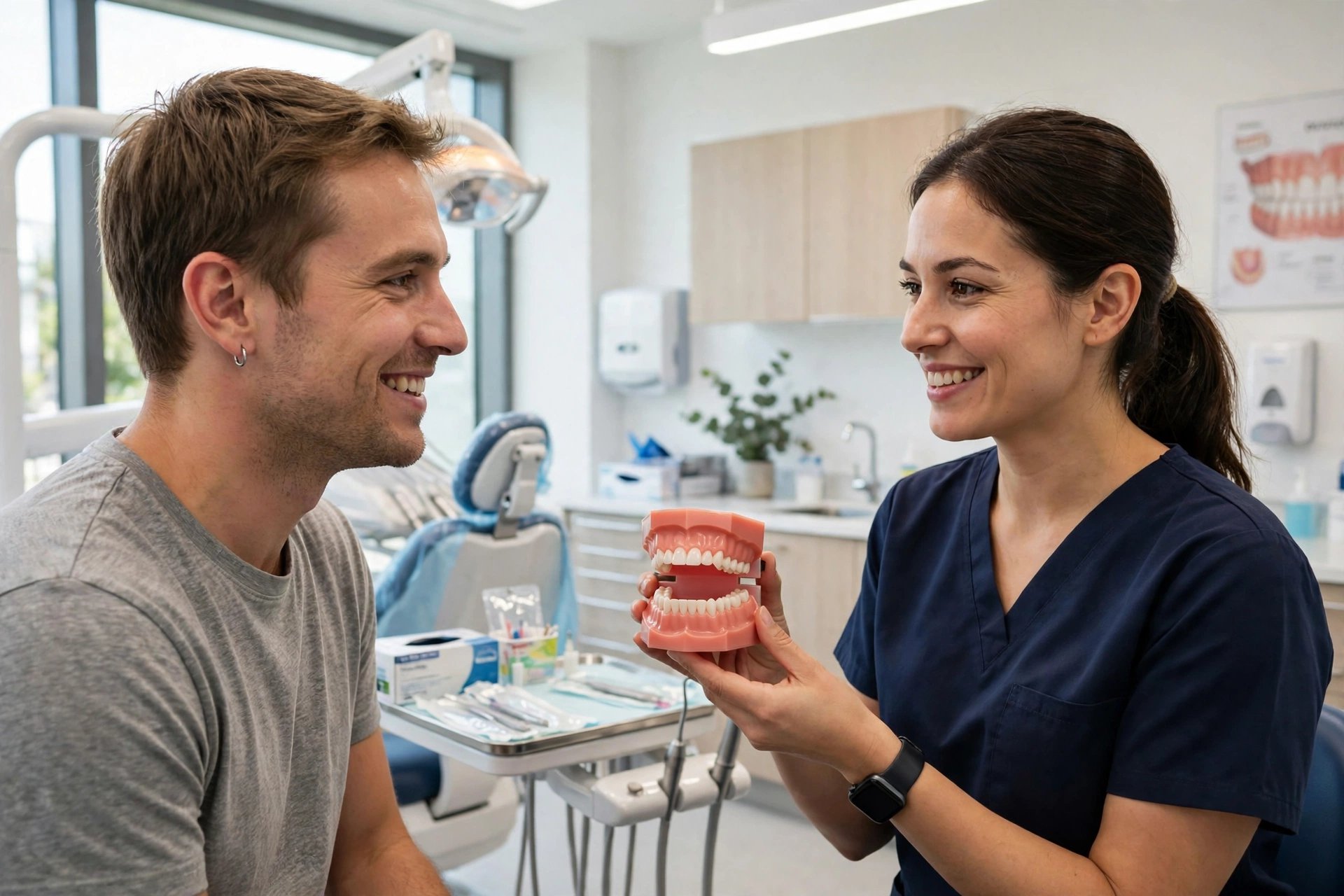
The price at a glance, per arch
Prices for partial dentures are usually quoted per arch, meaning one upper appliance or one lower appliance. If you need teeth replaced in both arches, you usually need two separate appliances, and lab fees are charged per appliance. That is why a two arch total can be roughly double a one arch figure, before prep work and insurance are considered.
Reported ranges from the competitor practice guide accessed on 2 November 2026, supported by secondary United States cost guides that give overlapping but not identical ranges, are:
- Acrylic partial, also called a resin partial: roughly 300 to 1500 dollars per arch in the competitor guide. Secondary guides report similar low end figures, with some reporting 500 to 1500 dollars for a larger acrylic partial and 300 to 600 dollars for a small flipper for one or two teeth.
- Flexible partial, made from thermoplastic nylon such as Valplast type material: roughly 900 to 2000 dollars per arch in the competitor guide. Secondary guides report up to 2500 dollars or, for a larger arch, up to 3500 dollars, which shows why a single national average can mislead.
- Cast metal partial, usually a cobalt chrome framework: roughly 900 to 2500 dollars per arch in the competitor guide. Secondary guides report 1000 to 2800 dollars, 1200 to 3000 dollars, or up to 4200 dollars with precision attachments. The higher figures reflect complexity and attachments, not a different treatment.
- Overall partial denture range in the competitor guide: 300 to 5000 dollars or more. That overall range is a summary of material, tooth count, and complexity, not a price for a specific appliance.
Do not compare a 500 dollar estimate for an acrylic partial with a 2000 dollar estimate for a metal precision partial as if they were the same product. They differ in material, framework, fit, durability, and lab work. A fair comparison always states material, arch, number of teeth, and what is included.
A price list for partial dentures should therefore be read as a set of ranges by type, not as a menu with one fixed price per item. Any clinic that gives a single national price without asking about material, teeth, and arch is giving you a starting point, not a quote.
What a partial denture is, in plain terms
A removable partial denture replaces some, but not all, teeth in an arch. It has artificial teeth set in a base that sits on gum tissue, held in place by clasps that grip remaining natural teeth, by a framework that distributes chewing force, or by a combination of both. A dental partial plate is the same general idea in everyday language: a removable plate that fills gaps where teeth are missing.
A partial denture is different from a full denture, which replaces all teeth in an arch. It is also different from a fixed bridge, sometimes called a fixed partial denture, which is cemented to neighbouring teeth and is not removed daily. It is different again from a dental implant, which replaces a tooth root in the jaw, and from an implant supported partial, which is a removable partial that snaps onto implants. Those distinctions matter for price, because each option involves different lab work, different materials, and different follow up care.
Temporary partial dentures, also called interim partials, are a related but distinct use. An interim partial is often used while gums heal after extractions, or while a longer term plan is prepared. It is usually acrylic, usually lighter, and usually less durable than a definitive partial. Its price sits at the lower end, but it is not a like for like substitute for a definitive cast metal partial if you need a long term appliance.
A permanent partial, in everyday language, usually means a definitive removable partial intended for long term use, not a fixed appliance that can never be removed. If a clinic uses the word permanent, ask what it means in that quote: definitive removable partial, fixed bridge, or implant supported option. The word alone does not determine price.
What moves the quote, grouped by where the money goes
A quote is easier to read when its parts are grouped by purpose rather than listed as a long set of factors. The groups below start with the total over time, then work back through preparation, making, design, a different treatment route, and finally payment. Every figure is a reported range accessed on 2 November 2026, per arch unless the text says otherwise, and not a quote.
1. The total over time, not just the first figure
Budget for fitting work later, not only on the day of fitting. Bone and gum tissue beneath a gap keep changing shape in the years after teeth are lost, so an appliance that sat quietly at first can begin to rock, rub, or feel loose as time passes. That drift is ordinary tissue change, not proof that the appliance was faulty, and it is why later fitting work belongs in the budget from the start.
Two kinds of later work dominate that budget. The competitor guide puts relining at 200 to 500 dollars: new material is shaped inside the appliance so it matches tissue that has changed since fitting. Fixing damage is listed separately in that guide at 100 to 400 dollars, and where the figure lands depends on how involved the work turns out to be, from a cracked tooth to a broken clasp. Those are reported ranges accessed on 2 November 2026, not quotes.
Even a partial that feels comfortable is worth taking for a yearly review, a rhythm most dentists advise. Spotting a loose clasp at that stage lets the clinic steady it before wider harm sets in, which keeps a modest fix from becoming a costly one. When comparing quotes, ask for an estimate of likely reline and repair costs, how often the clinic recommends review, and whether adjustments in the first weeks after fitting are included in the initial fee. A lower initial price with no included adjustments can cost more in the first year than a higher initial price with adjustments included.
Lifespan should also be discussed as a range, not as a promise. Secondary guides give shorter figures for some acrylic designs, around 3 to 5 years for a small flipper in heavy use. For acrylic and flexible designs, the competitor guide reports a working life of 5 to 10 years, after which fit or material wear may call for a new appliance. In the same guide, cast metal ranks longest lived, at a reported 10 to 15 years or longer where steady cleaning and review continue. A reline can extend fit, but it does not make a worn material new again.
2. Work done before the appliance is made
Teeth that must be removed before fitting add a separate charge to the bill. The competitor guide reports a surgical extraction, where removal is more involved, at roughly 250 to 600 dollars or more, and a straightforward single extraction at roughly 150 to 300 dollars. Those are reported ranges accessed on 2 November 2026, not quotes, and prices change.
Other preparation can include a professional cleaning before impressions, fillings for anchor teeth, treatment for gum disease, and rest seat preparation, which reshapes the teeth that will hold the clasps so they seat well. Each item should appear on an itemised quote, so you are not comparing a partial only price from one clinic with a partial plus prep price from another.
Healing time also affects total cost. Dentists often leave several weeks between extractions and the final impression, so the mouth has settled into its changed shape before measurements are taken. An immediate partial, made from impressions taken before extraction and fitted on the extraction day, spares you a gap in your smile while healing goes on, yet a reline once healing has settled, most often some months later, is still usually needed and adds to the overall bill. Immediate convenience has a later cost, and a fair quote should state that.
3. How the appliance is made, and what it is made from
A removable partial usually involves two places of work: the clinic where impressions, try in, and fitting happen, and a specialist workshop where the framework and teeth are built. That workshop charge is part of the total you pay, even when it is not shown as a separate line. Large workshops that process many cases can usually charge less than small specialist workshops that take on difficult or appearance focused work, so the workshop behind a hard case can shift the total. Location matters too. Place matters as well: fees in large cities and coastal areas often run above countrywide figures, so a range drawn from a national survey is a poor guide to a local bill. A national average is not a local quote. If you live in a high cost region, your quote may sit above the national range for the same material, and that does not automatically mean the clinic is overcharging. Ask for an itemised quote so you can see lab fees, clinical fees, and any prep work separately.
Digital design and in office milling can change lab fees for some restorations, but a removable partial still involves impressions or scans, design, try in, and adjustment. Do not assume that a digital label alone lowers the price of a partial.
Among materials, price ranking is consistent across guides even when exact ranges differ.
Acrylic partials cost least to make. Their lightness and the ease with which a clinic can adjust them are real advantages, yet they feel thicker in the mouth and their material gives out sooner than a metal design. A small flipper for one or two teeth is the least costly form, often worn for a short period while healing finishes or a longer term plan is settled, while a larger acrylic appliance for several teeth costs more because it takes more material and more workshop time.
Flexible partials are built from thermoplastic nylon, under family names such as Valplast, Flexite, and Duraflex. Many designs show no metal clasps, the material gives instead of snapping, and that combination draws readers who put comfort and looks first. That draw has limits: bite, remaining teeth, and the span of missing teeth decide whether a flexible design can carry chewing force safely, so a dentist must judge suitability, and a flexible partial that does not suit your bite is poor value however little it costs.
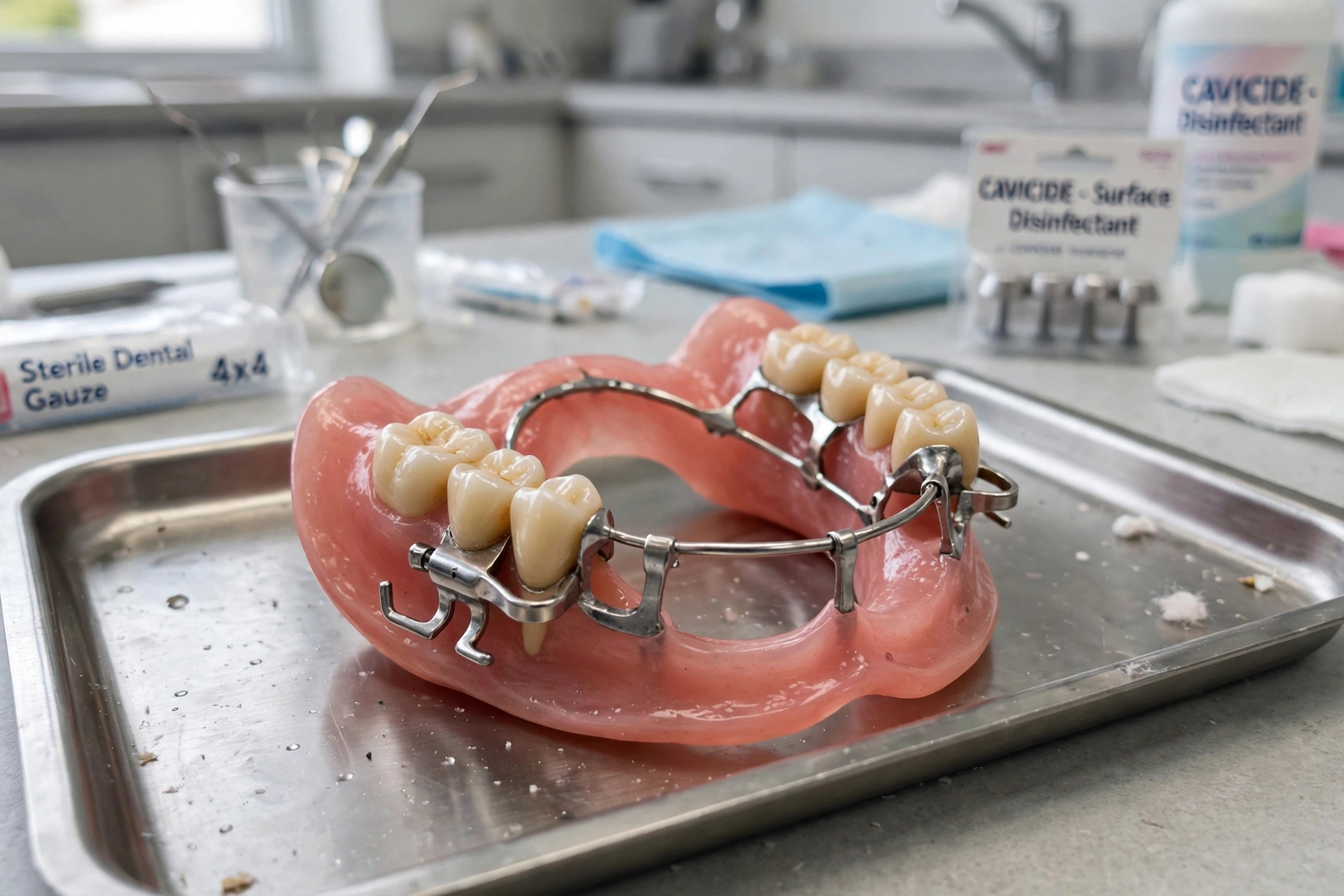
Cast metal partials rest on a slim cobalt chrome framework, with acrylic teeth set in a gum coloured base. That slim frame lasts longer and seats more exactly than an acrylic base on its own, and wearers commonly find it easier to live with over years, which changes lifetime cost even though the first bill is higher.
Thermoplastic partial denture cost therefore sits in the flexible family, not as a separate fourth material. If a quote says thermoplastic, ask which material family, whether metal clasps are included, and how repairs are handled, because flexible materials are often harder to repair or reline than acrylic or metal designs.
4. Teeth, span, and arches
Tooth count changes the build, not just the tooth list. An appliance that spans both sides of an arch needs a stronger framework, more base material, and more workshop time than a small appliance confined to one back corner, even before material is chosen.
Single tooth partial denture cost is the clearest example of why price does not scale tooth by tooth. A one tooth partial, sometimes called a Nesbit partial when it is a small one tooth appliance, replaces a single missing tooth and sits at the lower end of the range for its material. The appliance, framework, impressions, try in, and fitting are part of the price, so adding a second tooth does not simply double a one tooth price, and removing a tooth does not simply subtract a fixed amount.
Where teeth sit changes what the workshop must get right. At the front, shade matching and clasp visibility dominate, so aesthetic lab work can add cost even for a small appliance. At the back, chewing force dominates, so framework strength and support can add cost even when tooth count is modest. That is why a molar appliance and a small front flipper are not comparable on tooth count alone, and why a four tooth span and a five tooth span differ through span and design rather than through a fixed amount per tooth.
Upper and lower appliances are priced on their own, each carrying its own workshop fee, so material and span reasoning applies to each arch separately. A unilateral design, covering one side of one arch only, still needs a full framework and fitting for that arch.
5. Implant supported partials as a different treatment
Start from the anchor rather than the clasp. One or two implants are placed and the partial clips onto them, so the appliance is held by the implants themselves. Bone around an implant site keeps more of its bulk than bone under a clasp held appliance, because load passes into the bone through the implant. Neighbouring teeth escape the sideways pull that clasps apply over years, and chewing feels steadier, since the appliance stays put instead of shifting on teeth that remain.
That stability comes at a higher upfront total. In the competitor guide's illustration, an implant supported total often reaches 3000 to 8000 dollars or more, depending on implant count. Read that figure as an implant supported total only, not as a price for implants alone and not as a quote.
Search language makes this boundary easy to blur. Partial dental implants can be read as an implant supported partial, as implants placed to support a partial, or as a single implant for one tooth, and those readings carry different prices. Keep the totals separate: a removable partial price is not an implant price, and an implant supported total is not a removable partial price. Ask a clinic to state in writing whether the quote covers a removable partial only, implants only, or implants plus a partial, and how many implants are included.
Compared with a removable partial, implants usually cost more at the start, sometimes several times more, while offering fewer relines, less wear on adjacent teeth, and stronger chewing function over decades. That balance can tilt the other way for a younger wearer with decades ahead, for whom fewer relines and less wear on neighbouring teeth may repay the higher first bill over time. For someone else, a traditional partial made to a good standard may suit best, and that is a sound outcome rather than a compromise. Discuss the comparison explicitly with a dentist, weighing lifetime cost, bone health, and remaining teeth, not upfront price alone.
Any general comparison therefore needs two totals over the same stated period: a removable partial upfront figure plus its expected relines and replacement, set beside an implant supported upfront figure plus its maintenance. Without that shared period, the comparison has no meaning, because a cheaper appliance replaced twice can cost more than a dearer appliance kept for fifteen years.
6. Paying with insurance
Insurance changes the question from the full fee to the share left after benefit rules. Partial dentures usually fall in the major restorative band, where the competitor guide describes cover of half the fee once the deductible is met, up to a yearly ceiling commonly set between 1000 and 2000 dollars. The cap, not the percentage alone, is what surprises many readers.
Worked example, using the competitor guide's illustration, not a quote for any person: start with a full lab and clinical fee of 1800 dollars. At 50 percent cover, the benefit on that fee would be 900 dollars, provided the full 1500 dollar annual maximum is still available and provided the treatment is covered without a waiting period or exclusion. That leaves a patient share of 900 dollars in that illustration. Now change one fact: if 1000 dollars of that 1500 dollar maximum has already been used on other treatment, only 500 dollars of benefit remains. The patient share then becomes 1800 dollars minus 500 dollars, which is 1300 dollars. If a waiting period applies, or a missing tooth clause excludes teeth lost before coverage started, the benefit may be lower still or zero for that tooth.
With insurance and without insurance are therefore two different totals. Without insurance, the full fee, prep work, and later relines and repairs all fall to the patient. With insurance, the total is the fee minus the covered share, after deductible and within the annual maximum, plus any items the plan does not cover. A with insurance figure given without checking plan, deductible, used benefit, and waiting period is an estimate, not a guarantee.
Questions to ask your insurer before treatment:
- Does the plan cover the material you are considering, or only a standard material, with an upgrade charge for flexible or metal designs?
- How much of your annual maximum have you already used this year?
- Is a preauthorisation estimate available before treatment starts, and is it based on the same material, arch, and tooth count as your treatment plan?
- Does your plan have a missing tooth clause that excludes teeth lost before your coverage started?
- Is there a waiting period for major restorative work? Some plans require 6 to 12 months of enrolment first.
Before treatment starts, ask the insurer for a preauthorisation estimate, and treat that call as time well spent. That estimate cannot promise what the plan will finally pay, yet it replaces guesswork about your share with a figure worked out from your plan, material, arch, and tooth count. Make sure the estimate describes the same appliance as the treatment plan, because cover agreed for an acrylic design does not automatically extend to a metal one.
Delta Dental and other large insurers are often searched by name in this topic. This article does not give a Delta Dental specific price, because coverage varies by plan, employer group, state, and benefit year. The same warning applies to any insurer name in a search query: the plan document, not a web article, determines your benefit.
Cost by type, in one place
Use this summary only as a reported range check, not as a quote. All figures are per arch, accessed on 2 November 2026, and prices change.
- Small acrylic flipper, one or two teeth, often temporary: roughly 300 to 600 dollars in secondary guides, within the competitor guide's broader acrylic range of 300 to 1500 dollars.
- Larger acrylic partial, several teeth: roughly 500 to 1500 dollars in secondary guides, within the competitor guide's acrylic range.
- Flexible partial, Valplast type thermoplastic nylon: roughly 900 to 2000 dollars in the competitor guide, with secondary guides reporting up to 2500 dollars, or up to 3500 dollars for a larger arch.
- Cast metal partial, cobalt chrome framework: roughly 900 to 2500 dollars in the competitor guide, with secondary guides reporting 1000 to 2800 dollars, 1200 to 3000 dollars, or up to 4200 dollars with precision attachments.
- Implant supported partial total, including implants in the competitor guide's illustration: often 3000 to 8000 dollars or more, depending on implant count.
- Reline: roughly 200 to 500 dollars.
- Repair, cracked tooth or broken clasp: roughly 100 to 400 dollars, depending on complexity.
- Simple extraction before fitting: roughly 150 to 300 dollars. Surgical extraction: roughly 250 to 600 dollars or more.
Average cost for partial dentures, as a single number, is misleading without material and arch. Secondary guides report averages near 1738 dollars for resin acrylic, 1761 dollars for flexible nylon, and 2229 dollars for metal partials in a 2024 study summary quoted in a 2026 cost guide. Those averages are useful midpoints, but real quotes span the wider ranges above, and your quote will depend on your teeth, your arch, and your clinic.
Average cost for a full set of dentures is a different question. A full set means full dentures for both arches, or a full denture for one arch, depending on how the phrase is used, and it is not the same as a partial denture for one arch. If you need a full set figure, ask for a full denture quote separately, with arch and material stated, rather than extrapolating from a partial price.
How to make partial dentures more affordable, honestly
There is no single trick that makes a partial cheap without changing material, durability, or scope. The honest options are:
- Timing treatment to maximise your annual insurance benefit, for example beginning treatment at the start of a benefit year so the whole allowance period lies ahead, or splitting arches across benefit years if your dentist agrees that splitting is clinically sensible. Do not split treatment in a way that harms fit or healing.
- Asking about payment plans through your dental office, and checking whether a practice membership plan or a third party financing plan changes the total cost after interest and fees. A monthly payment is not a lower price.
- Getting a preauthorisation from your insurer so there are no surprise coverage gaps.
- Starting with a less expensive acrylic partial now, with a plan to upgrade to metal or implant supported later, if your dentist agrees that plan suits your teeth and timeline. That staged plan can make financial sense, but it can also mean paying for two appliances, so compare staged total cost with definitive total cost.
- Asking for an itemised written quote from more than one clinic, with the same material, arch, tooth count, and inclusions, so you are comparing like with like.
- Asking what is included in the first year: try in appointments, adjustments, relines, and repairs. A quote that excludes adjustments is not cheaper if you need three adjustments in the first month.
Affordability and cost transparency, in practical terms, mean a written quote that states material, arch, number of teeth, lab fee, clinical fee, prep work, insurance estimate, patient share, and what happens if a reline is needed after healing. If a clinic cannot provide that breakdown, ask again before committing, or seek a second quote.
Dental schools and community clinics are sometimes searched for lower cost treatment. This article gives no specific institution price, because institution prices are unverified as general prices, change by programme, and depend on case selection and student supervision. If you are considering a dental school clinic, contact that clinic directly for its current fees, waiting times, and suitability criteria, and do not rely on a search result figure as a general price.
What a good quote should include
Ask for a written quote that answers every item below. If an item is missing, ask for it in writing before treatment starts.
- Material and framework type, stated by name.
- Arch, upper, lower, or both, with a separate price per arch.
- Number and position of teeth replaced, front, back, or both, and whether the design is unilateral or spans both sides.
- Impressions or scans, try in appointments, fitting, and initial adjustments, with a statement of how many adjustments are included.
- Prep work: extractions, rest seat preparation, fillings, gum treatment, or cleaning, each priced separately.
- Lab fee, stated separately if the clinic can provide it, or stated as included in the clinical fee.
- Insurance estimate: covered share, deductible, annual maximum used, waiting period, missing tooth clause, and whether the estimate is a preauthorisation or an estimate only.
- Patient share after insurance, and the total if insurance pays less than estimated.
- Reline and repair policy after healing, including the cost of a reline after an immediate partial.
- Expected lifespan range for the material chosen, and review interval recommended by the clinic.
- What happens if the partial does not fit, breaks early, or needs remaking, and what charges apply in each case.
That checklist also protects you when comparing a national average with a local quote. A national average without inclusions is not comparable with a local quote with inclusions. Compare itemised quotes, not headline numbers.
Special cases and boundaries
Children and paediatric partials
Paediatric partial dentures, for children who have lost teeth early, are a specialised area with different design, growth, and replacement considerations. This adult focused cost guide does not give a paediatric price, because paediatric pricing is case specific and depends on age, growth, and the reason for tooth loss. If a child needs a partial, ask a paediatric dentist for a case specific quote and for how often the appliance will need review as the child grows.
Invisible dentures
Invisible dentures, in everyday language, usually mean a flexible partial with no visible metal clasps, so the appliance is less noticeable when smiling. The cost follows the flexible partial range above, not a separate invisible category. If a product is marketed as invisible, ask whether it is a flexible partial, what material it uses, how it is retained, and how it can be repaired, because invisibility alone does not determine durability or price.
Fixed bridges as an alternative
A fixed partial denture, meaning a fixed bridge, is cemented to neighbouring teeth and is not removed daily. Its cost is driven by the number of units, material, and prep work on anchor teeth, and it is not included in the removable partial ranges above. If you are comparing a removable partial with a fixed bridge, ask for separate itemised quotes for each option, with lifespan and anchor tooth implications explained, because the two treatments affect remaining teeth differently.
Front teeth in a specific location
Search phrases that add a location, such as a state or city, to a front teeth partial price are local queries, not national prices. This national guide gives the general front teeth partial range by material, and it does not give a location specific price. For a location specific figure, get a written quote from a clinic in that location, with material and tooth count stated.
Frequently asked questions
Start with the honest options, in the order that protects the treatment plan. Compare itemised quotes for the same material and inclusions, get a preauthorisation so there are no surprise coverage gaps, and ask about payment plans, remembering that a monthly payment is not a lower price. Timing treatment to maximise insurance benefit can help, for example beginning treatment at the start of a benefit year so the whole allowance period lies ahead, or splitting arches across benefit years if your dentist agrees that splitting is clinically sensible. A staged plan, starting with acrylic and upgrading later, can help in some cases, but compare staged total cost with definitive total cost, and discuss the plan with your dentist based on your specific teeth and timeline.
Treat the first review visit as the test, not the calendar. Bring a note of anything that still catches, rubs, or slips, and of any sounds that still feel unclear, so the clinic can adjust fit rather than leaving you to wait it out. Speech and chewing usually need a few weeks to settle, and softer food feels easier while that adjustment is under way, with a wider range becoming comfortable as fit improves, according to the competitor guide. Pain, rubbing, or a partial that will not stay in place are fit problems to report promptly, because a poor fit can damage anchor teeth and gum tissue over time.
Decide it as a quote question before deciding it as a timing question. Ask whether the first figure already includes the reline that healing usually requires, and ask what the total becomes once that reline is added. Measurements are taken before the tooth comes out, and the appliance goes in at the removal visit, so there is no gap while tissue heals. Because tissue keeps changing shape as it heals, a reline, typically three to six months later according to the competitor guide, is usually still needed, and it adds cost unless the quote already includes it. If that combined total changes the decision, ask about waiting for healing before a final impression instead.
Plan around the shortest lived design first, then work upward. Secondary guides put a small acrylic flipper in heavy use at around 3 to 5 years. Acrylic and flexible partials sit in the middle of the range, at 5 to 10 years in the competitor guide. Cast metal sits at the top, at 10 to 15 years or longer in the same guide. Those figures are ranges shaped by cleaning, review visits, bite, remaining teeth, and tissue change over time, and a reline can restore fit without restoring worn material.
Without insurance, you pay the full fee for the appliance, plus prep work, plus later relines and repairs. Using the ranges above, a single arch acrylic partial without insurance is roughly 300 to 1500 dollars, a flexible partial roughly 900 to 2000 dollars, and a cast metal partial roughly 900 to 2500 dollars in the competitor guide, before prep work. Secondary guides report wider ranges, so a complex case without insurance can exceed those figures.
Cover usually works as a share rather than the whole fee: plans in the major restorative band commonly pay half after the deductible, subject to a yearly ceiling of 1000 to 2000 dollars in the competitor guide. Coverage depends on waiting periods, missing tooth clauses, used benefit, and material limits. Get a preauthorisation estimate before treatment, and confirm whether the estimate covers the exact material and design in your plan.
An upper partial follows the same material ranges as other single arch partials: roughly 300 to 1500 dollars for acrylic, 900 to 2000 dollars for flexible, and 900 to 2500 dollars for cast metal in the competitor guide, per arch. A lower partial, or mandibular partial, follows the same ranges for a single arch. Two arches require two appliances and roughly double the lab fee portion, before prep work and insurance.
A partial for 4 teeth or 5 teeth costs more than a one tooth partial for the same material, because span, framework, and lab work increase, but there is no single fixed price for 4 teeth or 5 teeth that applies nationally. Ask for a quote that states material, arch, and span, and compare that quote with other quotes for the same material and span.
A one tooth partial sits at the lower end of its material range, because it replaces a single tooth, but it still includes appliance design, impressions, try in, and fitting. A small acrylic one tooth flipper is reported at roughly 300 to 600 dollars in secondary guides. A one tooth metal or flexible design costs more. Do not assume a per tooth price, because the appliance cost does not scale tooth by tooth in a simple way.
For one arch, reported ranges accessed on 2 November 2026 are roughly 300 to 1500 dollars for acrylic, 900 to 2000 dollars for flexible, and 900 to 2500 dollars for cast metal in the competitor guide, with secondary guides reporting wider ranges for larger or more complex cases. Overall, the competitor guide summarises partial dentures at 300 to 5000 dollars or more. Your price depends on material, tooth count, arch, lab fees, prep work, location, and insurance, and only a written quote after examination is accurate for you.
The decision in one paragraph
Start with material and arch, not with a single average price. Acrylic costs least and feels bulkiest, flexible feels easier to wear and shows less but suits fewer bites and is often harder to mend, and cast metal usually gives the better value over its full life despite a higher first bill. Then add tooth count, lab fees, prep work, and insurance, and ask for a written, itemised quote that states every inclusion and every later cost. If a quote gives you a single number without material, arch, tooth count, and insurance maths, it is not yet a quote you can compare. Get the breakdown, compare like with like, and choose the design that fits your mouth, your bite, and your budget over its full lifespan, not just on the day you pay.
Sources used for the factual claims in this article are listed in the supporting files for this article, including the competitor practice guide used for gap analysis and secondary United States cost guides that show overlapping ranges. The competitor guide is not copied here. Its structure, examples, and tables were not reproduced. Its reported price ranges are attributed as reported ranges, accessed on 2 November 2026, and they are not presented as quotes, current prices, or guaranteed costs for any individual.
*This article is general information only. It is not a diagnosis and not a substitute for dental advice. If you have pain, swelling, a loose tooth, gum disease, or a partial denture that does not fit, contact a dentist promptly.*