
The short version: for allergies, the only number that matters is how much genuinely clean air a purifier delivers per minute, the CADR, through sealed True HEPA filtration, with no ionizer or ozone device in the chain. The EPA's standing guidance is unambiguous: ozone-generating "purifiers" are not effective air cleaners at safe concentrations, and ionizers that emit ozone can irritate the very airways you're trying to protect. The Levoit Core 400S is our bedroom pick, the Coway Airmega 250 covers larger bedrooms and living rooms, and the Blueair Blue Pure 211i Max handles open-plan spaces. No hands-on testing anywhere on this page. Every claim is drawn from manufacturer documentation, AHAM/retailer listing data, and independent review publications. Nothing here treats an air purifier as a medical treatment; see the medical-claims note in the buying guide.
The Direct Answer: Which Allergy Air Purifier Should You Buy?
Buy the Levoit Core 400S if the purifier will live in a bedroom: H13 True HEPA, a 260 CADR for a real 403 sq ft room, a 24 dB sleep mode, and a laser PM2.5 sensor with app control so you can verify it's actually working. Buy the Coway Airmega 250 for larger bedrooms and living rooms where you want sealed three-stage filtration with a washable prefilter and smart auto mode.
For open-plan spaces: the Blueair Blue Pure 211i Max covers open-plan spaces other purifiers can't (up to 674 sq ft at proper air-change rates with a 435 smoke CADR).
Scope note: this guide sticks to the allergy angle: sealed True HEPA filtration, allergen-specific CADR, and ozone safety.
Quick Picks
Short on time? These are our top recommendations. Each button takes you to the exact product on Amazon.
Allergy Air Purifier Comparison Table
| Product | Key Specs | Best Use Case | Standout Feature | Amazon Link |
|---|---|---|---|---|
| Levoit Core 400S Best smart pick for bedrooms |
H13 True HEPA + carbon · 260 CFM | Bedroom allergy sufferers who want quiet and proof it works | H13 True HEPA 3-stage filter; 260 CFM CADR | Check Price |
| Coway Airmega 250 Best for large bedrooms |
Green True HEPA + carbon + prefilter · 249 / 261 / 230 | Large bedrooms and living rooms wanting auto-mode convenience | Green True HEPA (to 0.01 µm) + carbon + washable prefilter | Check Price |
| Blueair Blue Pure 211i Max Best for open-plan spaces |
HEPASilent + carbon · 435 / 452 / 450 | Open-plan homes and pet-dander-heavy households | Smoke CADR 435 CFM; HEPASilent filtration | Check Price |
Table note: CADR figures are AHAM Verifide where stated. The Blueair HEPASilent system's electrostatic stage is part of its filter design, not an ionizer. It does not emit ozone as a product function.
Detailed Reviews
1. Levoit Core 400S: best smart pick for bedrooms
The Core 400S is the bedroom pick in this guide. Its H13 True HEPA filter captures 99.97% of particles down to 0.3 microns; the three-stage cartridge adds a washable nylon prefilter and an activated-carbon bed for VOCs and cooking odors. The headline number is a 260 CFM CADR (442 m³/h) covering 403 sq ft at five air changes per hour, and the sleep mode drops to 24 dB, genuinely library-quiet, which is the number that decides whether an allergy sufferer actually runs the machine all night. The laser PM2.5 sensor ("AirSight Plus") feeds a live display and the VeSync app, with Alexa and Google voice control and a filter life of up to 12 months.
The caveat is the one every 400S owner learns: it's a 403 sq ft machine, not a whole-house one. Size it to a bedroom or medium living room and it's excellent; ask it to cover an open plan and the air-change rate falls below what's useful for allergies. There's no ionizer to worry about. Filtration is purely mechanical plus carbon.
Who it's for: bedroom allergy sufferers who want verified-quiet operation and proof (via the sensor) that the air is actually clean. Skip it if: your room is over ~400 sq ft. Step up to the Coway 250 or Blueair 211i Max.
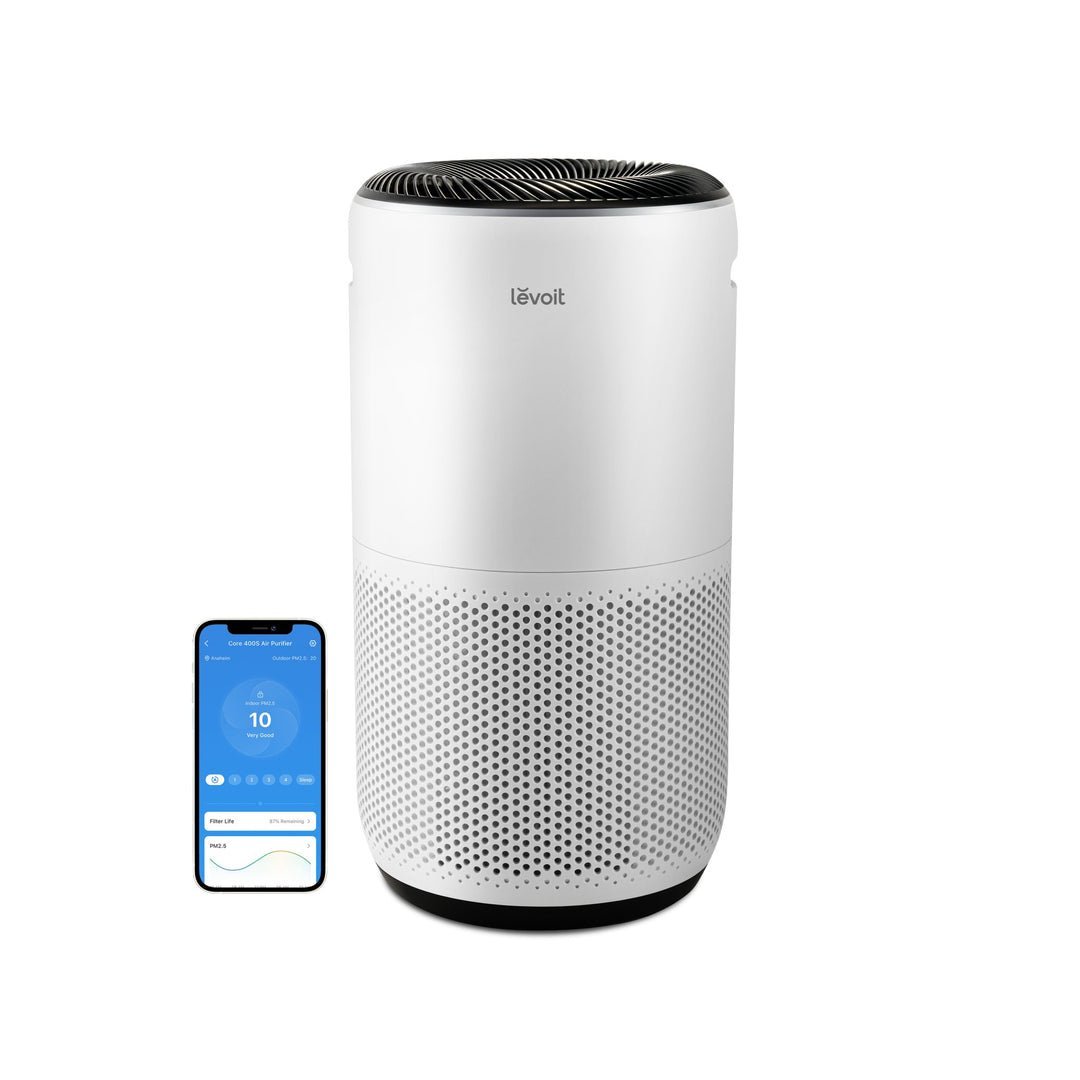
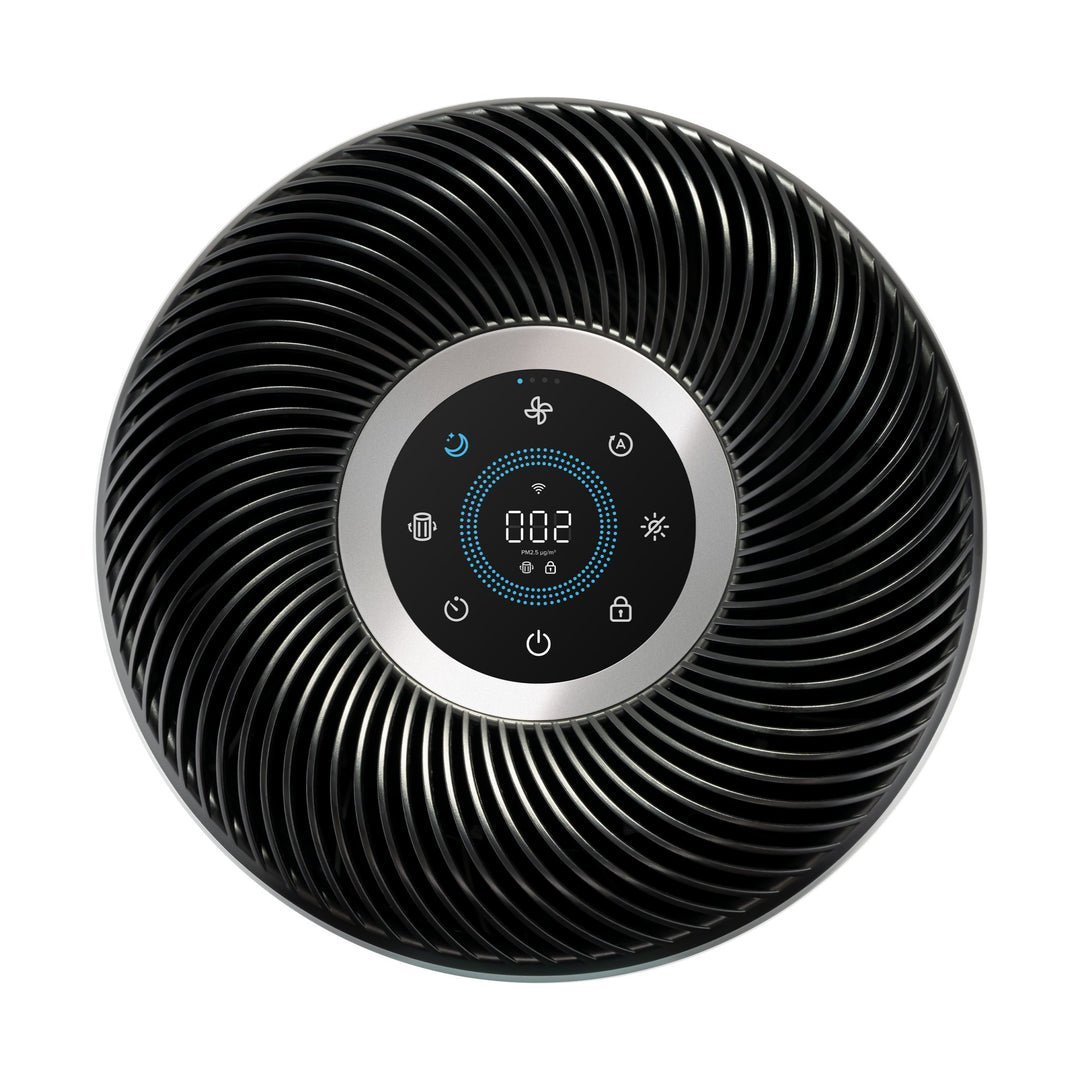
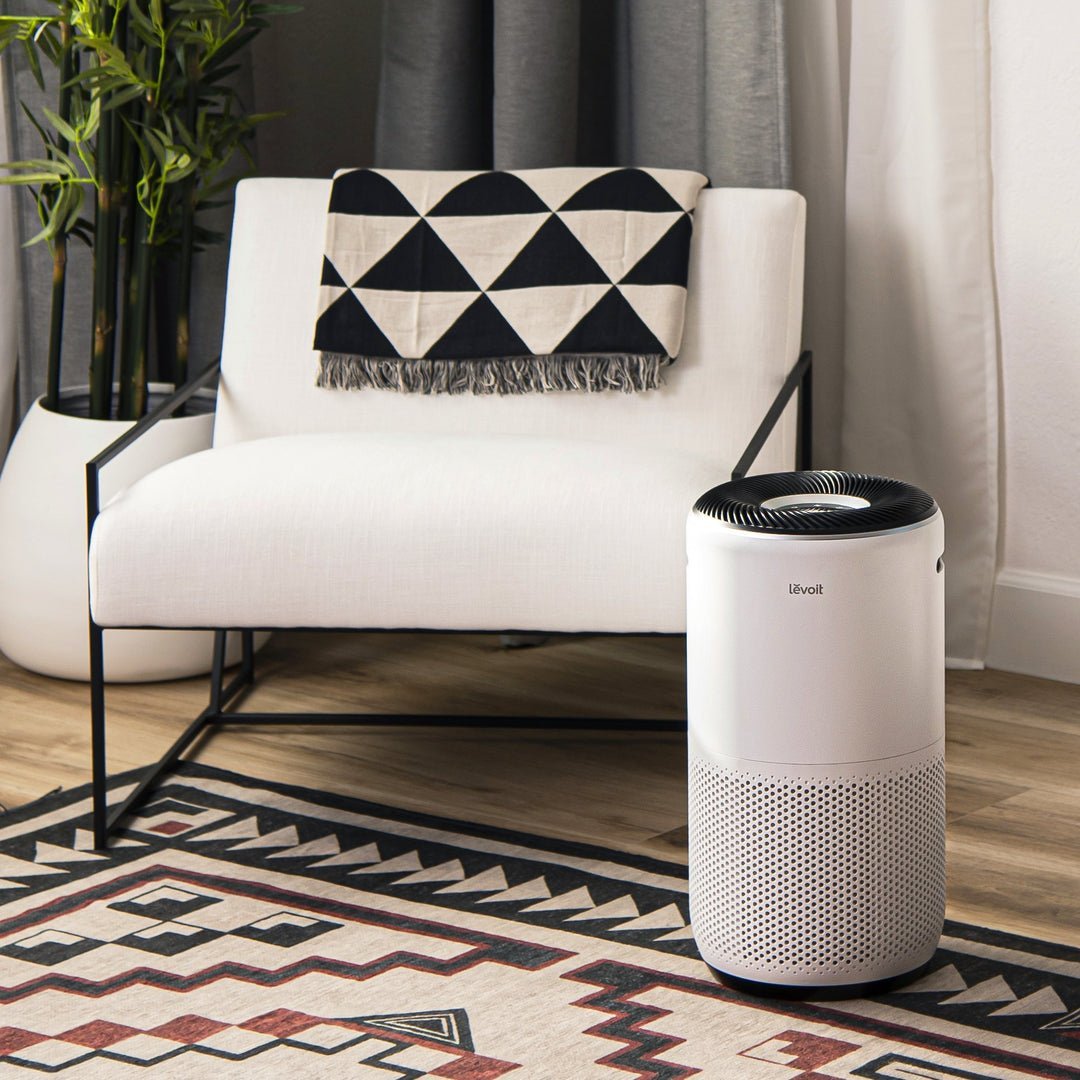
Levoit Core 400S
The bedroom answer: H13 True HEPA, 260 CADR for a real 403 sq ft room, 24 dB sleep mode, and a laser PM2.5 sensor with app control.
- H13 True HEPA 3-stage filter; 260 CFM CADR
- 24 dB sleep mode, genuinely bedroom-quiet
- AirSight Plus laser PM2.5 sensor + VeSync app
- 403 sq ft ceiling: rooms over ~400 sq ft drop below allergy-useful air-change rates.
- Smart features need the VeSync app: no benefit if you want a simple set-and-forget unit.
- Replacement filters are an ongoing cost: the HEPA cartridge lasts up to 12 months and must be replaced.
- Filtration: H13 True HEPA + carbon
- CADR: 260 CFM
- Room size: 403 sq ft @ 5 ACH
Best for: Bedroom allergy sufferers who want quiet and proof it works
2. Coway Airmega 250: best for large bedrooms
Coway's HyperCaptive filtration system pairs a washable prefilter with an activated-carbon (deodorization) filter and a Green True HEPA filter that Coway rates down to 0.01 microns. AHAM-style CADR figures run 230 (pollen) / 261 (dust) / 249 (smoke), and Coway rates coverage at 930 sq ft at 2 air changes per hour, roughly a 370 sq ft space at the 5 ACH an allergy household should target. Smart Mode uses the built-in air-quality sensor to adjust fan speed automatically, with Sleep and Eco settings plus a Rapid Mode for quick cleanups; noise spans 22–54 dB. The washable prefilter is a genuine running-cost advantage: rinse, dry, reinstall, and the HEPA and carbon stages last longer.
Note the model distinction: the base 250 has no Wi-Fi (the 250S adds the IoCare+ app and voice control at a higher price). Buy the base 250 unless you specifically want app scheduling. The filtration is identical.
Who it's for: large bedrooms, home offices, and living rooms where you want auto-mode convenience without the 400S's app. Skip it if: you need app control (get the 250S) or true open-plan coverage (the Blueair 211i Max moves far more air).


Coway Airmega 250
Sealed three-stage HyperCaptive filtration with a washable prefilter and smart auto mode for large bedrooms and living rooms.
- Green True HEPA (to 0.01 µm) + carbon + washable prefilter
- Smart Mode with air-quality sensor; Eco and Sleep modes
- 930 sq ft at 2 ACH; 22 dB low end
- No Wi-Fi or app control on the base 250: the 250S adds the app at a higher price.
- Not an open-plan machine: about 370 sq ft at 5 ACH, well below the Blueair open-plan coverage.
- Filter replacements are an ongoing cost even with the washable prefilter: the HEPA and carbon stages still need replacing.
- Filtration: Green True HEPA + carbon + prefilter
- CADR: 249 / 261 / 230
- Room size: 930 sq ft @ 2 ACH
Best for: Large bedrooms and living rooms wanting auto-mode convenience
3. Blueair Blue Pure 211i Max: best for open-plan spaces
Open-plan living is where most purifiers fail allergy sufferers. The room is simply bigger than their CADR supports. The 211i Max is built for that failure mode: Blueair publishes a smoke CADR of 435 CFM with pollen at 450 and dust at 452, and rates it for 674 sq ft at 4.8 air changes per hour, with the honest math shown, which is rare. The HEPASilent system combines mechanical and electrostatic filtration (this is a filter-design technique, not an ionizer. No ozone is emitted as a product function) with an activated-carbon layer, removing a stated 99.97% of particles down to 0.1 microns. An AllergenBlock filter variant adds extra pollen, dust, and pet-dander capture. Noise runs 23–53 dB, the app offers scheduling and a "welcome home" geofencing feature, and the fabric prefilter sleeve is washable.
The honest limits: it's a big unit (22.7 × 14.4 × 14.4 in) that reads as furniture, not a discreet box, and replacement filters are pricier than the smaller picks'. But for a combined living/kitchen space where pollen drifts in through the front door all day, nothing else here moves this much clean air.
Who it's for: open-plan homes, large living rooms, and pet-dander-heavy households needing high air-change rates. Skip it if: your space is a single bedroom. It's overkill, and the smaller picks are quieter and cheaper to run.


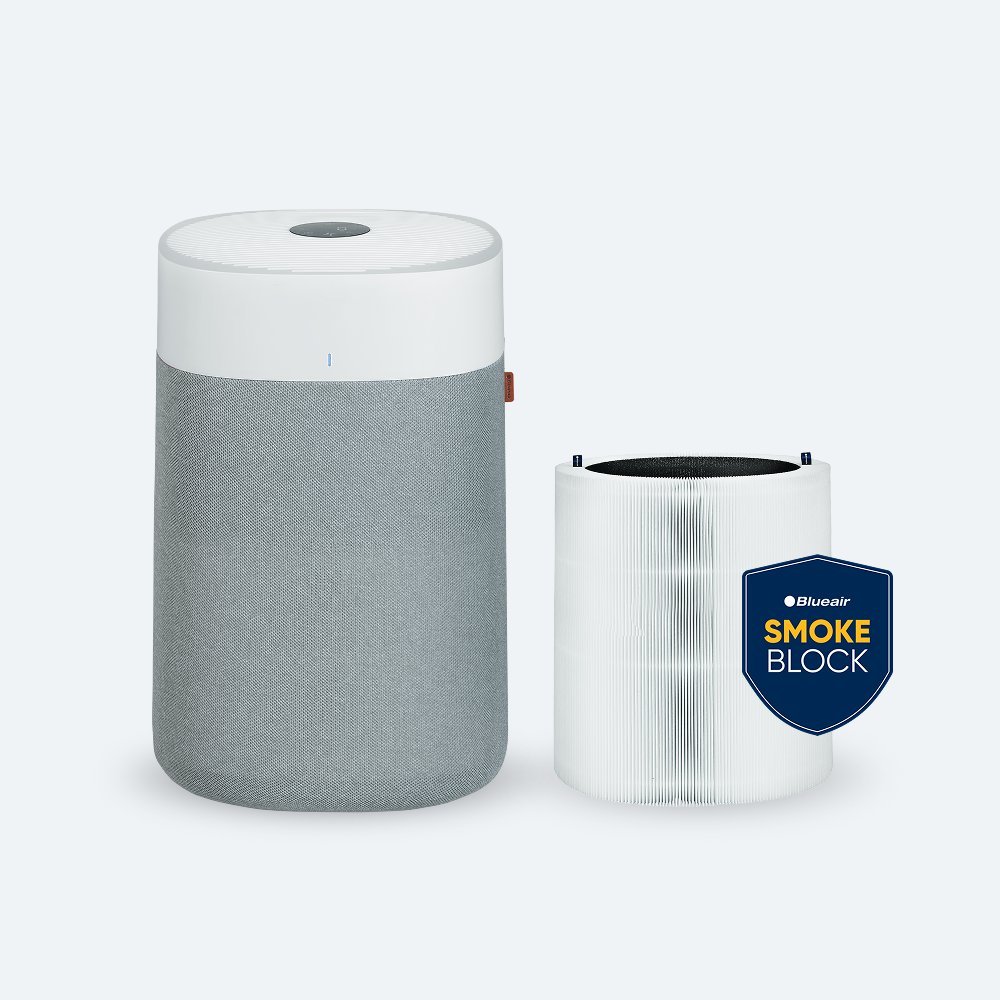
Blueair Blue Pure 211i Max
Built for open plans other purifiers can't cover: 435 smoke CADR, 674 sq ft at proper air-change rates, with the math shown.
- Smoke CADR 435 CFM; HEPASilent filtration
- 674 sq ft @ 4.8 ACH, genuine open-plan coverage
- App control with scheduling + washable fabric prefilter
- Big, furniture-sized unit (22.7 x 14.4 x 14.4 in): it needs floor space, not a discreet corner.
- Replacement filters pricier than the smaller picks.
- Overkill for a single bedroom: the smaller picks are quieter and cheaper to run there.
- Filtration: HEPASilent + carbon
- CADR: 435 / 452 / 450
- Room size: 674 sq ft @ 4.8 ACH
Best for: Open-plan homes and pet-dander-heavy households
How We Selected These Purifiers
No hands-on testing. This guide is research-based. The selection logic starts from allergy-specific guidance: the EPA's position on ozone-generating devices (excluded categorically), the Asthma and Allergy Foundation of America's emphasis on sealed mechanical filtration over ionizers, and the AHAM Verifide program as the only CADR source we treat as verified. Manufacturer CADR claims without AHAM listing are reported as maker claims and flagged. Prices are not quoted, since they change constantly. Where sources disagreed or a spec was unverifiable, the claim was left out.
A note on medical claims. An air purifier captures airborne particles; it does not treat, cure, or prevent allergies or asthma. Where this article discusses health, it reports what public guidance says (EPA on ozone, AAFA on filtration approaches) and what manufacturers claim about particle capture, attributed, never asserted as our own medical finding. If your symptoms are severe, talk to an allergist; a purifier is one tool, not a treatment plan.
Buying Guide: How to Choose an Air Purifier for Allergies
The one rule: CADR matched to the room, at 4.8+ air changes per hour
Clean Air Delivery Rate (CADR) is the single most useful number in air purification: cubic feet of genuinely clean air delivered per minute, measured separately for smoke, dust, and pollen by AHAM under controlled conditions. Smoke CADR is the hardest to earn (smallest particles) and therefore the most meaningful for allergies.
The rule of thumb used across independent testing publications: your purifier's smoke CADR should be at least two-thirds of your room's square footage. A 300 sq ft bedroom needs a smoke CADR of at least 200. And size for air changes per hour (ACH) of 4.8 or higher. That's AHAM's recommended rate, and it's what makes the difference between a purifier that slowly processes a room and one that keeps allergen levels down while pollen keeps drifting in.
Ignore the headline room size; do the ACH math yourself
Manufacturers routinely advertise coverage at 1 air change per hour, a number that means the room's air passes through the filter once every 60 minutes. At that rate, pollen settling between passes defeats the point. The honest figures in this guide's table use 4.8–5 ACH. When you read a box that says "1,125 sq ft," ask at what ACH. If the answer is 1, divide by five for the allergy-relevant number.
True HEPA means 99.97% at 0.3 microns: read the label
"HEPA" is a standard, not a brand, and the grade matters. True HEPA (often labeled H13) captures 99.97% of particles at 0.3 microns, the most penetrating particle size. "HEPA-type," "HEPA-grade," or "HEPA-like" without a grade or the 99.97% figure generally means a lesser filter. Every pick in this guide uses genuine True HEPA-class media; we excluded HEPA-type models on principle.
The prefilter is the unsung hero for allergies
Large particles such as dust, pet hair, and lint clog a HEPA filter fast if nothing catches them first. A good prefilter (ideally washable, as on the Coway 250 and Levoit 400S) extends the expensive HEPA's life and keeps airflow high. For pet-dander households, this matters more than any smart feature: dander rides on hair and dust, and the prefilter is what intercepts it.
Carbon handles what HEPA can't: odors, VOCs, gases
HEPA captures particles; it does nothing for gases. Cooking fumes, cleaning-product VOCs, and smoke odors are chemical irritants that can trigger the same airway response as allergens. An activated-carbon stage (present in every pick here) adsorbs them. If wildfire smoke or heavy cooking odors are part of your picture, carbon depth matters.
No ionizer, no ozone generator, no exceptions
This is the allergy-specific safety line. Ionizers produce trace ozone as a byproduct; the EPA warns that ozone irritates airways and worsens asthma, and no federal agency has approved ozone generators for occupied rooms. Every purifier in this guide uses purely mechanical filtration plus carbon, with no ionizer to disable, no UV stage generating byproducts, and no "plasma" marketing. CARB certification is a useful ozone-safety check on any model you consider.
Noise: check the sleep-mode number, not the headline
An allergy purifier that gets switched off at midnight cleans nothing. Sleep-mode noise in the low 20s dB (Levoit 400S: 24 dB; Coway 250: 22 dB) is genuinely bedroom-viable. Turbo-mode noise in the 60s is fine for daytime rapid cleaning but irrelevant to overnight use, and overnight is when the bedroom purifier does its most important work.
Filter costs are the real price
A cheap purifier with pricey filters replaced twice a year costs more over three years than a pricier purifier with cheap annual filters. Check replacement-filter price and interval before buying, and confirm filters are actually purchasable. Some budget brands have patchy filter availability. The washable prefilter on the Coway and Levoit models is a real running-cost advantage.
Air Purifier Types for Allergy Sufferers, Explained
Sealed mechanical (True HEPA) purifiers. Fan plus HEPA filter plus carbon. The only type this guide recommends. All three picks.
Ionizer / ionic purifiers. Charge particles so they clump and settle. Excluded from this guide: they emit trace ozone, and settled particles can be re-disturbed and breathed in.
Ozone generators. Marketed as "air purifiers," they intentionally produce ozone. The EPA's guidance is explicit: not effective at safe concentrations, harmful above them. Never buy one for an occupied home.
UV-C purifiers. Ultraviolet light aimed at killing microbes. The evidence for meaningful allergen benefit in residential units is thin, and poorly designed UV stages can generate ozone. None of our picks rely on UV.
"HEPA-type" budget purifiers. Real HEPA media costs money; HEPA-type models use lesser filters behind HEPA-adjacent marketing. Excluded on principle. For allergies, the 99.97% standard is the point.
Head-to-Head: The Comparisons That Decide Purchases
Coway Airmega 250 vs. Blueair Blue Pure 211i Max. Both cover big spaces, but at different scales: the Coway is a large-bedroom machine (~370 sq ft at 5 ACH), the Blueair a genuinely open-plan one (674 sq ft at 4.8 ACH) with nearly double the smoke CADR. If one purifier must cover a combined living/kitchen area, the Blueair is the only honest answer in this guide.
Common Buying Mistakes
- Buying an ionizer or ozone "purifier" for allergies. The device marketed as extra-cleaning power emits the lung irritant you're trying to avoid. Mechanical filtration only.
- Trusting the headline room size. That "1,125 sq ft" figure assumed under 2 air changes per hour. Divide maker coverage by ~5 for the allergy-relevant number, or check the ACH math yourself.
- Buying "HEPA-type" to save money. Without the 99.97%-at-0.3-microns standard, you're buying a fan with a filter-shaped object. For allergies, the grade is the product.
- Sizing for the house, not the room. One purifier per key room (especially the bedroom) beats one oversized unit trying to cover a floor through doorways.
- Ignoring filter availability and cost. Check that replacement filters are sold now, note the interval, and amortize. The cheap unit with expensive filters is the expensive unit.
- Placing the purifier in a corner behind furniture. Airflow needs clearance on the intake side. A purifier suffocated against a wall cleans the six inches around itself.
Bad Advice to Watch Out For
Three patterns in allergy-purifier search results deserve explicit rebuttal. First, coverage claims at 1 ACH presented without the air-change context. A purifier "rated" for over a thousand square feet may deliver under two air changes per hour there, which is not an allergy-relevant number; always convert to 4.8+ ACH before comparing. Second, ionizer-equipped purifiers marketed as allergy upgrades; per EPA guidance, ozone byproducts irritate airways, and the "extra" cleaning stage adds risk without meaningful allergen benefit over sealed HEPA. Third, "HEPA-type"/"HEPA-grade" models ranked alongside True HEPA units as if equivalent. The grade gap (95% vs. 99.97% at 0.3 microns) compounds across 24/7 operation into a meaningfully different allergen load. We built this guide's selection criteria specifically to exclude all three.
Frequently Asked Questions
They can reduce airborne allergens such as pollen, dust-mite debris, pet dander, and mold spores by continuously pulling room air through a True HEPA filter that captures 99.97% of particles at 0.3 microns. What they don't do: remove allergens already settled in bedding and carpets (vacuuming and washing still matter), or treat the allergy itself. Think of a purifier as reducing the airborne load, not as a medical treatment.
A sealed mechanical purifier with True HEPA (H13-grade) filtration and an activated-carbon stage, sized by AHAM-verified CADR to deliver at least 4.8 air changes per hour in your room, with no ionizer or ozone generator in the design. That's the configuration every pick in this guide follows, and it's what public-health guidance converges on.
Yes. Ionizers can emit ozone as a byproduct, and the EPA warns that ozone irritates airways and can worsen asthma, the opposite of what an allergy sufferer needs. No federal agency has approved ozone generators for use in occupied rooms. Choose purely mechanical (fan + filter) purification.
Target 4.8 air changes per hour or higher. That's AHAM's recommended rate and the level at which a purifier keeps allergen levels down while new particles keep entering. A purifier rated for a room at 1 ACH is moving too slowly for allergy purposes; convert any coverage claim to 4.8+ ACH before comparing models.
An air purifier reduces airborne particles that can trigger asthma symptoms, including dust, pollen, pet dander, and smoke, but it is not an asthma treatment and doesn't replace medication or an asthma action plan. If asthma is in the picture, the ionizer-free requirement is even more important (ozone is a known airway irritant), and it's worth discussing air-quality steps with your clinician.
CADR (Clean Air Delivery Rate) measures how many cubic feet of clean air a purifier delivers per minute, tested by AHAM for smoke, dust, and pollen separately. The filter grade tells you how well each pass cleans; CADR tells you how many passes happen. For allergies, both matter, but a great filter in a weak-fan box (low CADR) can't keep up with pollen drifting in through an open window. Rule of thumb: smoke CADR of at least two-thirds your room's square footage.
Final Verdict
Final Recommendations
Best smart pick for bedrooms: Levoit Core 400S: The bedroom answer: H13 True HEPA, 260 CADR for a real 403 sq ft room, 24 dB sleep mode, and a laser PM2.5 sensor with app control.
Best for large bedrooms: Coway Airmega 250: Sealed three-stage HyperCaptive filtration with a washable prefilter and smart auto mode for large bedrooms and living rooms.
Best for open-plan spaces: Blueair Blue Pure 211i Max: Built for open plans other purifiers can't cover: 435 smoke CADR, 674 sq ft at proper air-change rates, with the math shown.
Related Guides
- Best Air Purifier for Dust, a dust-focused companion guide.
Product photos: manufacturer-published images from Levoit, Coway, and Blueair. Specifications are manufacturers figures as published; CADR figures are AHAM Verifide where stated.