
Choosing a backyard smoker is really choosing a cooking style. Charcoal, ceramic and drum smokers each ask something different of you, and each rewards you differently at the table. This guide compares the three backyard smokers we recommend most strongly for 2026, using manufacturer specifications, owner manuals and named third-party review publications. A note on method before we start: we did not hands-on test these smokers. Our picks are research-based, drawn from manufacturer documentation and published reviews, not from lab testing, and where we cite a specification we say where it came from.
The three picks below share one trait: each is the proven reference point for its style. The Weber Smokey Mountain is the charcoal bullet smoker almost every beginner is steered toward, and for good reason. The Kamado Joe Classic III is the ceramic all-rounder that smokes, grills and sears in a single cooker. The Pit Barrel Cooker Classic is the drum smoker that strips the process down to hanging meat over coals and walking away. Pellet, offset and gravity-fed smokers are covered honestly in the buying guide further down, because for some backyards they are the right answer, but the three linked picks here are the ones our research supports most strongly.
If you are in a hurry, here is the short version.
The Short Answer
Best overall backyard smoker: the Weber Smokey Mountain 18 inch. It is the most proven charcoal smoker in its class: 481 square inches of cooking space across two grates, a water pan that steadies temperatures for beginners, and a decades-long track record on the competition circuit.
Best kamado: the Kamado Joe Classic III. An 18 inch ceramic cooker with a 225 to 750°F heat range, a hyperbolic smoking insert and a three-tier cooking system, for the cook who wants one cooker that does everything.
Best budget drum smoker: the Pit Barrel Cooker Classic Package. A hang-and-forget drum smoker with eight-rack hanging capacity that produces charcoal barbecue with the smallest learning curve of any pick here.
Quick Picks
Short on time? These are our top recommendations, and each button takes you to the exact product on Amazon.
Comparison Table
| Product | Fuel | Cooking Space | Standout Feature | Best For | Amazon Link |
|---|---|---|---|---|---|
| Weber Smokey Mountain Cooker 18 Inch Best Overall |
Charcoal | 481 sq in across two grates | Water pan steadies temperatures for hours | Most beginners | Check Price |
| Kamado Joe Classic III Best Kamado |
Charcoal (ceramic) | 18 inch, three-tier Divide and Conquer system | 225 to 750°F range in one cooker | Smoke, grill and sear in one cooker | Check Price |
| Pit Barrel Cooker Classic Package Best Budget Drum |
Charcoal | Hanging drum, 8-rack capacity | Hooks cook meat evenly with zero fuss | Simple, hands-off charcoal | Check Price |
Specification sources: Weber model 721001 documentation via manuals.plus; Kamado Joe official product specifications for model KJ15040921; Pit Barrel Cooker Co. package contents and capacity listings. Prices change; check the current price on Amazon before buying.
The 3 Best Backyard Smokers, Reviewed in Detail
Weber Smokey Mountain Cooker 18 Inch
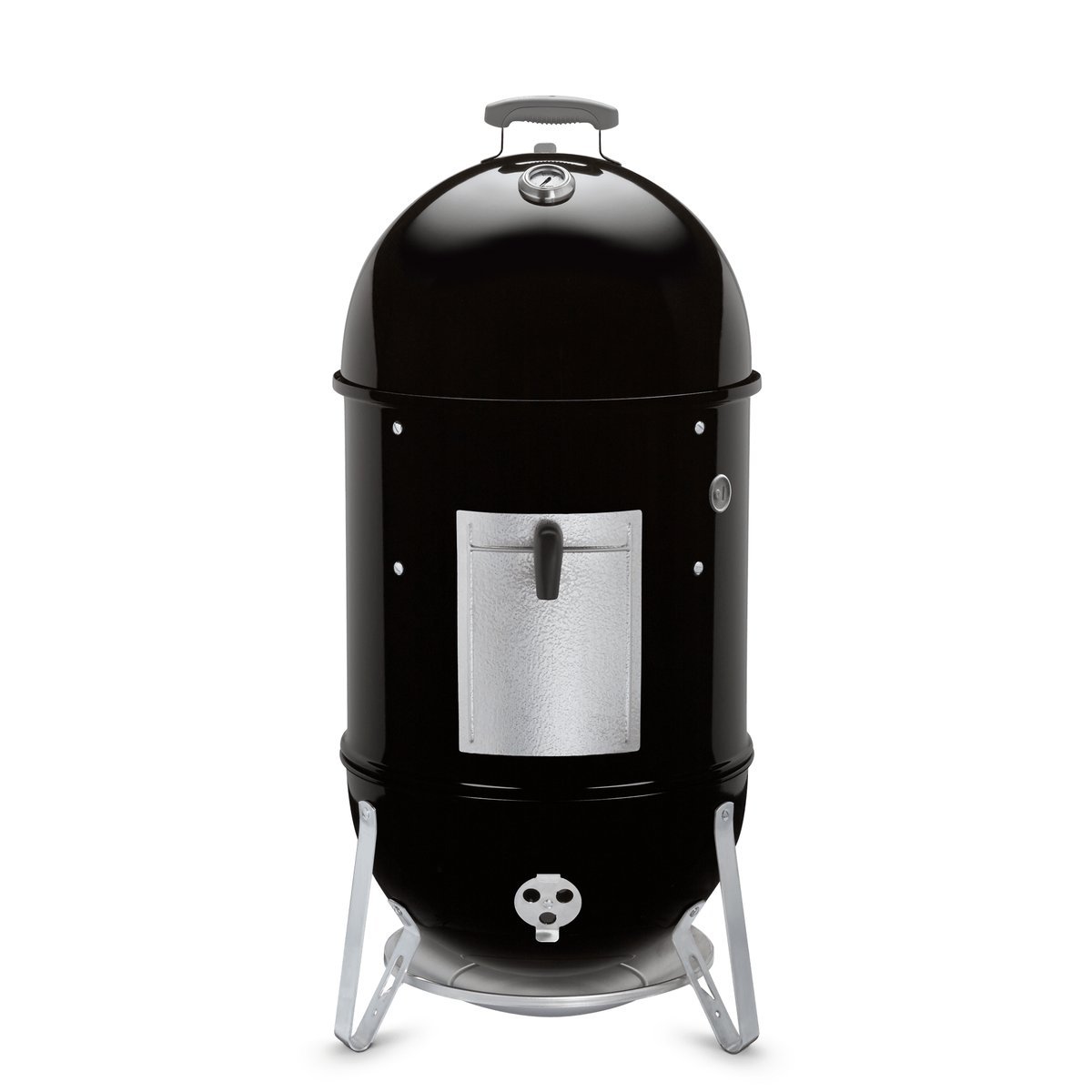
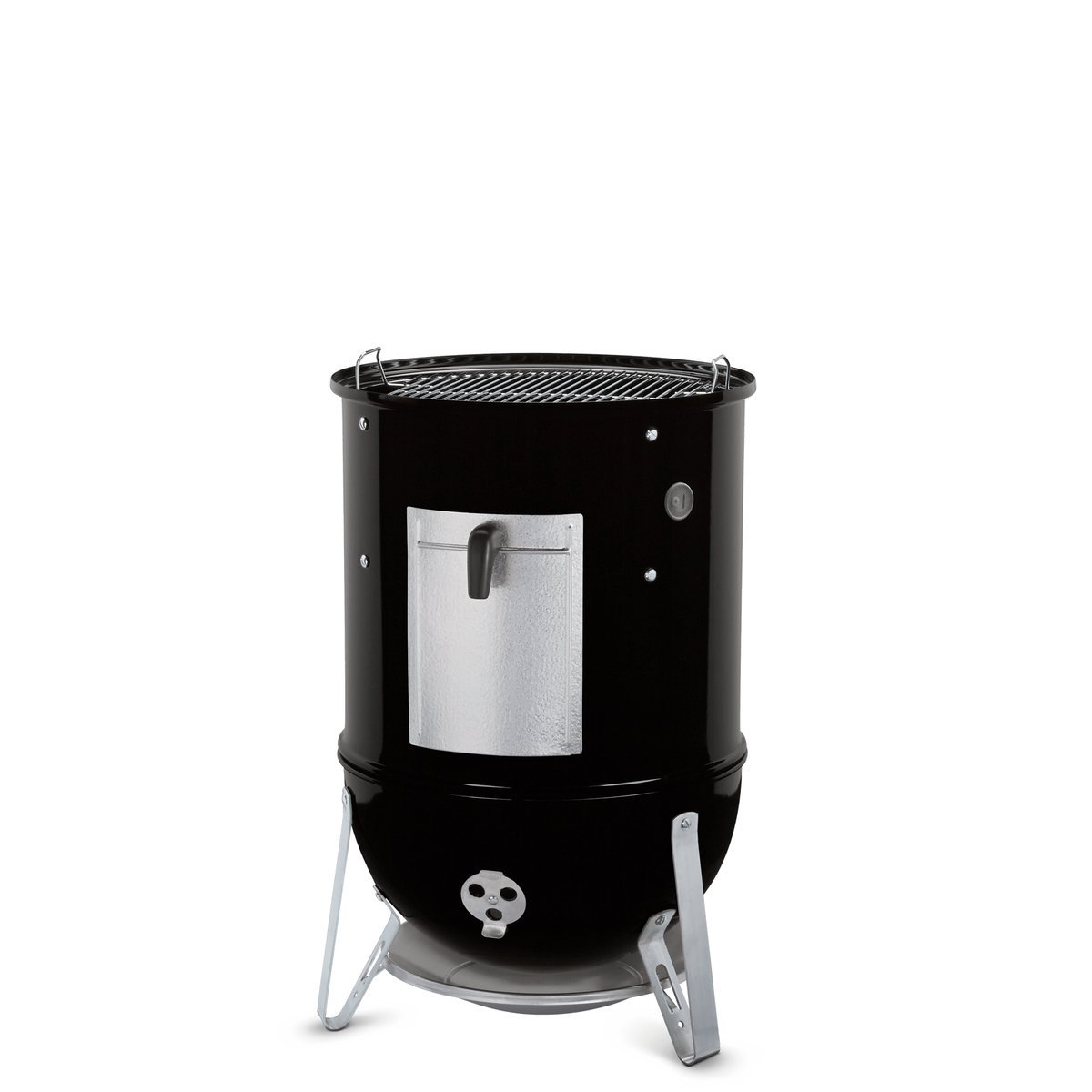
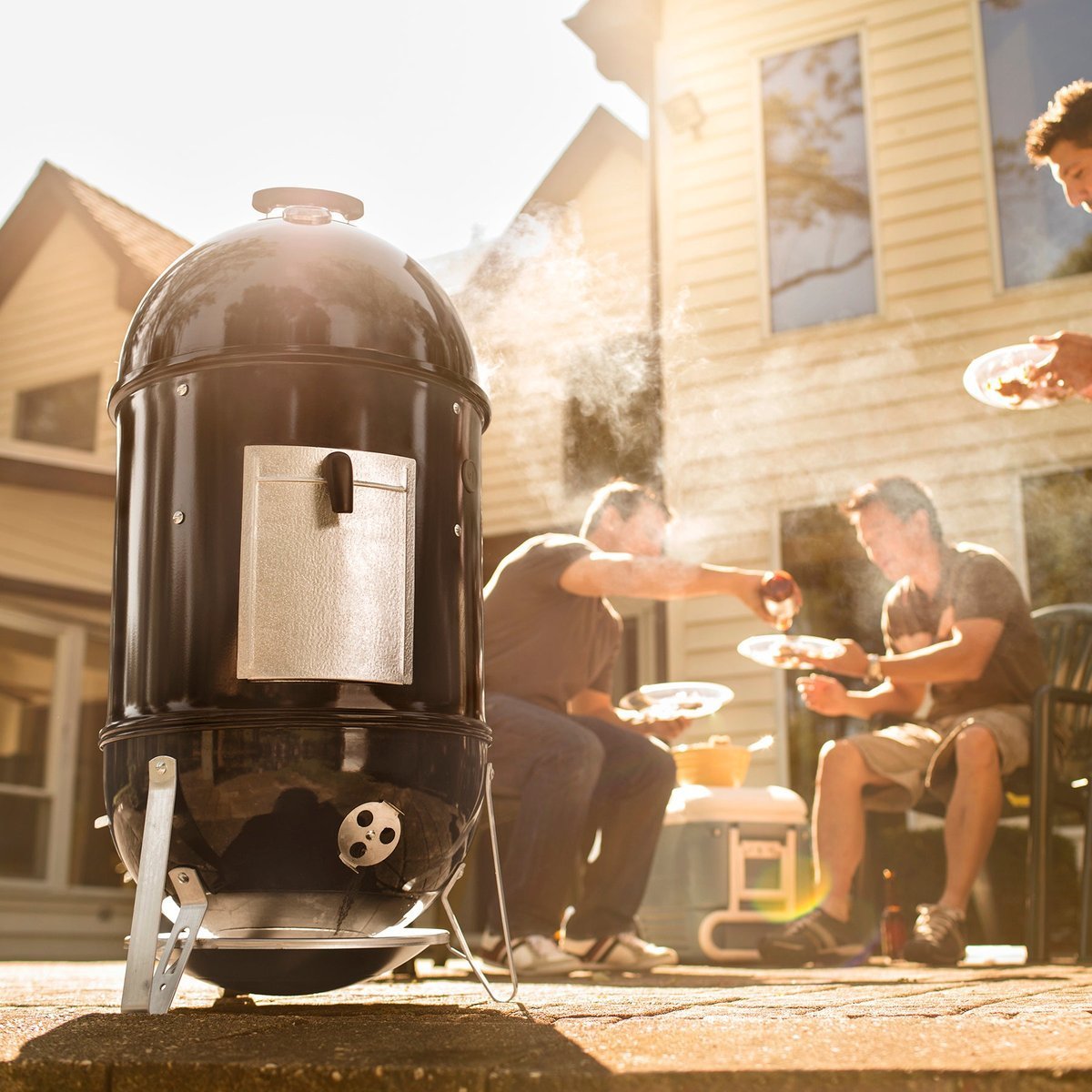
The Weber Smokey Mountain, usually shortened to WSM, is the reference point every other backyard smoker gets measured against. It is a vertical charcoal water smoker in three sections: a porcelain-enameled bowl at the base holds the charcoal ring, the midsection carries a water pan and two cooking grates, and a kettle-style lid with a damper and a built-in thermometer finishes the stack. The water pan is the quiet hero of the design. Filled with water, it acts as a heat sink that absorbs temperature spikes and releases heat slowly, which evens out the swings that ruin a beginner's first brisket on less forgiving cookers. That single design choice is why first-time owners so often get edible, genuinely good barbecue out of a WSM on their first or second cook.
The numbers are modest but well judged. Two grates give 481 square inches of cooking space in total (per Smoked BBQ Source's spec breakdown of the 18 inch model 721001), enough for a full packer brisket on one grate or several racks of ribs across both. The whole unit weighs roughly 40 to 52 pounds depending on configuration, so one person can move it around the patio or load it into a car for a tailgate, something that cannot be said of any ceramic or offset cooker. There is no electronics package to fail, no auger to jam and no fan to maintain: you light charcoal, set three dampers, and manage the fire the way pitmasters have for decades. BarbecueMen's pitmaster testing calls the WSM "the one I'd buy again tomorrow" after a decade of cooking on every smoker type, and that kind of long-term verdict, from a named reviewer with a testing history, is exactly the evidence this guide weights most heavily.
Who should buy it: anyone purchasing a first dedicated smoker, and anyone who values proven reliability over features. Who should think twice: anyone who also wants to grill. The WSM is a smoker, not a grill; it tops out in the mid-300s °F, so it will not sear a steak, and there is no app, no Wi-Fi and no automation. You manage the dampers yourself and add charcoal through a side door that reviewers consistently describe as flimsy, even while recommending the cooker overall. That is the whole deal with the WSM: simple works, but you do the work. If your goal is great barbecue with the least risk of a bad purchase, this is the safest money in backyard smoking, and the 18 inch is the size to buy. The 14 inch is too small for a brisket, and the 22 inch burns noticeably more fuel for space most families never fill.
- Water pan heat sink forgives beginner mistakes and holds low-and-slow temperatures steadily for hours
- 481 sq in across two grates fits a full packer brisket or several racks of ribs
- Decades-long track record on the competition circuit and in owner communities, with a how-to guide for every problem
- No electronics, augers or fans: very few parts that can fail, and light enough at roughly 40 to 52 lbs to move solo
Reasons to avoid:
- Smoker only: it tops out in the mid-300s °F, so no searing, no grilling and no pizza
- Fully manual fire management: you set three dampers and add charcoal yourself, with no app or controller
- The aluminium side access door is widely reported by reviewers as flimsy and a source of heat and smoke leaks
- Built-in lid thermometer placement means grate-level temperatures differ; a separate probe thermometer is a near-essential extra
- Model: 721001
- Type: Charcoal bullet / water smoker
- Cooking space: 481 sq in across two grates
- Dimensions: 19 x 21 x 41 in (D x W x H)
- Weight: roughly 40 to 52 lbs depending on configuration
Best for: first-time smoker buyers and anyone who wants proven, forgiving charcoal barbecue with the least purchase risk.
Kamado Joe Classic III
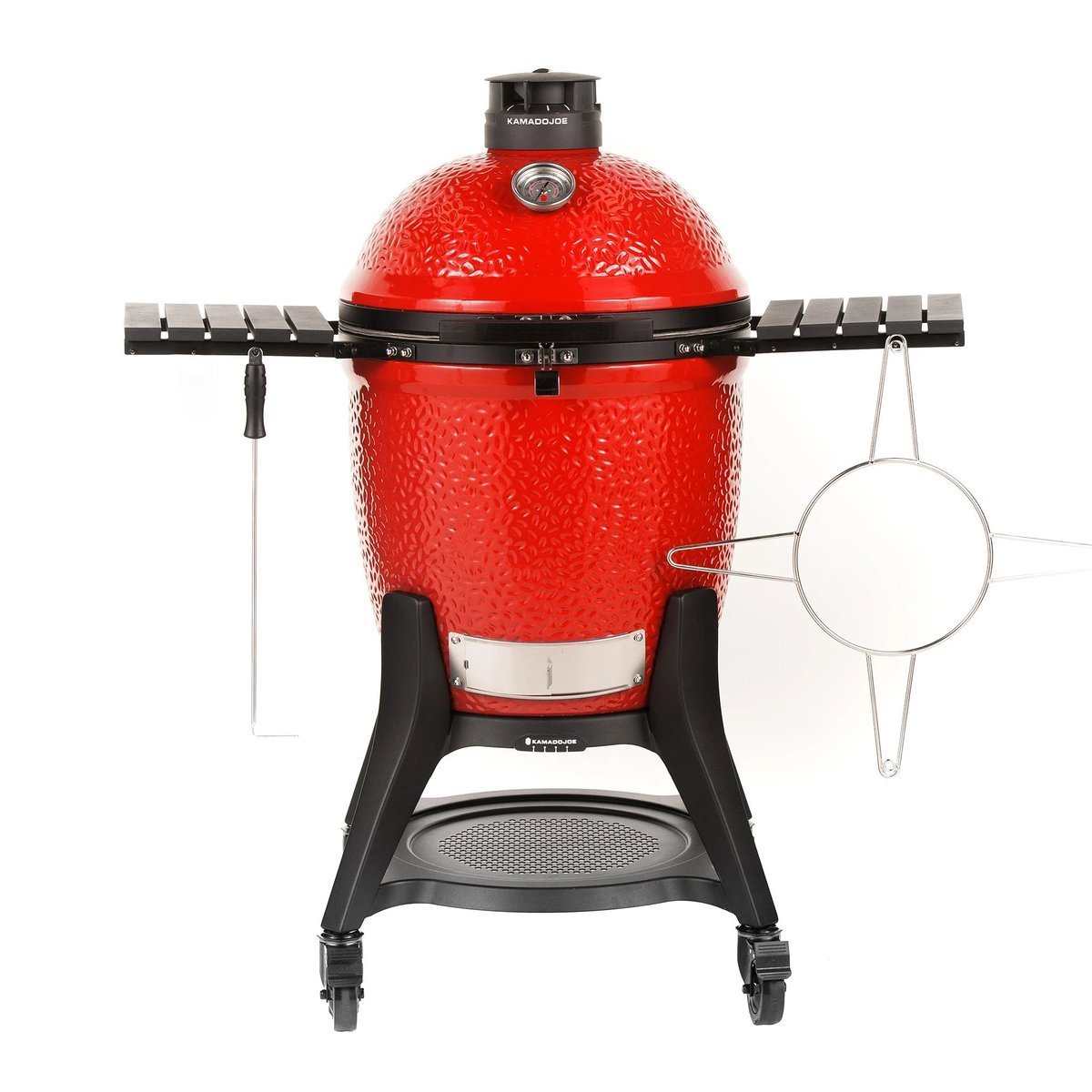
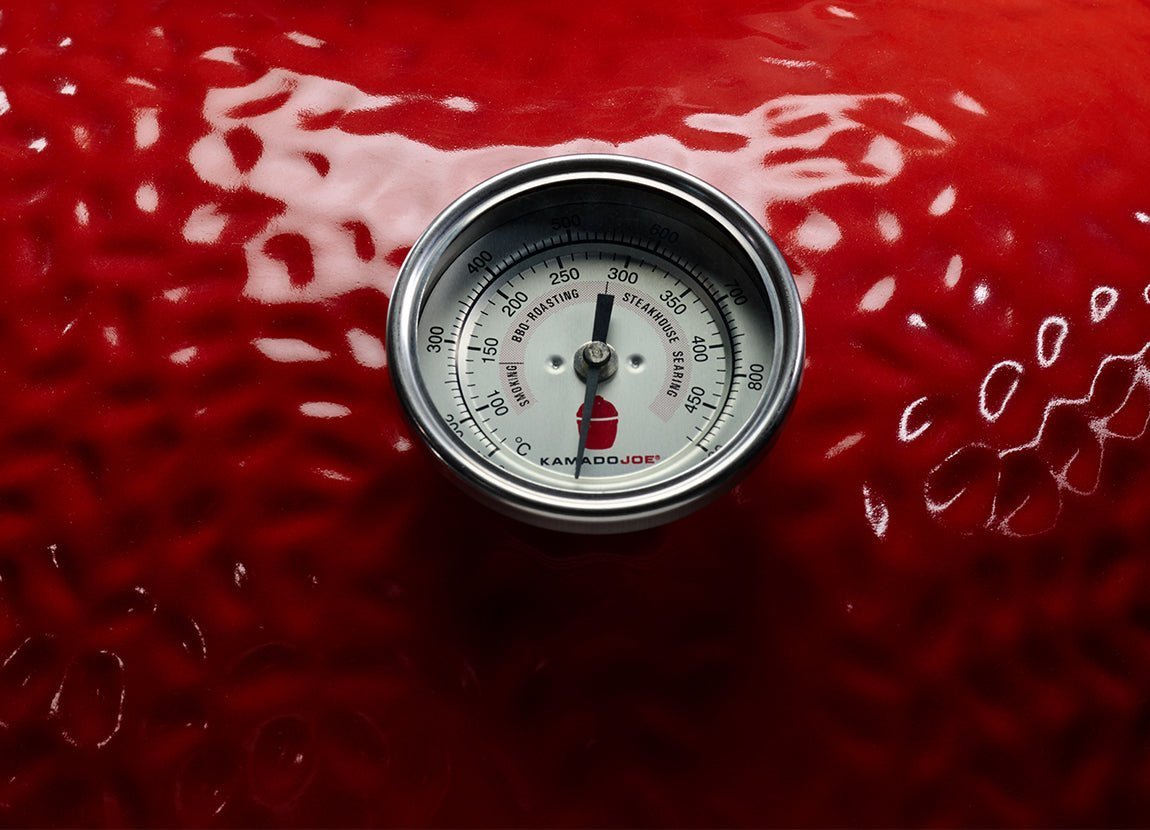
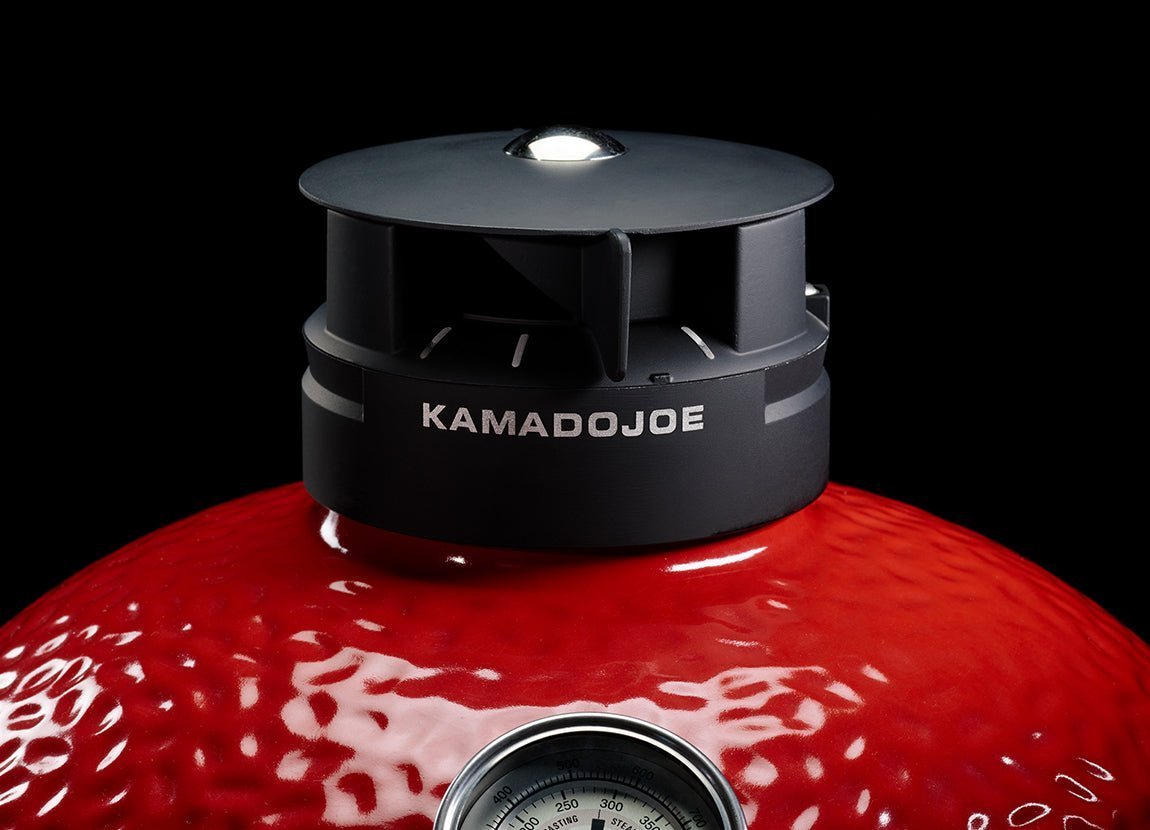
A kamado is the Swiss Army knife of backyard cooking, and the Classic III is the most capable mainstream version of it. Kamado Joe's official specifications describe an 18 inch ceramic cooker built around three systems. The SlōRoller hyperbolic insert sits above the coals and converts the grill into a smoker by circulating heat and smoke around the food in a cyclonic pattern, which the manufacturer credits with deeper smoke penetration and more even cooking. The three-tier Divide and Conquer cooking system lets you run grates and heat deflectors at different heights, so different foods cook at genuinely different temperatures in the same session. And the Kontrol Tower top vent, Air Lift hinge and slide-out ash drawer handle the daily-usability details that cheaper kamados get wrong.
The headline figure is the heat range: 225 to 750°F in one cooker, per Kamado Joe's own specifications. That range is the entire point of a kamado. You can smoke a brisket at 250°F in the morning, sear ribeyes at 700°F or beyond in the evening, and bake a pizza in between, on the same fuel load style and the same piece of equipment. Thick ceramic walls are the reason it works: ceramic insulation sips charcoal compared with thin steel, holds a set temperature with very little vent fiddling, and keeps working through winter weather that shuts down budget metal cookers. Kamado owners in cold climates genuinely do smoke in January, because the cooker barely notices the ambient temperature once it is heat-soaked.
The trade-offs are weight and price, and neither is small. In cart configuration, which is the version linked here (model KJ15040921), the Classic III weighs in the region of 230 to 286 pounds depending on configuration, so this is a decide-where-it-lives-then-assemble-it-there purchase, not a move-it-weekly one. It is also the premium tier of this guide by a wide margin; Kamado Joe lists the standalone Classic III at $1,999.99 on its official site, with the cart version higher. Reviewers consistently note the value case is weakest if you only ever smoke: a Weber Smokey Mountain does that one job for a fraction of the price. The Classic III earns its money when it replaces two or three cookers. If your patio has room for exactly one outdoor cooker and your budget allows, this is the one to rule them all; if smoking is your only goal, save the difference and buy the Weber.
- 225 to 750°F range in a single cooker: low-and-slow smoking, high-heat searing and pizza from one fuel type
- SlōRoller hyperbolic insert circulates heat and smoke for the smoking role, per the manufacturer's design
- Three-tier Divide and Conquer system cooks different foods at different heights and temperatures at once
- Ceramic insulation sips charcoal and holds temperature through cold and windy weather
Reasons to avoid:
- Premium price: the most expensive pick in this guide by a wide margin, with the cart version above the standalone's $1,999.99 manufacturer list price
- Very heavy in cart configuration (roughly 230 to 286 lbs): choose its spot before assembly, because moving it is a two-person job
- Weak value if you only smoke: a dedicated charcoal smoker does that single job for a fraction of the cost
- Ceramic is durable but not indestructible: a cracked firebox or shell is a warranty conversation, not a quick weld
- Model: KJ15040921 (with cart)
- Type: Ceramic kamado grill and smoker
- Grill size: 18 inch, three-tier Divide and Conquer system
- Temperature range: 225 to 750°F
- Colour: Blaze Red
Best for: the cook who wants exactly one outdoor cooker that smokes, grills, sears and bakes, and has the budget for the premium tier.
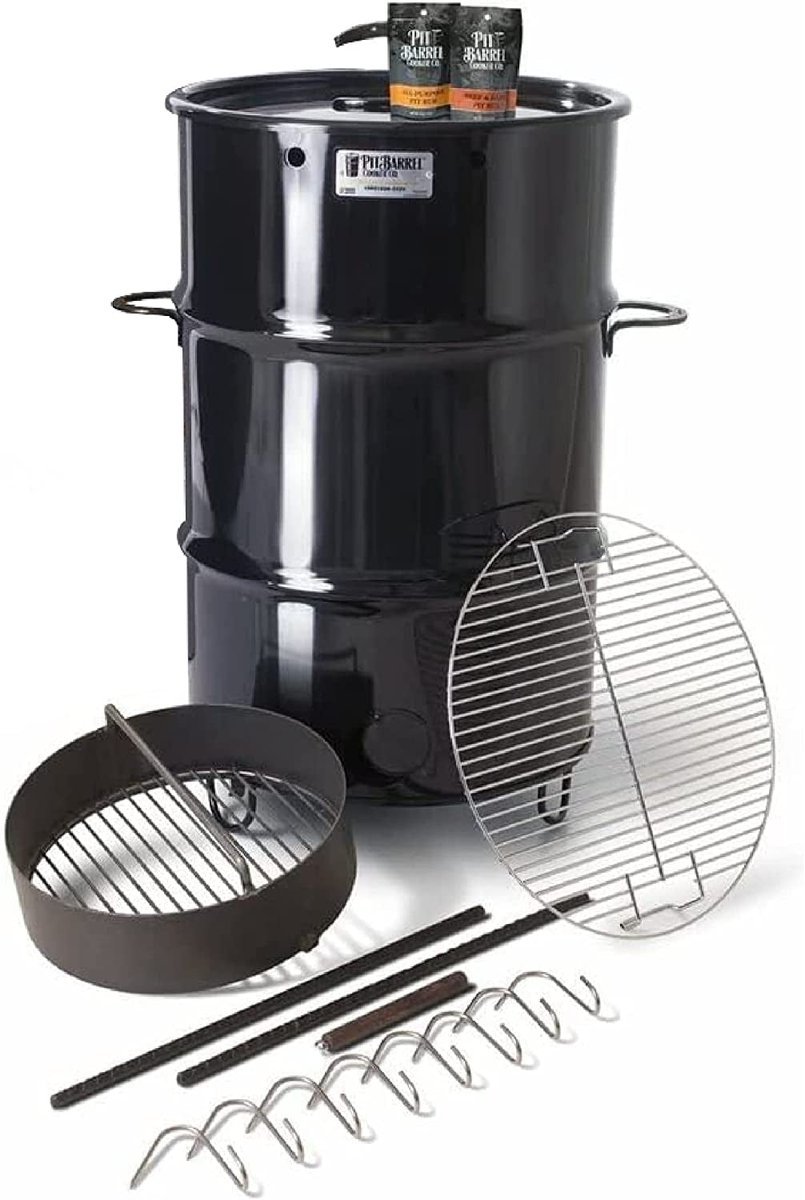
Pit Barrel Cooker Classic Package
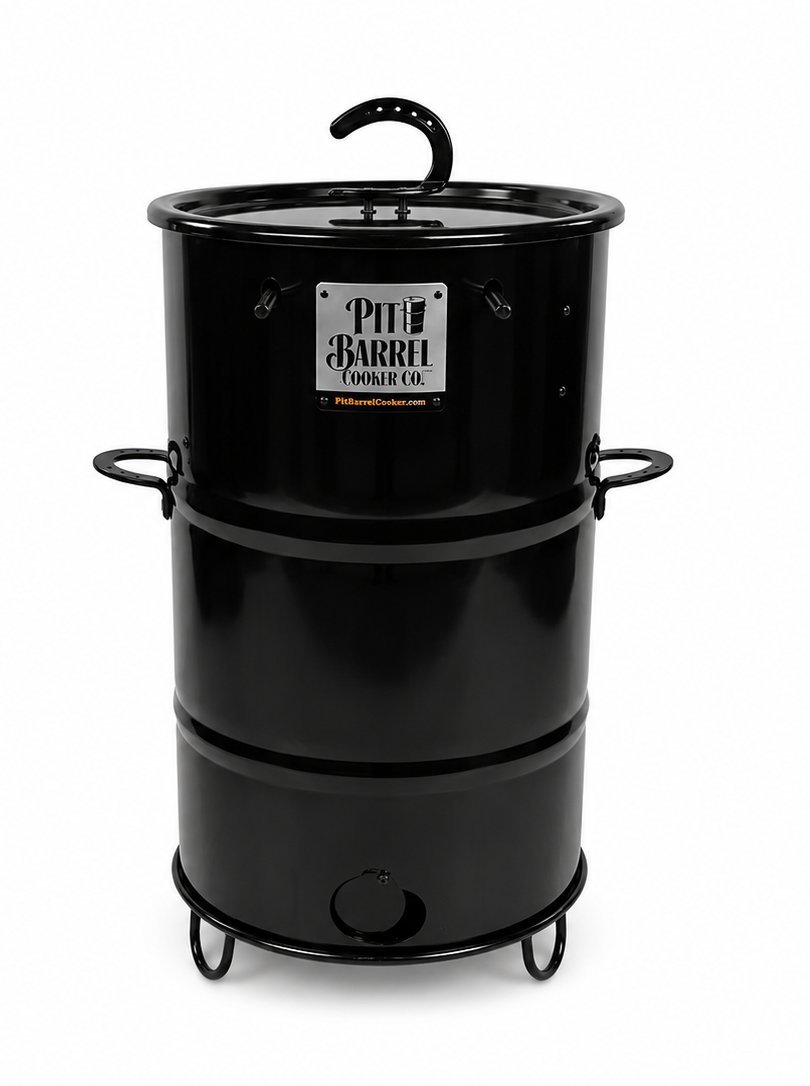
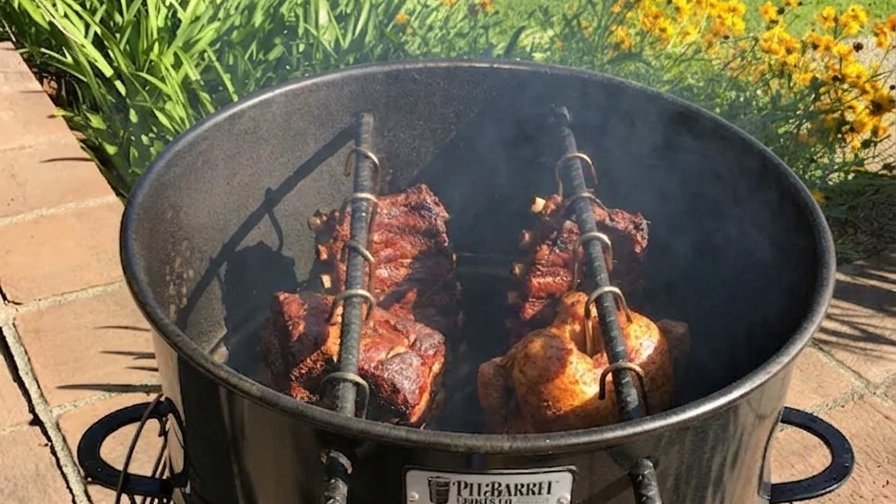
The Pit Barrel Cooker takes a brilliantly simple approach to barbecue: hang the meat on hooks from rods inside a porcelain-coated steel drum, put the lid on, and let physics do the work. The charcoal basket sits at the bottom of the 18.5 inch barrel, and hot air and smoke rise around the hanging meat, cooking it evenly on all sides at once with no rotation and no flipping. Because the meat hangs vertically, drippings fall toward the coals and the effective capacity is far larger than the drum's footprint suggests: the manufacturer rates the Classic for up to eight racks of ribs at once on the hanging rods, or two to three pork butts or briskets, or two 13 to 16 lb turkeys on the optional poultry hangers. Reviewers have settled on a phrase for the experience: hang and forget.
The Classic Package linked here is the complete starter kit, not a bare drum. In the box you get the 30 gallon porcelain-coated steel drum (33 inches tall including the lid and stand, 21.25 inches wide including the side handles), eight stainless steel hooks, two steel hanging rods, a standard grill grate for foods you would rather lay flat, a charcoal basket, a wooden hook remover tool and a three-point barrel stand. There is no water pan to fill, no damper routine to learn beyond the preset vent setting, and no electronics at all. BBQ Report's 2026 roundup names the Pit Barrel Cooker its Best Value pick among charcoal smokers, noting it sells for roughly the same money as the 18 inch Weber Smokey Mountain while offering the hanging capacity described above, and that positioning matches our own research: this is the cheapest route in this guide to feeding a crowd on real charcoal smoke.
The honesty section matters here. Temperature control on a Pit Barrel is crude by design: the drum settles where it settles, typically in the hot-and-fast end of the barbecue range, and you get what it gives you. That is fine, even ideal, for ribs, chicken and pork, but it is less precise than a Weber Smokey Mountain for delicate low-and-slow cooks where you want to hold an exact number for twelve hours. It is also a specialist: it smokes beautifully and does almost nothing else, so there is no grilling, searing or baking mode hiding in the spec sheet. Buy it as the simplest possible start in charcoal barbecue, or as a high-capacity second cooker, and it will not disappoint you. Buy it expecting a precision instrument and it will.
- Hang-and-forget cooking: meat cooks evenly on all sides with no flipping, rotating or damper routine
- Eight-rack hanging capacity from a compact 18.5 inch drum, plus two to three butts or briskets per cook
- Complete package: drum, hooks, rods, grill grate, charcoal basket, hook tool and stand in the box
- Named Best Value among charcoal smokers in BBQ Report's 2026 roundup, at roughly Weber Smokey Mountain money
Reasons to avoid:
- Crude temperature control by design: the drum runs where it runs, with no precise low-and-slow dial-in
- One-trick specialist: it smokes, but it does not grill, sear or bake
- Hanging suits ribs, chicken and butts best; foods that cannot hang securely rely on the single included grate
- No thermometer or monitoring built in: a leave-in probe is an essential extra, as with every pick here
- Model: Pit Barrel Cooker Package (Classic, 18.5 inch)
- Type: Charcoal drum / hanging smoker
- Capacity: up to 8 racks of ribs; 2 to 3 pork butts or briskets
- In the box: 30 gallon porcelain-coated drum, 8 hooks, 2 hanging rods, grill grate, charcoal basket, hook remover, 3-point stand
- Dimensions: 33 in tall including lid and stand; 21.25 in wide including handles
Best for: beginners who want charcoal flavour with the smallest possible learning curve, and hosts who need big hanging capacity on a budget.
How We Chose These Smokers
Our picks are research-based. We built the shortlist from manufacturer specifications and owner manuals, then cross-checked each candidate against named third-party review publications and aggregated owner reporting. We did not hands-on test any smoker in this guide, and we do not present scores, star ratings or test results of our own. Where a third-party finding is cited, it is attributed to its source so you can weigh it yourself. Prices are deliberately not stated as recommendations: street prices move, so each pick links to its live Amazon listing where the current price is the one that counts.
How to Choose the Right Backyard Smoker
Buying a smoker is really buying a cooking style. Work through these five decisions in order and the right category, then the right model, picks itself.
1. How much attention will you actually give it? Be honest. A traditional offset smoker needs you every 45 to 60 minutes for the whole cook, and a brisket can mean a 12-hour day of fire management. A charcoal bullet like the Weber Smokey Mountain needs a check every hour or two once it settles. A pellet smoker or a gravity-fed charcoal unit needs you at the start and when the food is done. Buy the smoker that matches your real weekends, not your fantasy ones. The most expensive smoker in the world is the one that sits unused because it demanded more than you had.
2. What flavor are you chasing? All smoke is not equal. Stick-burners and charcoal produce the deepest smoke flavor and the best bark; pellet grills are milder and more convenient; electric smokers are the mildest of all. If you grew up on Central Texas brisket, only an offset will scratch that itch. If you just want juicy ribs with a kiss of smoke, pellets will make you very happy.
3. How many mouths are you feeding? A 14 inch bullet smoker cannot fit a full packer brisket, so size up if brisket is on the menu. As a rule of thumb: couples and small families do fine with 400 to 650 square inches; regular entertainers want 800 or more; the biggest value pellet grills pass 1,000 square inches for people who cook for the whole block. Bigger also means more fuel and longer preheats, so do not overshoot.
4. What is your weather like? Thin-steel cookers bleed heat in cold wind. If you smoke through winter in the northern US, insulated cookers (kamados, double-walled pellet grills, gravity-fed units) hold temperature far better than a budget offset. Kamado owners in Minnesota smoke in January; budget offset owners mostly do not.
5. What is your total budget, including the extras? The smoker is the down payment. Budget another $75 to $150 for the non-negotiables: a reliable leave-in meat thermometer (built-in lid thermometers are notoriously optimistic), a chimney starter for charcoal units, a cover, and, for pellet grills, your first bags of pellets. A $500 smoker with a $40 thermometer beats a $700 smoker with guesswork.
The Types of Backyard Smokers, Explained
Charcoal bullet / water smokers (our Weber Smokey Mountain pick): vertical, three sections, with a water pan that steadies the heat. The beginner's classic: forgiving, affordable, proven. Downsides: limited temperature range, manual vent management, no grilling.
Kamado / ceramic cookers (our Kamado Joe Classic III pick): thick ceramic walls insulate brilliantly, so one cooker smokes low, sears very hot, and bakes. Downsides: heavy, expensive, and overkill if you only smoke.
Drum smokers (our Pit Barrel Cooker pick): meat hangs on hooks in a steel barrel; simple, affordable, effective. Downsides: crude temperature control, and smoking is essentially all they do.
Pellet smokers (for example the Pit Boss Austin XL and the Traeger Ironwood 650): an auger feeds wood pellets into a firepot while a controller holds your set temperature like an oven. The easiest route to real barbecue, and the value end of the category offers enormous cooking space per dollar, while premium models such as the Ironwood 650 add Wi-Fi control, a pellet sensor and extra smoke modes. Downsides: they need electricity, the smoke flavor is milder than charcoal or wood, there are more parts to fail, and aggregated owner reviews of value models cluster complaints around paint, rust and auger or controller faults. Buy with eyes open and keep the firepot clean.
Offset smokers (for example the Oklahoma Joe's Highland): fire burns in a side firebox and heat and smoke flow across the cooking chamber. The traditionalist's choice, with the deepest smoke flavor and real fire craft, and the Highland's roughly 900 square inches of total cooking space (619 primary plus 281 in the firebox, per the manual) makes it the classic first stick-burner. Downsides: the most hands-on style by far, a need for dry wood splits, and thin budget steel that leaks heat and smoke, which is why most owners add door gaskets.
Gravity-fed charcoal (for example the Masterbuilt Gravity Series 1050): charcoal sits in a tall hopper and gravity-feeds the fire while a digital fan holds temperature across a 225 to 700°F range, with 1,050 square inches of space per the manufacturer's specifications. Charcoal flavor with pellet-like convenience. Downsides: complex, needs power, and carries a shorter warranty than simpler designs.
Gas and electric vertical smokers exist too: cheap, easy, and fine for fish, jerky and sausage, but they produce the mildest smoke flavor of any type. We left them out of the picks because a backyard smoker buyer usually wants real barbecue; if all you smoke is salmon and snack sticks, an inexpensive electric cabinet is honestly enough.
Head-to-Head: The Comparisons That Matter
Weber Smokey Mountain vs. pellet smokers. The classic dilemma: proven charcoal simplicity versus pellet convenience and space. The WSM produces deeper smoke flavor and has far fewer failure points, but you manage the fire. A big pellet grill gives you double the cooking area and walk-away cooking, with electronics that can fail and a milder smoke profile. Choose the WSM if you enjoy the process; choose pellets if you entertain crowds and value your Saturdays.
Oklahoma Joe's Highland vs. Weber Smokey Mountain. Offset versus bullet is really a lifestyle question. The Highland gives you authentic stick-burner flavor and a bigger stage for brisket; the WSM gives you most of the flavor for a fraction of the effort. First smoker? The WSM, no contest. Second smoker, once you have caught the bug? The Highland is waiting.
Kamado Joe Classic III vs. everything. The kamado is not competing on smoking alone; it is competing on "what if I only buy one cooker." Against the WSM it costs several times more to smoke about as well; against a gas grill it sears nearly as well while also smoking. If your patio has room for exactly one cooker and your budget allows, the kamado wins. Otherwise, a dedicated smoker plus the grill you already own is the smarter money.
Pit Barrel Cooker vs. Weber Smokey Mountain. Similar money, opposite philosophies. The Pit Barrel hangs meat and asks almost nothing of you, but gives you almost no temperature control in return. The WSM asks you to learn three dampers and rewards you with genuine low-and-slow precision. Pick the drum for ribs and parties; pick the bullet for brisket craft.
Mistakes to Avoid When Buying a Backyard Smoker
- Buying for your fantasy, not your weekends. The offset is romantic until it is 2 a.m. and you are feeding splits in the rain. Match the smoker to the cook you will actually do.
- Undersizing for brisket. A packer brisket needs roughly 18 inches of grate in one direction. Measure your must-cook foods against the grate dimensions, not the marketing photos.
- Ignoring fuel logistics. Pellet grills need pellets, stored dry or the auger jams; offsets need dry wood splits, which are genuinely hard to source in some suburbs; charcoal needs storage space. Price a month of your fuel before you buy.
- Trusting the built-in thermometer. Lid thermometers routinely read 25 to 50°F away from grate level, where the food is. A $30 to $40 leave-in probe thermometer is the highest-return accessory in barbecue.
- Skipping the cover. The number one killer of smokers is weather, not wear. Budget offsets and value pellet grills are especially rust-prone; a cover and a dry spot add years.
- Expecting pellet smoke to taste like offset smoke. Pellet grills are convenient and delicious, but the smoke is milder. If you buy pellets expecting stick-burner bark, you will be disappointed through no fault of the grill.
- Buying the cheapest offset on the shelf. Ultra-thin bargain offsets leak heat and smoke so badly that beginners conclude they are the problem. A proven design at a fair price teaches barbecue; the cheapest offset teaches frustration.
Frequently Asked Questions
The Weber Smokey Mountain 18 inch: the water pan forgives temperature mistakes, the design is proven over decades, and there is a how-to guide for every problem you will ever hit. If you want zero learning curve, a pellet smoker is easier still, at the cost of milder smoke flavor.
Good smokers start around $400 to $500 (the Weber Smokey Mountain and the Pit Barrel Cooker sit in that band). The $800 to $1,100 band buys meaningful upgrades in convenience and build from pellet and gravity-fed designs. Above $1,500 you are paying for versatility, as with kamados, or for capacity, not for better brisket.
Charcoal wins on flavor depth and bark; pellets win on convenience and consistency. There is no universal "better", only the trade-off you prefer. Most competition pitmasters cook charcoal or wood; most weeknight cooks choose pellets. Both make great barbecue.
On a pellet smoker or gravity-fed unit with a full hopper and a working controller, experienced owners do it routinely, but you should still use a leave-in thermometer with a high-temperature alarm, keep the cooker away from structures, and never leave an offset or a basic charcoal unit burning while you sleep. Fire safety is not a feature; it is a practice.
A full packer brisket needs about 18 inches of uninterrupted grate in one direction. The 18 inch WSM fits one (barely: drape it over a rib rack or a foil-wrapped brick until it shrinks). Larger pellet grills and offsets swallow packers with room to spare, and the Pit Barrel hangs a trimmed brisket vertically.
Yes. The auger, fan, igniter and controller all run on standard household power. No outlet near the patio means an extension cord rated for outdoor use, or a different fuel type.
Final Recommendations
Best Overall: Weber Smokey Mountain Cooker 18 Inch, the proven, forgiving charcoal bullet smoker for most people.
Best Kamado: Kamado Joe Classic III, one ceramic cooker that smokes, grills, sears and bakes from 225 to 750°F.
Best Budget Drum: Pit Barrel Cooker Classic Package, hang-and-forget charcoal barbecue with eight-rack capacity.
The best backyard smoker is the one you will actually use, matched to the flavor you want and the effort you will give. For most people, most of the time, that is the Weber Smokey Mountain 18 inch: proven, forgiving, and priced so reasonably that the money you save buys a great thermometer, a cover, and a lot of brisket to practice on. Want one cooker for everything? The Kamado Joe Classic III. Want the simplest possible start? The Pit Barrel Cooker. And whichever style you choose, remember the unglamorous truth of barbecue: the cook matters more than the cooker. A patient beginner on a modest smoker will out-cook an impatient expert on a premium rig every time.
Related Guides
- Pit Boss smokers compared: every Pit Boss model, from the Austin XL to the Sportsman and Navigator series.
- Kamado grill vs offset smoker: which style fits your cooking?
- Pit Boss pellet smoker reviews: what owners actually report.
- Portable smokers worth taking to the tailgate.
- Stick burner smokers: the traditionalist's guide.
Recommendations are research-based; this article involved no hands-on product testing. Product photos are manufacturer-published brand photography, credited to Weber, Kamado Joe and Pit Barrel Cooker Co. respectively.