
The RTX 3080 Ti vs RTX 5070 question looks simple and is not. On paper the older card should win easily: 10,240 CUDA cores against 6,144, a 384-bit memory bus against a 192-bit one, and 912 GB/s of bandwidth against 672 GB/s. In published gaming tests the two cards land within a few percent of each other. The 5070 closes the gap with a much newer architecture, far higher clock speeds and DLSS 4 frame generation, while drawing 100W less power. Which one you should buy depends less on raw frames than on whether you are shopping new, upgrading, or hunting the used market.
This is a genuine two-card comparison, not a roundup. Performance figures are from published third-party testing (Digital Foundry's RTX 5070 review, via Eurogamer) and specifications are from NVIDIA and board-partner data; we have not hands-on tested these cards, and no claim below pretends otherwise. One buying note up front: the RTX 5070 linked in this guide is the exact card reviewed, the MSI GeForce RTX 5070 12G VENTUS 2X OC. The RTX 3080 Ti is covered in full as prose, because it is discontinued, new stock is scarce, and we could not verify an exact-variant new listing to our evidence standard. Rather than link to a renewed or mislabelled card, we explain how to buy one safely instead.
The short answer
Buy the RTX 5070 if you are purchasing a graphics card new today. It matches the 3080 Ti in modern games at 1440p, adds DLSS 4 Multi Frame Generation for high-refresh monitors, ray-traces more efficiently, and runs on 250W instead of 350W, so a smaller power supply and a cooler, quieter case. It also launched at $549, less than half the 3080 Ti's $1,199 launch price.
Keep your RTX 3080 Ti if you already own one. Native performance is a wash, both cards carry 12GB of VRAM, and the 3080 Ti's extra memory bandwidth still helps at 4K in bandwidth-hungry titles. Nothing here justifies spending several hundred dollars to move sideways.
Consider a used 3080 Ti only if you find a clean one from a reputable seller at a genuinely large discount, and you have done the maths on the missing warranty, the extra 100W of heat, and the absent DLSS 4 frame generation.
Quick Picks
RTX 3080 Ti vs RTX 5070 at a glance
| Card | Best for | The trade-off | Amazon Link |
|---|---|---|---|
| MSI GeForce RTX 5070 12G VENTUS 2X OC | Buying new: 1440p high-refresh gaming, ray tracing, DLSS 4, efficiency | Still only 12GB of VRAM, and a side-grade for existing 3080 Ti owners | Check Price on Amazon |
| NVIDIA GeForce RTX 3080 Ti | Keeping your money, or a carefully vetted used buy | No frame generation, 350W power draw, no new-card warranty on the used market | No verified new listing; see the used-buying advice below |
RTX 3080 Ti vs RTX 5070: full specification comparison
| Specification | RTX 3080 Ti | RTX 5070 |
|---|---|---|
| Architecture | Ampere (GA102) | Blackwell (GB205) |
| CUDA cores | 10,240 | 6,144 |
| Boost clock (reference) | 1,665 MHz | 2,512 MHz |
| RT cores | 80, 2nd generation | 48, 4th generation |
| Tensor cores | 320, 3rd generation | 192, 5th generation |
| Memory | 12GB GDDR6X | 12GB GDDR7 |
| Memory bus | 384-bit | 192-bit |
| Memory bandwidth | 912 GB/s | 672 GB/s |
| Power draw (TGP) | 350W | 250W |
| Recommended PSU | 750W | 650W |
| DLSS | DLSS upscaling, no frame generation | DLSS 4, including Multi Frame Generation |
| Display outputs | HDMI 2.1, 3x DisplayPort 1.4a | HDMI 2.1b, 3x DisplayPort 2.1b |
| PCIe interface | PCIe 4.0 x16 | PCIe 5.0 x16 |
| Launch date | 3 June 2021 | 4 March 2025 |
| Launch price | $1,199 | $549 |
Specifications are reference GPU figures from NVIDIA data as reported by reputable technical press. Launch prices are historical reference only, not current street prices. The spec table tells the story in miniature: the 3080 Ti is a big, wide, power-hungry chip, while the 5070 is a small, dense, efficient one that closes the performance gap through much higher clocks and a far newer architecture. Core count alone does not decide this fight.
The contenders in detail
NVIDIA GeForce RTX 3080 Ti: yesterday's flagship, still fast, but a hold or used buy
The 3080 Ti launched in June 2021 at $1,199 as a near-RTX 3090: the same GA102 die with half the VRAM. Its specification remains imposing. The GA102 GPU carries 10,240 CUDA cores, 80 second-generation RT cores and 320 third-generation Tensor cores, feeding 12GB of GDDR6X memory on a 384-bit bus for 912 GB/s of bandwidth, the widest memory system in this comparison by a large margin. In Digital Foundry's RTX 5070 review testing, the 3080 Ti sat about 2 percent ahead of the 5070 at 4K and about 2 percent behind at 1440p in native rendering, which is a tie in any honest reading. Its bandwidth advantage is real and shows up in bandwidth-hungry 4K titles.
For current owners, the verdict is simple: keep it. There is no frame-rate problem in your PC that a 5070 purchase solves, because native performance is effectively identical and both cards share the same 12GB VRAM ceiling. The reasons to move are features, not frames: DLSS 4 frame generation, which the 30 series will never receive, a 100W lower power draw, and a fresh warranty.
As a purchase today, the 3080 Ti is a used-market proposition. NVIDIA discontinued the card, new stock is scarce, and many listings that appear to sell it new are renewed units or the non-Ti 3080 mislabelled. That is exactly why this guide carries no purchase link for it: we could not verify an exact-variant new listing to the standard we apply to every link on this site, and a link that lands on a renewed card while the text implies new would mislead you. Bought carefully, though, a used 3080 Ti can be the value play of this comparison. Buy from a seller with history and returns, ask about the card's past life (ex-mining cards are not automatically bad, but should be priced as such), confirm the listing really is the Ti model, and stress-test temperatures the day it arrives. If the used price drifts close to a new 5070's street price, the case collapses: at parity, the new card's warranty, efficiency and DLSS 4 win outright.
The 3080 Ti's limitations are structural. It has no frame generation of any kind, its second-generation RT cores handle ray tracing less efficiently than the 5070's fourth-generation cores, its 350W power draw needs a 750W power supply and dumps real heat into your room, and its DisplayPort 1.4a outputs limit future ultra-high-refresh 4K monitor options. None of that makes it slow. It makes it a card to keep, or to buy used at the right money, rather than a card to chase new.

Best new buy
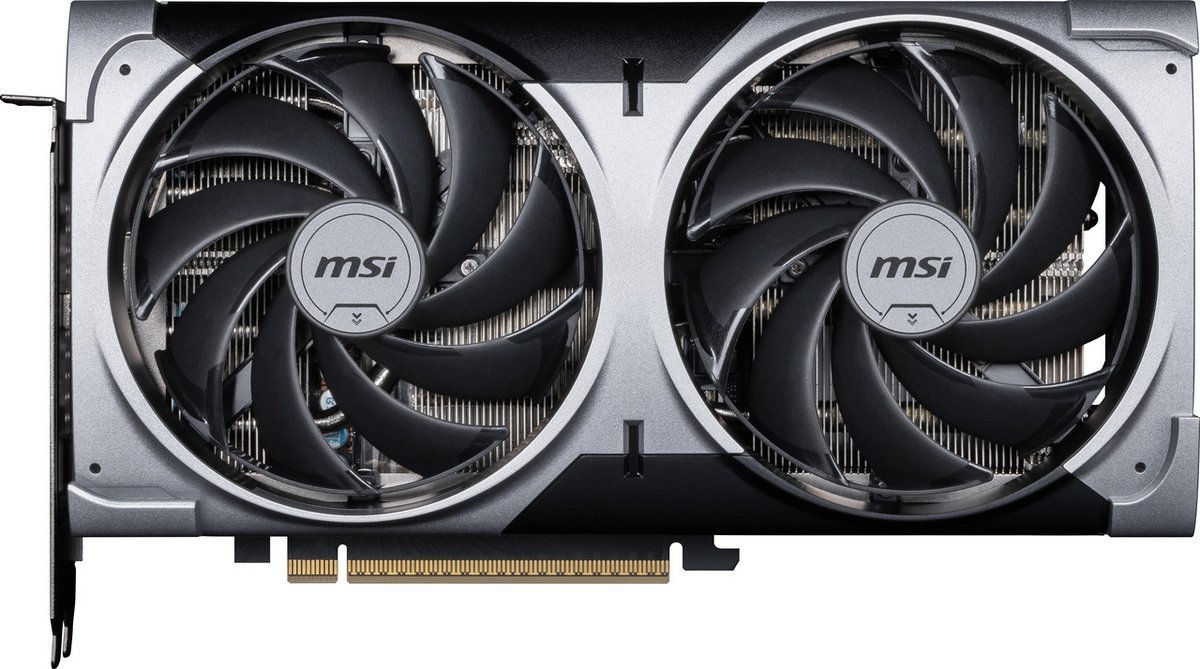
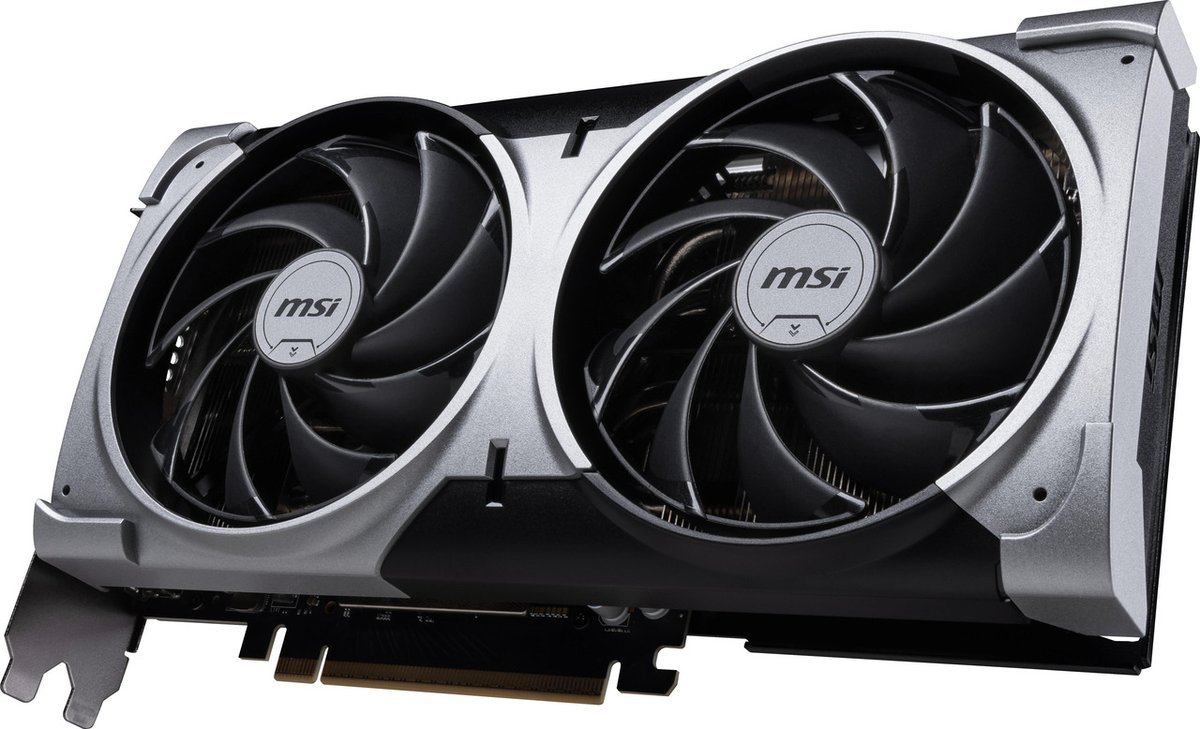
MSI GeForce RTX 5070 12G VENTUS 2X OC
The card we link here is MSI's VENTUS 2X OC edition of the RTX 5070: a compact dual-fan partner card, 236 mm long, built around the same GB205 GPU as every other 5070, with a mild factory overclock to a 2542 MHz boost clock. It is the sensible way to buy the 5070's feature set: DLSS 4 with Multi Frame Generation, fourth-generation RT cores, DisplayPort 2.1b outputs and AV1 encode and decode, in a card that fits smaller cases and runs on a 650W power supply.
In Digital Foundry's published testing, the RTX 5070 landed within roughly 2 to 4 percent of the RTX 3080 Ti across 1080p, 1440p and 4K in native rendering, effectively matching a card that launched four years earlier at more than double the price. Where the 5070 separates itself is everything around the raw frames. DLSS 4 Multi Frame Generation can multiply displayed frame rates on high-refresh monitors in supported games, the newer RT cores handle ray-traced workloads more efficiently, and the 250W power draw means less heat, less noise and no power supply upgrade for most builders. The VENTUS cooler uses two TORX Fan 5.0 fans, a nickel-plated copper baseplate and a metal backplate, and MSI rates the card as SFF-Ready, which matters in compact builds where the 3080 Ti's typical triple-fan partners simply do not fit.
Be clear-eyed about the limits. Twelve gigabytes of VRAM is the same capacity as the card it replaces, and it is a genuine constraint for heavily modded games and some 4K texture packs. The 192-bit bus gives up raw bandwidth to the 3080 Ti. And this is a side-grade for 3080 Ti owners, not an upgrade: if you already own the older card, the honest advice is to keep it or step up to a 16GB card instead. For anyone buying new, though, the warranty, the efficiency and the DLSS 4 feature set make this the right side of the comparison.
- 3080 Ti-class native performance with DLSS 4 Multi Frame Generation on top
- 250W power draw: runs on a 650W PSU, cooler and quieter than the 3080 Ti
- Compact 236 mm dual-fan design, SFF-Ready, fits smaller cases
- DisplayPort 2.1b outputs for future high-refresh 4K monitors
- New-card warranty and the longest driver-support runway
Reasons to avoid:
- Still only 12GB of VRAM, the same ceiling as the 3080 Ti
- A side-grade, not an upgrade, if you already own a 3080 Ti
- Narrower 192-bit bus means less raw memory bandwidth than the older card
- Model: MSI GeForce RTX 5070 12G VENTUS 2X OC, model V532-003R
- GPU: NVIDIA GeForce RTX 5070, Blackwell (GB205), 6,144 CUDA cores
- Boost clock: 2542 MHz factory OC (2557 MHz in MSI Center Extreme mode)
- Memory: 12GB GDDR7, 28 Gbps, 192-bit bus
- Outputs: 3x DisplayPort 2.1b, 1x HDMI 2.1b
- Power: 250W, single 16-pin connector, 650W PSU recommended
- Dimensions: 236 x 126 x 50 mm; weight 774 g
- Cooling: dual TORX Fan 5.0, nickel-plated copper baseplate, metal backplate
Best for: gamers buying new in 2026 who play at 1440p, especially on high-refresh monitors, use ray tracing, or want DLSS 4 frame generation, plus efficiency-conscious builders and anyone on a 650W power supply.
How to choose between the 3080 Ti and the 5070
Start with your monitor, not the GPU. At 1080p, both cards are overkill for esports titles and excellent for demanding single-player games, so buy on price and features. At 1440p, the cards are within a couple of percent in native performance, so the 5070's DLSS 4 frame generation is the tiebreaker if you own a high-refresh monitor. At 4K, the 3080 Ti's bandwidth advantage shows in some titles, but both cards are entry-level 4K GPUs in 2026 and you will lean on DLSS upscaling either way, where the 5070's newer upscaler is the better tool.
Then do the power maths. The 3080 Ti's 350W draw needs a 750W power supply and dumps real heat into your room; the 5070's 250W is happy on 650W and runs noticeably cooler and quieter. If your current PSU is 650W, a 5070 drops in with no other changes, while a used 3080 Ti may force a PSU upgrade that wipes out the saving. Add up the total cost, not just the card.
Understand what frame generation actually does before paying for it. It synthesises extra frames between rendered ones, multiplying perceived frame rate, but it needs a solid base frame rate of roughly 60fps or more to feel good, and it adds a little latency. It is transformative on a 240Hz monitor in supported games and irrelevant in games that do not support it. Finally, remember the VRAM reality both cards share: neither wins the memory argument, because both carry 12GB. If VRAM headroom is your top priority, the answer is a 16GB card such as the RTX 5070 Ti, not either card in this comparison.
FAQ
Is the RTX 5070 faster than the RTX 3080 Ti?
In native rendering, they are essentially tied. Digital Foundry's RTX 5070 review testing measured the 5070 within about 2 to 4 percent of the 3080 Ti at 1080p, 1440p and 4K, with the 3080 Ti slightly ahead at 4K and the 5070 slightly ahead at 1440p. With DLSS 4 Multi Frame Generation enabled in supported games, the 5070 pulls ahead substantially in displayed frame rate.
Is it worth upgrading from a 3080 Ti to a 5070?
For most owners, no. The native performance gain is single-digit percentages, so you would be paying for features (DLSS 4 frame generation, lower power draw, DisplayPort 2.1) rather than frames. The upgrade makes sense if your 3080 Ti is failing, you specifically want frame generation for a high-refresh monitor, or the 100W saving matters to you. Otherwise, wait for a genuinely faster card.
Does the RTX 5070 use less power than the 3080 Ti?
Yes, significantly less. The 5070 is rated at 250W against the 3080 Ti's 350W, a 100W difference that shows up in heat, noise, electricity cost and power supply requirements: 650W recommended for the 5070 against 750W for the 3080 Ti.
Does the 3080 Ti support DLSS 4 frame generation?
No. The 3080 Ti supports DLSS upscaling but no frame generation of any kind. Frame generation requires RTX 40-series or newer hardware, and Multi Frame Generation is exclusive to the RTX 50 series. This is the single biggest feature gap between the two cards.
Is 12GB of VRAM enough in 2026?
For 1440p ultra settings, yes, in the vast majority of games, and both cards share this capacity so it does not separate them. At 4K with maximum textures, or with heavy mods, 12GB can become a constraint on either card. If VRAM headroom is your priority, step up to a 16GB card rather than choosing between these two.
Should I buy a used 3080 Ti or a new 5070?
Buy the new 5070 unless the used 3080 Ti is substantially cheaper. The used card's case rests entirely on the discount: it must be large enough to compensate for no warranty, 100W more power and heat, older ray-tracing hardware and no frame generation. Near price parity, the 5070 wins on every axis except raw memory bandwidth. Whatever you buy used, verify the exact model, test temperatures on arrival, and buy from a seller with history and returns.
Why is there no Amazon link for the RTX 3080 Ti?
The 3080 Ti is discontinued and new stock is scarce, so most current listings are renewed units, marketplace resales or the non-Ti 3080 mislabelled. We link only to exact products we can verify, so rather than send you to a card that may not be what it claims, we cover the 3080 Ti in full above with advice on buying one safely on the used market.
Final recommendations
Buying new: get the MSI GeForce RTX 5070 12G VENTUS 2X OC. It delivers 3080 Ti-class gaming with DLSS 4, a 100W power saving and a new-card warranty, in a compact card that fits most builds.
Already own a 3080 Ti: keep it. This comparison gives you no performance reason to spend money, and the honest upgrade from a 3080 Ti is a 16GB card, not this one.
Hunting value: a used 3080 Ti at a genuine discount, from a seller with history and returns, with the power-supply maths done and temperatures tested on arrival, remains a legitimate buy. Just never pay new-5070 money for one.
Product images: manufacturer-published MSI photography, shown for editorial review. Research date: October 2026. Specifications and performance figures are from NVIDIA data and published third-party testing as cited in the text; we have not hands-on tested these cards. Street prices and availability change frequently, so confirm the exact variant on the listing before buying.