
Grate shopping fails more often on fit than on quality, which is why this guide is organised around the two questions that actually decide the purchase: does it fit your grill, and is it made of the right metal for how you cook? Every pick below is a replacement or upgrade cooking grate for 22-inch charcoal kettles and campfire cooking, checked against manufacturer and parts-specialist documentation. This is a research-based guide: no hands-on testing is claimed, and every specification is traced to the source named in our research notes.
One thing this list will not do is treat every metal rectangle as interchangeable. Grate shopping is a fit problem first, a material problem second, and a brand problem a distant third. A cheap grate that does not fit your kettle is worth less than the worn grate you are replacing.
The Short Answer
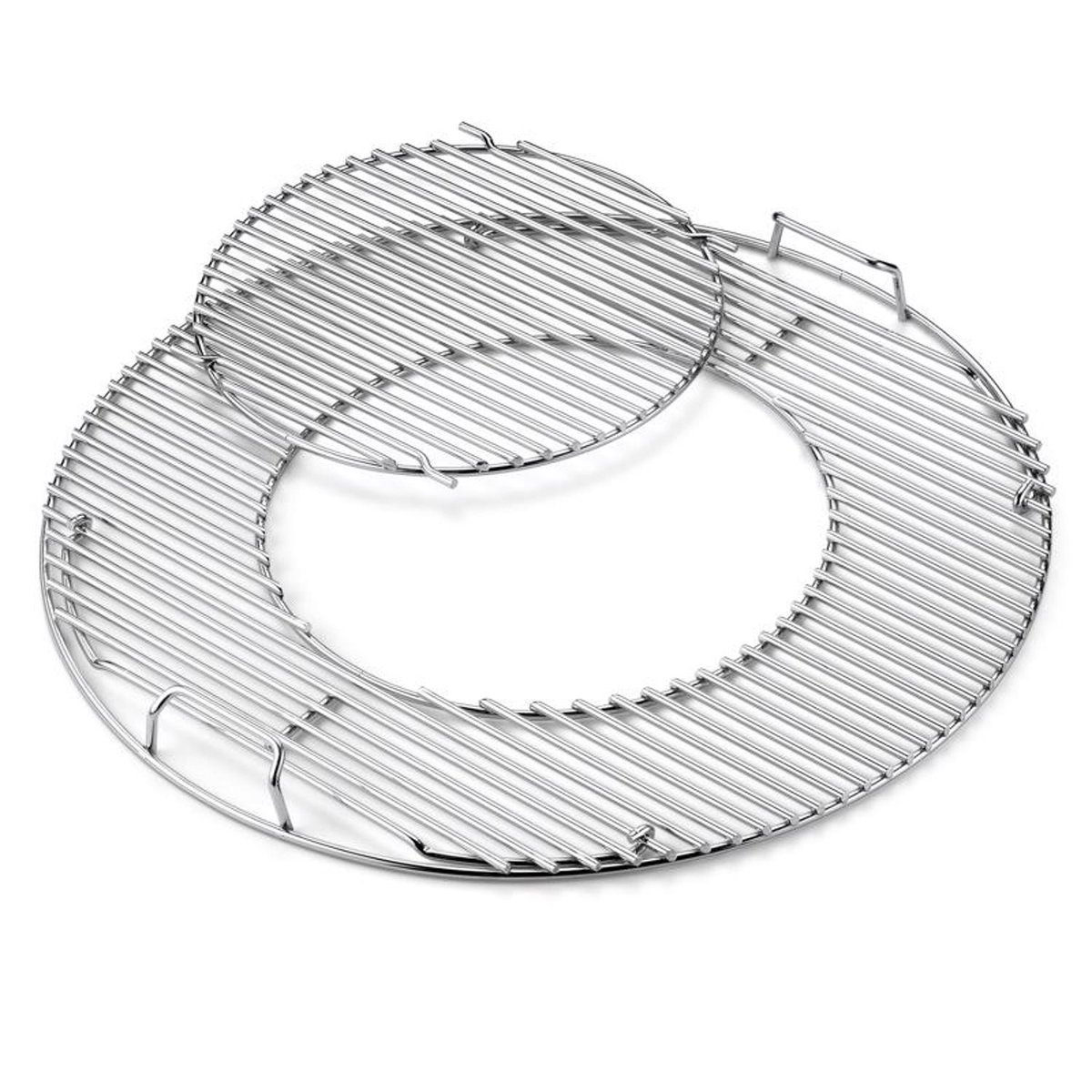
Best overall: the Weber Gourmet BBQ System Hinged Cooking Grate (part #8835). It is the official Weber replacement for every 22-1/2-inch Weber charcoal kettle and Performer, its hinged sides flip up so you can add charcoal mid-cook without lifting the whole grate, and the removable 12-inch center accepts Weber's sear grate, pizza stone, griddle and wok inserts, which makes it the only grate on this list that gets more useful over time.
Want more cooking space without a new grill? The SnS Grills Slow 'N Sear Elevated Cooking Grate (model ECG-SS) adds a second cooking level in genuine 304 stainless steel on any 22-inch-or-larger grill.
Cook over a campfire or fire pit? The VEVOR X-Marks 36-inch foldable fire pit grill grate is a steel grate with a high-temperature coating that folds flat for transport, the only pick here meant for open fire.
Just need your Weber back to stock? The Weber Replacement Cooking Grate (#7435) is the standard solid grate, the cheapest way to an exact Weber fit.
Quick Picks
Comparison Table
| Product | Key Specs | Best Use Case | Standout Feature | Amazon Link |
|---|---|---|---|---|
| Weber Gourmet BBQ System Hinged Cooking Grate (#8835) | Chrome-plated steel; 22.5" round; fits 22-1/2" Weber charcoal grills and Performer | Weber kettle owners who add charcoal mid-cook | Hinged sides plus a removable 12" center for GBS inserts | Check Price on Amazon |
| SnS Grills Slow 'N Sear Elevated Cooking Grate (ECG-SS) | 304 stainless steel; adds about 180 sq in; fits 22"+ grills, round or rectangular | Doubling cooking space without a bigger grill | A second cooking level that sits on your existing grate | Check Price on Amazon |
| VEVOR X-Marks Fire Pit Grill Grate, 36" Foldable | Heavy-duty steel, high-temp paint; 36" x 36"; diamond mesh; rated to 572°F (300°C) | Fire pits, campfires and camping | Folds flat in seconds for transport | Check Price on Amazon |
| Weber Replacement Cooking Grate (#7435) | Plated steel; 22.5" round (21.5" actual cooking surface); fits 22-1/2" Weber charcoal grills | Exact stock replacement on a budget | The factory grate your kettle came with, at the lowest cost | Check Price on Amazon |
All specifications are sourced from manufacturer, parts-specialist or retailer listing data. Prices are not shown because street prices change daily; check the exact variant on the live listing.
Detailed Reviews: The 4 Best Grill Grates
1. Weber Gourmet BBQ System Hinged Cooking Grate (#8835): Best Overall


Weber Gourmet BBQ System Hinged Cooking Grate (#8835)
The official Weber upgrade grate: hinged sides for mid-cook charcoal access and a removable center that docks Weber's whole Gourmet BBQ System accessory range.
- Hinged outer sections flip up to add charcoal or wood chunks mid-cook
- Removable 12-inch center accepts GBS sear grate, pizza stone, griddle and wok inserts
- Exact factory fit for 22-1/2-inch Weber charcoal grills and Performer models
- Heavier-gauge feel than the standard solid grate it replaces
Considerations
- Chrome-plated steel, not solid stainless, so the plating will eventually wear
- Center insert can drop out if you hang the grate vertically to store it
- GBS accessory inserts are sold separately
- Material: Chrome-plated steel
- Size: 22.5" round for 22-1/2" grills
- Center insert: 12" removable wire insert included
- Weber part: #8835 (UPC 077924004902)
- Fits: Weber 22-1/2" charcoal grills and Performer series
Best for: Weber kettle owners who cook long sessions, add fuel mid-cook, or want the GBS accessory system.
What it is: The official Weber hinged replacement cooking grate for every 22-1/2-inch Weber charcoal kettle and the Performer line, part number 8835. If your kettle came with a plain solid grate, this is the upgrade Weber itself sells.
Why we recommend it: Two features, both verified on Weber's parts documentation. First, the outer sections are hinged: they flip up so you can add charcoal or wood chunks mid-cook without lifting a hot, food-covered grate off the grill. Anyone who has done a long charcoal cook with a solid grate knows exactly how much that matters. Second, the 12-inch center circle lifts out, which turns the grate into a dock for Weber's Gourmet BBQ System accessories: a cast iron sear grate for steakhouse marks, a pizza stone, a griddle, a wok, even a poultry roaster. No other grate on this list has an accessory ecosystem behind it. The material is chrome-plated steel, the same construction as Weber's stock grates. That means it will eventually need replacement like every plated grate does, but it also means it heats fast, costs less than solid stainless, and fits exactly because it is the factory part.
Fit check: 22-1/2-inch Weber charcoal grills and Performer models. It will not fit 18-inch kettles, 26-inch kettles or gas grills, so measure before ordering. Owner feedback is not one-sided: some long-term owners report the center insert and its seat wear or rust faster than the outer ring, which is worth knowing, and the insert itself is available separately if it does wear first.
Who should skip it: If you never add charcoal mid-cook and have no interest in the GBS inserts, you are paying for features you will not use. Get the #7435 below instead.
2. SnS Grills Slow 'N Sear Elevated Cooking Grate (ECG-SS): Best Add-On
SnS Grills Slow 'N Sear Elevated Cooking Grate (ECG-SS)
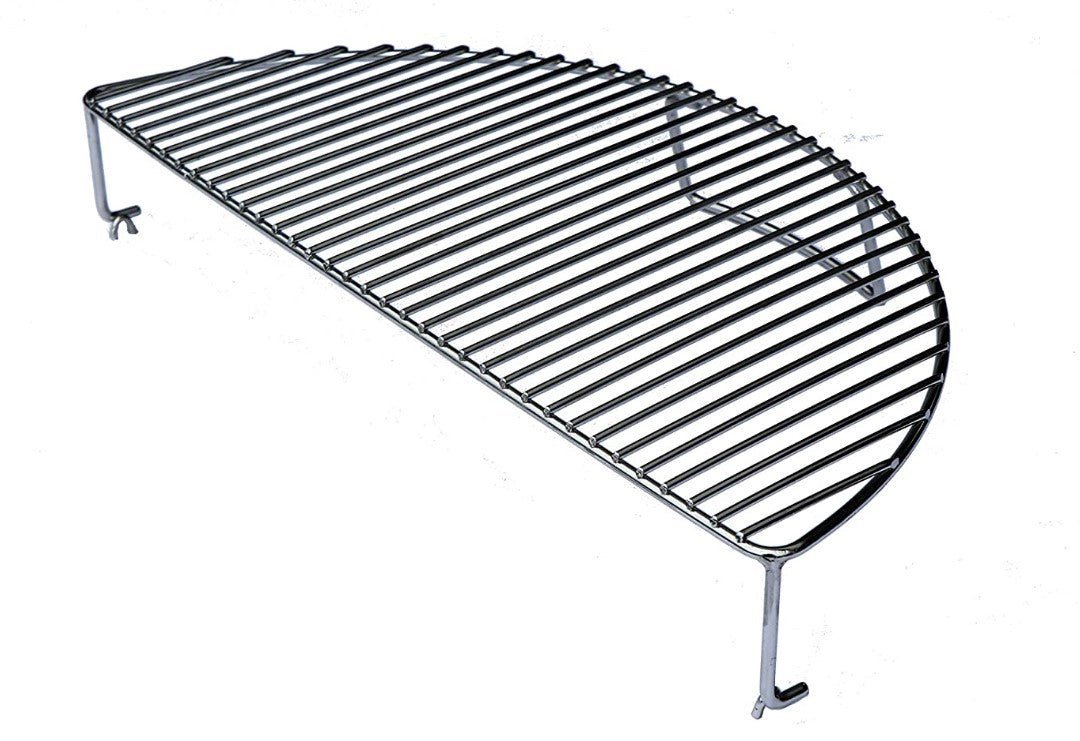
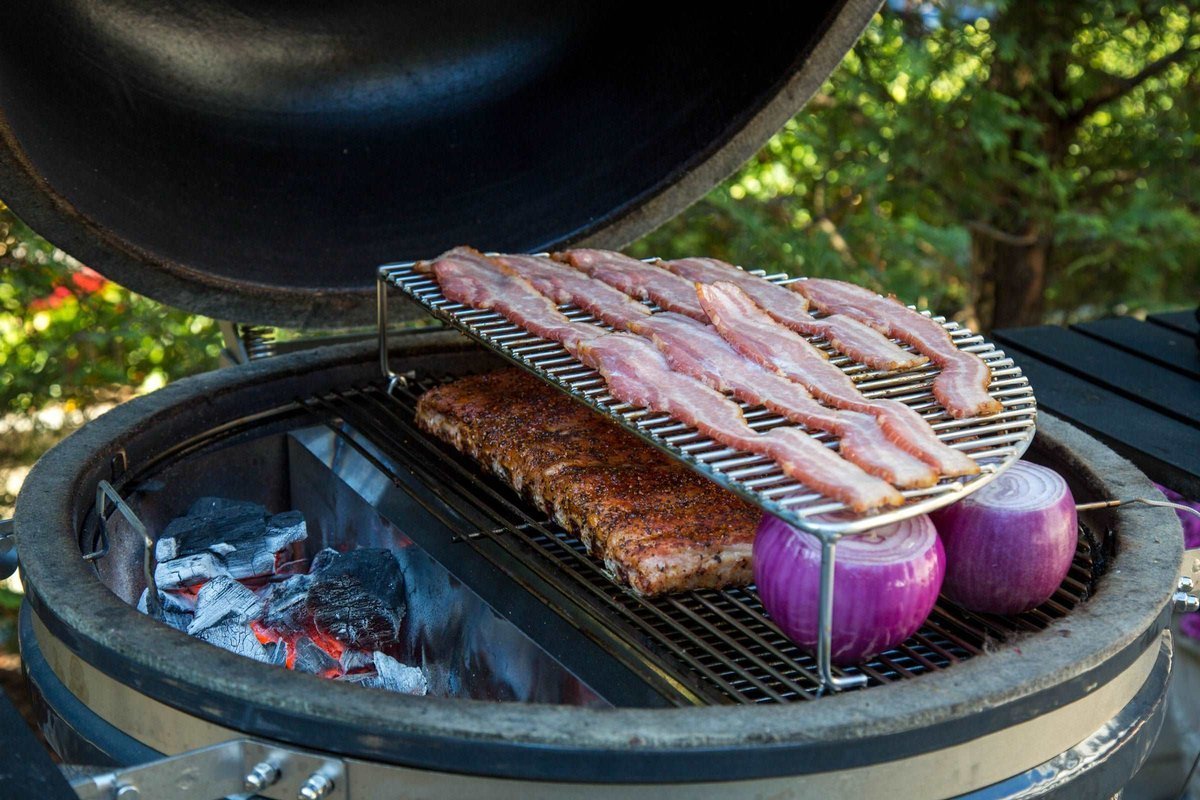
An elevated second cooking level in genuine 304 stainless steel that sits on your existing grate and adds about 180 square inches of space.
- Adds a second cooking tier without buying a bigger grill
- Genuine 304 stainless steel, the grade that resists rust and food acids
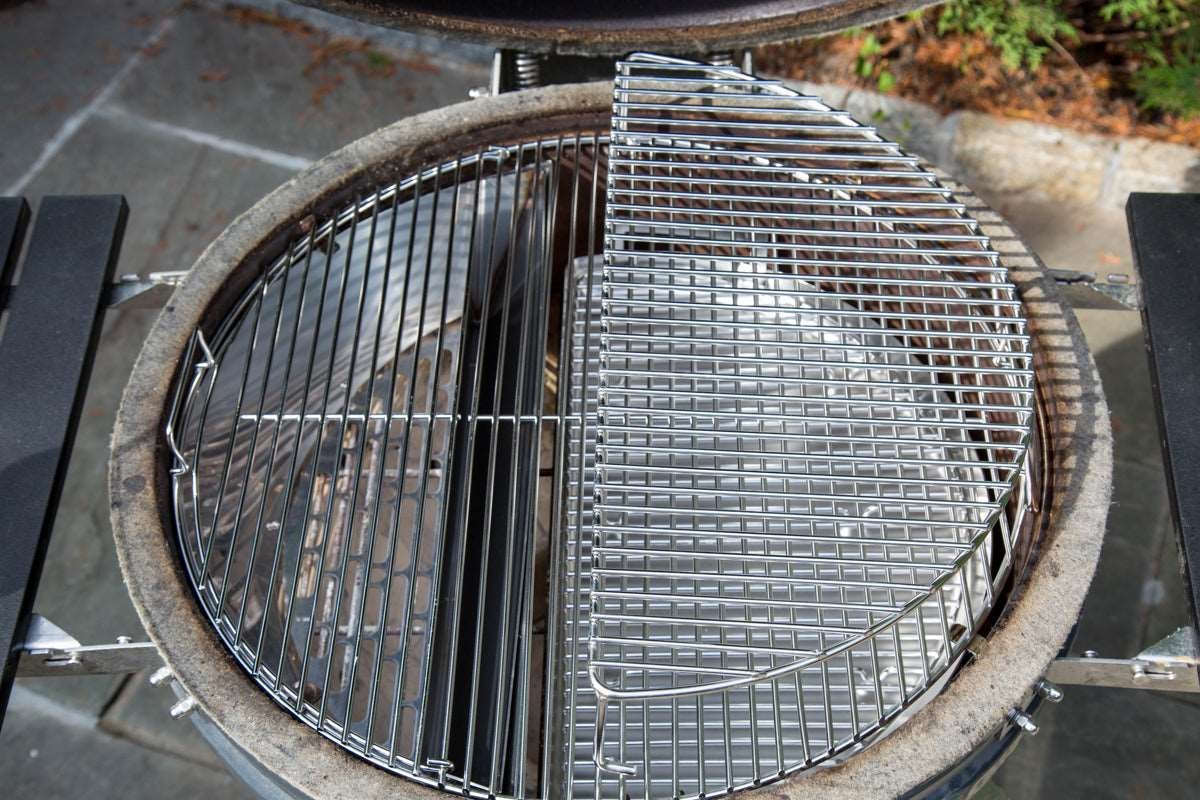
- Works on 22-inch or larger grills, round or rectangular, over standard or hinged grates
- No assembly: set it on the grate and cook
Considerations
- An accessory, not a replacement: you still need a sound main grate under it
- Raised food cooks in hotter, drier air near the lid, which takes some learning
- Costs more than a basic replacement grate
- Material: 304 stainless steel
- Model: ECG-SS (UPC 019962699641)
- Added area: About 180 sq in of elevated cooking surface
- Fits: 22" and larger grills, circular or rectangular
- Dimensions: 22 x 3.5 x 11.75 in (manufacturer listing)
Best for: Kettle and kamado cooks who run out of room, and anyone who wants a gentler upper tier for ribs, brisket or vegetables.
What it is: An elevated second-level cooking rack from SnS Grills (the Slow 'N Sear brand), model ECG-SS, made from 304 stainless steel. It sits on top of your existing cooking grate, standard or hinged, and gives you a second tier of cooking space. It is an accessory, not a standalone replacement grate, and that is exactly its appeal: it works on 22-inch or larger grills, round or rectangular.
Why we recommend it: Capacity is the scarcest resource on a kettle. A second level means ribs or a brisket can ride up top in gentler heat while burgers sear below, or you can simply cook for twice as many people without buying a bigger grill. The 304 stainless construction matters here more than on most picks: an elevated rack lives in the hottest, greasiest zone of the grill, and 304-grade stainless is the alloy that resists rust and food-acid corrosion for the long haul. On stainless grades, see the material comparison below: not all "stainless" is equal. No assembly is required; you set it on the grate and cook.
Owner experience, labelled as such: On the Weber Kettle Club enthusiast forum, long-term owners of SnS 304 stainless grates report years of heavy use with no rust or warping. That is owner experience, not our testing, but it is a consistent pattern from people who cook outdoors a lot.
Who should skip it: If your grill is already big enough, or if you are replacing a worn-out grate rather than adding capacity. This does not replace anything.
3. VEVOR X-Marks Fire Pit Grill Grate, 36" Foldable: Best for Campfire


VEVOR X-Marks Fire Pit Grill Grate, 36" Foldable
A 36-inch steel grate built to be its own structure over open fire: diamond mesh that keeps small foods out of the flames, and a fold-flat design that actually travels.
- Huge 36 x 36-inch surface covers a real fire pit
- Folds flat in seconds, with a handle for carrying and storage
- High-density diamond mesh keeps shrimp, bacon and sliced vegetables from falling through
- Support X-wire underneath stiffens the cooking surface
Considerations
- Some owners report warping under very high heat, per third-party roundups and reviews
- Coating is rated to 572°F (300°C) by VEVOR, a campfire ceiling, not a kettle replacement
- Not a fit for kettle or gas grills at all
- Material: Premium Q235 steel with food-grade high-temperature paint
- Model: JY-MY-YKW36-ZD (UPC 840349927954)
- Size: 36" x 36" cooking surface, folds in half
- Heat rating: 572°F / 300°C (VEVOR listing)
- Mesh: High-density diamond-shaped grid
Best for: Fire pit and campfire cooking, camping trips, and backyard fire bowls where no grill body exists to hold a grate.
What it is: A 36-by-36-inch foldable steel grill grate built for fire pits and campfire cooking, a completely different animal from the kettle grates above. Heavy-duty steel with a food-grade, rust-proof, high-temperature paint coating, rated by VEVOR to 572°F (300°C). It folds in about five seconds into a flat package, has a handle and a support X-wire underneath, and uses a high-density diamond mesh that keeps small foods, bacon, shrimp and sliced vegetables, from falling through.
Why we recommend it: Open-fire cooking has no kettle to hold a round grate, so the grate has to be its own structure. At 36 inches square it covers a real fire pit, it sets up with no assembly, and the fold-flat design means it actually comes camping with you instead of living in the garage. The diamond mesh is the practical detail: most fire pit grates are widely spaced bars, and widely spaced bars eat asparagus.
The honest con: Third-party roundups and customer reviews note that some units warp under high heat and that the hinge and support layout can leave the surface uneven. Buy it from a retailer with easy returns, do not build your hottest bonfire directly under the center, and let it cool before folding.
Who should skip it: Anyone cooking on a kettle or gas grill. This is an open-fire tool, and its coating is rated for campfire temperatures, not as a permanent kettle replacement.
4. Weber Replacement Cooking Grate (#7435): Best Budget Replacement
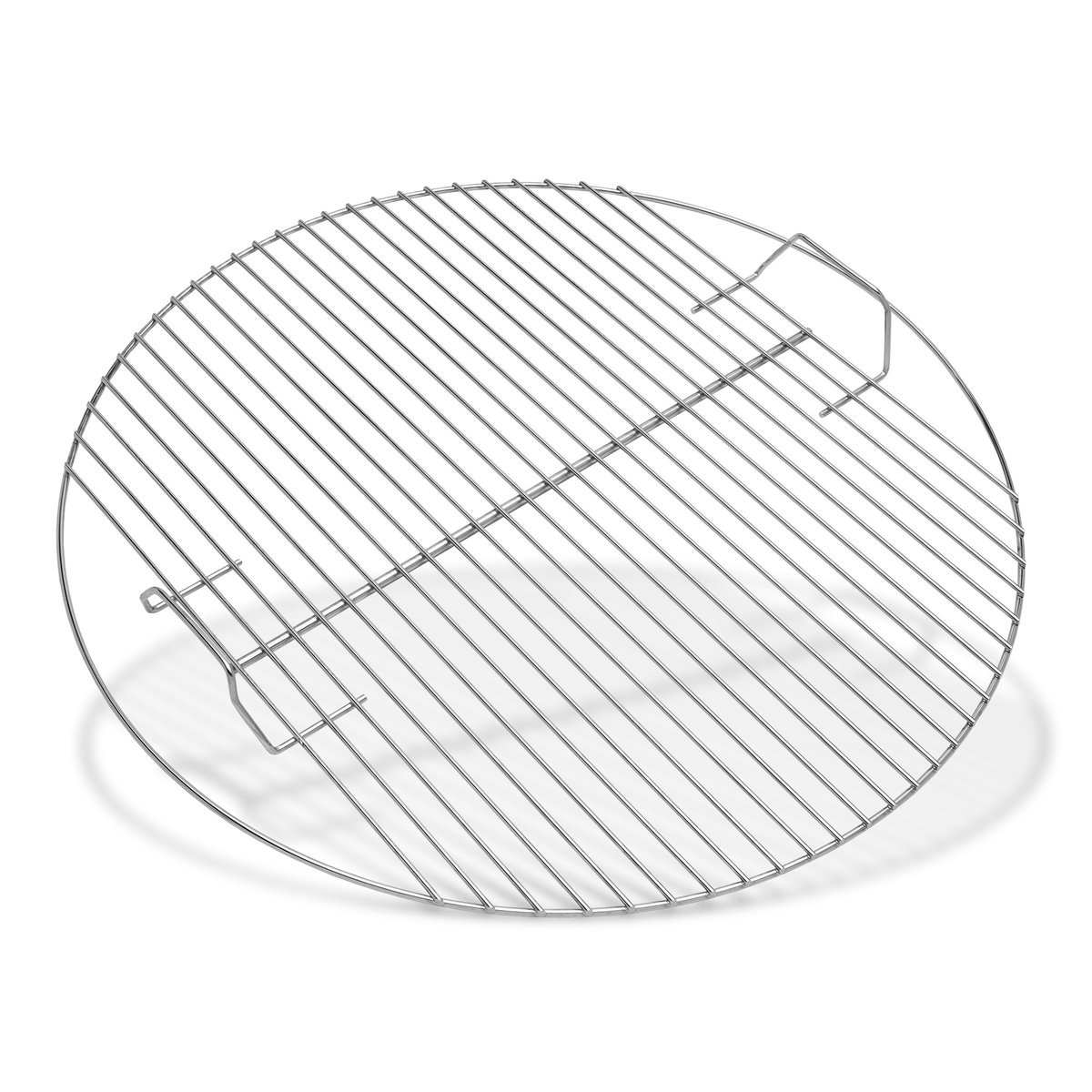


Weber Replacement Cooking Grate (#7435)
The standard solid grate Weber ships on its 22-1/2-inch kettles, sold as a genuine replacement part: exact fit, lowest cost, zero surprises.
- Genuine Weber part with a guaranteed exact fit for 22-1/2" kettles
- Cheapest route back to a clean, flat cooking surface
- Built-in lift handles for moving the grate on and off the grill
- Simple solid design with nothing to assemble or lose
Considerations
- No hinges, so mid-cook charcoal means lifting the whole hot grate
- No removable center, so no GBS accessory inserts
- Plated steel wears like every plated grate and will need replacing again in time
- Material: Heavy-duty plated steel
- Size: 22.5" nominal; 21.5" x 21.5" cooking surface
- Weber part: #7435 (UPC 077924074004)
- Fits: Weber 22" Original Kettle, Original Kettle Premium, Master-Touch, Bar-B-Kettle and Performer
- Handles: Integrated easy-lift handles
Best for: Anyone whose stock grate is rusted, warped or flaking and who wants the exact factory replacement at the lowest price.
What it is: The standard solid cooking grate Weber ships on 22-1/2-inch charcoal kettles, sold as replacement part #7435. Plated steel, no hinges, no removable center: the stock grate, nothing more.
Why we recommend it: Sometimes the right purchase is the boring one. If your current grate is rusted through, warped or flaking, the #7435 is the cheapest way to an exact, guaranteed fit: no measuring anxiety, no "universal" adapters, no wondering whether the support tabs line up. It is the factory part. For a grill you use a few times a month, the standard grate plus a good brush is all the upgrade you need. One honest note from owner forums: the current production version is reported to feel lighter than older Weber grates, so treat it as the consumable it is and brush it clean rather than expecting a lifetime part.
Who should skip it: If you are replacing the grate anyway and the hinged GBS version (#8835, pick #1) is only modestly more expensive, the hinges and the accessory center are worth it for anyone who does long cooks or wants the sear-grate insert later. The #7435 is the value play; the #8835 is the upgrade play.
What About a Cast Iron Kettle Grate?
Cast iron is the sear material, and readers ask about it constantly, so it deserves a direct answer. A heavy cast iron kettle grate holds heat through the moment cold food lands on it, which is what creates a crust that releases cleanly instead of welding to the metal; a well-seasoned cast iron surface is the best non-stick you can grill on. The costs are equally real: scrape it warm, dry it completely and re-oil it after every single cook, or it rusts. Our research found one exact-fit GBS-pattern cast iron option for 22-inch kettles, the X Home 8835 cast iron grate, but its Amazon listing showed no featured offers at research time and still showed none when we re-checked at publication prep, and other stockists listed it as out of stock. Under our linking rules we do not link a product you cannot actually buy, so it is named here for your own search rather than linked. If you find it in stock from a reputable seller, it is the cast iron route; if not, the stainless and plated picks above are the buyable answers today.
How to Choose a Grill Grate: The Buying Guide
Step 1: Measure your grill, because fit is everything
Grate shopping fails more often on fit than on quality. Before you buy anything: measure the inside diameter where the grate sits, not the outside of the grill. A "22-inch" Weber kettle takes a 22.5-inch grate that rests on support tabs inside the bowl. Check the shape: round kettle grates do not fit rectangular gas grills and vice versa, and gas grill grates are often sold in sets of panels while charcoal kettle grates are one round piece. Note the fuel type, because charcoal kettle, gas grill and campfire grates are different products with different heat and fit requirements. Finally, match the model family: Weber alone has 18, 22.5 and 26-inch kettles plus the Performer line, and the parts are not interchangeable. The universal-fit promise deserves skepticism: a grate that "fits most grills" usually fits most grills badly. Exact-fit replacements from the grill maker or a same-size specialist are the safe default.
Step 2: Pick your material, the real trade-off
Material decides maintenance burden, sear quality and lifespan. The comparison below is drawn from a detailed material guide at agratefulkitchen.com (September 2026) and cross-checked against enthusiast sources. Cast iron gives the best sear and, once seasoned, the best non-stick surface; it demands the most care: scrape while warm, dry completely, oil after every cook, preheat 15 minutes or more. Stainless steel is the low-maintenance choice: no seasoning, rust-resistant, easy to clean, but it needs fresh oil before every cook because stainless does not hold seasoning, and bar thickness matters enormously: thick 304-grade rods perform nearly as well as cast iron, while thin mystery "stainless" bars bend, warp and stick. Porcelain-coated grates (enamel over steel or iron) release food easily with no seasoning, which makes them great for delicate foods and casual grillers, but the coating chips from metal tools, drops or wire brushes, and a chipped porcelain grate should be replaced, not repaired, because the exposed metal rusts and the chip edge becomes a sticking point.
| Factor | Cast Iron | Stainless Steel | Porcelain-Coated |
|---|---|---|---|
| Non-stick performance | Best once seasoned | Moderate; needs fresh oil each cook | Good; smooth surface, no seasoning needed |
| Maintenance | High: scrape, dry, oil after every use | Low: brush and wipe | Low until the coating chips |
| Durability | Very durable; rusts if neglected | Very durable; resists rust (grade-dependent) | Fragile; chips from metal tools or drops |
| Heat retention | Excellent | Varies with bar thickness | Fair to good |
| Best for | Frequent grillers, high-heat searing | Low-maintenance users, longevity | Delicate foods, casual grillers |
| Typical lifespan | Years if seasoned | Many years (thick 304 grade) | 2 to 3 seasons of heavy use |
Price roughly tracks the trade-off: porcelain-coated grates are usually cheapest but shortest-lived; cast iron is mid-priced and lasts years if maintained; stainless ranges from cheap thin bars to expensive heavy rods that last nearly indefinitely.
Step 3: Decide how much grate you actually need
Replacing a dead grate? Buy the exact stock replacement (#7435-style) or the hinged upgrade (#8835-style) and do not overthink it. Running out of space? An elevated second-level rack like the SnS pick adds capacity without a new grill. Chasing a better sear? That is a material upgrade, cast iron, not a brand upgrade. Cooking over fire? That is a different product category entirely (the VEVOR pick), not a kettle grate.
Step 4: Watch the compatibility traps
"Stainless steel" without a grade is a warning sign: genuine 304-grade stainless is food-safe and corrosion-resistant, while ungraded "stainless" on cheap listings is often thin chrome-plated steel, so if the listing will not name the grade, assume plated. Weight is a proxy for quality in cast iron and stainless alike: a 15-pound cast iron kettle grate will out-sear a 6-pound one every time, and a listing that hides the weight is telling you something. And gas versus charcoal fitment is not interchangeable: confirm which fuel your grill uses and buy the matching grate family.
Grill Grate Types: Know What You Are Actually Buying
"Grill grate" covers four different products, and buying the wrong type is the most common expensive mistake in this category. Cooking grates are the surface food sits on: three of our four picks are cooking grates, round for kettles and rectangular panels for gas grills. Charcoal grates are the smaller grates that hold the coals below the cooking grate: the Weber #7441 (17-inch, heavy-gauge steel) is the classic example, it fits 22.5-inch kettles, it burns out faster than cooking grates because it sits in direct flame (typical replacement interval 3 to 5 years), and it is emphatically not a cooking surface. Elevated or second-level racks, like the SnS pick, are accessories that add capacity above your existing grate: additions, not replacements. Campfire and fire pit grates, like the VEVOR pick, are standalone structures for open fire: different heat, different job, different product.
Bad Advice Worth Correcting
We checked the pages that rank for this topic, and three patterns in them deserve a warning. First, fabricated "hands-on testing": several ranking pages headline a recent update date while their own metadata shows the content is nearly a year old, and they claim extensive hands-on testing with no photos, no methodology and no evidence any product was ever touched. Treat a testing claim as true only when the page shows its work. Second, charcoal grates sold as cooking grates: some roundups list the Weber #7441, a 17-inch charcoal grate that sits under the coals, among the "best grill grates" without distinguishing it from the cooking surface; bought as a cooking grate, it is five inches too small and belongs at the bottom of the kettle. Always check whether a grate holds food or holds coals. Third, ungraded "stainless steel": recommendations that never name a grade or a bar thickness are guesses, because per experienced kettle owners the grade and thickness are the whole story: thick 304 rods perform nearly as well as cast iron and last indefinitely, while thin ungraded bars bend, warp and shed plating.
Safety note: never cook on zinc-coated (galvanized) steel mesh or hardware cloth as a makeshift grate. Zinc coatings release zinc oxide fumes at grill temperatures, which cause metal fume fever, a flu-like illness hours after exposure. If a grate's coating is not specified as food-safe, do not grill on it.
7 Mistakes to Avoid When Buying Grill Grates
- Buying by grill brand instead of by size. "For Weber" means nothing until the diameter matches your model. Measure the inside of your grill where the grate sits.
- Confusing charcoal grates with cooking grates. The #7441-style grate holds coals; your food never touches it. Know which one you are replacing.
- Choosing cast iron without the maintenance commitment. Unseasoned, unoiled cast iron becomes a rusted paperweight within a season. Be honest about your habits.
- Trusting "stainless steel" with no grade. Demand 304, or at minimum a stated bar thickness and weight. Ungraded thin steel is the most common disappointment in this category.
- Using a wire brush on porcelain-coated grates. Steel wire chips the enamel; use nylon or brass brushes, and replace the grate when the coating chips rather than cooking on exposed, rusting metal.
- Oiling too early. Oil applied to a cold or warming grate burns off before food arrives. Preheat with the lid closed for 10 to 15 minutes, then oil immediately before the food goes on, with a high-smoke-point oil like canola, grapeseed or avocado; olive oil burns at grill temperatures and leaves sticky residue.
- Ignoring weight on cast iron and stainless. A grate that hides its weight is usually hiding thin metal. Thermal mass is what sears; thin is what sticks.
Frequently Asked Questions
The cooking grate is the surface your food sits on; the charcoal grate is the smaller grate below it that holds the coals. On a 22.5-inch Weber kettle, the cooking grate is 22.5 inches and the charcoal grate (Weber #7441) is 17 inches. They wear differently, the charcoal grate sits in direct flame and typically needs replacing every 3 to 5 years, and they are not interchangeable.
Neither is universally better; they solve different problems. Cast iron sears better and becomes genuinely non-stick with seasoning, but demands scraping, drying and oiling after every cook. Stainless steel (especially thick 304-grade) needs almost no maintenance and lasts longer, but requires fresh oil before each cook and does not sear quite as hard. Grill often and maintain willingly: cast iron. Grill occasionally or hate maintenance: stainless.
Yes: 304 is the food-grade stainless you want. It is corrosion-resistant, handles food acids from marinades and sauces, and does not need seasoning. The catch is thickness: thick 304 rods perform nearly as well as cast iron, while thin 304 (or ungraded "stainless") bars bend and stick. Grade gets you corrosion resistance; thickness gets you searing.
No. Stainless steel does not absorb oil into its surface, so seasoning does not build up the way it does on cast iron. Instead, apply fresh oil just before each cook, and re-oil between batches, to keep food from sticking.
No. Steel wire scratches and chips the porcelain coating, exposing the metal underneath to rust. Use a nylon or brass brush, avoid metal spatulas, and if the coating chips, replace the grate, because rust spreads under the remaining coating.
The most common causes are a grate that is not hot enough yet, oil applied too early so it burns off before the food lands, or a low-smoke-point oil like olive oil. Preheat with the lid closed for 10 to 15 minutes, then oil with a high-smoke-point oil right before adding food. If sticking persists after that, the issue is technique, not the metal.
Clean it when it is dirty; replace it when it is damaged. Replace when the plating or porcelain is flaking (flakes in food, exposed metal rusting), bars are warped or broken, or rust has eaten through rather than sitting on the surface. A charcoal grate with broken grid bars or rust-through should be replaced before the next cook, because coals falling through onto the ash system is a real failure mode.
Final Verdict
Buy the grate that matches your grill's size first and your cooking habits second. For most 22.5-inch Weber kettle owners, the Weber GBS Hinged Cooking Grate (#8835) is the right answer: exact factory fit, hinged sides for mid-cook charcoal, and a removable center that opens up Weber's whole accessory system. If you need more space rather than a new surface, the SnS Elevated Cooking Grate (ECG-SS) adds a 304-stainless second level to almost any large grill. For open fire, the VEVOR X-Marks 36-inch foldable grate is the practical campfire tool, bought from a retailer with easy returns. And if your stock grate is simply worn out, the Weber #7435 standard replacement is the cheapest correct answer. Whatever you buy, measure twice, confirm the material grade, and oil it right before the food goes on: technique covers more sins than metal ever will.
Final Recommendations
Best overall: the Weber GBS Hinged Cooking Grate (#8835), the factory upgrade with hinged sides and the GBS accessory center.
Best add-on: the SnS Elevated Cooking Grate (ECG-SS), a 304-stainless second level for any 22-inch-plus grill.
Best for campfire: the VEVOR X-Marks 36-inch foldable grate, the open-fire tool that folds flat and travels.
Best budget replacement: the Weber #7435, the exact stock grate at the lowest price.
Related Guides
- Party Ribs Smoker: if you are shopping for the smoker itself rather than the grate, start here.
- Kamado Grill vs Offset Smoker: the grill-type decision that determines which grate family you need.
- Best Grill Cleaner: keeping any grate, cast iron, stainless or porcelain, alive longer.
- Best Brush for Cast Iron Grill Grates (planned): the maintenance companion to a cast iron pick.
- Grill Accessories (planned hub): the wider accessory landscape these grates sit in.