
The selfie drone is the camera for people who are tired of asking strangers to take their photo. Both the DJI Neo and the HOVERAir X1 launch from your palm, follow you automatically, and fit in a jacket pocket, but they come from opposite design philosophies. DJI built a tiny real drone with GPS, a proper flight controller, and an ecosystem of controllers and FPV gear. HOVERAir built a flying camera that folds flat, needs no controller at all, and trades raw capability for radical simplicity. Same category, same palm-launch trick, very different answers to what this thing should be.
This comparison is written for the buyer standing between them. We compared the two on the things that actually decide a selfie drone purchase: camera quality, real flight time, tracking reliability, wind handling, portability, storage, and price, using manufacturer-published specifications as reported by 2026 review and comparison sources (MyDearDrone, TechGearLab, droneandcam, and maisondudrone). Where those sources conflict, we say so rather than picking the convenient number. We have not flown these drones ourselves and will not pretend otherwise. We also cover the next-generation step-ups, the DJI Neo 2 and the HOVERAir X1 Pro and Pro Max, as prose context only, since the real long-term question is which brand's lineup you want to buy into.
The Short Answer
Best for most people: the DJI Neo. At a reported $169 to $199 in the sources we reviewed, it costs less than half the reported price of the X1, shoots 4K/30 video, has GPS-backed positioning and tracking, and plugs into DJI's enormous ecosystem of apps, controllers, and FPV gear. The value equation is not close.
Best for ultimate portability and simplicity: the HOVERAir X1. It folds flat to pocket size at 125g, needs no phone or controller whatsoever, and carries a Level 5 wind-resistance rating in reviewer reporting, against the Neo's Level 4. If pressing one button and getting the shot is your whole requirement, this is the purer product.
The one-sentence verdict: buy the DJI Neo if you want the best selfie drone for the money and might ever want manual flight or FPV; buy the HOVERAir X1 if you will pay a premium for the smallest, simplest, most pocketable flying camera.
Quick Picks
Short on time? These are our top recommendations.
Head-to-Head Specs
| Spec | DJI Neo | HOVERAir X1 |
|---|---|---|
| Weight | 135 g | 125 g |
| Design | Rigid body, full propeller guards built in | Folds flat, enclosed propeller frame |
| Video (main camera) | 4K/30 | 2.7K/30 |
| Stabilization | Single-axis mechanical gimbal plus RockSteady and HorizonBalancing | Triple stabilization system (manufacturer description) |
| Claimed flight time | About 18 minutes | About 11 minutes |
| Real-world flight time (reviewer-reported) | About 14 to 15 minutes | About 14 to 15 minutes |
| Internal storage | 22 GB, no expansion | 32 GB |
| Positioning | GPS plus vision sensors | Vision and optical tracking, no GPS |
| Wind resistance | Level 4 (manufacturer rating) | Level 5 (reviewer-reported rating) |
| Control | Palm launch, DJI Fly app, optional RC controllers, optional FPV bundle | Palm launch, onboard buttons and app, no controller needed |
| FAA registration (recreational, US) | Not required (under 250 g) | Not required (under 250 g) |
| Amazon Link | Check Price on Amazon | Check Price on Amazon |
Figures are manufacturer-published specs as reported by the review sources named in the intro, observed in October 2026. Real-world flight times are reviewer-reported, not our measurements.
1. DJI Neo: Best for Most People
DJI Neo
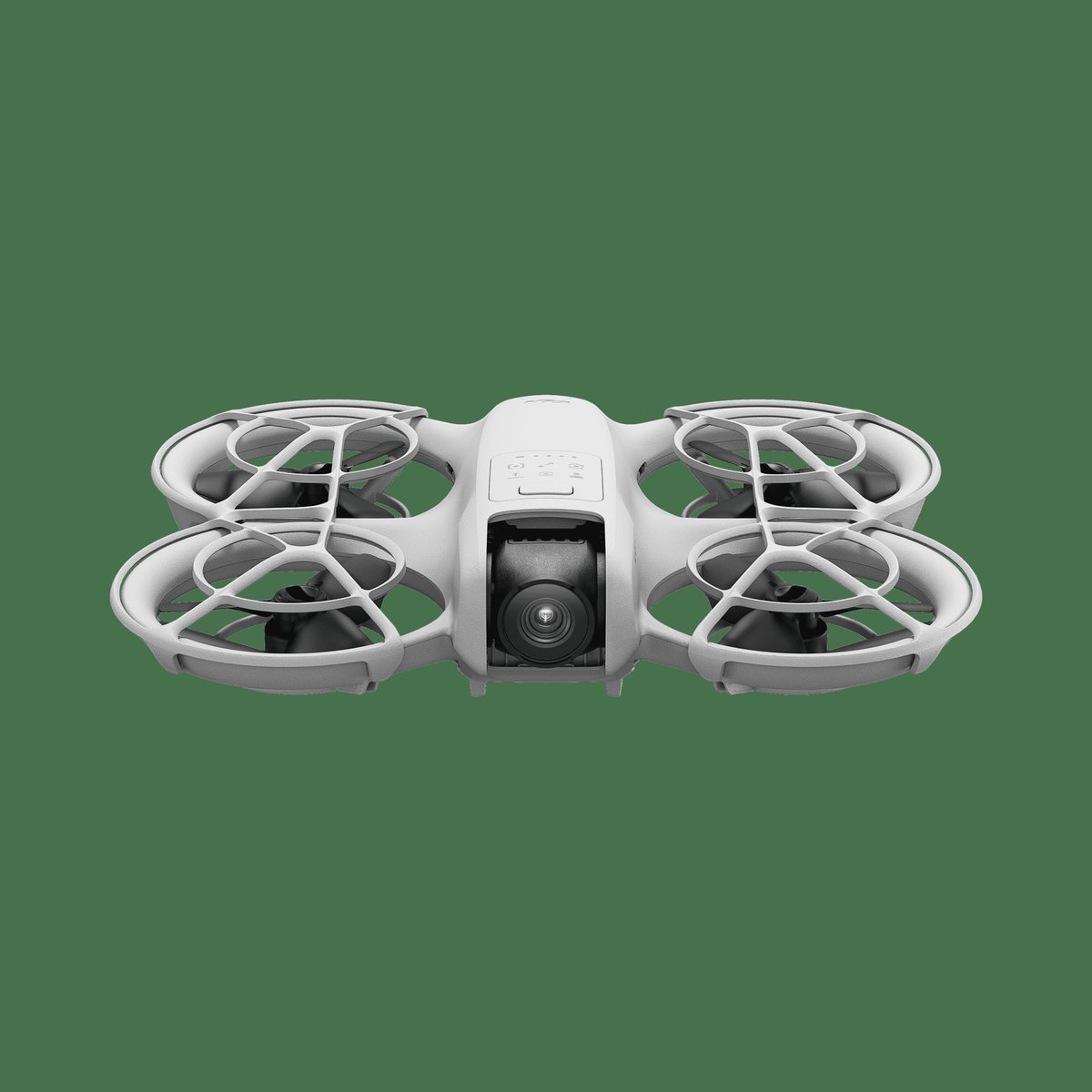
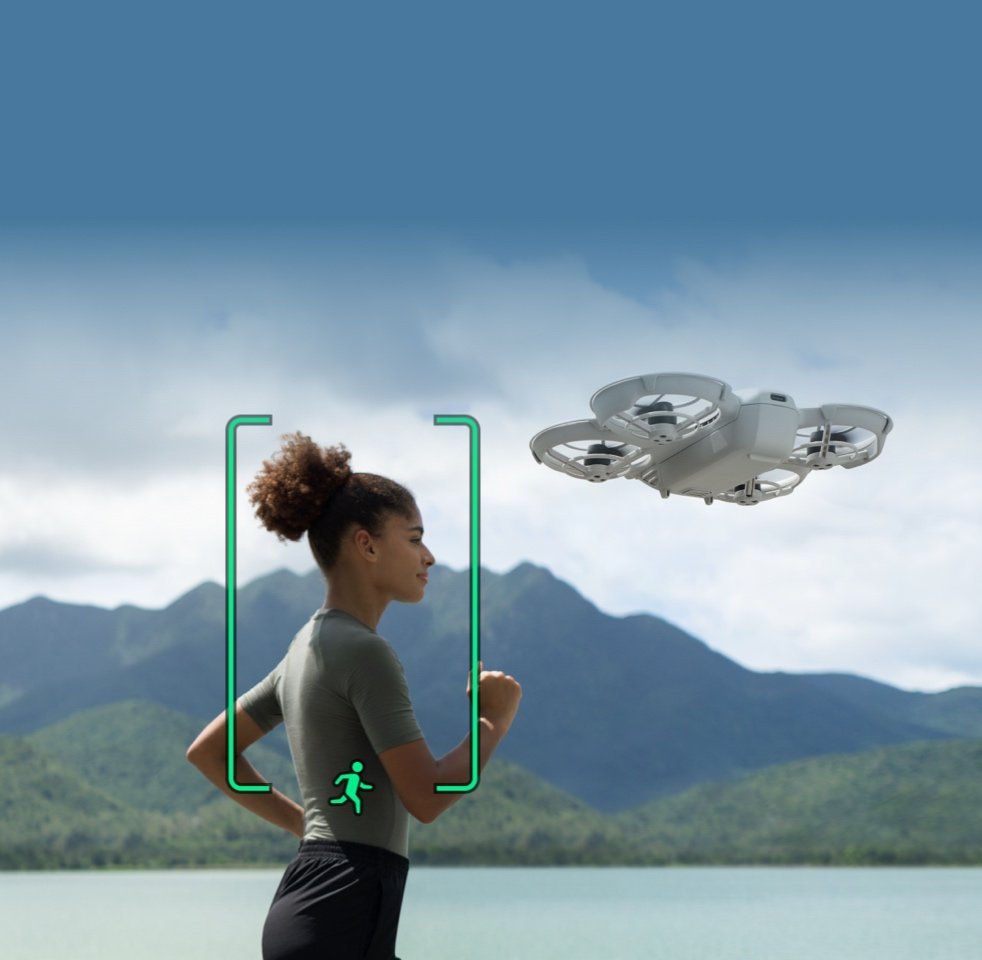
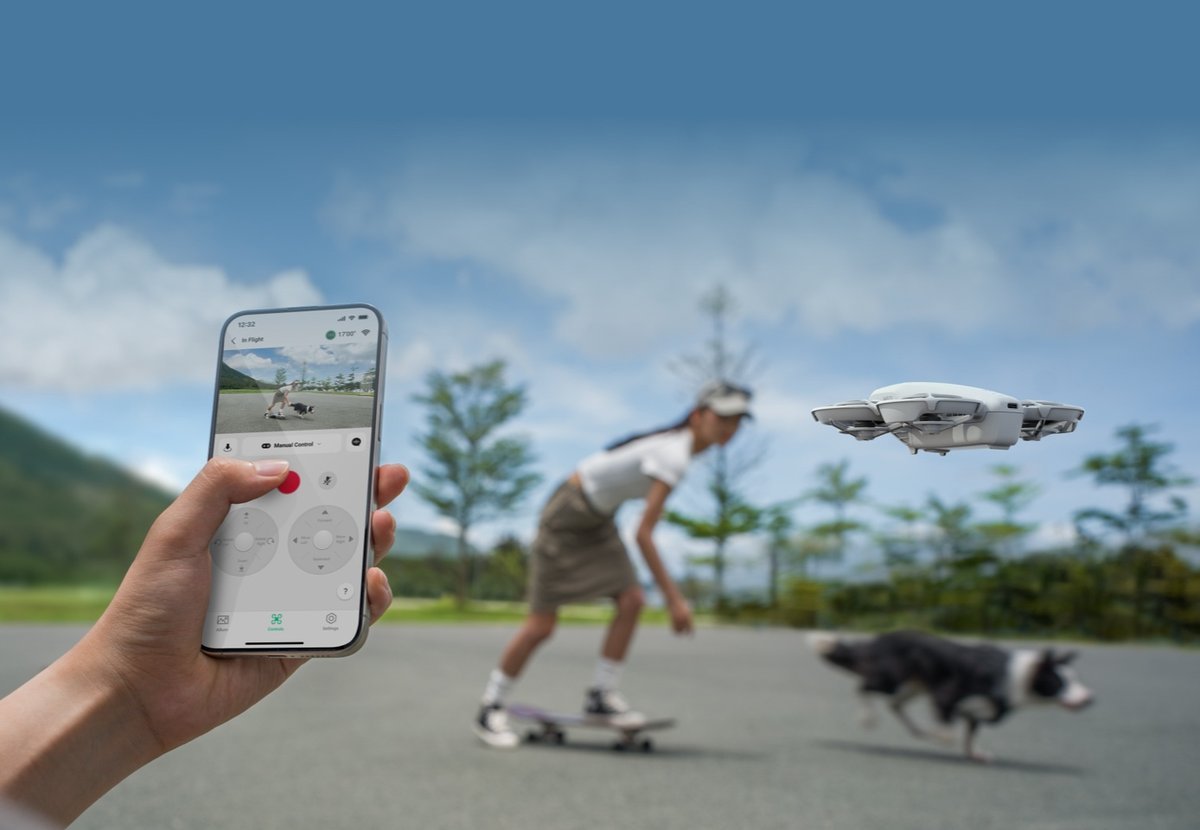
The DJI Neo is a 135g palm-launch drone with a 4K/30 camera on a single-axis mechanical gimbal, GPS plus vision positioning, full-coverage propeller guards, and 22GB of internal storage. It is the standard, controller-free package that anchors this comparison: one aircraft, one battery, no remote in the box, with every control option (phone app, RC controllers, FPV goggles and motion controller) available as an add-on later. On paper and in reviewer consensus, its 4K camera out-resolves the X1's 2.7K sensor, and TechGearLab's scoring put the Neo's image quality ahead of the X1's in their weighted system, while both remain social-media cameras rather than filmmaking tools.
- 4K/30 video from a 1/2-inch sensor gives real cropping headroom the X1's 2.7K footage does not.
- GPS plus vision positioning means steadier outdoor hovering, more confident tracking at distance, and proper return-to-home behaviour.
- It grows with you: DJI Fly app today, an RC controller for manual flight tomorrow, and an FPV bundle after that.
- Full propeller guards make it the safer pick around people and for indoor flying.
Reasons to avoid:
- 22GB of internal storage with no expansion fills fast at 4K; a long shooting day can strand you mid-session.
- Claimed flight time is about 18 minutes, but reviewer-reported real-world time is closer to 14 to 15 minutes per battery.
- The small sensor struggles in low light, like every drone in this class.
- No obstacle avoidance: DJI's own store FAQ states the Neo does not support it, so positioning confidence is not collision protection.
- Weight: 135 g
- Camera: 4K/30, 12MP stills, 1/2-inch sensor
- Storage: 22 GB internal, no expansion
- Flight time: about 18 minutes claimed
- In the box (this variant): aircraft, 1 Intelligent Flight Battery, propeller guards, spare propellers, gimbal protector, USB-C cable, screwdriver
Best for: beginners who might get serious, parents filming family moments, and any buyer who wants the most capable tiny drone for the money.
The Neo's camera advantage is the headline, but the honest framing matters. Viewed on a phone screen in good light, both drones in this comparison look good. The Neo's edge shows up in cropping flexibility, detail retention, and low-light noise, which is meaningful if you edit your footage and marginal if you post straight to social apps. MyDearDrone's assessment is representative: the Neo's footage is good for casual social media content in good light, with the small sensor's limits showing after sunset.
Flight time is where the spec sheet and reality part company. DJI claims about 18 minutes for the Neo, yet droneandcam's real-world testing found roughly 14 to 15 minutes of actual flight before landing. Treat every selfie drone flight claim skeptically: these are tiny batteries, and 14-ish minutes is the honest planning number. The practical consequence is that both drones are three-battery products if you film seriously, and the Neo answers that with DJI's standard multi-battery charging hub rather than a proprietary case.
Tracking is the Neo's structural advantage. GPS plus vision sensors give it more stable outdoor hovering, better return-to-home behaviour, and more confident tracking at distance than a vision-only system can manage. Think of it this way: the Neo is a drone that can do selfie mode, while the X1 is a selfie mode that happens to fly. For close-range follow shots on a hike or a ride, both excel. For anything involving distance, altitude, or wind, the Neo's GPS-backed flight controller is the safer system, even though, as DJI itself notes, the Neo has no obstacle avoidance sensors.
The ecosystem argument is the one that compounds over time. The Neo is a gateway into DJI's universe: the DJI Fly app, an optional RC-N3 controller for real manual flight, and an FPV bundle with motion controller and goggles that turns it into a tiny cinematic FPV drone. It can grow with you from palm-launch selfie stick to actual drone piloting, and every skill you build transfers up DJI's ladder to the Mini series and beyond. The rigid body plays a part too: the full propeller guards make it safer around people and better indoors, and the fixed structure is inherently more robust than a folding frame, even if it will never disappear into a pocket the way the X1 does.
Price is where the Neo wins outright. The reported street figures in the sources we reviewed put it at roughly $169 to $199, against roughly double that for the X1. Those are reported figures from October 2026 coverage, not a live price promise, but the gap is structural rather than promotional: the Neo is objectively more drone per dollar, and it is the reason most buyers should start here.
2. HOVERAir X1: Best for Portability
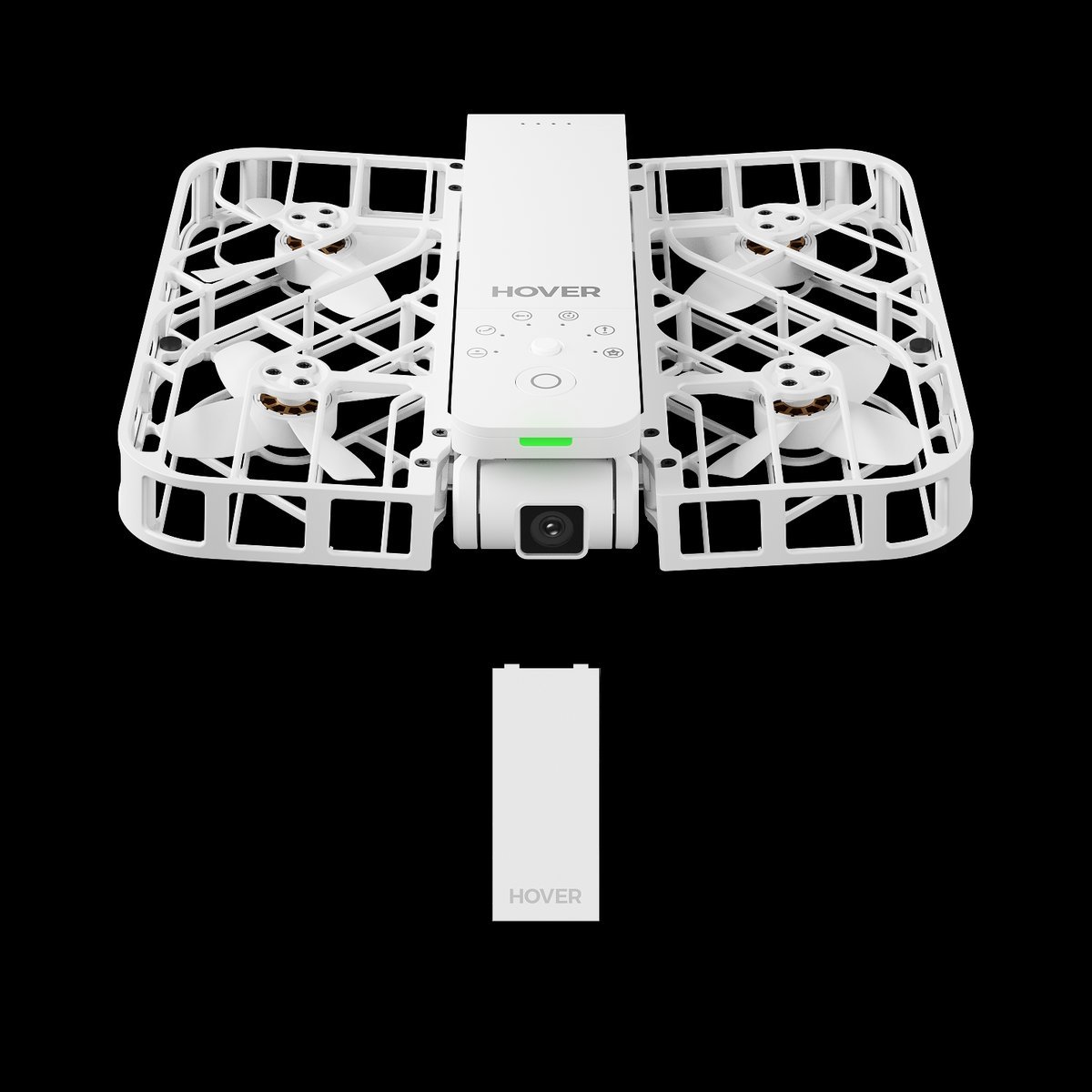
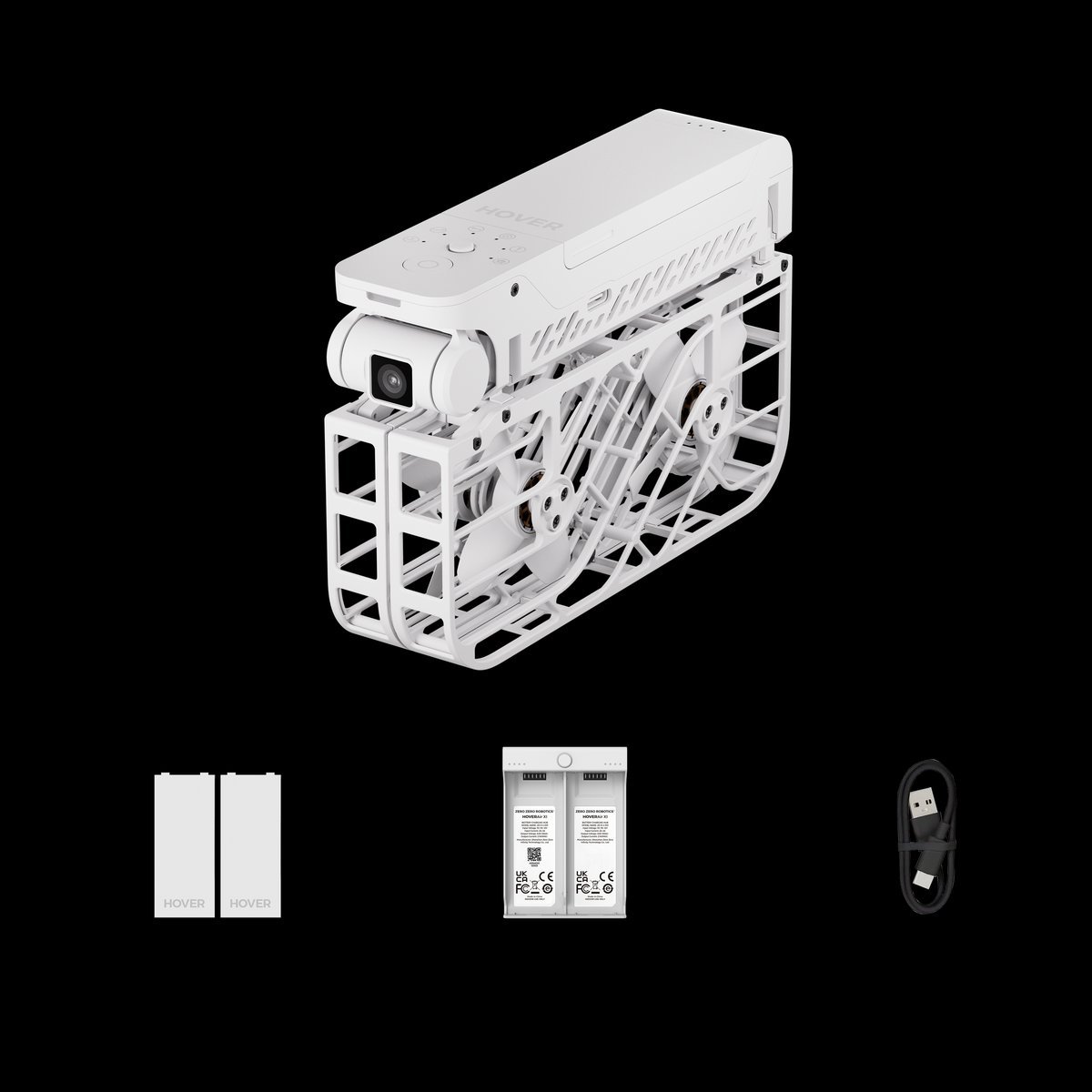
HOVERAir X1 (White)
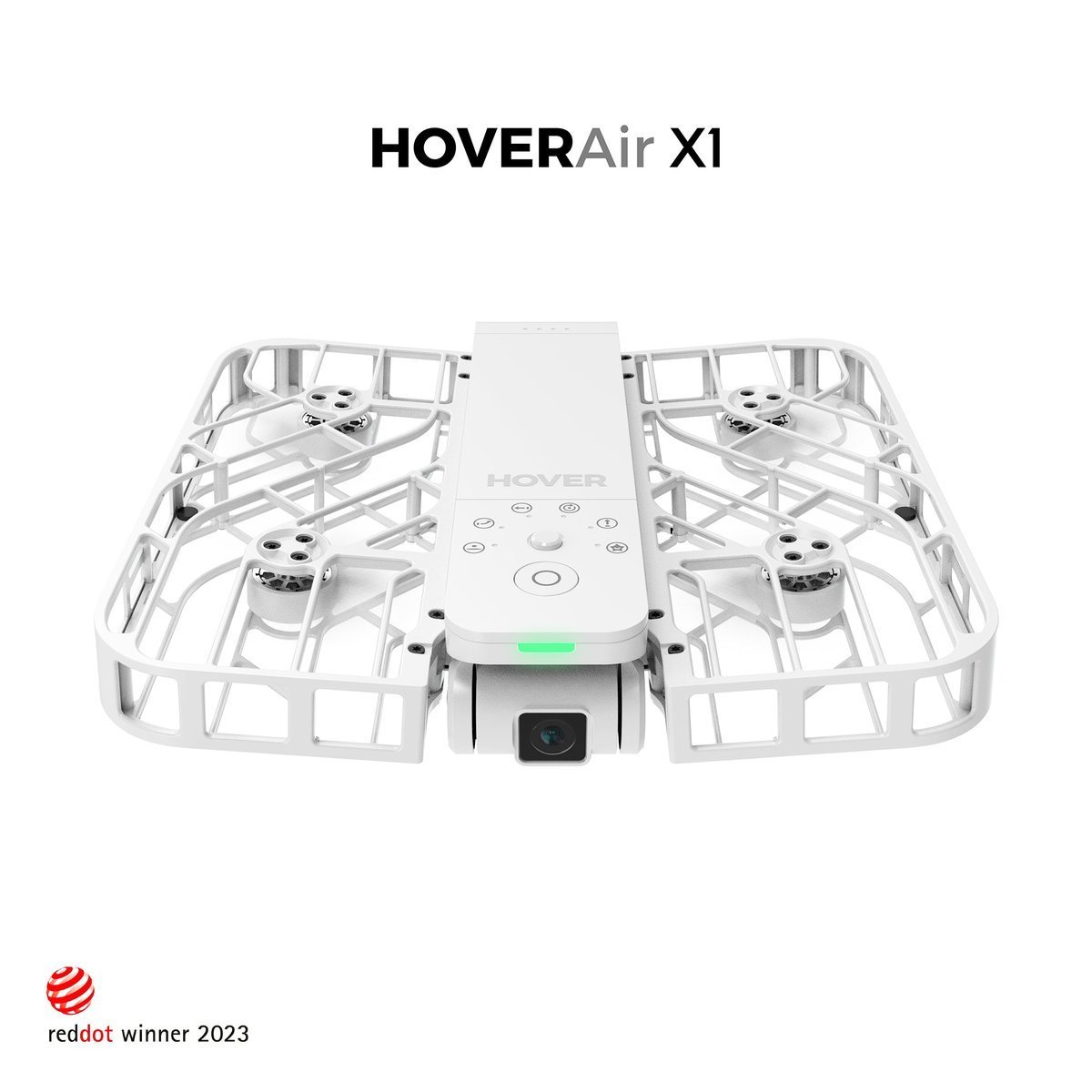
The HOVERAir X1 is a 125g flying camera that folds flat into a genuinely pocketable slab, launches from your palm, and runs its intelligent flight paths from onboard buttons with no phone or controller required. Its camera tops out at 2.7K/30, a clear step below the Neo on resolution, and it carries 32GB of internal storage. What it offers instead is the purest version of the selfie drone idea: unfold, press one button, get the shot, fold it away. Reviewers consistently praise its follow accuracy at close range, and droneandcam credits it with a Level 5 wind-resistance rating, one level above the Neo.
- Folds flat at 125g: the most pocketable design in the category, and 10g lighter than the Neo.
- Truly controller-free: onboard buttons run the flight modes, with no phone needed at all.
- Level 5 wind-resistance rating in reviewer reporting, against the Neo's Level 4, which matters at the coast and in the mountains.
- 32GB of internal storage, more than the Neo's 22GB, in a drone this small.
Reasons to avoid:
- 2.7K/30 maximum video resolution leaves less detail and less cropping room than the Neo's 4K.
- No GPS: tracking relies on vision alone, which is more limited in wind, at range, and in featureless environments.
- Costs roughly double the Neo in reported pricing, a large premium for portability and simplicity.
- Claimed flight time of about 11 minutes is the lowest figure here, even if real-world results land closer to the Neo's.
- Weight: 125 g
- Camera: 2.7K/30, 12MP stills
- Storage: 32 GB internal
- Flight time: about 11 minutes claimed
- Colour of this variant: White
Best for: travellers who film everything, hikers and cyclists who hate carrying gear, and buyers whose whole requirement is one-button simplicity.
Portability is the X1's signature advantage and it is not subtle. Folded, it is dramatically thinner than the Neo; comparison sources measure its folded volume at roughly half the Neo's. It disappears into a jacket pocket or a small bag compartment. The Neo is still small, but it is a thing you carry, where the X1 is a thing you forget you are carrying. If the reason you are buying a selfie drone is that the best camera is the one you have with you, the X1's form factor is the argument, and it is a strong one.
Wind is the second argument, and it is bigger than it looks on a spec sheet. At 125 to 135g, these aircraft are leaves with motors, and wind is the most common reason tiny drones get lost. Droneandcam's comparison is explicit: the X1 carries a Level 5 wind-resistance rating against the Neo's Level 4, and calls the difference genuinely noticeable at the coast or in the mountains. If you film outdoors in exposed places, this deserves more weight than any camera specification, because a shaky or missing drone ruins more footage than a smaller sensor ever will.
The camera gap is real, though, and buyers should go in with open eyes. The X1's 2.7K/30 ceiling gives it less headroom from the start, and TechGearLab's scoring put its image quality at 4.5 against the Neo's 5.0 in their weighted system. Neither drone is a cinema camera, and both use small sensors that struggle in low light, so the X1 is best understood as a daylight, direct-to-social camera. If you edit footage, the Neo's 4K will serve you better. If you never edit, the X1's footage is fine for exactly the use it was designed for.
Storage needs a careful word, because published figures for the X1 have varied between sources and bundles. The verified listing data for the white X1 in this guide confirms 32GB of internal storage, which is more than the Neo's 22GB, and on a long shooting day that difference is worth real minutes of 2.7K footage. What we could not confirm for this exact variant is the card expansion some comparison pages describe, so we do not claim it here: check the exact bundle's storage on the listing before you buy, and plan your offload routine either way.
Finally, the premium. Reported pricing in the sources we reviewed put the X1 at roughly double the Neo's price. You are paying that for the folding design, the controller-free purity, and the wind rating, not for a better camera or a longer spec sheet. For the traveller who films everything and packs light, that trade can be worth it every single day. For everyone else, it is a lot of money for convenience, and the Neo section above is where your budget goes further.
The Step-Ups: DJI Neo 2 and HOVERAir X1 Pro Max
If the base-model comparison leaves you wanting more, both brands sell a next tier. The DJI Neo 2 is the straightforward DJI upgrade path, and the HOVERAir X1 Pro and Pro Max apply the X1 formula with substantially better cameras, the Pro Max being the image-quality flagship of the selfie drone category. We mention these step-ups as context only and do not link them here, because the versions and bundles on sale vary, and a buying link has to point at the exact variant reviewed. The honest guidance is the same as for the base models: choose by ecosystem. The Neo line is a ladder into DJI's wider range, while the X1 line is a refinement curve that keeps the same simple experience and improves the camera. Note the weight creep, too: the Pro models push toward 200g, still under the 250g registration threshold but no longer in the forget-it-is-in-your-pocket class.
How We Chose
We compared manufacturer-published specifications as reported by dedicated drone and lab review sources in October 2026, and we treated conflicting figures as a warning rather than an inconvenience: where sources disagreed, for example on the X1's storage configuration, we used only what the verified listing data for the exact variant in this guide confirms and flagged the rest in the text. We made no hands-on flight claims, invented no prices, and attributed every reported price and real-world flight time to the coverage it came from. Automated spec aggregator pages were treated as starting points, not authorities, because at least one credits the base Neo with a 4K/60 mode that dedicated drone sources attribute to the Neo 2 instead.
How to Choose Your Selfie Drone
Decide what a selfie drone means to you. Buyer A wants a flying camera: press a button, get tracking shots, put it away. Buyer B wants a tiny drone: selfie mode today, manual flight and FPV tomorrow. Buyer A should lean HOVERAir; Buyer B should lean DJI. Everything else is detail.
Plan batteries, not minutes. Ignore claimed flight times and plan for roughly 14 to 15 real minutes per battery on either drone, less in wind. Budget spare batteries and the charging solution into the purchase from day one, or the cheaper drone may not stay cheaper.
Respect the storage ceiling. The Neo's 22GB with no expansion is its most underrated weakness on trips without a laptop. The X1's larger internal storage eases the problem, but neither drone rewards a shoot-first, offload-never workflow at these resolutions.
Know the rules. Both drones are under 250g, so neither requires FAA registration for purely recreational flight in the US, but the free TRUST recreational safety test is still required, and the standard rules apply: no flights near airports, no flights over uninvolved people, keep the drone in sight. Commercial use requires Part 107 certification regardless of weight, and rules vary by country.
FAQs
For most people, the DJI Neo: it costs less than half as much in reported pricing, shoots 4K/30, has GPS tracking, and offers an upgrade path to manual flight and FPV. The HOVERAir X1 is better if you specifically want the smallest folding design, controller-free operation, and the higher wind rating, and you are willing to pay roughly double for them.
Yes, that is its defining feature. The X1 launches from your palm and runs its automatic flight modes from its onboard buttons, with no phone or controller required. The DJI Neo can also palm-launch controller-free, but its full feature set, and manual flight, needs the app or a controller.
For purely recreational flight in the US, no: both are well under the 250g registration threshold, at 135g and 125g. You still need to complete the free TRUST recreational test and follow flight rules, and commercial use requires Part 107 certification regardless of weight.
Reviewer-reported real-world figures put both at roughly 14 to 15 minutes per battery, despite different claimed figures (Neo about 18 minutes claimed, X1 about 11 minutes claimed). Buy spare batteries: a serious filming session needs at least three.
The HOVERAir X1, with its Level 5 wind-resistance rating in reviewer reporting against the Neo's Level 4 manufacturer rating, a genuinely noticeable difference in exposed coastal or mountain locations, per droneandcam's comparison.
Final Recommendations
DJI Neo: best for most people. The most capable tiny aircraft for the money, with a 4K camera, GPS tracking, an upgrade path to real piloting, and a reported price under $200.
HOVERAir X1 (White): best for portability. The most invisible, most effortless flying camera of the two: folding flat, no controller, no phone, and the stronger wind rating, worth its premium to the buyer who values exactly that.
The DJI Neo vs HOVERAir X1 decision is really a question about what you believe a selfie drone should be. Most buyers are better served by the Neo. But the X1's buyers know who they are, and for them, nothing else folds this flat.
Product photos: manufacturer-published imagery from DJI's official store and HOVERAir's official US store, shown for editorial review purposes.