
Carbon monoxide is the hazard you cannot sense: it has no colour, no smell and no taste, and the early symptoms of poisoning look like flu. A working CO alarm is the only warning system a home has. This guide covers three alarms we verified model by model against manufacturer documentation: one combination smoke and CO unit, one plug-in model with a live digital readout, and one sealed-battery unit that needs no maintenance for a decade. Two further models that readers ask about, an interconnected X-Sense and a portable Kidde, are covered in prose throughout.
A note on the search that brought many readers here: this guide targets "best carbon monoxide alarm uk", so let us be upfront. MoleMarket is a US-market site, and every alarm below is a US-market, UL-listed model (UL 2034 for carbon monoxide detection, UL 217 for smoke). If you are shopping in the UK, look for models certified for the UK market before buying, and do not assume a US plug-in model will work on UK sockets or UK regulations. Battery-powered models travel fine; plug-in models do not. The safety fundamentals in this guide, replacement schedules, placement and end-of-life warnings, apply everywhere.
This is a research-based guide. Every specification below was checked against current manufacturer documentation and the sources named in our verification notes. We did not test these alarms ourselves and claim no hands-on testing. Where a claim comes from a manufacturer or a third-party source, the text says so.
The Short Answer
Best overall: the First Alert SMICO100 combines smoke and carbon monoxide detection in one battery-powered unit, so a single device replaces an ageing smoke alarm and adds CO cover. Its Precision Detection technology is designed to cut cooking nuisance alarms while keeping early warning of real hazards, and an end-of-life warning removes the guesswork on replacement.
Best plug-in: the Kidde Nighthawk KN-COPP-3 plugs into a wall outlet and shows live CO readings on a digital display, with peak level memory and a 9V battery backup for outages. Pick it where you want to see CO levels, not just hear an alarm.
Best sealed-battery: the X-Sense SC07 pairs a photoelectric smoke sensor with an electrochemical CO sensor and an LCD readout, powered by a sealed 10-year lithium battery. Install it and there are no batteries to change for the life of the unit.
Worth knowing about: X-Sense also sells an interconnected sibling of the SC07 that links alarms wirelessly so one detection sounds through the whole home, and Kidde's compact battery-powered KN-COB-LP2 is a portable option for travel and temporary spaces. Both are discussed in prose in the buying guide below. Whatever you choose, plan on one alarm per level of the home and outside each sleeping area, and replace units on the manufacturer's stated lifespan, which runs 7 to 10 years.
Quick Picks
Short on time? These are our top recommendations, each button takes you to the exact product on Amazon.
Comparison Table
| Product | Key Specs | Best Use Case | Standout Feature | Amazon Link |
|---|---|---|---|---|
| First Alert SMICO100 Best Overall |
Smoke + CO; ionization smoke and electrochemical CO sensors; 1 x 9V alkaline battery (included); 85 dB alarm | replacing old smoke alarms with dual protection in one unit | Precision Detection reduces cooking nuisance alarms | Check Price |
| Kidde Nighthawk KN-COPP-3 Best Plug-In |
CO only; electrochemical sensor; plug-in AC with 9V battery backup; digital display 30-999 ppm; 85 dB alarm | bedrooms and hallways where you want to see live CO levels | Peak level memory records the highest reading since reset | Check Price |
| X-Sense SC07 Best Sealed-Battery |
Smoke + CO; photoelectric smoke and electrochemical CO sensors; sealed 10-year lithium battery; LCD display; 85 dB alarm | ceilings and hard-to-reach spots where battery changes are a chore | Sealed battery lasts the full 10-year life of the unit | Check Price |
Table data verified October 2026 against manufacturer documentation. No prices are shown because they change constantly; check the current listing.
Detailed Reviews
1. First Alert SMICO100: Best Overall
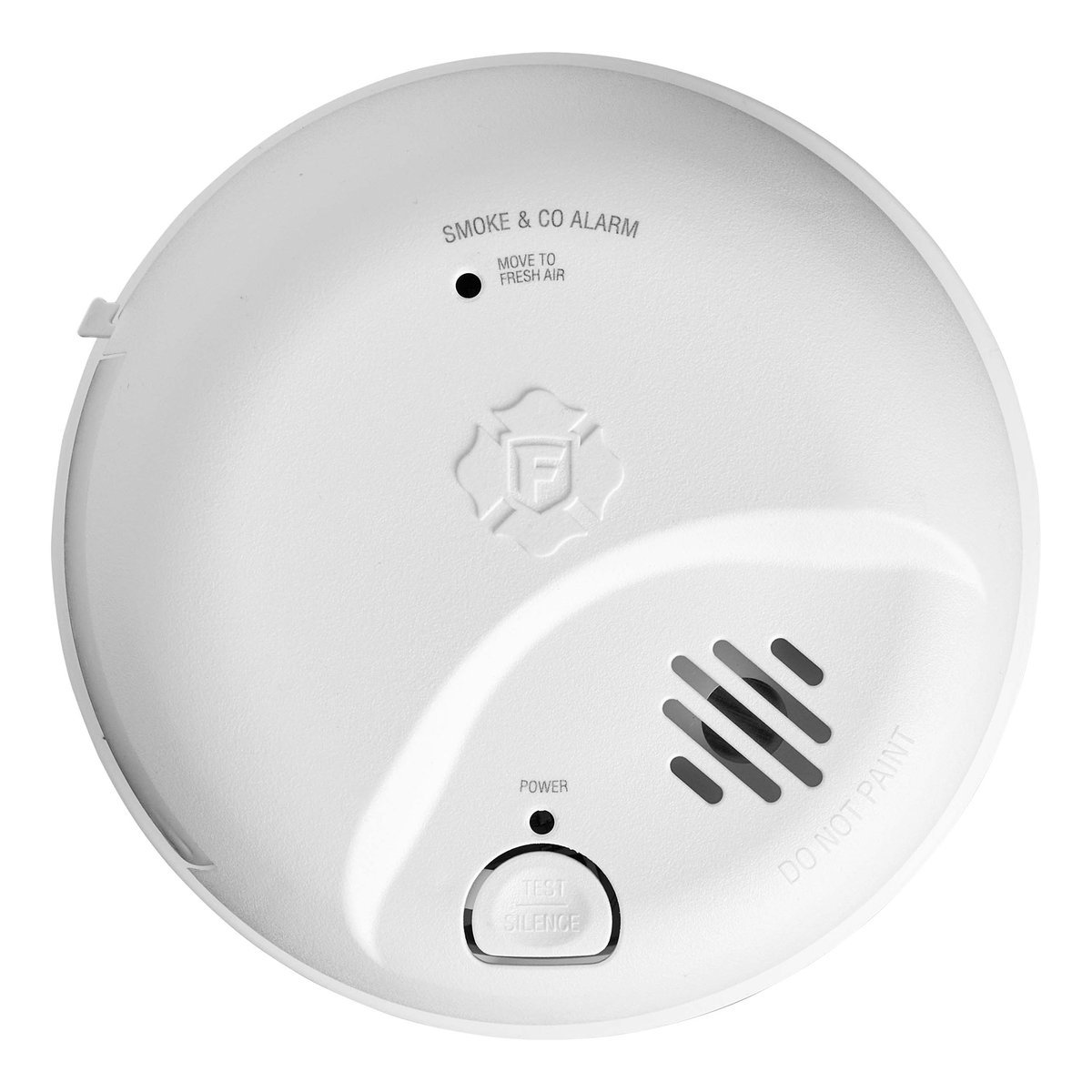

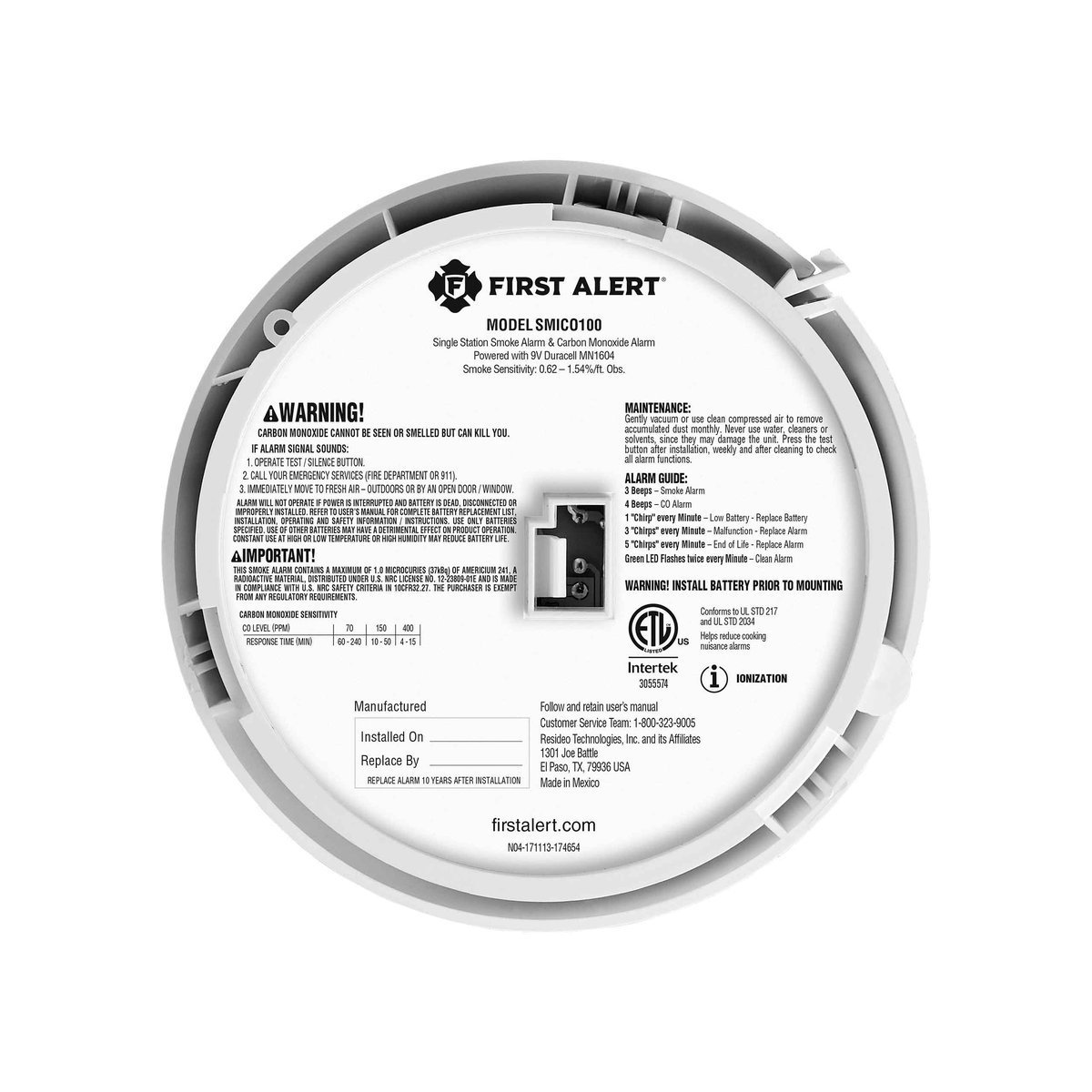
First Alert SMICO100
A combination unit is the simplest upgrade a home can make: one device, both hazards. The SMICO100 pairs an ionization smoke sensor with an electrochemical carbon monoxide sensor in a single round, battery-powered alarm, so it drops into the spot an old smoke alarm occupied and adds CO protection without extra wiring, extra holes or a second replacement schedule to track.
The sensor pairing matters. Electrochemical sensing is the standard technology for CO because it measures the gas directly and can be calibrated in parts per million, and First Alert's support documentation confirms its CO alarms use precisely calibrated electrochemical sensors. The ionization smoke sensor responds quickly to fast-flaming fires. The headline feature is Precision Detection, First Alert's current sensing technology, which the company designed to meet the latest industry standards while reducing the nuisance alarms that cooking steam and shower humidity trigger in older units. Fewer false alarms is not a convenience feature: nuisance alarms are the main reason people disable or remove alarms, and a disabled alarm protects nobody.
Day-to-day running is simple. A single 9V alkaline battery (included) powers the unit, so placement is flexible and a power cut changes nothing. The test and silence button sits on the front face, the horn sounds at 85 dB, and the unit carries an end-of-life warning that signals when the alarm itself needs replacing, a feature US rules have required on CO alarms since 2009. The body measures 5.6 by 5.6 by 2 inches and weighs 0.7 lb, and First Alert positions the SMICO100 as the replacement for its long-running SCO2 combination alarm, backed by a 10-year limited warranty.
Two honest limits. First, the replaceable battery means you own the battery schedule: expect periodic 9V changes across the unit's life, unlike the sealed X-Sense below. Second, plan replacement on the CO sensor's clock, not the warranty's. First Alert's own guidance puts CO alarm life at about 7 years and advises replacing combination units every 7 years, because the electrochemical sensor degrades and loses precision with age. First Alert also notes the SMICO100 does not fit certain older First Alert mounting brackets, so check your existing bracket before assuming a straight swap. Some customer reviews report false alarms or reliability concerns, which is worth knowing even though the Precision Detection redesign targets exactly that complaint.
Installation is a screwdriver job: the unit mounts on its bracket to a ceiling or wall, and the rear label (third photo) carries write-on lines for the installation date and the replace-by date. Use them. That label is the most useful maintenance feature on any alarm in this guide, because the replacement decision should come from those dates, not from whether the test button still beeps. Whichever alarm you fit, the routine is the same: test it weekly with the button, and write the replace-by date down somewhere you will actually see it.
- Smoke and CO detection in one unit, so one device replaces an old smoke alarm
- Precision Detection is designed to cut cooking nuisance alarms
- End-of-life warning tells you when the unit itself needs replacing
- Battery power means flexible placement and no dependence on an outlet
Reasons to avoid:
- Replaceable 9V battery means battery changes across the unit's life
- Replace on the 7-year CO sensor schedule per First Alert guidance, not the 10-year warranty
- Does not fit certain older First Alert mounting brackets
- Some customer reviews report false alarms or reliability concerns
- Model: SMICO100
- Detection: ionization smoke sensor + electrochemical CO sensor
- Power: 1 x 9V alkaline battery (included, replaceable)
- Alarm: 85 dB horn, test and silence button
- Size: 5.6 x 5.6 x 2 in; 0.7 lb
- Warranty: 10-year limited
Best for: households replacing ageing smoke alarms who want dual smoke and CO protection in a single, easy-to-place unit.
2. Kidde Nighthawk KN-COPP-3: Best Plug-In
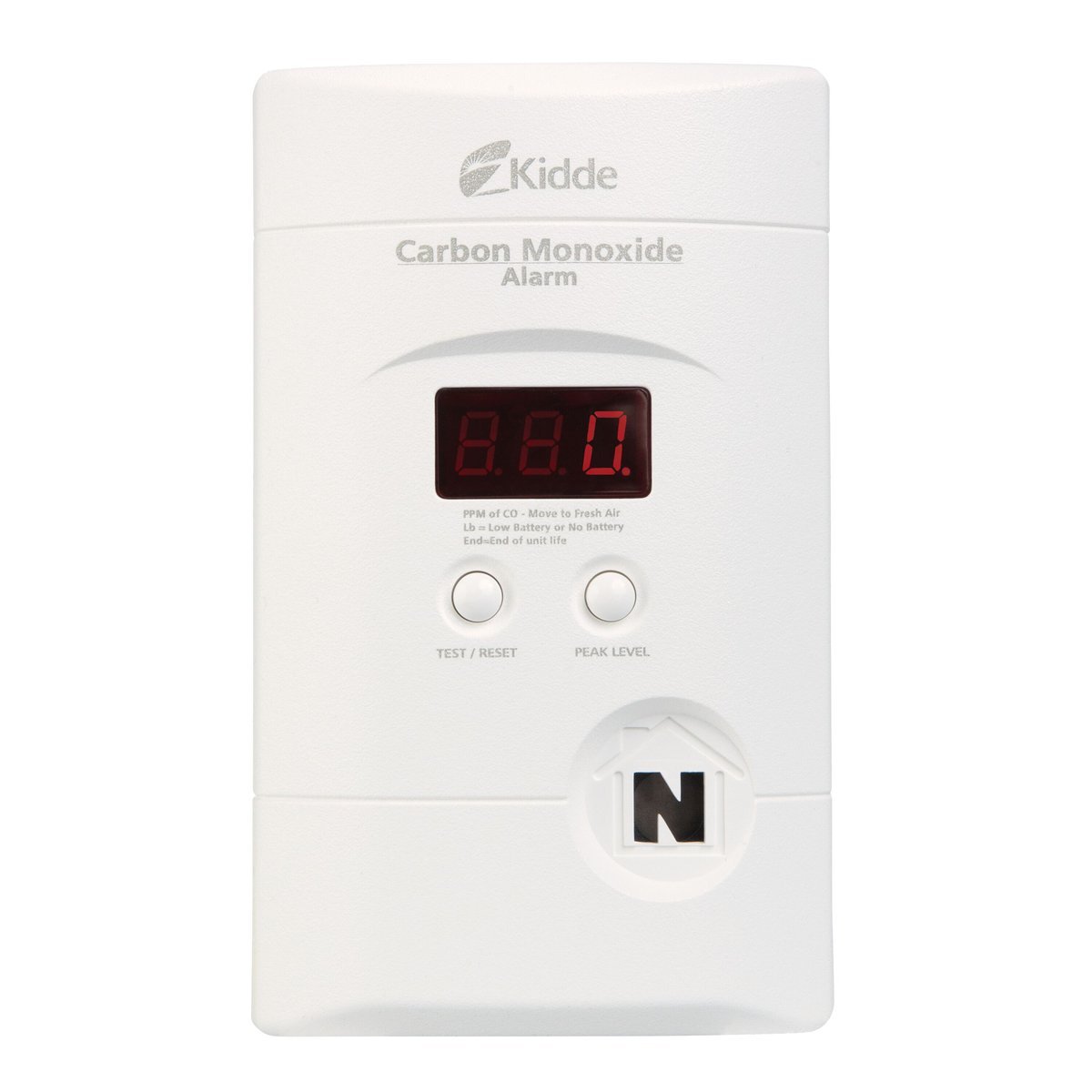
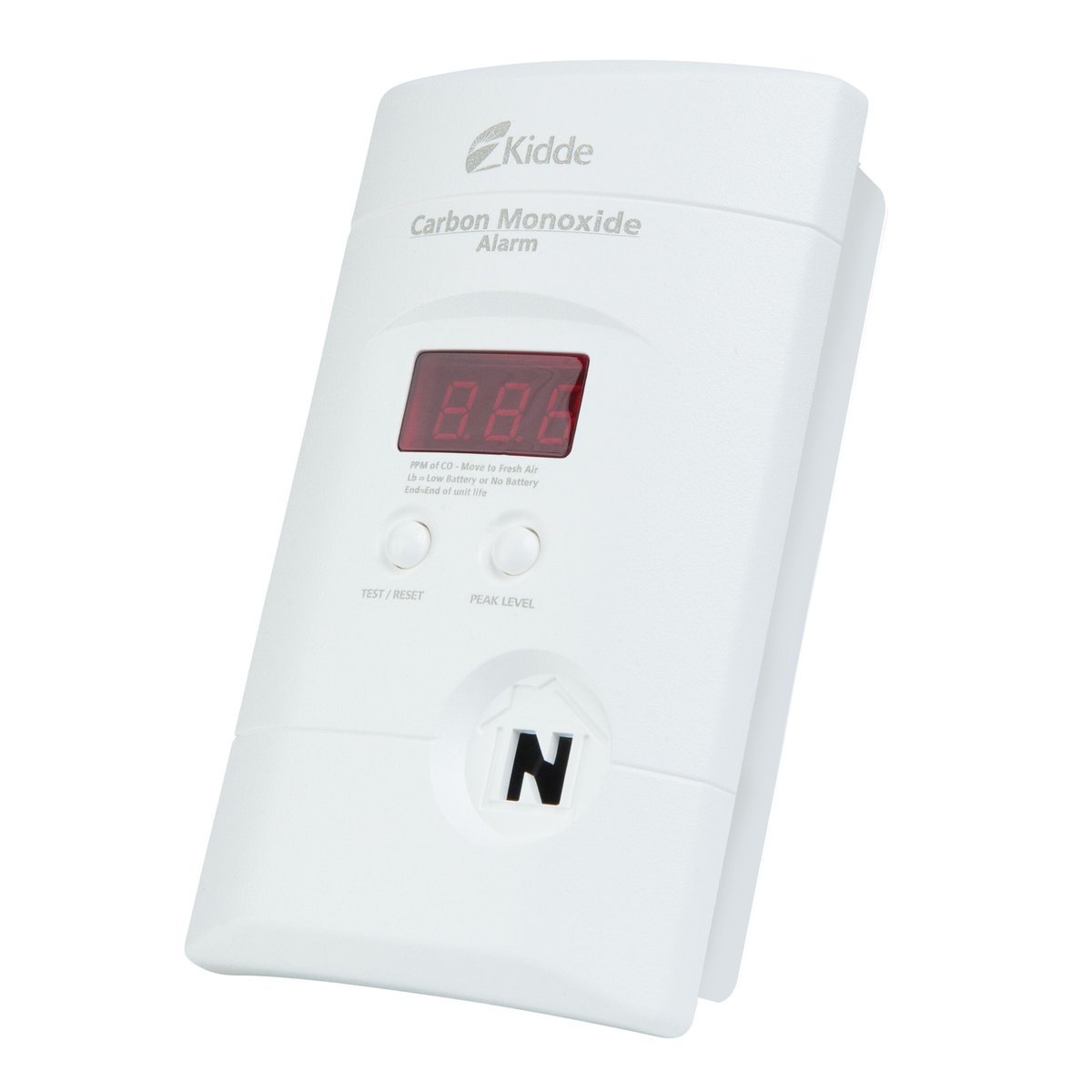
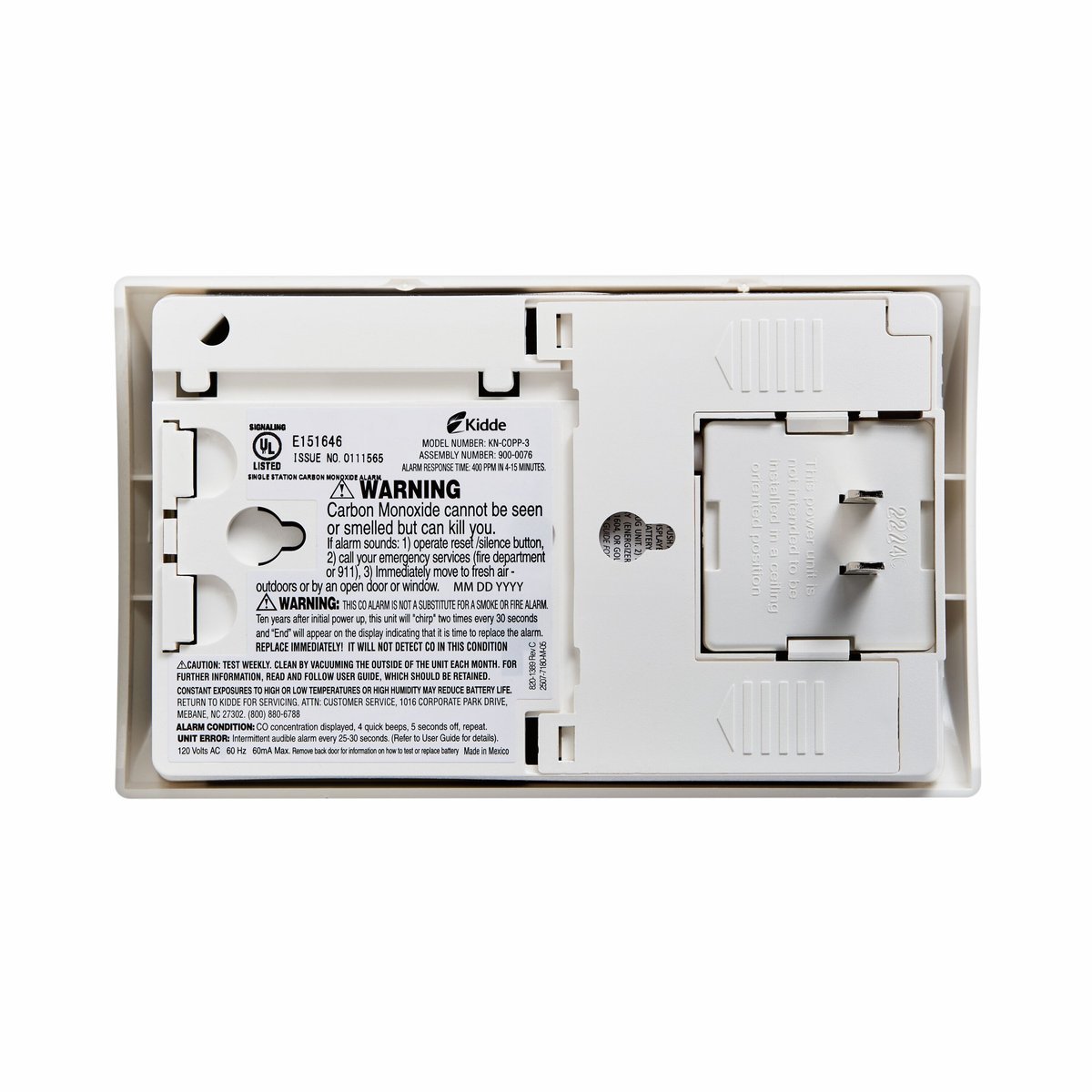
Kidde Nighthawk KN-COPP-3
Most CO alarms are silent until something is wrong. The Nighthawk KN-COPP-3 (Kidde part 900-0076) is different: it plugs directly into a wall outlet and shows the current CO concentration on a digital LED display, so you can watch levels the way you would watch a thermostat. For bedrooms and hallways near fuel-burning appliances, that visibility is the whole point of the product.
The display reads from 30 to 999 parts per million and refreshes every 15 seconds. Below alarm thresholds you will normally see a low or zero reading; if CO builds, you see the number climb before the 85 dB alarm sounds. Peak level memory records the highest concentration detected since the last reset or unplugging, which is genuinely useful after an incident or a return from holiday: if CO spiked to a dangerous level while you were out, the unit can tell you. The electrochemical sensor is the correct technology for CO, and the unit is UL listed with a 10-year limited warranty.
Power is the other strength. The alarm runs on 120V AC from the outlet and carries a 9V battery backup, so protection continues through a power cut, which is exactly when heating equipment and generators are most likely to misbehave. As the rear photo shows, the plug is built into the back of the unit; Kidde also supports tabletop placement or wall mounting using the included power cord where a direct plug-in position is awkward. The body measures 6.06 by 3.75 by 1.75 inches and weighs about 1 lb, larger than the compact battery models here, but that size buys the display and the plug-in format.
Buy with two facts in view. Kidde's own product page states this model is being replaced by the KN-COP-DP-10YL, so check the manufacture date stamped on any unit you receive and buy from fresh stock; an alarm's life runs from manufacture, not from the day you plug it in. Kidde also places the KN-COPP-3 among the named exceptions to its blanket 10-year life statement for CO alarms, giving its alarms a proven life of 7 to 10 years, so plan replacement inside that window and let the end-of-life signal have the final word. Some customer reviews report battery or defective-unit issues, a reminder to test the unit on installation and weekly after that.
If the alarm sounds, treat the display as information, not reassurance: Kidde's standing instruction for its CO alarms is to move everyone to fresh air and call the emergency services from outside the home, then let professionals find the source. The peak memory earns its keep afterwards, because it shows investigators and heating engineers the highest level the unit recorded. Do not reset it until that number has been noted down.
- Digital display shows live CO levels from 30 to 999 ppm, updated every 15 seconds
- Peak level memory records the highest reading since the last reset
- 9V battery backup keeps protection running through power cuts
- Plug-in, tabletop or wall-mount placement options
Reasons to avoid:
- Kidde lists this model as being replaced by the KN-COP-DP-10YL, so check manufacture dates
- Needs an outlet, which limits placement compared with battery models
- Larger and more visible than compact sealed-battery alarms
- CO only: it does not detect smoke
- Model: KN-COPP-3 (Kidde part 900-0076)
- Detection: electrochemical CO sensor
- Display: digital LED, 30-999 ppm, updates every 15 seconds, peak level memory
- Power: 120V AC plug-in with 9V battery backup
- Alarm: 85 dB
- Size: 6.06 x 3.75 x 1.75 in; 1 lb
- Warranty: 10-year limited
Best for: bedrooms and hallways where you want to see current CO levels at a glance, with outage-proof plug-in power.
3. X-Sense SC07: Best Sealed-Battery
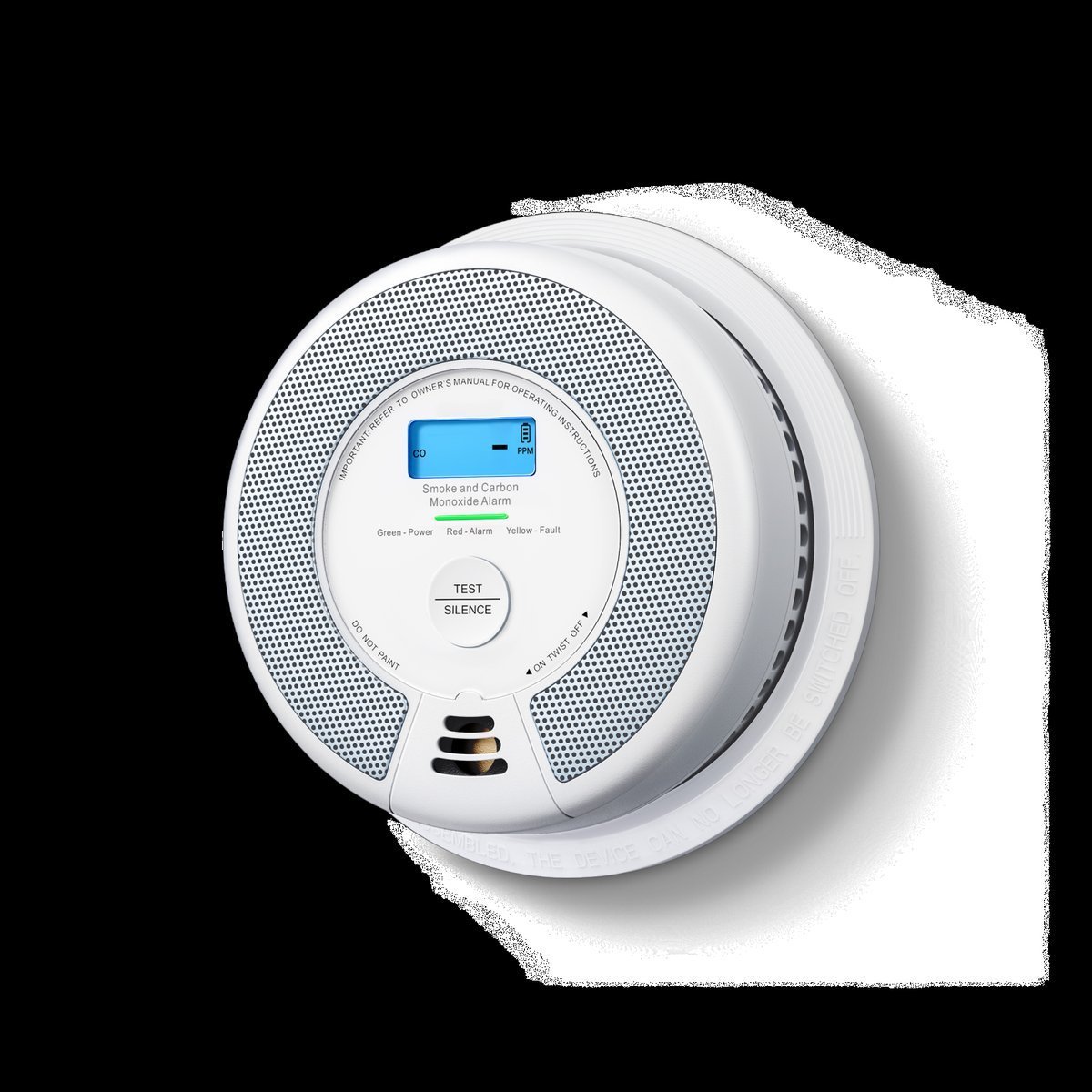


X-Sense SC07
The case for a sealed-battery alarm is simple: the battery is built in and lasts the full life of the unit, so there are no battery changes and no 2 a.m. low-battery chirp for a decade. The SC07 combines that fit-and-forget power supply with the right sensor pairing for a combination alarm: a photoelectric smoke sensor and an electrochemical CO sensor in one standalone unit.
The pairing is the technically correct one. Photoelectric smoke sensing is generally quicker to respond to smouldering fires, the type that produce large smoke particles before open flame, while electrochemical sensing is the established standard for measuring carbon monoxide. A front LCD shows the current CO concentration (30 to 999 ppm) and status information, so like the Nighthawk it can show you a rising problem rather than only shouting about a bad one; X-Sense notes the display lights for alarms and tests rather than glowing all night. X-Sense also states the unit runs a continuous self-test every 60 seconds. The alarm sounds at 85 dB, and the unit is ETL listed.
Form and fitting are straightforward. The SC07 is a round unit 5.7 inches across and 2.0 inches deep, weighing 10.6 oz, noticeably larger than a basic smoke alarm, as the installed photo shows against an adult hand. Battery power means no wiring and no outlet hunt: mount it on a ceiling or wall and it runs for its 10-year design life on the sealed lithium cell. When the unit reaches end of life, the whole alarm is replaced, which is the honest trade for never touching a battery. X-Sense backs it with a 60-day money-back promise and a 5-year quality warranty, per its published manual documentation.
The limits are about connectivity. This standalone model has no wireless interconnection and no Wi-Fi: if it sounds, it sounds in its own room only. X-Sense sells an interconnected sibling (covered in the buying guide below) that links alarms so one detection triggers all of them, which is the better architecture for multi-level homes. And because the battery is sealed, a premature battery failure means replacing the unit under warranty rather than swapping a cell. For a single-level home, a rental, or any ceiling where battery changes are a genuine chore, those are acceptable trades for a decade of zero maintenance.
The front face prints its own legend around the test and silence button: green for power, red for alarm, yellow for fault, so a glance tells you the unit's state without opening the manual. X-Sense rates both the sealed battery and the alarm itself for a 10-year life, and there is no battery door and nothing to service in between, which is precisely the ownership model you are buying: fit it, test it weekly, and replace the whole unit when its decade is done.
- Sealed 10-year lithium battery: no battery changes for the life of the unit
- Photoelectric smoke plus electrochemical CO sensors, the correct pairing for each hazard
- LCD shows current CO levels and status, not just an alarm state
- Battery powered, so no wiring and flexible ceiling or wall placement
Reasons to avoid:
- No wireless interconnection or Wi-Fi on this standalone model
- Sealed battery cannot be replaced; the whole unit is swapped at end of life
- Larger 5.7-inch body than a basic smoke alarm
- Quality warranty is 5 years, shorter than the 10-year battery life
- Model: SC07
- Detection: photoelectric smoke sensor + electrochemical CO sensor
- Display: LCD, CO 30-999 ppm plus status indicators
- Power: sealed 10-year lithium battery (non-replaceable)
- Alarm: 85 dB
- Size: 5.7 in diameter x 2.0 in; 10.6 oz
- Warranty: 5-year quality warranty, 60-day money-back (per X-Sense manual)
Best for: anyone who wants to install an alarm and not think about batteries for ten years, especially in hard-to-reach spots.
How We Chose: A Carbon Monoxide Alarm Buying Guide
1. Understand the sensor inside
Carbon monoxide alarms use electrochemical sensors calibrated to measure CO in parts per million; First Alert's support documentation confirms its CO alarms use precisely calibrated electrochemical sensors. Smoke detection uses different technology, photoelectric or ionization. A combination alarm carries both. Do not buy a CO alarm that cannot name its sensor type, and do not assume a smoke alarm detects CO: it does not.
2. Choose your power source honestly
Plug-in with battery backup (Kidde Nighthawk): continuous AC power, display always on, protected during outages. Best where outlets are available and you want a live readout. Sealed 10-year battery (X-Sense SC07): install and forget for a decade; best for ceilings and hard-to-reach spots. Replaceable battery (First Alert SMICO100, and Kidde's portable KN-COB-LP2 on two AA batteries): flexible and cheap to feed, but you own the battery-change schedule. Match the power type to the spot, not the other way around.
3. Respect the expiration date: it is real
This is the most misunderstood fact about CO alarms, and it is safety-critical. Kidde states its CO alarms have a proven life of seven to ten years; models manufactured from 2013 onward generally have a 10-year life, with named exceptions that include the KN-COPP-3. First Alert states most of its CO alarms expire after about 7 years, because the electrochemical sensor degrades over time and loses precision, and its guidance is that combination smoke-and-CO units should be replaced every 7 years: the shorter of the two sensor lifespans governs. US safety rules have required an end-of-life warning on CO alarms since 2009, and Kidde has included the feature since 2001. If your alarm chirps persistently after a battery change, it is telling you its life is over. Believe it. The manufacture date is stamped on the back of the unit; if you cannot find one, or it is older than the manufacturer's stated life, replace the alarm. A test button that beeps only proves the circuits work. It does not prove the sensor can still detect CO.
4. Decide: combo or separate?
Combination smoke and CO units (First Alert SMICO100, X-Sense SC07) mean fewer devices and one replacement schedule, governed by the CO sensor's timeline. They are ideal for upgrading old smoke alarms. Standalone CO units (Kidde Nighthawk, and the portable Kidde KN-COB-LP2) suit dedicated placement where CO risk concentrates: near, not inside, fuel-burning appliances, and in bedrooms. For most homes the answer is a mix: combo units in hallways and bedrooms, standalone CO where a plug-in display or portability makes sense.
5. Interconnected vs standalone
Interconnected alarms, wired or wireless, trigger the whole home when one unit detects danger, which is strongly recommended for multi-level homes: a CO event in the basement at 3 a.m. is no good if only the basement alarm sounds. X-Sense's interconnected sibling of the SC07 (the SC07-W) links compatible alarms wirelessly, up to 24 units per its manual, so every alarm sounds when one detects smoke or CO. Standalone units protect the room they are in and are fine for apartments and single-level homes.
6. Smart features: nice, not essential
Wi-Fi alarms add phone alerts and voice notifications, genuinely useful if you travel. But a smart alarm is bound by the same sensor lifespan as a basic one: connectivity does not extend the 7 to 10 year replacement clock.
Product Types at a Glance
| Type | Examples in this guide | Best for |
|---|---|---|
| Combination smoke + CO | First Alert SMICO100, X-Sense SC07 | Whole-home upgrades, fewer devices |
| Plug-in CO with display | Kidde Nighthawk KN-COPP-3 | Live CO readings, bedrooms |
| Sealed-battery | X-Sense SC07 | Zero maintenance, hard-to-reach spots |
| Interconnected | X-Sense SC07-W (prose) | Multi-level homes |
| Portable battery | Kidde KN-COB-LP2 (prose) | Travel, rentals, temporary spaces |
Head-to-Head Comparisons
First Alert SMICO100 vs X-Sense SC07: both combine smoke and CO in one unit. Choose the First Alert for Precision Detection's cooking-nuisance reduction and a replaceable 9V battery; choose the X-Sense for a sealed 10-year battery, a photoelectric smoke sensor and an LCD readout. Remember First Alert's guidance: replace combo units every 7 years, because the CO sensor governs.
Kidde Nighthawk vs Kidde KN-COB-LP2: the Nighthawk is the stay-at-home choice, with plug-in power, a live digital display and peak-level memory. The portable KN-COB-LP2 is the travel choice: it runs on two AA batteries with an electrochemical sensor, LED status indicators, event memory and an 85 dB alarm, and it can sit on a tabletop or mount on a wall. They complement each other; they do not compete.
Standalone SC07 vs interconnected SC07-W: same sensor pairing and sealed battery concept. Pay for interconnection if your home has more than one level or a finished basement, because the wireless linking is the whole point.
5 Mistakes That Undermine CO Safety
- Trusting an expired alarm because the test button beeps. The test button only confirms the circuits and power are working. It cannot confirm the sensor still detects CO at the right sensitivity (First Alert; Kidde). Check the manufacture date, not the beep.
- Confusing battery life with sensor life. A 10-year battery in a combo unit still expires on the CO sensor's schedule, about 7 years per First Alert. Replace on the sensor clock, not the battery clock.
- Installing only one alarm in a multi-level home. CO mixes readily with air; guidance calls for alarms on every level and outside sleeping areas. One unit in the hallway does not cover the basement.
- Assuming a smoke alarm detects CO. It does not. If you have only smoke alarms, you have zero CO protection. Add standalone CO or combo units.
- Ignoring the end-of-life chirp. A chirp that survives a battery change is the end-of-life warning, required since 2009. It means replace the unit, not the battery.
Two Myths That Put People at Risk
"Our test button beeps, so our old alarms are fine." No. Both major manufacturers explicitly warn that the test function only verifies circuitry and power. Electrochemical sensors degrade with age and contamination; an 8-year-old CO alarm that beeps can still be dangerously slow to respond. Replace by the manufacture date.
"10-year battery means a 10-year alarm." Only for the battery. First Alert's own support guidance sets CO alarm life at about 7 years and instructs replacing combination units every 7 years. A sealed 10-year battery in a combo unit does not extend the CO sensor's life.
FAQs
Seven to ten years, depending on the model. Kidde states a proven life of 7 to 10 years (10 years for most models manufactured from 2013 onward, with named exceptions). First Alert states about 7 years for its CO alarms and advises replacing combination smoke-and-CO units every 7 years. Check the manufacture date on the back of your unit against the manufacturer's stated life.
Three signals: the manufacture date plus the stated lifespan has passed; the unit emits a persistent end-of-life chirp that does not stop after a battery change; or the LED flashes an end-of-life pattern. US rules have required end-of-life warnings on CO alarms since 2009.
For most homes, a mix works best: combo units in hallways and outside bedrooms (fewer devices, one replacement schedule on the 7-year CO timeline), plus standalone CO units where you want a live display, like the plug-in Nighthawk, or portability, like Kidde's battery-powered portable.
On every level of your home and outside each sleeping area, following the manufacturer's placement instructions. Do not place them inside fuel-burning appliance enclosures or in dead-air corners. Interconnected models are strongly recommended for multi-level homes so one alarm's detection sounds everywhere.
Plug-in with battery backup gives continuous power and an always-on display where outlets exist. Sealed-battery models need no wiring and zero maintenance for a decade. Replaceable-battery models are the most flexible and the cheapest to run. Match the power type to the spot.
Yes. The lifespan runs from manufacture, not from first use, because electrochemical sensors degrade over time regardless. Always check the manufacture date on the back, even on a brand-new boxed unit that has sat in a warehouse.
Final Recommendations
Best Overall: the First Alert SMICO100 replaces an ageing smoke alarm and adds CO protection in one device, with nuisance-alarm reduction built in.
Best Plug-In: add the Kidde Nighthawk KN-COPP-3 where you want a live CO readout and peak level memory, and buy fresh stock, since Kidde is transitioning this model to a successor.
Best Sealed-Battery: choose the X-Sense SC07 where you never want to change a battery, and consider its interconnected sibling for multi-level homes.
For travel and temporary spaces, Kidde's portable KN-COB-LP2 remains a sensible shape of product: AA batteries, no wiring, tabletop or wall mount. Whatever you buy, buy to a schedule: check the manufacture date on the back, replace on the sensor clock (7 to 10 years depending on model), and never trust the test button alone.
Related Guides
- Our dedicated guide to carbon monoxide detectors covers detectors in more depth, including placement and standards.
- For a connected smart home, our smart sensors guide covers choosing and placing smart sensors.