
"Coffee machine" covers four different drinks: a pot of drip coffee, espresso-based milk drinks, pod coffee, and push-button bean-to-cup coffee. The right purchase starts with knowing which of those your household actually drinks, because a machine that is perfect for one is a poor tool for another. This guide gives full, linked reviews to the four machines we could verify end to end for home espresso and bean-to-cup brewing, and it discusses the drip and pod categories in prose so you can see the whole field before you spend anything.
Every product reviewed below was checked the same way: the exact model and finish was confirmed against two independent non-Amazon sources that print its Amazon ASIN, and three manufacturer photos of that exact variant were viewed at full size. Machines that could not clear both checks, including two reader favourites discussed in the notes further down, were left out of the picks rather than recommended on partial evidence. MoleMarket did not hands-on test these machines; the assessments combine manufacturer specifications with the published positions of the expert sources named in each review.
The Short Answer
Best all-in-one espresso: the Breville Barista Express (BES870XL), a semi-automatic machine with a built-in grinder, so one purchase covers grinding, brewing and steaming.
Best beginner espresso: the Breville Bambino Plus (BES500BSS), ready to brew in about three seconds, with automatic milk frothing that removes the hardest skill for new owners.
Best for hobbyists: the Gaggia Classic Pro E24 (RI9380/46), a commercial-style 58mm machine built in Italy and designed to be repaired and kept for decades.
Best automatic bean-to-cup: the De'Longhi Magnifica Evo (ECAM29084SB), whole beans in and finished drinks out at one touch, with a proper automatic milk carafe.
Mostly drink drip or pods? Then none of the four picks is your machine, and this guide says so plainly. The drip names to know are the OXO Brew 9-Cup and the Technivorm Moccamaster KBT, and the convenience benchmark is the Nespresso Vertuo Plus; they are discussed in prose in the category notes below, because we could not verify them to the same standard as the four picks.
Quick Picks
Short on time? These are our top recommendations, each button takes you to the exact product on Amazon.
Comparison Table
| Product | Key Specs | Best Use Case | Standout Feature | Amazon Link |
|---|---|---|---|---|
| Breville Barista Express (BES870XL) Best All-in-One Espresso |
54mm portafilter; built-in grinder; 67 oz tank; 1600W | espresso newcomers who want one machine that grinds, brews and steams, with no separate grinder purchase | Built-in conical burr grinder | Check Price |
| Breville Bambino Plus (BES500BSS) Best Beginner Espresso |
54mm portafilter; ThermoJet heat-up; 64 fl oz tank; 1560W | beginners and milk-drink households who want daily lattes with the shortest possible learning curve | 3-second heat-up, automatic milk frothing | Check Price |
| Gaggia Classic Pro E24 (RI9380/46) Best for Hobbyists |
58mm commercial portafilter; 3-way solenoid; 9 bar; made in Italy | buyers who want to learn real espresso technique on a machine that can be maintained for decades | Commercial 58mm group and accessory ecosystem | Check Price |
| De'Longhi Magnifica Evo (ECAM29084SB) Best Automatic Bean-to-Cup |
7 one-touch recipes; LatteCrema carafe; 13 grind settings | multi-person households where everyone needs good coffee with zero technique and one touch | One-touch drinks from whole beans | Check Price |
All specifications are manufacturer-published figures for the exact models and finishes named.
Detailed Reviews
1. Breville Barista Express (BES870XL): Best All-in-One Espresso
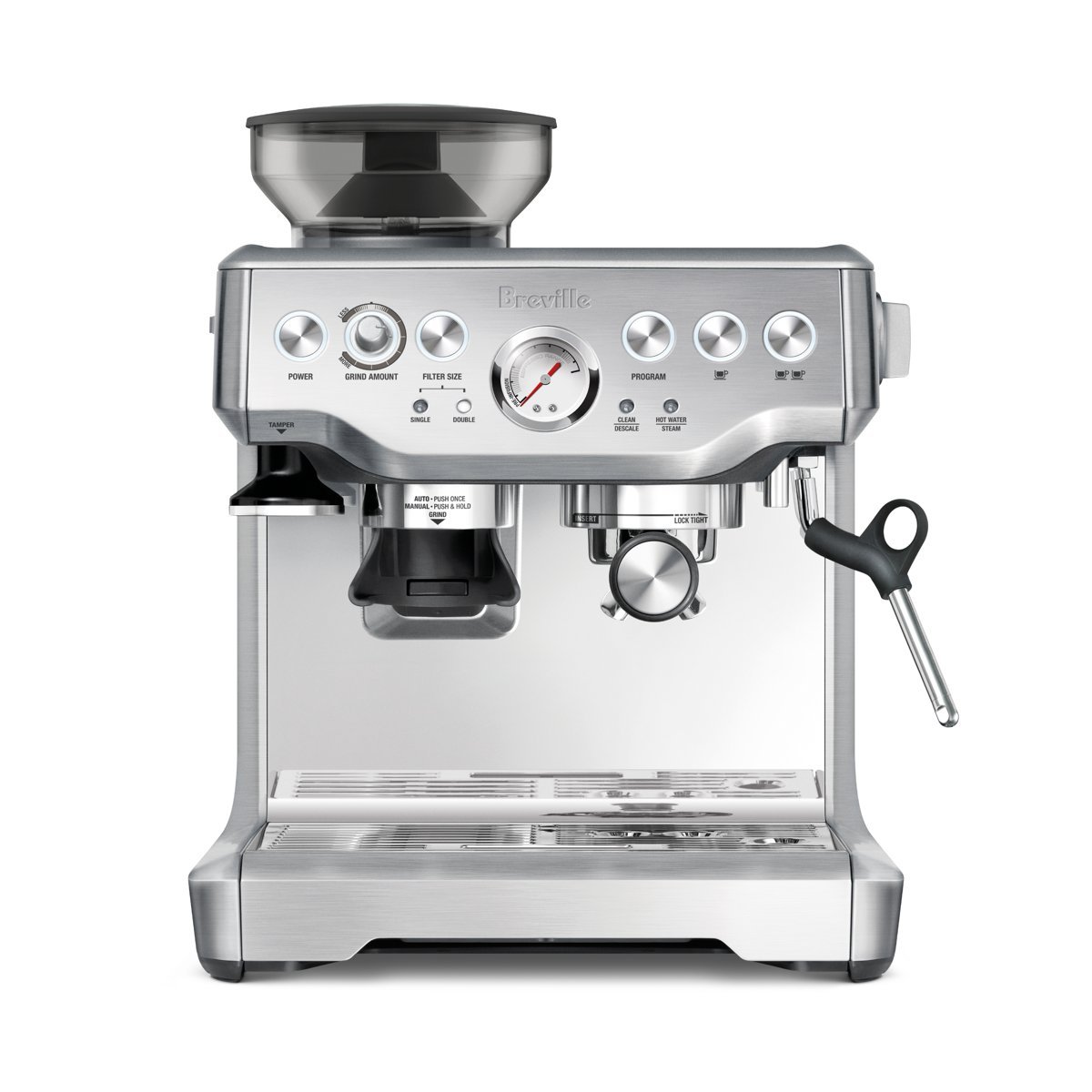
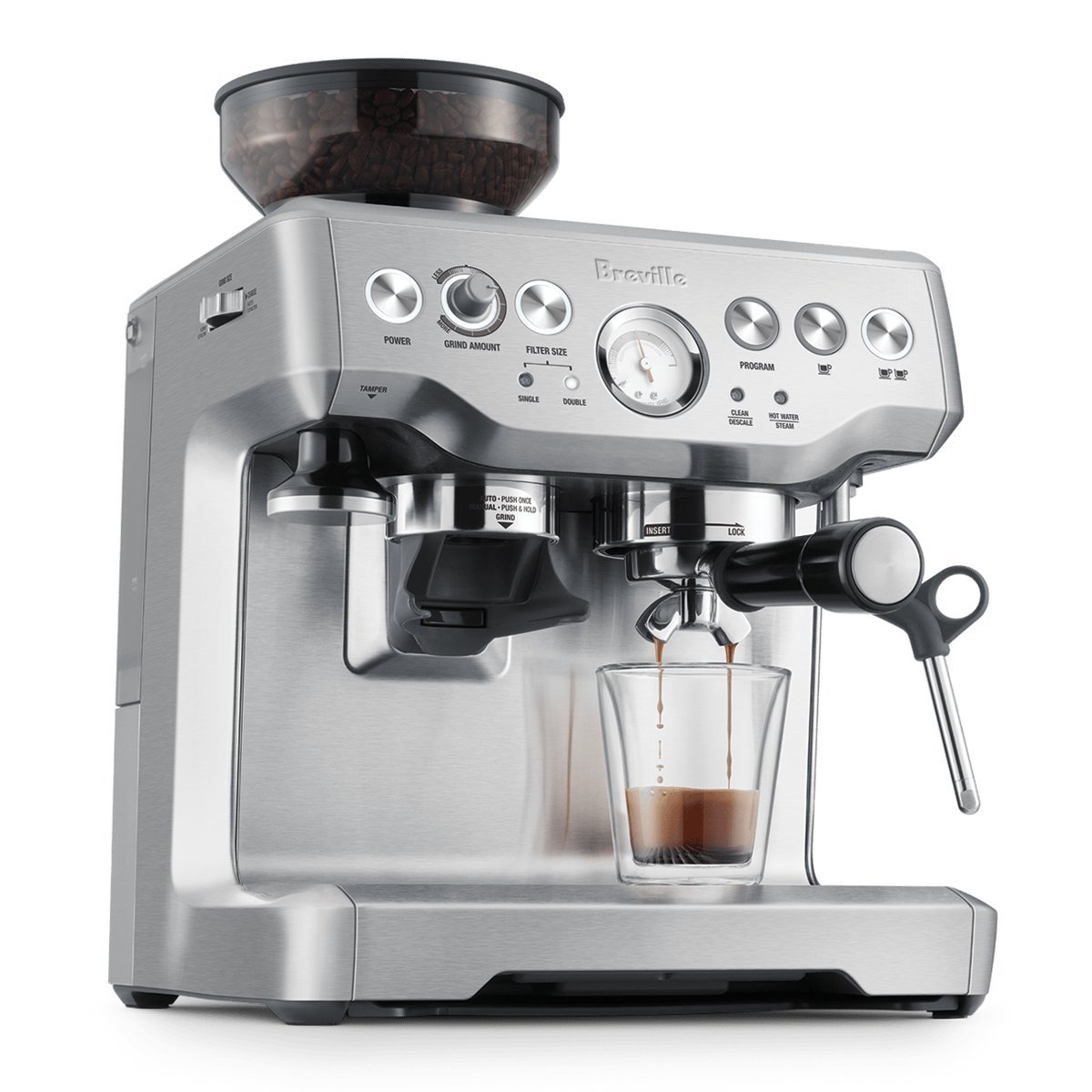
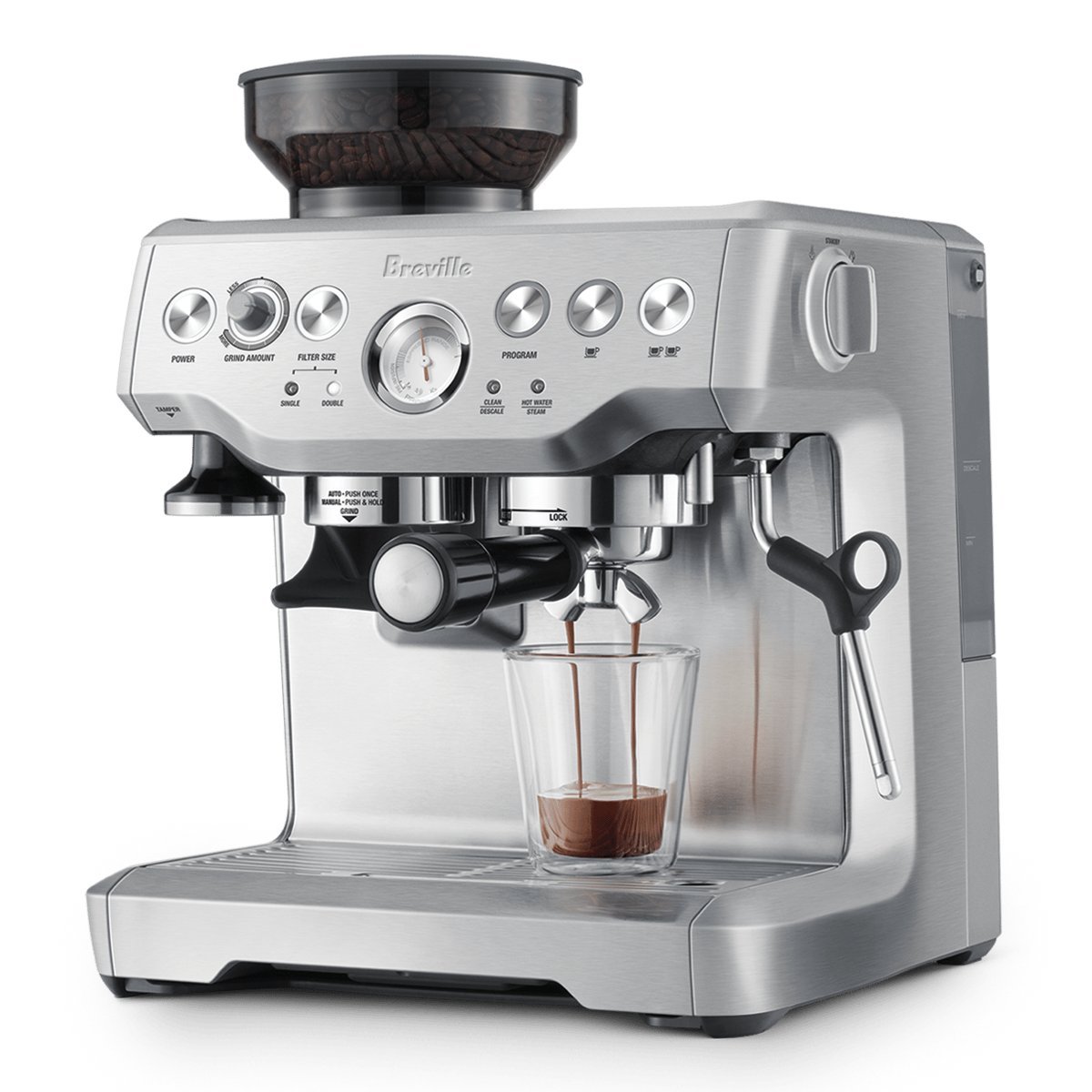
Breville Barista Express (BES870XL), Brushed Stainless Steel
The Barista Express is the single-purchase answer to home espresso: machine plus built-in grinder in one footprint. The expert guide at Espresso Advice lists it as the all-in-one pick, on the grounds that the built-in grinder removes the grinder-buying decision and delivers consistent results from one machine and one purchase, and it remains the category's most popular starting point for new home baristas.
- Built-in conical burr grinder with dose control, so fresh grounds go straight into the 54mm portafilter
- Generous 67 oz removable water tank and 1600W thermocoil heating, sized for households making several drinks a day
- Pressure gauge on the front panel gives beginners visible feedback while learning to dial in
- Manual steam wand produces proper microfoam once you practise, so the machine grows with your skill
Reasons to avoid:
- The built-in grinder is adequate, not great, per Espresso Advice, and it limits your upgrade path
- Single thermocoil means brewing and steaming happen one after the other, not at the same time
- 54mm portafilter fittings are Breville-specific, so the third-party accessory pool is smaller than the 58mm standard
- Model: BES870XL
- Finish: Brushed Stainless Steel
- Portafilter: 54mm
- Water tank: 67 oz, removable
- Power: 1600W
- Grinder: built-in conical burr
Best for: espresso newcomers who want one box, one purchase, and consistent milk drinks from day one, especially in small kitchens where a standalone grinder will not fit.
The honest caveat, from the same Espresso Advice source: the integrated grinder is the compromise that makes the one-box format possible. If counter space is the binding constraint, the trade-off is worth it. If you have room for two boxes, a separate machine and grinder at the same total cost usually deliver better value and a clearer upgrade path, because the grinder influences the cup more than the machine does. Espresso Advice's general guidance is to spend at least 30 to 40 percent of an espresso budget on the grinder; the Barista Express folds that spend into the machine, which is exactly why it suits beginners and exactly why committed hobbyists eventually outgrow it.
Day to day, the Barista Express workflow is grind, distribute, tamp, lock in, and watch the pressure gauge while the shot runs. The gauge matters more than it looks: it turns the invisible variable, extraction pressure, into something a beginner can see and correct by adjusting grind size or dose. The brushed stainless steel finish of this exact variant (BES870XL) also hides fingerprints and milk splashes better than polished finishes, a small thing that matters on a machine you wipe down daily. Who should skip it: hobbyists who already know they will chase better grinds later. The integrated grinder cannot grow with you, and you will end up buying a separate grinder anyway, at which point a machine like the Gaggia below is the cleaner starting point.
2. Breville Bambino Plus (BES500BSS): Best Beginner Espresso
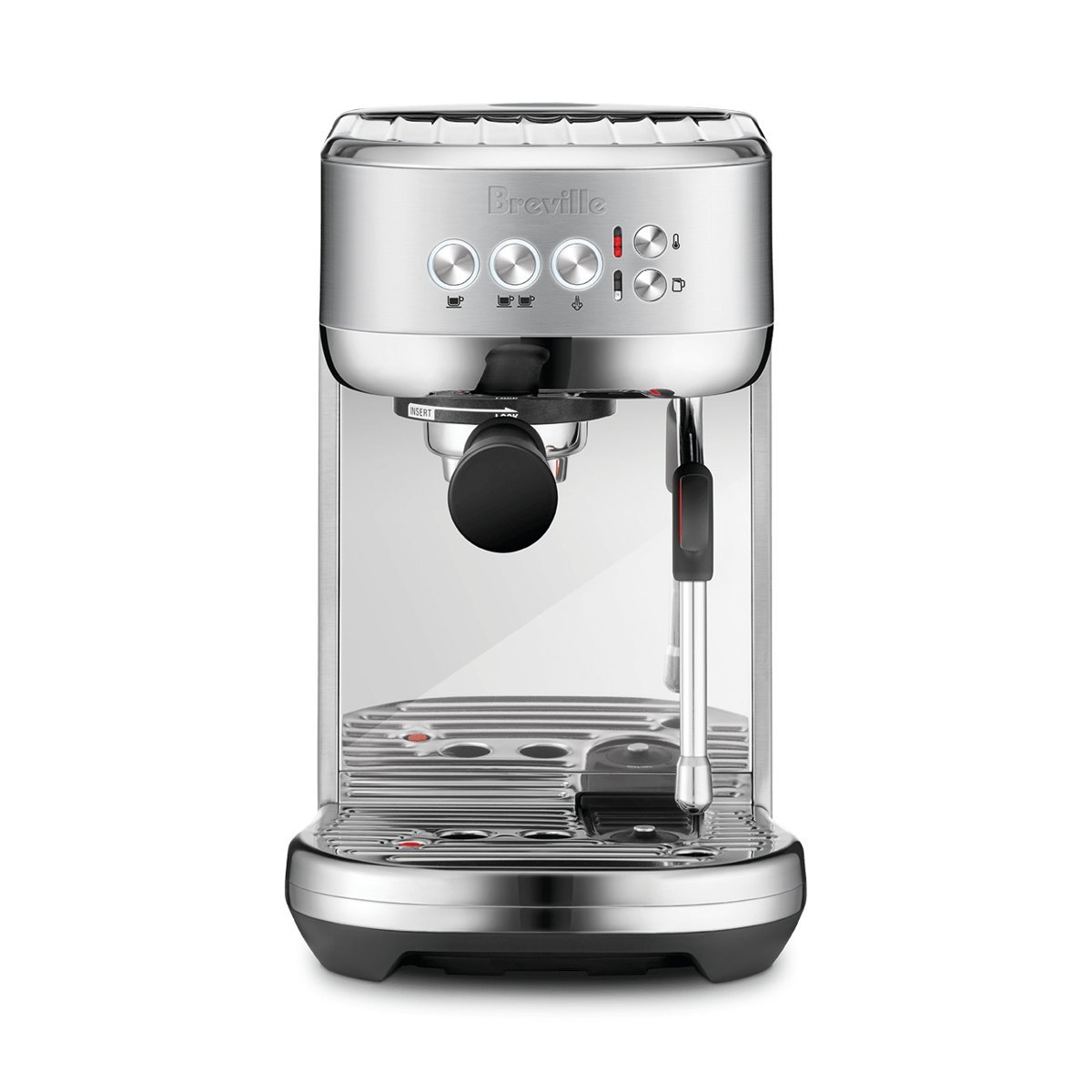

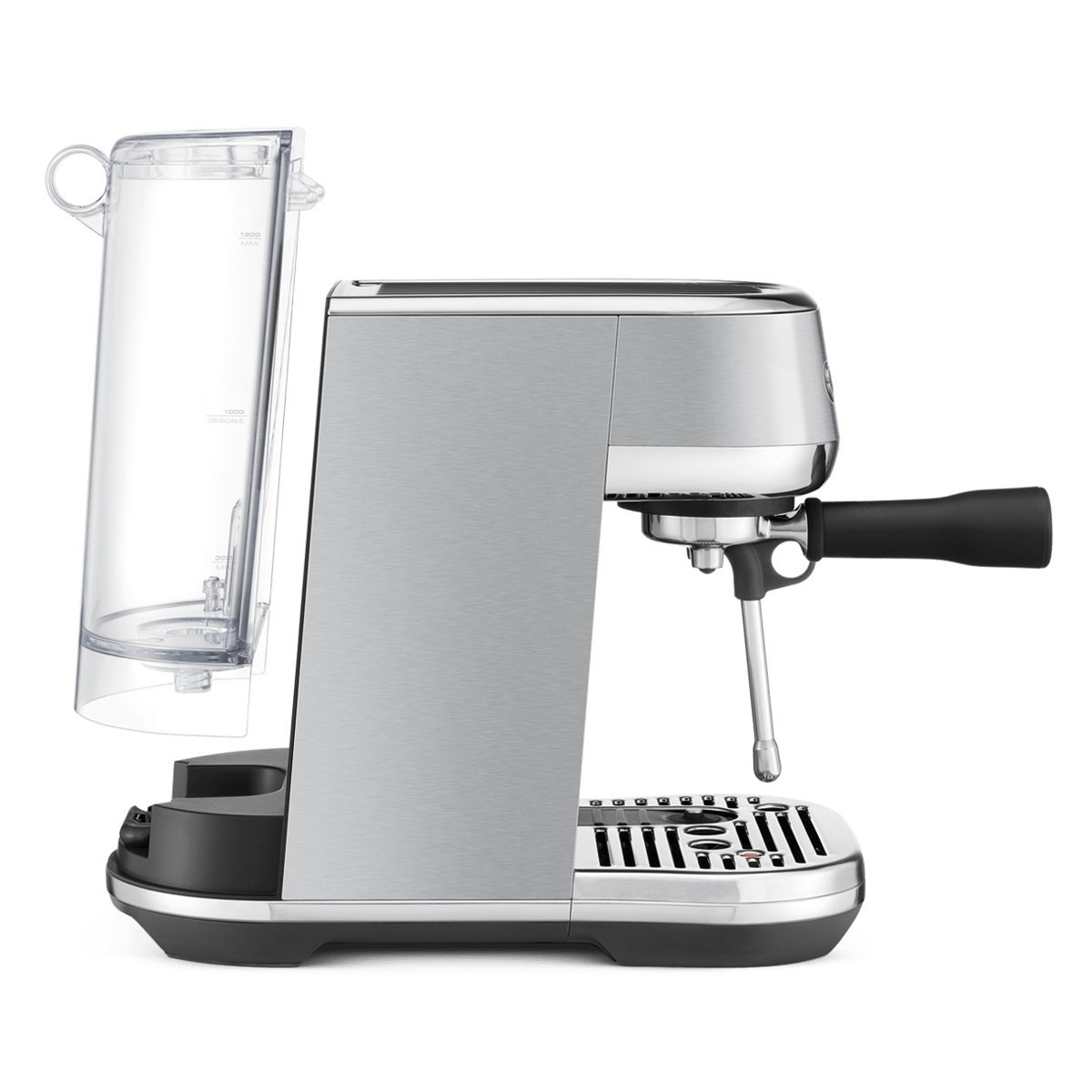
Breville Bambino Plus (BES500BSS), Brushed Stainless Steel
Espresso Advice's top pick for beginners is the Bambino Plus: automatic milk frothing, a roughly 3-second heat-up, and real espresso quality, in their words the machine most beginners should buy. The ThermoJet heating system reaches brewing temperature in about three seconds, which genuinely changes morning routines, because there is no warm-up ritual to plan around.
- ThermoJet heat-up in about 3 seconds, the fastest route to a weekday latte in this guide
- Automatic steam wand textures milk hands-free and adjusts temperature and foam level
- Ships with both pressurized and non-pressurized baskets, so it grows with your technique
- Slim footprint and a 64 fl oz tank, a rare combination in this class
Reasons to avoid:
- 54mm portafilter, versus the 58mm commercial standard, so fewer third-party accessories fit
- Expected lifespan of about 5 to 7 years rather than decades, per Espresso Advice
- The automatic frother limits latte-art ambitions; serious milk artists will want a fully manual wand
- No built-in grinder, so budget for one or use the pressurized baskets with pre-ground coffee as a bridge
- Model: BES500BSS (US SKU BES500BSS1BUS1)
- Finish: Brushed Stainless Steel
- Portafilter: 54mm
- Water tank: 64 fl oz, removable
- Power: 1560W
- Heating: ThermoJet, ready in about 3 seconds
Best for: beginners who want daily lattes and flat whites with minimal fuss; the automatic milk function alone justifies it for most milk-drink households.
The Bambino Plus is the pick that respects weekday time. A traditional boiler machine asks for 15 to 20 minutes of warm-up; the ThermoJet system in this machine is ready almost immediately, and the automatic steam wand removes the second beginner bottleneck by texturing the milk while you watch the shot. For a first machine, those two features decide whether espresso becomes a daily habit or a weekend project that quietly stops happening.
It is still a real semi-automatic underneath the convenience. You grind (or buy pre-ground), dose, tamp and pull the shot yourself, and the included non-pressurized baskets reward improving technique with better extractions, while the pressurized baskets forgive stale or unevenly ground coffee in the early months. The trade-offs are documented and worth accepting with open eyes: the 54mm group is a Breville ecosystem rather than the commercial standard, and Espresso Advice puts the expected lifespan at 5 to 7 years, in a different class from the Gaggia's decades. Who should skip it: aspiring hobbyists who already know they will want to modify, upgrade baskets and pour latte art from a manual wand. Start with the Classic Pro instead.
3. Gaggia Classic Pro E24 (RI9380/46): Best for Hobbyists


Gaggia Classic Pro E24 (RI9380/46), Brushed Stainless Steel
The Classic Pro is what serious home baristas graduate to, or start with when they know they want the craft. Espresso Advice's assessment: a commercial 58mm portafilter and manual steam wand in a machine built to last, which teaches real technique. The E24 version reviewed here (model RI9380/46) keeps the traditional recipe: a brass boiler, a 3-way solenoid valve, and 9-bar extraction, made in Italy.
- Commercial 58mm portafilter opens the full accessory ecosystem of precision baskets, tampers and distribution tools
- 3-way solenoid valve releases pressure after the shot, leaving a dry puck that knocks out cleanly
- Simple, repairable mechanics with a large owner community and a well documented modding scene
- Traditional build is documented to last 15 to 20 years or more with maintenance, per Espresso Advice
Reasons to avoid:
- 15 to 20 minute heat-up before the boiler and group are properly stable (a timer switch is the usual fix)
- Single boiler means a wait between brewing and steaming
- Genuinely steep learning curve: the manual steam wand and unpressurized baskets punish poor technique
- No built-in grinder, and this machine shows up a weak grinder immediately
- Model: RI9380/46 (Classic Pro E24)
- Finish: Brushed Stainless Steel
- Portafilter: 58mm commercial
- Valve: 3-way solenoid
- Extraction: 9 bar
- Origin: Made in Italy
Best for: people who want espresso as a skill, not an appliance; if dialling in a shot sounds like fun rather than a chore, this is your machine.
The Classic Pro's longevity is structural, not marketing. A brass boiler, a metal group, standard fittings and a design that owners routinely open up and service themselves mean wear parts can be replaced instead of the machine being replaced. The large modding community supports PID temperature controllers and pressure adjustments for owners who want to go further, and the used market reflects the durability: Espresso Advice notes that used Gaggia Classics are among the safer second-hand buys in espresso, precisely because the machines are repairable and long-lived.
The price of that longevity is patience, in two forms. The boiler and group need their warm-up time before shots are consistent, and the single-boiler layout makes you wait between pulling a shot and steaming milk, which matters when making drinks for a table of guests. The learning curve is the third cost: with unpressurized baskets and a manual wand, the machine shows you every flaw in your grind, dose and tamping. For the right buyer that feedback loop is the entire point. Who should skip it: anyone who wants a latte in four minutes on a weekday morning. Buy the Bambino Plus and spend the saved time drinking coffee instead of learning to make it.
4. De'Longhi Magnifica Evo (ECAM29084SB): Best Automatic Bean-to-Cup
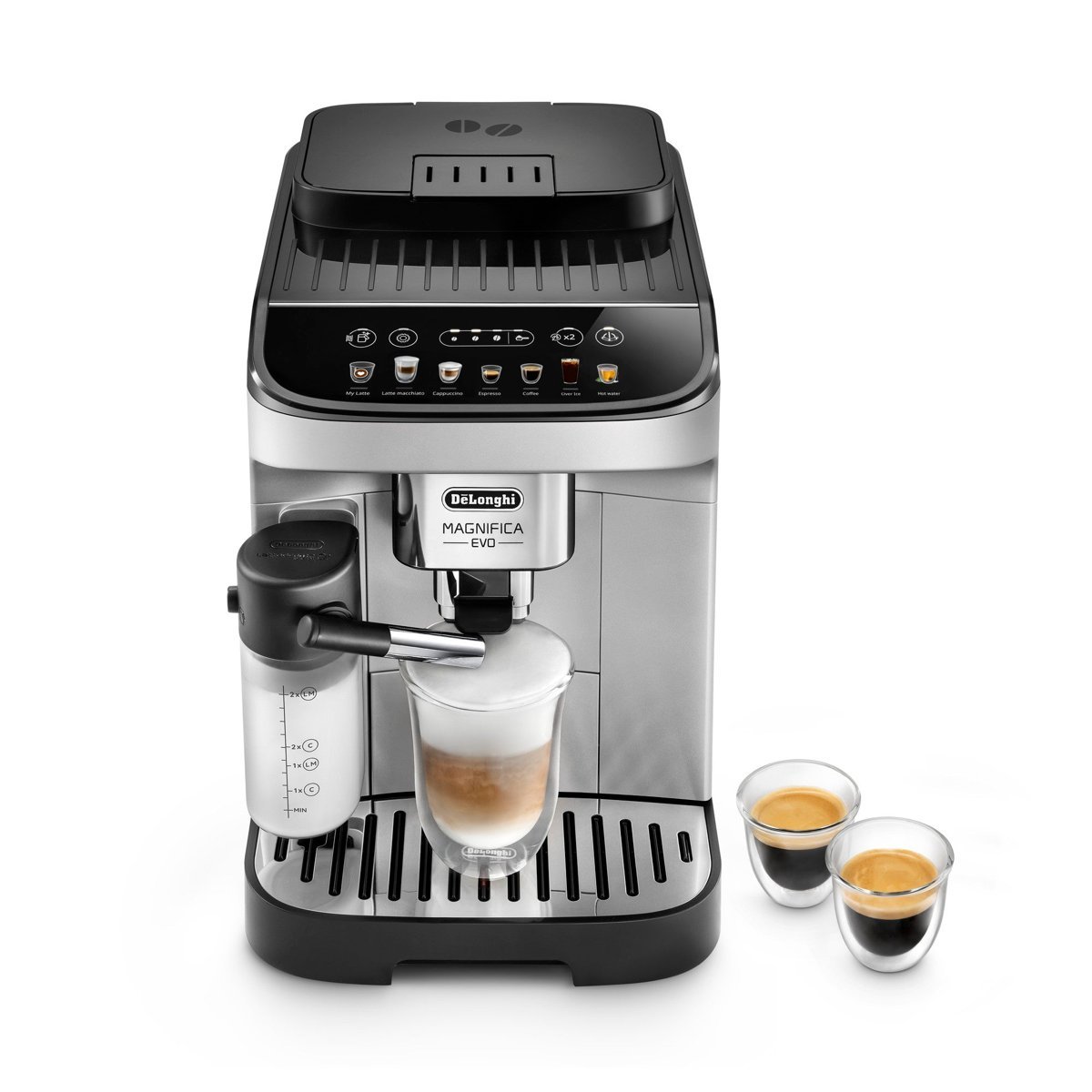
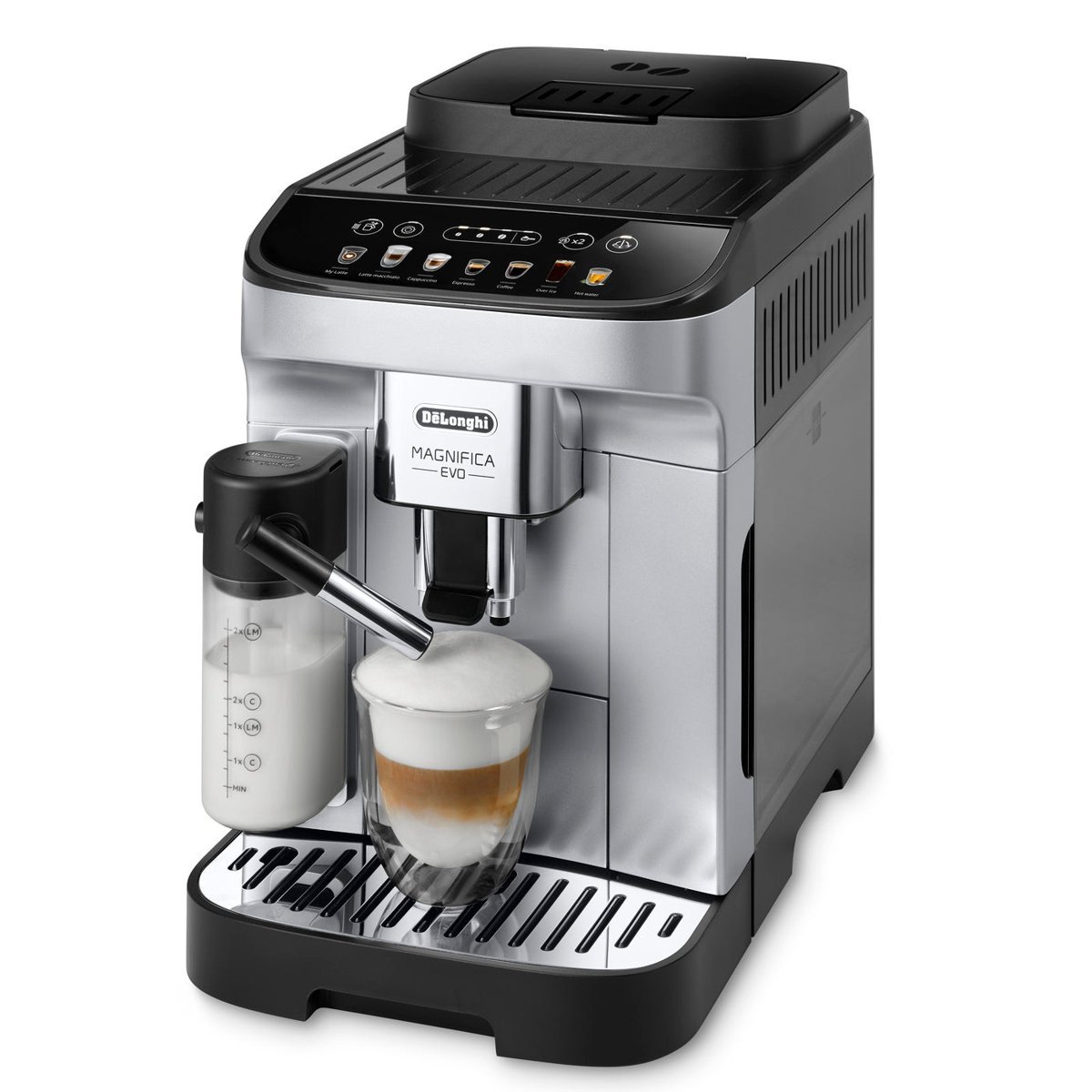
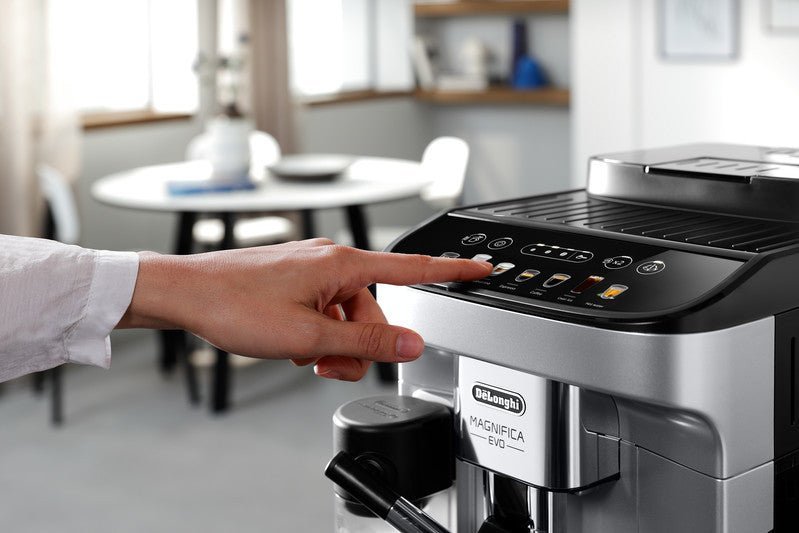
De'Longhi Magnifica Evo (ECAM29084SB), Silver
Fully automatic machines occupy the middle ground between pods and semi-automatic espresso: whole beans in, finished drinks out, no skill required. The Magnifica Evo is the easy-life family pick in current US roundups, with seven one-touch recipes on a colour touch panel and De'Longhi's LatteCrema carafe, which produces frothed milk drinks, including cappuccino and latte macchiato, at a single touch and then goes back in the fridge.
- Seven one-touch recipes, so every household member gets their drink without learning a workflow
- LatteCrema carafe froths milk automatically and stores in the refrigerator between uses
- Built-in grinder with 13 settings, grinding each dose fresh from whole beans
- Consistent results across users: the machine, not the operator, controls dose, grind and extraction
Reasons to avoid:
- Peak shot quality sits below a well driven semi-automatic; you are trading ceiling for consistency
- The internal brew group needs regular rinsing and periodic deep cleaning to stay hygienic
- Milk texture is fixed by the carafe system, with less control than a manual steam wand
- More moving parts and electronics than a manual machine, so long-term repair is a service job, not a DIY one
- Model: ECAM29084SB
- Finish: Silver
- Recipes: 7 one-touch, including MyLatte
- Milk system: LatteCrema carafe
- Grinder: built-in, 13 settings
- Interface: colour touch display
Best for: multi-person households where several people need to operate the machine, and where good coffee with zero effort beats great coffee with a learning curve.
The honest framing, echoed by espresso-focused reviewers, is that bean-to-cup machines make acceptable coffee very consistently rather than great coffee occasionally. The Magnifica Evo leans into that bargain well: the grinder doses fresh beans for every cup, the recipe icons make the machine self-explanatory for guests and teenagers, and the LatteCrema carafe solves the milk problem that stops most households using a manual machine on weekdays. A stored-in-the-fridge carafe that connects, froths and goes back is a small design decision with an outsized effect on daily use.
Ownership costs are the predictable ones: beans, water, and periodic cleaning of the brew group and milk carafe, plus descaling on the machine's schedule. In return you give up the hobby ceiling entirely. There is no portafilter technique to refine and no accessory ecosystem to explore, and a skilled semi-automatic owner will pull a better shot. Who should skip it: anyone who enjoys the process of making espresso. You will be bored within a month, and the coffee will not reward you for staying. For everyone else in a busy house, this is the machine most likely to still be used daily a year from now.
A Note on Drip and Pod Machines
Two categories in the original research did not produce a linked pick, and the honest reasons differ. For drip, the reference machines are the OXO Brew 9-Cup and the Technivorm Moccamaster KBT: Wirecutter's drip coverage names the OXO its top coffee-maker pick for excellent drip with a straightforward design, and the Moccamaster KBT as the great-coffee, no-programming choice with a thermal carafe. We verified the OXO's exact-variant ASIN against two independent sources, but could not assemble the three verified manufacturer photos of the exact machine that this guide requires for a reviewed pick; the Moccamaster's exact-variant ASIN could not be confirmed to the same dual-source standard at all. Rather than lower the bar quietly, both stay as prose references: if you drink drip by the pot, they are the two designs to research first.
For pods, the Nespresso Vertuo Plus remains the convenience benchmark in US roundups: consistent coffee and espresso-style drinks in several cup sizes at one touch, with no grinding, tamping or technique. Its exact Ink Black variant was confirmed against two sources, but again only one verified manufacturer photo of that exact variant could be obtained, so it is discussed here rather than reviewed as a pick. The standing advice on pods is unchanged: price the capsules over two years before the low machine price persuades you, and remember that pod systems make strong coffee rather than true 9-bar espresso.
How to Choose a Coffee Machine
1. Decide what "coffee" means in your house
This is the step most buyers skip, and it is the one that matters most. Write down what everyone actually drinks for a week before shopping. A household split between drip drinkers and latte lovers may genuinely need two approaches, or a compromise; buying an espresso machine for a house that drinks black coffee by the mug is the most expensive mistake in this category.
2. Match the machine type to your mornings
Be honest about your routine. A 15 to 20 minute heat-up is fine on a slow Sunday and a dealbreaker on a Tuesday. If your weekday window is under five minutes, you want the Bambino Plus's near-instant heat-up, a pod machine, or an automatic like the Magnifica Evo, not a traditional boiler machine. Espresso Advice's rule of thumb is worth repeating: espresso as a craft takes time; if time matters more than craft, buy automation.
3. The grinder question decides espresso quality
For any espresso machine without a built-in grinder, budget for one. Espresso Advice's guidance is to spend at least 30 to 40 percent of your total budget on the grinder, because it affects the cup more than the machine does. Pre-ground coffee stales within days and cannot be dialled in; a pressurized basket, included with the Bambino Plus, is the beginner's bridge, not the destination.
4. Milk drinks change the machine
If lattes and cappuccinos are the goal, the steam system is half the purchase. Automatic frothing, whether the Bambino Plus's wand or the Magnifica Evo's carafe, gets you drinkable milk drinks immediately. A manual wand, as on the Gaggia and the Barista Express, requires practice but produces better microfoam and teaches a transferable skill.
5. Count the real cost, not the sticker
Pods and capsules are a subscription in disguise, so calculate a year's worth before choosing a pod system. Espresso machines have near-zero consumable cost beyond beans and the occasional descaler. Bean-to-cup machines sit in the middle: beans plus periodic cleaning of the brew group and milk system.
6. Counter space and the daily ritual
Measure before you buy. Semi-automatic setups need room for the machine, grinder, tamper and knock box; automatics and pod machines need far less. Also consider noise: grinders, especially early-morning grinding, are the loudest part of any setup.
Types of Coffee Machines at a Glance
- Drip and filter machines (the OXO Brew and Moccamaster designs discussed above): brew a full pot of filter coffee. Best for households that drink volume. Cannot make espresso.
- Semi-automatic espresso machines (Bambino Plus, Barista Express, Gaggia Classic Pro): you grind, dose, tamp and pull the shot; the machine provides pressure and steam. The learning curve is real and the ceiling is high.
- Pod and capsule machines (the Nespresso Vertuo Plus discussed above): sealed capsules, one button, consistent results. Lowest effort, highest per-cup cost, most packaging waste.
- Automatic bean-to-cup machines (Magnifica Evo): grind and brew internally at the press of a button. Whole-bean freshness with pod-like ease; peak quality below a skilled semi-automatic setup.
- Manual brewers (pour-over, French press, moka pot): not reviewed in this guide.
Head-to-Head: The Comparisons That Actually Decide Purchases
Espresso machine vs. drip coffee maker
These answer different questions. Drip makers produce larger volumes of milder coffee efficiently; espresso machines produce concentrated shots for milk drinks. If your household drinks black coffee by the mug, an espresso machine is an expensive mistake. If everyone orders lattes, a drip machine will not satisfy anyone. Households split down the middle should buy for the drink that is daily and cover the occasional one cheaply, with a moka pot or French press.
Built-in grinder vs. separate grinder
Convenience and footprint versus quality and upgradeability. The Barista Express proves the convenience case; Espresso Advice's counterpoint stands: a separate grinder at the same total budget usually grinds better and can follow you through future machine upgrades. Choose built-in if space is tight; choose separate if coffee is becoming a hobby.
Pod machine vs. bean-to-cup automatic
Both serve the "coffee now" buyer. Pods win on upfront cost, footprint and drink variety; bean-to-cup wins on per-cup cost over time, whole-bean freshness and less packaging waste. The break-even point depends on your daily cup count: heavy drinkers, at three or more cups a day, usually come out ahead with bean-to-cup within two years. The Magnifica Evo is this guide's bean-to-cup pick for exactly that buyer.
Common Buying Mistakes
- Buying an espresso machine for drip drinkers. Espresso machines do not make strong drip coffee; they make shots. Match the machine to the drink.
- Ignoring the grinder. Pairing a capable espresso machine with pre-ground supermarket coffee guarantees disappointment. The grinder is not an accessory; it is half the system.
- Choosing on bar pressure marketing. Machines advertising 15 bars are not better than 9-bar machines: espresso extracts at 9 bars, and the 15-bar figure is a pump maximum before regulation. Pressure consistency through the shot is what matters.
- Underestimating capsule costs. A pod machine's true price is the machine plus two years of capsules. Do the arithmetic before the convenience persuades you.
- Buying programmability you will never use. If you have never once set a coffee timer, you will not start now.
- Skipping descaling. Hard water kills coffee machines faster than any other factor. Follow the machine's descale indicator, or a calendar reminder, and it will last years longer.
Bad Advice to Ignore
- "More bars means better espresso." Espresso extracts at 9 bars; 15-bar headlines describe pump maximums, not extraction quality. Judge pressure consistency, not the badge number.
- "This pod machine makes real espresso." Pod systems make concentrated coffee, not 9-bar-extracted espresso. If a review blurs that line, it is selling convenience, not accuracy.
- "You need to spend more for noticeably better coffee." Past a point, money buys workflow and longevity, not cup quality. Espresso Advice's prosumer-tier guidance makes this explicit: a skilled barista on a mid-tier machine out-brews a beginner on a flagship. Spend on the grinder and fresh beans first.
Frequently Asked Questions
No. Espresso and drip machine technology evolves slowly: Espresso Advice notes that the machines worth buying in 2026 are largely the same ones worth buying in 2024, with changes limited to pricing, software features and minor build refinements. Buy when you need coffee, not when a launch calendar says so.
Descale every 1 to 3 months depending on water hardness, and rinse the brew basket and carafe (or the brew group on an automatic) after use. Machines with a descale indicator light should be followed over any fixed schedule. Regular descaling protects brewing temperature; limescale buildup is the most common reason a machine slowly starts making worse coffee.
For drip drinkers, usually yes. A glass carafe on a hot plate keeps coffee warm but degrades flavour noticeably after 20 to 30 minutes of continuous heat. A thermal carafe, the design the Moccamaster KBT uses, keeps coffee hot for 2 to 4 hours with no external heat, so it tastes better for longer. Glass is cheaper to replace and lets you see the level; that is the trade-off.
For a semi-automatic machine, effectively yes, unless you choose an all-in-one like the Barista Express. The grinder affects the cup more than the machine, and Espresso Advice recommends budgeting 30 to 40 percent of total spend on it. Pressurized baskets make pre-ground coffee workable while you learn, but they are a bridge.
Yes, especially for proven designs like the Gaggia Classic: Espresso Advice notes used machines can save 30 to 50 percent with minimal risk, since simple brass-boiler machines are repairable and long-lived. Buy from sellers who can demonstrate the machine heating and pulling a shot.
Only if you regularly make multiple milk drinks back to back. Single boilers and thermocoil machines with a short pause between brewing and steaming handle one to three drinks fine. You are buying workflow speed, not better-tasting shots.
Breville-style machines typically last about 5 to 7 years; traditional machines such as the Gaggia last 10 to 20 years or more with maintenance, per Espresso Advice. Descaling discipline and water quality matter more than brand for longevity.
The Plus adds automatic milk frothing and a slightly larger feature set over the base Bambino. If you make milk drinks daily, the Plus's automatic steam is worth it; if you drink straight espresso and want the lowest entry price, the base model suffices.
Final Verdict
The best coffee machine is the one that matches your actual mornings. Choose the Breville Bambino Plus for lattes with the least effort, the Breville Barista Express if one box must do everything including grinding, and the Gaggia Classic Pro if you want to learn espresso as a craft on a machine you can keep for decades. Choose the De'Longhi Magnifica Evo when a whole household needs good coffee with zero skill and one touch. If your household drinks drip by the pot or wants pod convenience, use the category notes above to research the OXO Brew 9-Cup, the Moccamaster KBT and the Nespresso Vertuo Plus; they are strong designs that this guide discusses in prose because they did not clear its verification bar for a full reviewed pick. Buy for the drink you make daily, budget for the grinder if you choose espresso, and descale whatever you buy.
Final Recommendations
Best All-in-One Espresso: Breville Barista Express (BES870XL), built-in grinder; 54mm portafilter; 67 oz tank.
Best Beginner Espresso: Breville Bambino Plus (BES500BSS), 3-second ThermoJet heat-up; automatic milk frothing.
Best for Hobbyists: Gaggia Classic Pro E24 (RI9380/46), commercial 58mm portafilter; made in Italy.
Best Automatic Bean-to-Cup: De'Longhi Magnifica Evo (ECAM29084SB), 7 one-touch recipes; LatteCrema carafe.
Research notes: pick positions and attribute facts are sourced from the publications named in the reviews (Espresso Advice's espresso machine guides and Wirecutter's coffee-maker coverage, as recorded in this article's research file). MoleMarket did not hands-on test these machines; recommendations combine cited expert positions with buyer-profile matching. Prices, ratings and availability are intentionally not stated.