
If you searched for the best leaf vacuum, you have probably noticed something odd: half the results are really about leaf blowers. That is not an accident. The modern leaf vacuum is almost always a 3-in-1 machine, blower, vacuum and mulcher in one body, so the leaf vacuum conversation and the leaf blower vacuum conversation are effectively the same one. This guide treats that honestly instead of fighting it.
The two picks below earned their places on verified specifications, manufacturer documentation and independent tested reviews, not on headline numbers alone. Every figure in the comparison table comes from a documented source, and where sources conflicted, we say which one we trusted. Because this category is full of marketing inflation, the buying guide further down explains the three numbers that actually matter, CFM, MPH and the mulch ratio, plus the wet-leaf reality that no product page volunteers.
The Short Answer
Buy the Craftsman CMEBL7000 if comfort leads: it is the top pick in Family Handyman's tested leaf vacuum review, with a two-strap backpack collection bag that takes the load off your arms, the highest blow volume here at 450 CFM, and air speeds up to 260 MPH. Buy the BLACK+DECKER BV6000 if value and mulching lead: a high-impact metal fan that resists clogging, a 16:1 mulch ratio, and a disposable bag system that ends the dusty bag-emptying ritual, on the same core platform as its pricier BV6600 sibling. And one honest sentence before anything else: do not buy any leaf vacuum expecting it to handle wet, matted leaves well. Every manual in this category warns against vacuuming wet material.
Our Top Picks at a Glance
A true two-strap backpack design with a 55-litre bag, 450 CFM and 260 MPH, built for big piles and long cleanups.
Metal anti-clog fan, 16:1 mulch ratio and a tie-and-toss disposable bag system at the lowest entry cost here.
Side-by-Side Comparison
| Product | Power | Blow CFM / MPH | Mulch Ratio | Bag | Weight | Warranty | Amazon Link |
|---|---|---|---|---|---|---|---|
| Craftsman CMEBL7000 | 12 amp corded | 450 / 260 | 12:1 (third-party figure) | 55 L backpack | 11.27 lb | 3-year limited | Check Price on Amazon |
| BLACK+DECKER BV6000 | 12 amp corded | 400 / 250 | 16:1 (manufacturer) | Disposable (2 included) plus reusable assembly | 8.1 lb | 2-year limited | Check Price on Amazon |
Figures are manufacturer specifications for each exact model unless marked as third-party. Almost no maker in this category publishes a vacuum-mode CFM figure, which is why the table compares blower-mode output, bag design and mulching hardware instead. No prices are shown, because they change constantly.
Most Comfortable for Long Sessions
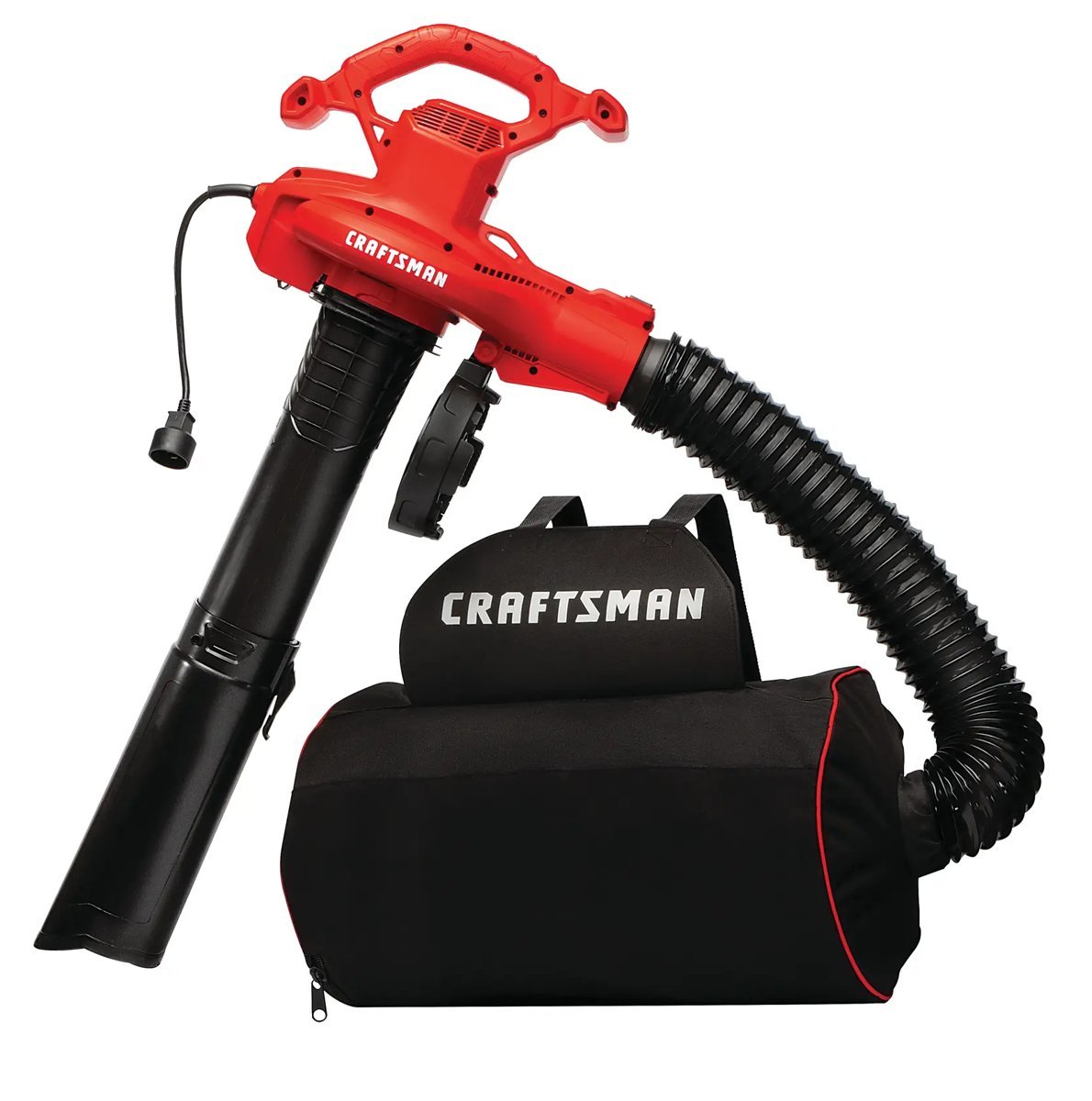
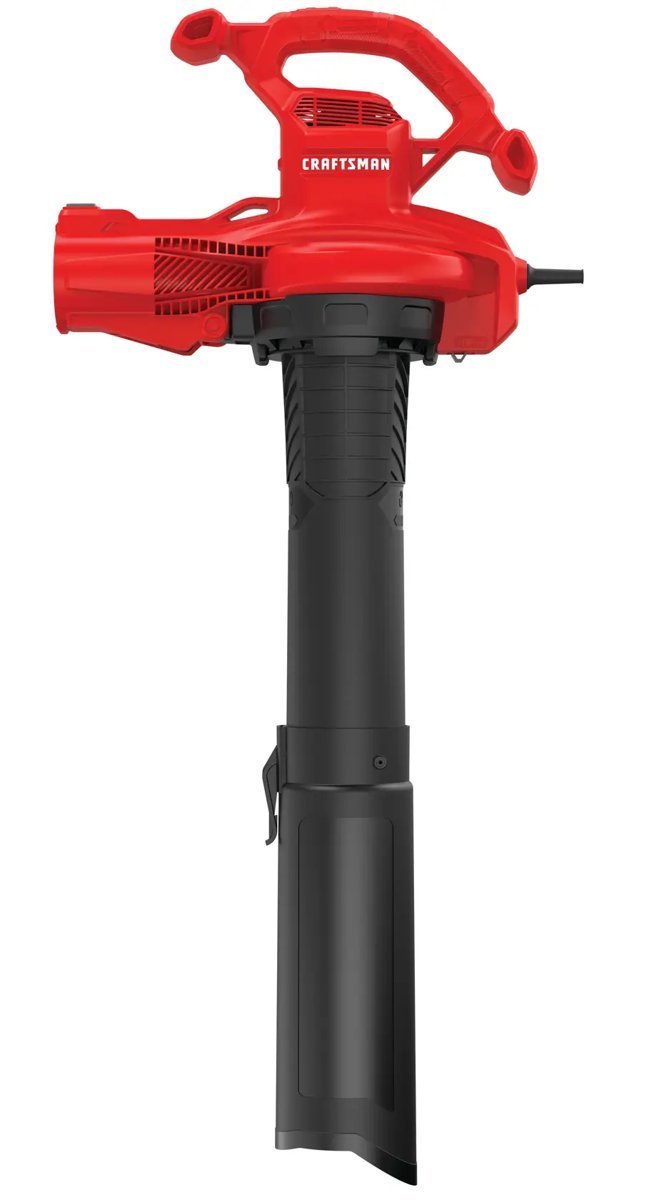
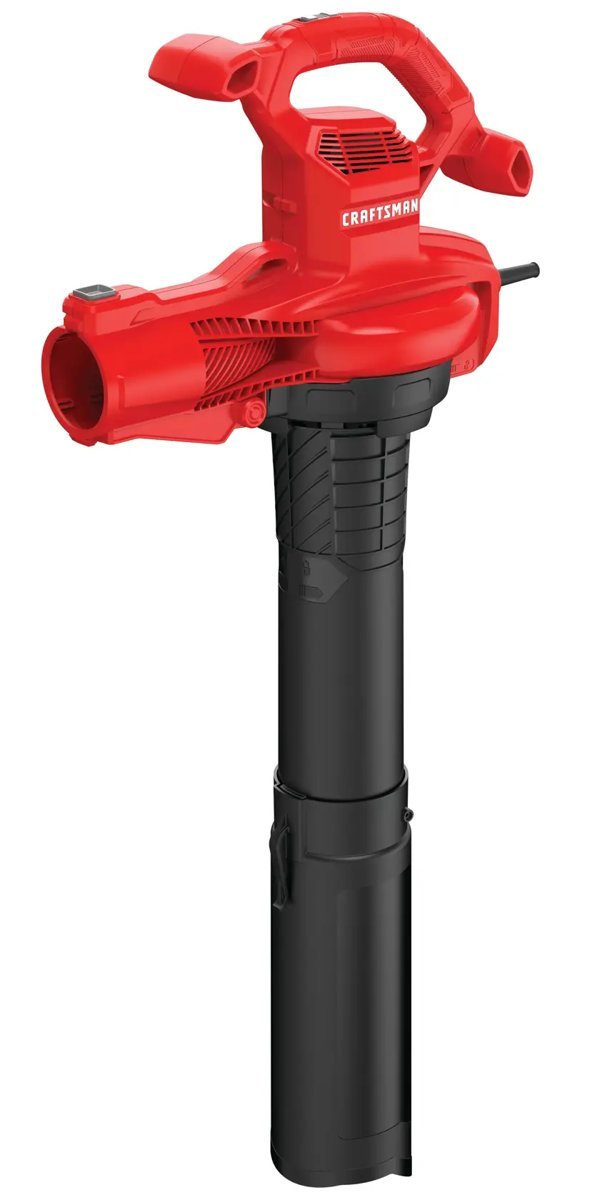
Craftsman CMEBL7000
Every handheld leaf vacuum makes the same quiet promise and breaks it the same way: the tool itself is manageable, but the collection bag fills, the weight migrates to one wrist and one shoulder, and the last third of the job is a slog. The CMEBL7000 is designed around that failure. The power head stays in your hands, light and short, while the 55-litre collection bag rides on your back on two straps, connected by a flexible hose. Weight lands on both shoulders and your hips instead of hanging off one arm, and that is why Family Handyman's testers made it their top leaf vacuum pick and singled the design out as the comfort standard other vacuums should meet. If your cleanup sessions run long, this is the machine that respects that fact.
The performance underneath the ergonomics is genuinely strong. The 12-amp motor delivers 450 CFM of blow volume, the highest figure among the picks in this guide, at air speeds up to 260 MPH, which ties the fastest corded machines in the class. Volume is what clears a lawn efficiently: it moves broad fans of leaves into piles without the narrow, fussy stream a high-speed, low-volume tool produces. Conversion between blower and vacuum is tool-free; you swap tubes and twist open the attached fan cover. The backpack bag has a wide-mouth opening that empties without a fight, and the two grip handles on the power head earned specific praise in testing, because repositioning your hold mid-session is how you actually manage fatigue.
The trade-offs are real, and they sit in the mulching hardware. Third-party spec tables list the impeller as plastic rather than metal, and plastic dulls and chips faster when twigs and grit pass through it. The mulch ratio tells the same story: third-party tables cite roughly 12:1, the weakest reduction figure in this guide, so bagged volume shrinks less and you empty more often than the headline capacity suggests. There is also a single operating speed, with no dial for delicate work around mulch beds and plantings. None of this makes the CMEBL7000 a weak machine; it makes it a specialised one. It trades shredding finesse for carrying comfort and raw blowing volume.
Set up honestly, it is easy to live with. At 11.27 lb before the bag starts filling, it is not a light tool, and the backpack only helps while the bag is reasonably empty, so empty at half full and the design works as intended. The cord is the usual corded compromise: unlimited runtime, and an extension cord to manage, sized at 12 gauge for long runs so the motor is not starved. Craftsman backs the machine with a three-year limited warranty, a year longer than the BLACK+DECKER below. For a big, leaf-heavy property where the session length is the problem, that combination of comfort, airflow and cover is the strongest case in this guide.
- Two-strap backpack bag carries the load on both shoulders
- 450 CFM and up to 260 MPH, the strongest blow figures here
- Tool-free conversion between blower and vacuum
- Three-year limited warranty
- Plastic impeller, per third-party spec tables
- Roughly 12:1 mulch ratio is the weakest here
- Single operating speed, no dial for delicate areas
- 11.27 lb before the bag fills
- Model: CMEBL7000
- Motor: 12 amp corded electric
- Air volume: 450 CFM (blow mode)
- Air speed: up to 260 MPH
- Bag: 55 L backpack with hose
- Weight: 11.27 lb
- Warranty: 3-year limited
Best for: long cleanup sessions on leaf-heavy properties, and anyone whose shoulders get a vote.
Best Budget Mulching Pick
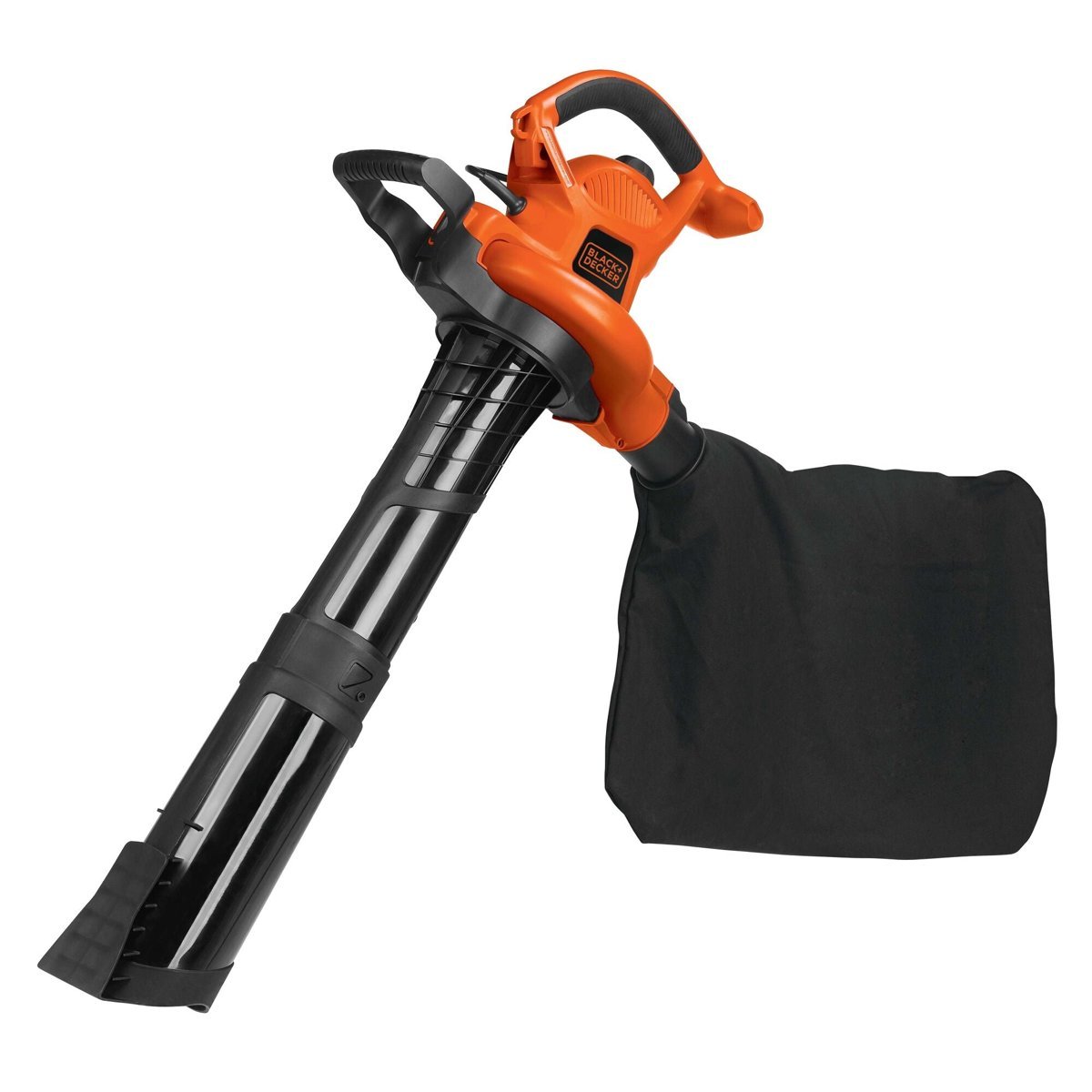
BLACK+DECKER BV6000
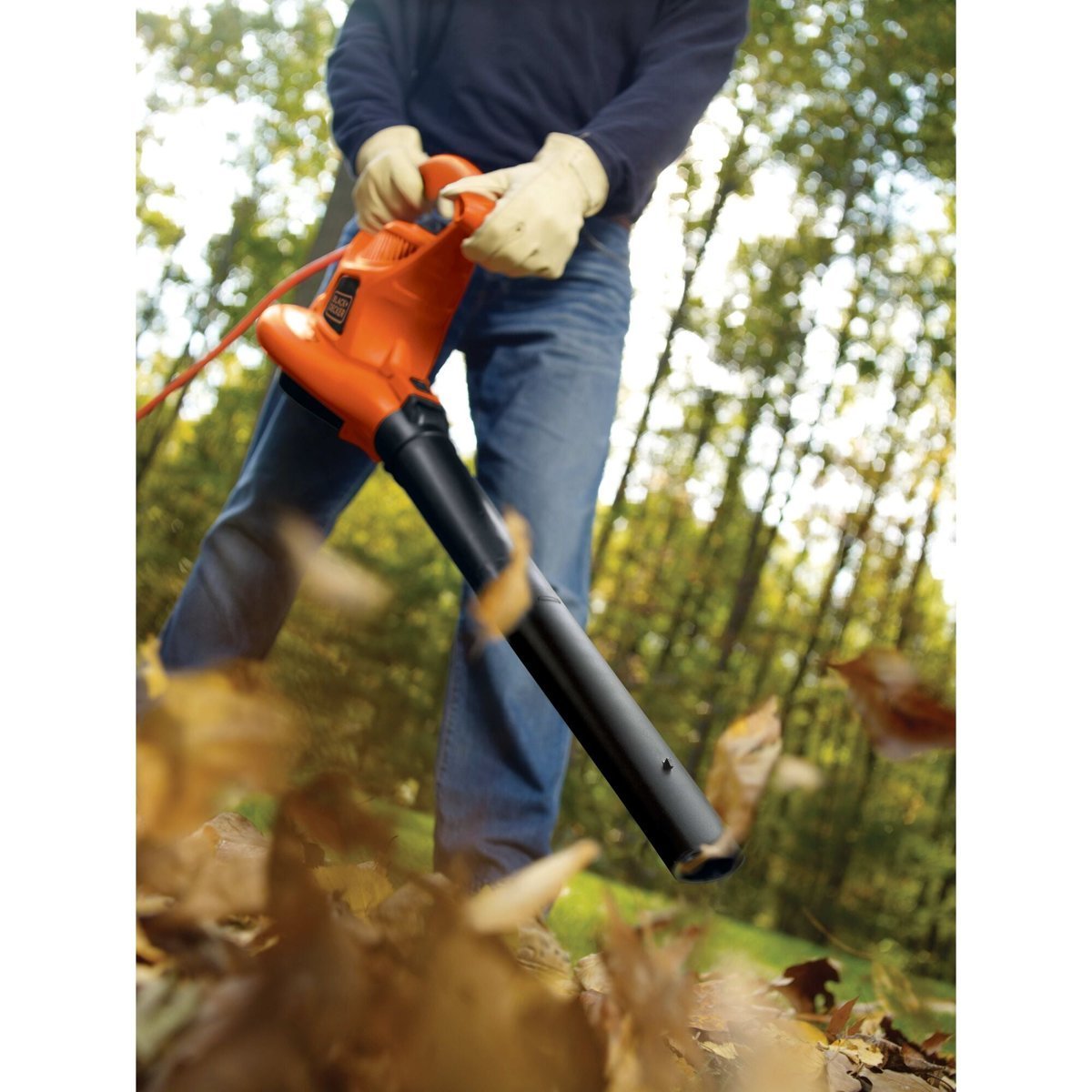
The BV6000 is the budget pick that does not feel like a compromise, because BLACK+DECKER kept the parts that determine performance and cut the parts that determine convenience. The 12-amp motor produces 400 CFM at up to 250 MPH. The mulching heart is a high-impact metal fan, positioned by the brand as anti-clogging hardware, and metal is the material that matters here: it keeps shredding twigs, acorns and grit long after a plastic impeller has dulled, and it underpins the 16:1 mulch ratio, sixteen bags of loose leaves reduced to one bag of mulch in the ideal case. On the numbers that decide how a leaf vacuum actually performs across a season, this machine matches models costing noticeably more.
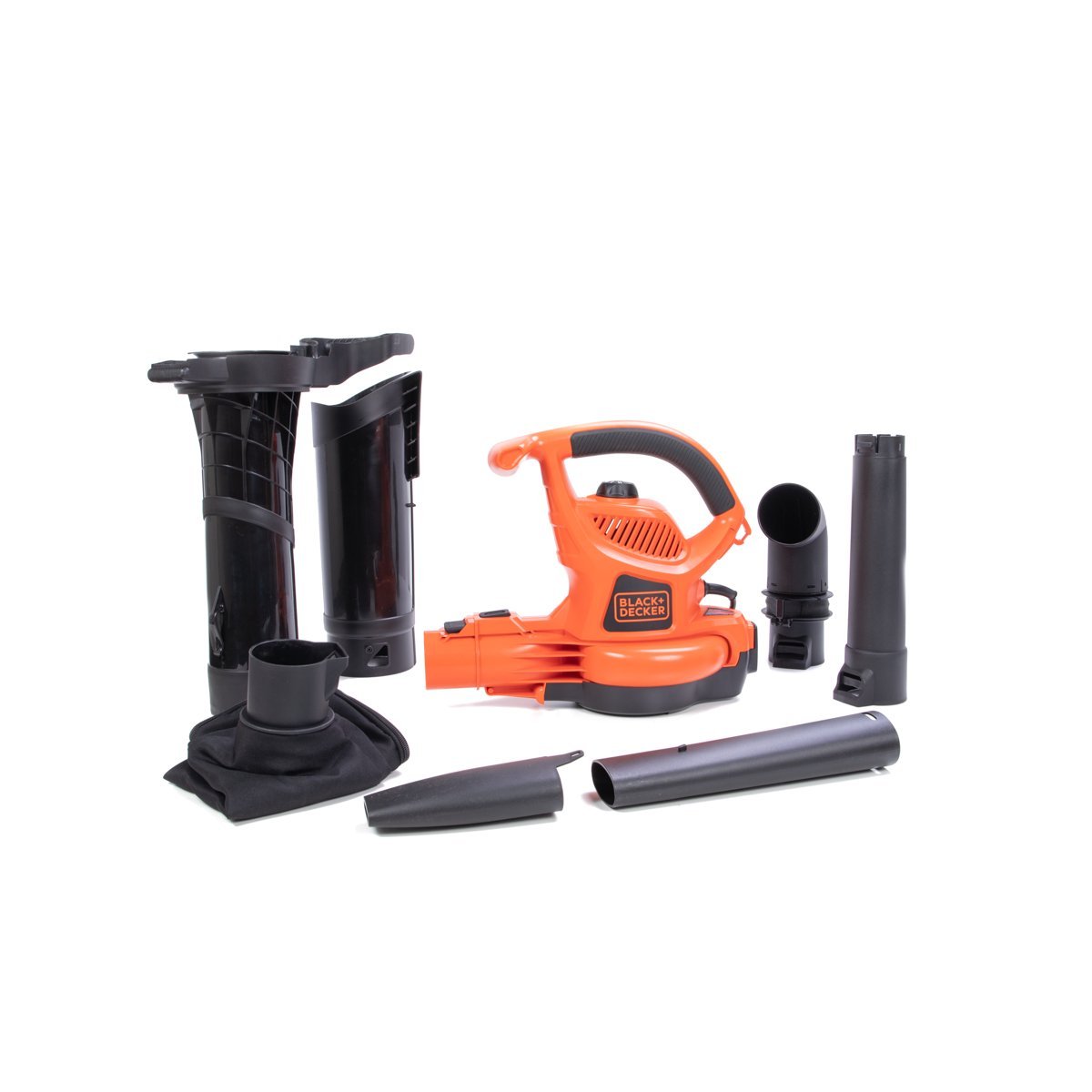
Its signature feature is the bag system, and it is more thoughtful than it first looks. The BV6000 is disposable-first: two disposable bags and a diffuser are in the box, so when a bag fills you tie it off and toss it, with no dusty ritual of shaking a clogged fabric bag out over a bin. A reusable bag assembly is also included for buyers who prefer it, along with a detachable shoulder strap and a concentrator nozzle for cracks and corners. For anyone who vacuums weekly through the autumn, the disposable system removes the single most annoying maintenance task in the category. The honest costs are ongoing bag purchases and a waste stream, and both belong in the decision.
The context that makes the BV6000 easy to place is its sibling. The BV6600 sits on the same core platform, same motor class, same airflow, same metal fan, and adds a variable-speed dial, a rake attachment and a larger reusable EZ-Empty bag. The BV6000 replaces the dial with a simpler two-speed switch, which is genuinely less useful around delicate beds where you want airflow between the two settings, and it drops the rake. Everything else, the performance-relevant hardware, is shared. That is why this is the value pick: you are paying less for the same mulching core, and the money you save buys a season of disposable bags.
The remaining caveats are the category's usual ones, sharpened slightly. Mode changes mean swapping tubes and attaching the bag, about a minute once practised, slower than flip-switch designs. The 16:1 ratio is an ideal-case ceiling measured on dry leaves; on mixed, slightly damp yard waste, expect meaningfully less, which is true of every ratio in this guide. At 8.1 lb it is the lightest pick here, but a filling bag adds weight exactly where your arm feels it, so the half-full emptying rule applies. BLACK+DECKER rates the design at 68 dB and claims the BV6000 generation runs 50 percent quieter than its LH4500 predecessor under the EN ISO 3744 measurement procedure; quieter than the old model is not the same as quiet, and hearing protection is still the right call. A two-year limited warranty and a built-in cord retainer round out a package that is very hard to argue with at its price.
- High-impact metal fan resists clogging and dulling
- 16:1 manufacturer mulch ratio, the best figure here
- Disposable bag system ends dusty bag-emptying
- Lightest pick in this guide at 8.1 lb
- Two-speed switch instead of a variable dial
- Disposable bags are an ongoing cost and waste stream
- Tube-swap mode changes are slower than flip-switch designs
- Two-year warranty is a year shorter than the Craftsman's
- Model: BV6000
- Motor: 12 amp corded electric
- Air volume: 400 CFM (blow mode)
- Air speed: up to 250 MPH
- Mulch ratio: 16:1 (manufacturer)
- Bag: disposable system (2 bags and diffuser included) plus reusable assembly
- Noise: 68 dB
- Weight: 8.1 lb
- Warranty: 2-year limited
Best for: budget buyers who mulch weekly and want metal-fan performance without paying for convenience extras.
Also Considered
Three more machines recurred across the tested reviews and buying guides we researched, and all three are legitimate cross-shopping options. The Toro 51621 UltraPlus is the independent testers' favourite in this category: Bob Vila's tested review names it best overall, it is one of the only models whose maker publishes a vacuum-mode figure (405 CFM) alongside its 340 CFM blow rating, and its metal impeller and quick-release latch are the benchmark our picks are judged against. The Worx WG509 Trivac claims the highest corded mulch ratio at 18:1 from a two-stage metal impeller, changes modes with a flip of a switch instead of a tube swap, and carries a three-year warranty, at the cost of the heaviest corded body here at 9.3 lb and the smallest bag at 1.2 bushels. The Ryobi RY404150 40V HP is the cordless option: 600 CFM, a claimed 20:1 mulch ratio and a kit with two 4.0Ah batteries, balanced against roughly 15 lb of working weight and about half an hour of total runtime across both batteries. If one of those trade-off profiles fits your yard better than our two picks, you will not go wrong; the guidance below applies to all of them.
How We Chose
This guide is research-based. We did not run hands-on tests, and we do not pretend otherwise. Specifications were verified against manufacturer product pages and user manuals for each exact model, and recommendation weight was given to independent publications that test with named testers and published methods, principally Family Handyman's and Bob Vila's tested leaf vacuum reviews. Where a figure comes from a third-party spec table rather than the manufacturer, for example the Craftsman's impeller material and mulch ratio, the article says so at the point of use. We also applied a rule this category badly needs: when a roundup's numbers disagreed with the manufacturer's own materials, we trusted the manufacturer and treated the roundup's other claims with suspicion.
How to Choose a Leaf Vacuum
CFM vs MPH: volume moves piles, speed dislodges them
CFM (cubic feet per minute) is air volume, how much air the machine moves. MPH is air velocity, how fast it moves. Volume clears big areas faster; velocity dislodges stuck, damp or embedded debris. The Craftsman's 450 CFM at 260 MPH against the BLACK+DECKER's 400 CFM at 250 MPH is a close-run version of the category's central trade-off. For vacuuming specifically, the rarely published vacuum-mode CFM matters most, which is why Toro's published 405 CFM vacuum figure for the 51621 is a genuine point of differentiation among the also-considered models.
The mulch ratio, explained honestly
The mulch ratio (12:1, 16:1, 18:1, 20:1) claims how many bags of loose leaves compress into one bag of mulch. Treat it as a ceiling, not a promise: manufacturers measure it on dry, uniform leaves, and independent reviewers consistently report real-world ratios well below the claim on mixed yard waste. Two things move the real number: a metal impeller, as in the BV6000, shreds more aggressively and resists dulling better than plastic, and dry leaves mulch dramatically better than damp ones. Use the ratio to compare within a brand's lineup before you use it across brands.
Corded vs cordless is really a runtime question
Both picks here are corded 12-amp machines: unlimited runtime, lower prices, lighter bodies. Cordless buys freedom at the price of finite runtime and higher weight; the Ryobi kit discussed above delivers roughly 30 minutes across its two batteries on high settings. If your cleanup is a single 45-minute session, cordless means a recharge break or a third battery. If your yard is a ten-minute tidy, cordless wins outright. There is no power argument for cordless in this category; the best corded units match it.
Bag capacity and comfort decide the experience
You will empty the bag many times per session, so capacity and carry design matter more than the spec table suggests. The Craftsman's 55-litre backpack and the BV6000's tie-and-toss disposables are two different answers to the same problem: a filling bag gets heavy and dusty. The practical rule either way is to empty at one-third to one-half full. A half-full bag vacuums better, clogs less and is dramatically easier to carry.
Noise: they are all loud
Every unit in this category is loud enough to warrant hearing protection. Manufacturer figures cluster around the high 60s in decibels, and claims like 50 percent quieter are measured against the maker's own older model, not against competitors. If neighbours or ordinances constrain you, the practical lever is the time of day, not the model you choose. Electric is still far quieter than gas.
Wet leaves: the rule nobody follows
Do not vacuum wet leaves. Every manual in this category says some version of it, and reviewers who ignored it report clogs, stalled impellers and worse. Leaves are ready when they crumble rather than fold. If it rained yesterday, blow today and vacuum tomorrow. This is also why mulch ratios disappoint in practice: the ratio assumes the dry leaves the manual demands.
Buying Mistakes to Avoid
Comparing mulch ratios as if they were measured the same way. They are not. Test conditions differ between brands, and real-world results land well below every claim. Buying for the headline CFM without checking the mode. Most published CFM figures are blower-mode numbers; vacuum-mode output is published by almost nobody. Vacuuming wet leaves. It is the number-one cause of clogs and impeller stalls in this category. Ignoring the cord math. A 12-amp tool at 100 feet needs a 12-gauge extension cord; a thin cord starves the motor and can overheat. The cord is a real accessory purchase, not an afterthought. Filling the bag to the brim. Suction drops as the bag fills. Empty at half.
Frequently Asked Questions
For most buyers, the BLACK+DECKER BV6000: it keeps the performance hardware that matters, a metal anti-clog fan and a 16:1 mulch ratio, and cuts convenience extras instead. If your sessions run long, the Craftsman CMEBL7000's backpack design is worth its premium. Neither recommendation is based on hands-on testing by us; both are research-based, drawn from verified specifications and independent tested reviews.
They solve different halves of the job. A blower moves leaves fast across open ground; a vacuum collects them into a bag and mulches them for disposal or compost. If your town requires bagged yard waste, or you compost, the vacuum half matters enormously. Most owners end up using blower mode most of the time and vacuum mode for beds, corners and final cleanup, which is exactly why the 3-in-1 exists.
Poorly, and you should not try. Wet leaves mat together, clog the intake tube, stall the impeller and mulch into paste instead of flakes. Every manual behind this guide warns against vacuuming wet material. Wait until leaves dry enough to crumble, or use blower mode only on damp days.
It is the manufacturer's claim for how many bags of loose leaves compress into one bag of mulch: 16:1 means sixteen bags in, one bag out. Treat it as an ideal-case ceiling measured on dry leaves. Real-world results on mixed yard waste typically land well below the claimed figure, and a metal impeller gets closer to the claim than a plastic one.
Corded if an extension cord reaches your whole yard: unlimited runtime, lower price, lighter tool. Cordless if it does not, accepting finite runtime, higher weight and a higher price. There is no power argument for cordless in this category; the best corded units match it on the figures that matter.
Almost certainly not. The vacuum's impeller already mulches as it collects, and for typical suburban leaf volumes the result is fine for compost or bag disposal. Dedicated mulchers and chippers exist for composters processing serious volume, branches rather than just leaves: a different tool, a different budget and a different job.
Final Recommendations
Craftsman CMEBL7000: the comfort pick, with a backpack bag, the strongest blow figures here and a three-year warranty.
Check Price on AmazonBLACK+DECKER BV6000: the value pick, with a metal anti-clog fan, a 16:1 mulch ratio and a disposable bag system.
Check Price on AmazonWhichever you choose, vacuum dry leaves, empty the bag at half full, wear hearing protection and size your extension cord properly. The machine matters less than those four habits.