
A hand press espresso machine is the purist's route to espresso: no pump, no boiler, no electricity, just hot water, finely ground coffee, and your own arm generating the pressure. "Hand press" is the catch-all term buyers use for manual lever presses and hand-pumped piston devices, and this guide covers one of each, the two machines that cleared our verification standard for this update. What unites them is real pressure brewing: unlike a moka pot, a proper manual espresso maker can generate the roughly 9 bars needed for genuine espresso with crema.
One clarification before we start, because it shapes every recommendation below: nothing in this guide is hands-on tested by MoleMarket. Every pick is research-based, drawn from barista reviewers, coffee publications, manufacturer-published specifications, and owner reports, all attributed. This update is deliberately short. Four other well-regarded manual machines (the Flair 58 Plus 2, the Cafelat Robot Barista, the ROK EspressoGC, and the Bellman CX-25P stovetop brewer) are discussed in prose further down, but we could not verify an exact-variant Amazon listing for them to our standard, so they carry no buy links here. Where the evidence was thin or conflicting, we say so instead of inventing certainty.
The Short Answer
Best overall hand press espresso machine: the Flair PRO 3, the most complete expression of manual espresso, with a built-in pressure gauge, a detachable brew head, and a no-preheat cylinder. One Hundred Coffee's 2026 roundup ranked it first among manual lever machines, and Roast Love's 2026 guide made it its top pick as well.
Best portable: the Wacaco Picopresso, a hand-pumped piston device with an 80 ml water tank and a proper 52 mm basket that pulls true double shots, and packs its own tamper, distribution tool, and dosing funnel inside. Caffeine Fiend named it the best portable manual espresso maker, and One Hundred Coffee calls it the best portable for serious coffee.
Quick Picks
Comparison Table
| Product | Key Specs | Best Use Case | Standout Feature | Amazon Link |
|---|---|---|---|---|
| Flair PRO 3, Black Best Overall |
Direct lever; 46mm portafilter; 70 ml water; dose up to 24 g; pressure gauge | home baristas who want cafe-level control over extraction with no electricity | Pressure gauge with a marked 6 to 9 bar espresso zone, plus a no-preheat cylinder | Check Price |
| Wacaco Picopresso (PPGR) Best Portable |
Hand-pumped piston; 52 mm basket; 80 ml tank; 18 g dose; 350 g | travel, camping and office brewing where a full-size machine cannot go | Naked portafilter and a full tool kit that packs inside the device | Check Price |
All specifications are manufacturer-published figures for the exact models and finishes named.
Detailed Reviews
1. Flair PRO 3, Black: Best Overall Hand Press Espresso Machine
Flair PRO 3, Black
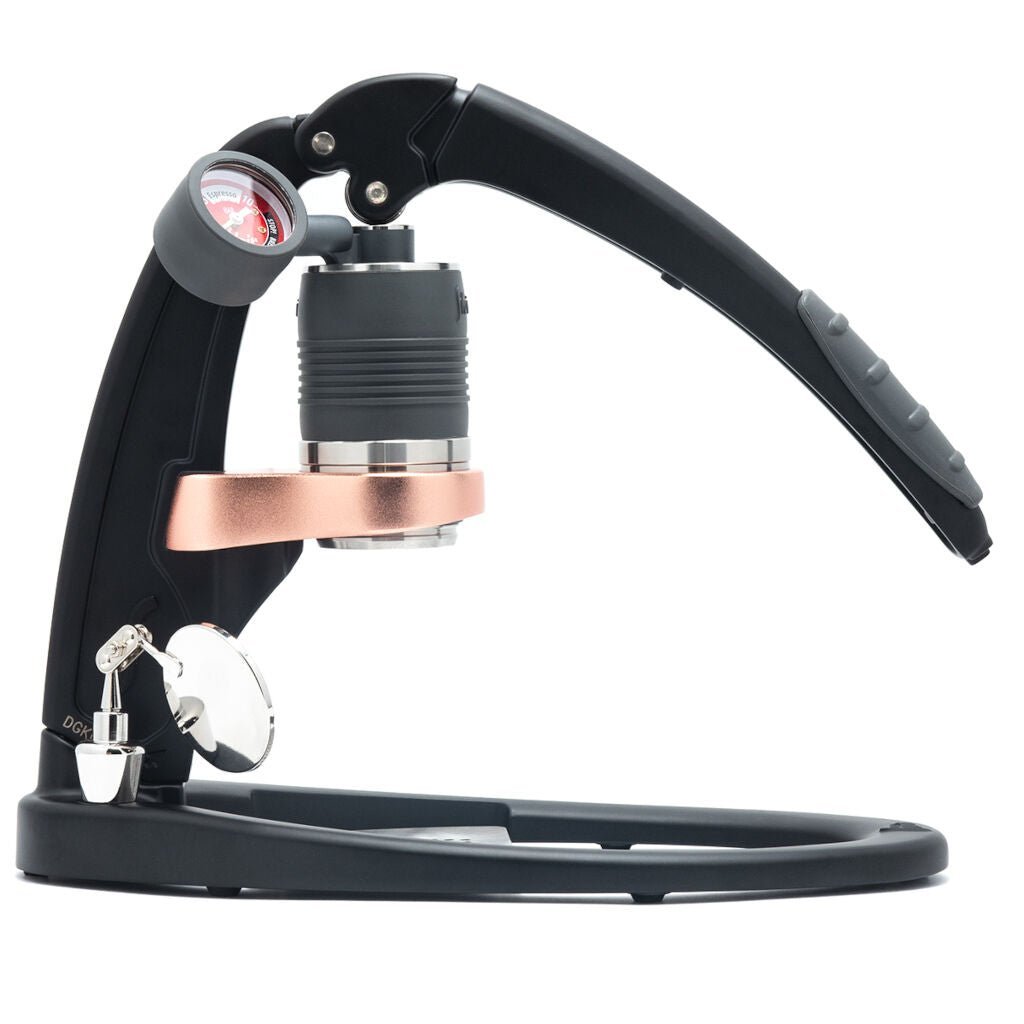
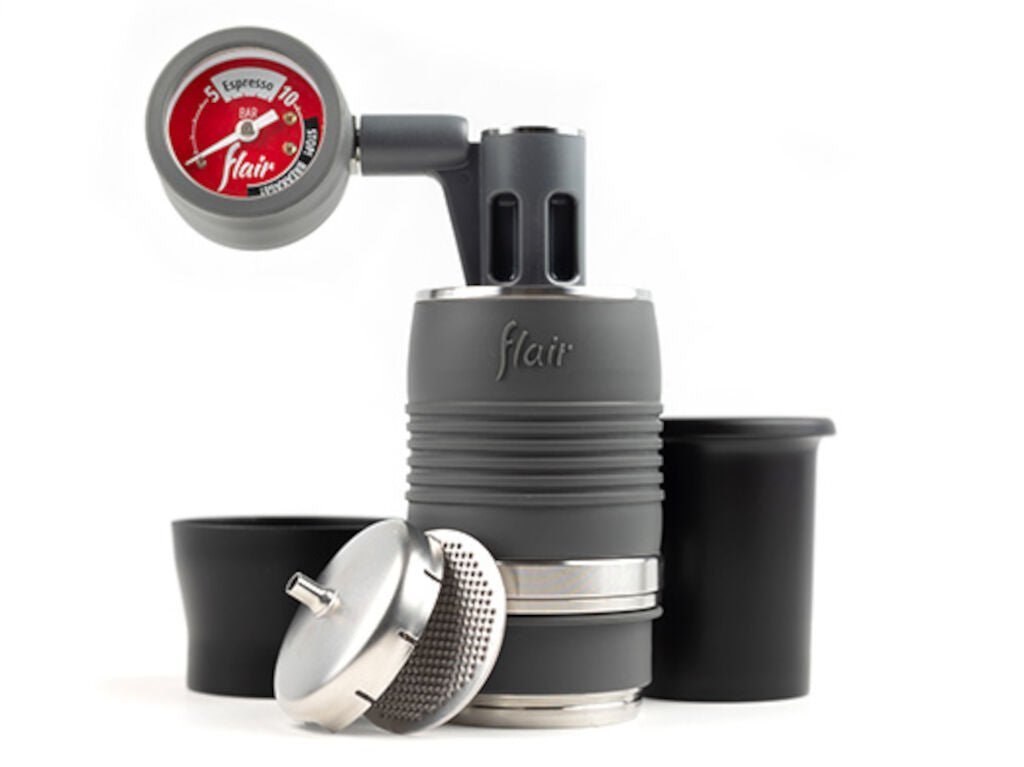
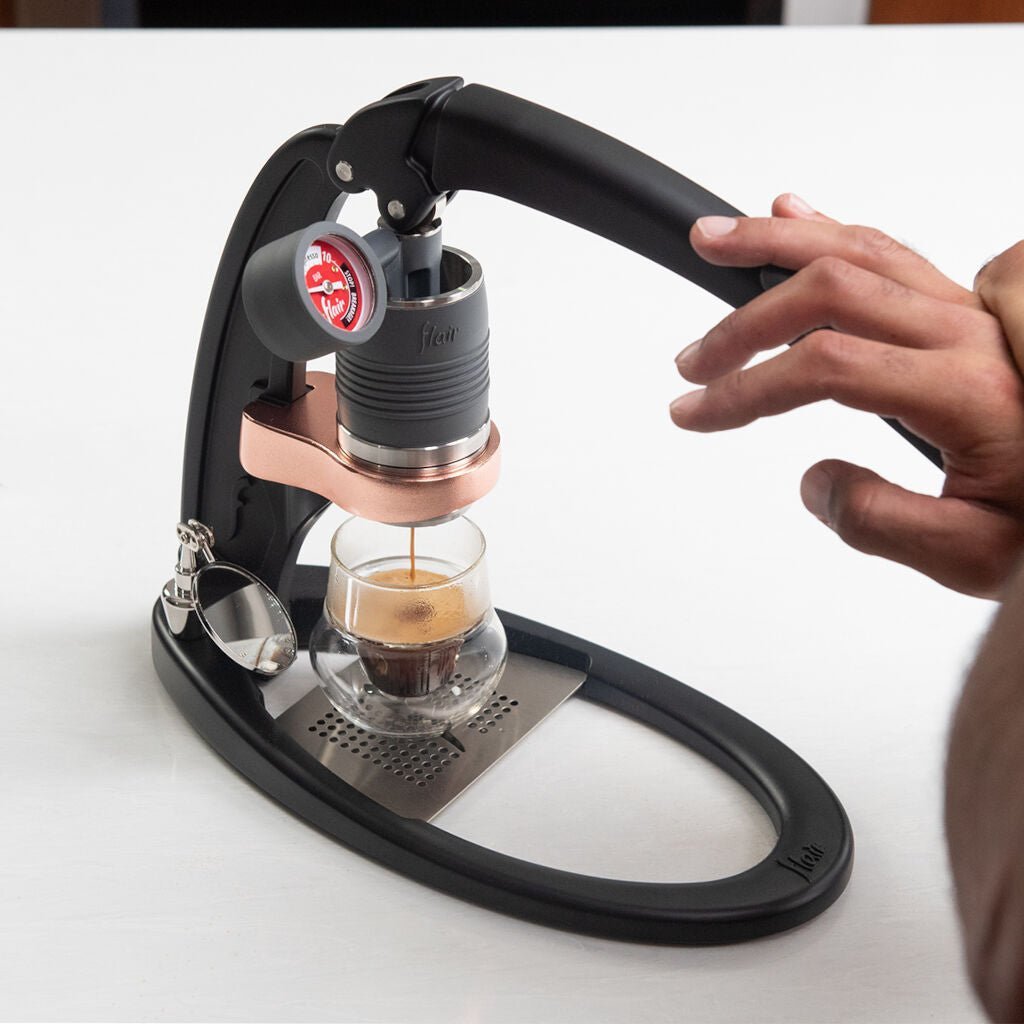
The reference point for serious manual espresso. One Hundred Coffee's 2026 roundup ranked the Flair PRO 3 first among manual lever machines, and Roast Love's 2026 guide made it its top pick as well, two independent sources converging on the same machine. The PRO 3 is a 100 percent human-powered direct-lever press with a built-in pressure gauge showing the 6 to 9 bar extraction range in real time, a 70 ml water capacity, doses up to 24 grams, and yields up to a 56 ml shot. What sets it apart is the workflow engineering: a detachable brew head that rinses clean in seconds, a thinner no-preheat cylinder that removes the fiddliest step of manual espresso, an integrated shot mirror, and a preheat funnel for colder rooms and lighter roasts.
- Built-in pressure gauge with a marked espresso zone, so you see and correct your pressure through the whole shot
- No-preheat thin-wall cylinder removes the step beginners most often skip, with a preheat funnel included when you want it
- Detachable brew head rinses clean in seconds and the whole machine packs into the included carrying case
- Cast aluminium and stainless steel build with a 5-year warranty, per the manufacturer specifications
Reasons to avoid:
- It demands good prep: a quality grinder, fresh beans, and respect for heat management
- The 46 mm basket is a proprietary size, so the third-party accessory pool is smaller than the 58 mm standard
- No steam capability, so milk drinks need a separate frothing solution
- The learning curve is real; expect a bag or two of beans before your shots settle down
- Mechanism: direct-lever manual press, 100 percent human-powered
- Portafilter: 46 mm
- Water capacity: 70 ml
- Dose / yield: up to 24 g / up to 56 ml
- Pressure: gauge with 6 to 9 bar espresso zone
- Build: cast aluminium and stainless steel; carrying case included
- Weight: 7.43 lb
- Warranty: 5 years
Best for: home baristas who want the ritual and the reward, cafe-level control over extraction without electricity, and a machine that grows with their technique.
As One Hundred Coffee put it, this is not a gadget pretending to make espresso; it is equipment that expects you to care and rewards you when you do, with real control over pressure profiling and brew ratio. Because your arm is the pump, you shape the extraction curve yourself: a gentle pre-infusion as the puck saturates, a ramp into the 6 to 9 bar zone the gauge marks out, and a taper at the end of the shot. That is a level of control most electric machines at this level simply do not offer, and it is why the PRO 3 keeps winning roundups against newer rivals.
The honest limitations matter too. The PRO 3 will expose a weak grinder immediately, and its shots reward fresh beans and careful distribution. It makes espresso only, so cappuccino drinkers need a separate frother or a stovetop steamer. And while the no-preheat cylinder genuinely removes the classic manual-espresso chore, very light roasts still benefit from the included preheat funnel and water just off the boil. None of that undermines the pick; it defines who it is for. If you want push-button coffee, look elsewhere. If you want to learn espresso properly, this is the machine reviewers keep pointing at.
2. Wacaco Picopresso (PPGR): Best Portable Hand Press Espresso Machine
Wacaco Picopresso (PPGR)
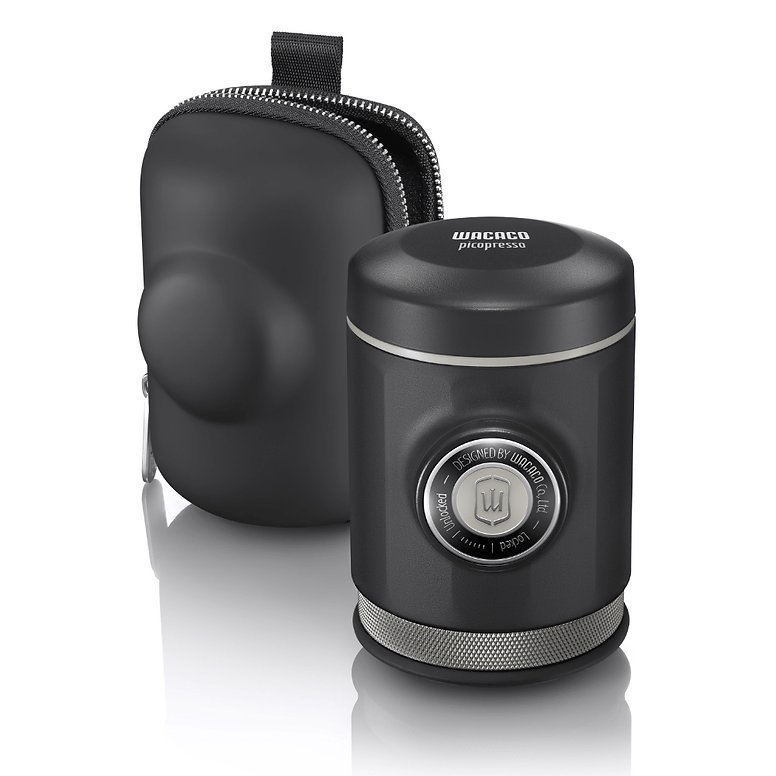
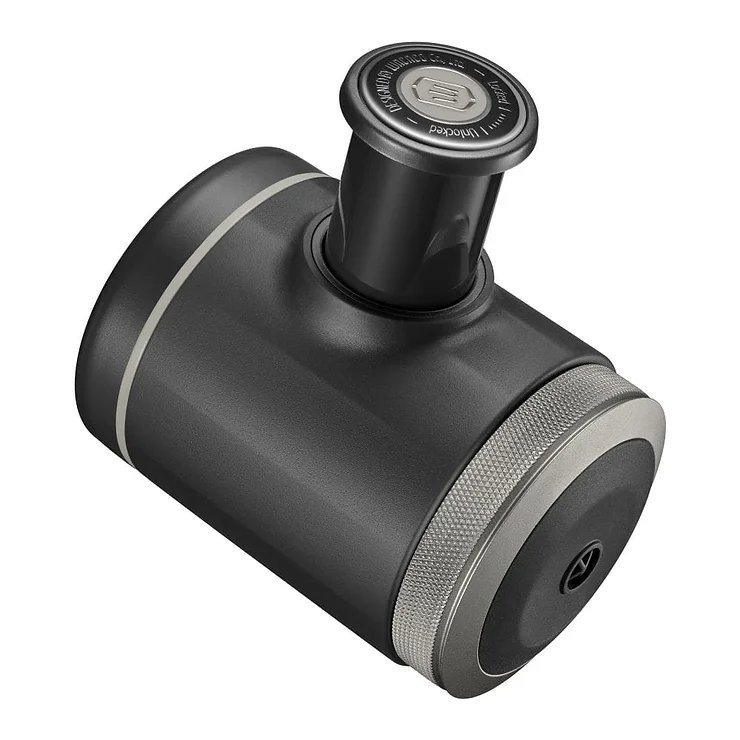
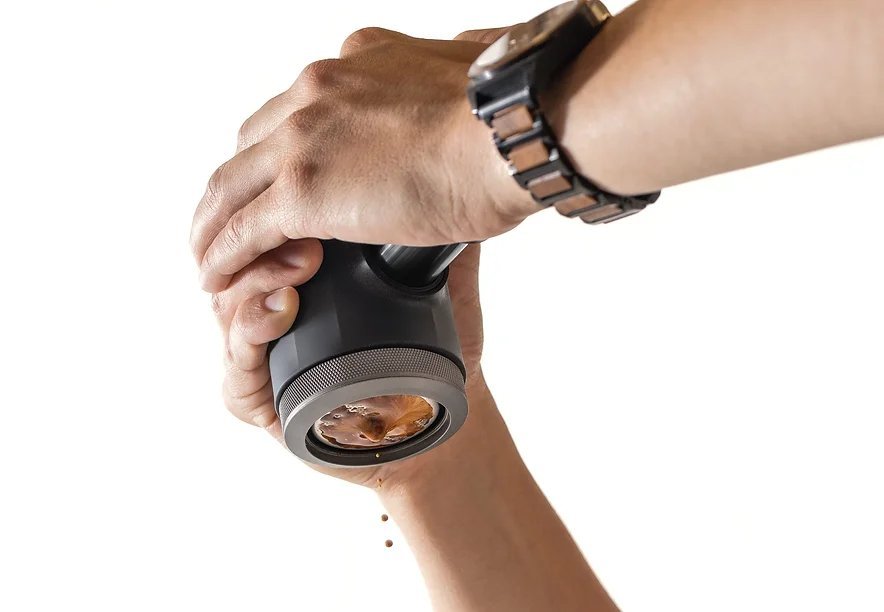
The travel pick that does not compromise on the shot. The Picopresso is a hand-pumped piston device, no lever, you press directly on the piston, with a 52 mm stainless steel basket holding up to 18 grams and an 80 ml (2.7 fl oz) water tank that pulls true double shots. Caffeine Fiend named it the best portable manual espresso maker; One Hundred Coffee calls it the best portable for serious coffee; Coffeeness notes it is the smaller, more professional sibling of the Nanopresso. The standout is the self-containment: the Picopresso packs its own dosing funnel, distribution tool, metal tamper, scoop and brush inside the device and its protective case, so your whole espresso kit travels as one unit.
- Real double shots from an 18 g commercial-style basket and a naked portafilter, rare at this size
- The full tool kit (funnel, distribution tool, tamper, scoop, brush) packs inside the device and case
- Weighs just 350 g (12.3 oz), the lightest serious espresso maker in this guide
- Pumping system is capable of up to 18 bar maximum pressure, well beyond the 9 bar espresso standard
Reasons to avoid:
- It is fiddly, with lots of small parts, and Coffeeness notes it is harder to clean than countertop machines
- It does not heat water, so a kettle or other hot water source travels with it
- No pressure gauge, so consistency comes from practiced, even pumping
- Best suited to brewers who already understand espresso; beginners will learn faster on a countertop lever
- Model: PPGR
- Mechanism: hand-pumped piston
- Basket: 52 mm, up to 18 g, naked portafilter
- Water tank: 80 ml / 2.7 fl oz
- Max pressure: 18 bar
- Included: filter basket, tamper, scoop, brush, distribution tool, funnel, protective case
- Weight: 350 g / 12.3 oz
Best for: travelers, campers, bikepackers, and office workers who refuse to drink bad coffee away from home, especially experienced brewers who already own a good hand grinder.
The Picopresso's party trick is that nothing about the shot itself feels portable-grade. The 52 mm basket is a genuine commercial-style filter basket rather than a pressurized shortcut, and the naked portafilter lets you watch the extraction and diagnose channeling the way you would on a home machine. Pumping can reach up to 18 bar at maximum effort, well beyond the roughly 9 bar espresso standard, though brute force is not the point; steady, even strokes and a properly dialed grind are what produce the sweet shot reviewers describe.
Plan around two honest constraints. First, the Picopresso does not heat water, so at a campsite or office you still need a kettle, and your brew temperature discipline is your own. Second, the workflow has many small parts to rinse, dry, and repack, which is charming on a trip and tedious on a rushed weekday morning. Owners who treat it as their travel espresso ritual tend to love it; buyers expecting pod-machine convenience tend not to. Paired with a capable hand grinder, it is the closest thing to a cafe shot that fits in a jacket pocket.
Other Manual Machines Worth Knowing
Four respected machines from our research do not carry buy links in this update, because we could not verify an exact-variant listing for them to the standard we apply to every recommendation. They are still worth knowing, and we will add links if verification clears.
Cafelat Robot Barista. The most forgiving manual espresso machine, and Caffeine Fiend's top overall pick for 2026. The Robot uses a dual-arm lever design and an oversized 57.5 mm basket with no separate brew chamber, a design Coffee Chronicler notes means you can get away without preheating at all. Owners call it close to indestructible, and the Barista version adds a pressure gauge. Cafelat sells primarily direct and through specialty retailers, which is why it appears here without a link.
Flair 58 Plus 2. The flagship of the Flair line and the most cafe-serious manual press: a full 58 mm portafilter in the commercial standard, and electronic group preheating, which Coffee Chronicler's Q Grader roundup notes is unique in the category and a real edge for lighter roasts. If you already own 58 mm accessories, this is the manual machine built around them.
ROK EspressoGC. One Hundred Coffee's best countertop-ritual pick: a distinctive hand-powered lever press with a glass composite brew chamber, twin arms you press down together, and a die-cast frame that looks like industrial sculpture. Pressure consistency takes practice without a gauge, but the ritual is the appeal.
Bellman CX-25P. The stovetop exception: a stainless brewer with a pressure gauge and a genuine cafe-style steam wand, so it is the one hand-powered design here that also steams milk for cappuccinos. Coffeeness calls it a big step up from a moka pot. Be honest with yourself about the output, though: stovetop brewing does not sustain the 9 bar extraction of the lever and piston presses, so expect rich espresso-style coffee rather than pump-grade espresso.
How to Choose a Hand Press Espresso Machine
Lever vs piston vs stovetop: the three hand-press types
"Hand press espresso machine" covers three mechanisms. Direct-lever presses (the Flair PRO 3 above) use a lever driving a piston: you control pressure through the whole shot, which enables pressure profiling, a gentle pre-infusion, a ramp to 9 bar, a taper at the end. Hand-pumped pistons (the Wacaco Picopresso) generate pressure by pumping directly on the piston: compact and travel-friendly, but with less nuanced control. Stovetop brewers with steam (the Bellman CX-25P) use stovetop heat and steam pressure: the only type that also steams milk, at the cost of true 9-bar extraction. Choose the mechanism by your priority: control (lever), portability (piston), or milk drinks (stovetop).
The grinder matters more than the press
Every experienced source in this category says the same thing: a hand press espresso machine is only as good as the grinder feeding it. Manual espresso needs a fine, consistent grind, and pre-ground coffee goes stale too fast to dial in. Budget for a quality hand grinder (the 1Zpresso range comes up repeatedly in owner discussions) or an entry electric espresso grinder alongside whichever press you choose. A great press with a bad grinder makes bad espresso; a decent press with a great grinder can make excellent espresso.
Pressure: 9 bar is the target, more is not better
Espresso extracts at around 9 bars of pressure; that is the standard every cafe machine targets. When a portable pump advertises "up to 18 bar," that is headroom, not quality: what matters is holding steady, controlled pressure through the shot, which is why the Flair PRO 3's pressure gauge is such a valued feature. It shows you what your arm is doing. Do not buy on the biggest bar number; buy on pressure visibility and control.
Preheat: the hidden workflow step
Manual presses are thermal lightweights compared to boiler machines, so preheating the brew group is the step beginners skip and veterans never do. The machines handle it differently: the Cafelat Robot's oversized-basket design needs no preheat at all, the Flair PRO 3's no-preheat cylinder removes the step, and the Flair 58's electronic preheat automates it. With any other manual press, run hot water through the group before dosing; it is the difference between a sour shot and a sweet one, especially with lighter roasts.
Basket size and the accessory ecosystem
Basket diameter decides which tampers, distribution tools, and aftermarket baskets fit. A 58 mm basket speaks the commercial standard, so every accessory ever made fits. The 52 mm Picopresso basket and the PRO 3's 46 mm basket have dedicated ecosystems but narrower aftermarket choice. If you already own espresso tools, match the press to them; if you are starting fresh, think about which ecosystem you want to live in.
Milk drinks: almost nothing here steams
Here is the honest limitation of the category: neither of this guide's two picks steams milk, and that is typical of hand press machines. If you want cappuccinos, you need a separate solution (a handheld frother or a stovetop steamer), or the stovetop Bellman CX-25P discussed above, whose built-in steam wand makes it the exception in the hand-powered class.
Frequently Asked Questions
It is a manual espresso maker where you generate the brewing pressure by hand, via a lever press or a hand-pumped piston, instead of an electric pump. Both picks in this guide brew at or near true espresso pressure (around 9 bar) without electricity.
Yes, with the right grind and technique. A proper hand press hits around 9 bars of pressure, which is the defining requirement of espresso, producing real crema. That is what separates them from moka pots (around 1.5 bar), which make strong coffee but not espresso. Reviewers including Coffee Chronicler's Q Grader report manual-press shots standing up next to prosumer semi-automatic machines.
The Cafelat Robot, on the published evidence: Coffee Chronicler's roundup and consistent owner feedback call it the most forgiving manual machine, with no preheat needed and dual-arm leverage. It is covered in prose above rather than as a linked pick. The Flair PRO 3 in this guide is the more instrumented teacher, because its pressure gauge shows you exactly what your arm is doing while you learn.
It depends on the machine. The Cafelat Robot needs no preheat by design, and the Flair PRO 3 has a no-preheat cylinder. For any other manual press, run hot water through the brew group before dosing; skipping it is the most common cause of sour shots, especially with lighter roasts.
A good one; it is the most important purchase in the setup. Manual espresso needs a fine, consistent grind, and pre-ground coffee will not dial in. Owner communities repeatedly recommend quality hand grinders such as the 1Zpresso range as the pairing for manual presses, or any espresso-capable electric grinder.
Neither lever nor piston presses steam milk, and that includes both picks in this guide. The stovetop Bellman CX-25P, discussed in prose above, is the hand-powered exception with a built-in cafe-style steam wand. If you want milk drinks from a lever press setup, add a separate handheld frother or stovetop steamer.
Plan 5 to 10 minutes per shot including grinding and prep, per experienced owner reports, and longer while you are learning. That is the honest time cost of the ritual, and the main reason to choose a semi-automatic machine if your mornings are rushed.
Final Recommendations
Flair PRO 3, Black: best overall. The most complete manual setup: pressure gauge, no-preheat workflow, detachable brew head, and the top ranking in two independent 2026 roundups. Buy it if espresso is becoming a hobby and you want cafe-level control without a boiler or a pump.
Wacaco Picopresso (PPGR): best portable. Real double shots from a 52 mm basket, a full tool kit that packs inside the case, and 350 g all-in. Buy it if your espresso has to travel, to the office, the campsite, or the far end of a bikepacking route.
Whichever you choose, budget for the grinder first, respect the preheat, and give yourself a bag or two of beans to learn. Do that, and a hand press will make some of the best espresso you have ever tasted, powered by nothing but hot water and your own arm.