A radar detector is no substitute for driving within the speed limit. What a good one does is give you earlier, clearer awareness of radar and laser activity around your vehicle, without drowning you in false alerts.
This guide compares the two radar detectors we verified in full for 2026: the Radenso DS1, our pick for city driving, and the Cobra RAD 700i, our pick for the money. Both are single-antenna GPS detectors with automatic false-alert lockouts, app connectivity, and modern filtering. They suit different drivers, which is why the head-to-head section below compares them directly, and the buying guide explains the trade-offs in plain language.
One important note before we go further: radar detectors (which passively listen for signals) are legal for passenger vehicles in 49 states, but illegal in Virginia and Washington, D.C., banned on military bases, and banned in commercial vehicles over 10,001 lbs. Radar jammers (which actively interfere with police equipment) are federally illegal everywhere in the U.S. The legality section below covers the full picture, and why this guide recommends detectors only.
In this guide: quick picks and a side-by-side comparison table, two in-depth reviews, how to choose (antennas, arrows, GPS lockouts, bands, stealth), U.S. legality explained, what "police radar detector" means, how the technology actually works, a head-to-head comparison, buying mistakes to avoid, FAQs, and a final verdict.
Quick Picks
Short on time? These are our top recommendations. Where a buy button appears, it takes you to the exact product on Amazon.
Comparison Table
| Product | Key Specs | Best Use Case | Standout Feature | Amazon Link |
|---|---|---|---|---|
| Radenso DS1 Best for City Driving |
Antennas: Single; Directional arrows: No; Built-in GPS: Yes (16,500 auto lockouts plus 5,000 manual) | City and suburban commuters plagued by false alerts; drivers who enjoy fine-tuning settings per band. | Deepest verified false-alert management | Check Price on Amazon |
| Cobra RAD 700i Best for the Money |
Antennas: Single; Directional arrows: No; Built-in GPS: Yes (AutoLearn) | Budget-conscious buyers who still want GPS, app connectivity, shared alerts, and modern filtering, the maximum feature set per dollar in this guide. | Outstanding value | Check Price on Amazon |
Best Radar Detectors: In-Depth Reviews
How we chose these (methodology)
We did not hands-on test these detectors, and we won't pretend otherwise. Selection is research-based: we compared manufacturer-published specifications and manuals. This guide recommends two models. We verify every recommended model against manufacturer documentation and an independent source before linking it, and models that could not meet that standard are not recommended here. We excluded all jammers on legal grounds (see below). Recommendations reflect buyer suitability, never commission.


Radenso DS1
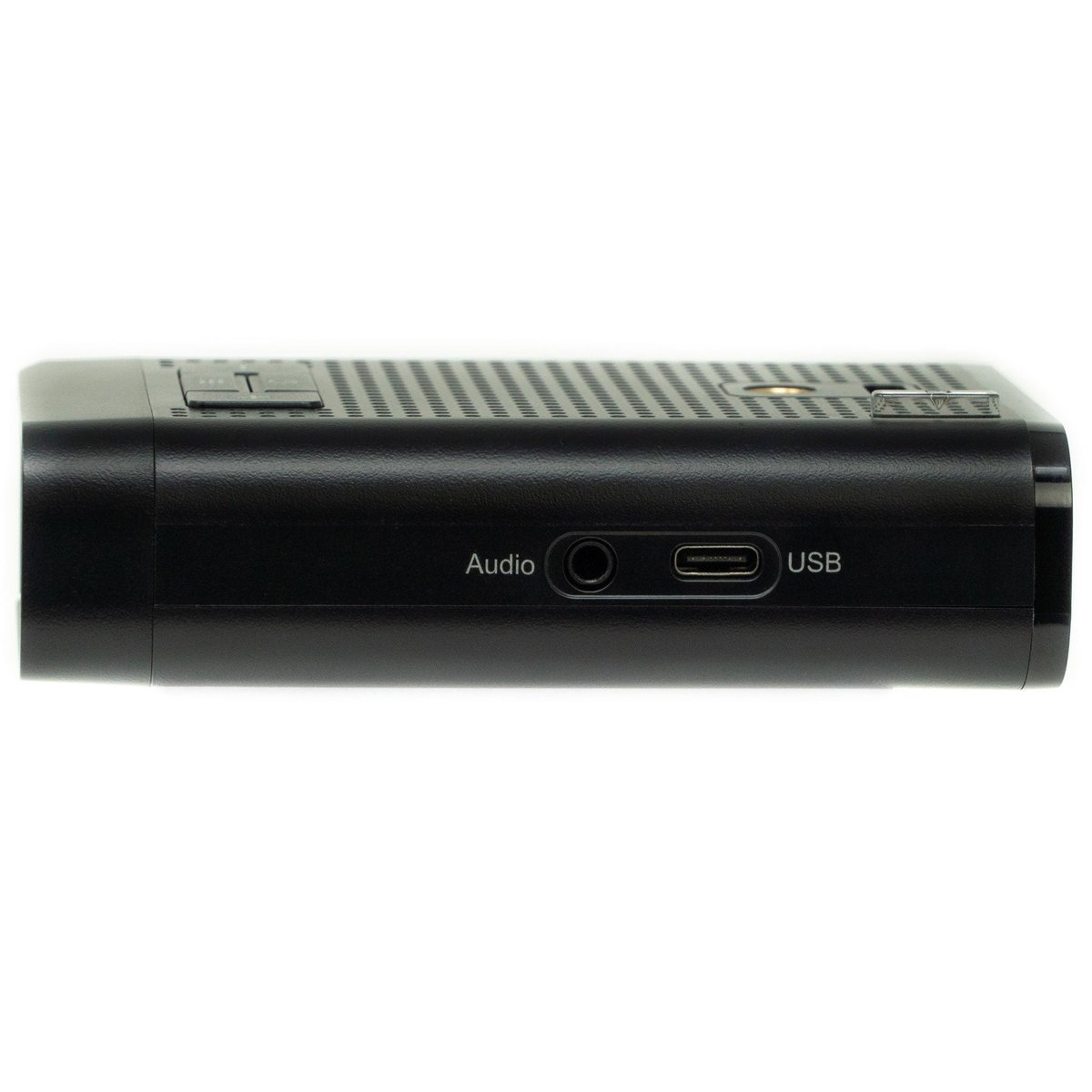
City driving is where cheap detectors fall apart, and the Radenso DS1 is built for exactly this problem. Its auto-learning GPS lockouts remember up to 16,500 stationary false-alert locations automatically, with room for 5,000 more that you mark yourself, so a regular commute gets quieter over time as the detector learns the fixed false alarms on your routes. That capacity is the deepest verified false-alert memory in this guide, and it is the reason the DS1 leads for city and suburban drivers. Around that core, the DS1 offers deep per-band customization, so drivers who like to fine-tune settings can adjust sensitivity band by band rather than accepting one fixed profile. Bluetooth 5.0 connects the detector to its app for control and updates, and USB-C keeps charging current, with a magnetic mount for quick removal. The colour OLED display shows band and frequency clearly, including Ka readings, and the manual lists detection support for MultaRadar (MRCD and MRCT) and Gatso photo-radar systems alongside the standard X, K, and Ka bands. Radenso also claims the DS1 is undetectable by Spectre and VG-2 radar-detector-detectors. Treat that as a manufacturer claim, not a guarantee, and remember it never makes a detector legal where detectors are banned. At 4.3 by 3 by 1.2 inches, the unit is compact on the windshield, and its single-antenna design keeps the package simple.
Reasons to Buy
- Deepest verified false-alert management: 16,500 automatic GPS lockouts plus 5,000 manual lockouts, so repeat routes get quieter over time
- Deep per-band customization for drivers who like to fine-tune sensitivity band by band
- Modern connectivity: Bluetooth 5.0 app control and USB-C charging, with a magnetic mount for quick removal
- Photo-radar coverage: the manual lists MultaRadar (MRCD and MRCT) and Gatso detection alongside X, K, and Ka bands
Reasons to Avoid
- No directional arrows: this is a single-antenna detector, so alerts carry no direction context
- No dedicated rear antenna: single-antenna coverage cannot match dual-antenna models for signals behind you
- Customization depth means setup work: drivers who want a set-and-forget unit may find the per-band controls more than they want
- Fullest control runs through the app: drivers who do not want app involvement get less from the Bluetooth features
- Antennas: Single
- Directional arrows: No
- Built-in GPS: Yes (16,500 auto lockouts plus 5,000 manual)
- Connectivity: Bluetooth 5.0, USB-C, magnetic mount
- Display: Colour OLED
- Photo radar: MRCD and MRCT, Gatso (per manual)
- Dimensions: 4.3 x 3 x 1.2 inches
Best for: City and suburban commuters plagued by false alerts, especially drivers who drive the same routes every day, since repeat routes are where automatic lockouts pay off fastest. It also suits drivers who enjoy fine-tuning settings per band and want app control and USB-C rather than older connectors. Drivers who want a compact, modern unit for daily commuting, school runs, and suburban errands will get the most from it, and so will anyone who has been annoyed into ignoring a chatty detector, because a quiet detector you trust beats a chatty one you start ignoring. It also suits drivers upgrading from a basic non-GPS unit, since lockouts and per-band controls attack the two frustrations that make cheap detectors annoying: repeat false alarms on fixed routes and one fixed profile for every band.
Should you buy it? Buy the DS1 if your driving is mostly city and suburban, your routes repeat, and false alerts are your main frustration. The lockout memory and per-band controls are built for exactly that driver, and the compact size, magnetic mount, and USB-C charging suit a daily-use unit you take in and out of the car. Skip it if directional arrows matter to you, because this is a single-antenna detector and its alerts carry no direction context, and skip it if you want a set-and-forget unit with almost nothing to configure, since the customization depth that enthusiasts like is setup work that simpler buyers may not want. If either of those is a deal-breaker, the Cobra below is the alternative to weigh, trading lockout depth for shared alerts and value.
Radenso DS1
Single antenna, no directional arrows, GPS with 16,500 auto lockouts, Bluetooth 5.0, USB-C
Cobra RAD 700i
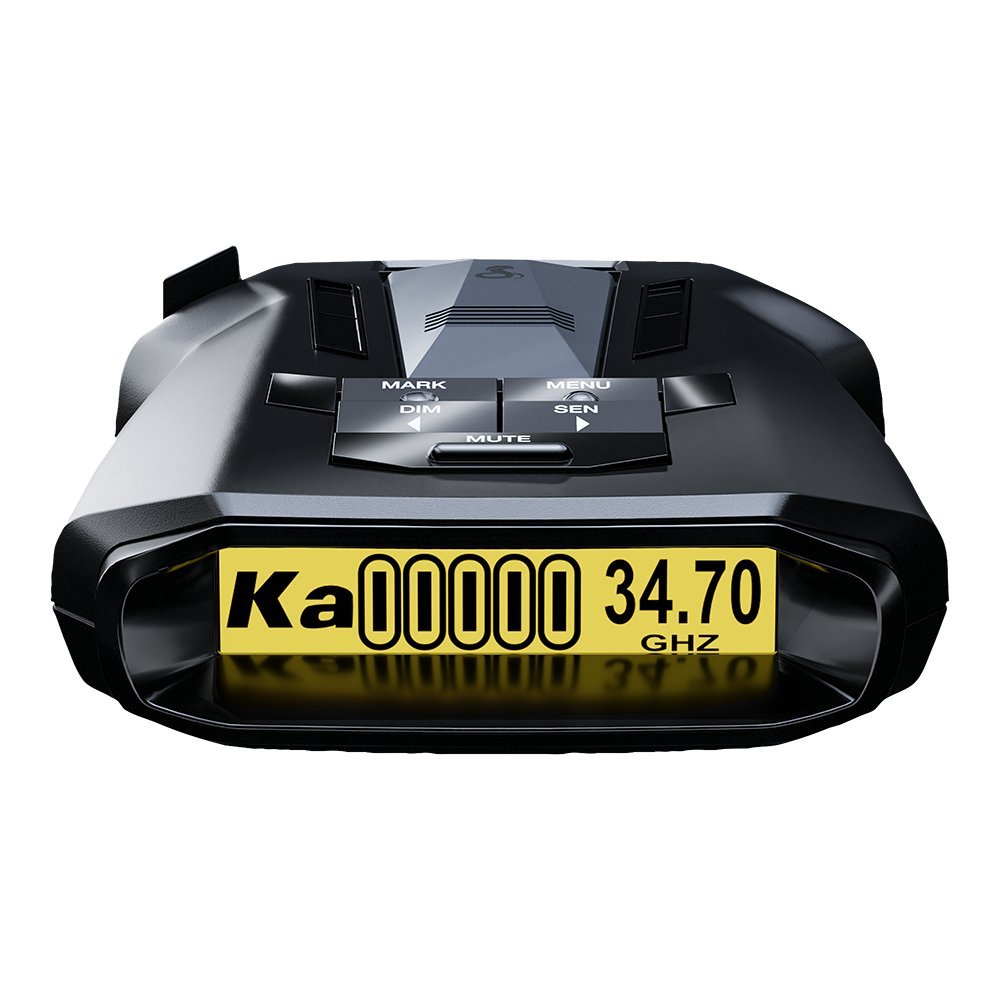
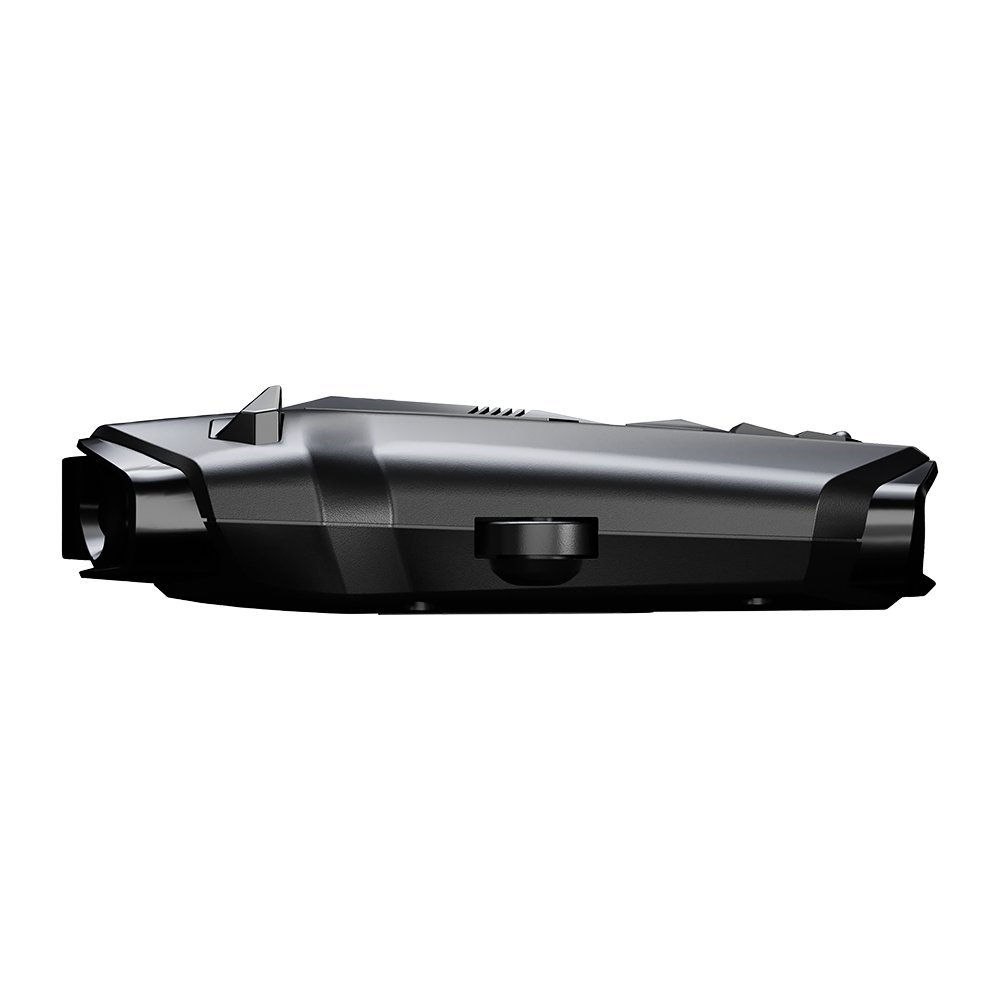
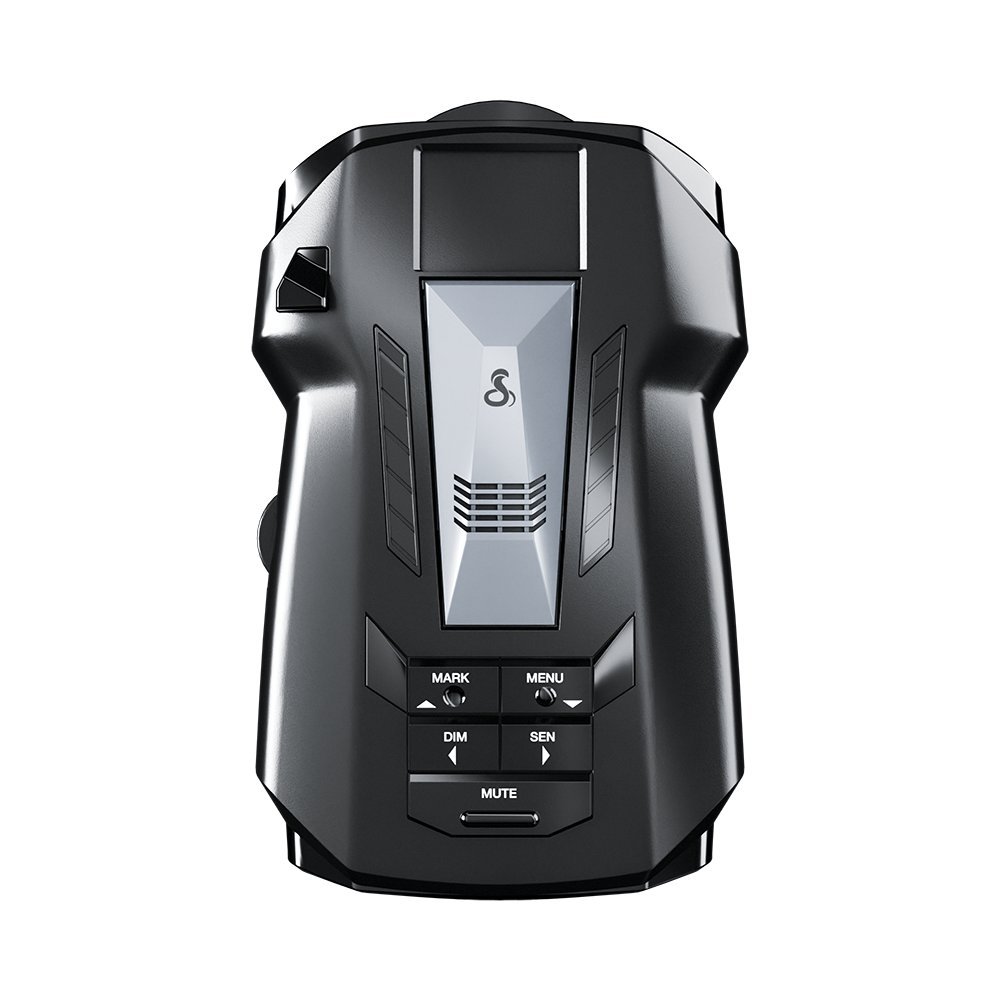
"Best radar detector for the money" is one of the most-searched phrases in this category, and the Cobra RAD 700i is the most defensible answer we have found. It is a connected GPS detector with AutoLearn lockouts, which automatically learn and quiet the stationary false alerts on your regular routes, so your commute gets calmer the more you drive it. Shared community alerts arrive through the Drive Smarter app, with CarPlay and Android Auto support, so warnings from other drivers reach you alongside the detector's own sensing. Front-and-rear laser detection covers both directions for laser alerts, and Cobra's premium detection tier with digital signal processing (DSP) handles the filtering work that keeps noisy bands manageable. At 6.4 ounces and 5.13 by 3.13 by 1.25 inches, in black, the unit is light and compact on the windshield. The manual lists the model as 0180012-1. Like the DS1, the RAD 700i is a single-antenna detector with no directional arrows, so it trades the direction context of dual-antenna models for a much lower tier. That trade is the whole point of this pick: the strongest feature set per dollar in this guide, for buyers who want GPS, app connectivity, shared alerts, and modern filtering without paying flagship prices. For drivers comparing the two picks here, the choice is lockout depth and customization (DS1) against shared alerts and value (RAD 700i). A hands-on review of the RAD 700i notes its box contents, setup, and performance testing, and lists the display as a 5-color OLED with the Drive Smarter app for Android or iOS.
Reasons to Buy
- Outstanding value: GPS, AutoLearn, shared alerts, and modern filtering at a budget-friendly tier
- GPS with AutoLearn: stationary false alerts on regular routes are learned and quieted automatically
- Shared community alerts through the Drive Smarter app, with CarPlay and Android Auto support
- Front-and-rear laser detection plus Cobra's premium detection tier with DSP filtering
Reasons to Avoid
- No directional arrows: single-antenna design, so alerts carry no direction context
- No dedicated rear antenna: single-antenna coverage cannot match dual-antenna models behind you
- Connected features run through the app: drivers who do not want app involvement get less from it, and app terms should be checked before buying
- Value tier trade-offs: no dual antennas, no arrows, and no flagship extras, so arrow-focused buyers should look elsewhere
- Antennas: Single
- Directional arrows: No
- Built-in GPS: Yes (AutoLearn)
- App: Drive Smarter with shared alerts, CarPlay and Android Auto
- Laser: Front-and-rear detection
- Display: 5-color OLED
- Weight: 6.4 ounces
- Dimensions: 5.13 x 3.13 x 1.25 inches
- Model: 0180012-1
Best for: Budget-conscious buyers who still want GPS, app connectivity, shared alerts, and modern filtering, in other words the maximum feature set per dollar in this guide. It suits first-time detector buyers who want a connected unit without flagship prices, commuters who want their regular routes quieted automatically by AutoLearn lockouts, and drivers who value community alerts from the Drive Smarter app, including CarPlay and Android Auto support, alongside the detector's own sensing. Drivers moving up from a basic non-GPS unit will notice the difference most, since lockouts and shared alerts attack the two frustrations that make cheap detectors annoying: repeat false alarms and lonely sensing with no community input.
Should you buy it? Buy the RAD 700i if value leads your decision and you want a connected GPS detector rather than a bare-bones unit. AutoLearn, shared alerts, and front-and-rear laser detection cover the features most daily drivers actually use, at a tier well below dual-antenna models. Skip it if directional arrows are a must, since this is a single-antenna detector, and check the current app terms before buying, since connected features can carry their own terms. If arrows and dual-antenna coverage matter more than value, neither pick in this guide offers them, so you would need to look beyond these two verified models rather than compromise on a feature you consider essential.
Cobra RAD 700i
Single antenna, no directional arrows, GPS with AutoLearn, Drive Smarter shared alerts, front-and-rear laser detection
How to Choose a Radar Detector: Buying Guide
Dual antenna vs. single antenna (and why arrows matter)
Two antennas, one watching forward, one behind, give true 360° awareness, and dual-antenna detectors can show directional arrows indicating whether a signal is ahead, beside, or behind you. That context is genuinely useful: an alert from behind as you pass a patrol car means something different from one ahead. Single-antenna detectors alert without direction. If your budget allows, dual antennas with arrows are the single biggest step up in situational awareness.
Range vs. quiet: the real trade-off
Maximum sensitivity means maximum range, but also maximum false alerts. The best detectors don't just hear more; they filter better. Look for digital signal processing (DSP), dedicated filtering for vehicle blind-spot and collision-avoidance systems, and GPS-based lockouts that silence repeat false alarms at fixed locations. A quiet detector you trust beats a chatty one you start ignoring.
GPS lockouts and camera databases
Built-in GPS does three jobs: (1) lockouts: remembering and auto-muting stationary false alerts on your regular routes (Cobra's AutoLearn, Radenso's 16,500-location auto-lockout memory); (2) camera alerts: warning of fixed red-light and speed-camera locations from a database; (3) speed-based sensitivity: reducing sensitivity at low speeds where tickets are unlikely. Check whether database updates are free and how they're delivered (USB, Bluetooth, or WiFi).
Radar bands: X, K, Ka, what you'll actually encounter
- X band (10.525 GHz): the oldest police radar band, now largely phased out of speed enforcement in the U.S. Most X-band alerts come from automatic door openers and other non-police sources. Many drivers disable X band entirely in cities.
- K band (~24.1–24.15 GHz): still used for speed enforcement, but it's also where modern cars' blind-spot monitoring and collision-avoidance systems operate, making it the noisiest band. Good K-band filtering is what separates great detectors from annoying ones.
- Ka band (~34.7 GHz, spanning roughly 33.4–36 GHz): the primary U.S. police radar band and the one that matters most. A real Ka alert deserves immediate attention. Advanced detectors offer Ka segmentation to scan it more efficiently.
- Laser/LIDAR (904 nm infrared): not radar at all, a narrow beam of infrared light. The hard truth: when your detector alerts to laser, your speed may already have been measured. Treat laser detection as a ticket notifier, not advance warning, no windshield detector reliably defeats laser; that's physics, not brand.
POP mode and photo radar
POP is a very brief burst of radar some guns can emit; genuine POP encounters are rare and the mode can increase falsing, many experienced users leave it off. MultaRadar (MRCD/MRCT) and GATSO are low-power photo-radar systems used for automated enforcement; both detectors in this guide list detection support.
RDD stealth: what "undetectable" means
A radar detector detector (RDD): notably the Spectre Elite, is equipment police use to find radar detectors, mainly where detectors are banned (Virginia, D.C.). Some detectors are engineered for low emissions and claim stealth: the Radenso DS1 (Spectre/VG-2, per Radenso) carries such a claim. Treat this as a manufacturer claim, not a guarantee, and remember stealth doesn't make a detector legal where detectors are banned.
Connectivity and subscriptions: read the fine print
Modern detectors pair with apps for shared alerts, settings, and updates. Before buying, verify: is the app free? Do premium features require a subscription after a trial? Are database updates free, and how are they delivered? Check current terms yourself; we don't quote subscription prices. Radenso states its firmware and database updates are free.
Mounting, power, and your vehicle
Most detectors mount to the windshield via suction cups and run on 12V vehicle power. Verify your vehicle has an accessible 12V outlet or plan for a hardwire kit. Check your state's windshield-mount rules: California and Minnesota, among others, restrict objects mounted on the windshield. Magnetic quick-release mounts (fitted to the DS1, per its manual) make it easy to remove the detector when parked, or when driving through Virginia, where you should stow it entirely.
Are Radar Detectors Legal in the U.S.? (Read This Before Buying)
Short answer: Radar detectors are legal for passenger vehicles in 49 states. They are illegal in Virginia (Code of Virginia § 46.2-1079) and Washington, D.C., prohibited on U.S. military installations, and banned in commercial motor vehicles with a gross vehicle weight rating over 10,001 lbs under federal law (49 CFR 392.71). Check your state and local laws before buying, and if you drive through Virginia, remove and stow the detector; its mere presence in the vehicle is evidence of a violation there.
A few specifics worth knowing:
- Virginia: Operating a vehicle equipped with any device "to detect or purposefully interfere with" police speed-measurement equipment is an equipment infraction, typically around a $40 fine plus court costs, no license points, and the device must be returned to you. Still: don't risk it. Stow the unit before crossing into Virginia.
- Commercial vehicles: Federal regulation 49 CFR 392.71 prohibits radar detectors in commercial motor vehicles, no driver may use one, and no carrier may permit it. This applies to interstate commercial trucking, not your personal car.
- Mounting laws: Separate from detector legality, several states restrict anything mounted on the windshield. Use a visor or mirror-stem mount where required.
Detectors vs. jammers: a critical distinction
A radar detector passively listens for police radar signals. A radar jammer actively transmits to interfere with police equipment, and jammers are federally illegal. The FCC explicitly prohibits the manufacture, marketing, sale, and operation of jamming devices, including devices that interfere with police radar; violations carry heavy fines and potential prison time. "Laser jammers" (also marketed as "shifters") sit in a patchwork of state laws, many states, including California, Colorado, Illinois, Texas, and Virginia, ban them explicitly, and their legality varies by state.
This guide covers detectors only. We do not recommend, review, or link to any jammer or jammer-adjacent product, and we advise against buying one: beyond the legal exposure, they don't belong in a discussion of legal driving aids. If you searched for "police jammer," now you know why you won't find buying advice for one here, and we'd urge you to steer clear.
Legal note: laws change. This summary reflects sources checked in October 2026 (FCC enforcement guidance, the Code of Federal Regulations, and the Code of Virginia). It isn't legal advice. Verify current law in your jurisdiction.
What Is a "Police Radar Detector"?
If you searched for a police radar detector, you're in the right place, it's simply what many drivers call a radar detector when they mean one specific job: warning you about police speed-enforcement signals. Every detector in this guide is a police radar detector in that sense. There is no separate consumer product category behind the phrase; it describes the job, not a distinct type of device.
What that job actually involves:
- Police radar bands. U.S. speed enforcement uses X band (10.525 GHz, now rare), K band (~24.1 GHz), and Ka band (~34.7 GHz, the primary band). A capable police radar detector covers all three, with Ka-band sensitivity mattering most. See "Radar bands" in the buying guide above for the full breakdown.
- Police laser (LIDAR). Some enforcement uses infrared laser instead of radar. Detectors can alert to laser, but the honest limitation stands: by the time a windshield detector sees a laser beam, your speed has usually already been measured. No detector in this guide defeats laser; treat laser alerts as information, not protection.
- Being detected yourself. In Virginia and Washington, D.C., where detectors are banned, police use radar-detector-detectors (notably the Spectre Elite) to find them. Some models claim stealth (see "RDD stealth" above), but stealth is an engineering claim, never a legal shield.
One caution for shoppers using this search phrase: you'll also encounter "police jammers": devices claiming to block or scramble police equipment. Those are a different product in a different legal universe. Jammers are federally illegal under FCC rules; the detectors in this guide are passive listeners, legal for passenger vehicles in 49 states. If a listing promises to interfere with police radar, it isn't a detector. Walk away.
Bottom line: either detector reviewed above is a capable police radar detector. Choose by the same criteria, range, filtering, directional arrows, GPS lockouts, not by whether the box has the word "police" on it.
Head-to-Head Comparison
Radenso DS1 vs. Cobra RAD 700i: the city specialist against the value pick. Both are single-antenna GPS detectors with no directional arrows, so the choice is not about antennas. It is about what you value more. Choose the DS1 for lockout depth (16,500 automatic locations plus 5,000 manual) and per-band customization, plus photo-radar support for MultaRadar and Gatso. Choose the RAD 700i for shared community alerts, CarPlay and Android Auto, and the stronger value case. City commuters on repeat routes lean DS1. Budget-first buyers and first-time detector owners lean Cobra. Either way, you give up directional arrows, so if arrows are essential, neither pick here will satisfy you.
Common Buying Mistakes
- Buying a jammer instead of a detector. They sound similar; legally they're worlds apart. Jammers are federally illegal. If a listing promises to "block" or "scramble" police equipment, walk away.
- Ignoring your state's laws. Virginia and D.C. ban detectors outright. Buying a premium detector and getting fined in Virginia is an avoidable mistake, as is mounting one on the windshield where that's prohibited.
- Chasing range while ignoring filtering. A detector that alerts constantly trains you to ignore it. GPS lockouts and BSM/CAS filtering matter as much as raw sensitivity for daily driving.
- Expecting laser alerts to save you. Laser detection usually means your speed was just measured. Don't buy a detector primarily for laser protection, no windshield unit reliably provides it.
- Skipping updates. Camera databases and firmware go stale. Prefer models with free, easy updates, and actually install them.
- Assuming "undetectable" means "legal everywhere." RDD stealth is an engineering claim, not a legal shield. It doesn't make detectors lawful in Virginia or D.C.
- Choosing on a single feature alone. Arrows are useful, but a detector with arrows and weak filtering will annoy you daily, while a quiet single-antenna unit you trust may serve you better. Judge the whole package: filtering, lockouts, connectivity, and legality, not one headline feature.
Frequently Asked Questions
For passenger vehicles, yes in 49 states. They're illegal in Virginia and Washington, D.C., banned on military bases, and banned in commercial vehicles over 10,001 lbs under federal law (49 CFR 392.71). Always verify current state and local laws.
A detector passively listens for radar signals, legal in most states. A jammer actively interferes with police equipment, federally illegal under FCC rules, with heavy fines and possible prison time. This guide covers detectors only.
Our pick is the Cobra RAD 700i: GPS with AutoLearn, shared community alerts, front-and-rear laser detection, and Cobra's premium detection tier at a budget-friendly tier. It's the strongest feature-per-dollar package in our research.
Not strictly, but they're the most useful situational-awareness feature available. Knowing a signal is behind you versus ahead changes how you interpret every alert. If your budget reaches a dual-antenna model, arrows are worth it.
X band (10.525 GHz) is the oldest police radar band and is now largely out of enforcement use; most X-band alerts come from door openers and other non-police sources. Many city drivers disable X band to cut false alerts.
With RDD equipment like the Spectre Elite, yes, non-stealth detectors can be detected, which is how Virginia and D.C. enforce their bans. Some models claim stealth, but treat those as manufacturer claims and never as permission to use a detector where banned.
Core detection never does. Some connected features do, so check current terms before buying. Radenso states its firmware and database updates are free.
They run on standard 12V vehicle power and mount to the windshield in most cases. Check windshield-mount restrictions in your state, and note that heavily metallized windshields (some EVs and luxury cars) can reduce reception, a remote-installed unit may suit those vehicles.
Radar jammers are federally illegal (FCC). Laser jammers fall under varying state laws and are explicitly banned in many states. We don't recommend or cover them. If a product claims to block or scramble police equipment, it's not something to buy.
It's another name for a radar detector, a device that warns you about police radar and laser speed enforcement. Every model in this guide detects police radar; there is no separate product category. The same buying criteria apply (range, filtering, arrows, GPS lockouts). Note that detectors are illegal in Virginia and Washington, D.C., and that jammers, sometimes marketed alongside this search phrase, are federally illegal.
Final Verdict
The Radenso DS1 is our pick for city driving: the deepest verified false-alert memory in this guide, with 16,500 automatic lockouts plus 5,000 manual, per-band customization, and modern connectivity. The Cobra RAD 700i is our pick for the money: GPS with AutoLearn, shared community alerts, front-and-rear laser detection, and Cobra's premium detection tier, at a budget-friendly tier. Both are single-antenna detectors with no directional arrows, so choose by your priority: lockout depth and customization, or shared alerts and value.
Whatever you choose: buy from an authorized retailer, keep firmware and databases updated, and know your state's laws. A detector is an awareness tool, not a license to speed. Drive within the limit and let it be your backup, not your plan.
Final Recommendations
Best for City Driving: Radenso DS1: City and suburban commuters plagued by false alerts; drivers who enjoy fine-tuning settings per band.
Best for the Money: Cobra RAD 700i: Budget-conscious buyers who still want GPS, app connectivity, shared alerts, and modern filtering, the maximum feature set per dollar in this guide.