
The short version: the Blue Yeti and the Audio-Technica AT2020USB+ are the two classic USB condenser microphones for podcasting, streaming, and home recording, and they solve the same problem in different ways. The Yeti gives you four switchable pickup patterns and full onboard controls, which makes it the more versatile pick for interviews, roundtables, and multi-use desks. The AT2020USB+ sticks to a single cardioid pattern with a simpler control set, and its studio-style design and lighter build suit solo recording at a desk. If you record more than one voice or scenario, the Yeti's flexibility is worth it; if you record one voice in one place, the AT2020USB+ keeps things focused.
If you search for a microphone comparison, these are the two names that come up again and again: Blue's Yeti and Audio-Technica's AT2020USB+. Both are USB condenser microphones aimed at the same buyer, the podcaster, streamer, voiceover artist, or home recordist who wants better-than-headset audio without buying an audio interface. Both plug straight into a computer, both include a desktop stand and a headphone jack for latency-free monitoring, and both have been on the market long enough that their strengths and weaknesses are thoroughly documented.
That shared history is exactly what makes the comparison useful. This is not a contest between different categories; it is a choice between two philosophies. The Yeti bets on versatility: four pickup patterns, a gain knob, and enough onboard control to handle interviews, group recording, and music without touching software. The AT2020USB+ bets on focus: one cardioid pattern, a studio-microphone form factor inherited from the acclaimed AT2020, and a mix control for blending your voice with playback. Neither approach is wrong, but they suit different desks.
MoleMarket is research-based, not a test lab. We did not record, measure, or A/B test these microphones. This comparison is built from the manufacturers' published specifications (Logitech G's Yeti product pages and documentation; Audio-Technica's AT2020USB+ manual and spec sheets), professional reviews including Sound on Sound's review of the AT2020USB+, and corroborating retailer spec pages from B&H Photo Video and Long & McQuade. Every figure below is attributed to its publisher; nothing is invented, estimated, or presented as our own testing.
Blue Yeti vs AT2020USB+ at a Glance
| Feature | Blue Yeti (Silver) | Audio-Technica AT2020USB+ (Black) |
|---|---|---|
| Best for | Versatility: interviews, groups, streaming, music | Focused solo recording: podcasting, voiceover, vocals |
| Pickup patterns | Cardioid, bidirectional, omnidirectional, stereo | Cardioid only |
| Capsule | Three 14mm condenser capsules (Logitech G rating) | Fixed-charge back plate condenser (Audio-Technica rating) |
| Sample rate / bit depth | 48 kHz / 16-bit | 44.1 or 48 kHz / 16-bit |
| Onboard controls | Gain, pattern select, mute, headphone volume | Mix control, headphone volume |
| Headphone monitoring | Zero-latency, built-in amp (130mW, 100dB SNR) | Zero-latency, built-in amp (130mW) |
| Weight | Mic 1.2 lb; stand 2.2 lb | 386 g (13.6 oz) |
| In the box | Mic, desktop stand, USB cable | Mic, tripod stand, pivoting mount, USB cable, pouch |
| Amazon Link | Check Price on Amazon | Check Price on Amazon |
Best for Versatility: Our Blue Yeti Review
Blue Yeti USB Microphone (Silver)
Editors' Choice
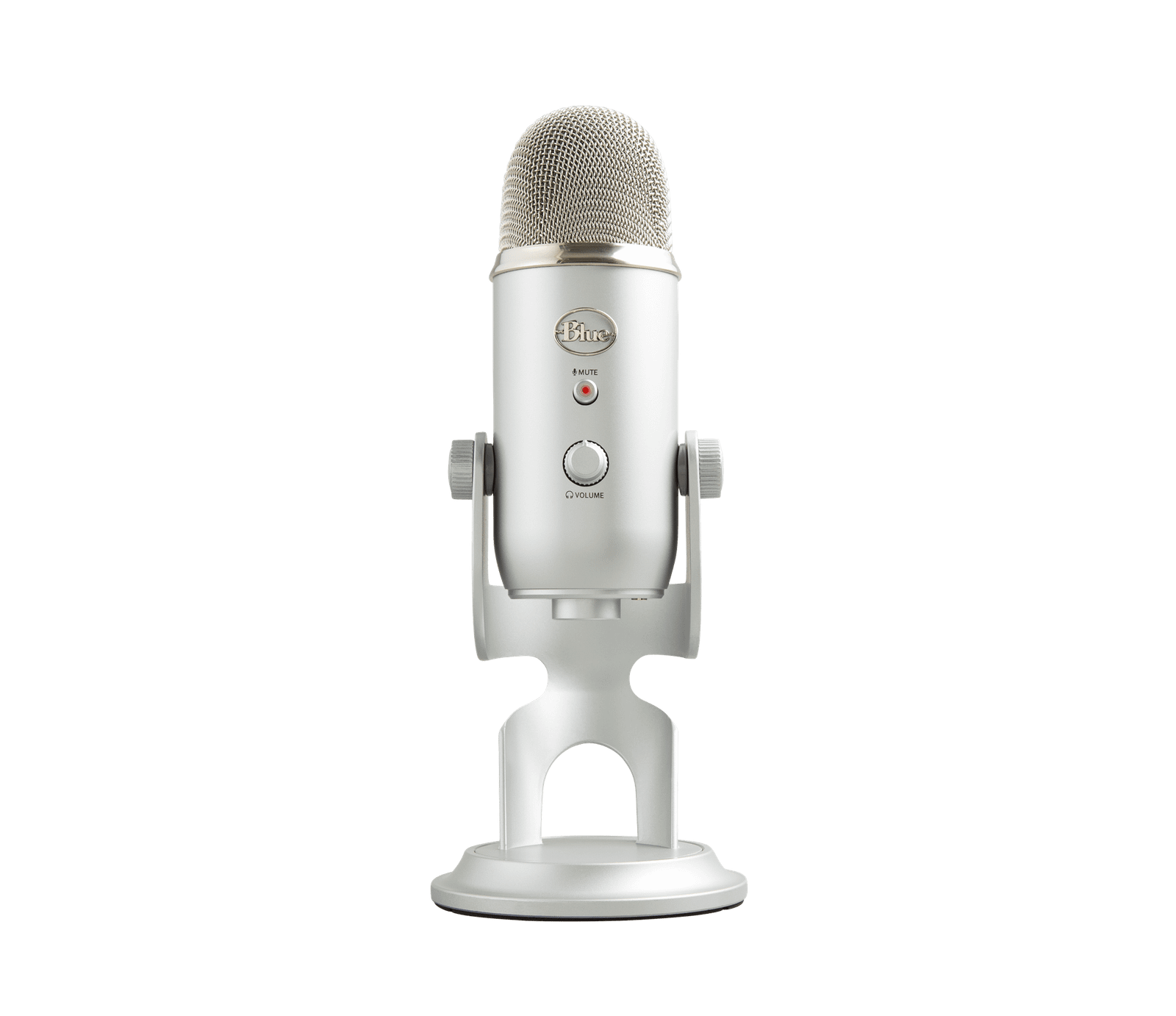
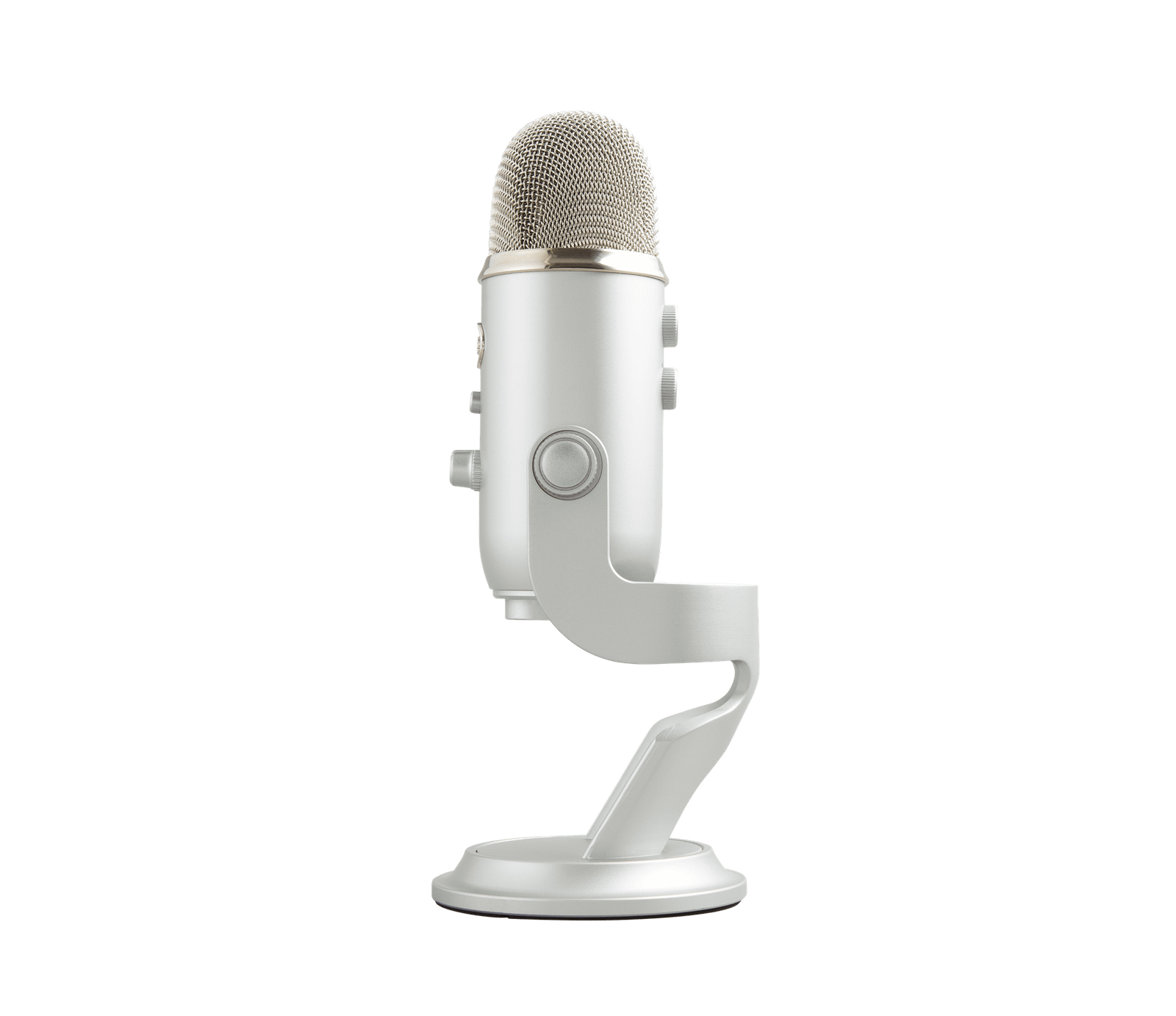
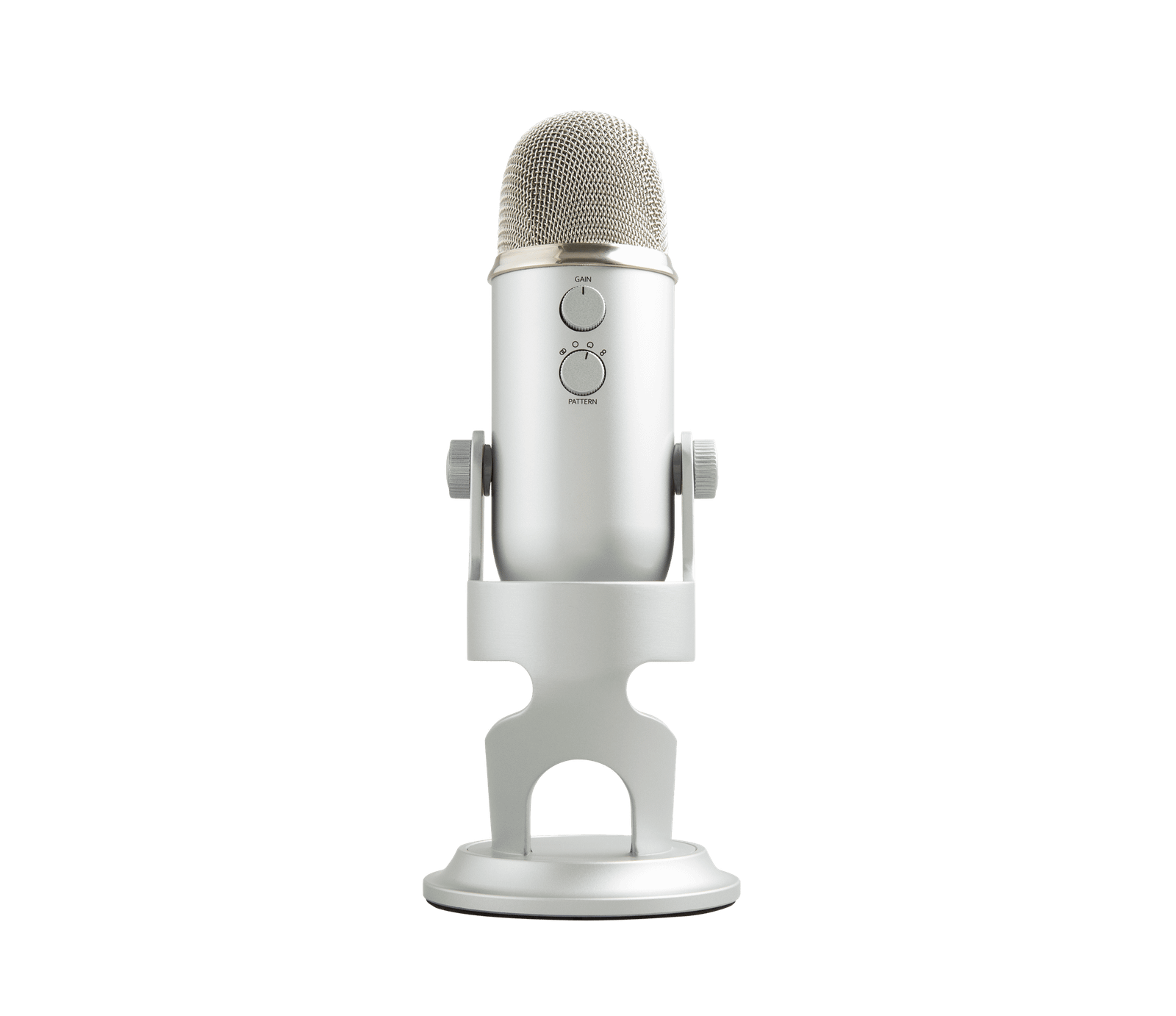
The Blue Yeti in Silver: front view with mute and volume controls, side profile on the stand, and rear view with the gain and pattern knobs.
Blue Yeti USB Microphone (Silver)
- Three 14mm condenser capsules; four pickup patterns: cardioid, bidirectional, omnidirectional, stereo (Logitech G ratings)
- 48 kHz / 16-bit; 20Hz to 20kHz frequency response; 120dB max SPL
- Onboard gain, pattern select, instant mute, and headphone volume; zero-latency monitoring via built-in headphone amp
- USB powered; adjustable desktop stand and USB cable included
Reasons to Buy
- Four pickup patterns in one microphone. The Yeti switches between cardioid, bidirectional, omnidirectional, and stereo (per Logitech G's documentation), which covers solo recording, two-person interviews, roundtable discussions, and stereo music capture. That is the practical meaning of its three-capsule array: one mic that adapts instead of one mic per job.
- Complete onboard control. Gain, pattern selection, instant mute, and headphone volume are all physical controls on the mic body, so the essentials never require opening software. For streamers and podcasters who adjust on the fly, that matters more than it sounds.
- Zero-latency monitoring done properly. The built-in headphone amplifier is rated by Logitech G at 130mW with 100dB signal-to-noise, which means you can hear yourself in real time without the distracting delay of software monitoring.
- The established default, with the community to match. B&H Photo Video's overview describes the Yeti as a go-to mic for podcasters and streamers on YouTube and Twitch. More than a decade on the market means setup guides, troubleshooting threads, and accessory options exist for essentially every scenario.
- Optional voice processing if you want it. Blue VO!CE effects and filters are available through a free Logitech G HUB download, adding EQ, limiting, de-essing, and vocal effects for streamers who want them, without forcing them on anyone.
Reasons to Avoid
- It is big and heavy. At 3.2 pounds with the stand and nearly a foot tall in the stand, the Yeti dominates a small desk. If your workspace is tight, its footprint is a genuine drawback.
- No hardware mix control. Unlike the AT2020USB+, the Yeti cannot blend microphone and computer playback on the hardware; balancing game audio against your voice has to happen in software.
- VO!CE extras need Logitech's software. The core microphone is driver-free plug and play, but the Blue VO!CE filters and effects require downloading and installing G HUB, which some buyers will not want.
- Condenser honesty applies. Like every condenser in this class, the Yeti will faithfully capture keyboard clicks, mouse taps, and room echo. An untreated reflective room will show up in your recordings regardless of which mic you choose.
Who it's best for. The Blue Yeti USB Microphone (Silver) is the right pick for the creator whose recording life is not one thing. If you podcast solo on Monday, interview a guest on Wednesday (bidirectional mode, one mic between two people), and record a roundtable or a music demo on the weekend (omnidirectional or stereo), the Yeti covers all of it without new hardware. Streamers benefit the same way: cardioid for focused commentary with game audio underneath, instant mute on the mic body for coughs and interruptions, and headphone volume right there when the game gets loud. It also suits the buyer who simply does not know yet which pattern they need, because the cost of guessing wrong is zero; you turn a knob and try another one. Beginners get a forgiving learning tool, and multi-use desks get a single microphone instead of a small collection.
Why we recommend it. We recommend the Yeti on the strength of what its published specifications actually deliver in use. The tri-capsule array is not marketing decoration; it is the physical reason four genuinely different pickup patterns exist in one body, and Logitech G documents each pattern's purpose plainly. Cardioid rejects off-axis sound for solo work in noisy rooms. Bidirectional records front and back for interviews. Omnidirectional captures the whole room for group discussions. Stereo gives music and ASMR-style recording a wider image. Around that flexibility sits a control set that respects the user: a gain knob for hot or quiet sources, a pattern selector you can operate mid-session, a mute button with an LED indicator, and headphone volume for the zero-latency monitoring the built-in amplifier provides. The professional consensus supports the recommendation too; retailers and reviewers alike describe the Yeti as the default USB microphone for creators, a status earned over years rather than granted by a launch campaign. The Blue VO!CE software is a reasonable bonus rather than the reason to buy: EQ, compression, and de-essing for streamers who want polish, entirely optional for everyone else. Nothing about the Yeti demands technical confidence, which is precisely why it keeps winning the versatility argument.
Should you buy it? Buy the Yeti if your recording involves more than one scenario, more than one voice, or any uncertainty about what you will record next year. Its flexibility is real, documented, and immediately usable. Skip it if you are certain you will only ever record one voice, in one spot, into one computer; in that case you are paying in desk space and complexity for patterns you will never turn on, and the simpler Audio-Technica AT2020USB+ below is the more honest fit. Also skip it if your desk genuinely cannot spare the footprint, or if you need XLR output for a mixer or interface, which no USB-only mic provides. For everyone in the broad middle, the creators, streamers, and podcasters who want one microphone that handles whatever the week brings, the Yeti remains the versatility pick for a reason.
Spec line: USB (Mini-USB) · Cardioid / bidirectional / omnidirectional / stereo · 48 kHz, 16-bit · 20Hz to 20kHz · Mic 1.2 lb, stand 2.2 lb · Gain, pattern select, mute, headphone volume
Best for Focused Recording: Our Audio-Technica AT2020USB+ Review
Audio-Technica AT2020USB+ Cardioid Condenser USB Microphone (Black)
Best Buy
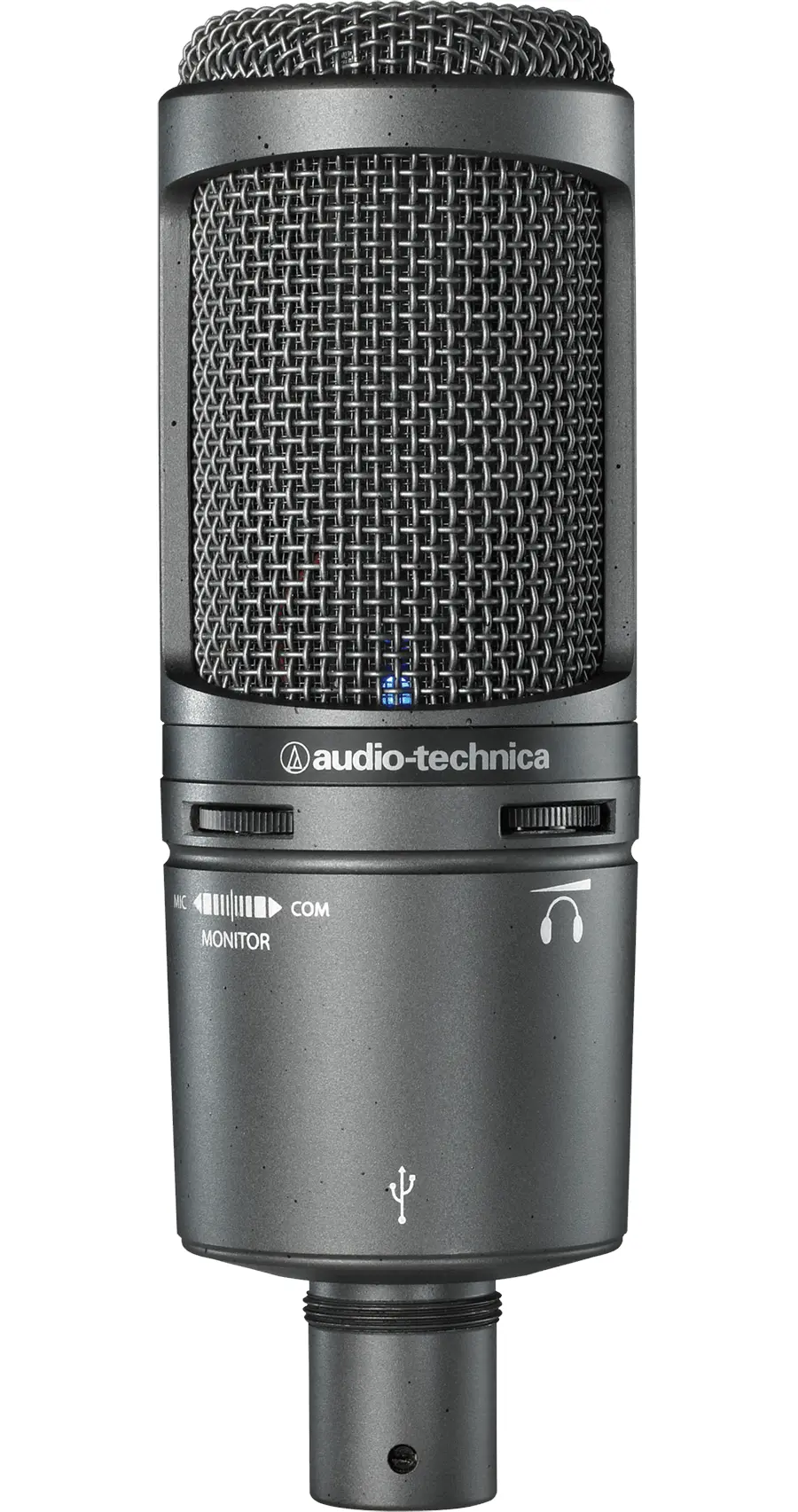
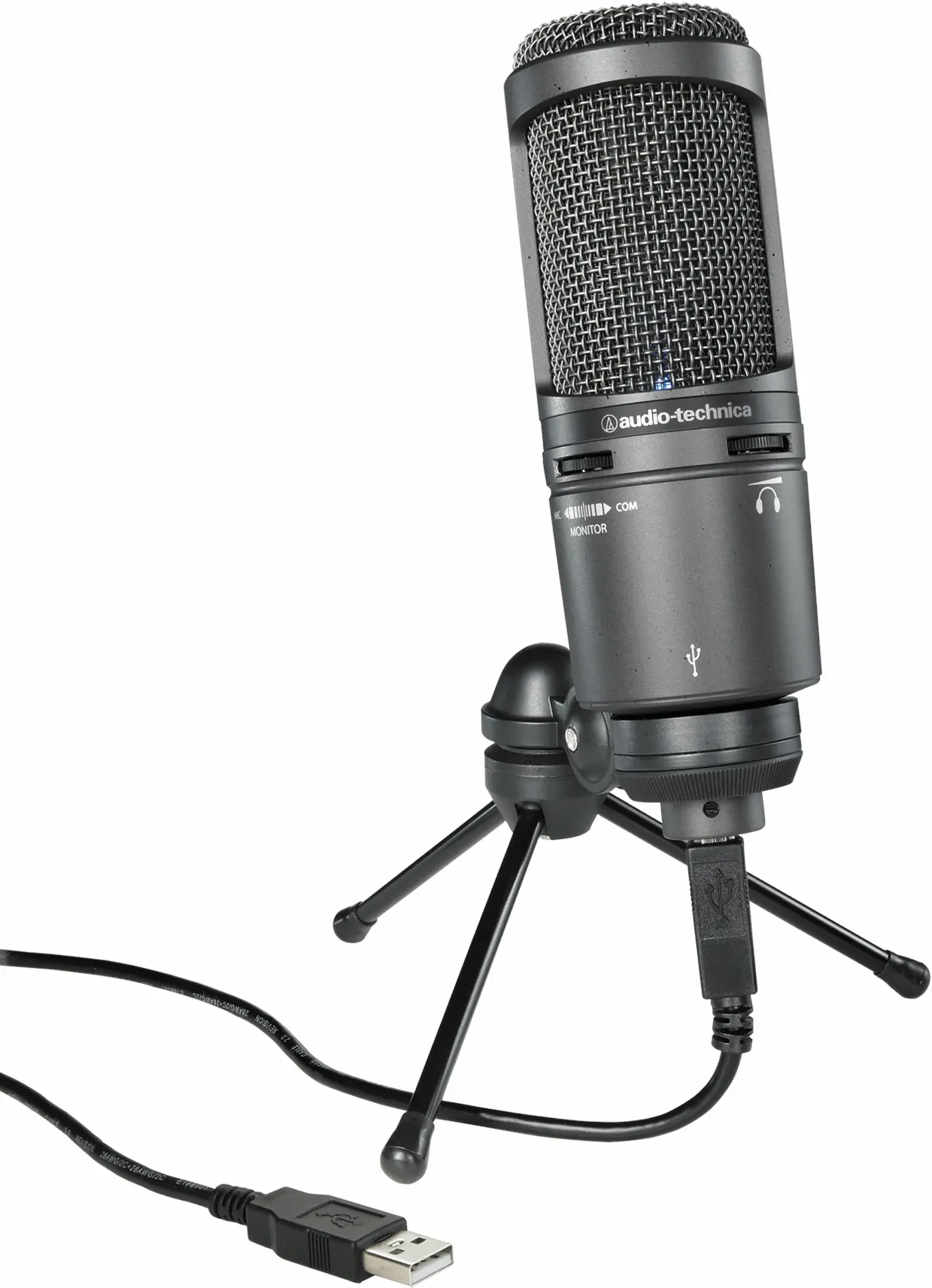
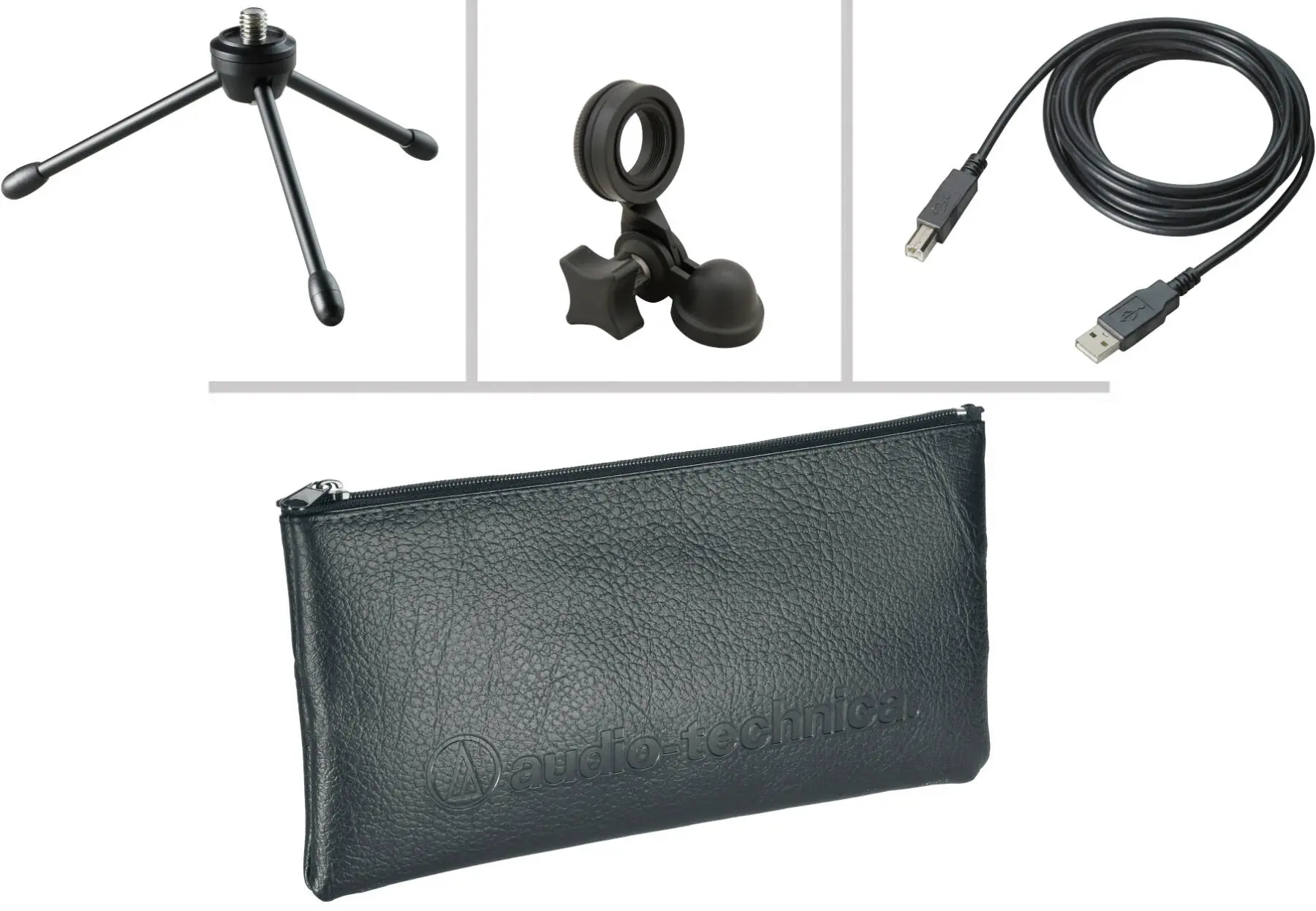
The AT2020USB+ in Black: front view with mix and headphone controls, mounted on the included tripod stand, and the included accessories (stand, mount, USB cable, pouch).
Audio-Technica AT2020USB+ Cardioid Condenser USB Microphone (Black)
- Fixed-charge back plate condenser element; cardioid pattern only (Audio-Technica ratings)
- 16-bit, 44.1/48 kHz A/D conversion; 20Hz to 20kHz; 144dB max SPL
- Mix control blends mic and computer audio; headphone jack with volume for zero-latency monitoring; blue LED power indicator
- USB powered; tripod desk stand, pivoting stand mount, USB cable, and soft pouch included
Reasons to Buy
- One pattern, done well. The AT2020USB+ commits to cardioid and nothing else. For solo recording that is a feature, not a limitation: there is no wrong pattern to select, and the cardioid pickup Audio-Technica publishes focuses on the voice in front while rejecting the sides and rear.
- A real mix control on the hardware. The blend dial between microphone and computer audio is genuinely useful for overdubs, streaming with game sound, and podcast recording with remote guests; it is the one onboard control the Yeti lacks.
- Lighter and more compact. At 386 g (13.6 oz) per Audio-Technica's spec sheet, it is far easier to reposition, boom-mount, or pack than the 3.2-pound Yeti, and its studio-microphone profile takes up less visual and physical space on camera.
- The AT2020 lineage. This is the USB version of Audio-Technica's acclaimed AT2020 studio condenser, and it shows in the design: metal construction, the same side-address form factor, and a complete accessory set (tripod stand, pivoting mount, cable, pouch) in the box.
- Professional review support. Sound on Sound's review of the AT2020USB+ praised its price-to-performance ratio, noting the smooth extended response and judging its 20dB self-noise adequately low for typical close-miked studio work, which is exactly the use case here.
Reasons to Avoid
- Cardioid only, full stop. There is no bidirectional mode for interviews, no omnidirectional for groups, no stereo for music. If your recording ever involves a second voice in the room, this is the wrong microphone.
- No hardware gain knob. Input gain is set in your operating system or recording software, which is fine once configured but less convenient than the Yeti's physical gain control when sources change.
- Self-noise is adequate, not class-leading. The published 20dB SPL self-noise (74dB signal-to-noise) is fine for close-miked voice work, as Sound on Sound confirmed, but quiet sources in quiet rooms will reveal it sooner than on lower-noise condensers.
- No pads or filters. There is no low-cut switch or pad for loud sources, so plosives, handling noise, and boomy rooms must be managed with placement, distance, and technique rather than a switch.
Who it's best for. The Audio-Technica AT2020USB+ Cardioid Condenser USB Microphone (Black) is the right pick for the solo recordist: the podcaster recording one voice, the voiceover artist, the streamer doing commentary, the singer-songwriter tracking vocals at a desk. If your setup is one person, one chair, one computer, the AT2020USB+ gives you everything you need and nothing you will second-guess. The mix control earns its place for anyone who records while listening to playback, podcasters monitoring remote guests, musicians overdubbing, streamers balancing game audio, because it solves a real problem in hardware instead of in a settings menu. It also suits buyers who find multi-pattern microphones fussy; there is exactly one correct way to address this mic (front, logo toward you), and the blue LED confirms it is live. Smaller desks, camera-visible setups, and anyone who moves the mic between rooms will appreciate the lighter build and the included pouch.
Why we recommend it. We recommend the AT2020USB+ because focus is a legitimate engineering choice, and Audio-Technica executed it well. The cardioid-only design removes an entire category of user error while delivering the pickup behavior solo recording actually needs: strong on-axis response, rejection of keyboard and room noise from the sides and rear. The published specifications back up the design for its intended use. Sixteen-bit conversion at 44.1 or 48 kHz covers every podcast, stream, and demo vocal cleanly; the 144dB maximum SPL handling means even loud singers will not distort it; and the 130mW headphone amplifier with its dedicated volume wheel gives the same zero-latency monitoring the Yeti offers. The mix control is the standout feature in daily use, a small dial that answers the constant question of "how loud am I versus my playback" without alt-tabbing. Professional reviewers have validated the value proposition: Sound on Sound's review treated it as a serious budget studio tool rather than a toy, with particular praise for how much microphone the price buys. The metal construction and the complete included kit, tripod, pivoting mount, cable, and pouch, mean there is nothing else to buy to start recording. It is a narrower tool than the Yeti, and within its lane it is the more refined one.
Should you buy it? Buy the AT2020USB+ if you record one voice, in one place, and you value simplicity and a smaller footprint over flexibility. It is the better fit for dedicated podcast desks, voiceover booths, and streaming setups where the microphone never moves and never faces a second person. Skip it the moment your plans include interviews, co-hosts in the room, group recording, or stereo music capture; the single cardioid pattern cannot do those jobs, and the Yeti above exists precisely for them. Also skip it if you need a hardware gain knob at your fingertips, or XLR connectivity for a mixer-based setup. For the solo creator who wants to plug in, set software gain once, and record, the AT2020USB+ is the focused, honest, and fairly priced choice.
Spec line: USB (Type B) · Cardioid · 16-bit, 44.1/48 kHz · 20Hz to 20kHz · 386 g (13.6 oz) · Mix control, headphone volume
How We Chose These Two Microphones
We started from the search itself. A "microphone comparison" query is, in practice, a request for a head-to-head between the USB microphones everyone recommends, and the two names that dominate that conversation are Blue's Yeti and Audio-Technica's AT2020USB+. They share the same use case (podcasting, streaming, voiceover, and home recording over USB), the same buyer (no audio interface, no XLR chain), and a comparable tier, which makes the comparison fair and the differences meaningful. Newer USB-C models exist, including Audio-Technica's own AT2020USB-X, but the classic pair is the comparison shoppers actually search for, so it is the comparison we wrote.
Every product in this guide had to clear two non-negotiable gates before it could appear: a dual-source-verified Amazon ASIN for the exact variant reviewed (the Silver Yeti, model 988-000103; the Black AT2020USB+, model AT2020USB PLUS), and three verified manufacturer or brand-packshot photos of that exact variant. A product that failed either gate would have been cut and replaced, not padded. Both microphones passed.
The research itself drew on the manufacturers' published specifications and manuals, Sound on Sound's professional review of the AT2020USB+, and corroborating retailer spec pages from B&H Photo Video and Long & McQuade. Where professional reviewers reached a consensus, we report it as consensus; where figures come from a manufacturer, we attribute them. Nothing in this guide is presented as hands-on testing, because none was performed.
How to Choose Between Them
Start with the number of voices. This is the decision that settles most comparisons. One voice, one spot, every time: the AT2020USB+. Two voices, guests, groups, or "I'm not sure yet": the Yeti. Pickup patterns are the single biggest functional difference between these microphones, and everything else is secondary.
Then consider your desk. The Yeti is a large, heavy microphone that anchors a desk; the AT2020USB+ is lighter, slimmer, and easier to boom-mount or move. If the mic will be on camera, the AT2020USB+'s studio profile is less visually dominant. If the mic never moves, the Yeti's weight becomes stability rather than burden.
Then the controls you will actually touch. Make a short list: do you adjust gain often (Yeti's knob wins), do you blend voice with playback (AT2020USB+'s mix control wins), do you mute mid-stream (both have accessible mute behavior, the Yeti's as a dedicated button). Buy for the controls you will use weekly, not the ones that sound good in a spec table.
Budget honestly. These two microphones live in the same price tier, and both fluctuate with sales, so check the current price on each listing before deciding rather than assuming one is "the cheap one." Neither requires an audio interface, a shock mount, or extra software to work, so the sticker price is close to the total cost; the only common add-on worth budgeting for is a boom arm if you want the mic off the desk, and both models mount to standard 5/8-inch threaded stands. Pair either with decent monitoring headphones for the full benefit of their zero-latency headphone jacks (see our research on Best Noise Cancelling Headphones (2026): 5 Top Picks if headphones are your next upgrade).
A final honest note. Both are condenser microphones, which means both will reveal an untreated room. If your recordings sound echoey or pick up the keyboard, the fix is placement, distance, and soft furnishings, not a different microphone in this class. Choose the pattern set and controls that fit your work; treat the room as a separate project.
Frequently Asked Questions
Which is better for podcasting: the Blue Yeti or the AT2020USB+?
It depends on your podcast format. For a solo podcast recorded in one place, the AT2020USB+ is the more focused tool: one cardioid pattern, a mix control for monitoring guests or playback, and a smaller footprint. For interview podcasts, co-hosts in the same room, or roundtable formats, the Yeti's bidirectional and omnidirectional patterns make it the better choice, since the AT2020USB+ cannot record a second voice facing the mic's rear. Match the microphone to the number of voices.
Do I need an audio interface or special software for either microphone?
No. Both are USB microphones that plug directly into a computer and work with built-in drivers on Windows and macOS; Audio-Technica and Logitech G both document driver-free plug-and-play operation. The Yeti's optional Blue VO!CE effects require a free Logitech G HUB download, but the microphone's core recording features work without it. No audio interface, mixer, or phantom power is needed for either model.
Can I mount these microphones on a boom arm instead of the included stand?
Yes, both support standard microphone stands. The Yeti's yoke assembly can be removed and the mic body carries a 5/8-inch threaded mount; the AT2020USB+ ships with a pivoting stand mount designed for 5/8-inch threaded stands, plus a 5/8-inch to 3/8-inch adapter. Either microphone will fit the boom arms and desk mounts sold for standard threaded stands.
Which microphone picks up less background noise?
In cardioid mode, both reject sound from the sides and rear by design, and neither will magically ignore a noisy room: they are condenser microphones, and condensers are sensitive by nature. Practical noise control comes from technique available to both, close mic placement (a few inches), speaking into the correct side, and turning down software gain rather than recording hot. Between the two, the AT2020USB+'s cardioid-only design removes the risk of accidentally recording in omnidirectional or stereo, which is the most common way beginners capture excess room noise on the Yeti.