Pet hair is a different kind of dirt. It works itself into carpet fibers, weaves around brushrolls, floats into corners, and comes right back out the exhaust as dander if your vacuum's filtration is weak. The best vacuum for pet hair isn't the most powerful vacuum on paper; it's the one that keeps hair off the brushroll, seals allergens inside, and is light enough that you'll actually use it several times a week.
This guide compares four models that consistently top 2026 pet-hair vacuum roundups, covering a cordless stick, a self-emptying robot, and two handhelds, matched to the floors and pets in your home. Every pick is documented in our product research: no invented specs, no hands-on testing claims, no lab.
How this guide was built (methodology)
This is research-based buying advice, not a lab test. On 2026-10-20 we reviewed the live US search results for "best vacuum for pet hair" and neighbouring queries, cataloguing the ranking sources and where their picks converged. Ranking sources included lab-style roundups, specialist vacuum retailers' spec pages, and owner-feedback-driven guides. We then confirmed each model's identity and key specifications against manufacturer documentation or reputable retailer spec listings before including it.
Inclusion rules: a model appears below only if (a) it is a real, verifiable product with a named manufacturer model number, and (b) its key pet-hair-relevant features (tangle resistance, filtration, bin system) could be confirmed from manufacturer documentation or a credible spec source. Products whose key figures couldn't be confirmed were excluded and logged in our product research.
Labelling honesty: in this guide, "verified" means the claim traces to manufacturer documentation (such as SharkNinja's product page) or a named publication's published specs; "provisional" means the claim reflects reviewer/retailer consensus without a citable primary source. Where two sources disagreed on a figure, we say so in the review rather than picking the friendlier number.
What this guide can't do: it can't replace handling a vacuum in person, and it doesn't pretend to. Use it to narrow the field to models that fit your floors, pets, and budget, then check current availability on the retailer's page before buying.
The short answer
The short answer: the best vacuum for pet hair for most homes is the Dyson V15 Detect. It pairs very strong cordless suction with a hair de-tangling cleaner head, laser dust visibility, and whole-machine HEPA filtration. For hands-off daily hair control, the self-emptying iRobot Roomba j7+ runs on its own and avoids pet accidents with camera-based obstacle detection. For stairs, couches, and cars, get the Shark UltraCyclone Pet Pro Plus CH951 handheld. If you want the lightest grab-and-go option, the Shark WandVac Power Pet WV410 weighs under 1.5 pounds.
Quick Picks
Short on time? These are our top recommendations.
Comparison table
| Model | Type | Key pet-hair features | Filtration | Bin / emptying | Weight | Amazon |
|---|---|---|---|---|---|---|
| Dyson V15 Detect | Cordless stick | Digital Motorbar with hair de-tangling; hair screw tool included | Whole-machine HEPA | 0.76 L point-and-shoot bin | About 6.8 lb (retailer spec listings) | Check Price on Amazon |
| iRobot Roomba j7+ | Robot | PrecisionVision obstacle avoidance; P.O.O.P. pet-waste promise | High-efficiency filter; sealed 60-day bags | Self-empties to Clean Base, up to 60 days | 7.48 lb (manufacturer manual figure) | Check Price on Amazon |
| Shark UltraCyclone Pet Pro Plus CH951 | Handheld | Self-cleaning pet power brush; scrubbing brush | Washable filter | 0.5 qt XL dust cup | 2.8 lb (manufacturer) | Check Price on Amazon |
| Shark WandVac Power Pet WV410 | Handheld | Pet tool; boost mode | Fabric filter | 0.1 qt one-touch cup | Under 1.5 lb | Check Price on Amazon |
On mobile, read the table one model per row: each row gives type, standout features, filtration, bin, and weight. All specs are research-based. Sources are listed in our product research.
Detailed product reviews
1. Dyson V15 Detect: best overall cordless for pet hair
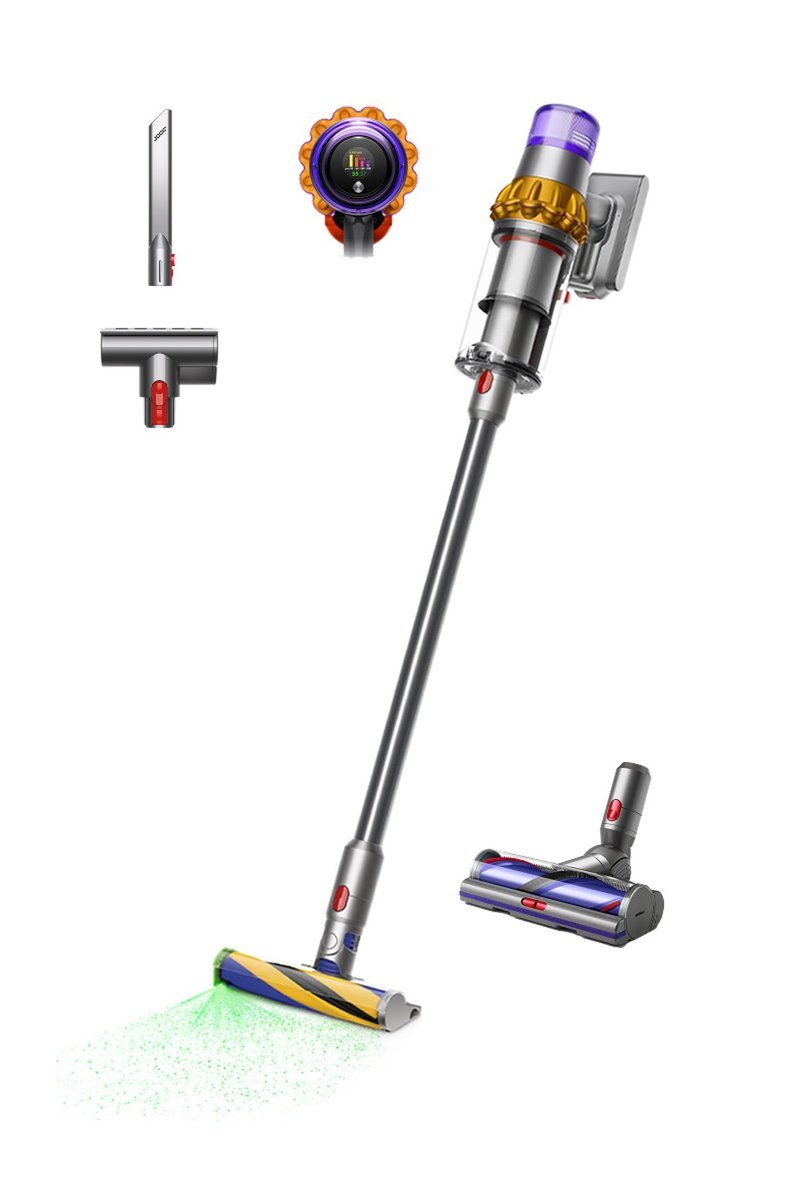

Dyson V15 Detect
240 Air Watts · Digital Motorbar de-tangling head · Fluffy Optic laser · Whole-machine HEPA · Up to 60 min Eco runtime · About 0.76 L bin
Check Price on AmazonWhy it leads: The V15 Detect is the consensus premium cordless in 2026 pet-hair roundups, and its feature set reads like a checklist of pet-owner pain points. It produces up to 240 Air Watts of suction from Dyson's Hyperdymium motor, the strongest figure published for this class, and pairs it with the Digital Motorbar cleaner head, which uses polycarbonate vanes to de-tangle hair from the brush bar as it cleans. That matters because hair wrap is the number-one maintenance complaint with pet vacuums: a brushroll that chokes on fur gradually loses pickup until you cut it free.
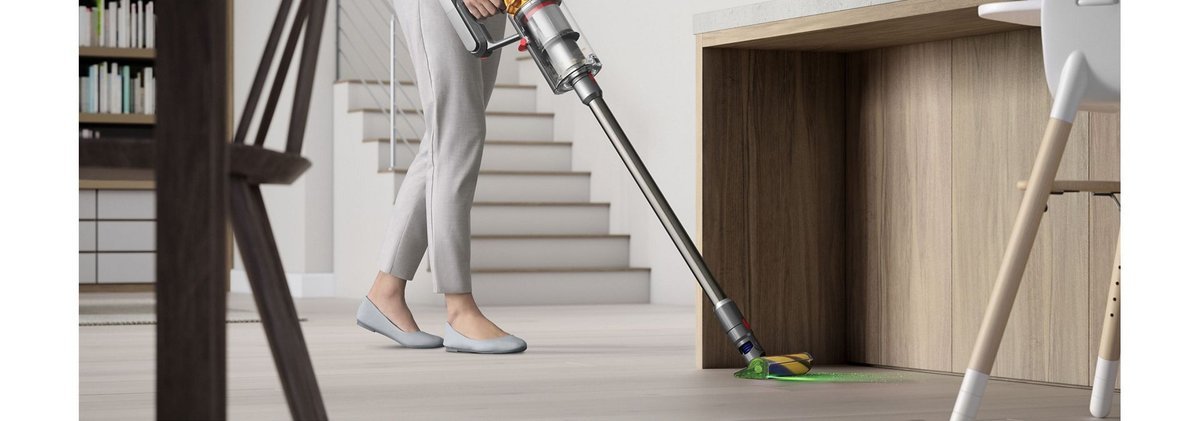
Pet-hair-specific features: The standout for pet homes is the laser. The Fluffy Optic (laser slim fluffy) cleaner head projects a precisely angled blade of green light that reveals dust and fine pet hair invisible under normal lighting. Buyers report it changes where they vacuum, not just how. The piezo sensor counts particles up to 15,000 times per second and raises suction automatically in Auto mode, with real-time counts shown on the LCD screen. Whole-machine HEPA filtration (a sealed system, verified on Dyson's spec pages) traps 99.99% of particles as small as 0.3 microns, the filtration class allergy sufferers should insist on. Up to 60 minutes of runtime in Eco mode, with a swappable click-in battery. The Hair Screw tool is included for upholstery and stairs.
Trade-offs: It's the premium pick in price terms. The bin (about 0.76 L) is modest. Heavy shedders will empty it mid-clean. At full power on thick pile, reviewers report the strong suction can make the head hard to push, requiring a step down to medium power. Boost mode drains the battery in roughly 8 minutes (retailer-reported figure; treat as provisional), so plan whole-home cleans on Auto or Eco.
Reasons to Buy:
- 240 Air Watts of Hyperdymium suction, the strongest figure published for this class
- Digital Motorbar de-tangling vanes plus the included Hair Screw tool for upholstery and stairs
- Fluffy Optic laser reveals fine dust and light-colored pet hair on hard floors
- Whole-machine sealed HEPA filtration traps 99.99% of particles as small as 0.3 microns
- Up to 60 minutes of Eco runtime with a swappable click-in battery
Reasons to Avoid:
- Premium price point, the highest in this guide
- Modest about 0.76 L bin; heavy shedders will empty it mid-clean
- Boost mode drains the battery in roughly 8 minutes (retailer-reported figure; treat as provisional)
- Strong suction can make the head hard to push on thick pile at full power
Best for: mixed-floor homes, allergy households that need sealed HEPA, and anyone who wants one cordless vacuum to cover floors, stairs, and cars via handheld conversion. Avoid if: your home is wall-to-wall deep carpet.
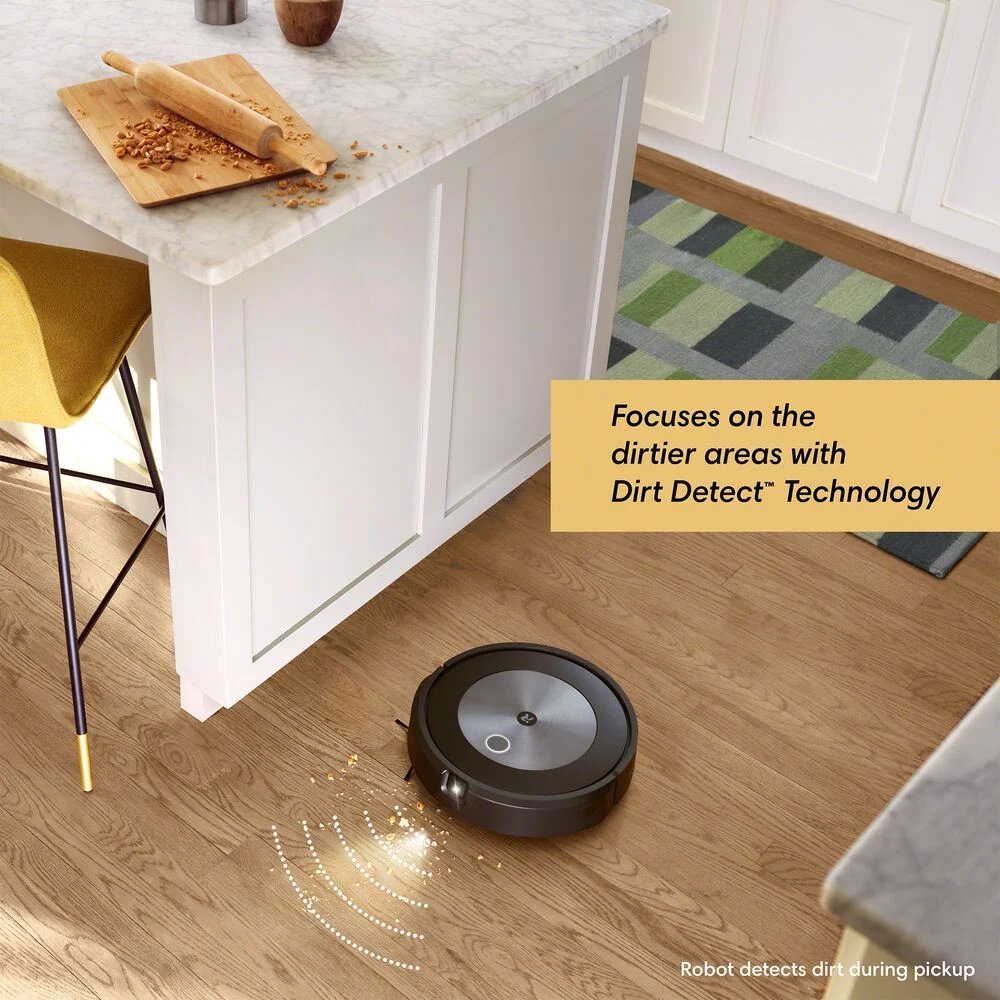
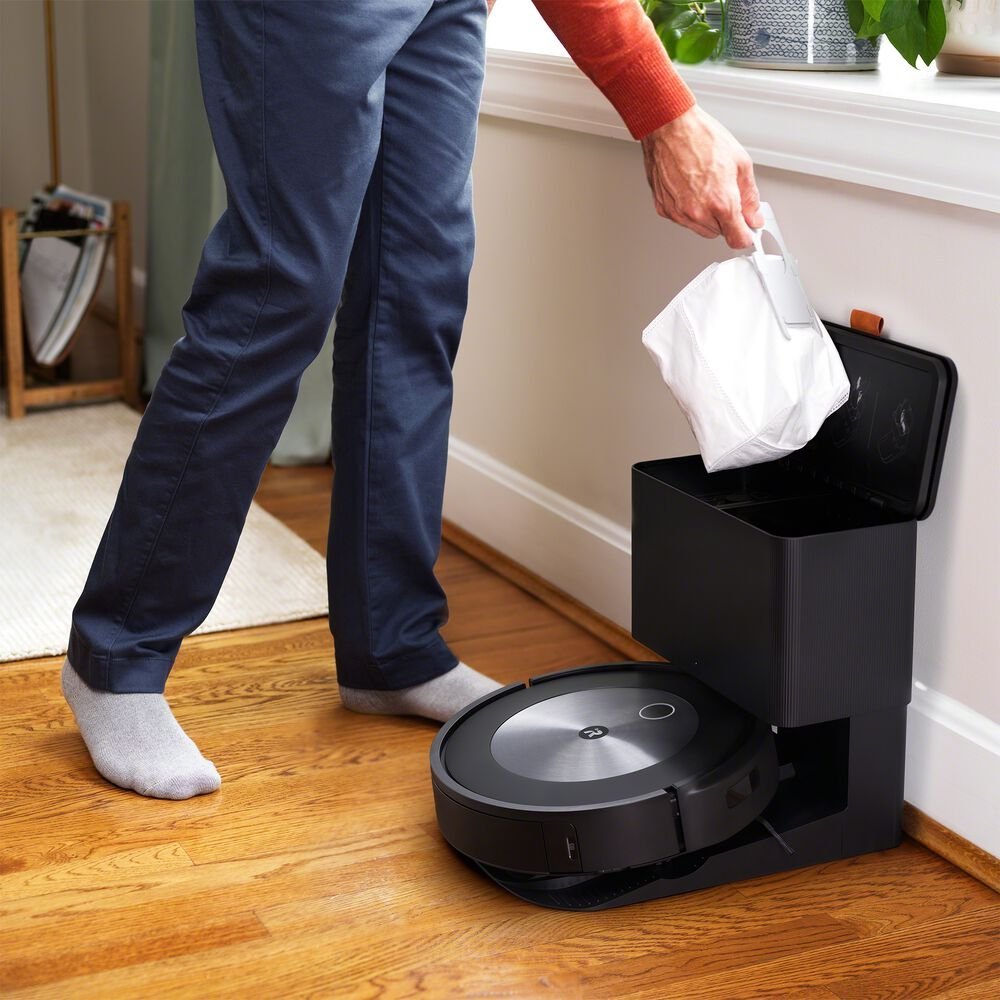
2. iRobot Roomba j7+: best automatic (robot) vacuum for pet hair
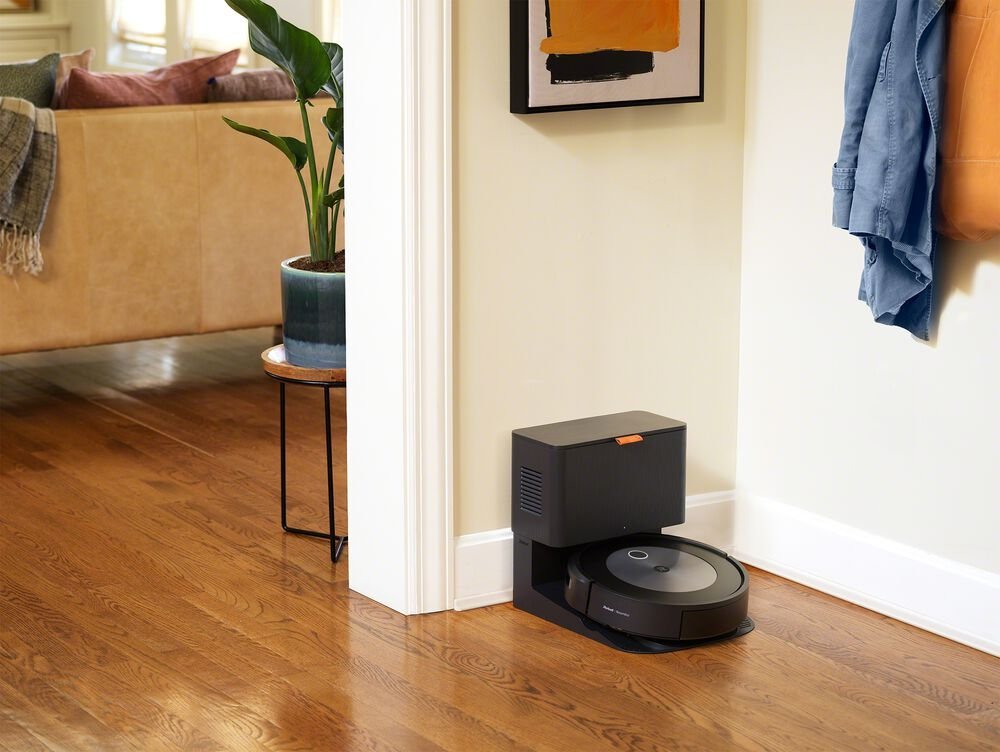
iRobot Roomba j7+
PrecisionVision obstacle avoidance · Clean Base self-empties up to 60 days · P.O.O.P. pet-waste promise · Dual rubber brushes · Smart mapping
Check Price on AmazonWhy it leads: The best vacuum for pet hair is the one that runs every day, and that's the robot's entire argument. The j7+ pairs PrecisionVision navigation, a front-facing camera that recognises and avoids obstacles including pet waste, charging cables, and shoes, with the Clean Base Automatic Dirt Disposal, which empties the robot's bin into sealed AllergenLock bags for up to 60 days. In a pet home, daily automated pickup prevents the hair layer from ever building up, which matters more than any single deep clean.
Pet-hair-specific features: iRobot backs the obstacle avoidance with the P.O.O.P. (Pet Owner Official Promise): the j7+ is guaranteed to avoid solid pet waste, or iRobot replaces the robot, valid for one year from purchase, covering solid cat or dog waste, with additional terms. Dual rubber brushes resist hair wrap far better than old bristle designs, and the sealed disposal bags capture 99% of pollen and mold, so dander stays contained rather than puffing back into the room when you empty a bin. Smart mapping learns rooms for selective cleaning, and voice control (Alexa, Google Assistant, Siri Shortcuts) is supported.
Trade-offs: A robot is a maintenance layer, not a deep cleaner. It won't replace an upright's carpet agitation on thick pile, and it can't do stairs, upholstery, or cars. The bags are an ongoing consumable. And while obstacle avoidance is the category's best-reviewed, no camera system is infallible: pick up cables and small objects before scheduled runs.
Reasons to Buy:
- Daily automated pickup prevents the hair layer from ever building up
- Clean Base self-empties into sealed AllergenLock bags for up to 60 days
- PrecisionVision avoids pet waste, backed by the P.O.O.P. replacement promise
- Dual rubber brushes resist hair wrap far better than old bristle designs
- Smart mapping with room selection plus voice control
Reasons to Avoid:
- Not a deep cleaner; it won't replace an upright's carpet agitation on thick pile
- Can't do stairs, upholstery, or cars
- Sealed bags are an ongoing consumable cost
- No camera system is infallible; cables and small objects must be picked up before runs
Best for: busy pet owners who want hair controlled daily with zero effort, allergy households that benefit from sealed 60-day disposal. Avoid if: you need stairs and upholstery covered. Pair a robot with a handheld instead.
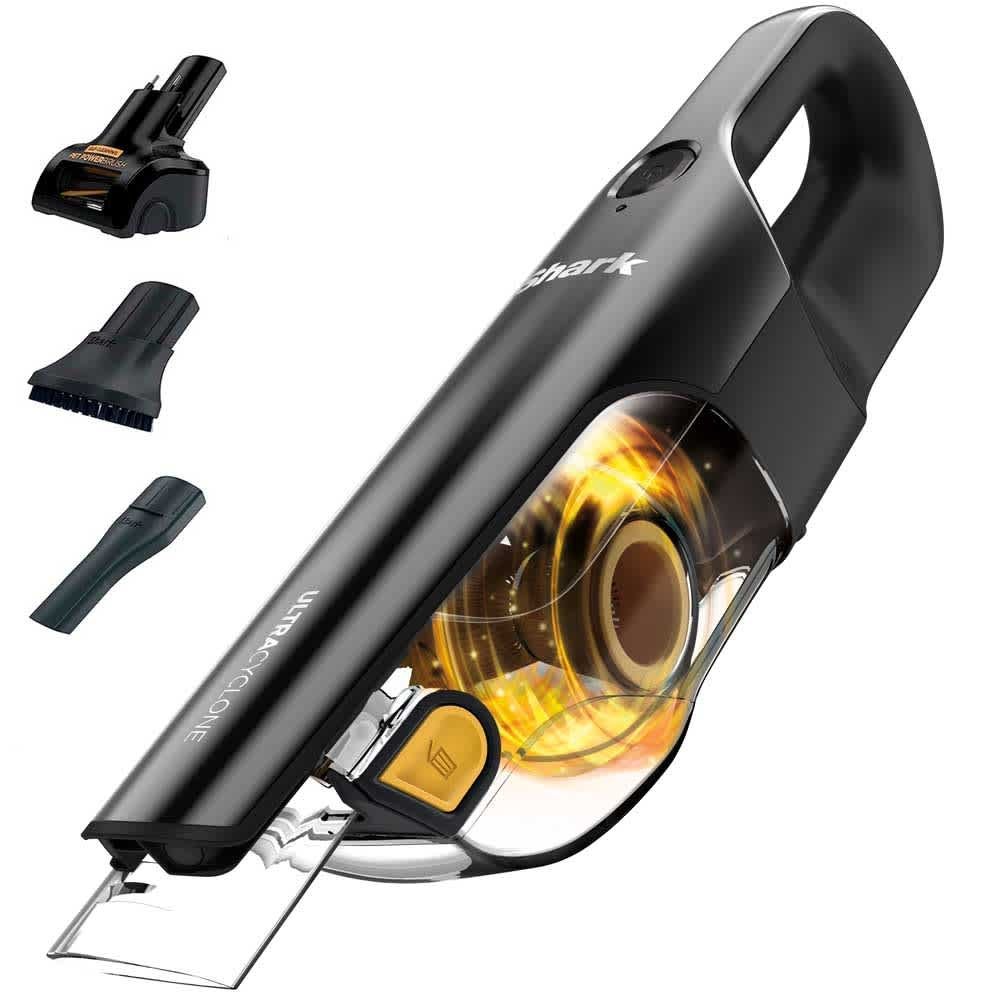
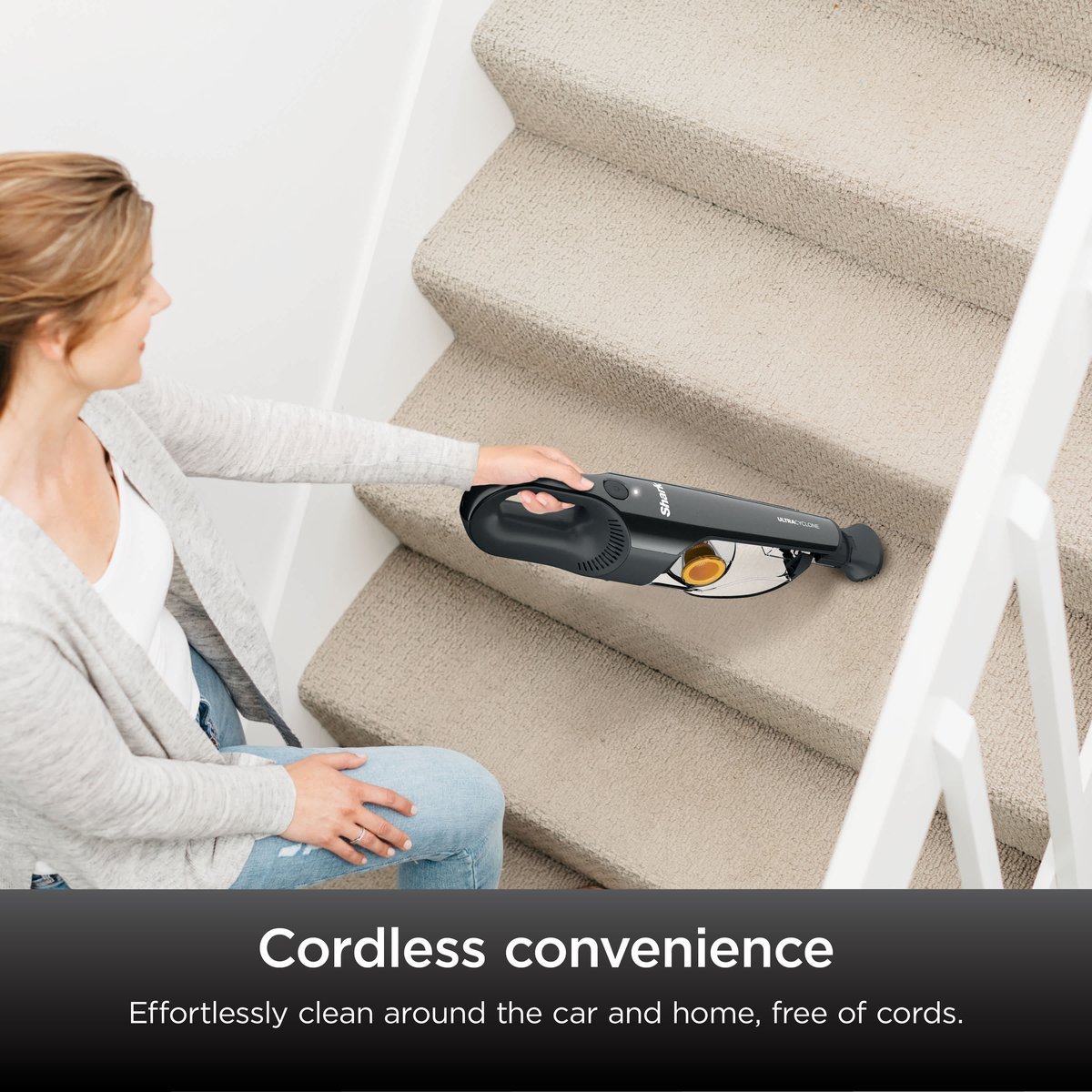
3. Shark UltraCyclone Pet Pro Plus CH951: best handheld vacuum for pet hair
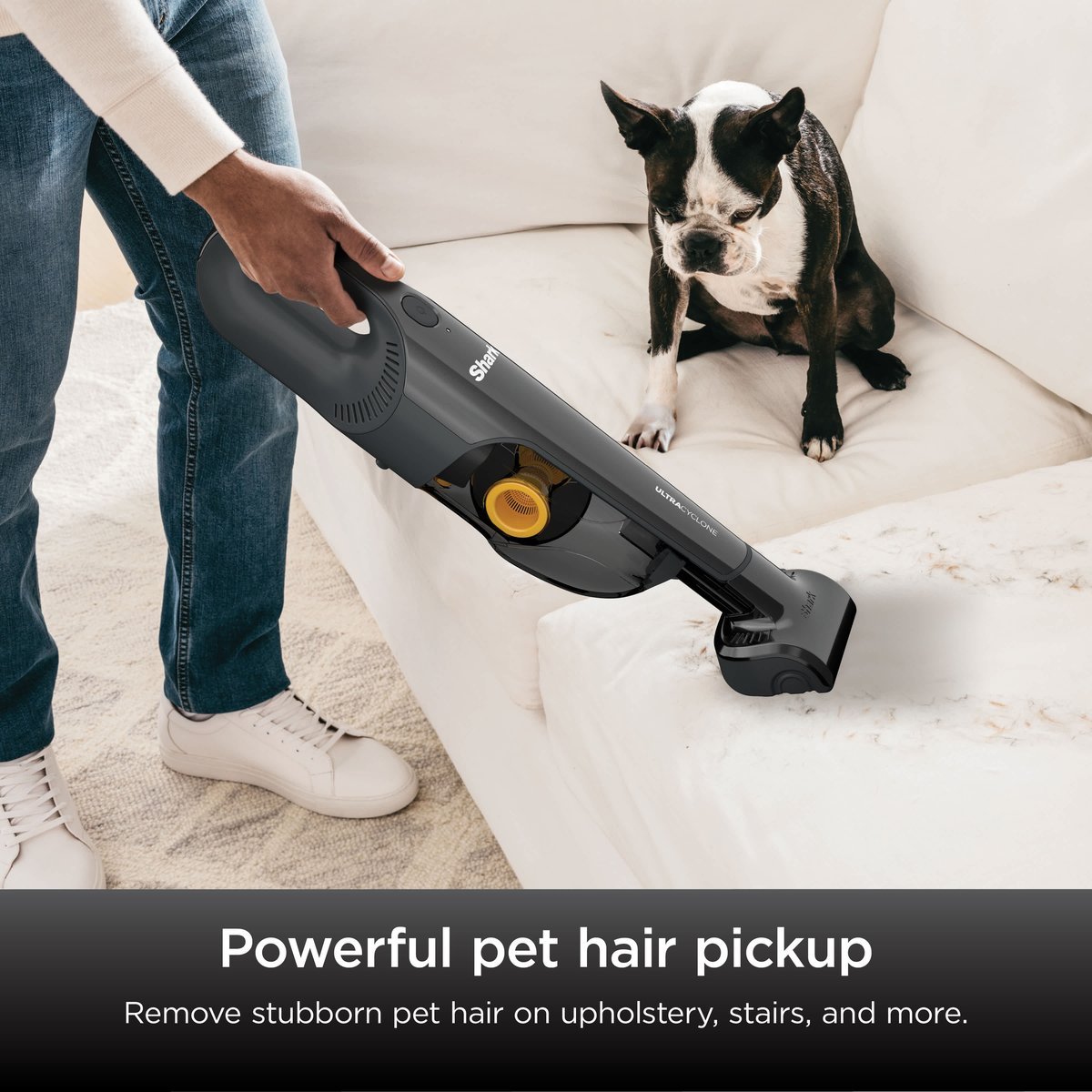
Shark UltraCyclone Pet Pro Plus CH951
Self-cleaning pet power brush · CleanTouch dirt ejector · XL 0.5 qt dust cup · 10 min runtime · 2.8 lb (manufacturer figure)
Check Price on AmazonWhy it leads: Couches, stairs, car seats, and pet beds are where hair concentrates, and where full-size vacuums are a chore to aim. The UltraCyclone Pet Pro Plus CH951 is a cordless handheld built specifically for those jobs: a motorized self-cleaning pet power brush that removes hair wrap from the brushroll, a scrubbing brush for ground-in messes on car mats, and a CleanTouch dirt ejector that empties the XL dust cup without touching the mess. At 2.8 lb (SharkNinja's figure), it's genuinely one-handed.
Pet-hair-specific features: The detachable self-cleaning pet power brush is the star. Motorized agitation on upholstery is what separates a pet handheld from a generic dustbuster. The XL dust cup (0.5 qt) is large for the class, and the filter is washable. A 2-year limited manufacturer warranty is included.
Trade-offs: Runtime is 10 minutes with a 4-hour charge. This is a spot-cleaner, not a whole-room tool. Buyers praise the suction but consistently flag the small bin relative to heavy shedding and a noise level that surprises for the size. And at 2.8 lb per the manufacturer versus 3.8 lb on some retailer listings, the "lightweight" claim varies by source; handle it in store if weight is the deciding factor.
Reasons to Buy:
- Motorized self-cleaning pet power brush agitates upholstery where hair weaves in
- CleanTouch dirt ejector empties the XL dust cup without touching the mess
- XL 0.5 qt dust cup is large for the handheld class
- 2.8 lb per the manufacturer, genuinely one-handed
- Scrubbing brush for ground-in messes on car mats
Reasons to Avoid:
- 10-minute runtime with a 4-hour charge; a spot-cleaner, not a whole-room tool
- Small bin relative to heavy shedding
- Noise level surprises buyers for the size
- Weight varies by source (2.8 lb manufacturer vs 3.8 lb retailer listings)
Best for: pet furniture, stairs, cars, and quick fur-tornado cleanup between full vacuums. Avoid if: you need more than 10 minutes of continuous cleaning. Get a cordless stick instead.
4. Shark WandVac Power Pet WV410: best lightweight portable vacuum for pet hair
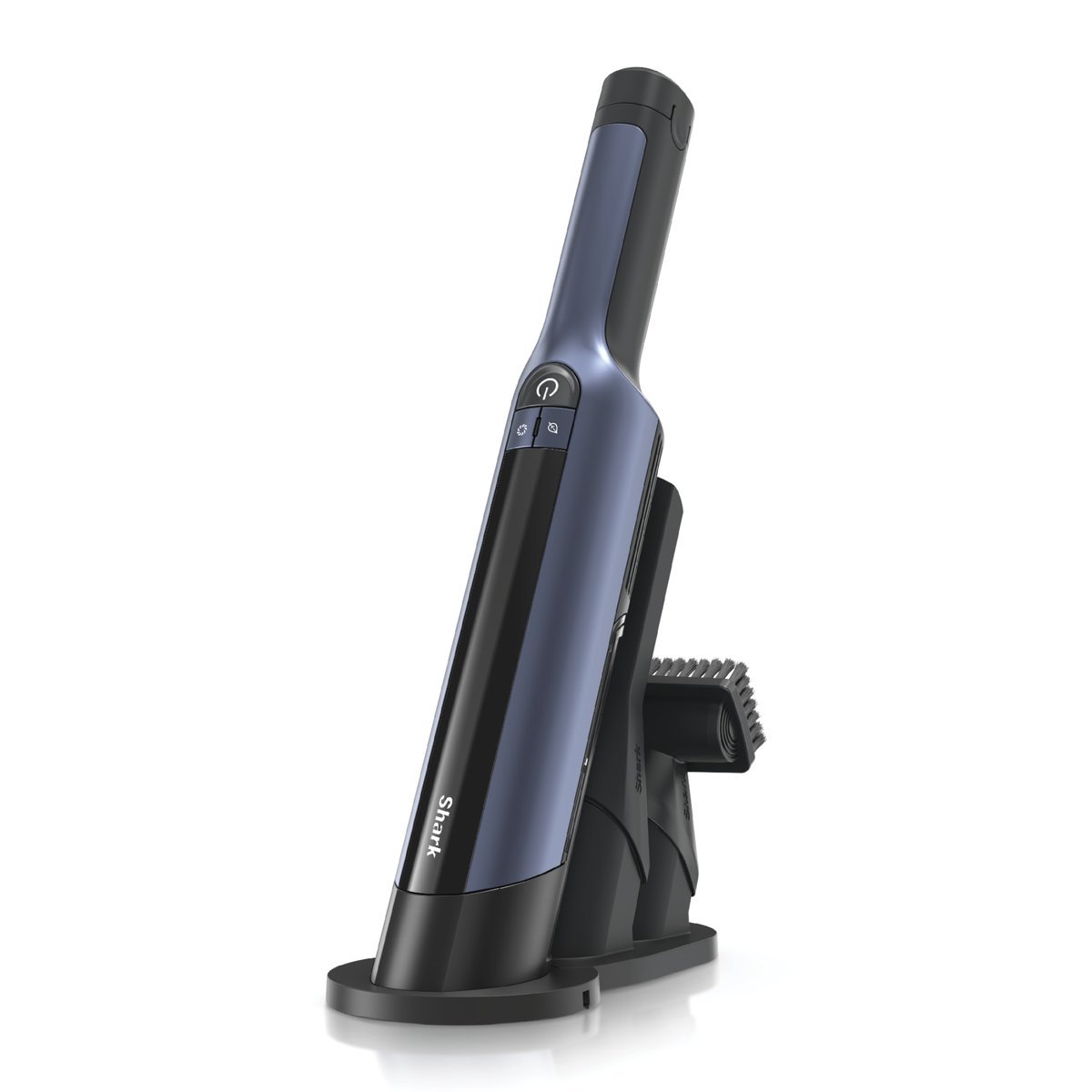
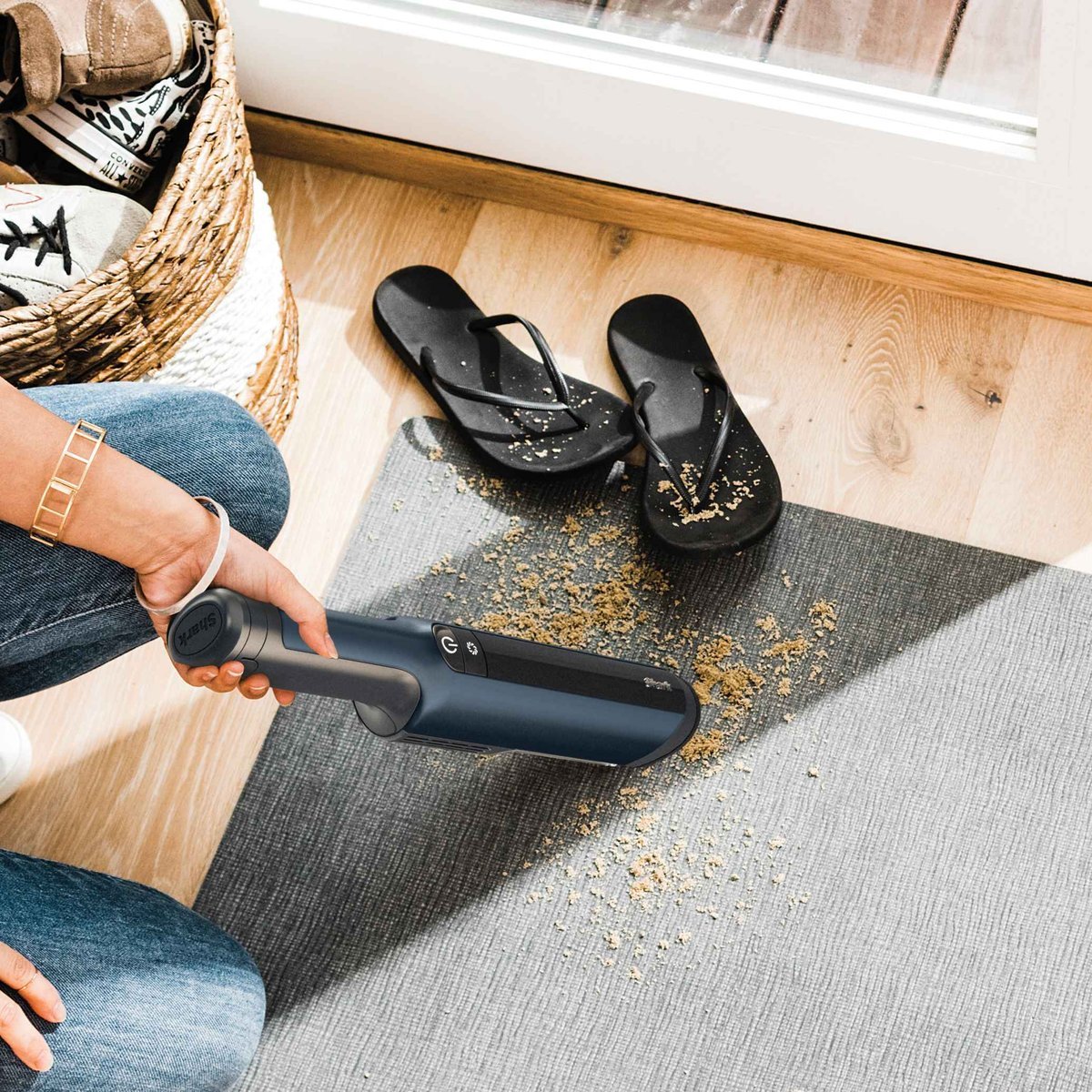
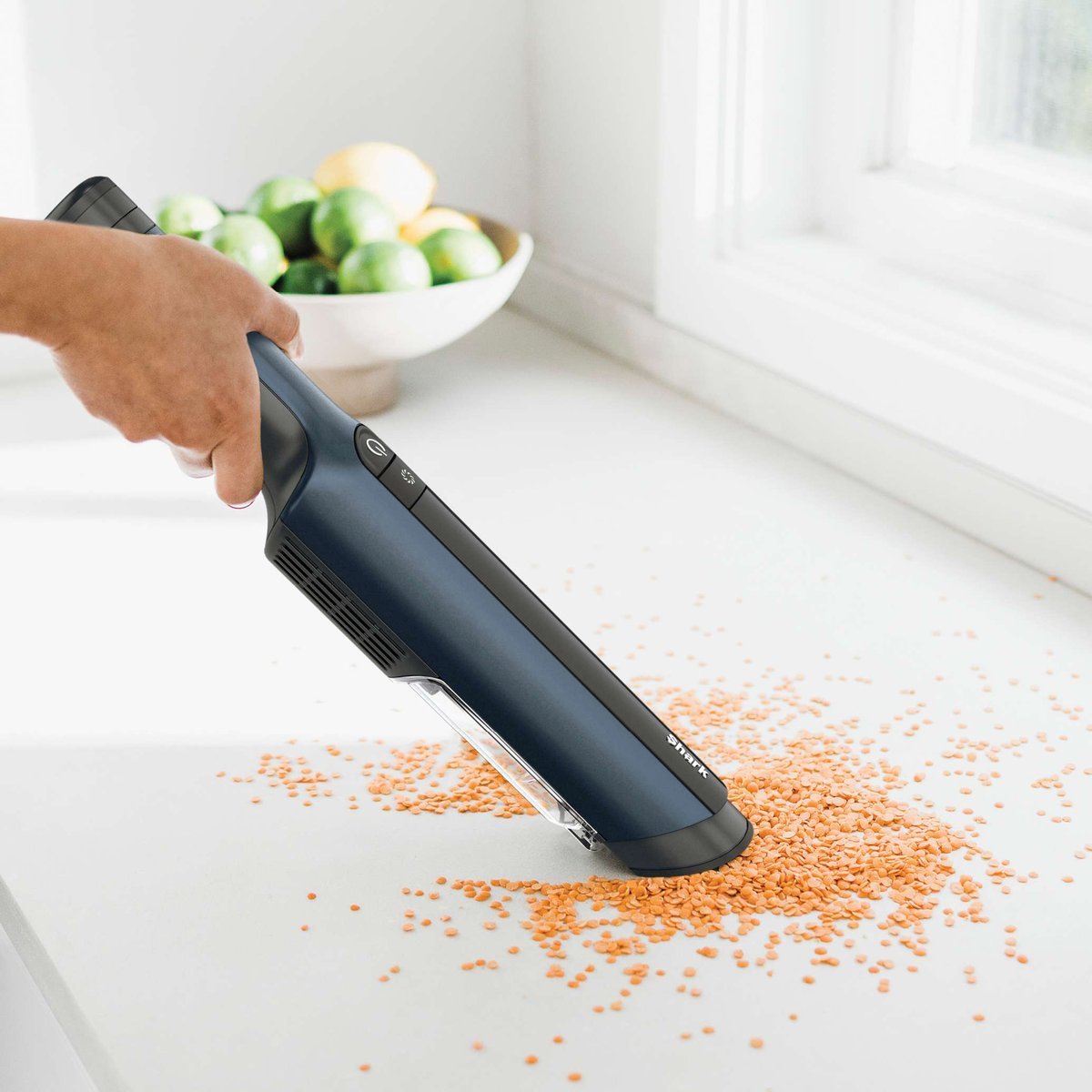
Shark WandVac Power Pet WV410
Under 1.5 lb · Dedicated pet tool · Duster crevice tool · Boost mode · One-touch 0.1 qt cup · ION charging dock
Check Price on AmazonWhy it leads: "Portable" in the pet-hair world means one thing: the vacuum you'll actually grab on a Tuesday. The WandVac Power Pet weighs under 1.5 lb (1.4 to 1.48 lb across sources), light enough to hang by the door and use one-handed. It ships with a specialized pet tool plus a duster crevice tool for furniture, upholstery, and tight spaces. Boost mode adds an extra burst of suction for stubborn patches, and the one-touch dust cup keeps emptying contact-free.
Pet-hair-specific features: The dedicated pet tool targets stubborn hair on furniture and fabrics; the washable fabric filter keeps maintenance simple; and the included ION charging dock with dual onboard accessory storage means the tools live with the vacuum instead of in a drawer.
Trade-offs: The 0.1-quart dust cup is tiny. Heavy shedders will empty it constantly, and suction, while strong for its size, doesn't compete with full-size sticks on carpet. This is a maintenance tool: brilliant for daily surface hair, inadequate as your only vacuum.
Reasons to Buy:
- Under 1.5 lb, light enough to hang by the door and use one-handed
- Dedicated pet tool plus duster crevice tool for furniture, upholstery, and tight spaces
- Boost mode adds an extra burst of suction for stubborn patches
- One-touch dust cup keeps emptying contact-free
- ION charging dock with dual onboard accessory storage keeps tools with the vacuum
Reasons to Avoid:
- Tiny 0.1-quart dust cup; heavy shedders will empty it constantly
- Suction doesn't compete with full-size sticks on carpet
- A maintenance tool only; inadequate as your sole vacuum
Best for: apartments, quick daily hair sweeps, car interiors, and anyone who won't use a heavy machine often enough for it to matter. Avoid if: this would be your only vacuum. Pair it with an upright or robot.
Buying guide: how to choose a vacuum for pet hair
1. Match the machine to your floors. Carpeted homes need agitation. A powered brushroll that beats hair out of pile. Hard-floor homes need soft heads or suction that doesn't scatter debris, plus a laser or light that shows fine hair. Mixed homes need both, which is why convertible cordless sticks with two cleaner heads top most roundups.
2. Prioritise tangle resistance over raw suction. The number on the box (Air Watts, amps, pascals) matters less than whether the brushroll stays clean. Self-cleaning brushrolls (Shark UltraCyclone pet brush), de-tangling vanes (Dyson Motorbar), and rubber extractors (Roomba) exist because hair wrap is the failure mode that quietly kills pickup. Ask: "how do I clean the brushroll?" before "how strong is it?"
3. Insist on sealed filtration if allergies matter. "HEPA filter" on the box is not enough. What matters is a sealed system (whole-machine HEPA, Anti-Allergen Complete Seal) so dirty air can't bypass the filter. In a pet home, an unsealed vacuum can redistribute dander with every pass. If anyone in the house has pet allergies, sealed HEPA is non-negotiable.
4. Size the bin to your shedder. A husky in spring will fill a 0.5-liter cordless bin in one hallway. If emptying mid-clean sounds miserable, go bigger: a 1-liter tank, or a self-emptying robot dock that holds 60 days of debris. Small bins are fine for handheld spot tools; they're a dealbreaker on your primary vacuum.
5. Think in systems, not single machines. The highest-satisfaction pet homes run a combination: a robot for daily maintenance, an upright or cordless for weekly deep cleans, and a handheld for furniture and cars. One perfect vacuum is rarer, and more expensive, than two good ones that cover different jobs.
6. Check the ongoing costs. Bags (robot docks), replacement filters, and battery replacements are the hidden price of ownership. Bagless isn't automatically cheaper if the filter needs replacing; self-emptying docks aren't automatically expensive if they replace a housekeeper's worth of daily vacuuming.
7. Weight and noise are usability features. A 22-lb upright that stays in the closet loses to a 1.5-lb handheld that gets used daily. If stairs are in play, Lift-Away-style detachable canisters or lightweight sticks matter more than spec-sheet suction. Check the dB rating if you have noise-sensitive pets. 80 dB vacuums can genuinely stress some animals.
Vacuum types at a glance
| Type | Strengths for pet hair | Watch out for |
|---|---|---|
| Cordless stick | Light, converts to handheld, great for daily mixed-floor upkeep | Battery runtime, small bins, premium prices |
| Corded upright | Sustained full power, best carpet agitation, big bins | Heavy, cord management, storage bulk |
| Robot | Runs daily unattended, self-emptying docks, sealed disposal | No stairs/upholstery, bag costs, obstacle limits |
| Handheld | Furniture, cars, stairs, spot cleanup | Short runtime, tiny bins |
| Canister | Excellent hard-floor and filtration performance | Bulkier hose management, pricier in pet-spec form |
Head-to-head comparisons buyers keep making
Roomba j7+ vs a cordless stick: different jobs. The robot prevents buildup; the stick removes it. Buyers who choose "one or the other" usually end up buying the other one six months later. If you must pick one, pick the robot for maintenance-free daily hair control on hard floors and low pile, and the stick if you have stairs, thick carpet, or cars to cover.
UltraCyclone CH951 vs WandVac WV410: both are Shark handhelds, and the choice is power versus portability. The CH951 has the motorized self-cleaning pet power brush and the larger XL cup, better on upholstery. The WV410 is dramatically lighter (under 1.5 lb) with longer reported runtime, better for quick daily grabs. Got both a couch problem and a car problem? The CH951. Just want the lightest thing that works? The WV410.
Mistakes buyers make (and how to avoid them)
1. Buying suction, ignoring the brushroll. A high-Air-Watt machine with a hair-choked brushroll cleans worse than a weaker one with a clean roller. Check the de-tangling mechanism first, the suction number second.
2. Skipping sealed filtration. "HEPA-type" or "HEPA-style" filters in an unsealed machine let dander escape around the filter. In a pet home this actively worsens air quality while you clean. Look for "whole-machine HEPA" or "complete seal" wording from the manufacturer.
3. Underestimating bin size. Pet hair is bulky. A small bin means stopping mid-clean to empty, and many buyers report that a full bin is when they abandon a vacuum to the closet. Size the bin to the shedder, not the marketing photos.
4. Expecting a robot to replace an upright. Robots maintain; uprights deep-clean. A robot-only household with thick carpet will watch embedded hair accumulate over months. Budget for both if the floors demand it.
5. Forgetting the furniture. Half of a pet home's hair lives on couches, beds, and stairs. These are surfaces full-size vacuums reach awkwardly. A pet vacuum purchase without a handheld or upholstery tool leaves the worst half of the job undone.
6. Trusting "pet" branding without checking the tools. Some "pet" editions are a standard vacuum with a different color. The pet-specific features that matter are concrete: motorized pet brush, self-cleaning roller, sealed HEPA, odor control. If the box can't name them, the branding is doing the work.
7. Ignoring noise for anxious pets. An 80 dB vacuum can terrify a noise-sensitive dog or cat into hiding. A vacuum your pet fears is a vacuum you'll use less. If your pet is anxious, prioritize quieter models and introduce the machine gradually.
How to spot bad pet-hair vacuum advice
The "best vacuum for pet hair" results are crowded with affiliate roundups, and several patterns should make you skeptical:
"We tested" with no test described. Multiple ranking pages claim testing without publishing a method. No floors listed, no hair type, no measurements. A real test names its protocol (carpet type, hair source, number of passes). No protocol, no trust; treat the pick as an opinion, including ours (we claim research, not testing, throughout this guide).
Marketing specs presented as findings. "Most powerful suction" claims that trace to a manufacturer's press release aren't findings. When a page's "test winner" section reads like the product page, the page is a product page with extra steps.
Ignoring tangle resistance. Pages that rank pet vacuums on suction and price alone, without discussing brushroll hair wrap, are missing the category's defining failure mode. Any guide that doesn't mention de-tangling isn't written for pet owners.
The "one vacuum for everything" promise. No single machine is simultaneously the best deep carpet cleaner, the best daily driver, and the best stair tool. Pages that crown one winner for every use case are optimizing for a clean narrative, not your home.
Stale picks. Vacuum lineups turn over yearly. A "2026" guide recommending models discontinued years ago, or carrying 2023 prices as current, signals a page that isn't maintained. Check that the models are still sold before trusting the ranking.
Frequently asked questions
Do I need a special vacuum for pet hair, or will a regular vacuum work?
A regular vacuum with strong suction and a powered brushroll can handle light shedding, but pet-specific designs address three problems regular vacuums ignore: hair wrap on the brushroll (solved by self-cleaning or de-tangling rollers), dander escaping the exhaust (solved by sealed HEPA systems), and odor building up in the bin (solved by odor-neutralizing features). For one short-haired pet and hard floors, a good regular vacuum suffices. For heavy shedders or carpet, the pet-specific features earn their keep.
Are robot vacuums good for pet hair?
Yes, for maintenance, not deep cleaning. A robot like the Roomba j7+ running daily prevents hair from building up, which is the highest-leverage thing any vacuum can do in a pet home. But robots can't agitate deep carpet like an upright, can't do stairs or upholstery, and their small onboard bins rely on self-emptying docks. The best setup is a robot for daily upkeep plus a full-size vacuum for weekly deep cleans.
Does the laser on the Dyson V15 Detect actually help with pet hair?
The laser doesn't remove hair. It reveals it. The Fluffy Optic head projects angled green light that makes fine dust and light-colored pet hair visible on hard floors, so you see the patches you'd otherwise skip. Buyers consistently report it changes their cleaning behavior more than any suction upgrade. It's most useful on hard floors; on carpet, the Digital Motorbar's agitation matters more than visibility.
How do I stop pet hair from tangling in the vacuum brushroll?
Choose a vacuum designed against it: self-cleaning brushrolls (Shark UltraCyclone pet brush), de-tangling vanes (Dyson Digital Motorbar), or rubber extractors (Roomba j7+). Beyond the machine: vacuum more often so hair never mats into the roller, empty the bin before it's packed (a full bin forces hair through the roller), and cut away wrapped hair promptly. Letting it accumulate strains the motor. Avoid bristle-only brushrolls in heavy-shedding homes.
Is a HEPA filter necessary for pet allergies?
A sealed HEPA system is the single most important vacuum feature for allergy households. Pet dander is tiny (much of it under 10 microns) and stays airborne for hours; an unsealed vacuum recirculates it. Look specifically for "whole-machine HEPA" or "complete seal" language from the manufacturer. A HEPA filter in a leaky housing doesn't deliver HEPA performance. The Dyson V15 Detect offers a sealed whole-machine HEPA system.
What's the best handheld vacuum for pet hair on furniture and cars?
The Shark UltraCyclone Pet Pro Plus CH951 is the strongest handheld pick in this guide: its motorized self-cleaning pet power brush agitates upholstery where hair weaves in, the XL dust cup handles more than typical handhelds, and the CleanTouch ejector keeps emptying hands-free. For the lightest option, the Shark WandVac Power Pet WV410 (under 1.5 lb) with its dedicated pet tool covers quick furniture and car touch-ups. Neither replaces a full-size vacuum. They're the furniture-and-car layer of a pet-hair system.
How often should I vacuum if I have pets?
Daily for high-traffic hard floors during shedding season (this is the robot vacuum's job), and a full vacuum of carpets and upholstery at least twice a week in multi-pet homes. The honest rule: hair you can see is hair that's already embedded. Waiting until it's visible means harder cleaning. A robot running on schedule plus a 20-minute weekly deep pass beats a monthly marathon every time.
Do self-emptying robot vacuums really go 60 days without emptying?
"Up to 60 days" is the manufacturer's rated figure for the Roomba j7+'s Clean Base (and similar docks), measured under test conditions. Real-world mileage depends on shedding volume. A husky in spring will fill bags faster than the rating suggests, while a single short-haired cat may beat it. Treat 60 days as a best case, not a promise, and check the dock's indicator rather than the calendar. Even at half the rating, a sealed bag you touch monthly beats a dusty bin you empty daily.
Final Recommendations
The best vacuum for pet hair is the system you'll actually use. For most pet homes, that starts with the Dyson V15 Detect, the strongest all-rounder with genuine anti-tangle engineering and sealed HEPA. Add the Roomba j7+ if daily hands-free maintenance appeals. Every pet home benefits from a handheld layer: the Shark UltraCyclone Pet Pro Plus CH951 for power or the Shark WandVac Power Pet WV410 for featherweight convenience.
Whatever you choose, judge it on the three things that actually decide pet-hair satisfaction: tangle resistance, sealed filtration, and whether it's pleasant enough to use twice a week. Get those right and the hair stops winning.
Best overall: Dyson V15 Detect: 240 Air Watts, de-tangling Digital Motorbar, Fluffy Optic laser, whole-machine HEPA.
Best automatic: iRobot Roomba j7+: PrecisionVision avoidance, Clean Base self-empties up to 60 days, P.O.O.P. promise.
Best handheld: Shark UltraCyclone Pet Pro Plus CH951: motorized self-cleaning pet power brush, CleanTouch ejector, XL cup.
Best lightweight: Shark WandVac Power Pet WV410: under 1.5 lb, dedicated pet tool, Boost mode, one-touch emptying.
Specifications are manufacturers' published figures and change over time. Product photos are the manufacturers' published product images.