
If snoring, traffic, or thin walls are stealing your sleep, foam earplugs are the simplest fix that actually works: they cost pennies per pair, carry the highest noise reduction ratings of any disposable plug type, and need no charging, apps, or fitting appointments. This guide compares seven foam plugs on the things that decide whether you will still be wearing them at dawn: the manufacturer-stated Noise Reduction Rating (NRR), the shape, the softness of the foam, and the pack sizes they are actually sold in.
One honest caveat before the picks: NRR is a laboratory number measured under ideal conditions (ANSI S3.19-1974). In the real world your actual attenuation is lower, because occupational-health guidance commonly derates the printed figure. Treat a 33 dB plug and a 32 dB plug as near-identical, and let fit and foam softness make the decision. That is what this guide is built around.
If you are in a hurry, here is the short version.
The Short Answer
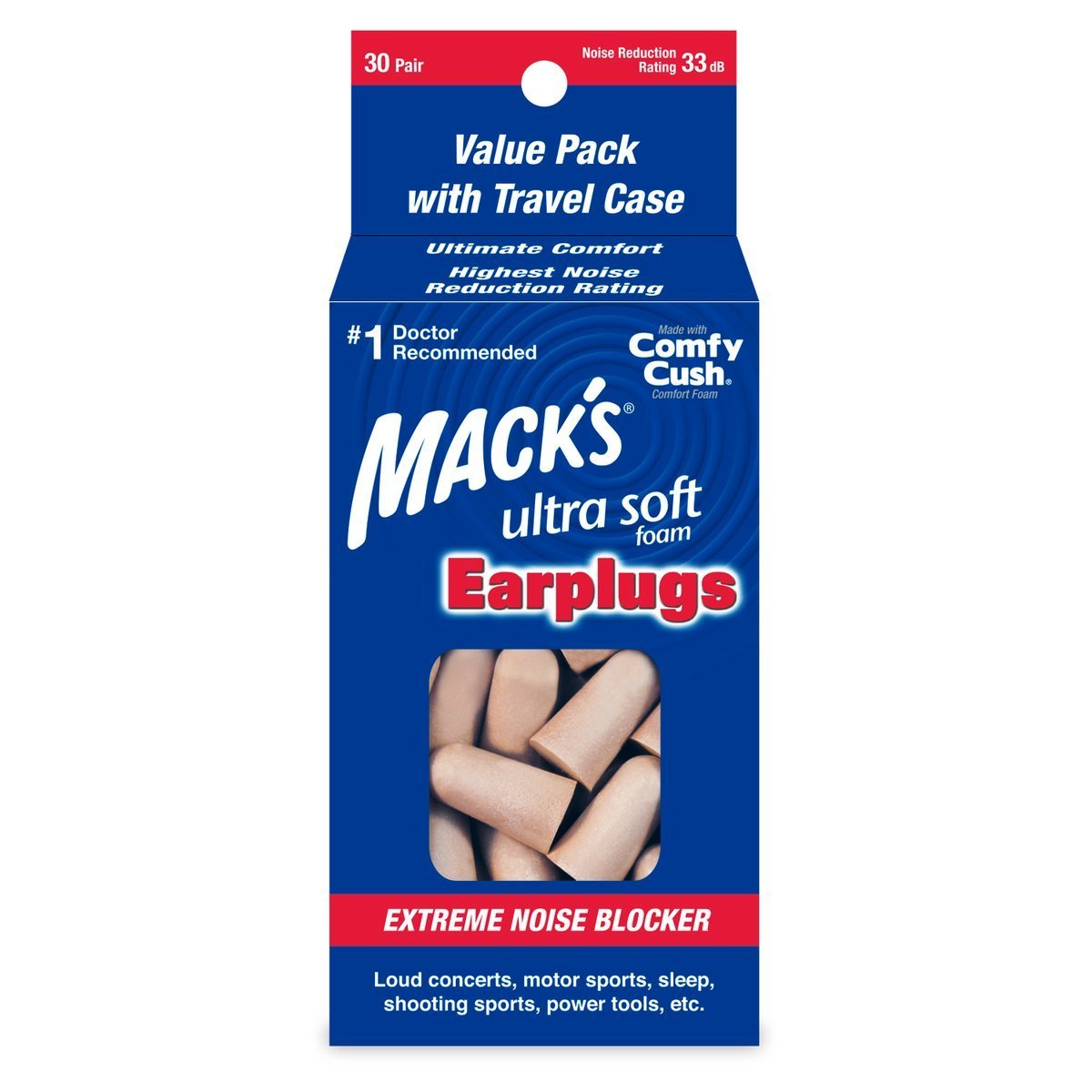
Best overall foam ear plugs for sleeping: the Mack's Ultra Soft Foam Earplugs (NRR 33), a high manufacturer-stated rating in a soft, slow-recovery foam that sleep-focused roundups keep coming back to. The pack linked in this guide is the 30-pair pack, which includes a travel case.
Best for maximum blocking in bulk: the Howard Leight MAX-1 (NRR 33), the highest-rated disposable in the Howard Leight line, sold uncorded in a 200-pair box that can cover a year or more of nightly use.
Best tapered fit for smaller ears: the Howard Leight Laser Lite (NRR 32), whose tapered T-shape seats in narrow canals that push standard cylinders back out.
Best budget multi-pack: the HEAROS Ultimate Softness Series (NRR 32), a soft, flat-backed, beige plug sold here in the 56-pair pack.
Quick Picks
Short on time? These are our top recommendations, and each button takes you to the exact product on Amazon.
Comparison Table
| Product | Key Specs | Best Use Case | Standout Feature | Amazon Link |
|---|---|---|---|---|
| Mack's Ultra Soft Foam Earplugs, 30 Pair Best Overall |
NRR 33 dB; tapered comfort foam; 30 pairs with case | most sleepers who want one proven default pick | Highest NRR class in a genuinely soft foam | Check Price |
| Howard Leight MAX-1 Uncorded Earplugs, 200 Pair Best Maximum Blocking in Bulk |
NRR 33 dB; pre-shaped bell; 200 pairs, orange | loud snoring partners and bulk buyers | Top of the Howard Leight disposable line | Check Price |
| Howard Leight Laser Lite LL-1 Uncorded Earplugs, 200 Pair Best Tapered Fit for Smaller Ears |
NRR 32 dB; tapered T-shape; 200 pairs, pink and yellow | smaller or sensitive ear canals, side sleepers | Taper seats narrow canals without bulge pressure | Check Price |
| HEAROS Ultimate Softness Series Ear Plugs, 56 Pair Best Budget Multi-Pack |
NRR 32 dB; tapered, flat back; 56 pairs, beige | budget sleepers and side sleepers | Flat back keeps the plug low-profile in the ear | Check Price |
| Flents Protechs Quiet Contour Ear Plugs, 10 Pair with Case Best Contoured Fit |
NRR 33 dB; hourglass contour; 10 pairs with case, green | side sleepers who want a shaped plug that stays put | Contoured waist anchors the plug overnight | Check Price |
| 3M E-A-R Classic Ear Plugs 310-1060, 30 Pairs Best Classic Workhorse |
NRR 29 dB; slow-recovery PVC cylinder; 30 pairs, yellow | anyone who wants the proven, no-frills standard | The original slow-recovery foam plug design | Check Price |
| The Ear Buddy Premium Soft Foam Ear Plugs, 50 Pairs Best Comfort-First Pick |
NRR 32 dB; soft bell shape; 50 pairs in a jar, orange | sleepers who have quit foam plugs over comfort | Designed around softness first, in a storage jar | Check Price |
Detailed Reviews
1. Mack's Ultra Soft Foam Earplugs: Best Overall

Mack's Ultra Soft Foam Earplugs, 30 Pair
Mack's has made earplugs since the 1960s, and the Ultra Soft Foam line is the one sleep-focused roundups keep returning to. The manufacturer-stated NRR is 33 dB, the highest rating currently printed on foam earplug packaging, and independent shopping coverage lists it at the same figure. What earns it the top slot is the combination: a soft, slow-release foam that compresses low in the canal, a slightly tapered shape that seats without cork-like pressure, and a brand with decades of hearing-protection history behind it.
- Highest NRR class (33 dB) shared by only a few foam plugs
- Soft, slow-recovery foam is notably kind to side sleepers
- The linked 30-pair pack includes a travel case
- Also sold in larger packs, so restocking the same plug is easy
Reasons to avoid:
- Disposable foam, so there is an ongoing replacement cost
- Pale beige color is easy to lose in bedding
- Very soft foam needs a careful roll to seat deeply
- Noise Reduction Rating: 33 dB (manufacturer-stated)
- Shape: tapered comfort foam
- Pack linked: 30 pair, with travel case
- Model: Mack's Ultra Soft (manufacturer model 32)
Best for: the default choice if you do not know where to start.
Mack's uses a soft, slow-release foam (marketed as a comfort foam) that you roll thin, insert, and let expand to fill the canal: the standard roll, pull, hold technique every foam plug shares. The plugs seat deeply without the "cork in a bottle" pressure some firmer plugs create at 3 a.m., and because the foam compresses low in the canal rather than protruding, side sleepers are not pressing a plug against the pillow all night.
Who it's best for: most sleepers, especially anyone buying foam plugs for sleep for the first time. Why we recommend it: the 33 dB rating is matched by a couple of rivals here, but none pairs it with foam this soft at this availability. Should you buy it? Yes, as the starting point. As with all disposable foam, replace pairs when they get dirty or lose their spring: a flattened plug that will not expand is doing nothing for you.
2. Howard Leight MAX-1: Best Maximum Blocking in Bulk


Howard Leight MAX-1 Uncorded Earplugs, 200 Pair
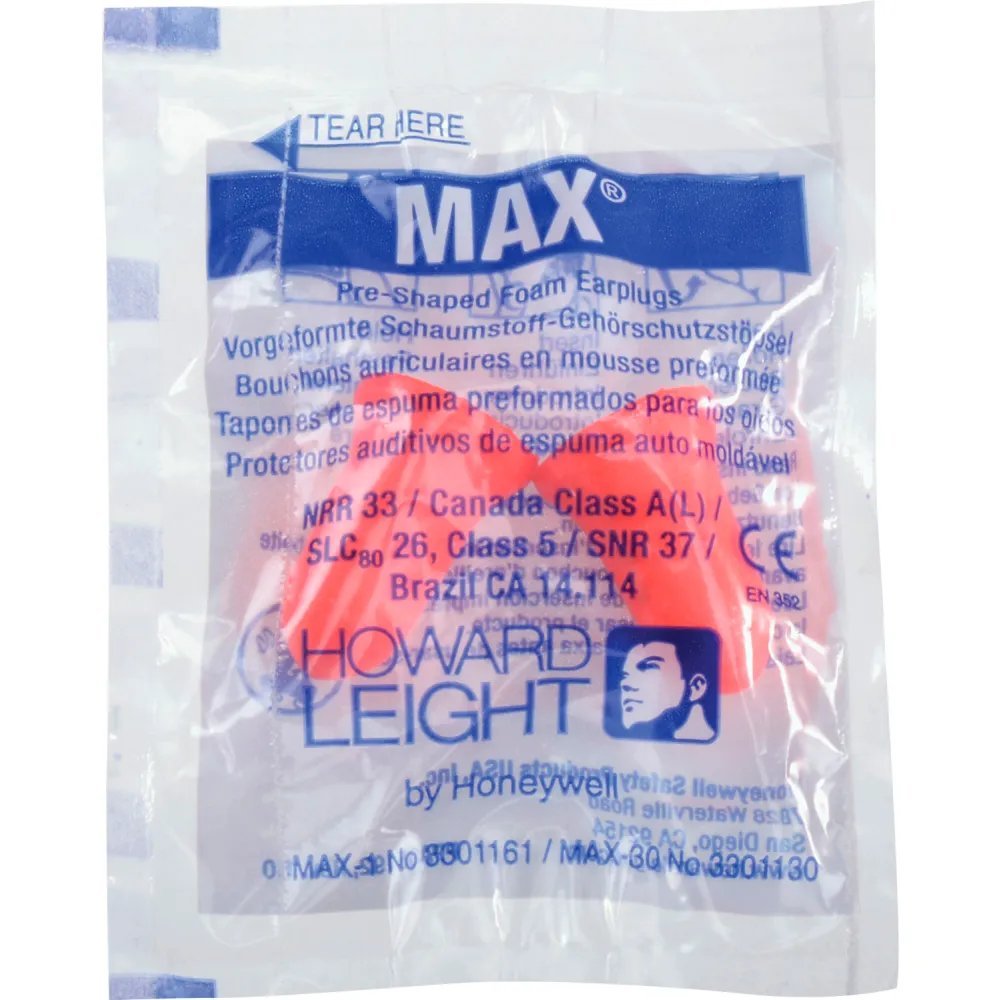
Honeywell's Howard Leight MAX is the foam plug workplaces hand out when they need the highest attenuation in a disposable: the manufacturer rates it at NRR 33 dB, the top of its disposable line. The bell shape is pre-shaped rather than a straight cylinder, which makes it easier to seat deeply, and the outer skin is smooth and soil-resistant, a genuine comfort plus for overnight wear since rougher foam can irritate the canal wall over eight hours.
- NRR 33 dB, the highest rating in the Howard Leight disposable range
- Pre-shaped bell is easier to seat deeply than a plain cylinder
- Smooth, soil-resistant skin stays comfortable over a full night
- 200-pair box brings the per-night cost down to cents
Reasons to avoid:
- Slightly firmer foam than the softest sleep-specific picks
- Bright orange industrial look, if that matters to you
- A 200-pair box is a commitment if the fit turns out wrong for your ears
- Noise Reduction Rating: 33 dB (manufacturer-stated)
- Shape: pre-shaped bell
- Model: MAX-1, uncorded (the corded sibling is MAX-30)
- Pack linked: 200 pairs, orange
Best for: loud-snoring-partner households and anyone who wants maximum rated attenuation in bulk.
For sleepers, the MAX's real advantage is economics: the 200-pair box can cover a year or more of nightly use, so replacement discipline (the thing that keeps foam plugs hygienic) costs almost nothing to maintain. The trade-off is feel. It is a slightly firmer foam than the softest sleep-specific picks, so dedicated side sleepers with sensitive canals sometimes prefer the Laser Lite or the Ear Buddy below.
Who it's best for: anyone whose problem is volume, whether that is a snoring partner or a bulk-buying habit. Why we recommend it: it matches the highest printed rating in this guide and undercuts everything else per pair. Should you buy it? If you already know foam plugs fit you, yes. Watch for: corded versions (MAX-30) are meant for worksites; buy the uncorded MAX-1 for bed.
3. Howard Leight Laser Lite: Best Tapered Fit for Smaller Ears

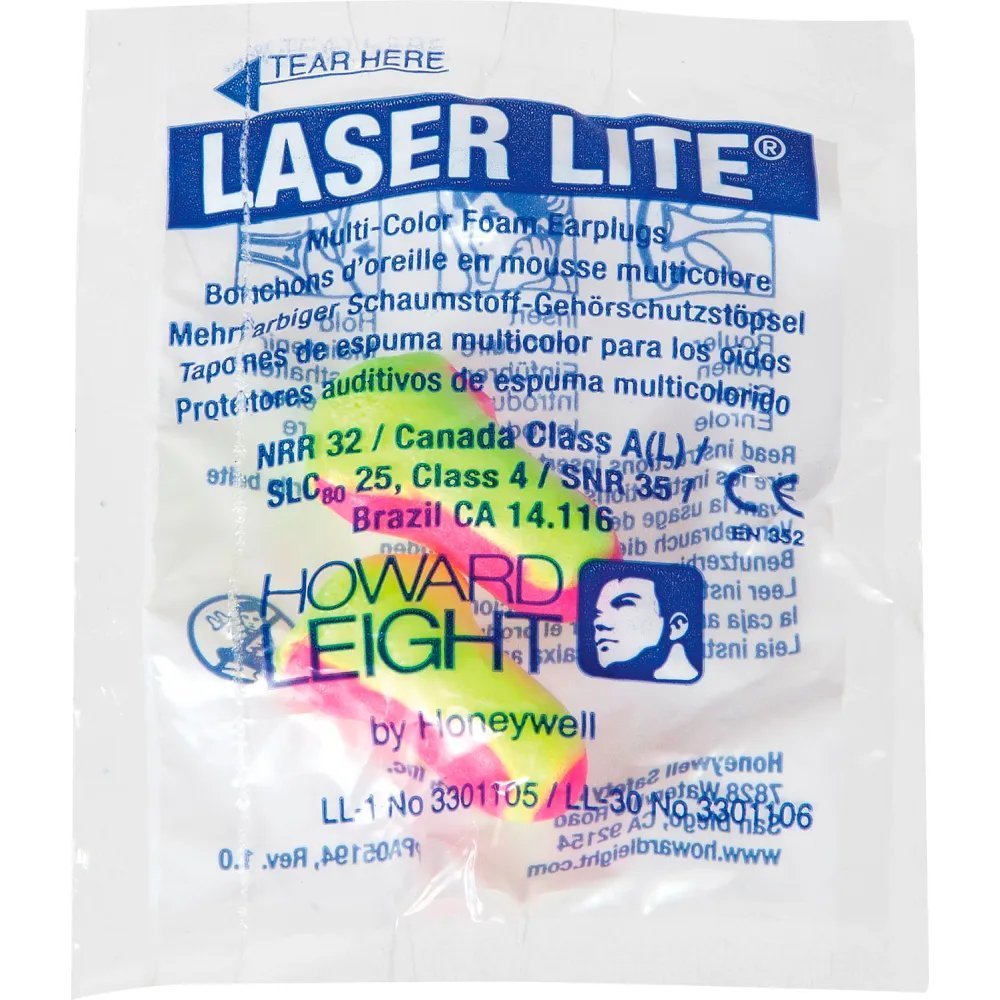
Howard Leight Laser Lite LL-1 Uncorded Earplugs, 200 Pair
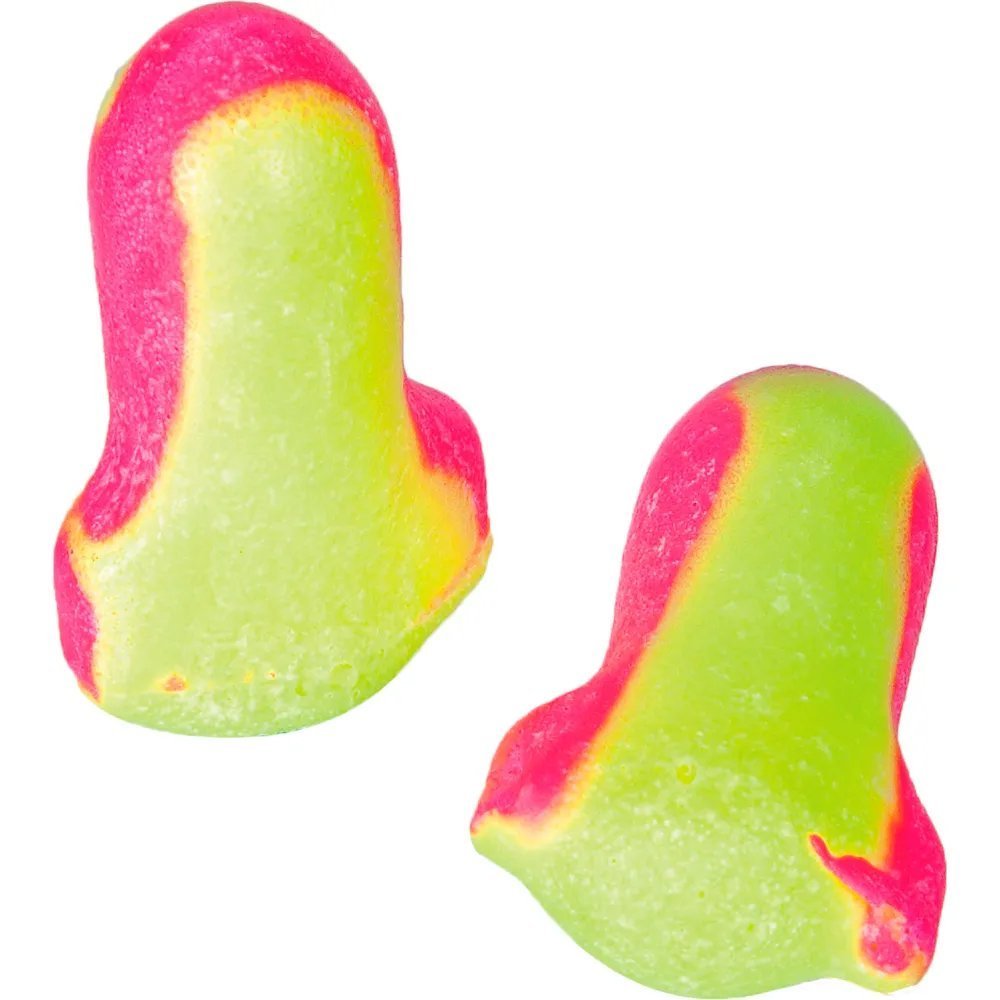
The Laser Lite is the tapered sibling in Howard Leight's line, rated at NRR 32 dB. The taper matters: a standard plug in a narrow canal sits half-out, leaks sound, and migrates out by 2 a.m. The tapered T-shape profile seats deeper without a bulge pressing outward, which is exactly what side sleepers and smaller canals need.
- Tapered shape fits narrow canals that reject standard plugs
- Self-adjusting foam expands to seal without deep pressure
- Bright pink and yellow coloring is easy to find on dark bedding
- Published reviews consistently call it the fits-almost-everyone plug
Reasons to avoid:
- 1 dB below the 33-rated picks on paper (inaudible in practice)
- Bright colors show dirt quickly, which shortens each pair's life
- The T-shape flange can press on some outer ears when side sleeping
- Noise Reduction Rating: 32 dB (manufacturer-stated)
- Shape: tapered T-shape
- Model: LL-1, uncorded (the corded sibling is LL-30)
- Pack linked: 200 pairs, pink and yellow
Best for: smaller or sensitive ear canals, side sleepers, and anyone who has struggled with plugs migrating out overnight.
The bright yellow-and-magenta coloring looks like a worksite gimmick, but it has a bedroom use: you can find a dropped plug on dark bedding without turning on a light and waking your partner. Fit notes from published reviews consistently describe the Laser Lite as the foam plug that fits almost everyone, and UK sleep coverage has named it a top pick specifically because the tapered shape goes in deep without pressure.
Who it's best for: smaller ears first, and anyone whose plugs have ever hurt or fallen out. Why we recommend it: fit decides real-world attenuation more than the printed number does, and this is the most forgiving fit in the guide. Should you buy it? If standard cylinders have failed you, start here. The 1 dB paper gap versus the 33-rated picks is not something a sleeper can hear.
4. HEAROS Ultimate Softness: Best Budget Multi-Pack
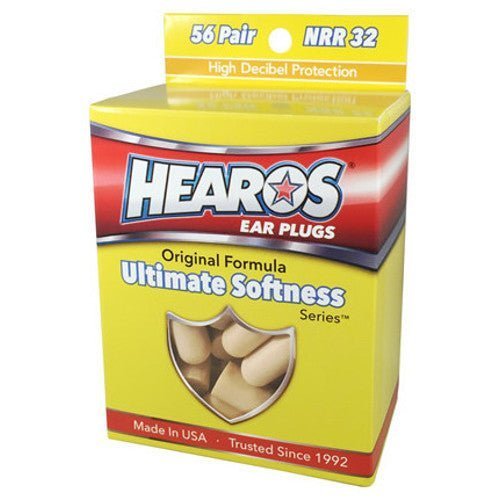

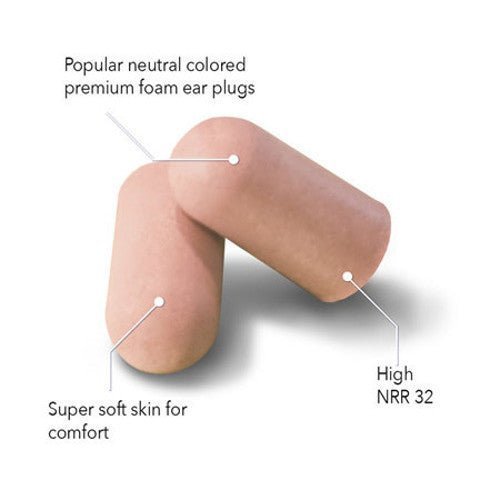
HEAROS Ultimate Softness Series Ear Plugs, 56 Pair
Hearos has sold foam earplugs since 1992, and the Ultimate Softness line is its sleep-friendly flagship: a tapered plug with a flat back, made from a soft proprietary polyurethane foam, manufacturer-rated at NRR 32 dB and tested to ANSI S3.19-1974. The beige color is deliberately inconspicuous, and the flat back keeps the plug from protruding, which side sleepers appreciate. The pack linked in this guide is the 56-pair pack (model 5625).
- Flat back sits low in the ear, a real plus for side sleepers
- Soft polyurethane foam is gentle on sensitive canals
- 56-pair pack brings the per-pair cost down sharply
- Published Q&A around the product specifically covers sleeping use
Reasons to avoid:
- Soft rather than springy foam, so the seal feels less firm than the MAX
- Flat back gives you less to grip when removing the plug
- Smaller pack sizes cost noticeably more per pair
- Noise Reduction Rating: 32 dB (manufacturer-stated)
- Shape: tapered with a flat back
- Model: 5625
- Pack linked: 56 pairs, beige
Best for: budget-conscious sleepers who want a name-brand plug in a sensible bulk pack.
Value is the story here. Hearos sells this plug in several pack sizes, and the 56-pair pack linked above is the sweet spot: big enough that the per-pair cost undercuts most competitors, small enough that you are not storing a year's supply before you know the fit works. The insertion guidance is the standard routine (roll and compress, pull the ear up and back, hold until the foam expands), and the manufacturer's discard guidance is to replace pairs after several uses or as soon as dirt or wax accumulates.
Who it's best for: budget sleepers and side sleepers who like a low-profile plug. Why we recommend it: it is the cheapest way in this guide to keep fresh pairs in rotation without dropping to no-name foam. Should you buy it? Yes if price per pair is your deciding factor. If you prefer a firmer, springier seal, look at the MAX instead.
5. Flents Protechs Quiet Contour: Best Contoured Fit
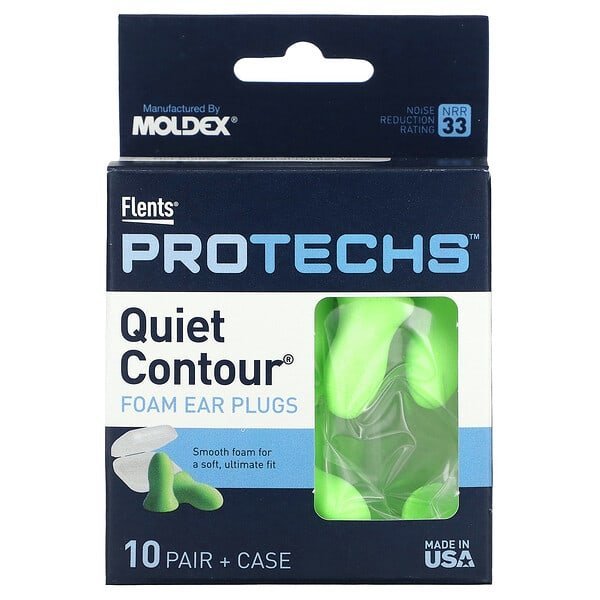
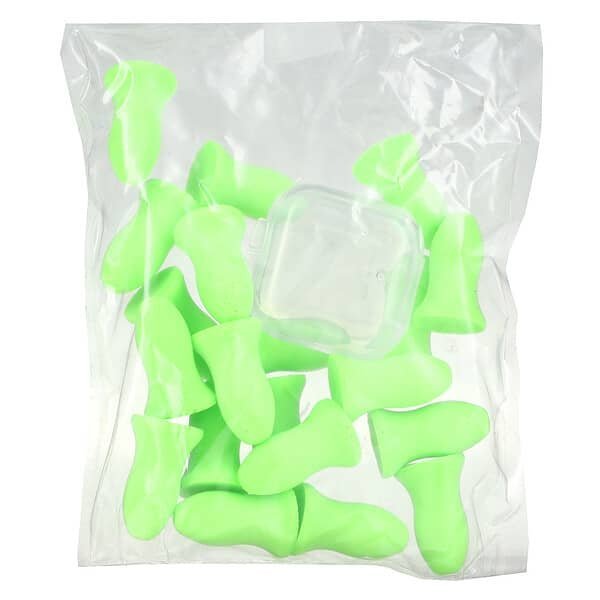
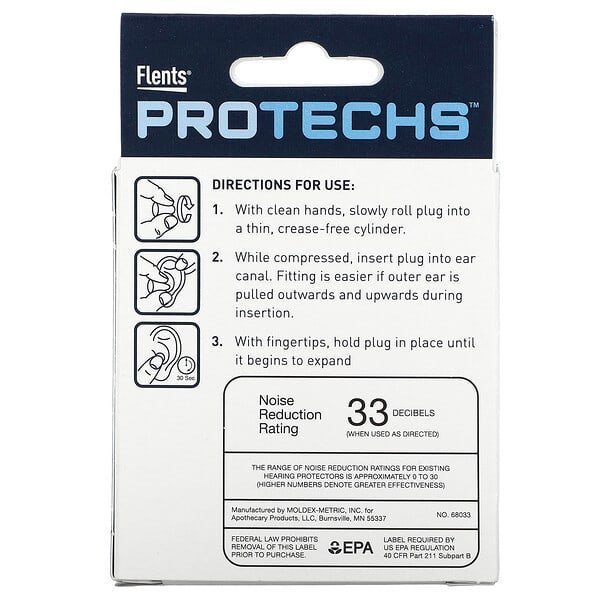
Flents Protechs Quiet Contour Ear Plugs, 10 Pair with Case
Flents' Protechs line is a drugstore staple, and the Quiet Contour variant is the one to get for sleep: an hourglass, contoured profile in extra-soft, lightweight foam, manufacturer-rated at NRR 33 dB, latex-free and made in the USA. The contour is the point: the narrower waist sits in the canal while the wider ends seal and anchor, which many side sleepers find more stable overnight than straight cylinders.
- Contoured waist anchors the plug against overnight migration
- NRR 33 dB with a storage case included in the 10-pair pack
- Extra-soft, lightweight foam, latex-free and made in the USA
- Small pack is a cheap way to test the contoured shape
Reasons to avoid:
- Only 10 pairs per pack, so the per-pair cost is the highest here
- Easy to confuse with the older Quiet Please line, which is rated NRR 29
- Contoured shape will not suit ears that prefer a plain cylinder
- Noise Reduction Rating: 33 dB (manufacturer-stated)
- Shape: hourglass contour
- Model: 68033AMZ
- Pack linked: 10 pairs with case, green
Best for: side sleepers who want a shaped plug that stays put, and travelers who want the case.
A note on the Flents lineup, because it is genuinely confusing: the older Quiet Please line carries an NRR 29 rating on its packaging, while Quiet Contour and Quiet Time are rated at 33 dB. They are different products, not different names for the same plug, and we deliberately left Quiet Please out of this guide for that reason. Make sure the package you buy says Quiet Contour if the 33 dB figure is what you are after. The current retail box is printed "Manufactured by MOLDEX" for Apothecary Products, which is the standard supply arrangement for this line.
Who it's best for: side sleepers whose plugs back out by morning. Why we recommend it: the hourglass waist is a real mechanical answer to migration, not a marketing shape. Should you buy it? Buy the small pack first; if the contour suits your ears, the larger Quiet Contour packs work out cheaper per pair.
6. 3M E-A-R Classic: Best Classic Workhorse
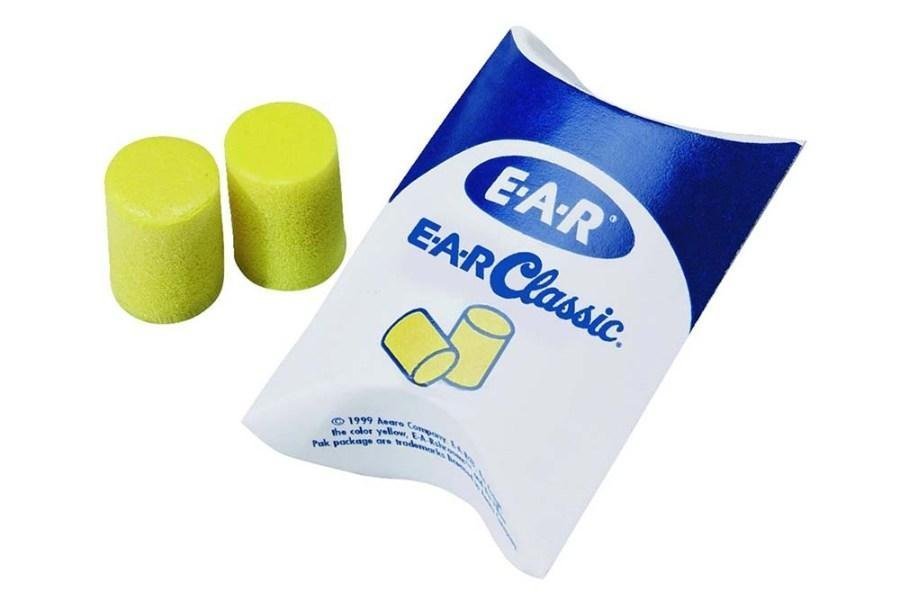

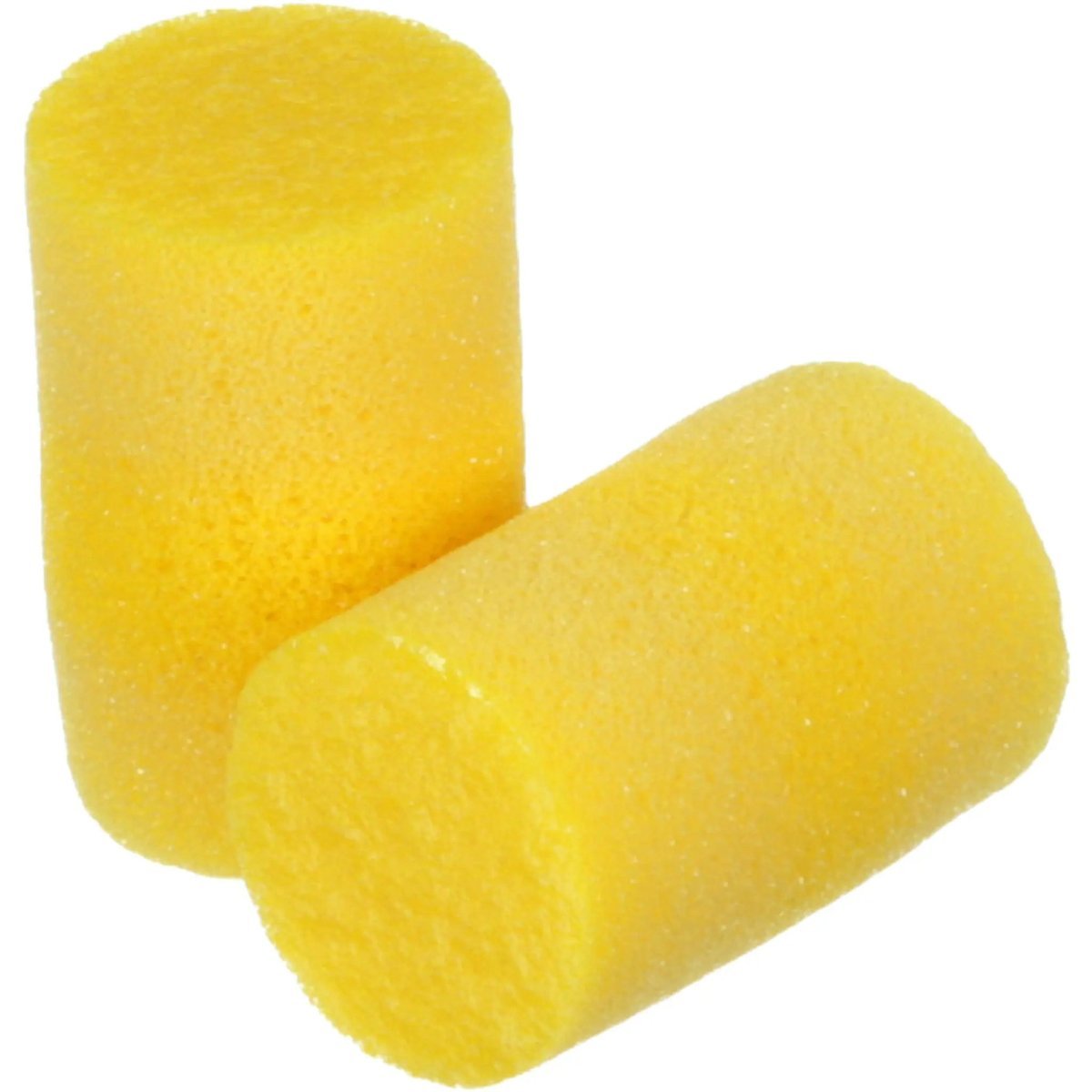
3M E-A-R Classic Ear Plugs 310-1060, 30 Pairs
The 3M E-A-R Classic is the original slow-recovery foam plug, the design everything else iterated on, rated at NRR 29 dB. It is a plain yellow cylinder of PVC foam: no taper, no contour, no marketing foam names. What it offers is predictability. The foam is on the firmer side, which some sleepers actually prefer because it holds its seal through position changes, and the slow recovery gives you plenty of time to get it seated before it expands. The 310-1060 box holds 30 pairs in individual pillow packs.
- The original slow-recovery design, with decades of documented fit behavior
- Firmer foam holds its seal through position changes
- Slow expansion leaves time to seat the plug properly
- Individual pillow packs keep pairs clean in a drawer or travel bag
Reasons to avoid:
- Lowest rating in this guide at NRR 29 dB
- Firmer foam is not the comfiest for dedicated side sleepers
- Plain cylinder shape, with no taper for narrow canals
- Noise Reduction Rating: 29 dB (manufacturer-stated)
- Shape: cylinder, slow-recovery PVC foam
- Model: 310-1060, uncorded
- Pack linked: 30 pairs per box, yellow
Best for: anyone who wants the proven, no-frills standard, and light sleepers in moderately noisy rooms.
Why include a 29 dB plug in a list of 32s and 33s? Because NRR differences of a few dB are smaller than the difference good insertion makes, and the Classic's long track record means its fit behavior is thoroughly documented. Light sleepers in moderately noisy rooms (traffic hum, a partner who breathes loudly rather than saws logs) often find 29 dB plenty, especially with the seal a firmer, slow foam maintains all night.
Who it's best for: traditionalists and back sleepers who like a firmer seal. Why we recommend it: it is the benchmark every other foam plug is measured against, and it is frequently the cheapest per pair in bulk. Should you buy it? If the Classic presses when you lie on your side, try the Laser Lite instead; otherwise it remains a sound, honest pick.
7. The Ear Buddy Premium Soft Foam: Best Comfort-First Pick
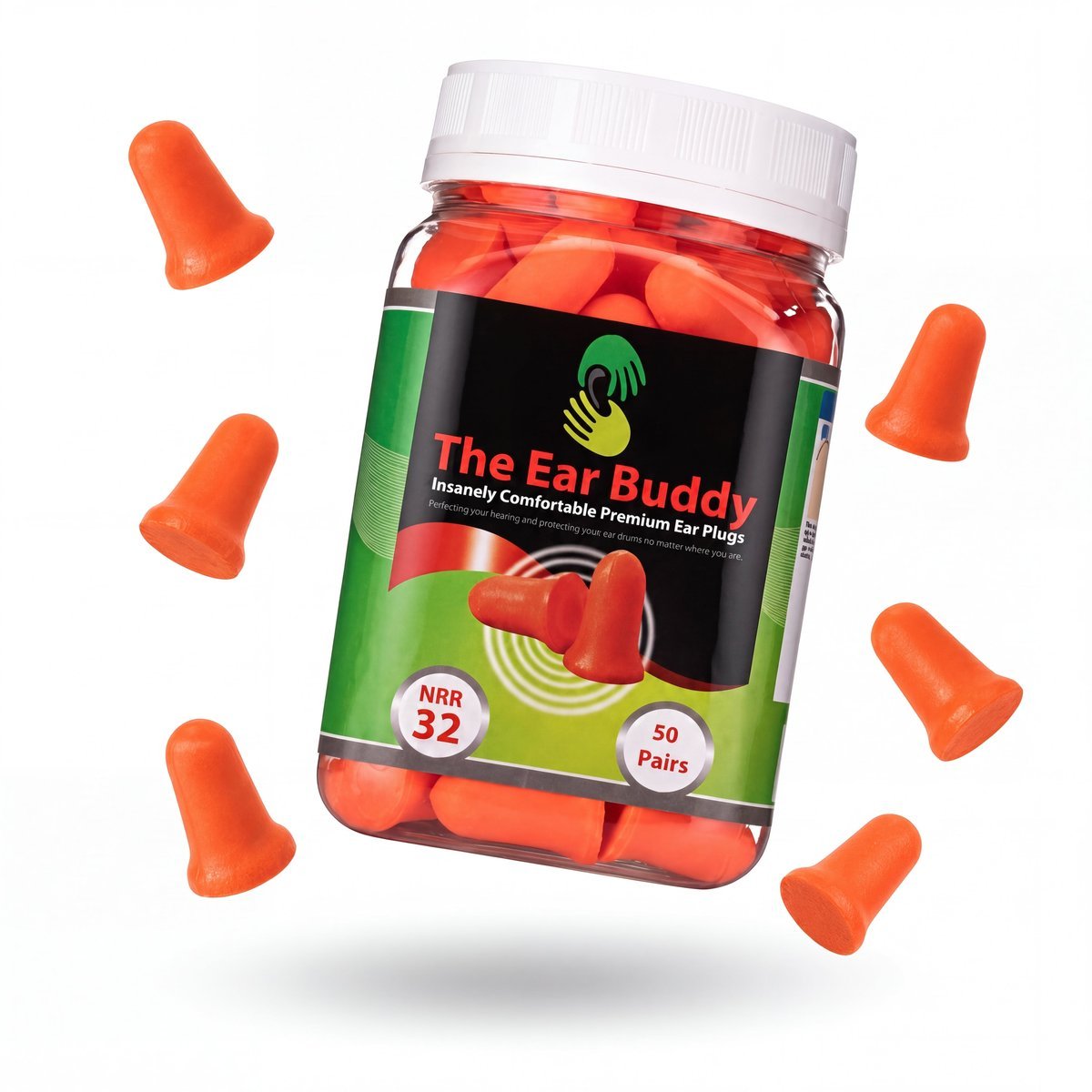
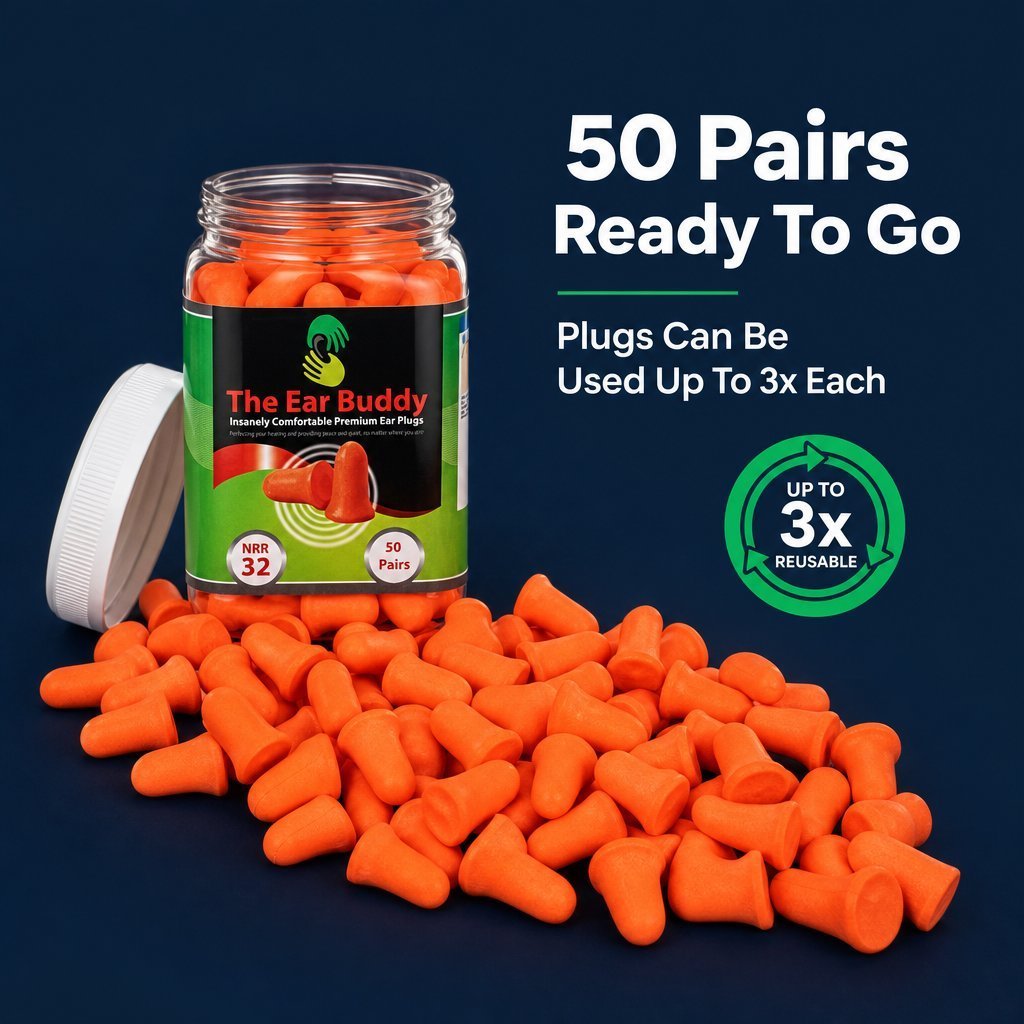
The Ear Buddy Premium Soft Foam Ear Plugs, 50 Pairs
The Ear Buddy is a smaller brand built specifically around sleep: bell-shaped, extra-soft foam plugs made for overnight wear, with a manufacturer-advertised NRR of 32 dB. Published comparisons describe them as notably soft in the ear, and the bell profile keeps the contact patch broad and low-pressure rather than deep and tight. The 50 pairs come in a reusable storage jar rather than loose pairs in a box.
- Softness-first design aimed specifically at overnight wear
- Bell profile spreads pressure instead of concentrating it
- Storage jar keeps 50 pairs in one tidy place
- Sold with a money-back guarantee, which lowers the cost of trying them
Reasons to avoid:
- Smaller brand, with thinner third-party documentation than the industrial names
- The jar is bulkier for travel than a small pack
- Orange is the only color
- Noise Reduction Rating: 32 dB (manufacturer-stated)
- Shape: bell, extra-soft low-pressure foam
- Pack linked: 50 pairs in a reusable jar, orange
- Manufacturer: The Ear Buddy (Dealfisher)
Best for: sleepers who have abandoned foam plugs before because they hurt by morning.
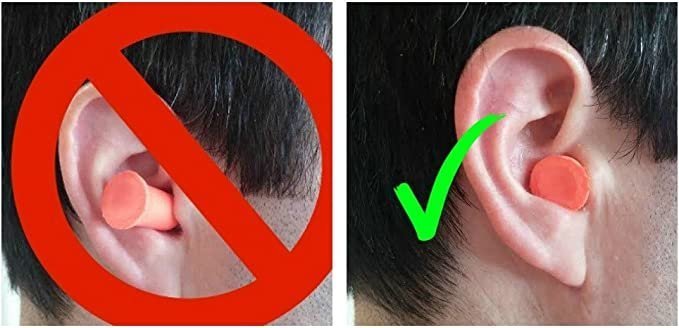
The honest framing: this is a comfort pick, not a heritage pick. The big industrial brands have deeper documentation, but if your primary complaint about foam plugs has always been that they hurt by morning, a plug designed around softness first is the logical experiment, and the guarantee framing lowers the cost of being wrong. The brand's own fitting guide makes the same point this guide does: a plug rolled thin and inserted to the right depth blocks far more than one pushed in shallow.
Who it's best for: comfort refugees from firmer foam. Why we recommend it: it is the only pick here designed for sleep first and worksites never. Should you buy it? Buy it as an experiment alongside a proven pick if your ears are the sensitive kind; it is the pair most likely to still be in at dawn.
How We Chose
Every plug in this guide is a disposable slow-recovery foam plug with a manufacturer-stated NRR printed on its packaging and verified against two independent non-Amazon sources for the exact pack linked. We prioritized, in order: the printed NRR (as a standardized comparison, not a promise), foam softness and shape variety across the list (cylinder, tapered, bell, and contoured, so different ears are covered), pack sizes that make nightly replacement affordable, and documentation depth from the manufacturer and published reviews. We deliberately excluded the Flents Quiet Please line (packaging rated NRR 29 under a confusingly similar name) and the HEAROS Xtreme Protection line (thinner sleep-specific documentation than Ultimate Softness). This guide is research-based: it draws on manufacturer specifications and published review coverage rather than hands-on testing, and it says so wherever a claim depends on it.
Buying Guide: How to Choose Foam Ear Plugs for Sleeping
Understand what NRR actually means
Noise Reduction Rating is measured in a laboratory under ANSI S3.19-1974, with trained subjects achieving perfect fits. Your bedroom is not a laboratory. Occupational-health practice commonly derates the printed NRR: a widely used rule of thumb estimates real-world attenuation at roughly (NRR minus 7) divided by 2, which means a "33 dB" plug might deliver something like 13 dB of actual reduction for an average user. That is still the difference between a 70 dB snore and a 57 dB snore, which is the difference between waking and sleeping. But it means you should not agonize between 32 and 33 dB on the package. The plug you insert correctly beats the higher-rated plug you insert badly, every time.
Get the insertion right: roll, pull, hold
Almost every foam-plug complaint ("they don't block anything," "they fall out," "they hurt") traces to insertion, not the product:
- Roll the plug between clean thumb and forefinger into a thin, crease-free cylinder. Do not just squish it flat.
- Pull the top of your ear up and back with the opposite hand. This straightens the ear canal.
- Insert the compressed plug and hold it in place with a fingertip for 20 to 30 seconds while it expands.
If you can see most of the plug sticking out, it is too shallow: remove, re-roll, and try again. A correctly seated foam plug sits nearly flush.
Match the shape to your ears
- Cylinders (3M E-A-R Classic, Mack's Ultra Soft) are the universal default, fine for average canals.
- Tapered plugs (Laser Lite, HEAROS Ultimate Softness) suit smaller or sensitive canals: they seat deeper with less outward pressure.
- Bell and contoured plugs (Howard Leight MAX, Ear Buddy, Flents Quiet Contour) seal broadly and resist backing out, which helps if plugs migrate overnight.
Side sleepers should favor softer foam and low-profile shapes: anything that protrudes will press against the pillow and either hurt or lever the plug out.
Decide how you will buy them
Disposable foam plugs are sold in packs from 6 to 200 pairs. If you are committing to nightly use, the big boxes (MAX, Laser Lite, Mack's) bring the per-night cost down to cents per pair. If you are experimenting, buy the smallest pack of two or three shapes: fit is personal, and a small experiment beats a big box of plugs that hurt.
Replacement cadence
Manufacturers are consistent on this: disposable foam plugs are single-use or few-use products. Howard Leight's guidance says discard after each use or when compromised; Hearos says discard as soon as dirt or wax accumulates. In practice for sleep, a pair lasts a few nights at most. A plug that stays compressed, looks dirty, or has lost its spring is not protecting you: throw it out. Reusing dirty plugs is the main infection-risk behavior with foam earplugs, not nightly use itself.
Foam Ear Plugs vs. Other Sleep Earplug Types
Foam is one of four common approaches, and the right one depends on what bothers you about the others:
- Foam (this guide): cheapest, highest rated attenuation, disposable. Downsides: nightly waste, frequent replacement, and some people find any in-canal pressure uncomfortable.
- Moldable silicone putty (such as Mack's Pillow Soft): warmed in your hands and pressed over the canal opening rather than inserted. Reusable for several days and very low profile for side sleepers, but lower rated attenuation (around NRR 22 dB) and it can pick up hair and lint.
- Wax: a similar moldable concept to silicone putty, traditional and effective.
- Pre-molded reusable (flanged designs, custom-molded): more expensive up front, washable, consistent fit, but the rigid flanges bother some side sleepers.
Foam plugs block sound; white noise machines mask it. They are complements, not competitors: many light sleepers run both, using the machine to smooth the residual noise that gets past the plugs. Sleep earbuds that play masking audio solve a different problem, attenuate little on their own, and cost far more than a box of foam plugs. Try foam first; it is the cheapest experiment in sleep.
Foam Ear Plugs for Specific Sleep Situations
Partner snoring. The classic use case. Snoring is intermittent and mid-frequency, exactly what foam attenuates best. Start with the Mack's Ultra Soft or the MAX; if the snoring is truly industrial-grade, combine plugs with a white noise machine rather than chasing a higher NRR that does not exist.
Shift workers sleeping dayside. Daytime sleep fights traffic, garbage trucks, and lawn equipment: louder and more variable than nighttime noise. The MAX in bulk is the economical answer, and a sleep mask helps as much as the plugs. Keep a pair in your work bag too; the transition from site noise to bedroom quiet is where most shift workers lose sleep.
Travel and hotels. Foam plugs are the highest-value item in any travel kit: weightless, cheap enough to lose, and effective against hallway noise, thin walls, and aircraft cabin drone. The Laser Lite's bright colors are a genuine travel feature (you will spot a dropped plug on a hotel carpet), and the Flents and Mack's packs linked here include a small case.
Dorms and shared apartments. Roommate noise is unpredictable (conversations, gaming, music), which makes it more disruptive than steady traffic hum. Foam plugs handle the steady component; for the unpredictable peaks, pairing with a noise machine earns its keep. Buy the big box at the start of term and stop thinking about it.
Sensitive or small ears. If every plug you have tried has hurt, the problem is usually size, not foam as a category. Tapered plugs (Laser Lite), the flat-backed HEAROS, or the softest bell shapes (Ear Buddy) exist precisely for this.
5 Mistakes People Make Buying Foam Ear Plugs for Sleep
- Shopping by NRR alone. A 33 dB plug inserted poorly loses to a 29 dB plug inserted well. Prioritize softness and shape for your ears, then let NRR break ties.
- Skipping the roll, pull, hold technique. Unrolled plugs barely seal. If your foam plugs "don't work," re-read the insertion steps above before buying a different brand.
- Reusing disposables for weeks. Dirty, flattened foam is both ineffective and the main hygiene risk. Budget for replacement; it is cents per night in bulk.
- Buying firm industrial foam for side sleeping. Jobsite plugs are designed for seal under hard hats, not comfort under pillows. Side sleepers want soft, low-profile foam.
- Expecting total silence. No earplug blocks all sound: bone conduction alone carries low frequencies past any plug. The goal is sleepable quiet, roughly a 10 to 15 dB real-world drop, which foam reliably delivers.
Two Myths Worth Correcting
"NRR 33 means 33 dB less noise." No. NRR is derived under ANSI S3.19-1974 lab conditions with trained fitters. Treating the printed number as your bedroom result overpromises by roughly double. We state manufacturer NRR figures because they are the only standardized comparison available, but we pair them with the derating reality above. Any review that ranks plugs purely by printed NRR is ranking packaging, not sleep.
"Just reuse each pair for a month to save money." Disposable foam degrades: it stops expanding, collects wax and bacteria, and the seal fails silently (you do not notice it is not working until you are awake at 3 a.m.). The per-night cost in bulk packs is a few cents; reuse beyond a few nights is false economy with a hygiene downside.
FAQ
Are foam earplugs safe to wear every night?
Yes, for most people, with hygiene. Keep your hands clean when rolling them, replace pairs regularly, and watch for wax buildup or irritation. Published sleep-health coverage notes earplugs are generally safe for nightly use provided disposables are replaced as directed. If you have a history of ear infections, ear surgery, or a perforated eardrum, check with a clinician first; that is standard manufacturer guidance.
What is the highest NRR available in a foam earplug?
33 dB is the highest Noise Reduction Rating currently printed on foam earplug packaging, held by plugs including Mack's Ultra Soft Foam, Howard Leight MAX, and Flents Protechs Quiet Contour. Remember it is a laboratory rating; real-world attenuation is lower.
Can you reuse foam earplugs?
Disposable foam plugs are designed for single or limited use. Howard Leight instructs users to discard after each use or when compromised; Hearos advises discarding as soon as dirt or wax accumulates. For sleeping, most people get a few nights per pair. Never wash and try to re-expand disposable foam; it will not recover its seal.
Do foam earplugs help with snoring?
They are the most commonly recommended first step for partner snoring. A snore at the pillow can reach 60 to 70 dB; a well-fitted foam plug delivering roughly 10 to 15 dB of real-world reduction brings that into the range most people sleep through. They will not eliminate it (low-frequency components travel partly through bone conduction), but they turn "impossible" into "manageable" for most couples.
Why do my foam earplugs fall out at night?
Usually one of three things: the plug was not rolled thin and inserted deep enough (redo roll, pull, hold); the plug is too large for your canal (try a tapered plug like the Laser Lite); or jaw movement while sleeping is working a shallow plug loose (seat it deeper, or switch to a bell or contoured shape that resists backing out).
Foam vs. silicone earplugs for sleeping: which is better?
Foam blocks more noise (higher NRR) and costs less; silicone putty is reusable, sits outside the canal, and suits side sleepers who dislike in-canal pressure. There is no universal winner: it depends on whether your priority is maximum quiet or maximum comfort.
Can foam earplugs cause ear infections?
Not by themselves, but dirty plugs can contribute. The risk behavior is reusing disposable foam past its life: wax and bacteria accumulate, and a degraded plug can irritate the canal. The fix is the replacement cadence above, not avoiding plugs. If you get recurrent infections, talk to a clinician and consider washable reusable options.
Do I need the corded or uncorded version?
Uncorded, for sleep. Cords exist so workers do not lose plugs on job sites; in bed, a cord is just something to tangle in. Every Howard Leight plug in this guide comes in both forms (MAX-1 uncorded versus MAX-30 corded, LL-1 versus LL-30); buy the uncorded model number.
Final Verdict
Foam earplugs remain the best value in sleep: pennies a night for the highest rated attenuation you can buy without a prescription or a charging cable. Buy the Mack's Ultra Soft Foam if you want the safest default, the Howard Leight MAX if you want maximum rated quiet in bulk, the Laser Lite if standard plugs have ever hurt or migrated, and the HEAROS Ultimate Softness if the budget matters most. Whichever you choose, the technique matters more than the brand (roll, pull, hold), and fresh pairs matter more than fancy foam.
Final Recommendations
Best Overall: Mack's Ultra Soft Foam Earplugs, 30 Pair; NRR 33 in soft slow-recovery foam, with travel case.
Best Maximum Blocking in Bulk: Howard Leight MAX-1, 200 Pair; NRR 33, pre-shaped bell, cents per night.
Best Tapered Fit for Smaller Ears: Howard Leight Laser Lite LL-1, 200 Pair; NRR 32 tapered T-shape.
Best Budget Multi-Pack: HEAROS Ultimate Softness Series, 56 Pair; NRR 32, flat back, beige.
Best Contoured Fit: Flents Protechs Quiet Contour, 10 Pair with Case; NRR 33 hourglass shape.
Best Classic Workhorse: 3M E-A-R Classic 310-1060, 30 Pairs; NRR 29, the original slow-recovery cylinder.
Best Comfort-First Pick: The Ear Buddy Premium Soft Foam Ear Plugs, 50 Pairs; NRR 32, softness-first bell in a storage jar.
Related Guides
- Best earplugs for sleeping: the full guide across foam, silicone, wax, and custom types
- Foam ear plugs vs silicone: head-to-head on the two most popular sleep materials
- Wax ear plugs: the moldable alternative
- Best noise machines for sleep: mask what the plugs don't block
- Sleep earbuds for side sleepers: when you want audio masking instead of plugs
- Earplugs for small ear canals: if standard plugs never fit