
If you are shopping for the highest dB ear muffs, the first thing to know is that the number on the box is a laboratory figure, not a promise. The Noise Reduction Rating (NRR) is measured on trained subjects under ideal conditions, and real-world protection is always lower. That does not make the ratings useless: it makes them a comparison tool, and it means the certification and test data behind a number matter as much as the number itself.
This guide compares four ear muffs at the top of the NRR range, from a 37 dB manufacturer-stated claim down to a slim 27 dB low-profile model, using manufacturer documentation and published lab attenuation data. Every rating is labelled as manufacturer-stated, and we explain exactly how to derate the figures for real-world use before you buy.
If you are in a hurry, here is the short version.
The Short Answer
Highest claimed NRR: the Decibel Defense Professional Safety Ear Muffs, with a manufacturer-stated NRR of 37 dB, the highest figure claimed by any earmuff in this guide.
Best overall: the 3M Peltor X5A, rated NRR 31 dB by 3M with published frequency-by-frequency lab data behind the number, the highest rating from a major safety-equipment manufacturer.
Best for industrial work: the 3M Peltor Optime 105, a dual-cup NRR 30 dB workhorse built for full shifts around heavy machinery.
Best low-profile option: the 3M Peltor X4A, an NRR 27 dB slim-cup muff that clears rifle stocks, glasses and other PPE more easily than the bigger models.
Quick Picks
Short on time? These are our top recommendations, and each button takes you to the exact product on Amazon.
Comparison Table
| Product | Manufacturer-Stated NRR | Certifications | Style | Best For | Amazon Link |
|---|---|---|---|---|---|
| Decibel Defense Professional Safety Ear Muffs Highest Claimed NRR |
37 dB | ANSI S3.19, CE EN 352-1 (manufacturer-stated) | Over-the-head, foldable, padded headband | Maximum claimed reduction | Check Price |
| 3M Peltor X5A Best Overall |
31 dB | ANSI S3.19, CSA Class AL, EN 352 | Over-the-head, twin headband | Highest certified rating | Check Price |
| 3M Peltor Optime 105 Best for Industrial Work |
30 dB | ANSI S3.19 (Optime line) | Over-the-head, dual cup | Construction and industry | Check Price |
| 3M Peltor X4A Best Low-Profile |
27 dB | ANSI S3.19 (X-Series line) | Over-the-head, low-profile | Slim fit with other PPE | Check Price |
Every NRR in this article is the manufacturer's stated rating, measured under the EPA's NRR program in laboratory conditions. Real-world protection is lower; see "What NRR really means" below.
How We Chose
We ranked ear muffs by their manufacturer-stated NRR, then checked what stands behind each number: the test standard named, the attenuation data published, and the manufacturer's own documentation. A rating with published frequency-by-frequency lab data and ANSI S3.19 certification is weighted more heavily here than a bare claim, and the reviews below say plainly which is which. This is a research-based guide built from manufacturer documentation and published sources; we do not claim hands-on testing we have not done.
Detailed Reviews
1. Decibel Defense Professional Safety Ear Muffs: Highest Claimed NRR
Decibel Defense Professional Safety Ear Muffs
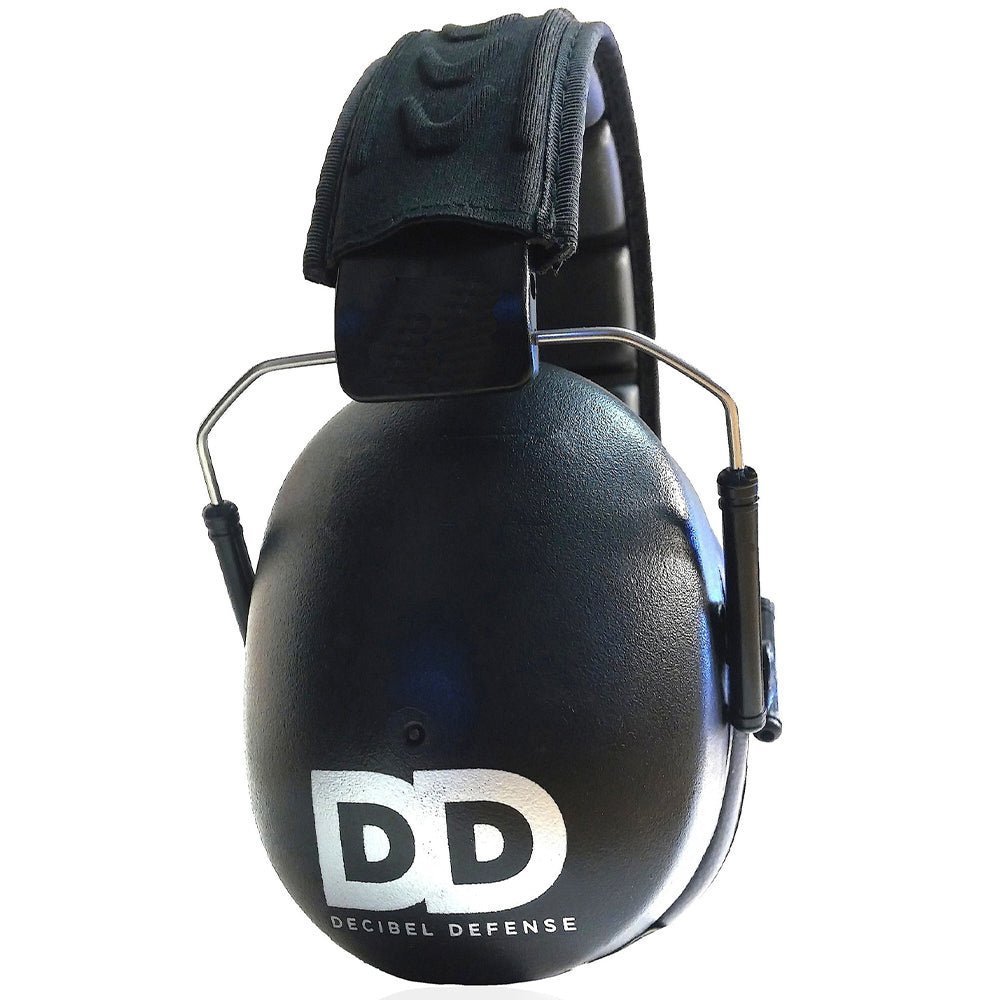
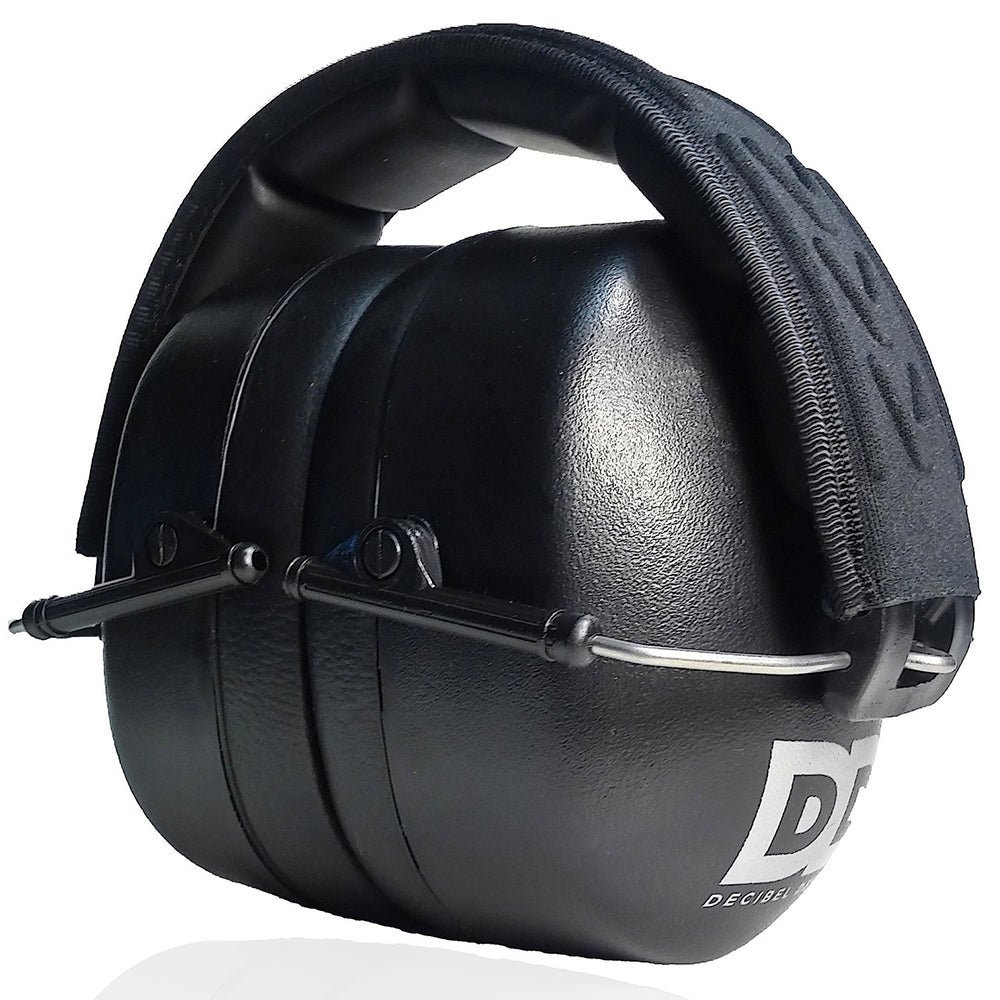
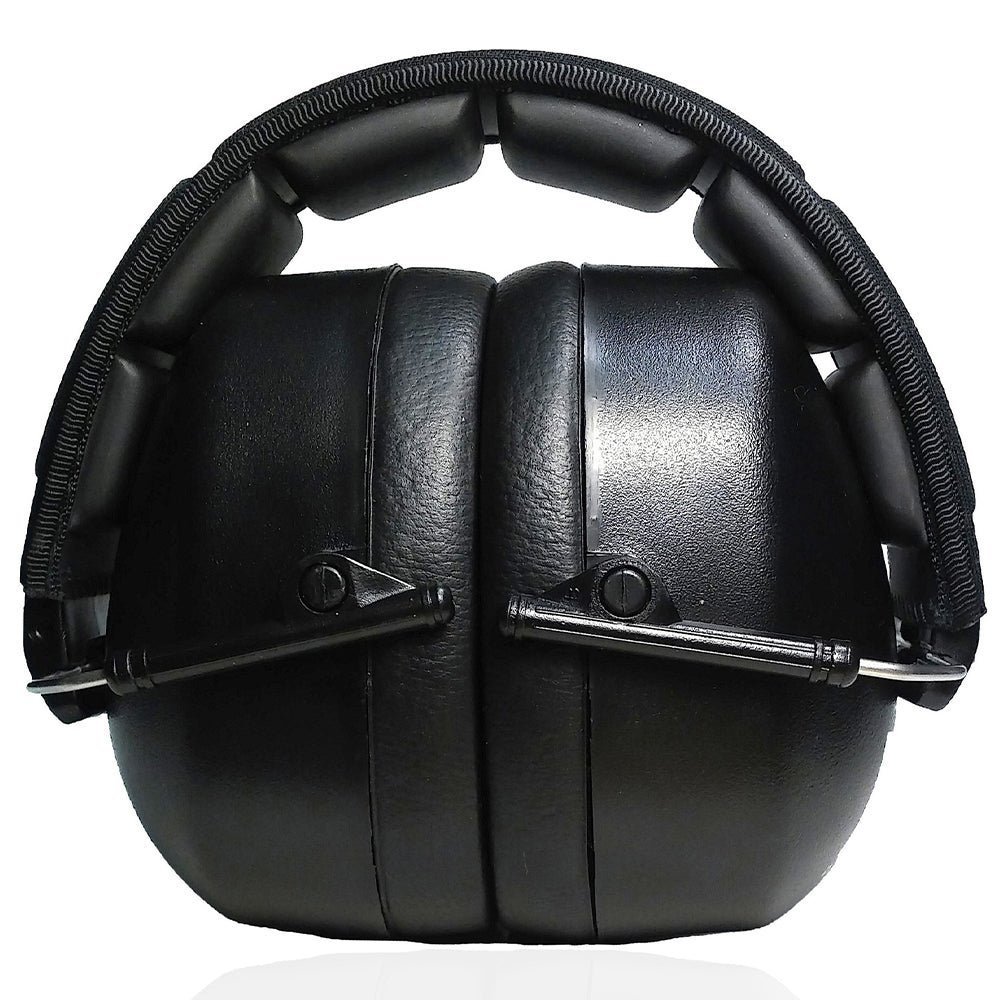
Decibel Defense claims the highest noise reduction rating of any ear muff in this guide: a manufacturer-stated NRR of 37 dB, with ANSI S3.19 and CE EN 352-1 certifications claimed by the company. That puts these muffs at the very top of the pile on paper, among the highest NRR figures available in consumer and professional earmuffs. The muffs are built for long days, with a padded headband, fully adjustable sliding ear cups, and a foldable design that collapses into a range bag or toolbox. They come in standard and XL sizes, and the company markets them for users from young children up through adults, which makes them a plausible pick for families who want one product line that covers everyone.
- Highest manufacturer-stated NRR of any earmuff in this guide (37 dB)
- ANSI S3.19 and CE EN 352-1 certifications claimed by the manufacturer
- Padded headband and adjustable, foldable ear cups for portability
- Standard and XL sizing; marketed for kids through adults
- US-based company with a stated satisfaction guarantee
Reasons to avoid:
- The 37 dB figure is the manufacturer's own claim; the highest NRR from a major safety manufacturer with widely published lab attenuation data is 31 dB (see the 3M Peltor X5A below)
- Review publications consistently note the muffs feel tight at first and need a break-in or stretching period
- Bulkier than low-profile alternatives, so not ideal under a welding helmet or against a rifle stock
- NRR (manufacturer-stated): 37 dB
- Style: Over-the-head, foldable
- Size: Regular (standard); XL also available
- Colour: Black
- Part number: #0001
- Certifications (manufacturer-stated): ANSI S3.19, CE EN 352-1
Best for: shooters, industrial workers, and anyone who wants the maximum claimed reduction and is willing to break the headband in for a comfortable fit.
Who it's best for: The Decibel Defense muffs suit shooters, industrial workers, and families who want the highest number on the label in a foldable, sizeable package. The standard and XL sizing is unusual in this category and makes the line a practical single purchase for households with very different head sizes.
Why we recommend it: On the label, nothing else in this guide goes higher than 37 dB, and the company states ANSI S3.19 and CE EN 352-1 certifications behind the figure. The foldable frame, padded headband and sliding cups are the right comfort features for a high-clamping-force muff, because a muff this strongly rated has to be worn for the whole session to deliver anything close to its rating.
Should you buy it? Buy it if your priority is the highest claimed rating and you accept that the figure is the manufacturer's own. Review publications note an initial tightness that needs a break-in period, so budget a few sessions before judging the fit. If you would rather have the highest rating backed by the deepest published test documentation, look at the 3M Peltor X5A next.
2. 3M Peltor X5A: Best Overall
3M Peltor X5A
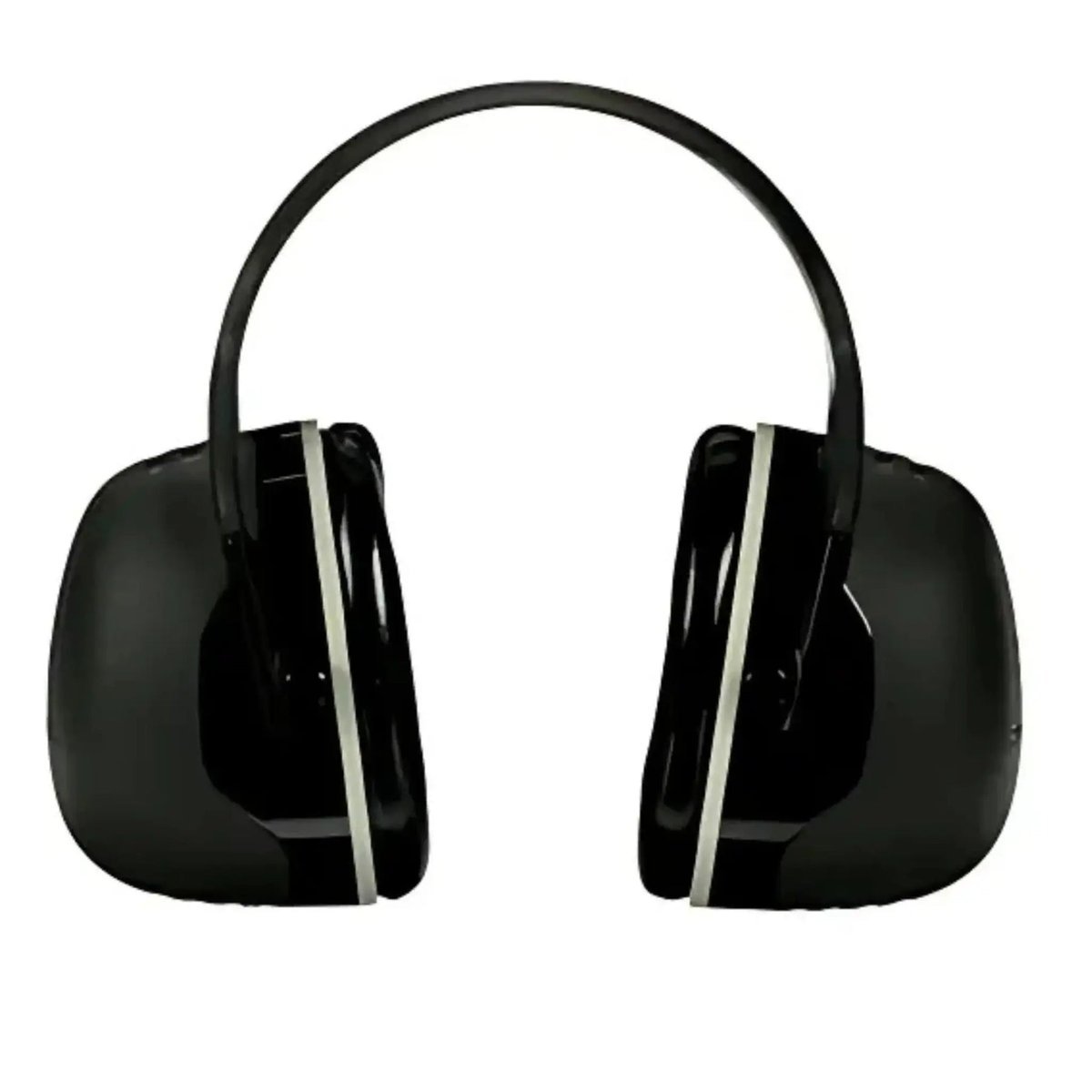
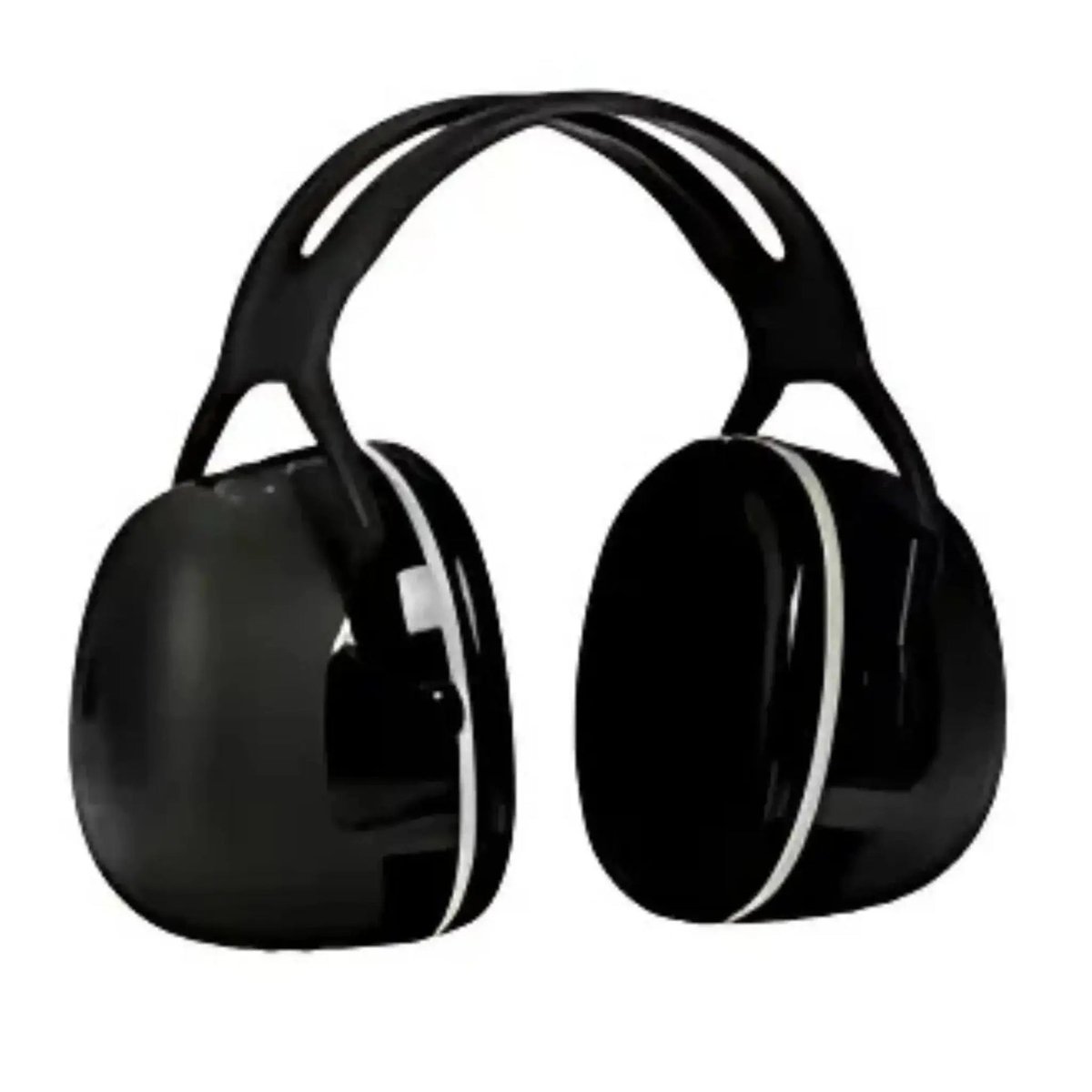
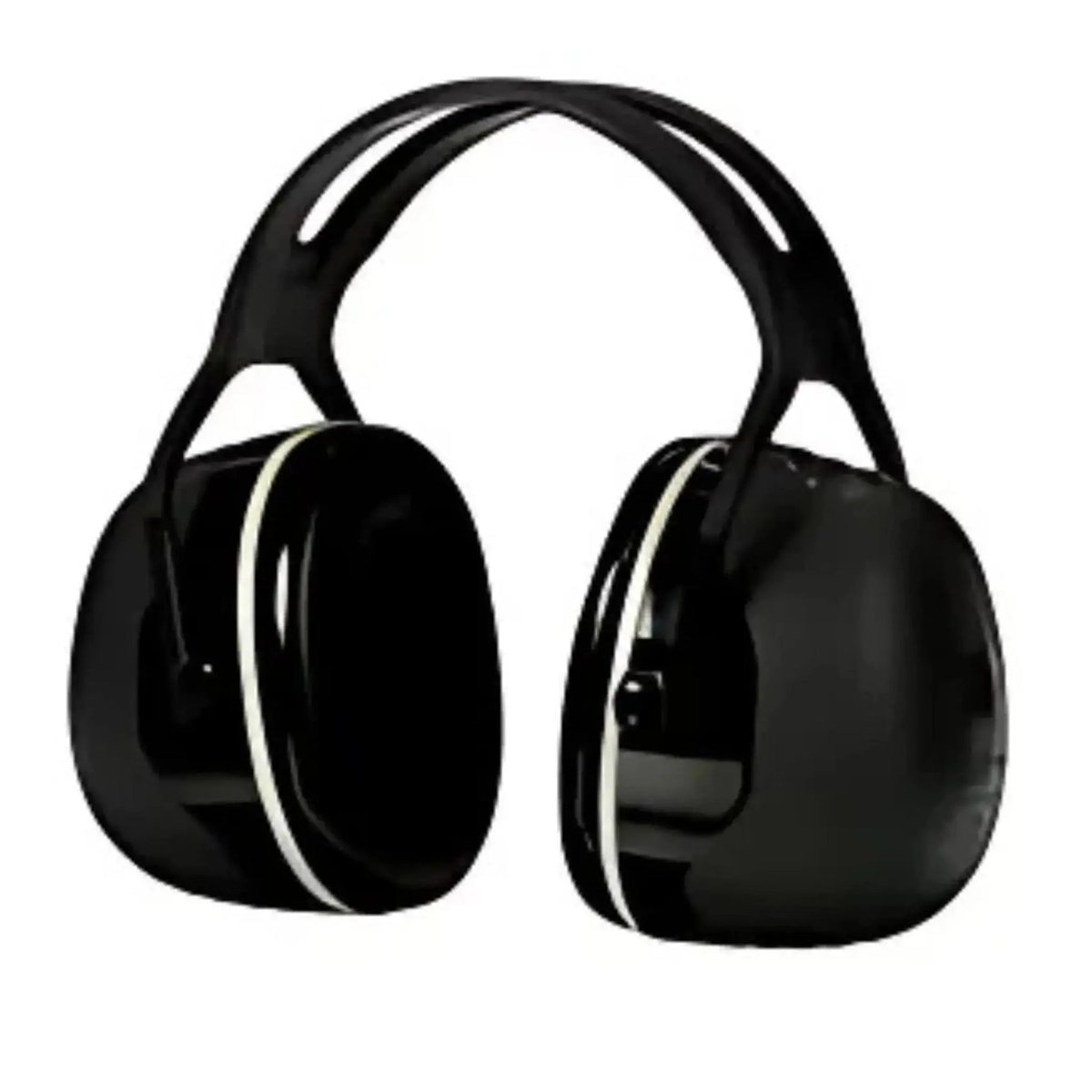
3M describes the X5A as offering the highest NRR (31 dB) for an earmuff on the market, and it backs that up with published frequency-by-frequency attenuation data in its technical datasheets. The X5A is the flagship of 3M's Peltor X-Series, designed for extreme-noise environments like airports, quarries, metal processing, and heavy industry. The twin-headband design spreads pressure and reduces heat buildup, and the electrically insulated (dielectric) wire headband is suited to work around low-voltage electrical hazards. The earcups tilt for a customized seal, and the cushions and foam liners are replaceable with 3M's HYX5 hygiene kit, which extends the usable life of the muff. It carries CSA Class AL approval and meets EN 352 standards alongside the ANSI S3.19 NRR label.
- Highest NRR (31 dB) stated by a major safety manufacturer with published lab data
- Twin headband and tilting earcups balance comfort with a strong seal
- Electrically insulated headband for use around electrical hazards
- Replaceable cushions and liners keep them serviceable for years
- CSA Class AL and EN 352 approvals alongside the NRR label
Reasons to avoid:
- Not foldable and bulkier than consumer-style muffs, so less portable
- On paper, lower than the 37 dB claim above, though with far more published test documentation behind the number
- Heavier than low-profile options at around 351 g
- NRR: 31 dB
- Style: Over-the-head, twin headband
- Weight: Approximately 351 g (12.4 oz)
- Headband: Electrically insulated (dielectric) wire
- Certifications: ANSI S3.19, CSA Class AL, EN 352
- Hygiene kit: HYX5 (replaceable cushions and liners)
Best for: industrial workers, construction crews, and anyone who wants the highest rating from a manufacturer with decades of published attenuation data.
Who it's best for: The X5A suits industrial workers, construction crews, and shooters who want maximum certified protection rather than the maximum claimed number. It is the reference point against which every "highest dB" claim in this category should be measured.
Why we recommend it: The difference between this muff and the higher claims above it is documentation. 3M publishes the X5A's attenuation by frequency in its technical datasheets, from 22.3 dB mean attenuation at 125 Hz up to 44.2 dB at 1000 Hz (EN 352 test data), so the single-number 31 dB NRR can be checked against real measurements rather than taken on trust. The twin headband, tilting cups and replaceable hygiene-kit parts are built for daily professional use, and the dielectric headband adds genuine value around electrical hazards.
Should you buy it? Yes, if maximum certified protection is the goal. Accept the trade-offs honestly: it does not fold, it is bulkier than consumer muffs, and at around 351 g it is not the lightest option here. For range bags and tight storage, the X4A below is the easier carry.
3. 3M Peltor Optime 105: Best for Industrial Work

3M Peltor Optime 105
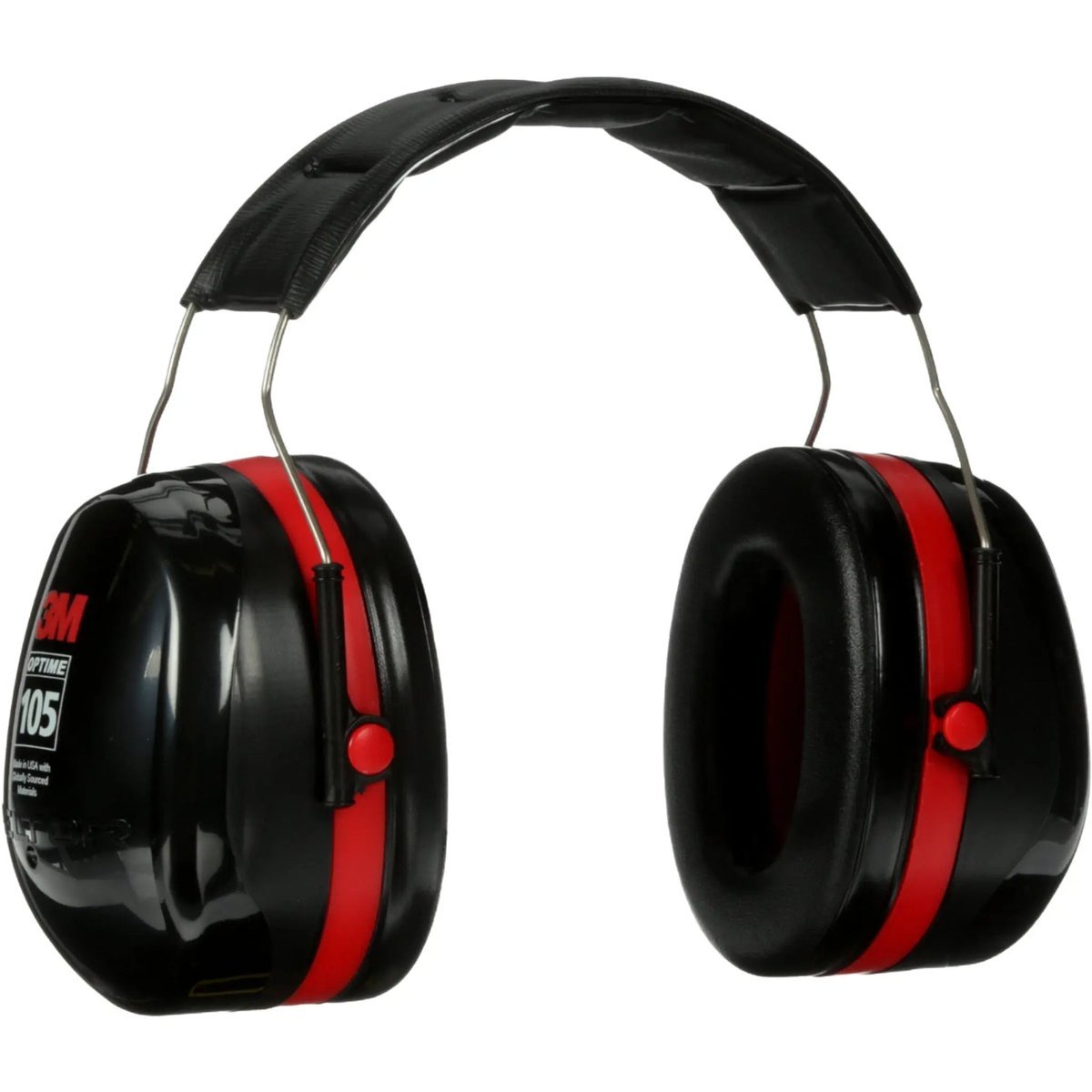
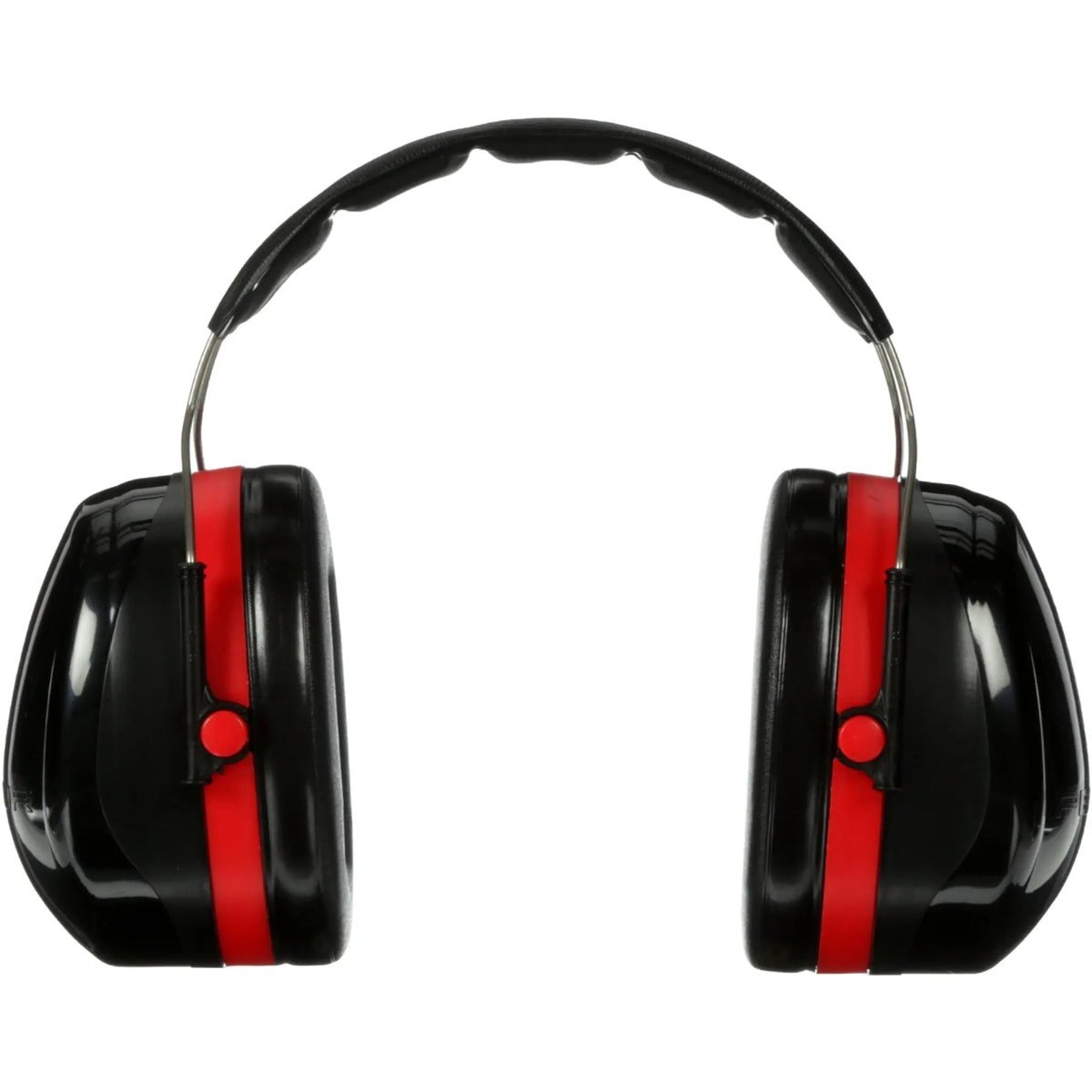
The Optime 105 is 3M's long-running industrial workhorse: a dual-cup earmuff rated at NRR 30 dB in 3M's own hearing-protection catalog, recommended for time-weighted-average noise exposures up to 105 dBA. Its double-shell earcup design connects two cups through a foam inner layer to boost noise reduction across low and high frequencies, and the soft liquid and foam filled cushions deliver high attenuation with the comfort needed for long shifts. The H10A version reviewed here is the over-the-head model in black with red accents; the wider Optime 105 line also includes neckband, folding, and hard-hat-attached versions, so it slots into existing PPE setups on construction sites and factory floors. The stainless steel headband resists bending and warping, and the cushions are replaceable.
- NRR 30 dB from 3M with the rating published in 3M's catalog
- Double-shell cup design proven over years of industrial use
- Line includes neckband, folding and hard-hat versions for PPE setups
- Liquid and foam filled cushions stay comfortable over full shifts
- Replaceable cushions extend service life
Reasons to avoid:
- One decibel below the X5A's 31 dB on the label
- The standard headband model does not fold flat, so it is less portable than foldable consumer muffs
- Higher clamping force than moderate-rated muffs, which is overkill if you only need light protection
- NRR: 30 dB
- Model: H10A, over-the-head
- Cup design: Double-shell (Twin-Cup)
- Cushions: Liquid and foam filled, replaceable
- Headband: Stainless steel, padded
- Colour: Black with red accents
Best for: construction workers, factory-floor workers, and heavy-equipment operators who need a proven 30 dB industrial muff that integrates with other PPE.
Who it's best for: The Optime 105 suits construction workers, factory-floor staff and heavy-equipment operators who wear hearing protection for entire shifts and need it to work alongside the rest of their PPE.
Why we recommend it: One decibel separates this muff from the X5A on the label, and in practice the two deliver nearly identical protection once fit and derating are accounted for. What the Optime 105 adds is breadth: the line's neckband, folding and hard-hat-attached versions mean a whole crew can standardise on one muff family across different jobs, and the double-shell design has a long industrial track record behind it. 3M positions the Optime 105 for noise exposures up to 105 dBA, which covers the loudest common workplaces.
Should you buy it? For all-day industrial use, the Optime 105's comfort and PPE compatibility make it one of the safest recommendations on this list. Choose the X5A instead only if you want the absolute maximum certified rating and the modern X-Series fit system.
4. 3M Peltor X4A: Best Low-Profile
3M Peltor X4A
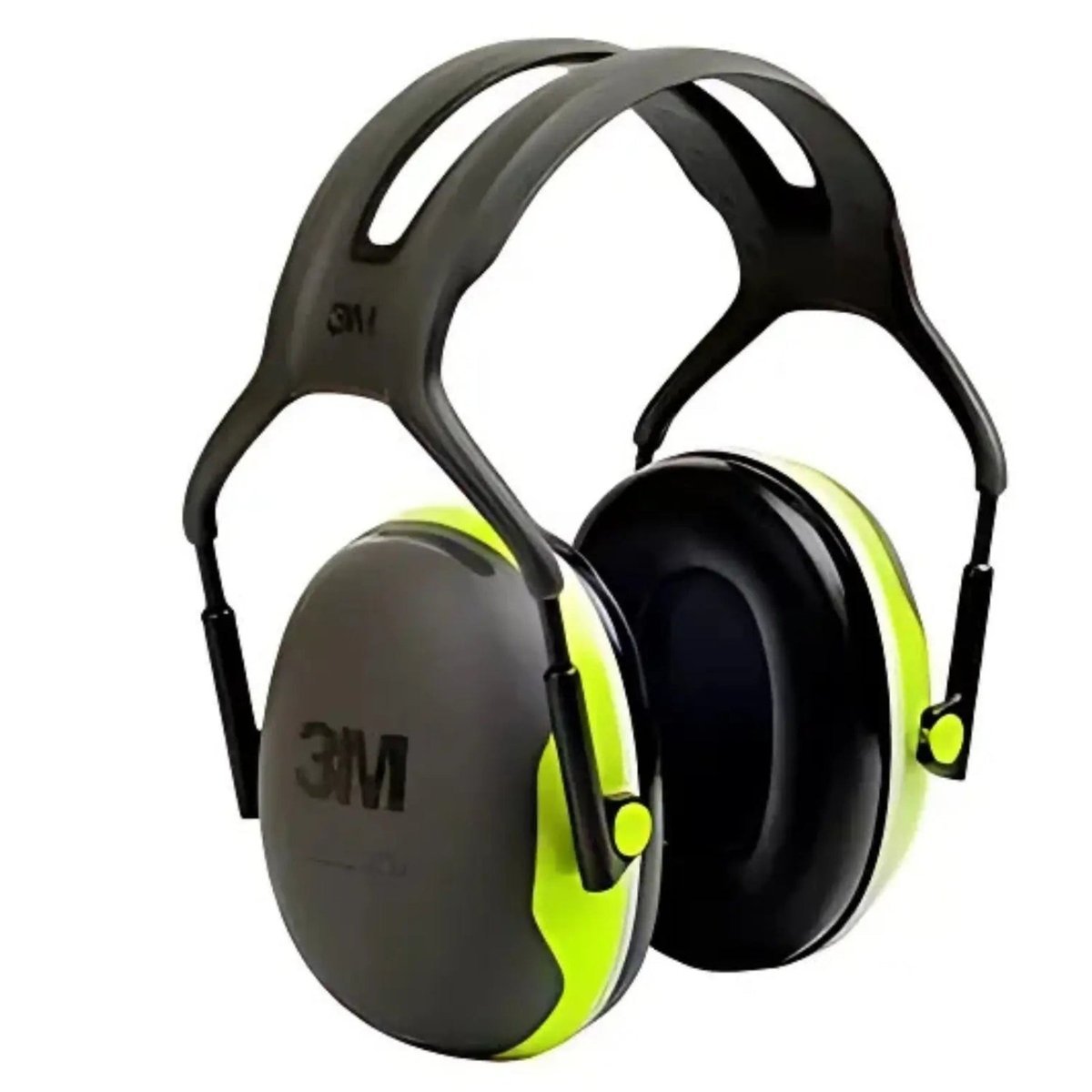
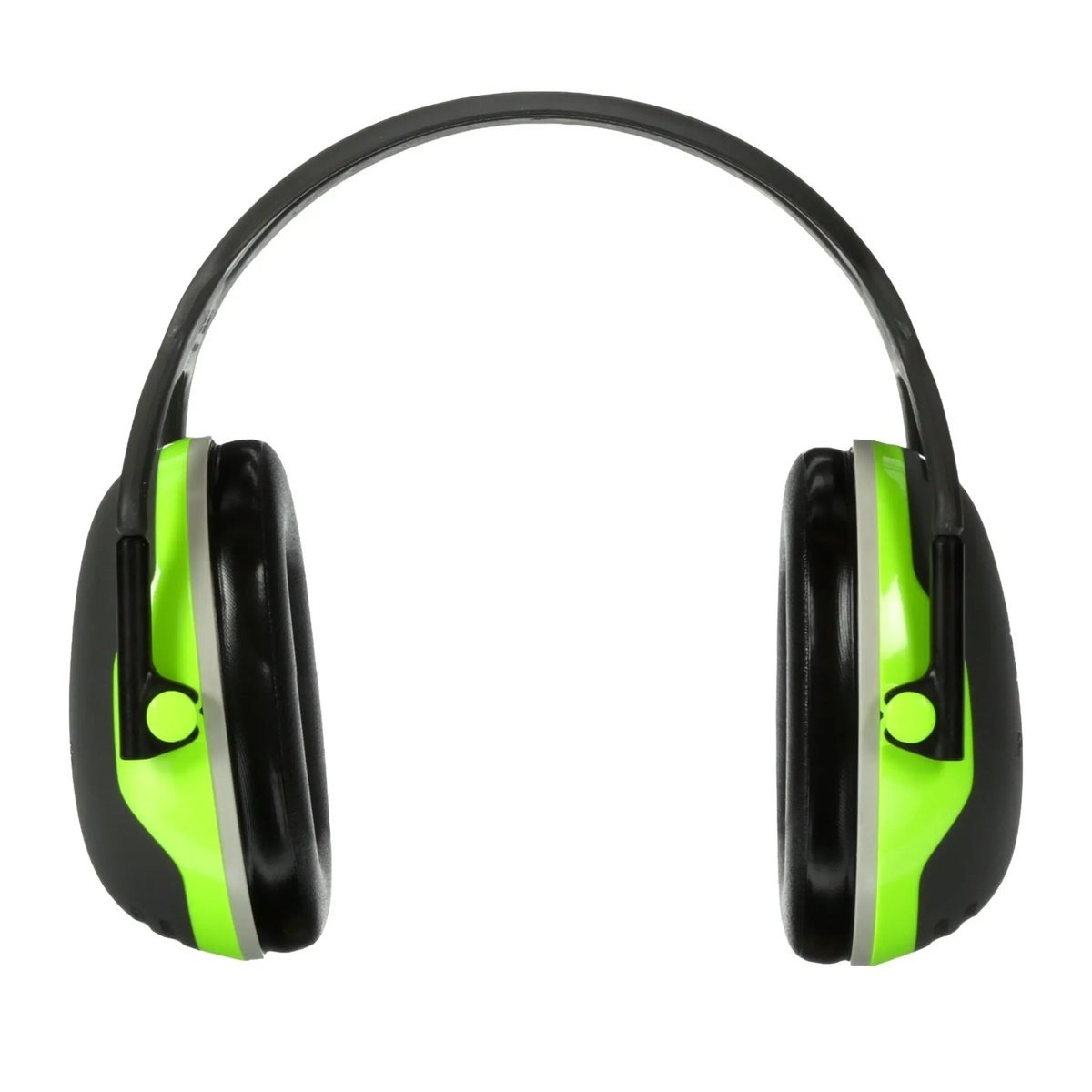
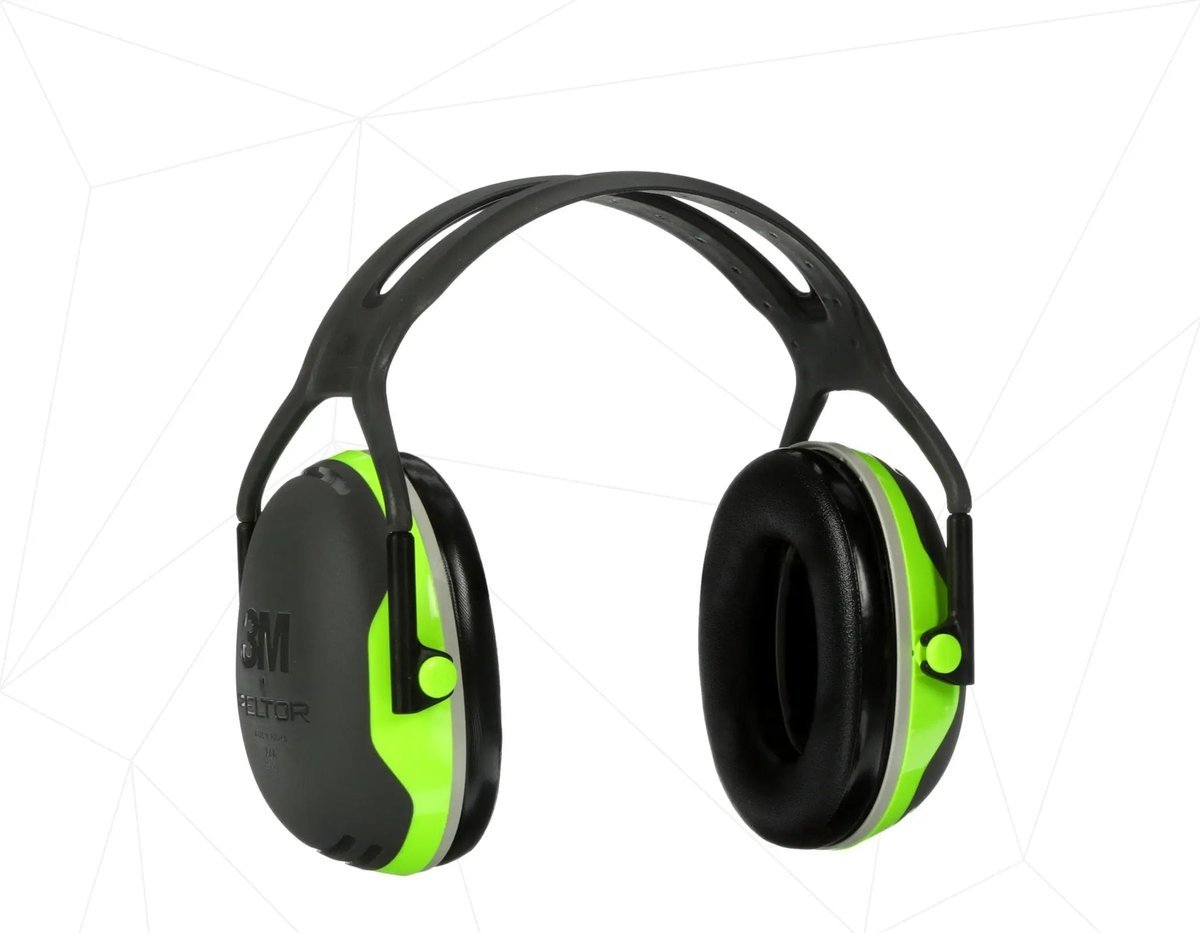
The X4A trades a few decibels for a slimmer profile: NRR 27 dB per 3M's catalog, with a low-profile cup designed to stay compatible with other PPE, including glasses, hats, and, importantly for this category, rifle and shotgun stocks. It keeps the X-Series hallmarks: a twin headband that reduces heat buildup, an electrically insulated wire headband, and tilting earcups for a customized seal. Specially formulated foam in the earcups and cushions helps the slim cups reach a rating that bulkier older designs needed much more size to achieve, and the cushions and foam liners are replaceable with the HYX4 hygiene kit. For shooters who find full-size high-NRR cups bump against their stock, or for workers who wear earmuffs alongside other gear all day, the X4A's slim design is a practical compromise.
- NRR 27 dB, still a high rating, from 3M's published catalog
- Low-profile cups clear rifle stocks, glasses, and hats more easily
- Twin headband and tilting cups for fit and comfort
- Electrically insulated headband for electrical-hazard environments
- Replaceable cushions and liners (HYX4 hygiene kit)
Reasons to avoid:
- Lower rating than every other muff in this guide (27 dB against 30 to 37 dB)
- Slimmer cups can mean a less forgiving seal for some head shapes
- Not the choice when maximum attenuation is the priority
- NRR: 27 dB
- Style: Over-the-head, low-profile
- Colour: Black and chartreuse
- Headband: Twin, electrically insulated wire
- Certifications: ANSI S3.19, CSA Class AL
- Hygiene kit: HYX4 (replaceable cushions and liners)
Best for: shooters and PPE-heavy workers who need a slim cup that plays well with other gear.
Who it's best for: The X4A suits shooters who have fought a bulky earmuff against a rifle stock, and workers who layer earmuffs over glasses, hats or helmets for full shifts.
Why we recommend it: A muff that breaks its seal against a stock or a glasses arm protects far worse than its label suggests, and the X4A's slim cups are designed to avoid exactly that failure. Its 27 dB rating is honestly labelled and published by 3M, and after the derating explained below, the real-world gap between a well-sealed 27 dB muff and a poorly sealed 31 dB muff can vanish entirely. It also keeps the X-Series comfort system and replaceable parts, so it is not a stripped-down budget compromise.
Should you buy it? Buy it if profile and compatibility matter more than the last few decibels. If raw attenuation is the goal and you wear the muff on its own, step up to the X5A instead.
Buying Guide: What NRR Really Means
NRR vs. decibels: the number on the box
NRR (Noise Reduction Rating) is the single-number metric used in the United States to rate hearing protectors. It is regulated by the EPA and determined through controlled laboratory testing: the manufacturer tests the device on ten trained human subjects, in anechoic conditions, across nine test frequencies. The NRR represents the maximum theoretical sound reduction achievable when the device is worn perfectly, a condition rarely replicated in real life. So a 31 dB NRR muff does not reduce every noise you hear by exactly 31 dB. Think of NRR as a standardized way to compare products, not as a guarantee of what your ears will experience.
The honest truth about the highest ratings
Independent hearing-protection explainers place the highest NRR for earmuffs at 31 dB, the 3M Peltor X5A's territory. You will also see higher manufacturer-stated ratings, such as the 37 dB claimed by Decibel Defense. Those are the companies' own ratings, and the highest rating from a major safety manufacturer with widely published lab attenuation data remains 31 dB. That does not make the higher claims false, but it does mean you should weigh a 31 dB rating with published lab data and ANSI S3.19 certification differently from a 37 dB rating claimed on a box. In this guide, every rating is labelled manufacturer-stated so you can judge for yourself.
Real-world protection is always lower (derating)
Because lab conditions are ideal, safety bodies recommend derating the label. NIOSH recommends subtracting 25% from a labeled earmuff NRR to estimate real-world protection, so a 31 dB muff becomes roughly 23 dB of effective protection. A common OSHA-style estimate is (NRR minus 7) divided by 2, which adjusts for the difference between the lab's C-weighted test noise and the A-weighted measurements used in workplaces; a 31 dB muff works out to about 12 dB of estimated effective reduction under this method. The exact math matters less than the principle: fit, seal, and wearing the muff 100% of the time matter more than a 2 to 3 dB difference on the label. 3M itself warns that the effectiveness of a hearing protector reduces dramatically when the protector does not fit properly.
NRR does not fully capture gunfire
An important caveat for the hunting and shooting crowd: the NRR is based on the attenuation of continuous noise, and EPA label-program text notes it may not be an accurate indicator of the protection attainable against impulsive noise such as gunfire. Firearm discharges can exceed 140 dB at the shooter's ear. Even the highest-rated muffs reduce the risk rather than eliminate it, so always follow range safety rules, and consider double protection (earplugs under earmuffs) for indoor ranges or large calibers.
How to choose: the five things that matter more than the number
1. Certification. Look for ANSI S3.19 (US) and/or CE EN 352-1 markings. A bare "37 dB" claim with no test standard behind it is not comparable to a certified rating.
2. Fit and seal. The muff must fully enclose the ear with no gaps; glasses arms, hair, and hats all break the seal. Try before you commit where possible.
3. Clamping force and comfort. The highest-NRR muffs clamp hardest. If it is uncomfortable, you will take it off, and a 31 dB muff in the drawer protects nobody.
4. Use case. Shooting favors slim cups (stock clearance) or shooting-specific designs such as Howard Leight's Leightning L3; industrial work favors replaceable cushions and PPE compatibility.
5. Double protection. For the loudest environments, wearing foam earplugs under earmuffs adds roughly 4 to 8 dB beyond the higher-rated device alone, which is more effective than chasing the last decibel on the box.
Product Types: Passive vs. Electronic Ear Muffs
All four muffs in this guide are passive: they block sound through physical construction (cups, foam, seals) with no batteries. Passive muffs are simple, reliable, and generally deliver the highest NRRs. Electronic muffs use microphones to pass through ambient sound at safe levels while compressing or clipping sudden loud noises. They are popular at ranges because you can hear conversation and range commands, but their NRRs are typically lower (low to mid 20s), which is why none make this highest dB list.
Head-to-Head Comparisons
3M Peltor X5A (31 dB) vs. Decibel Defense (37 dB)
This is the honest question behind the search. On the label, Decibel Defense wins by 6 dB. On documentation, the X5A wins decisively: published attenuation tables, decades of industrial deployment, and 3M's own statement that 31 dB is the highest NRR for an earmuff on the market. Our take: if you trust manufacturer-stated maximums and want the highest number, choose Decibel Defense. If you want the highest rating with the deepest test documentation, choose the X5A.
3M Peltor X5A (31 dB) vs. Optime 105 (30 dB)
One decibel on the label, and in practice nearly identical protection. Choose the X5A for the absolute maximum and the modern X-Series fit system; choose the Optime 105 for its wider range of mounting options (neckband, hard-hat, folding versions across the line) and its long industrial track record.
Common Mistakes to Avoid
1. Treating the NRR as exact. A 37 dB muff does not make a 140 dB gunshot 103 dB. NRR is a lab-ideal, single-number comparison tool; derate it and focus on fit.
2. Chasing the number over the seal. A certified 27 dB muff that seals perfectly protects better than a claimed 37 dB muff worn over thick glasses arms.
3. Ignoring comfort. The highest-NRR muffs clamp hardest. A muff you remove after 20 minutes protects you for 20 minutes. Padded headbands and replaceable cushions exist for a reason.
4. Buying uncertified "37 dB" muffs. If there is no ANSI S3.19 or CE EN 352 marking, the number on the box is not comparable to certified ratings. Stick to brands that name their test standard.
5. Assuming one device is enough for everything. Indoor ranges, magnum calibers, and heavy industry are double-protection territory: foam earplugs under earmuffs beat any single muff.
Frequently Asked Questions
The highest manufacturer-stated NRR for an earmuff we verified is 37 dB (Decibel Defense, manufacturer-stated). The highest NRR stated by a major safety-equipment manufacturer with published lab data is 31 dB, the 3M Peltor X5A.
Not in real-world use. NRR is measured in a lab on trained subjects under ideal conditions. NIOSH recommends derating earmuff NRRs by 25% to estimate actual protection, and even brief removal of the muff destroys most of the benefit. Treat 37 dB as a comparison figure, not a guarantee.
Not necessarily. NRR is based on continuous-noise testing and is an imperfect measure of protection against impulsive gunfire noise. For shooting, fit, seal, stock clearance, and comfort often matter more than 2 to 3 dB of label difference, so a well-sealed 27 to 30 dB shooting muff beats a poorly fitting higher-rated one.
Yes. Earmuffs are standard hearing protection at ranges, and many shooters double up with foam earplugs underneath for maximum protection. Follow your range's safety rules, and note that no earmuff eliminates all risk from gunfire noise.
The cups should fully enclose your ears with an even seal all around, with no gaps from glasses arms, hair, or hats. You should feel consistent, comfortable pressure, and the outside world should sound noticeably muffled. If sound leaks on one side, adjust the headband and re-seat the cups.
Final Verdict
If you searched for the highest dB ear muffs, here is the honest bottom line: the highest manufacturer-stated NRR is 37 dB (Decibel Defense), the highest with deep published test documentation is 31 dB (3M Peltor X5A), and the difference between 27 and 37 dB on a label matters far less than certification, fit, and actually wearing them. Whichever you choose, remember: derate the label, prioritize the seal, and in the loudest environments, add foam earplugs underneath. Your hearing does not get a second chance.
Final Recommendations
Highest Claimed NRR: Decibel Defense Professional Safety Ear Muffs, 37 dB manufacturer-stated; foldable; standard and XL sizes.
Best Overall: 3M Peltor X5A, 31 dB certified benchmark; twin dielectric headband; published lab data.
Best for Industrial Work: 3M Peltor Optime 105, 30 dB dual-cup workhorse for full shifts and PPE setups.
Best Low-Profile: 3M Peltor X4A, 27 dB slim cups that clear stocks, glasses and hats.
Related Guides
- our broader look at hearing protection ear muffs for every use case.
- noise cancelling earmuffs, including electronic options for the range.
- work earmuffs for construction and industrial use.
- comfortable ear muffs for all-day wear.
- good ear muffs for everyday noise.
Safety note: this article is for information only and is not medical or occupational safety advice. Firearm noise can exceed 140 dB and can cause permanent hearing damage; no hearing protector eliminates all risk. Always follow range safety rules and consult a qualified audiologist or occupational hygienist for workplace hearing-conservation programs.