
Researched October 2026
The short version: Samsung's The Frame invented the frame TV and remains the most refined art TV you can buy. Its matte anti-glare display, Art Mode, and flush wall mount are still the category benchmark. But it is no longer alone: the Hisense CanvasTV undercuts it with a frame and mount in the box, 144 Hz gaming specs, and free art with no subscription, while the TCL NXTFRAME adds Bang & Olufsen audio and AI art generation. The right frame TV is the one whose art ecosystem and picture quality match how you'll actually use it.
The Direct Answer: Which Frame TV Should You Buy?
If you want one recommendation: the Samsung The Frame (current LS03F generation) is the safest buy in the category. It has the most mature art ecosystem (the Art Store's curated collection plus your own photos), the best-tested matte anti-glare display, motion and brightness sensors that make the art look like a real print, and an included Slim Fit wall mount that sits nearly flush to the wall. No rival matches the complete package yet.
But the field has real alternatives now:
- Best value → Hisense CanvasTV. A genuine QLED art TV with a 144 Hz panel, anti-glare Hi-Matte display, magnetic frame and slim wall mount included in the box, and over a thousand free artworks with no subscription, for meaningfully less than The Frame.
- Best features → TCL NXTFRAME. Audio tuned by Bang & Olufsen, AI art generation, Google TV, and an included frame, the most tech-forward art TV.
The single most expensive mistake here is buying a frame TV for the picture quality alone. You're paying a design premium: the matte screen that makes art look like a print trades away some contrast and pop versus a glossy performance TV at the same price. Buy a frame TV because you want the wall to look like a gallery. If pure picture performance is the mission, our best-TV guide will serve you better.
Quick Picks
Short on time? These are our top recommendations: each button takes you to the exact product on Amazon.


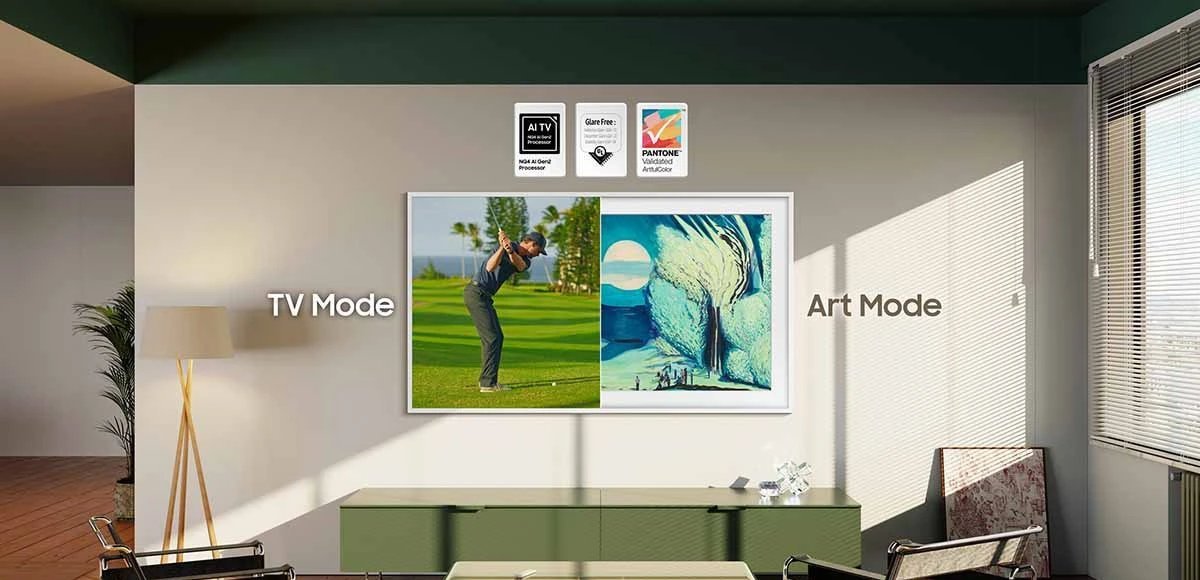
Samsung The Frame (LS03F, 55-inch)
The category originator, now nine years refined: the most mature art ecosystem, the best-tested matte display, and a flush mount plus One Connect box in the box.
- Art Mode with curated Art Store, digital mats, and motion/brightness sensors that make art look like a real print
- Matte anti-glare 4K QLED display: the best-tested reflection control in the category
- Slim Fit wall mount and One Connect box included; a single thin cable runs to the screen
Important limitation: Decorative bezels cost extra; full Art Store access needs a paid subscription; 50-inch and smaller sizes drop to 60 Hz
- Display: 4K QLED, matte anti-glare
- Refresh rate: 120 Hz (55-inch and up), up to 144 Hz with Motion Xcelerator
- Smart platform: Tizen with Samsung Vision AI
Best for: Living rooms and design-led spaces where the TV-off look matters as much as the TV-on look
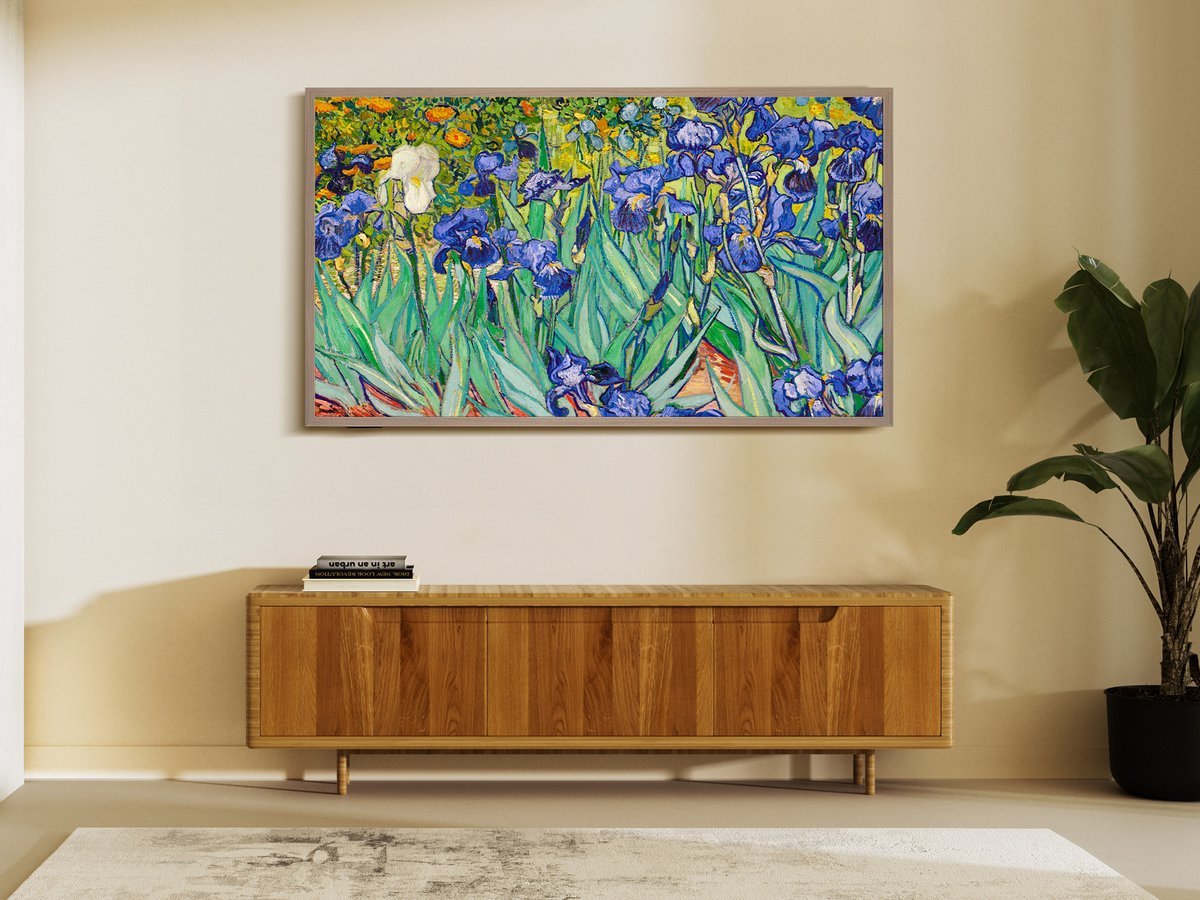


Hisense CanvasTV (S7N, 55-inch)
The first legitimate Frame rival: a 4K QLED art TV with a native 144 Hz panel, frame and mount in the box, and 1,000+ free artworks, no subscription.
- Magnetic teak frame and UltraSlim wall mount included in the box
- Native 144 Hz panel with FreeSync Premium Pro and ALLM, genuinely better for gaming
- 1,000+ free masterpieces with no subscription; Dolby Vision support
Important limitation: Thicker and heavier than The Frame (1.4 in deep); no local dimming, so dark-room contrast is modest; no One Connect-style single-cable box, so cable tidiness lags The Frame
- Display: 4K QLED, Hi-Matte anti-glare
- Refresh rate: 144 Hz native, VRR 48-144 Hz
- Smart platform: Google TV; 2-year warranty
Best for: Gamers who want an art TV; value buyers; Google TV households
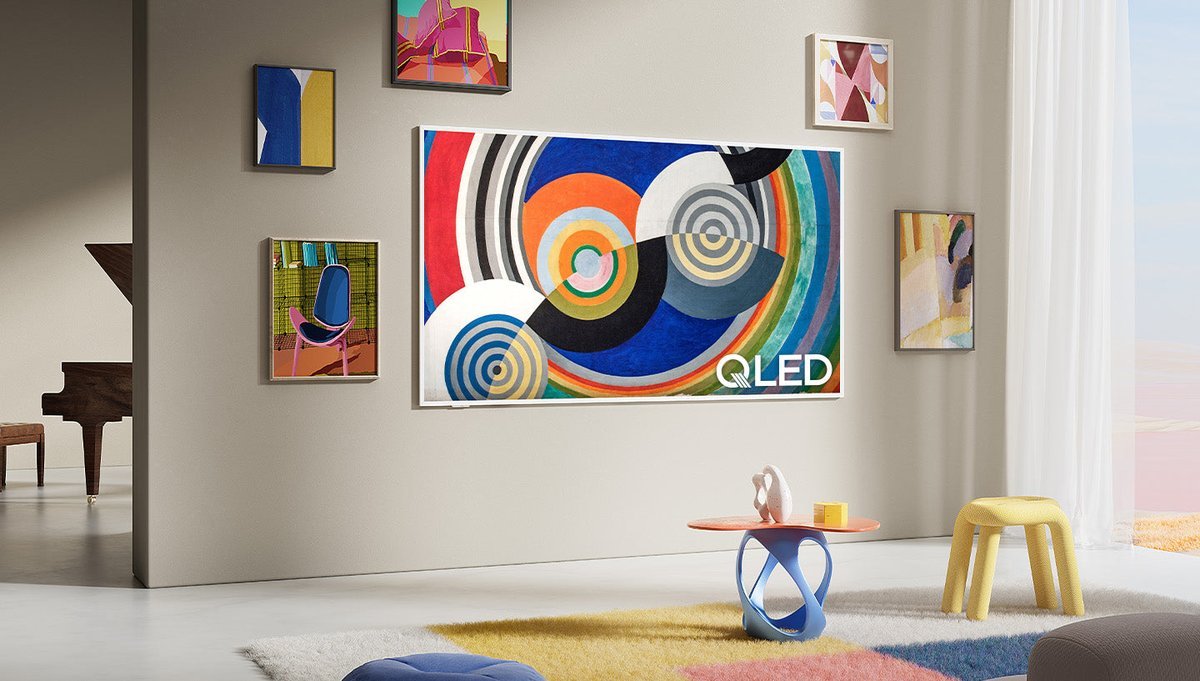
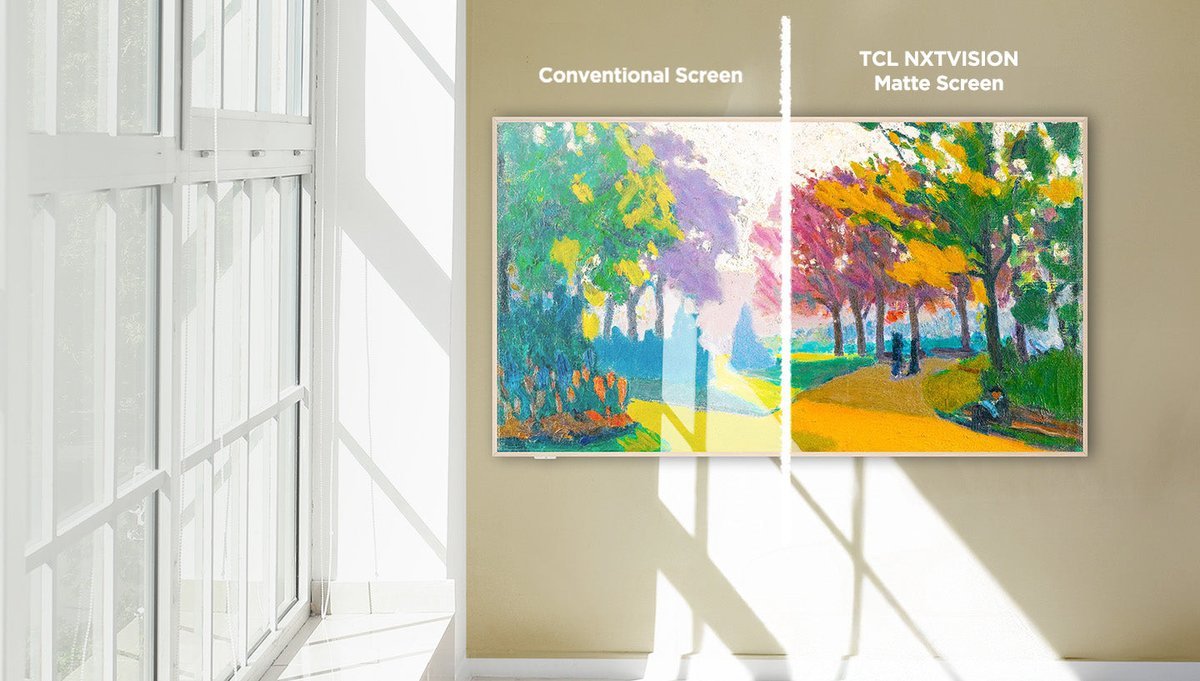

TCL NXTFRAME (55-inch, 55A300W)
The most tech-forward art TV: Bang & Olufsen-tuned audio, onboard AI art generation, Google TV, and an included frame.
- Audio tuned by Bang & Olufsen: a genuine differentiator
- AI art generation plus curated library; Google TV built in
- Frame included; slim 1.1-inch profile; 120 Hz panel with 144 Hz VRR
Important limitation: Art ecosystem younger than Samsung's; no motion/brightness sensor refinement to match The Frame; 120 Hz native panel (144 Hz only through VRR), behind the Hisense's native 144 Hz panel
- Display: 4K QLED, matte anti-glare
- Refresh rate: 120 Hz (144 Hz VRR)
- Audio: Bang & Olufsen-tuned, Dolby Atmos
Best for: Buyers who value smart features and audio; AI-art enthusiasts
| Product | Key Specs | Best Use Case | Standout Feature | Amazon Link |
|---|---|---|---|---|
| Samsung The Frame (LS03F, 55-inch) Best Overall Frame TV |
4K QLED matte; 120 Hz; Tizen | Design-first living rooms | Most mature art ecosystem | Check Price |
| Hisense CanvasTV (S7N, 55-inch) Best Value |
4K QLED Hi-Matte; 144 Hz native | Value + gaming art TV | Frame and mount in the box, free art | Check Price |
| TCL NXTFRAME (55-inch, 55A300W) Best for Features |
4K QLED matte; 120 Hz; B&O audio | Feature-rich art TV | Bang & Olufsen audio + AI art | Check Price |
How We Selected These Frame TVs
We did not hands-on test these televisions: this guide is research-based, and we'd rather say so than imply otherwise. Selection followed three filters. First, genuine art-TV credentials: every pick is sold as a design-first television with a matte/anti-glare display and a dedicated art mode, not a regular TV with a slideshow screensaver. Second, corroborated market presence: each model is covered by multiple independent publications with consistent specifications; single-source hype and AI-generated listicles were excluded. Third, buyer-profile coverage: the shortlist had to serve the design purist (The Frame), the value buyer (CanvasTV), and the feature buyer (NXTFRAME).
Prices are intentionally absent from this guide: TV pricing shifts constantly across retailers and sizes, and a printed price would be wrong within weeks. The picks are ordered by buyer profile, not by price: use them as a shortlist, then compare current prices at publication-time retailers.
Buying Guide: How to Choose a Frame TV
Decide what you're actually buying: art or TV
Every frame TV asks you to pay a design premium: the matte screen, the flush mount, the frame hardware, the art ecosystem. If you'll spend 80% of the time watching movies and 20% glancing at art, a performance TV (best-TV guide) gives you more picture per dollar. If the wall looks like a gallery 20 hours a day and shows movies for 4, the premium is rational. Be honest about the ratio before you shop.
The matte screen is the whole trick, and the whole trade-off
The anti-glare matte display is what makes art look like a print instead of a glowing rectangle, and it's the feature every legitimate art TV shares. The trade-off, confirmed by independent reviewers: matte coatings soften perceived contrast and black levels versus glossy screens. Samsung's matte display is the best-tested in the category; Hisense's Hi-Matte and TCL's matte are credible; all of them trade some "pop" for reflection control. If you watch mostly in a bright room, this trade is pure win. In a dark home theater, it's a real cost.
Art ecosystems compared: subscription vs free
This is the hidden long-term cost. Samsung's Art Store, the largest curated collection, needs a paid subscription for full access. Hisense includes 1,000+ pieces free, and TCL bundles curated and AI-generated art. All three display your own photos free. If you'll mostly show family photos, the subscription question is moot. If you want rotating museum-grade curation, factor the subscription into the total cost: a cheaper TV with a subscription can cost more over five years than a pricier TV without one.
Check what's in the box: frames and mounts
Samsung includes the Slim Fit flush wall mount but sells decorative bezels separately, so budget for the frame you actually want. Hisense includes both magnetic frame and UltraSlim mount. TCL includes the frame. This isn't trivia: the "frame" in "frame TV" can be a meaningful added cost on the Samsung side, and it's the reason the value math is closer than headline prices suggest.
Refresh rate matters if you game or watch sports
The three picks here span 120 Hz (The Frame, and the NXTFRAME with VRR up to 144 Hz) to a native 144 Hz panel (CanvasTV). For movies and art, refresh rate barely matters. For gaming, sports, and fast motion, 120 Hz+ with VRR/ALLM is visibly smoother, and the CanvasTV's native 144 Hz panel with FreeSync is the standout value play here. Check the refresh rate against how you'll actually use the TV before you buy.
Wall mounting is part of the product
A frame TV on a stand defeats the purpose: these are designed to hang flush like art. Verify what's included (Samsung's Slim Fit mount is genuinely excellent), check the weight (the 75-inch CanvasTV approaches 80 lb, so allow two people and proper anchors), and confirm your wall can take it. Our wall-mount guide covers the hardware.
Size it like art, not like a TV
TV buying advice says "go as big as the room allows" (TV sizes explained). Art buying says "fit the wall." A 65-inch frame TV dominates a small room the way a large painting would, which is the point, but measure the wall and the viewing distance first. The 55-inch size fits most living-room walls without turning the "painting" into a billboard; 65-inch suits large open-plan spaces.
Verify the model year
Frame TVs iterate yearly (LS03B → LS03D → LS03F), and older generations stay on sale at tempting discounts. That's fine, but verify which generation you're buying: panel specs, refresh rates, and smart platforms change between generations, and stale listings don't always say so. The picks above reference current-generation models.
Frame TV Types at a Glance
QLED art TVs (Samsung The Frame, Hisense CanvasTV, TCL NXTFRAME) are the mainstream: bright enough for living rooms, no burn-in concerns for all-day art display, and the matte finish works beautifully in ambient light.
Mini-LED art TVs add local dimming for meaningfully better contrast, bridging art-TV design and home-theater performance at premium prices.
OLED art TVs deliver perfect blacks and the most convincing dark-room art reproduction, at premium prices and with the usual OLED static-image considerations.
The DIY alternative: any TV can display art: load photos via USB, cast from your phone, or run a slideshow app. What the DIY path can't replicate is the matte anti-glare display (the print-like look), the flush 1-inch mounting, the motion/brightness sensors, and the curated art ecosystem. It's a legitimate budget path, not a true substitute.
Head-to-Head: The Comparisons That Actually Decide Purchases
Samsung The Frame vs Hisense CanvasTV. The defining rivalry. The Frame wins on refinement: better matte display, better sensors, better art curation, thinner profile, One Connect cable management. The CanvasTV wins on the spec sheet and the receipt: 144 Hz native panel, Dolby Vision, frame and mount included, free art, 2-year warranty, for meaningfully less. Buyers who notice the last 10% of the art illusion: Samsung. Buyers who notice the first 90% and the price: Hisense.
Frame TV vs a regular performance TV. The honest version: a Samsung QN90-series mini-LED or LG C-series OLED at the same money will beat every frame TV here on pure picture quality. What they can't do is disappear into your decor. This is a lifestyle purchase: own the trade-off or buy the performance TV (best-TV guide, 4K TVs: buying advice).
TCL NXTFRAME vs Hisense CanvasTV. The two value disruptors. TCL wins on audio (Bang & Olufsen) and AI art features; Hisense wins on panel specs (native 144 Hz) and warranty. Both include the frame; both run Google TV. Pick by which strength you'd notice daily.
How to Spot Bad Frame TV Advice
- "A frame TV has the same picture quality as a regular TV at the price." Several ranking pages imply this. Independent reviewers consistently find the opposite: the matte coating and mid-range panels trade contrast and brightness for the art look. We state the trade-off explicitly instead.
- AI-generated roundups recommending generic "art frame TVs." Thin listicles in this SERP recommend no-name "smart art TVs" with no verifiable specs or review history. We exclude them categorically.
- Ignoring the subscription cost. Roundups that compare headline prices without noting Samsung's Art Store subscription mislead on total cost. Our buying guide makes the subscription-vs-free distinction explicit.
- Stale model generations presented as current. Older Frame generations (LS03B/LS03D) still rank in shopping results; some roundups don't distinguish them from the current LS03F. We specify the generation and tell readers to verify it.
Common Buying Mistakes
- Buying for picture quality alone. The design premium is real. If performance-per-dollar is the goal, buy a performance TV.
- Forgetting the frame isn't always included. Samsung's bezels cost extra: factor them into the budget before comparing prices.
- Ignoring the art subscription. The cheapest TV with a subscription can cost more over five years than a pricier TV with free art.
- Mounting it like a regular TV. A frame TV on a stand, or on a tilt mount inches from the wall, wastes the entire concept. Flush-mount it.
- Buying the 60 Hz model for a gaming household. Check the refresh rate against how you'll actually use it.
- Sizing it like a home theater. Fit the wall like art, not the room like a cinema.
- Assuming all "Frame" listings are the current generation. Verify LS03F (or current equivalent): older generations linger in listings.
- Displaying static art 24/7 on OLED without thinking. Modern mitigation is good, but vary the art and use the sleep/motion sensors: that's what they're for.
Frequently Asked Questions
If you want your TV to look like framed art when off, and you'll use it that way daily, yes: it's the most refined execution of the concept, with the best matte display, sensors, and art ecosystem. If you mostly watch movies in a dark room and rarely notice the wall, no: a performance TV at the same price (see our best-TV guide) will look better. The value is in the design, not the panel.
Samsung's Art Store, the curated collection, requires a paid subscription for full access. But you can display your own photos and artwork free, and the TV includes a rotating selection of complimentary pieces. Rivals differ: Hisense and TCL include large free art libraries with no subscription. Check current terms, because they change.
The TV ships with a standard black bezel; decorative bezels in other colors and finishes are sold separately and swap magnetically. If the frame finish matters to your decor, budget for it: it's part of the real cost. (Hisense and TCL include their frames in the box.)
Yes. Every pick here is a full smart TV with streaming apps, HDMI inputs, and gaming features. The "frame" part is industrial design plus an art mode, not a limitation. The honest caveat: at the same price, a non-frame TV usually has a better panel, so you're trading some performance for the design.
For the QLED art TVs in this guide (Samsung, Hisense, TCL), effectively no: LCD panels don't burn in, and all three are built for all-day art display. If you look beyond this guide at an OLED art TV, know that modern OLEDs have aggressive mitigation (pixel shifting, logo dimming), but displaying the same static image for very long daily hours is the highest-risk use case for OLED. Vary the artwork and use the motion sensor and sleep features.
Final Recommendations
Best Overall Frame TV: Samsung The Frame (LS03F, 55-inch), the definitive art TV and the benchmark everything else is judged against
Best Value: Hisense CanvasTV (S7N, 55-inch): 144 Hz, an included frame and mount, and free art for meaningfully less
Best for Features: TCL NXTFRAME (55-inch, 55A300W): B&O audio and AI art generation stand alone in the category
Related Guides
- best-TV guide: Best TVs, our general best-TV roundup for performance buyers
- 4K TVs: buying advice for resolution-first shoppers
- QLED TVs: buying advice on quantum-dot displays
- QLED vs UHD: panel terminology explained
- 55-inch TVs: sizing advice for the most popular size
- 65-inch TVs: sizing advice for larger walls
- TV sizes explained: matching screen size to viewing distance
- wall-mount guide: Wall-mount TVs, mounting guidance for flush installs
- Samsung vs LG TV: brand comparison