
The short version: the best noise cancelling earbuds for most people in 2026 are the Bose QuietComfort Ultra Earbuds (2nd Gen): the strongest pure noise-blocking in an earbud, with Bose's CustomTune personalisation and wireless charging. iPhone owners should get the Apple AirPods Pro 3 instead: Apple's 2x-stronger ANC claim, heart-rate sensing, and Live Translation are unmatched inside the Apple ecosystem. Audiophiles go Sony WF-1000XM5 (LDAC hi-res, superb tuning), Android power users go Technics EAH-AZ100 (3-device multipoint, Dolby Atmos), tight budgets go EarFun Air Pro 4 (real adaptive ANC under $100), and runners go Beats Powerbeats Pro 2 (ear hooks that don't budge, heart-rate tracking).
How this guide was made: MoleMarket did not hands-on test these earbuds. Every pick is a research-based recommendation built from manufacturer specification pages (Bose, Apple reporting via multiple outlets, Sony reseller spec sheets, Technics-published specs), and the consensus of 2026 editorial roundups (including Engadget, Trusted Reviews, and specialist earbud publications). Where sources disagreed, notably on AirPods Pro 3 battery and water-resistance figures, we say so. We show no buy-box prices: earbud pricing moves constantly, so check live listings.
Earbuds vs headphones: read this first: this guide covers in-ear noise cancelling earbuds only. If you want over-ear headphones (stronger ANC, longer battery, better for flights), see our companion guide on the best noise cancelling headphones. We explain when to choose which below.
The Direct Answer: Which Noise Cancelling Earbuds Should You Buy?
- Buy the Bose QuietComfort Ultra Earbuds (2nd Gen) if maximum silence is the goal: the deepest earbud ANC available, CustomTune ear-shape personalisation, and wireless charging, but only 6 hours per charge.
- Buy the Apple AirPods Pro 3 if you use an iPhone: Apple's best ANC (claimed 2x the Pro 2), heart-rate sensing, Live Translation, and seamless Apple pairing. Android users get fewer of the headline features.
- Buy the Sony WF-1000XM5 if sound quality leads: 8.4 mm Dynamic Driver X, LDAC hi-res wireless, and 8-hour ANC battery: the audiophile's earbud.
- Buy the Technics EAH-AZ100 if you're on Android and live across devices: connect to three devices at once, LDAC, Dolby Atmos with head tracking, and 10-hour ANC battery.
- Buy the EarFun Air Pro 4 if your budget is under $100: adaptive ANC, Bluetooth 5.4, LDAC and aptX Lossless. The spec sheet embarrasses earbuds twice the price.
- Buy the Beats Powerbeats Pro 2 if you train: secure ear hooks, heart-rate monitoring, and 10-hour battery. ANC is tuned for gyms, not libraries.
Quick Picks
Short on time? These are our top recommendations. Each button takes you to the exact product on Amazon.
| Product | Key Specs | Best Use Case | Standout Feature | Amazon Link |
|---|---|---|---|---|
| Bose QuietComfort Ultra Earbuds (2nd Gen) Best Overall ANC |
Deepest ANC · CustomTune | Best overall ANC | The silence champion: strongest earbud ANC | Check Price |
| Apple AirPods Pro 3 Best for iPhone |
2x ANC · heart-rate · Live Translation | Best for iPhone | The iPhone owner's pick, unmatched in the ecosystem | Check Price |
| Sony WF-1000XM5 Best Sound Quality |
LDAC · superb tuning | Best sound quality | The audiophile pick: LDAC hi-res | Check Price |
| Technics EAH-AZ100-K (Black) Best for Android |
3-device multipoint · Dolby Atmos | Best for Android | The Android power-user pick | Check Price |
| EarFun Air Pro 4 Best Budget |
Adaptive ANC · aptX Lossless · <$100 | Best budget | The budget pick: real adaptive ANC under $100 | Check Price |
| Beats Powerbeats Pro 2 Best for Workouts |
Ear hooks · heart-rate · 45h | Best for workouts | The workout pick: ear hooks plus heart-rate tracking | Check Price |
Detailed Reviews: The 6 Best Noise Cancelling Earbuds
Bose QuietComfort Ultra Earbuds (2nd Gen): Best Overall ANC
Bose invented the noise-cancelling category for aviation headsets, and that heritage shows. Per Bose's own product page: adjustable ActiveSense adaptive ANC, CustomTune (which analyses your ear shape on first fit and tunes both sound and cancellation to it), 6 hours of battery per charge (4 with Immersive Audio spatial sound), IPX4 water resistance, Bluetooth 5.3, a wireless-charging case, and AI-based call noise suppression new to the second generation.
The 2026 editorial consensus is unusually unified: Engadget's roundup calls these the strongest pure noise-blockers among earbuds, particularly against constant drone (airplane cabins, HVAC) and, harder for most earbuds, human voices. The trade is battery: 6 hours is the shortest per-charge figure in this guide, and Immersive Audio cuts it to 4. If your use case is flights and open offices, nothing in-ear silences better; if you need all-day battery without the case, look at Sony or Technics.
Fit is part of the system, not an afterthought: the Fit Kit pairs three eartip sizes with three stability bands, nine combinations in total, so the seal that ANC depends on is tunable rather than luck. CustomTune then measures your ear shape on first fit and adjusts both sound and cancellation to it, and the wireless-charging case means the short per-charge figure is a pause, not a stop, on travel days.
Buy them if: silence is the top priority. Skip them if: you need 8+ hours per charge, or hate bulky cases.

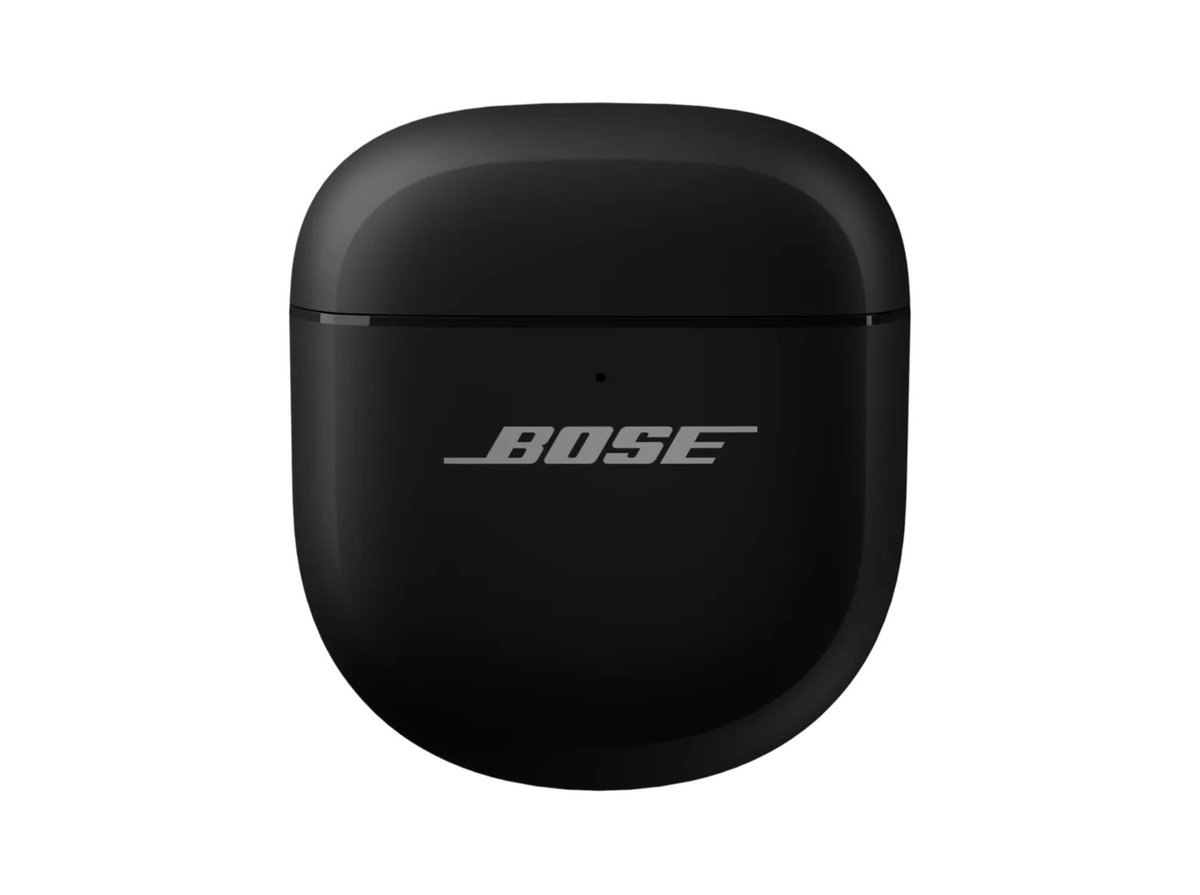
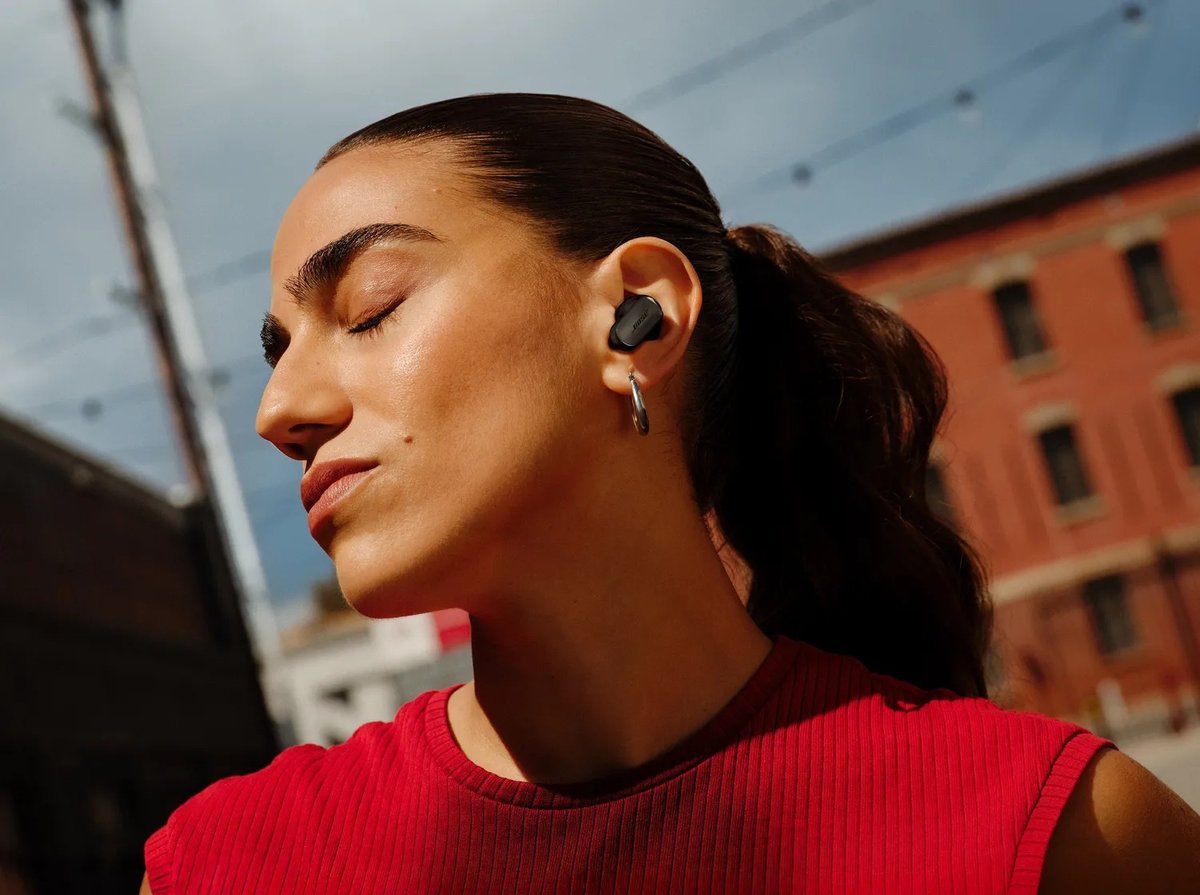
Bose QuietComfort Ultra Earbuds (2nd Gen)
The 2026 editorial consensus is unusually unified: the strongest pure noise-blockers among earbuds, against constant drone (airplane cabins, HVAC) and, harder for most earbuds, human voices. Adjustable ActiveSense adaptive ANC, CustomTune ear-shape personalisation, wireless-charging case, AI-based call noise suppression.
- Strongest pure noise-blocking in an earbud
- CustomTune ear-shape personalisation
- Wireless-charging case; AI call noise suppression
- 6 hours per charge is the shortest battery here
- Immersive Audio cuts that to 4 hours
- Bulky charging case
- ANC: ActiveSense adaptive
- Battery: 6h (4h Immersive)
- Bluetooth: 5.3, aptX Adaptive
- Color: Black
Best for: Anyone for whom silence is the top priority
Apple AirPods Pro 3: Best for iPhone
Launched September 2025 at $249, the AirPods Pro 3 are Apple's strongest earbud play yet: Apple claims ANC up to 2x stronger than the AirPods Pro 2, adds a PPG heart-rate sensor (a first for AirPods), Live Translation, and five foam-infused tip sizes. The H2 chip returns, Bluetooth is 5.3, and the case charges over MagSafe/USB-C with Precision Finding.
Two honest flags from our research. First, published specs conflict: battery is reported anywhere from 6 to 8 hours with ANC on (24–30 hours total via the case), and water resistance as IP54 or IP57. We refuse to pick a number; Apple's own spec page is the tiebreaker. Second, the headline features (Live Translation, heart-rate, hearing-health tools) need an Apple Intelligence-capable iPhone; Android users get good earbuds but not the magic. Still on AirPods Pro 2? They're now discounted and remain excellent, but the Pro 3's ANC jump and health sensors are the real upgrade story, covered in our FAQ.
The hardware changes are easy to miss at a glance: a smaller body, five foam-infused tip sizes including a new extra-small, and the H2 chip driving Adaptive Audio and Conversation Awareness alongside the heart-rate sensor. The case keeps MagSafe charging and adds Precision Finding, so the whole package is built for people who already live on an iPhone.
Buy them if: you live in Apple's ecosystem. Skip them if: you're on Android, half the features stay locked away.
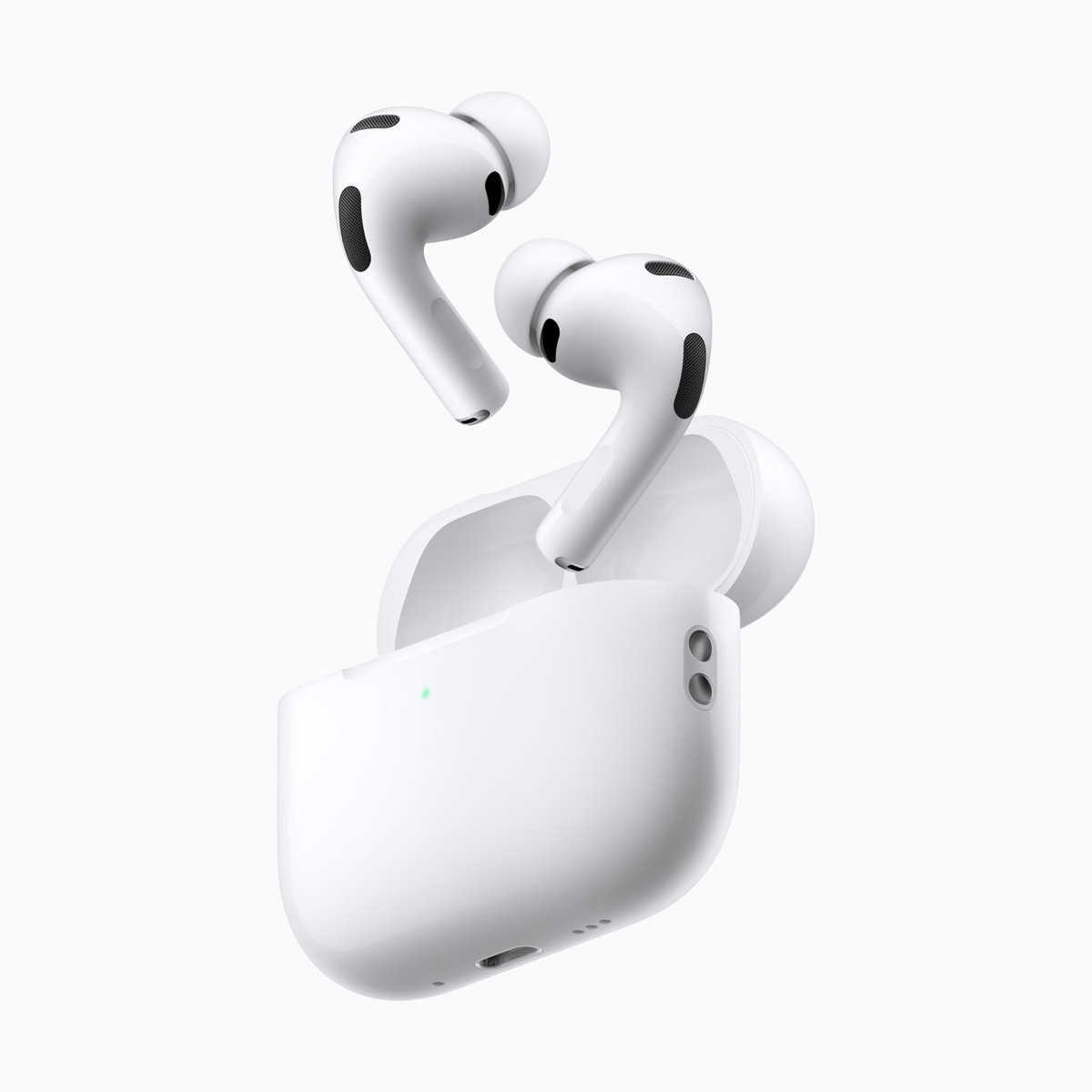


Apple AirPods Pro 3
iPhone owners should get these instead: Apple's 2x-stronger ANC claim, heart-rate sensing, and Live Translation are unmatched inside the Apple ecosystem. New acoustic design, foam-infused ear tips in five sizes, H2 chip with Adaptive Audio and Conversation Awareness, hearing-health tools.
- 2x-stronger ANC claim; heart-rate sensing
- Live Translation; hearing-health tools
- Unmatched inside the Apple ecosystem
- Headline features need an Apple Intelligence-capable iPhone
- Android users get fewer features
- Published specs conflict: battery 6 to 8 hours ANC on, IP54 or IP57 (Apple's own spec page is the tiebreaker)
- Chip: H2
- Features: Heart-rate, Live Translation
- Color: White
Best for: iPhone owners
Sony WF-1000XM5: Best Sound Quality
Sony's flagship earbuds pair an 8.4 mm Dynamic Driver X with dual ANC processors (QN2e + Integrated Processor V2) and the codec stack audiophiles demand: LDAC (up to 990 kbps hi-res wireless), plus AAC, SBC, and LC3. Battery is a genuine strength: 8 hours per charge with ANC on, 24 hours total with the case, and multipoint connects two devices at once. IPX4, 5.9 g per bud, wireless charging case.
Where Sony wins is tuning maturity: the Headphones Connect app's EQ, DSEE Extreme upscaling, 360 Reality Audio, and Speak-to-Chat (auto-pauses when you talk) are the most complete feature set here. The recurring criticism across reviews is fit: the rounder, smaller body suits most ears but not all, so work through the four included tip sizes before judging comfort or ANC (a poor seal destroys both). If your phone doesn't support LDAC (iPhones don't), you lose the headline codec advantage. Another reason iPhone users should default to AirPods.
The two-processor setup is what makes the ANC feel effortless rather than aggressive: the QN2e and Integrated Processor V2 split the work across six microphones, while DSEE Extreme upscales compressed streams and 360 Reality Audio adds a wider stage for supported tracks. Speak-to-Chat, which pauses playback when you start talking, is the small feature owners end up missing most on other buds.
Buy them if: sound quality and codec support lead your decision. Skip them if: you're on iPhone (no LDAC), or need the absolute deepest ANC (that's Bose).
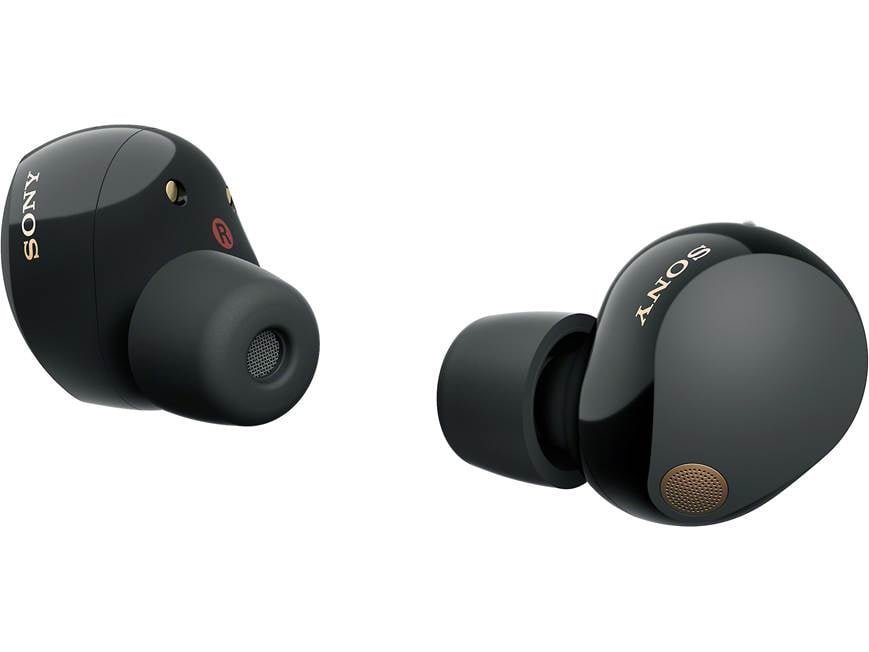


Sony WF-1000XM5
The audiophile pick: LDAC hi-res, superb tuning, for listeners who lead with sound quality and codec support.
- LDAC hi-res audio; superb tuning
- The audiophile pick
- Best sound quality
- No LDAC on iPhone
- Not the deepest ANC here; Bose leads
- Fit criticism: the rounder body suits most ears but not all, and a poor seal destroys ANC and comfort
- Codec: LDAC
- ANC: Yes
- Color: Black
Best for: Audiophiles; Android users wanting hi-res
Technics EAH-AZ100-K (Black): Best for Android
Technics' flagship is the connoisseur's Android pick, and Trusted Reviews agreed, awarding it Best Wireless Earbuds 2025 with a rare full five stars. The spec sheet (mirroring Technics' published specs via retail listings): 10 mm magnetic-fluid driver, fully adaptive dual-hybrid ANC, Bluetooth 5.3 with LDAC/AAC/SBC/LC3, multipoint across three devices simultaneously (most rivals manage two), Dolby Atmos with head tracking, Voice Focus AI calls, IPX4, and battery that embarrasses flagships: about 10 hours ANC-on over AAC (7 over LDAC), 28 hours total with the case, plus Qi wireless charging.
The differentiator is the total package for Android users: hi-res LDAC, proper multipoint, and genuinely top-tier ANC in one device, with no ecosystem lock-in required. Downsides: premium pricing, and IPX4 with no dust rating at this tier feels stingy. If you juggle a phone, laptop, and tablet daily, the 3-device multipoint alone may decide this.
The driver is the talking point Technics leads with: a 10 mm magnetic-fluid unit, a design borrowed from the company's loudspeaker work, paired with Voice Focus AI for calls and Qi wireless charging for the case. Five tip sizes are included, and Dolby Atmos with head tracking gives films and live recordings a sense of space that stereo buds flatten.
Buy them if: you're on Android and want everything (ANC, LDAC, multipoint, battery) without compromise. Skip them if: budget matters, the EarFun gets you 70% of this for a fraction.
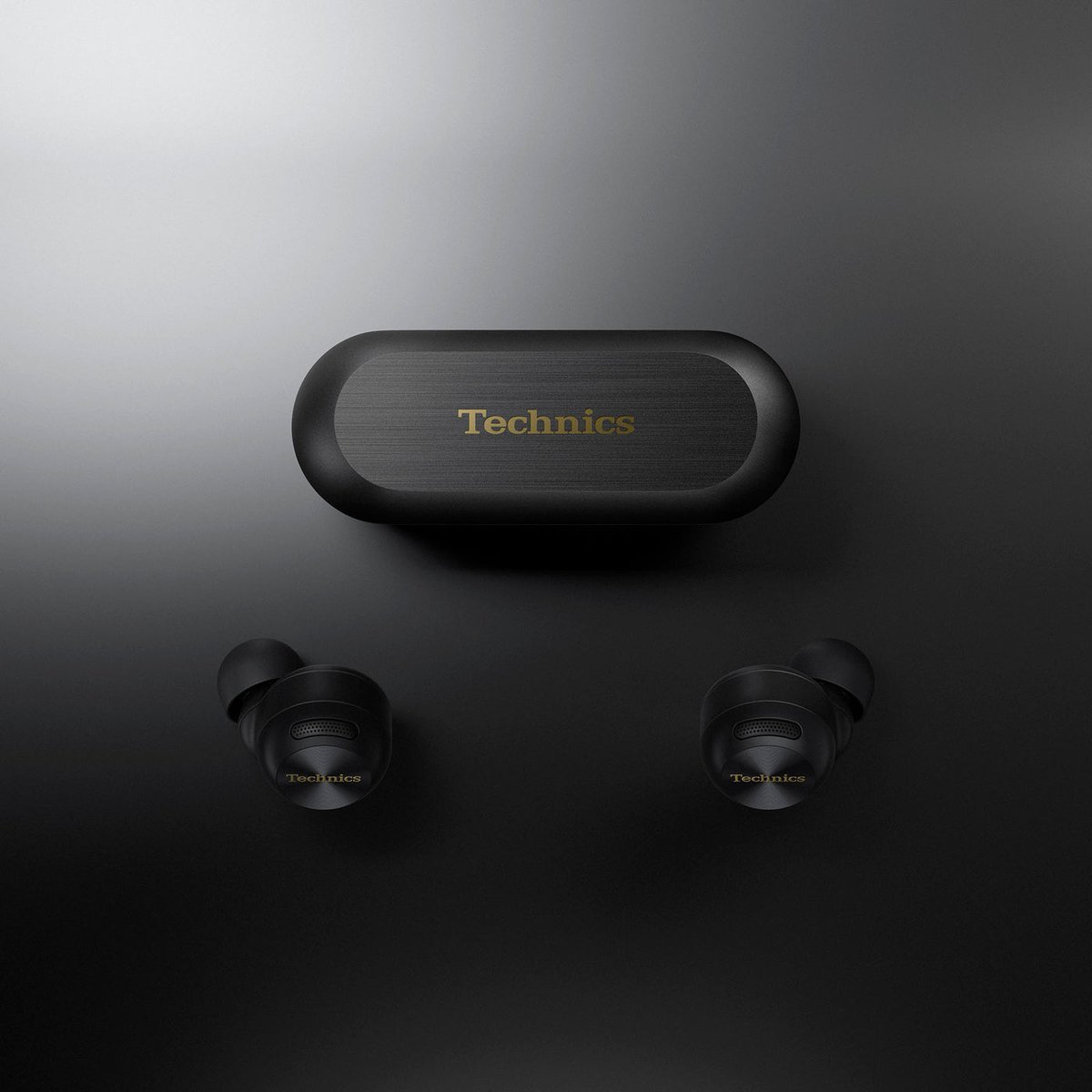
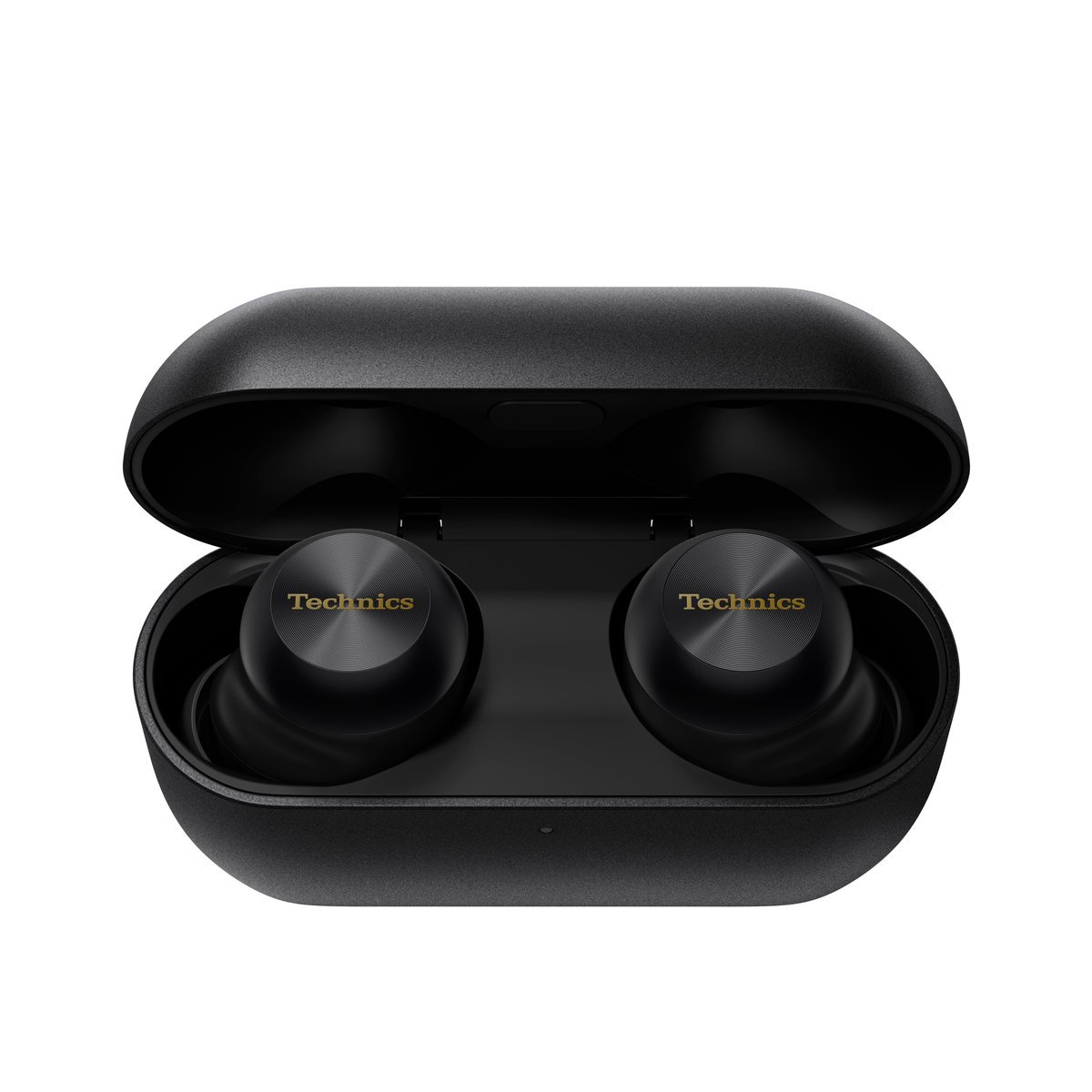
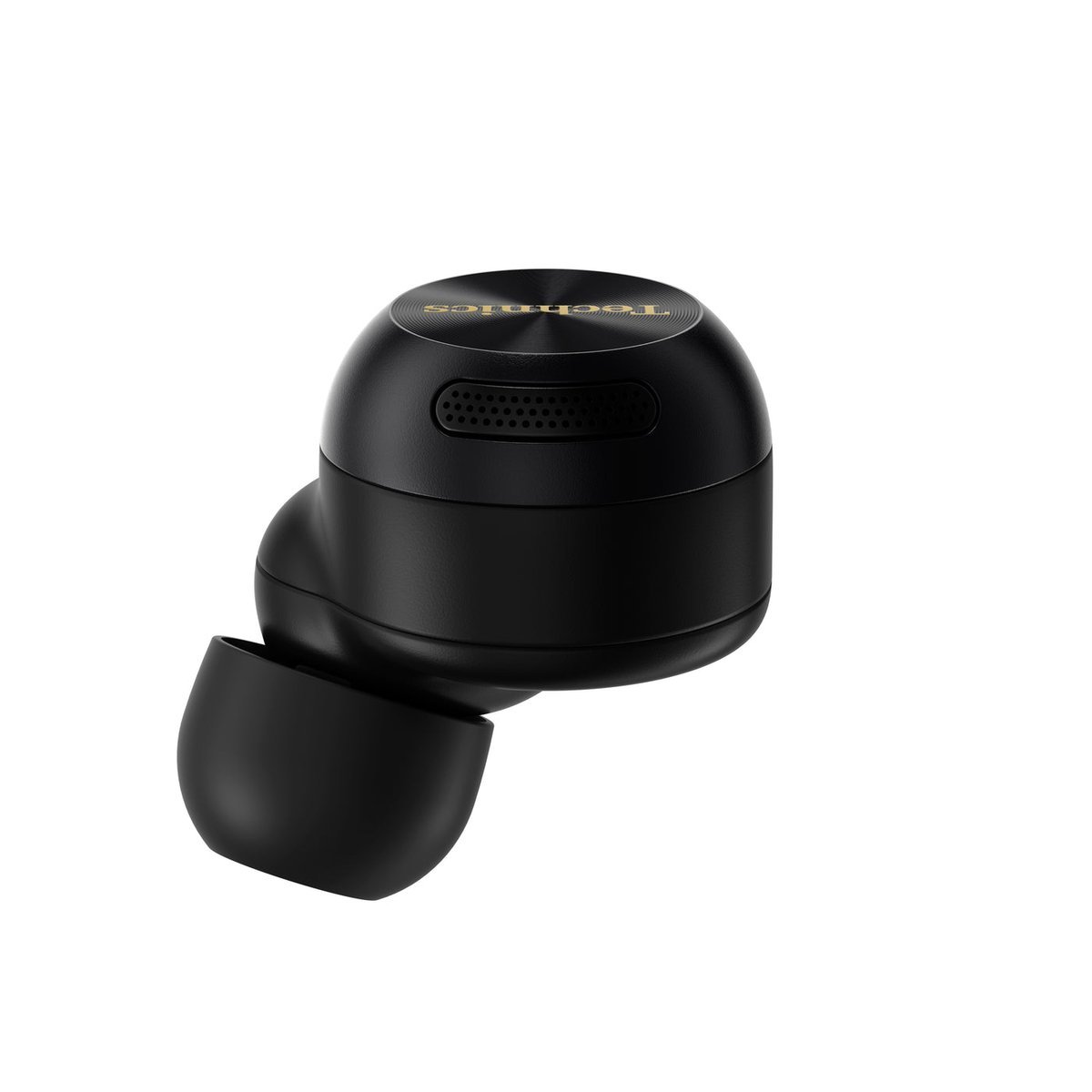
Technics EAH-AZ100-K (Black)
The Android power-user pick: adaptive ANC, LDAC, 3-device multipoint, Dolby Atmos with head tracking, 10-hour battery (28 with case), Qi wireless charging, magnetic fluid drivers: everything without compromise.
- ANC + LDAC + 3-device multipoint
- Dolby Atmos with head tracking
- 10h battery, 28h with case; Qi wireless charging
- Premium pricing; the EarFun gets you most of this for a fraction
- IPX4 with no dust rating at this tier
- LDAC drops ANC battery to about 7 hours from 10 hours over AAC
- Battery: 10h / 28h case
- Multipoint: 3 devices
- Audio: Dolby Atmos, LDAC
Best for: Android users wanting everything without compromise
EarFun Air Pro 4: Best Budget
The budget pick that broke the category's price logic. EarFun's published specs (consolidated across review spec tables): Qualcomm QCC3091 chip, 10 mm composite driver, QuietSmart 3.0 adaptive ANC claiming up to 50 dB reduction, Bluetooth 5.4, and a codec list (LDAC, aptX Lossless, aptX Adaptive, AAC, SBC) that flagships would envy. Battery: 7.5 hours ANC-on per charge, 35 hours total with the case (52 with ANC off). IPX5, multipoint for two devices, wireless charging, in-ear detection, typically selling under $100.
The honest framing: "up to 50 dB" is a lab number, and in real-world ANC depth the EarFun trails Bose and Sony. Adaptive ANC exists here, it just isn't class-leading. Default tuning is bass-heavy (fixable in the EarFun app's EQ), and the glossy plastic scratches. But as the cheapest credible route to real adaptive ANC with hi-res codecs, nothing touches it. Note the codec caveat: aptX Lossless needs a Snapdragon Sound Android phone; iPhone users get AAC only.
The chip underneath explains the spec sheet: Qualcomm's QCC3091 runs QuietSmart 3.0 adaptive ANC, six microphones with cVc 8.0 call noise suppression, and Auracast broadcast audio for shared listening. Google Fast Pair covers Android setup, and five tip sizes are included, so the budget price does not mean a budget fit system.
Buy them if: your budget is firm and you want maximum spec per dollar. Skip them if: ANC depth is the whole point, save for the Bose.

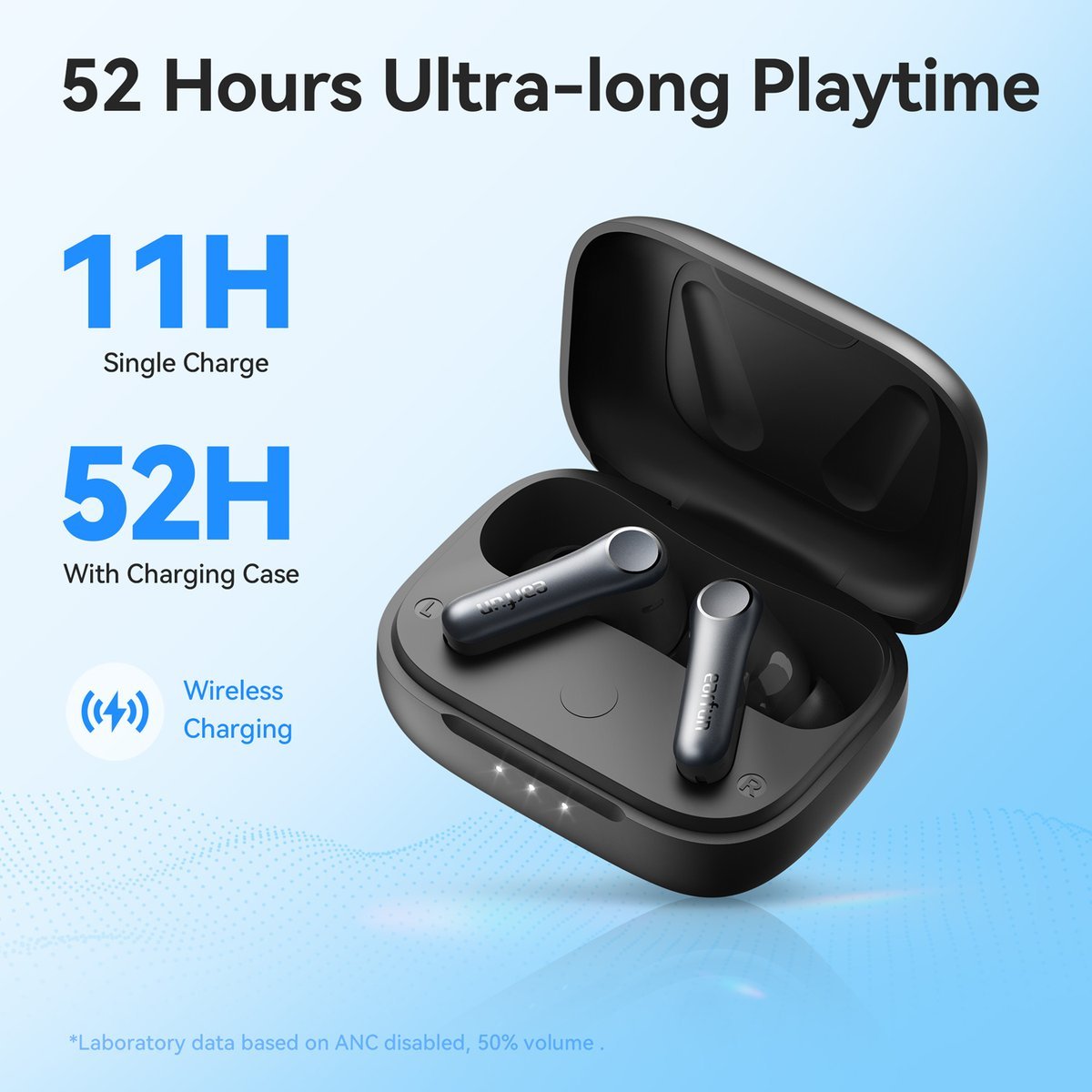
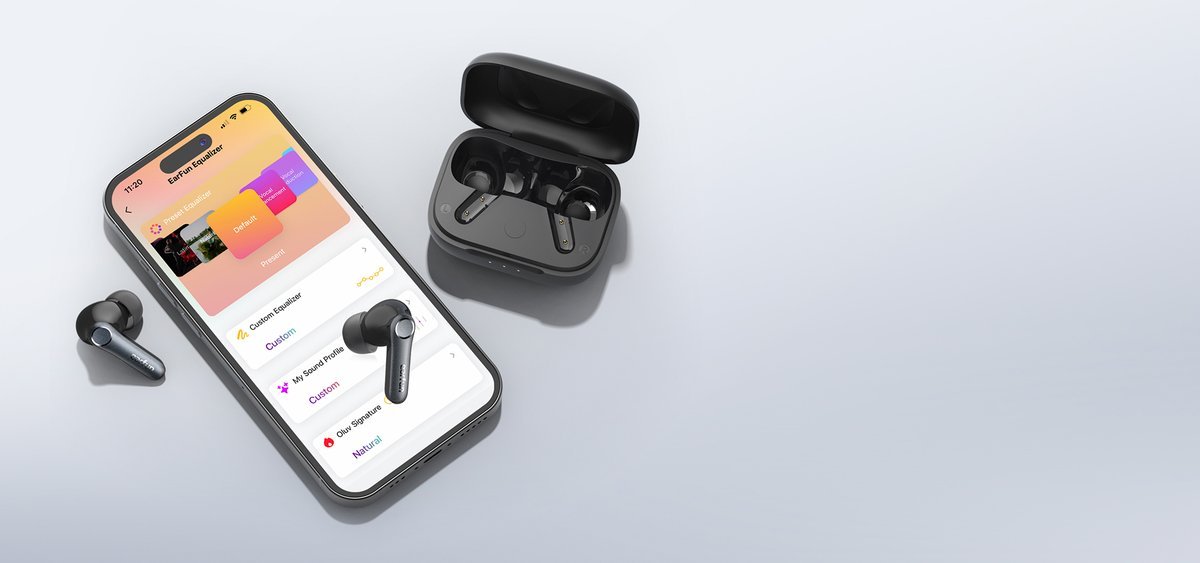
EarFun Air Pro 4
The cheapest credible route to real adaptive ANC with hi-res codecs: adaptive hybrid ANC (up to 50 dB lab), Snapdragon Sound with aptX Lossless, LDAC hi-res, 6-mic AI calls, Bluetooth 5.4, 52-hour total playtime. Real adaptive ANC under $100.
- Real adaptive ANC under $100
- aptX Lossless + LDAC hi-res
- 52h total playtime; Bluetooth 5.4
- Real-world ANC trails Bose and Sony; it is a lab 'up to 50 dB'
- Default tuning is bass-heavy (fixable in the app's EQ)
- Glossy plastic scratches
- aptX Lossless needs a Snapdragon Sound Android phone
- ANC: Adaptive hybrid, up to 50dB
- Codecs: aptX Lossless, LDAC
- Battery: 52h total
- Color: Black (TW600)
Best for: Tight budgets wanting maximum spec per dollar
Beats Powerbeats Pro 2: Best for Workouts
The only ear-hook design here, and for training that's the whole argument: nickel-titanium reinforced hooks that reviewers consistently say simply don't fall out. Launched February 2025 at $249 with Apple's H2 chip, the Pro 2 adds ANC (Beats' best in an earbud, though reviewers rank it mid-pack for voices), an optical heart-rate sensor in each bud pulsing 100+ times per second, IPX4 sweat resistance, and superb battery: 10 hours per charge with ANC off, 45 hours total with the case (Beats figures), plus Qi wireless charging in a 33%-smaller case.
The trade-offs are clear-eyed: AAC/SBC codecs only (no LDAC/aptX), ANC that's adequate for the gym but not the library, and a case reviewers still call bulky. But for runners and lifters, especially iPhone users who get one-touch pairing, Find My, and hands-free Siri, the secure fit plus heart-rate tracking is a combination nothing else here offers.
The heart-rate sensor is the feature that separates this from every other pick: optical sensors in each bud pulse more than 100 times per second and feed Apple's Health app during workouts, no watch required. Class 1 Bluetooth keeps the connection steady at distance, Adaptive EQ tunes sound to your ear shape, and Personalized Spatial Audio with head tracking carries over from Apple's flagship buds.
Buy them if: you train hard and earbuds fall out of your ears. Skip them if: you want the deepest ANC or hi-res codecs. This is a sports tool, not an audiophile one.
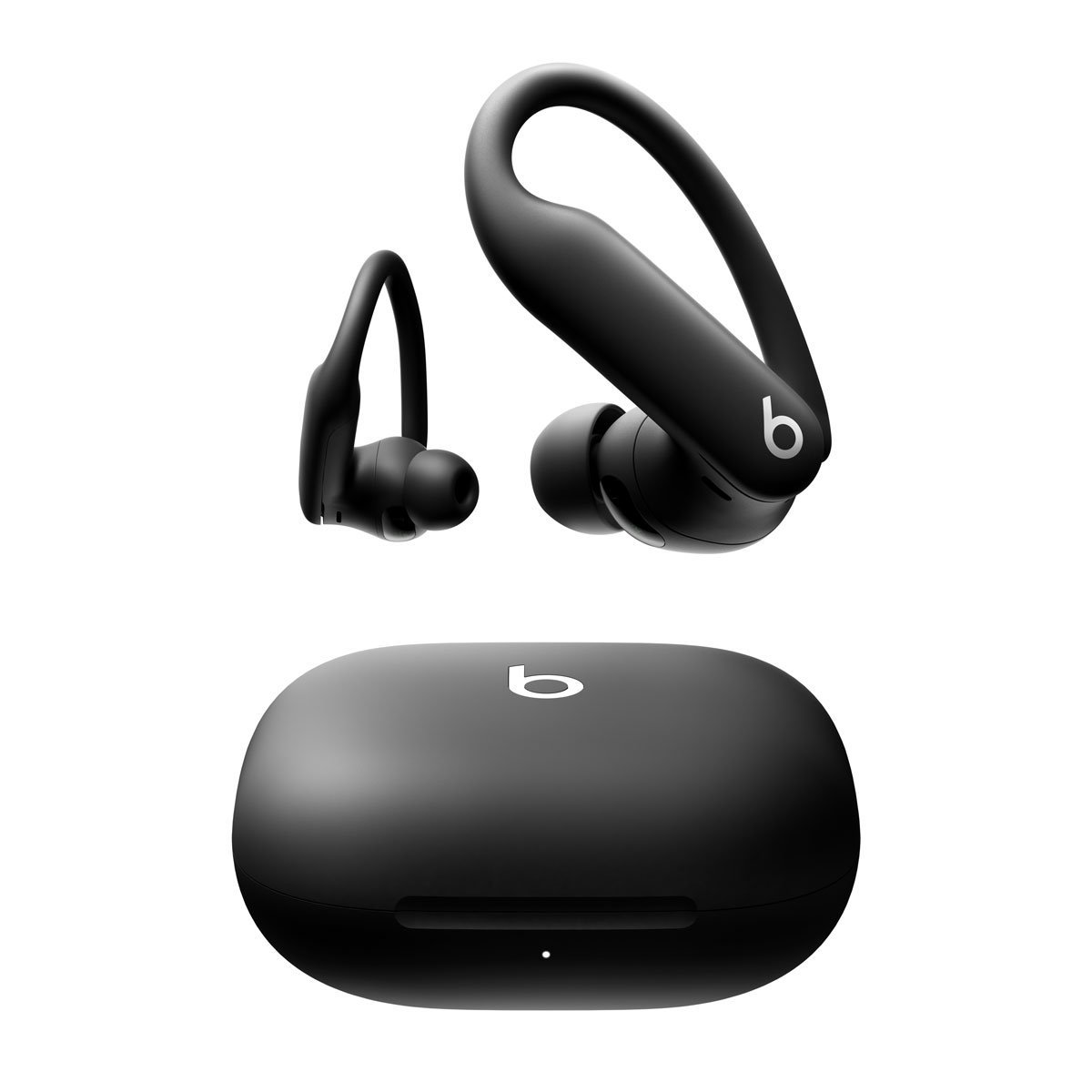


Beats Powerbeats Pro 2
The workout pick: secure-fit ear hooks that don't budge, heart-rate tracking, IPX4, up to 45-hour battery with case. For runners and lifters, especially iPhone users who get one-touch pairing, Find My, and hands-free Siri, secure fit plus heart-rate tracking is a combination nothing else here offers.
- Secure-fit ear hooks that don't budge
- Heart-rate tracking for workouts
- 45h battery with case; IPX4
- AAC/SBC codecs only (no LDAC/aptX)
- ANC is adequate for the gym, not the library
- Case reviewers still call bulky
- Fit: Ear hooks
- Battery: 45h with case
- Feature: Heart-rate tracking
- Color: Jet Black
Best for: Runners and lifters; anyone whose earbuds fall out
How We Researched These Earbuds
MoleMarket has not hands-on tested these earbuds, and we won't pretend otherwise:
- Manufacturer pages first. Bose's official QC Ultra Earbuds (2nd Gen) product page for battery, IP rating, Bluetooth version, and feature list. Technics-published specs via authorised retail spec tables for the EAH-AZ100.
- Multi-outlet spec triangulation. Sony WF-1000XM5 specs cross-checked across B&H Photo and regional Sony reseller tables (8.4 mm driver, LDAC, 8/24-hour battery, IPX4, in full agreement). AirPods Pro 3 and EarFun Air Pro 4 specs consolidated across multiple review publications, with conflicts flagged, not hidden.
- 2026 editorial consensus. Engadget's 2026 earbuds roundup, Trusted Reviews' 2026 ANC earbuds guide (and its 2025 Best Wireless Earbuds award to the Technics), and specialist earbud publications for the budget tier.
- What we don't know: real-world ANC depth in your ears (fit-dependent), long-term reliability, and firmware-update trajectories. We flag fit-dependence wherever it decides the outcome.
Buying Guide: How to Choose Noise Cancelling Earbuds
Decide what "noise cancelling" means to you
Not all ANC is equal, and the marketing terms hide real differences. Hybrid ANC (feedforward plus feedback mics, Sony and EarFun) cancels a broad range well. Adaptive ANC (Bose ActiveSense, Technics' fully adaptive system) adjusts cancellation strength to your environment in real time, better for moving between street, office, and train. dB reduction claims (like "up to 50 dB") are lab figures measured under ideal conditions; they're useful for comparing within one brand's lineup and nearly useless across brands. Judge ANC by reviewer consensus on your noise type (drone vs voices vs wind), not by the biggest number.
Match the earbuds to your phone's ecosystem
This decides more purchases than any spec: AirPods Pro 3 on iPhone get spatial audio, Live Translation, heart-rate, and seamless switching; on Android they're just good earbuds. Sony's LDAC and Technics' full feature set need Android to shine (iPhones cap at AAC). Beats straddles both but favours Apple. Buy for the phone you own, not the phone you might buy.
Battery ratings are not comparable across brands
Every brand measures differently. Some brands measure with ANC on, some off, some with spatial audio, at different volumes. Our table standardises on per-charge ANC-on figures, but treat all battery claims as approximate and subtract ~20% for loud listening, calls, and cold weather. The case total matters more than the per-charge number for travel.
Fit is a specification
ANC lives or dies on seal: a poor tip fit leaks bass and lets noise flood in, making a flagship perform like a budget pair. Work through every included tip size (foam-infused tips, like the AirPods Pro 3's, seal better for most ears). If buds consistently fall out, that's what ear hooks (Powerbeats Pro 2) are for. Don't fight anatomy.
Codecs matter, but only if your phone speaks them
LDAC and aptX Lossless deliver hi-res wireless audio only when both phone and earbuds support them. iPhone users: AAC is your ceiling regardless of the earbuds' codec list. Don't pay extra for LDAC you can't use. Android users: check your phone's Bluetooth codec support in developer settings before paying the hi-res premium.
Multipoint is a work-from-home essential
If you take laptop calls and phone calls in the same day, multipoint (two or three simultaneous connections) is transformative. No more manual re-pairing. Sony and EarFun handle two devices; Technics handles three. Bose and Apple handle switching within their own ecosystems elegantly but less universally.
Call quality: the spec nobody checks until it's too late
If you take calls on the move, microphone count and wind handling matter more than driver size. Earbuds with 6+ mics and AI noise suppression (Bose's 2nd-gen call upgrade, Technics' Voice Focus AI, EarFun's 6-mic array) keep your voice intelligible on a windy street; 2-mic budget pairs fall apart in the same conditions. Reviewer consensus, not mic counts alone, is the guide here. A well-tuned 4-mic system beats a poorly tuned 6-mic one. If calls are your primary use case, prioritise models reviewers specifically praise for voice pickup, and note that over-ear headphones' sheltered mics still beat every earbud in wind.
Comfort for long sessions vs secure fit for movement
There's a real trade-off: the most comfortable buds (Bose, Sony) aren't the most secure (Beats hooks), and vice versa. Office workers should optimise for comfort; runners for security. Nobody gets both at the maximum, so pick your priority honestly.
Earbuds vs Headphones: When to Choose Which
How earbuds compare with over-ear headphones:
| Factor | Earbuds (this guide) | Over-ear headphones |
|---|---|---|
| Maximum ANC depth | Very good (Bose leads) | Better: larger drivers, more mics, better seal |
| Portability | Pocketable; the travel pick | Bulky; needs a case |
| Battery per charge | 6–10 hours | 30–60 hours |
| Exercise | Excellent (especially ear hooks) | Poor: sweat, heat, slipping |
| Calls in wind | Weaker (mics exposed) | Better (mics sheltered) |
| Sleeping / side-lying | Possible (low-profile buds) | Impractical |
Rule of thumb: fly weekly or work in a loud office → over-ear headphones. Commute, train, or want one pair for everything → earbuds (this guide). Many serious travellers own both: earbuds for the gym and calls, over-ears for the plane.
Head-to-Head: The Comparisons That Actually Decide Purchases
Bose QC Ultra Earbuds 2 vs Sony WF-1000XM5
Silence vs sound. Bose wins pure ANC depth and ear-shape personalisation; Sony wins battery (8 vs 6 hours), codec support (LDAC), and app maturity. Commuters and flyers: Bose. Music-first listeners: Sony.
AirPods Pro 3 vs AirPods Pro 2
The Pro 3 brings Apple's claimed 2x ANC improvement, heart-rate sensing, Live Translation, and foam-infused tips. The Pro 2 is now discounted and remains excellent for calls and everyday ANC. Upgrade if ANC depth or health features matter to you; pocket the savings if they don't. The Pro 2 at clearance prices is one of 2026's quiet bargains.
Technics EAH-AZ100-K (Black) vs Sony WF-1000XM5 (the Android flagship duel)
Both do LDAC, both have top-tier ANC, both cost flagship money. Technics wins battery (10 vs 8 hours ANC-on) and multipoint (3 vs 2 devices) plus Dolby Atmos head tracking; Sony wins app polish and brand ubiquity. Multi-device workers: Technics. Everyone else: a coin flip decided by fit.
EarFun Air Pro 4 vs the flagships (the value question)
The EarFun gives you adaptive ANC, BT 5.4, and better codec support than some flagships for under $100. What the extra $150–200 buys in the flagships: deeper real-world ANC, better call quality, more refined tuning, and longer brand support. If ANC is a nice-to-have, the EarFun is the smart buy; if silence is the job, it isn't.
Adaptive vs hybrid ANC: what's the difference?
Hybrid ANC uses feedforward and feedback microphones together for strong static cancellation. Adaptive ANC adds real-time adjustment to changing noise (wind gusts, announcements, engine pitch shifts). In practice: adaptive is better for commuters moving through varied noise; hybrid is fine for steady environments like offices.
Mistakes to Avoid
- Buying for the dB number. "Up to 50 dB" lab claims don't transfer across brands. Judge ANC by reviewer consensus on your specific noise, not the biggest number on the box.
- Ignoring the tip-fit step. Half of all "these earbuds sound bad / ANC is weak" complaints are a wrong tip size. Spend ten minutes on fit before judging anything.
- Paying for codecs your phone can't use. iPhone + LDAC earbuds = paying for nothing. Check your phone's codec support first.
- Expecting flagship ANC from a budget pair. The EarFun's adaptive ANC is real, but physics and processing budgets still separate it from Bose. Match expectations to price.
- Forgetting the case in battery maths. 6 hours per charge is fine when the case holds 3–4 recharges; it's the total (24–52 hours here) that decides travel readiness.
- Confusing ENC with ANC. "ENC" or "call noise reduction" cleans up your voice on calls. It does not silence the world for you. Budget listings blur this deliberately; check for "ANC" or "active noise cancellation" specifically.
Bad Advice to Ignore When Shopping for Noise Cancelling Earbuds
- Single-product "review" sites ranking their house brand #1 with "tested" claims and no methodology. If a site sells or exclusively promotes one brand's earbuds while claiming independent testing, treat its rankings as advertising. We cite editorial consensus across independent outlets instead.
- "These $30 earbuds have the same ANC as Bose." They have an ANC feature, usually basic feedforward with no adaptive processing. The gap is audible in voices and wind, which is exactly where cheap ANC fails.
- Battery figures compared without stating ANC on/off. A "36-hour" claim with ANC off vs a "24-hour" claim with ANC on is not a comparison. It's a trap. Always check the test conditions.
Frequently Asked Questions
The Bose QuietComfort Ultra Earbuds (2nd Gen): the 2026 editorial consensus (including Engadget's roundup) rates them the strongest pure noise-blockers among earbuds, especially for constant drone and voices. Sony and Technics trail slightly on ANC depth but lead on battery and features.
ANC itself doesn't damage hearing. It reduces the need to crank volume, which protects hearing. The real risks are volume (keep it moderate), hygiene (clean tips regularly to avoid infections), and awareness (don't wear full ANC near traffic). Consult a clinician for personal medical questions.
Yes. ANC works independently of audio playback. Many owners wear them silent on flights or in offices purely for the quiet. (Battery still drains, since the ANC processors run regardless.)
The Pro 3's upgrades are real: Apple's claimed 2x ANC improvement, heart-rate sensing, Live Translation, foam-infused tips. But discounted Pro 2s remain excellent for calls and everyday ANC. Upgrade for ANC depth and health features; save with the Pro 2 if those don't move you.
Over-ear headphones cancel more noise and last longer per charge (over-ear headphones); earbuds win on portability and exercise. Flyers and loud-office workers: headphones. Commuters and gym-goers: earbuds.
Side-sleepers struggle with standard buds; dedicated sleep buds exist but trade ANC depth for a low profile. Back-sleepers do fine with small, comfortable buds at low volume. Don't sleep in full ANC at high volume, and keep awareness of alarms.
Final Recommendations
For pure silence in 2026, the Bose QuietComfort Ultra Earbuds (2nd Gen) remain the earbud to beat. CustomTune personalisation and the deepest ANC available in-ear, with battery life as the honest price. iPhone owners should short-circuit the whole decision and buy the AirPods Pro 3: nothing else integrates with your phone like them. Android users choosing on merit want the Technics EAH-AZ100-K (Black) (everything, including 3-device multipoint) or the Sony WF-1000XM5 (sound quality first). The EarFun Air Pro 4 proves you do not need $200 for real adaptive ANC, and the Beats Powerbeats Pro 2 owns the gym outright.
And if your priority is maximum quiet on long flights rather than pocketability, over-ear noise cancelling headphones are where the deepest silence lives.
Best Overall ANC: Bose QuietComfort Ultra Earbuds (2nd Gen): the strongest pure noise-blocking earbuds
Best for iPhone: Apple AirPods Pro 3: the best for iPhone
Best Sound Quality: Sony WF-1000XM5: the best sound quality
Best for Android: Technics EAH-AZ100-K (Black): the Android power-user pick
Best Budget: EarFun Air Pro 4: real adaptive ANC under $100
Best for Workouts: Beats Powerbeats Pro 2: ear hooks that do not budge, heart-rate tracking