
Nothing ruins a great movie like dialogue that arrives half a second after the actor's lips move, or like the glare from a spouse when you turn the volume up for the third time. Wireless TV headphones solve both problems at once: you hear every word at your own volume, and everyone else in the house hears nothing.
But here's what most guides won't tell you: not all wireless headphones work for TV. The Bluetooth headphones you love for your phone can be a terrible match for your television. The reason is latency, the delay between the picture and the sound, and it's the single most important thing to understand before you buy. This guide explains it in plain terms, then recommends four systems that actually solve it: three dedicated RF systems from Sennheiser and one low-latency Bluetooth bundle from Avantree.
The Short Answer
For most people, a dedicated RF wireless TV headphone system (the Sennheiser RS 175 is the standout) is the best choice: it connects to virtually any TV via optical or 3.5 mm cable, keeps audio effectively in sync with the picture, and reaches up to 100 metres from its base station. If clear dialogue matters most (for example, an older viewer who struggles to follow speech), the Sennheiser RS 195 adds seven adjustable hearing profiles and a speech mode. If you want Bluetooth headphones that double for everyday use, the Avantree HT5009 bundle pairs FastStream low-latency Bluetooth (under 40 ms, per Avantree) with a transmitter that works with any TV. And if you want the most affordable Sennheiser system, the RS 120-W covers the basics with three sound modes and a docking transmitter. Availability note on the Avantree HT5009: Avantree lists it as discontinued, and Avantree's own store shows it out of stock, so check the seller's remaining stock, the item's condition, and warranty and support cover before you order.
Quick Picks
Short on time? These are our top recommendations: each button takes you to the exact product on Amazon.
| Product | Key Specs | Best Use Case | Standout Feature | Amazon Link |
|---|---|---|---|---|
| Sennheiser RS 175 Best Overall Wireless TV Headphones |
Digital RF · no lip-sync · optical | Best overall | The most-recommended TV headphone system | Check Price |
| Sennheiser RS 195 Best for Clear Dialogue and Hearing Support |
Speech tuned · 7 hearing profiles | Dialogue | The dialogue specialist: Personal Hearing profiles | Check Price |
| Avantree HT5009 Best Low-Latency Bluetooth TV Bundle |
FastStream <40ms · 40h battery | Low-latency Bluetooth | The low-latency Bluetooth TV bundle | Check Price |
| Sennheiser RS 120-W Best Affordable Sennheiser System |
Affordable · 3 modes · 20h | Affordable Sennheiser | The affordable Sennheiser TV system | Check Price |
Detailed Reviews
1. Sennheiser RS 175: Best overall wireless TV headphones
The RS 175 is the system most TV-headphone guides converge on, and the specs explain why. It's a digital RF system operating on 2.4–2.48 GHz, not Bluetooth, which means there's no pairing dance and none of the lip-sync delay that plagues standard Bluetooth. The transmitter accepts both optical digital and 3.5 mm analog connections, so it works with anything from a brand-new smart TV to an old box in the spare room.
Sennheiser rates the range at up to 100 metres and the battery at 18 hours per charge, powered by two AAA NiMH rechargeables that drop into the transmitter's charging cradle. You can pair two headphone sets to one transmitter, handy for couples, and the headphones offer surround-style sound modes alongside standard stereo.
Why it wins for TV: digital RF is the most forgiving wireless option for watching video. No codec roulette, no wondering whether your TV's Bluetooth stack supports the right profile. Connect the optical cable, place the headphones on the base to charge, and it behaves like a wired connection you can take to the kitchen.
Things to know: At 310 g it's not the lightest set here, and the AAA batteries take a long 8.5 hours to fully charge, so it's best to develop the habit of docking the headphones after each session rather than draining them flat. If a family member struggles specifically with dialogue, the RS 195 below is the better sibling.

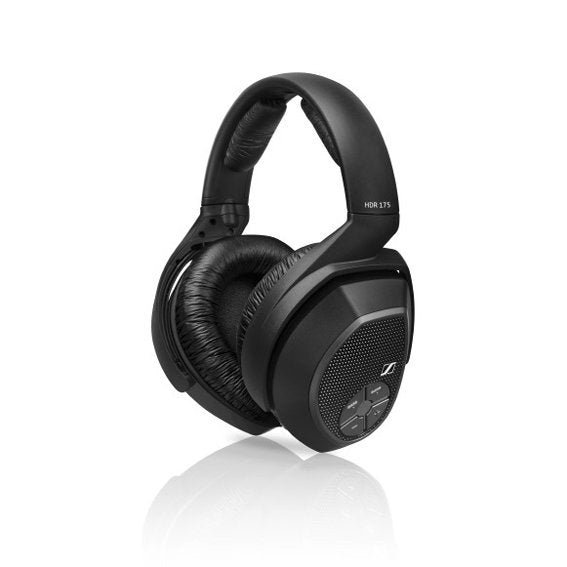

Sennheiser RS 175
The system most TV-headphone guides converge on: digital RF (2.4–2.48 GHz), not Bluetooth, so there is no pairing and no lip-sync delay. Optical + 3.5mm inputs; works with anything from a new smart TV to an old box. Behaves like a wired connection you can take to the kitchen.
- Digital RF, no lip-sync delay, no pairing dance
- Optical + 3.5mm inputs; works with any TV
- The most-recommended TV headphone system
- 310 g, heavier than many Bluetooth headphones
- AAA batteries take 8.5 hours to fully charge, so docking after each session matters more than the headline battery figure
- No dialogue-specific hearing profiles: if dialogue clarity is the priority, the RS 195 is the better sibling
- Wireless: Digital RF 2.4–2.48 GHz
- Inputs: Optical, 3.5mm
- Battery: 18 hours
Best for: Anyone wanting the best overall wireless TV headphones
2. Sennheiser RS 195: Best for clear dialogue and hearing support
The RS 195 is built on the same digital RF platform as the RS 175 (2.40–2.48 GHz, 100 m range, 18-hour battery, optical + 3.5 mm inputs), but everything about it is tuned for one job: making speech intelligible. The headline feature is Personal Hearing, seven sound profiles (selected on a rotary dial marked A through G) that reshape the audio to compensate for different hearing patterns. On top of that, a dedicated Speech mode focuses the processing on dialogue, and a balance control adjusts left/right volume independently.
This is the system consistently recommended for older viewers: independent comparisons (RTINGS.com compared it directly with the Avantree HT5009 and found the Sennheiser more comfortable, better built, and more neutral-sounding, while the Avantree countered with better battery life and lower latency) line up with the specs. Maximum sound pressure reaches 117 dB, and the 17 Hz–22 kHz response covers the full range without exaggerating bass that would muddy speech.
Who it's for: anyone who finds themselves turning on subtitles not because of the TV volume, but because dialogue gets lost. Also anyone with asymmetric hearing who needs more in one ear than the other: the balance dial handles that directly.
Things to know: like the RS 175, the RF system is TV-only, so these are not headphones you will take on the train. Two receivers can share one transmitter, so both partners can each set their own volume.

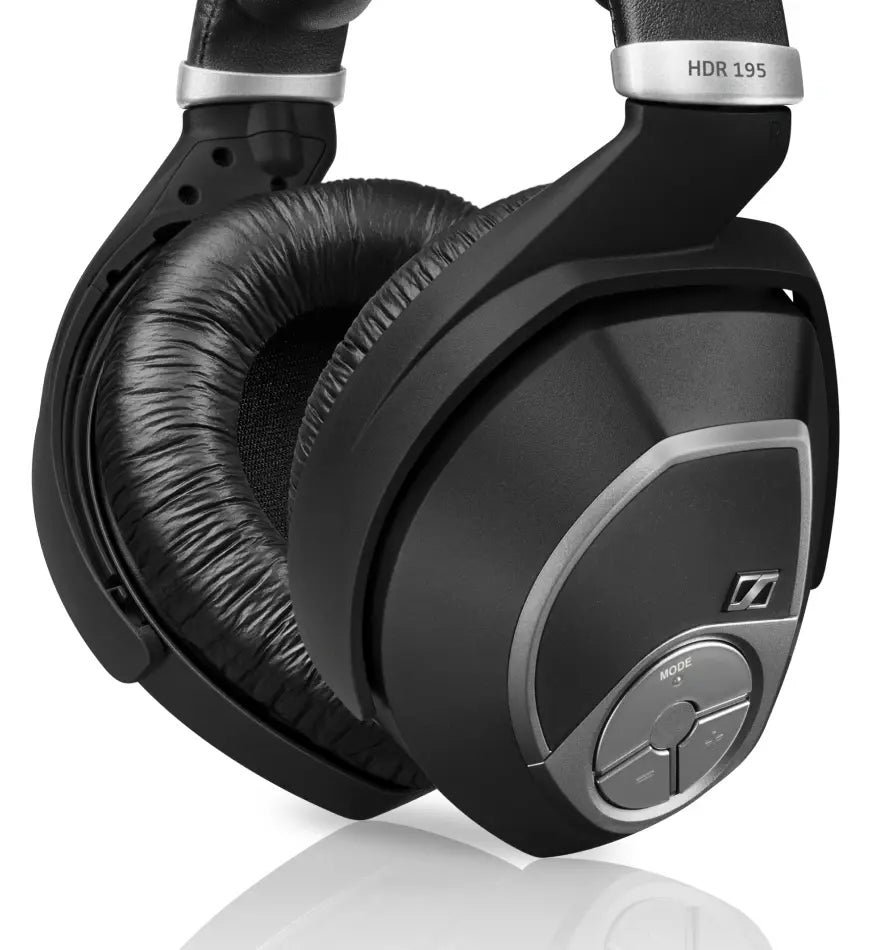

Sennheiser RS 195
Same digital RF platform as the RS 175 (2.40–2.48 GHz, 100m range, 18-hour battery, optical + 3.5mm), tuned for speech intelligibility. Personal Hearing: seven sound profiles (A–G) compensating for different hearing patterns, dedicated Speech mode, and a left/right balance dial. The system consistently recommended for older viewers.
- Personal Hearing, 7 profiles for different hearing patterns
- Dedicated Speech mode; left/right balance dial
- Max 117 dB; 17Hz–22kHz; two receivers can share one transmitter
- TV-only: these are not headphones you will take on the train or use on the move
- No Bluetooth, so the headphones cannot double as everyday wireless headphones for a phone or tablet
- The hearing-profile dial and modes add setup choices the simpler RS 175 does not ask of you
- Wireless: Digital RF
- Feature: Personal Hearing A–G
- Max SPL: 117 dB
Best for: Anyone who turns on subtitles because dialogue gets lost; asymmetric hearing
3. Avantree HT5009: Best low-latency Bluetooth TV bundle
The HT5009 takes the opposite approach to Sennheiser: instead of RF, it uses Bluetooth 5.0 with the FastStream codec, which Avantree rates at under 40 ms of latency, low enough that lip-sync errors become imperceptible for most viewers. (For context, Avantree's own guidance notes that standard SBC Bluetooth can introduce 200 ms or more of delay, which is very visible.) The bundle includes a transmitter with optical, AUX, and RCA inputs, so it works with any TV even if the TV itself has no Bluetooth at all.
Battery life is the headline number: up to 40 hours per charge, double most competitors. Range is a Class 1 Bluetooth spec of up to 164 feet / 50 metres. The transmitter supports passthrough, meaning a soundbar or receiver can stay connected at the same time, and two headphone sets can connect simultaneously.
Why it wins for Bluetooth fans: the headphones also pair with phones and tablets like normal Bluetooth headphones, so one purchase covers TV nights and travel. The dual-headphone support and passthrough make it genuinely couple-friendly. Independent comparison by RTINGS.com against the Sennheiser RS 195 gave the HT5009 the edge on battery life and latency, with comfort and build quality going to Sennheiser.
Things to know: Bluetooth is still Bluetooth, so a congested 2.4 GHz environment can cause dropouts, and Samsung/LG smart TVs have a known habit of auto-pairing with discoverable Bluetooth devices, which can block reconnection to the transmitter (Avantree documents workarounds: refuse/block the device prompt, remove the headphones from the TV's device list, or fully power off the TV rather than using standby).


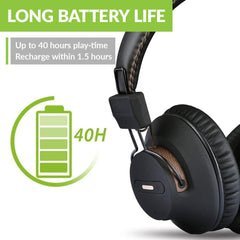
Avantree HT5009
The low-latency Bluetooth bundle: Bluetooth 5.0 with FastStream codec at under 40ms latency, so lip-sync errors become imperceptible. Transmitter with optical, AUX, and RCA inputs (works with any TV, even without Bluetooth). 40 hours per charge, Class 1 164-foot range, passthrough for soundbars, two headphone sets simultaneously.
Availability note: Avantree lists the HT5009 as discontinued, and Avantree's own store shows it out of stock. If you order one, check the seller's remaining stock, the item's condition, and warranty and support cover first.
- Bluetooth 5.0 FastStream, under 40ms latency
- 40-hour battery; Class 1 164 ft range
- Passthrough for soundbars; dual-headphone support; doubles as normal Bluetooth headphones
- Bluetooth is still Bluetooth: a congested 2.4 GHz environment can cause dropouts
- Samsung and LG smart TVs can auto-pair with discoverable Bluetooth devices and block reconnection to the transmitter (Avantree documents workarounds)
- Comfort and build quality trail the Sennheiser RS 195 in independent comparison (RTINGS.com), which gave the HT5009 the edge on battery life and latency instead
- Bluetooth: 5.0 FastStream <40ms
- Battery: 40 hours
- Range: 164 ft Class 1
Best for: Bluetooth fans; couples; anyone whose TV lacks Bluetooth
4. Sennheiser RS 120-W: Best affordable Sennheiser system
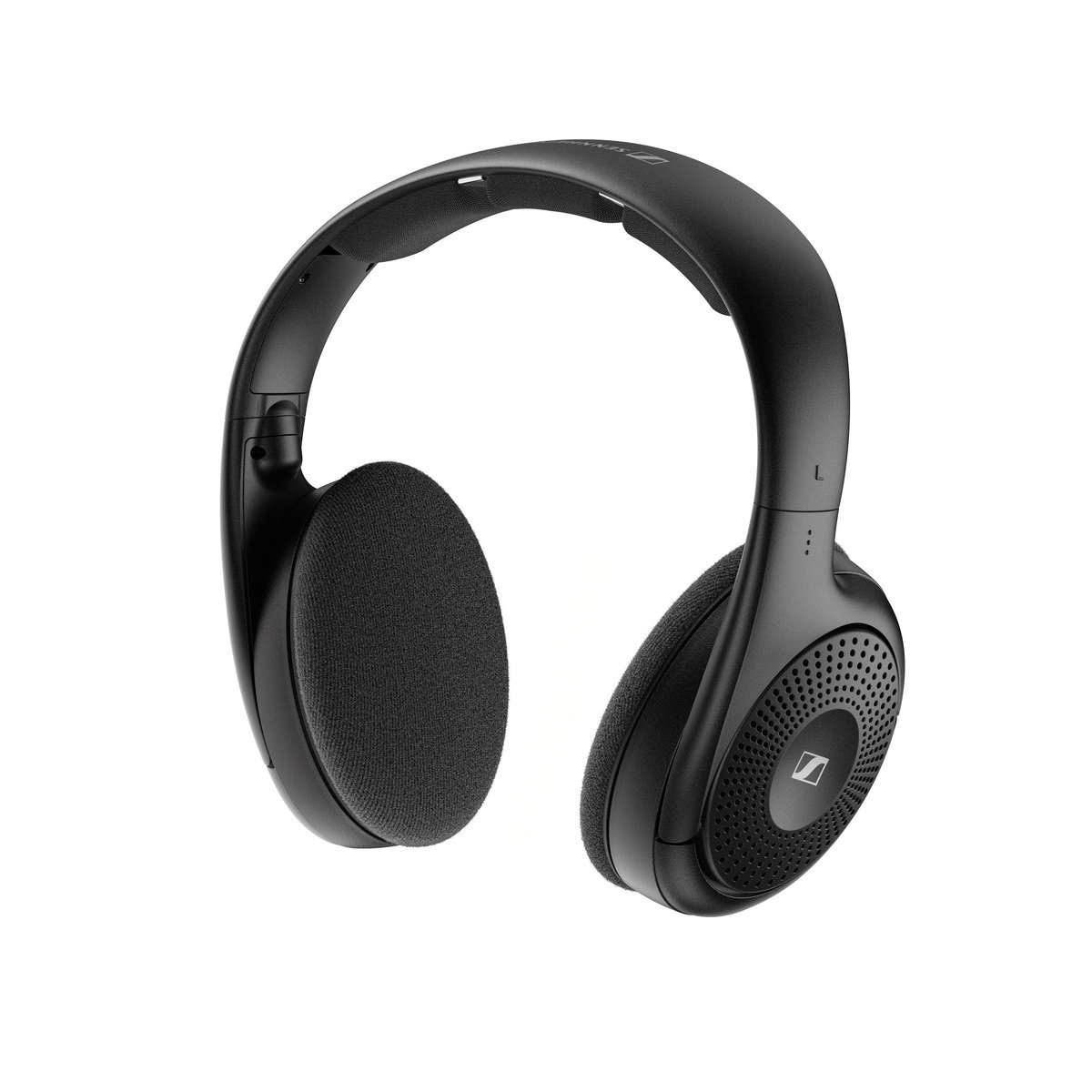
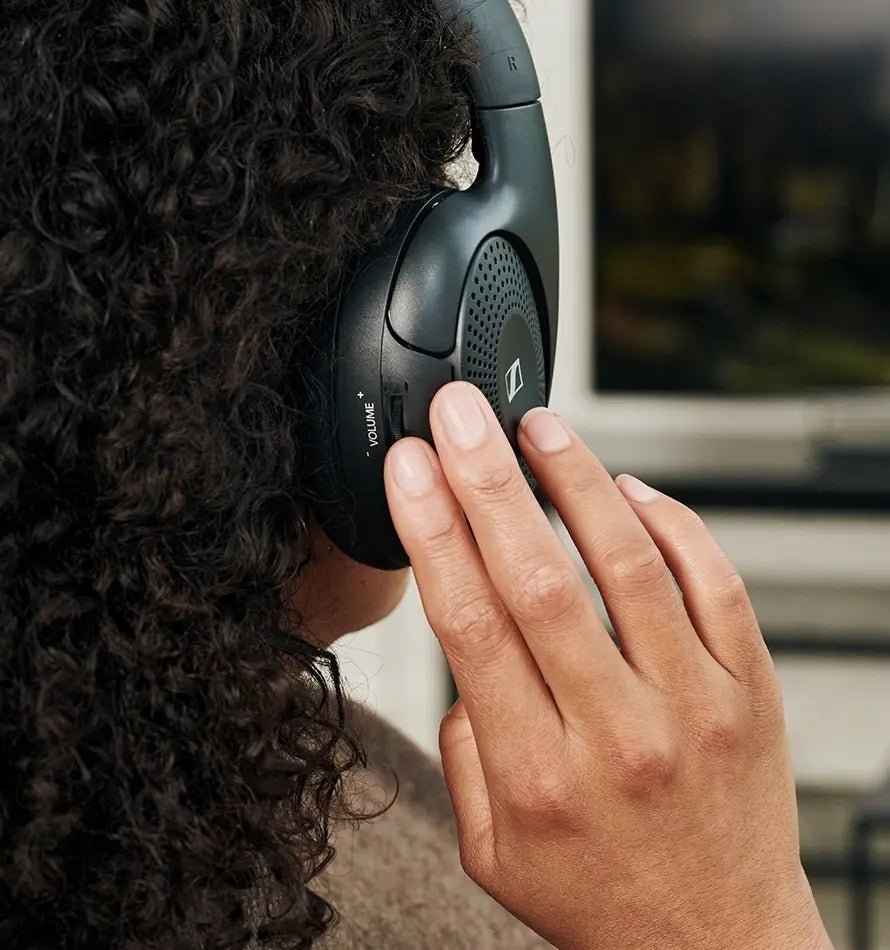
The RS 120-W is Sennheiser's newer entry-level TV system: on-ear digital wireless headphones with an all-in-one transmitter that doubles as a docking station and charger. Three sound modes, Speech, Music, and Neutral, let you pick the processing that fits what you're watching, and Sennheiser rates maximum volume at 100 dB, which helps viewers who need extra amplification. Battery life is up to 20 hours, and the headphones recharge simply by being placed on the stand.
The party trick: one transmitter can broadcast to "dozens" of headphones simultaneously, per Sennheiser, which is overkill for most homes, but it makes the system a plausible pick for assisted-listening setups in community rooms or care homes.
Things to know: the on-ear design (earpads rest on the ears rather than around them) is less isolating than the over-ear RS 175/195, so it's best for quiet rooms. If you want over-ear comfort and the 100-metre range, step up to the RS 175.
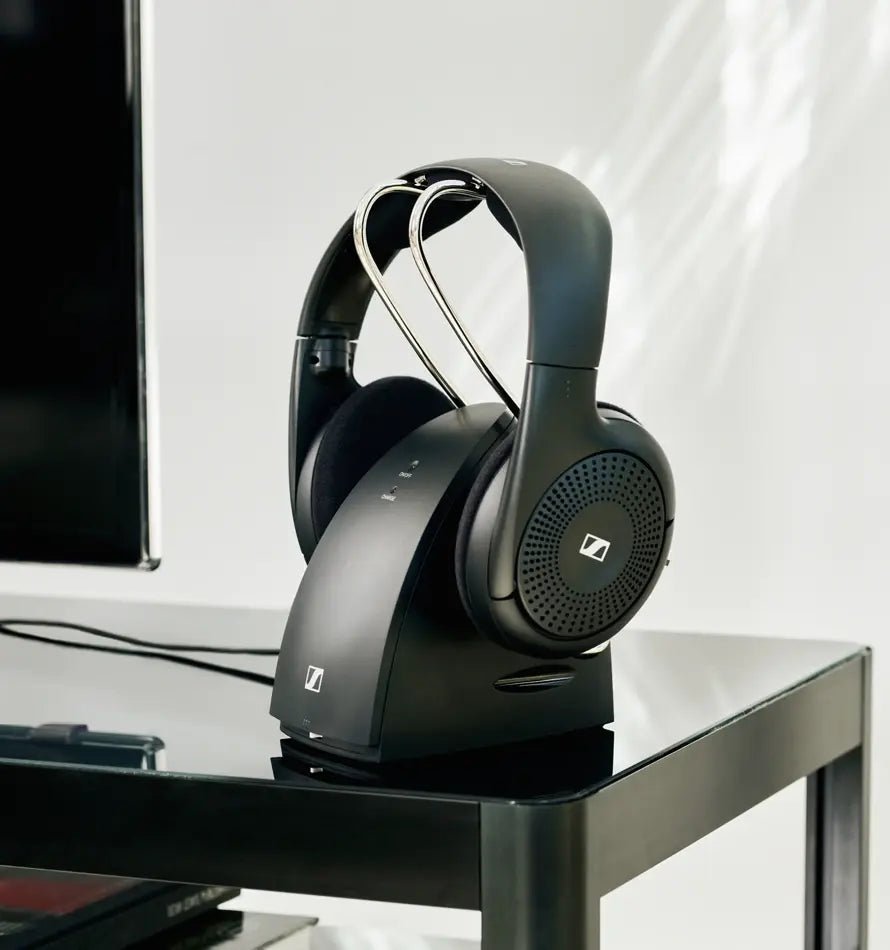
Sennheiser RS 120-W
Sennheiser's newer entry-level TV system: on-ear digital wireless headphones with an all-in-one transmitter that doubles as docking station and charger. Three sound modes (Speech, Music, Neutral), 100 dB max volume for viewers needing extra amplification, 20-hour battery, recharge by placing on the stand. One transmitter can broadcast to 'dozens' of headphones, which is plausible for assisted-listening setups.
- Affordable Sennheiser TV system
- 3 sound modes; 100 dB max volume
- One transmitter broadcasts to multiple headphones; 20h battery
- On-ear design is less isolating than the over-ear RS 175 and RS 195, so it suits quiet rooms best
- Connects via RCA or 3.5 mm only: no optical input is listed for this system, so check your TV’s outputs first
- 60-metre range, shorter than the 100-metre rating of the RS 175 and RS 195
- Design: On-ear
- Modes: Speech, Music, Neutral
- Battery: 20 hours
Best for: Budget-conscious buyers wanting the Sennheiser name; assisted-listening setups
Buying Guide: What Actually Matters
1. Latency is the whole game. When sound lags behind the picture, dialogue feels wrong and you can never un-notice it. Dedicated RF systems (Sennheiser) sidestep the problem with near-instant transmission. Bluetooth bundles need a low-latency codec, look for aptX Low Latency, FastStream, or a manufacturer's sub-40 ms claim. Plain SBC/AAC Bluetooth can lag by 200 ms or more. Never assume a premium headphone is low-latency; check the codec list.
2. Check your TV's audio outputs before anything else. Optical (TOSLINK), 3.5 mm headphone jack, RCA, or built-in Bluetooth: match the system's inputs to what your TV actually offers. The RS 175, RS 195 and the Avantree HT5009 all accept optical, the widest-supported TV output. The RS 120-W connects via RCA or 3.5 mm only, so check your TV's outputs before choosing it.
3. Range and walls. Manufacturer range figures are line-of-sight. The Sennheiser RF systems' 100 m rating means whole-house coverage is realistic; the Avantree's 164 ft Class 1 Bluetooth range is fine for apartment-scale listening. Bluetooth struggles more with walls than RF does.
4. Battery and charging habits. RF systems here run 18–20 hours and charge on a dock, and the ritual is "return to the stand." Avantree's 40-hour battery is more forgiving if you forget. Whichever you choose, the habit that matters is docking, not the headline number.
5. Comfort for long sessions. TV headphones get worn for two- to four-hour stretches. Over-ear (around the ear) designs like the RS 175, RS 195 and HT5009 beat on-ear designs for long films. If you wear glasses, over-ear with soft clamping force matters, check return policies so you can try them.
6. Dialogue clarity features. If the whole point is hearing speech, prioritize systems with speech modes or EQ (the RS 195's seven profiles and speech mode, the RS 120-W's Speech mode) over raw sound quality. For music-first listeners, the opposite applies.
7. Multi-listener and speaker coexistence. Couples: the Sennheiser systems support two headphone receivers on one transmitter, and the Avantree HT5009 supports dual pairing. If one person prefers the speakers, the HT5009's passthrough feature helps, but your TV's settings decide whether speakers and headphones can run together.
The Three Types of Wireless TV Headphones
Dedicated RF systems (Sennheiser RS 175, RS 195, RS 120-W) are purpose-built for the TV: a base station plugs into the TV, the headphones talk to the base on a private radio link. Pros: minimal latency, huge range, dead-simple operation, no Bluetooth compatibility questions. Cons: they're TV-only, you can't take them on the plane.
Bluetooth bundles (the Avantree HT5009) ship headphones plus a low-latency Bluetooth transmitter. Pros: the headphones double as everyday Bluetooth headphones; sub-40 ms latency claim; long battery life. Cons: Bluetooth is more interference-prone; TV brand quirks (Samsung/LG auto-pairing) can complicate setup; only specific codecs solve the latency problem.
Your TV's built-in Bluetooth + regular headphones. Pros: no extra box, use headphones you already own. Cons: latency is a lottery, since it depends on your TV's Bluetooth stack and whether it supports low-latency codecs. Fine for news and talk shows; risky for films where you notice sync. Check your TV's audio-delay/sync setting first.
Head-to-Head Comparisons
Sennheiser RS 175 vs RS 195: same digital RF platform, same 18-hour battery, same 100 m range, same inputs. Buy the RS 175 for the best all-round TV listening; buy the RS 195 if hearing support is the priority, the seven hearing profiles, speech mode, and balance control are genuinely useful for viewers with hearing loss, and independent comparison found it the more comfortable, better-built of the two versus budget Bluetooth rivals.
Bundle vs your own Bluetooth headphones: a bundle's transmitter guarantees a low-latency codec; your TV's built-in Bluetooth does not. If lip-sync perfection matters and your TV lacks codec information, the bundle wins every time.
7 Mistakes to Avoid
- Buying regular Bluetooth headphones and assuming they'll sync. The #1 disappointment in this category. Unless the headphone and TV both support a low-latency codec, expect visible lag.
- Ignoring your TV's outputs. Buying a system whose inputs do not match your TV is an unforced error: the RS 120-W connects via RCA or 3.5 mm only, so it suits TVs with those outputs rather than optical-only setups. Look at the back of your TV first.
- Chasing noise cancelling for TV use. ANC is great on planes; in your living room it's mostly irrelevant, and flagship ANC headphones are the ones most likely to lack low-latency codecs.
- Forgetting the charging ritual. An 18-hour battery with a dock beats a 40-hour battery you forget to charge, or rather, neither helps if you don't plug it in. Pick the charging style you'll actually follow.
- Assuming "wireless" means "works with any TV." Every system needs a compatible input. No input match, no sound.
- Overlooking the second viewer. If two people watch together, confirm dual-headphone support before buying, not all systems offer it.
- Expecting hearing-aid performance from a speech mode. The RS 195's profiles help intelligibility, but they're not medical devices. If hearing loss is significant, pair good headphones with a hearing check.
FAQs
Yes. Every modern TV has at least one audio output (optical, 3.5 mm, RCA, or built-in Bluetooth) that a wireless headphone system can use. Dedicated RF systems and Bluetooth bundles include a transmitter that connects to those outputs, so even a TV without Bluetooth works.
Plug the system's transmitter into the TV's optical or 3.5 mm output, power it, and turn the headphones on, dedicated systems auto-link. For TVs with built-in Bluetooth, put both in pairing mode from the TV's sound settings. If streaming apps produce no sound while broadcast TV works, check the TV's digital audio format: set it to PCM/stereo rather than Dolby, since many transmitters can't decode Dolby.
They can. Standard Bluetooth (SBC/AAC) can delay audio by 200 ms or more, which is plainly visible. Low-latency codecs, aptX Low Latency, FastStream, or a manufacturer-rated sub-40 ms system like the Avantree bundles, keep the delay imperceptible. Dedicated RF systems avoid the problem entirely.
Yes, smart TVs have the same audio outputs as other TVs, plus many have built-in Bluetooth. One quirk to know: some Samsung and LG smart TVs auto-pair with any discoverable Bluetooth device, which can block headphones from reconnecting to their own transmitter. The fix is to refuse/block the TV's pairing prompt, remove the headphones from the TV's device list, or power the TV fully off instead of using standby.
With the right system, yes. The Sennheiser RS 175 and RS 195 each support two headphone receivers on one transmitter, and the Avantree HT5009 supports dual pairing. Check this feature before buying if you watch as a pair.
Sometimes. It depends on the TV, not the headphones. Some TVs allow dual audio output; others mute internal speakers when an external device is connected. The Avantree HT5009 includes a passthrough feature, but the TV's settings have the final say.
They help many viewers: private volume control, speech-focused EQ, and, on the Sennheiser RS 195, adjustable hearing profiles and left/right balance. They're not hearing aids, though. For significant hearing loss, use them alongside proper hearing care.
No. RF systems use their own radio link and Bluetooth bundles use Bluetooth, neither needs Wi-Fi or an internet connection. (This is a common confusion: "wireless" here doesn't mean "smart.")
Because four is the honest count. Every pick here carries a verified link to its exact variant, and every pick has three verified manufacturer photos. Other models exist, but none we considered met the verification standard for a linked recommendation, so this guide recommends four verified headphones rather than padding the list with picks we could not verify.
While researching this article we found several claims in ranking content that deserve a rebuttal:
- "Flagship ANC headphones guarantee lip-sync accuracy." One ranking vendor blog claims premium Bluetooth headphones ensure lip-sync accuracy through "proprietary Bluetooth codecs." This is misleading: flagship noise-cancelling headphones typically support SBC, AAC and LDAC, none of which are low-latency codecs, and LDAC is notably high-latency. Flagship noise cancelling has nothing to do with TV sync. Treat any article that conflates ANC quality with TV suitability as sales copy, not advice.
- "Any Bluetooth headphone is fine for TV." Several thin affiliate pages recommend standard Bluetooth earbuds (e.g., mainstream ANC earbuds) for TV viewing without mentioning latency at all. Standard Bluetooth can lag 200 ms+, earbuds typically run 5–6 hours per charge, and they fall out when you recline. For dedicated TV watching, they're a poor pick, which is why none appear in our recommendations.
- "Zero-lag RF" marketing. Some content describes RF systems as having literally zero latency. No wireless system has zero latency; RF systems simply have delays far below human perception. We describe Sennheiser RF latency as "minimal" and deliberately publish no millisecond figure the manufacturers do not claim.
- Vendor blogs recommending their own products as the answer. The top-ranking informational content for this keyword is largely published by a headphone vendor and recommends that vendor's products (some of which we could not verify as current models). Our picks mix Sennheiser and Avantree based on verifiable specs, and we have excluded models we could not verify.
Final Verdict
Buy the Sennheiser RS 175 if you want the best all-round wireless TV headphone system: digital RF, optical input, 100-metre range, and no latency headaches. Choose the Sennheiser RS 195 if clear dialogue is the priority: its hearing profiles and speech mode are unmatched. On a tighter budget, the Sennheiser RS 120-W covers the basics with three sound modes and a docking transmitter. And if you would rather have Bluetooth headphones that double for everyday use, the Avantree HT5009 is the low-latency bundle to beat, with a 40-hour battery and passthrough for a soundbar.
Whatever you choose, remember the rule this whole guide rests on: for TV, the codec matters more than the brand. RF or a verified low-latency Bluetooth codec: that is the entire buying decision in one sentence.
Final Recommendations
Start with the RS 175 if you want the best all-round wireless TV headphone system: digital RF, optical input, 100-metre range, and no latency headaches. Step up to the RS 195 if clear dialogue is the priority, to the HT5009 if you want Bluetooth headphones that double for everyday use, or to the RS 120-W if you want the most affordable Sennheiser system. Whatever you choose, remember the rule this whole guide rests on: for TV, the codec matters more than the brand.
Best Overall Wireless TV Headphones: Sennheiser RS 175, the best overall wireless TV headphones
Best for Clear Dialogue and Hearing Support: Sennheiser RS 195, the best for clear dialogue
Best Low-Latency Bluetooth TV Bundle: Avantree HT5009, the low-latency Bluetooth TV bundle
Availability note: Avantree lists the HT5009 as discontinued, and Avantree's own store shows it out of stock. Check the seller's remaining stock, the item's condition, and warranty and support cover before you order.
Best Affordable Sennheiser System: Sennheiser RS 120-W, the affordable Sennheiser TV system