
The short version: the Pixel Watch 4 is a refinement, not a revolution, and the refinements are in exactly the places that mattered. You get a brighter display (3,000 nits vs 2,000), meaningfully better battery life (up to 30 hours on the 41mm model against 24 hours on the Watch 3), a newer Snapdragon W5+ Gen 2 chip, dual-frequency GPS, and satellite SOS for off-grid emergencies on the Watch 4 line. The design, sensors, water resistance and core Fitbit health suite carry over largely unchanged. Both watches also come in a 45mm size, covered in prose in the size section below; the two buyable picks in this comparison are the 41mm Wi-Fi models, compared like for like throughout.
This comparison is research-based. Every specification traces to Google's official comparison materials and established spec publications, and the two linked models were verified variant by variant (model numbers GA09958-US and GA05756-US) before inclusion. We did not hands-on test either watch, and battery figures are Google's official claims under Google's test conditions, not independent measurements.
The Direct Answer: Pixel Watch 3 or Pixel Watch 4?
Buy the Pixel Watch 4 if you want the best Pixel Watch: the battery finally lasts through a full day plus a night of sleep tracking, the display is dramatically brighter outdoors, and dual-band GPS makes it the first Pixel Watch genuinely credible for serious outdoor training.
Buy the Pixel Watch 3 at a discount if you want the smart deal: same design language, same health sensors, same 5 ATM water resistance, and with the Watch 4 on shelves, the 3 routinely sells below its launch price. For desk-and-gym use, the generational gap is small.
Keep what you have if you own a Watch 3 and your complaints are about Wear OS software or the Fitbit app rather than hardware. The Watch 4 does not reinvent either.
The honest truth: Google fixed the Watch 3's two real weaknesses (battery life and GPS accuracy) and brightened the screen, then left everything else alone. That is a good upgrade, but it is an evolution, and evolutions reward patient buyers. The Watch 3 at a discount is arguably the better value; the Watch 4 is unarguably the better watch.
Quick Picks
Short on time? These are our top recommendations, each button takes you to the exact product on Amazon.
Spec Comparison: 41mm Models, Like for Like
| Spec | Pixel Watch 4 (41mm) | Pixel Watch 3 (41mm) |
|---|---|---|
| Announced | August 2025 | August 2024 |
| Display | Actua 360 AMOLED LTPO, 3,000 nits; bezels 15% smaller, about 10% more screen area | Actua AMOLED LTPO, 2,000 nits |
| Chip | Snapdragon W5+ Gen 2 | Snapdragon W5 Gen 1 |
| RAM / storage | 2GB / 32GB | 2GB / 32GB |
| Battery capacity | 325 mAh | 307 mAh |
| Battery life (always-on display) | Up to 30 hours | Up to 24 hours |
| Battery Saver mode | Up to 48 hours | Up to 36 hours |
| Charging | 25% faster than Watch 3; 0 to 80% in about 25 minutes | Magnetic puck (USB-C) |
| GPS | Dual-frequency (GPS, GLONASS, Galileo, BeiDou, QZSS) | Single-band (same constellations) |
| Satellite SOS | Yes, on the Watch 4 line (model, region and carrier dependent) | No |
| Bluetooth | 6.0 | 5.3 |
| Case | 100% recycled aluminum | 100% recycled aluminum |
| Water resistance | 5 ATM / IP68 | 5 ATM / IP68 |
| Glass | Custom 3D Corning Gorilla Glass 5 | Custom 3D Corning Gorilla Glass 5 |
| Health sensors | Heart rate, SpO2, ECG, cEDA, skin temperature (updated sensor), altimeter, compass | Heart rate, SpO2, ECG, cEDA, skin temperature, altimeter, compass |
| Amazon Link | Check Price | Check Price |
Battery figures are Google's official claims under Google's test conditions. Launch prices were the same for both generations (from $349 for the 41mm Wi-Fi model, per launch reporting); current street prices change and are not shown, so check both listings before deciding.
The Two Watches in Detail
Google Pixel Watch 4 (41mm, Wi-Fi): The Better Watch

Google Pixel Watch 4 (41mm, Wi-Fi)
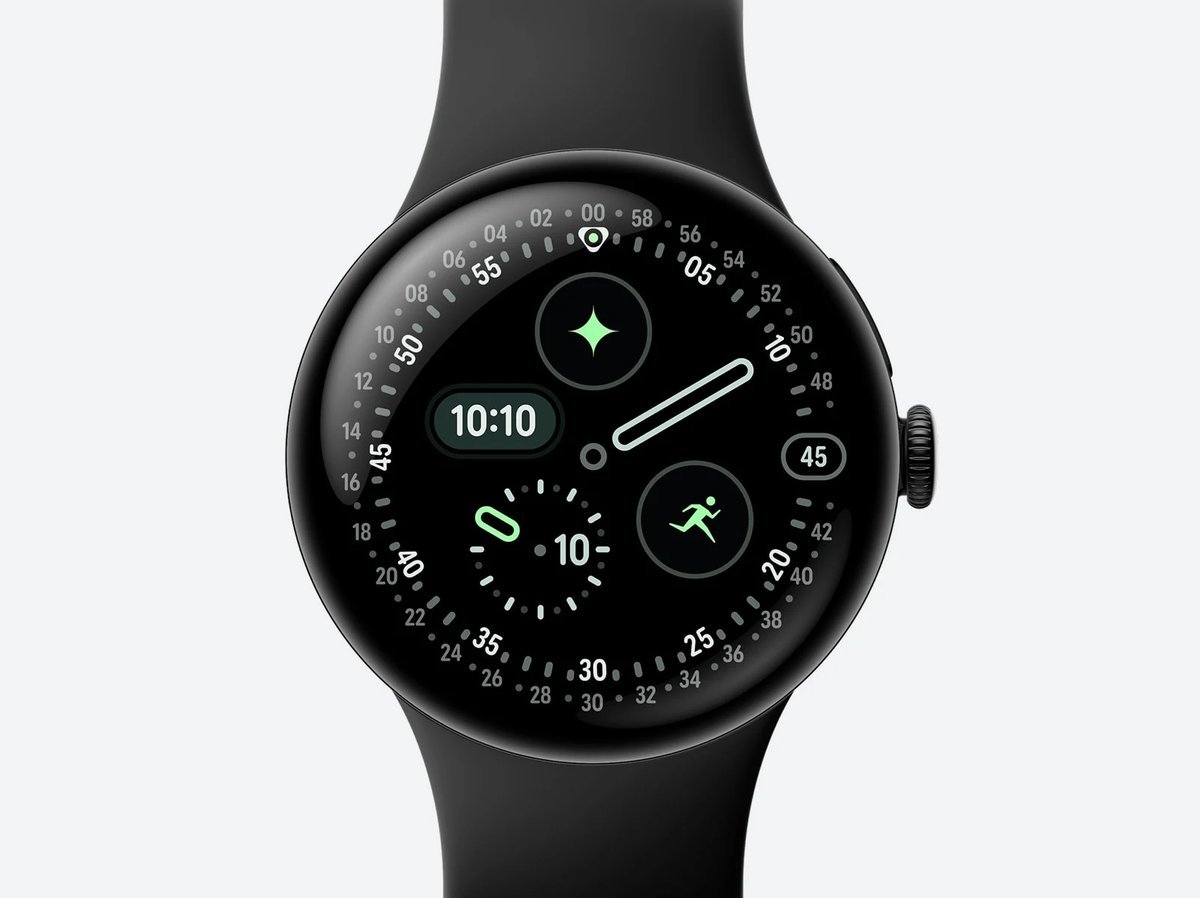
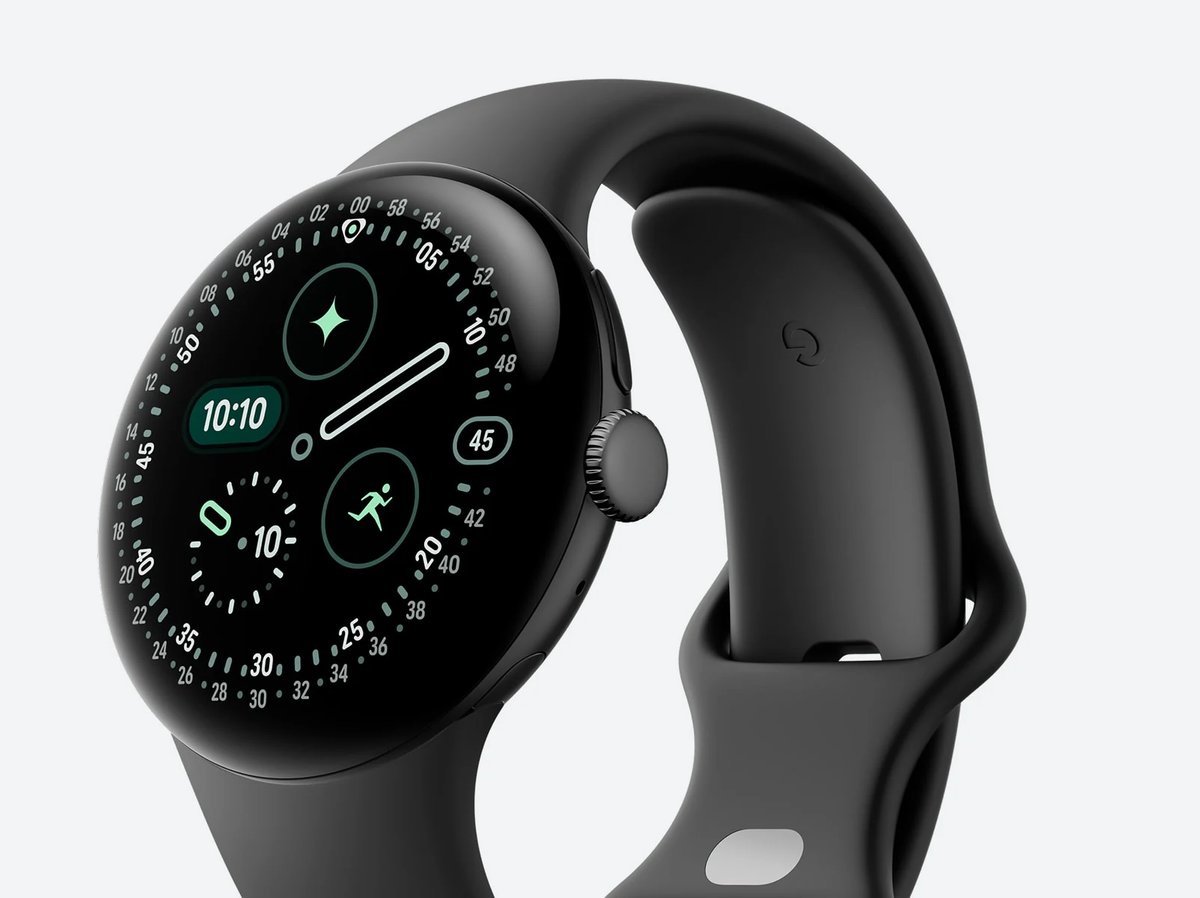
The Watch 4, model GA09958-US in this Matte Black case with Obsidian band, keeps the round domed-glass design, digital crown and 100% recycled aluminum case of its predecessor, and spends its entire upgrade budget on the three things Watch 3 owners actually complained about: battery life, outdoor readability and GPS accuracy.
The display is the most visible change. The Actua 360 panel peaks at 3,000 nits, up from 2,000 on the Watch 3, with bezels 15% smaller and roughly 10% more usable screen area. Both panels are LTPO AMOLED with 1 to 60Hz variable refresh, so always-on efficiency is comparable; the difference is that the Watch 4's always-on face stays readable in direct sunlight where the Watch 3 could wash out, and complications fit a little more comfortably. If you mostly use your watch indoors, this upgrade is nearly invisible. If you run, ride or hike in bright conditions, it is the single most noticeable day-to-day difference.
Battery is the headline. Google rates the 41mm Watch 4 at up to 30 hours with always-on display (up from 24) and up to 48 hours in Battery Saver (up from 36), from a slightly larger 325 mAh cell and a more efficient chip. Thirty hours crosses the psychological line the Watch 3 could not: a full day plus a full night of sleep tracking on one charge. Charging is 25% faster, reaching 0 to 80% in about 25 minutes, and fast top-ups change the routine, because a shower-length charge buys most of a day. Google's figures are lab claims, and GPS workouts and LTE drain faster than the headline; but the direction and size of the gain is the largest single improvement in Pixel Watch history. (The 45mm version, covered in prose below, stretches to 40 hours always-on and 72 hours in Battery Saver.)
For outdoor users, dual-frequency GPS listens on two satellite bands instead of one, which materially improves position accuracy in city streets and under tree cover, the Watch 3's recognised weak point. The Watch 4 line also adds satellite SOS for emergencies when no cellular or Wi-Fi signal is available (availability depends on model, region and carrier, and it needs a clear view of the sky), and the Watch 4 manual lists Loss of Pulse Detection among its safety features. The Snapdragon W5+ Gen 2 chip is an efficiency story rather than a speed story: the Watch 3 was never slow, and the newer silicon mainly enables the battery gains and features such as retroactive activity recognition, which logs a workout you forgot to start. Health hardware is otherwise familiar: heart rate, SpO2, ECG, cEDA stress sensing, an updated skin-temperature sensor, altimeter and compass, with improved sleep tracking.
- Up to 30 hours of battery with always-on display, plus 25% faster charging
- 3,000-nit Actua 360 display with smaller bezels stays readable in sunlight
- Dual-frequency GPS fixes the Watch 3's route-tracking weak point
- Satellite SOS joins the line for off-grid emergencies
Reasons to avoid:
- An evolution, not a redesign: same look, case and core sensors as the Watch 3
- Costs more than the discounted Watch 3 for upgrades indoor users may never notice
- Android only: it does not pair with iPhones
- Proprietary bands and charger add to the system price
- Model: GA09958-US
- Variant: 41mm, Wi-Fi, Matte Black case / Obsidian band
- Display: Actua 360 AMOLED LTPO, up to 3,000 nits
- Chip: Snapdragon W5+ Gen 2; 2GB RAM / 32GB storage
- Battery: 325 mAh; up to 30 h always-on, 48 h Battery Saver (Google claims)
- GPS: dual-frequency
- Water resistance: 5 ATM / IP68
Best for: Android users who train outdoors, track sleep, or were frustrated by the Watch 3's battery life and GPS accuracy.
Google Pixel Watch 3 (41mm, Wi-Fi): The Value Pick


Google Pixel Watch 3 (41mm, Wi-Fi)
The Watch 3, model GA05756-US in this Champagne Gold case with Hazel band, is the watch the Watch 4 refines rather than replaces. Same domed design, same sensor suite, same water resistance, and a health platform that already includes the features most people buy a Pixel Watch for: Readiness score, cardio load, Morning Brief, advanced running metrics and a workout builder.
Start with what carries over, because it is most of the experience. The multi-path optical heart rate sensor, SpO2, ECG, cEDA stress sensing, skin temperature, altimeter and compass are the same suite the Watch 4 ships with, minus the Watch 4's updated skin-temperature sensor and software-side sleep improvements. The Actua AMOLED LTPO display peaks at 2,000 nits, which is bright by any normal standard and only looks dim next to the Watch 4's 3,000 nits in direct sun. The Snapdragon W5 Gen 1 chip with 2GB of RAM and 32GB of storage was already smooth for watch tasks, and Wear OS performance depends as much on software as on silicon. Notifications, payments, steps, casual workouts and sleep tracking, the things most owners do most of the time, feel essentially identical on the two watches.
The gaps are real but specific. Battery life is up to 24 hours with always-on display and 36 hours in Battery Saver from the 307 mAh cell, which means nightly charging and some planning around sleep tracking: the classic routine is a top-up while you shower and get ready for bed. GPS is single-band, so route traces in dense cities and forests are less accurate than the Watch 4's dual-frequency fix. There is no satellite SOS, Bluetooth is 5.3 rather than 6.0, and charging is slower. None of these gaps matters much indoors; all of them matter outdoors or on long days away from a charger.
The case for buying it anyway is arithmetic. Both generations launched from the same $349 for the 41mm Wi-Fi model (per launch reporting), but with the Watch 4 on shelves the Watch 3 routinely sells below its launch price, and every dollar of discount is a dollar the Watch 4's upgrades have to earn back. For a first smartwatch, for desk-and-gym use, or for anyone whose watch life happens mostly indoors, the Watch 3 at a discount is arguably the best value the Pixel Watch line has offered. Check the current price gap before you decide: if the two are close, buy the Watch 4; if the gap is wide, the Watch 3 is the smart money.
Context matters here: the Watch 3 was itself the big step for this line, adding the 45mm size option, a larger and brighter display and the advanced running platform over the Watch 2, along with charging about 20% faster than that watch. Owners of a Watch 2 or the original Pixel Watch get nearly the full modern experience from the Watch 3; it is only existing Watch 3 owners for whom the step up narrows to battery, brightness and GPS.
- Same design, sensor suite and Fitbit health platform as the Watch 4
- Routinely discounted now that the Watch 4 is on shelves
- 2,000-nit Actua display is bright in all but direct-sun comparisons
- Readiness, cardio load, Morning Brief and advanced running features included
Reasons to avoid:
- 24-hour battery means nightly charging and planning around sleep tracking
- Single-band GPS is less accurate in cities and under tree cover
- No satellite SOS and slower charging than the Watch 4
- Shorter remaining software support runway than the newer model
- Model: GA05756-US
- Variant: 41mm, Wi-Fi, Champagne Gold case / Hazel band
- Display: Actua AMOLED LTPO, up to 2,000 nits
- Chip: Snapdragon W5 Gen 1; 2GB RAM / 32GB storage
- Battery: 307 mAh; up to 24 h always-on, 36 h Battery Saver (Google claims)
- GPS: single-band
- Water resistance: 5 ATM / IP68
Best for: value hunters and first-time smartwatch buyers whose use is mostly indoors, and Watch 2 owners upgrading on a budget.
Head-to-Head: Where Each Watch Wins
Design and display: Pixel Watch 4, clearly outdoors (3,000 nits, smaller bezels, about 10% more screen); a wash indoors. The cases, sizes and glass are otherwise the same.
Chip and performance: Pixel Watch 4, modestly, and mostly via efficiency rather than speed. Neither watch feels slow; the newer chip enables the battery story.
Battery and charging: Pixel Watch 4 by the widest margin in this comparison: up to 30 vs 24 hours always-on in the 41mm size, 48 vs 36 hours in Battery Saver, and 25% faster charging. Real-world habits still dominate: always-on display and GPS workouts are the two big drains on both watches, and turning always-on off buys several extra hours on either generation.
GPS and satellite SOS: Pixel Watch 4. Dual-frequency GPS is a genuine accuracy upgrade for runners and hikers, and satellite SOS is a safety feature the Watch 3 simply does not have.
Health and fitness: Pixel Watch 4, narrowly. Same sensors and the same Fitbit platform; the 4 adds an updated skin-temperature sensor, improved sleep tracking and retroactive activity recognition rather than any new health dimension.
Connectivity: Pixel Watch 4 on paper (Bluetooth 6.0 vs 5.3); largely irrelevant in practice today. Both keep Wi-Fi, NFC for Google Wallet and ultra-wideband, and both offer optional LTE versions.
Value: Pixel Watch 3, whenever its discount is meaningful. Identical launch pricing means the entire decision is the size of the street-price gap on the day you buy.
Buying Guide: Which Pixel Watch Should You Buy?
Buy the Pixel Watch 4 if...
- Your current watch dies before bedtime: the battery gain is real and life-changing for sleep tracking.
- You run, hike or ride outdoors: dual-band GPS and the 3,000-nit display are built for this.
- You go off-grid: satellite SOS is a genuine safety upgrade.
- You want the longest software support runway: newer chip, newer launch, longer relevance.
Buy the discounted Pixel Watch 3 if...
- You mainly want notifications, steps, casual workouts and sleep tracking indoors.
- The price gap at purchase time is large: every dollar saved is a dollar the Watch 4's upgrades must earn back.
- You are buying a first smartwatch and are unsure you will even like wearing one.
Wait if...
- You own a Watch 3 and your complaints are software, not hardware.
- You are an iPhone user: neither watch pairs with iOS (both require Android). Cross-platform options are covered in our smartwatch roundup.
- A Watch 5 rumour cycle has started and you are not in a hurry: Google now iterates annually.
41mm vs 45mm: the size decision (both generations)
The generations share the size choice, so decide it once: 41mm suits wrists under about 7 inches and anyone who finds big watches clumsy; 45mm buys the bigger battery (455 mAh on the Watch 4, rated up to 40 hours always-on and 72 hours in Battery Saver; 420 mAh on the Watch 3) and a larger canvas for maps and complications. Features are otherwise identical within a generation, which is why the linked picks in this comparison are the 41mm models: compare like sizes first, then choose your size. A practical way to decide is to trace your wrist. If a 45mm case would overhang the flat top of your wrist, the watch will rock, the heart-rate sensor will read inconsistently during workouts, and long sleeves will fight the crown. When in doubt, size down: a slightly small watch you wear daily beats a slightly large one you leave in a drawer.
Bands, chargers and the accessory tax
A practical note no spec table captures: the Pixel Watch uses a proprietary band connector. Standard 20mm quick-release straps do not fit, so you buy Pixel Watch bands from Google or licensed makers. If you are upgrading within the Pixel Watch line, check band compatibility for your specific models before assuming old bands carry over; if you are switching brands, budget for at least one spare band. Chargers are similarly proprietary (magnetic puck with a USB-C cable), and the Watch 4 charges faster but through its own puck: keep one where you charge, because you cannot borrow a standard Qi charger in a pinch. None of this is a reason not to buy; it is a reason to price the system, not just the watch.
Fitbit Premium and subscriptions: the fine print
The health suite is Fitbit-powered, and Fitbit's deeper analytics (detailed readiness breakdowns, premium workout content, some long-term trend reports) sit behind the Fitbit Premium subscription. The core tracking (heart rate, sleep stages, workouts, SpO2, ECG) works without it. New purchases have historically included a trial period, but treat Premium as an optional ongoing cost, not a requirement. Both watches are equally affected, so it is not a differentiator between them.
Software: Wear OS, Gemini and the Fitbit question
Both watches run Wear OS with Google's Pixel-exclusive features and the Fitbit health suite, and Google's update commitment and feature-drop cadence apply to both. This is worth stating plainly: if your frustration with the Watch 3 is software (Fitbit app quirks, Wear OS app gaps, notification handling), the Watch 4 does not solve it. Buy the new hardware for hardware reasons.
Where the Samsung Galaxy Watch Fits In
The honest alternative to any Pixel Watch is Samsung's Galaxy Watch line. Choose the Pixel Watch 4 if you want the cleanest Google experience (Google Assistant and Gemini, Fitbit's health suite, Pixel-exclusive features) on a non-Samsung Android phone. Choose a Galaxy Watch if you own a Samsung phone, for its integration advantages, or prefer the Classic's physical rotating bezel. Choose neither if you use an iPhone: both are Android-only. It is an ecosystem decision more than a spec decision, and both are excellent Wear OS watches in 2026. Rugged watches from Garmin and Amazfit trade smart features for weeks of battery, and plain fitness bands do most of the tracking job for much less; both are worth a look if the Pixel formula does not fit.
7 Common Mistakes When Choosing Between Pixel Watch 3 and 4
- Upgrading for the chip alone. The W5+ Gen 2 is better, but the Watch 3 was never slow. Buy the Watch 4 for battery, display and GPS, not silicon.
- Comparing 41mm vs 45mm across generations. A 45mm Watch 3 against a 41mm Watch 4 mashes size and generation together. Compare like sizes, then choose your size.
- Ignoring the discount maths. If the Watch 3 is substantially cheaper at purchase time, the Watch 4's upgrades have to earn the difference. For indoor use, they often cannot.
- Expecting software fixes from hardware. Fitbit app quirks and Wear OS gaps follow you to the Watch 4. New hardware, same software.
- Buying LTE you will not activate. The LTE premium plus a carrier plan only pays off if you actually leave your phone behind. Most buyers should buy Wi-Fi.
- Assuming water resistant means swim-proof forever. 5 ATM covers swimming, but seals age: rinse after pools and salt water, and do not press buttons underwater.
- Forgetting the accessory tax. Proprietary bands and chargers mean the sticker price is not the system price. Budget one spare band and a second charger before you call it a deal.
Three Comparison Traps to Avoid
Auto-generated "fact" tables as buying advice. Some comparison pages list dozens of trivial or mixed-variant "facts" as differentiators, blending 41mm and 45mm figures in the same column and producing claims that are technically true and practically meaningless. Treat any spec you cannot trace to the manufacturer as unverified.
Cross-size comparisons presented as generational ones. Pages comparing the 45mm Watch 3 against the 41mm Watch 4 "prove" the Watch 3 has a bigger screen and battery, which is true of the sizes, not the generations. Always compare 41 to 41 and 45 to 45.
Battery figures without conditions. "40 hours vs 24 hours" only means something with the mode stated: the 40-hour figure is the 45mm Watch 4 with always-on display, and Battery Saver numbers are a different mode entirely. Our table keeps sizes and modes distinct, as Google publishes them.
FAQs
It depends on what bothered you about the 3. If battery life or GPS accuracy were the issues, yes: the Watch 4 fixes both substantially. If you were happy with the 3, the 4 is a refinement: brighter screen, faster charging, satellite SOS on the line. Evolutionary, not revolutionary.
The main differences: a 3,000-nit vs 2,000-nit display with smaller bezels; Snapdragon W5+ Gen 2 vs W5 Gen 1; up to 30 to 40 hours of battery depending on size vs 24 hours; dual-band vs single-band GPS; satellite SOS (new on the 4 line); Bluetooth 6.0 vs 5.3; and faster charging. Design, sizes, water resistance and core sensors are unchanged.
Yes, substantially. Google rates the Watch 4 at up to 30 hours (41mm) or 40 hours (45mm) with always-on display, vs 24 hours for the Watch 3 in both sizes; Battery Saver stretches to 48 or 72 hours vs 36. Real-world results vary with usage, but the generational gain is the largest in Pixel Watch history.
No. Like all Pixel Watches, the Watch 4 requires an Android phone and does not pair with iOS. iPhone users should look at the Apple Watch instead.
It is water-resistant to 5 ATM with IP68 dust and water protection: safe for swimming, showering and rain. It is not a dive watch, and water resistance diminishes as seals age.
Yes, as an optional variant: both 41mm and 45mm come in Wi-Fi and LTE versions, as did the Watch 3. The linked pick in this comparison is the 41mm Wi-Fi model. LTE adds cost plus a carrier plan; buy it only if you will leave your phone behind.
An emergency feature on the Watch 4 line that can send SOS messages via satellite when you have no cellular or Wi-Fi connection, aimed at hikers and backcountry users. Availability depends on model, region and carrier support, and it needs a clear view of the sky.
No. Core tracking (heart rate, sleep, workouts, SpO2, ECG) works without it on both the Watch 3 and Watch 4. Premium adds deeper analytics and workout content. Treat it as optional, and check what trial is bundled at purchase time.
Final Recommendations
Best Overall: for most buyers, the Pixel Watch 4 (41mm, Wi-Fi) is the pick. The battery finally does what a smartwatch should (a full day plus sleep tracking), the display is genuinely better outdoors, and dual-band GPS plus satellite SOS make it the first Pixel Watch that takes the outdoors seriously, at the same launch price the Watch 3 had.
Best Value: for value hunters, the discounted Pixel Watch 3 (41mm, Wi-Fi) is the pick. Same design, same sensors, same water resistance, and the discount at purchase time is real money. For notifications, steps, casual workouts and indoor use, it remains an excellent watch.
The deciding question is simple: will you use the battery, the brightness and the GPS? If yes, Watch 4. If your watch life happens mostly indoors, bank the savings on the Watch 3. Either way you are buying into the best Wear OS showcase available; just make sure you own an Android phone first, and verify the exact variant's specs on the listing before you buy.
Related Guides
- Best smart watches (2026): 7 picks for every wrist.
- Best watch brands under $500 (2026): 8 picks.
- Best men's watches under $500 (2026): 7 picks.