
The PowerSmart DB2321 is a 21-inch gas push mower with a 144cc four-stroke engine and 3-in-1 discharge (mulch, bag, side discharge). This review covers its specifications, its strengths, its drawbacks, and who it suits, so you can judge whether a manual push mower fits your yard before you buy.
Quick Picks
Short on time? Here is our single pick, and its button takes you to the exact product on Amazon.
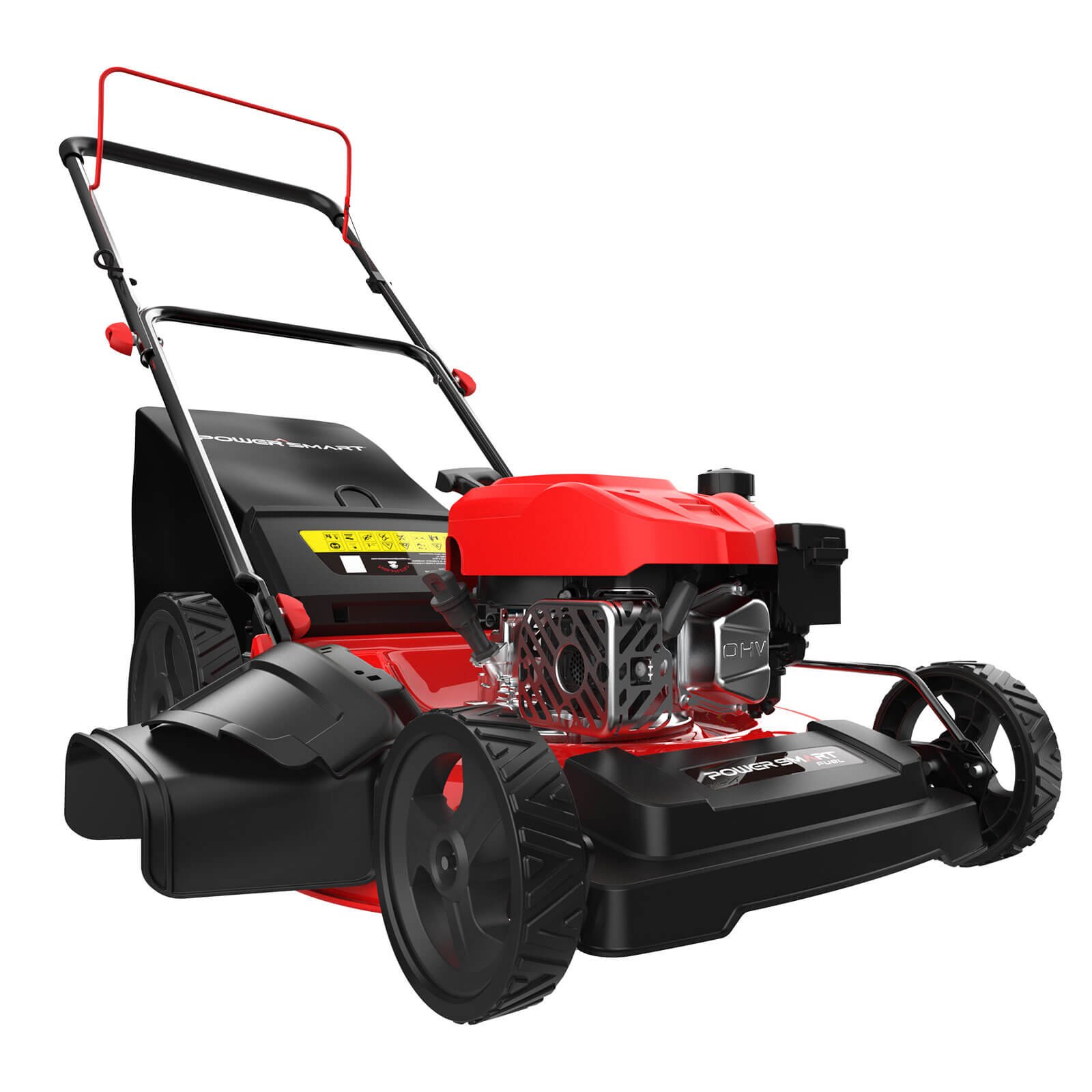
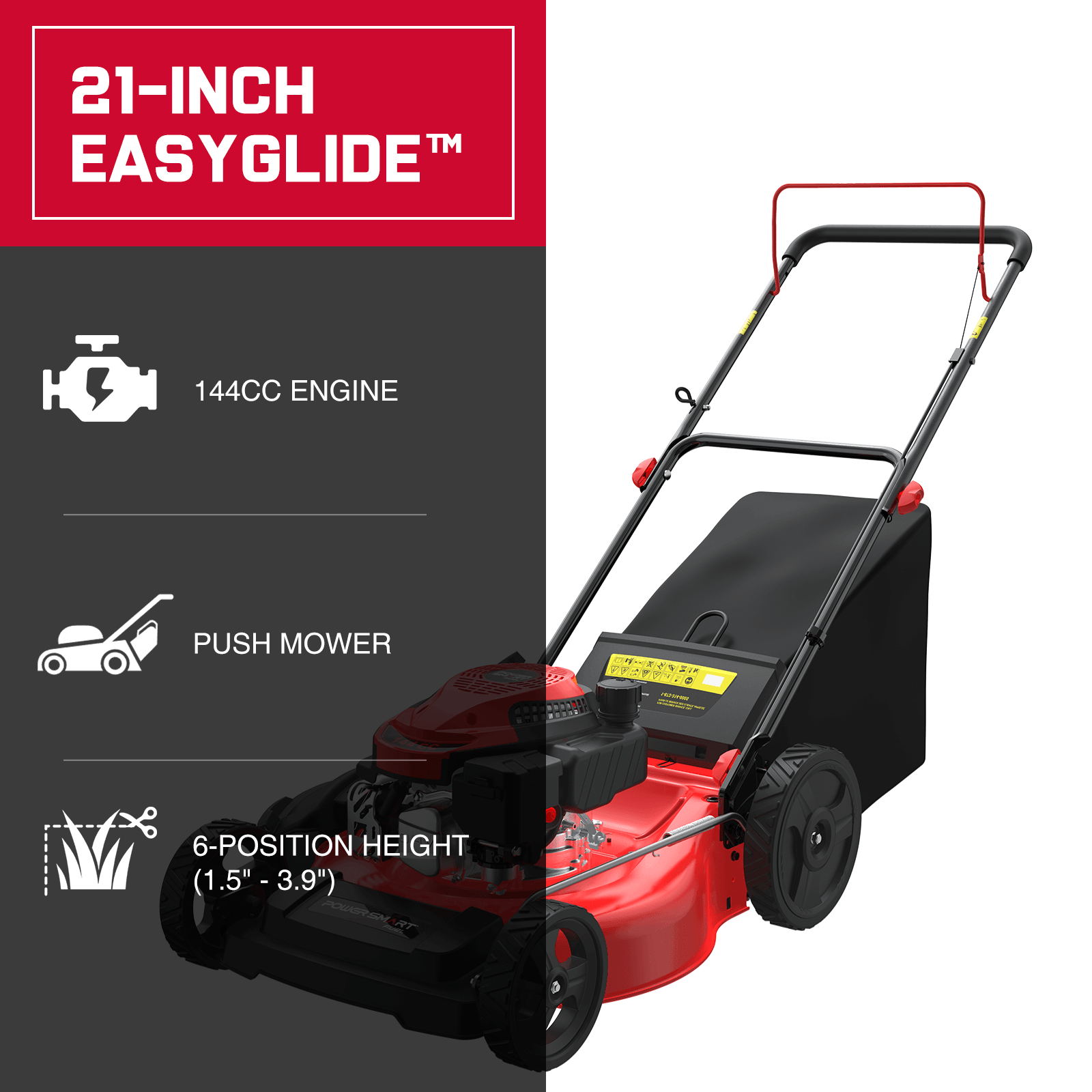
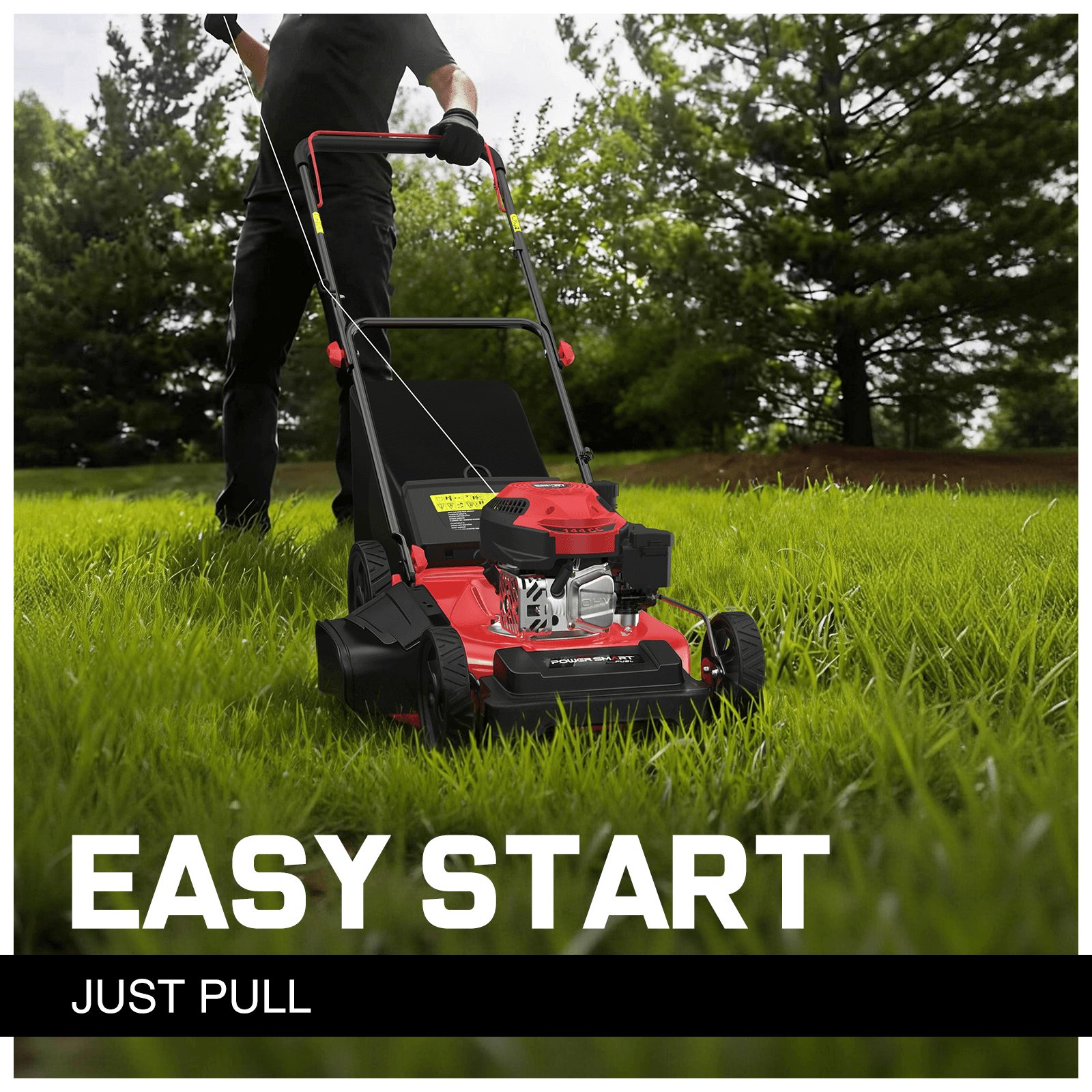
Photos: manufacturer PDP shots for the exact DB2321 variant: one studio shot, one feature graphic with a central full unit, and one in-use shot. Baked-in manufacturer text is disclosed in each image description above. No retailer, Amazon, AI, or stock imagery.
PowerSmart DB2321
A straightforward gas push mower with a real 144cc four-stroke engine and a full 21-inch deck for a small flat yard. No self-propulsion, no long feature list, nothing fancy, and nothing missing for the job it is built for.
Reasons to Buy:
- Real 144cc four-stroke engine with a full 21-inch deck
- 3-in-1 discharge: mulch, bag, and side discharge
- 6-position height adjustment from 1.5 to 3.9 inches
- Foldable handle for compact storage
Reasons to Avoid:
- No self-propulsion: you push the full 61.6 lb yourself, which gets tiring on anything beyond a small flat lawn
- No pace-matching drive, so slopes and larger lawns are hard work
- Pull-start only, with no electric start option on this model
- Some listings disagree on discharge options, so confirm the 3-in-1 setup on the box before you buy
- Model: DB2321 (DV8621P / DB8721P)
- Deck: 21-inch
- Engine: 144cc 4-stroke
- Drive: Manual push (no self-propelled drive)
- Discharge: 3-in-1 (mulch, bag, side discharge)
- Height: 6-position, 1.5-3.9 in
- Weight: 61.6 lb
- Handle: Foldable for storage
Best for: Small flat lawns; buyers comfortable pushing a mower themselves.
| Product | Key Specs | Best Use Case | Standout Feature | Amazon Link |
|---|---|---|---|---|
| PowerSmart DB2321 Our Pick |
21-inch deck; 144cc 4-stroke engine; manual push; 6-position height adjustment 1.5-3.9 in; 61.6 lb; 3-in-1 (mulch, bag, side discharge); foldable handle. | Small flat lawns (up to about a third of an acre); foldable handle for easy storage. | A real 144cc four-stroke and 21-inch deck for a small flat yard. | Check Price on Amazon |
How to Choose a Gas Lawn Mower: Buying Guide
Start with yard size, not engine size
Yard size decides the mower class, and the class decides almost everything else. As a rule of thumb used across reputable buying guides: manual push mowers suit lawns up to about a third of an acre; self-propelled walk-behinds cover a third to a full acre; beyond that, you're in riding-mower territory. Deck width then decides how long the job takes, a 30-inch deck needs roughly 30% fewer passes than a 21-inch deck on the same lawn. Buy the deck for the lawn you have, not the lawn you wish you had: an oversized mower in a small, bed-heavy yard is slower, not faster.
Self-propelled drive types actually matter
This is the detail most roundups gloss over. Rear-wheel drive keeps traction on slopes and in thick grass because the drive wheels stay planted when the nose lifts. Front-wheel drive pivots beautifully on flat lawns but spins going uphill. Variable or pace-matching speed beats single-speed drive for comfort, single-speed mowers either drag you or lag behind you. If anyone in the household has limited strength or stamina, prioritize a pace-matching rear-drive model.
Engine displacement is a rough proxy, not a verdict
Engine size in cc tells you about power potential, not cut quality. A bigger engine exists to spin wider decks and more blades; a smaller engine is plenty for a 21-inch deck. What matters more in practice: easy starting (auto choke, no priming), a fuel shut-off valve for storage, and realistic maintenance expectations. Every gas mower needs annual attention: blade sharpening, air-filter service, fresh fuel, and an oil check. Family Handyman's long-term testers put it plainly, with proper maintenance, many gas mowers give 10 to 20 years of service.
Deck, discharge, and the mulching question
Three discharge modes exist: mulching (clippings chopped fine and returned to the lawn), bagging (clippings collected), and side discharge (clippings thrown clear for fast rough cuts). Mulching is the default right answer for a healthy lawn most of the year, fine clippings decompose and return nitrogen. Bag when the grass is very tall or wet, or in autumn when you're collecting leaves. Tool-free switching levers that move between mulch and bag without tools are a bigger quality-of-life feature than they sound.
Height adjustment and wheels
Look for a cut-height range that reaches at least 3.5–4 inches. Taller grass shades the soil, holds moisture, and crowds out weeds, mowing at the mower's lowest setting is one of the most common lawn mistakes. Two-point or single-lever adjustment is faster than four individual wheel levers; dual-lever is a fine middle ground. Larger rear wheels (10–11 inches) roll over bumps and thick grass more easily than small ones.
Warranty and service network are part of the purchase
Compare warranties in years and in what they cover. Warranty length and coverage differences are real money if something fails in year three. Just as important is where you'll get service: major brands sell through dealer and big-box networks with parts availability, while budget brands may leave you hunting for a compatible air filter. Before you buy, check that your area has a servicing dealer for the brand, and keep the model and serial numbers from the model plate, every manual we reviewed asks for them when you need support.
Gas Mower Types: Push, Self-Propelled, Riding, and Zero-Turn
Walk-behind gas mowers come in two flavors: manual push (you provide the locomotion; the engine only spins the blade) and self-propelled (the engine also drives the wheels). Within self-propelled, front-wheel, rear-wheel, and all-wheel drive each suit different terrain, as covered above. Riding mowers and lawn tractors take over at roughly an acre and up. Zero-turn mowers turn on a dime and generally give the most even cut on large properties, per Family Handyman's FAQ, but they're a different budget class entirely, typically starting well above walk-behind prices. This review covers a walk-behind push mower because that is what the PowerSmart DB2321 buyer is comparing; if your lawn needs a rider, shop that category instead.
Self-Propelled vs Manual Push: Which Do You Actually Need?
Buy self-propelled if your lawn is over a third of an acre, has any slope, or if pushing 60–90 lb for an hour would stop you from mowing regularly, the best mower is the one you'll actually use. The pace-matching systems are worth seeking out because they remove the single most annoying thing about cheap self-propelled mowers: being towed. Buy manual push if your lawn is small and flat, you want the lightest machine and the lowest price, and you're comfortable with the exercise. There's no shame in either choice, there's only the wrong choice for your yard, which is an oversized mower for a small lawn, or a manual push mower for a half-acre hill.
Common Mistakes to Avoid
- Buying for the sale price instead of the yard. A cheap mower that's wrong for your terrain costs more in frustration than the upgrade would have.
- Ignoring drive type on slopes. Front-wheel drive on a hill is a traction problem you will rediscover every single mow.
- Mowing too short. Scalping stresses the grass and invites weeds. Most lawns do best at 3–3.5 inches in summer.
- Running stale fuel. Gasoline older than about 30 days without stabilizer gums up carburetors, the number-one "my mower won't start" cause in spring. Use fresh fuel or add stabilizer before storage.
- Skipping blade sharpening. A dull blade tears grass instead of cutting it, leaving brown tips and a ragged lawn. Sharpen at least once a season.
- Never cleaning the deck. Caked clippings under the deck choke airflow and wreck mulching performance. Use the washout port if your mower has one.
- Storing it full of untreated fuel. Either run the tank dry or stabilize the fuel, and use the fuel shut-off valve if fitted. Spring-you will thank autumn-you.
SERP Danger Rebuttal: Bad Advice We Found in Search Results
While researching this guide (October 2026), we found several patterns in ranking pages that deserve a direct rebuttal:
Numeric "scores" with no testing methodology. Several high-ranking listicles assign scores like "9.9 Exceptional" to a dozen mowers with no disclosed testing, no test conditions, and no explanation of what separates a 9.9 from a 9.4. A score without a methodology is decoration, not information. We name no scores in this review for exactly that reason, our recommendations rest on verifiable specifications and the documented testing of named publications.
"Heavier means more durable." Weight correlates with deck width and engine size, not build quality. Judge durability by deck material, warranty length, and brand service network, not by how much the box weighs.
Panic over gas-mower bans. California's legislation phasing out the sale of new gas-powered lawn equipment is real (Family Handyman's 2026 update discusses it). That does not mean your existing mower stops working, and gas mowers remain widely available from other brands. Buy based on your yard's needs; just check current availability before committing to a specific model, and buy from authorized dealers so warranty coverage is clean.
"Just get the cheapest self-propelled, they're all the same." They're not. Drive type, speed control, deck design, and warranty vary enormously, and the wrong drive type for your terrain is a mistake you'll pay for weekly. The buying guide above exists so you can weigh those differences before you buy.
Gas Mower Safety: Read This Before You Mow
Gas mowers are safe tools when operated per the manufacturer's manual, and the manual is not optional reading. The safety points below are drawn from operator-manual guidance (including the Troy-Bilt TB115 manual excerpts we reviewed) and standard industry practice. Your specific model's manual always takes precedence.
- Fuel handling: Refuel outdoors with the engine off and allowed to cool (the TB115 manual specifies waiting at least 5 minutes). Never smoke near fuel. Use fresh unleaded gasoline, minimum 87 octane, with no more than 10% ethanol, never E15 or E85, and never an oil/gasoline mix in a four-stroke engine. Fuel older than 30 days without stabilizer can damage the carburetor and void warranty coverage. Wipe up spills and move the mower before starting.
- Children and bystanders: Never allow children to refuel the engine. Keep children and pets out of the mowing area entirely, most manuals are explicit that the operator is responsible for keeping bystanders clear. Never carry children on a mower of any kind.
- Blade work: If you must clear a clog or inspect the blade, stop the engine, disconnect the spark plug wire, and wait for all movement to stop. Some mowers offer a blade-stop system that stops the blade while the engine idles, which is convenient, but it does not replace full shutdown and plug-wire disconnection for maintenance.
- Slopes: Mow across slopes, never up and down, on walk-behind mowers; on steep grades, consider whether a walk-behind is appropriate at all. If the mower feels unstable, stop.
- Storage: Store fuel in approved containers away from living spaces and ignition sources. Use the fuel shut-off valve (if fitted) and follow the manual's off-season procedure.
We make no claim that any mower here is "safer" than another, safety outcomes depend on operation and maintenance, not on which model you buy.
FAQs
Gas mowers suit larger yards because a tank of fuel gives far more continuous runtime than a battery charge, and gas models typically cost less than equivalent battery mowers. Battery mowers are quieter, need almost no maintenance, and produce no direct emissions. Choose gas for runtime and upfront cost; choose battery for convenience and quiet.
Not imminently. California has passed legislation phasing out the sale of new gas-powered lawn equipment, and some cities restrict their use, but gas mowers remain widely sold across the US. If you buy gas, buy from an authorized dealer and keep the manual, parts and service availability matters more than headlines.
Clean, fresh unleaded gasoline, minimum 87 octane, with no more than 10% ethanol (E10). Never use E15 or E85. Fuel older than 30 days without a stabilizer can damage the carburetor, the TB115 manual warns this damage is not covered under warranty.
Among walk-behinds, cut quality depends more on blade sharpness, deck design, and mowing habits than on brand. Twin-blade systems chop clippings finer, which looks tidier and mulches better. Keep the blade sharp and don't cut more than a third of the grass height at once, that matters more than the badge on the deck.
Smaller-engine push and self-propelled walk-behinds are the quietest gas options; larger decks and twin-blade systems are louder. If noise is the deciding factor, a battery mower is quieter than any gas model, there's no gas mower that competes with electric on noise.
On runtime per session, gas wins, a tank outlasts a battery charge. On lifespan, a well-maintained gas mower can serve 10–20 years, but it demands annual maintenance (blade, filter, fuel, oil). Battery mowers need almost no maintenance but their batteries degrade over years and replacements are expensive. Total cost of ownership is closer than the sticker prices suggest.
Final Verdict
For a small flat lawn, the PowerSmart DB2321 is the honest minimum: a real 144cc engine, a full 21-inch deck, and 3-in-1 discharge, with the trade-offs stated plainly. You push all 61.6 lb yourself, there is no self-propulsion, and the feature list is short. If your lawn is larger, sloped, or you need drive assistance, this is not the mower for that job; shop a self-propelled model instead. Match the mower to your terrain, mulch more than you bag, keep the blade sharp, and read the manual before the first pull.
Final Recommendations
Our Pick: PowerSmart DB2321: the honest budget gas push mower, 144cc four-stroke, 21-inch deck, 3-in-1 discharge, foldable handle.