
We did not fly these drones ourselves. Every pick below is here because we verified its exact model and configuration in two independent sources, matched its photos to the exact variant, and checked its headline specs against the manufacturer's own listings. Where a claim could not be verified, we cut the product instead of guessing. We show no buy-box prices: use the Amazon button to check the current price for the exact configuration named.
Camera drones have split into two jobs. Some are flying cameras for people who want good footage with the least fuss. Others are professional tools where sensor size, lens choice, and flight time matter more than convenience. This guide covers both, and it is honest about which is which. A sub-250 g drone that fits in a jacket pocket is not a professional cinema tool, and a 1 kg triple-camera flagship is not a travel companion, no matter what the marketing says.
Three things decide almost every purchase. First, the camera: sensor size matters more than megapixels, and a mechanical 3-axis gimbal matters more than any stabilisation mode. Second, the weight: in the US, drones under 250 g flown recreationally need no registration, while anything heavier needs registration and Remote ID, and commercial flying needs a Part 107 certificate whatever the weight. Third, the ecosystem: spare batteries, propellers, and support two years from now are worth more than a headline feature that ships half finished.
Short Answer
If you want one answer: the DJI Air 3S is the best camera drone for most people. It pairs a 1-inch 50 MP main camera with a 48 MP 70 mm telephoto camera, flies up to 45 minutes on paper, and senses obstacles in every direction. If you want to stay under 250 g, the DJI Mini 4 Pro is the pick: it keeps 4K/60 HDR video, omnidirectional sensing, and ActiveTrack 360 in a sub-250 g body. If you want the best camera drone that is not a DJI, the Potensic Atom 2 is the only non-DJI pick that cleared our verification: a 1/2-inch Sony sensor, 4K HDR, and a 3-axis gimbal for far less money than any DJI flagship here. For professional work, the DJI Mavic 4 Pro is in a class of its own with a triple-camera system led by a 100 MP Hasselblad camera. And if you want a drone that films you with no controller at all, the HOVERAir X1 Pro is the self-flying pick.
This guide recommends five drones. Two draft picks were cut during verification because they could not be confirmed to our evidence standard, and we would rather recommend five verified drones than seven half-verified ones. The picks below are the ones that survived: every configuration named here was confirmed in two independent sources, and every photo shows the exact variant.
Quick Picks
Short on time? These are our top recommendations, and each button takes you to the exact product on Amazon.
| Drone | Camera | Weight | Max flight | Best for | Check price |
|---|---|---|---|---|---|
| DJI Air 3S | Dual: 1-inch 50 MP + 48 MP 70 mm tele | 724 g | 45 min | Most people | Check Price on Amazon |
| DJI Mini 4 Pro | 48 MP, 4K/60 HDR | Under 249 g | 34 min (standard battery) | Travel and beginners | Check Price on Amazon |
| Potensic Atom 2 | 48 MP Sony 1/2-inch, 4K HDR | 245 g | 32 min | Best non-DJI value | Check Price on Amazon |
| DJI Mavic 4 Pro | Triple: 100 MP Hasselblad + 48 MP + 50 MP | 1,063 g | 51 min | Professional work | Check Price on Amazon |
| HOVERAir X1 Pro | 4K/60, 12 MP | 191.5 g | About 16 min | Self-filmed action | Check Price on Amazon |
1. DJI Air 3S: Best Overall
The Air 3S earns the top spot because its dual-camera system solves the most common frustration in drone photography: you frame a wide landscape shot, then want a tighter detail, and landing to swap lenses is not an option. The 1-inch 50 MP main camera handles the wide view with 14 stops of dynamic range, and the 48 MP 70 mm telephoto camera gives you a genuinely useful second focal length for compression and detail. Both shoot 4K/60 HDR video with 10-bit D-Log M for grading, and the 3-axis gimbal keeps both steady.
Flight performance matches the camera. Omnidirectional sensing covers every direction, ActiveTrack 360 keeps a moving subject framed while the drone orbits, and the O4 transmission system holds a link out to 20 km in open conditions. The 45-minute paper flight time works out closer to 30 minutes in real flying with wind and manoeuvring, so plan shots accordingly and budget for a second battery. At 724 g it needs registration and Remote ID in the US, and the same weight class triggers stricter rules in many other countries, so check before you travel.
Budget buyers should look at the Potensic Atom 2 or the DJI Mini 4 Pro instead, and professionals should step up to the Mavic 4 Pro. For everyone else, the Air 3S is the point where hobby footage starts looking professional, and it stays there without demanding professional money or professional paperwork beyond the standard registration.
Best for: most buyers who want the best image quality short of a professional budget. Watch out for: the 724 g weight class and its registration duties, and real flight times well under the paper figure.
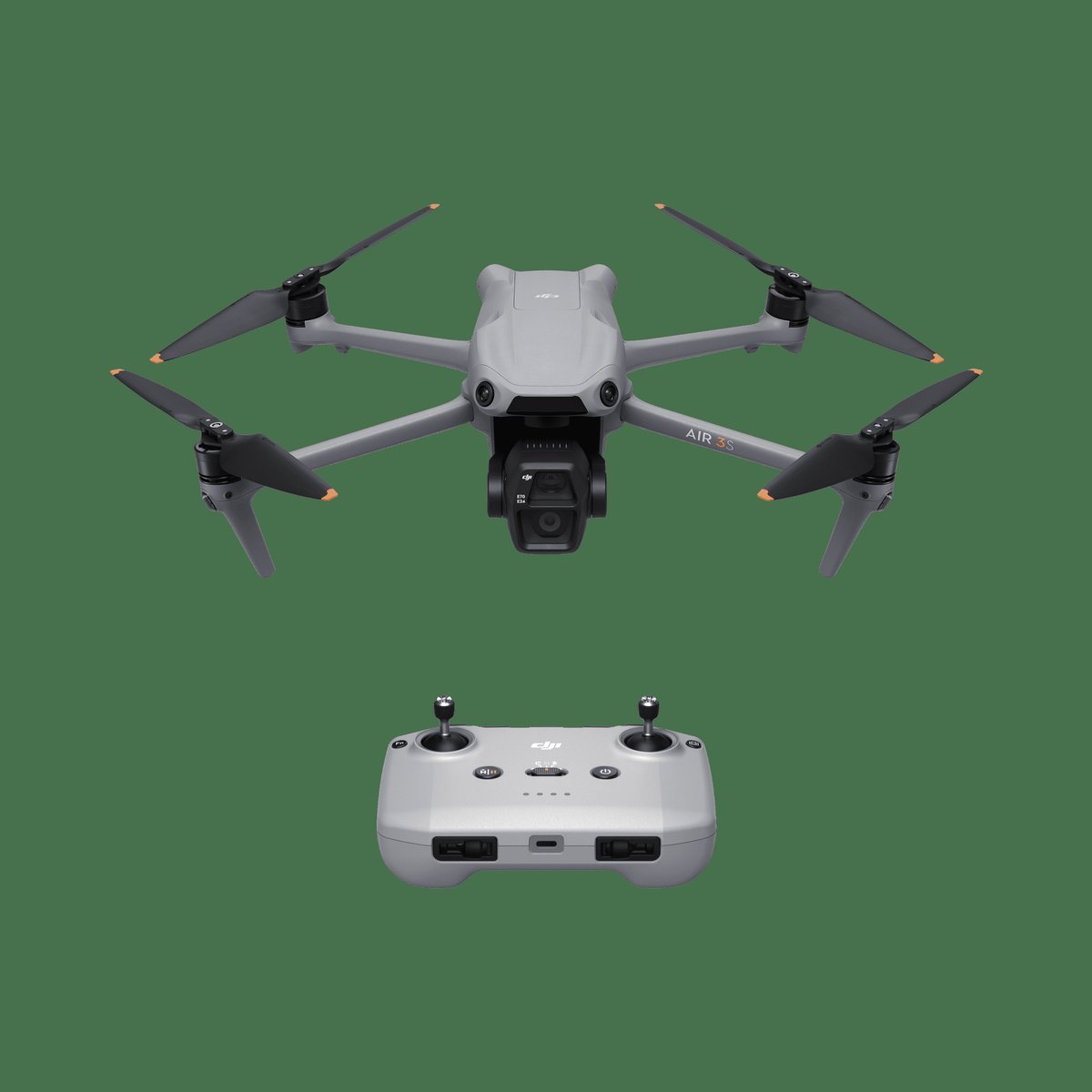

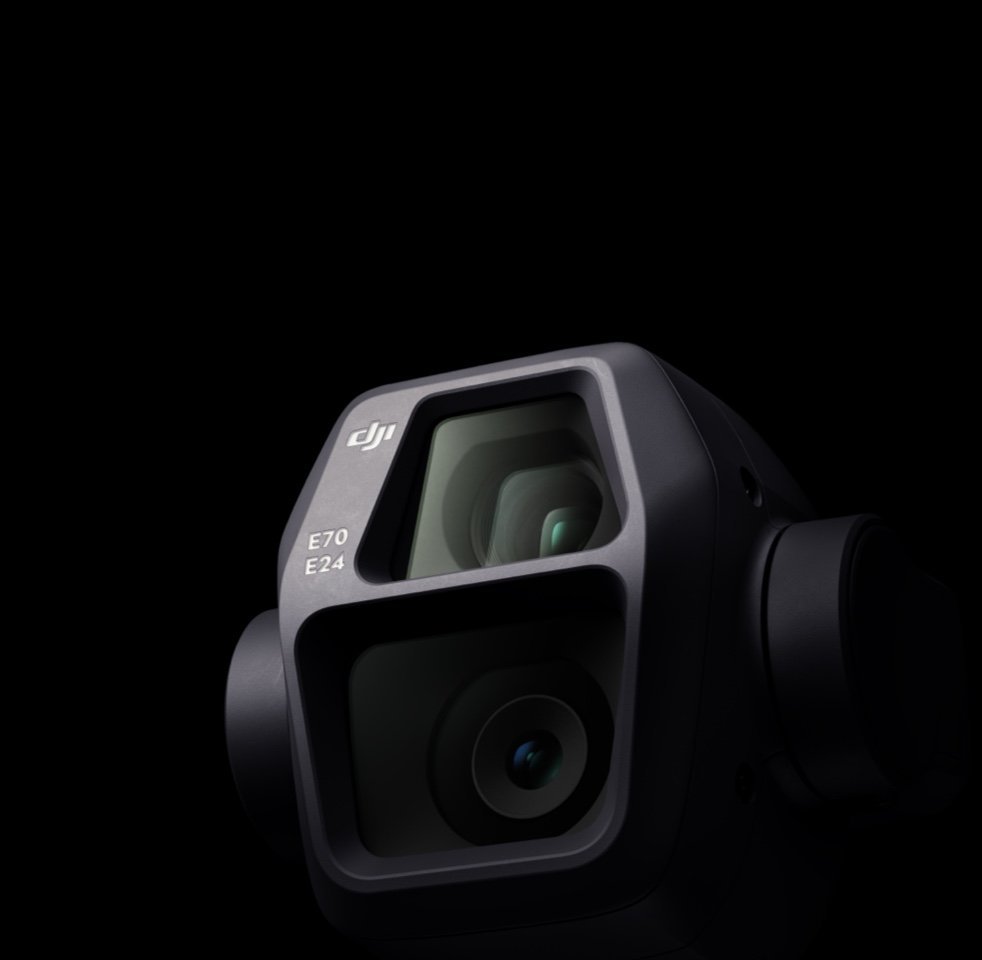
DJI Air 3S
The top spot: two genuinely useful focal lengths in one drone, a 1-inch 50 MP main camera plus a 48 MP 70 mm telephoto, with 4K/60 HDR video, 10-bit D-Log M, omnidirectional sensing, and ActiveTrack 360.
- Two focal lengths in one drone: 24 mm wide plus 70 mm telephoto for detail and compression
- 1-inch sensor with 14 stops of dynamic range for cleaner low-light footage
- Omnidirectional sensing and ActiveTrack 360 for confident flying and tracking
- 724 g means registration and Remote ID in the US, plus stricter rules abroad
- Real flight time is closer to 30 minutes than the 45-minute paper figure
- US availability is constrained: some variants show out of stock and supply depends on inventory while it lasts
- Camera: 1-inch 50 MP main + 48 MP 70 mm telephoto
- Video: 4K/60 HDR, 10-bit D-Log M
- Weight: 724 g
- Flight: 45 min on paper, about 30 min real
- Sensing: Omnidirectional
- Transmission: O4, 20 km open conditions
Best for: Most buyers who want the best image quality short of a professional budget
2. DJI Mini 4 Pro: Best Sub-250 g
The Mini 4 Pro is the most capable sub-250 g drone DJI has made, and the weight class is the whole point. Under 249 g with the standard battery, it escapes recreational registration in the US, packs into a jacket pocket, and still carries a 48 MP camera with 4K/60 HDR video, True Vertical Shooting for social video without cropping, omnidirectional sensing, and ActiveTrack 360. The O4 transmission system matches the bigger DJI models at 20 km in open conditions, so you give up very little range for the size.
Flight time is 34 minutes on the standard battery and 45 minutes with the optional Plus battery, and the usual paper-versus-real gap applies: expect roughly two thirds of either figure in wind. The smaller 1/1.3-inch sensor is the real compromise. In good light the footage is close to the Air 3S, but at dusk and indoors it gets noisier sooner, and the light body gets pushed around more in strong wind. Treat it as a fair-weather traveller, not an all-conditions workhorse.
Who should skip it: anyone who needs the cleanest low-light footage or flies regularly in coastal wind. Everyone else gets the easiest DJI here to own, travel with, and fly legally, and the standard RC-N2 configuration in this guide is the one to buy: it keeps the price down and the phone you already own becomes the screen.
Best for: travellers, beginners, and anyone who wants the lightest capable DJI. Watch out for: dusk noise from the smaller sensor, wind push on a light body, and the recreational-only scope of the sub-250 g exemption.


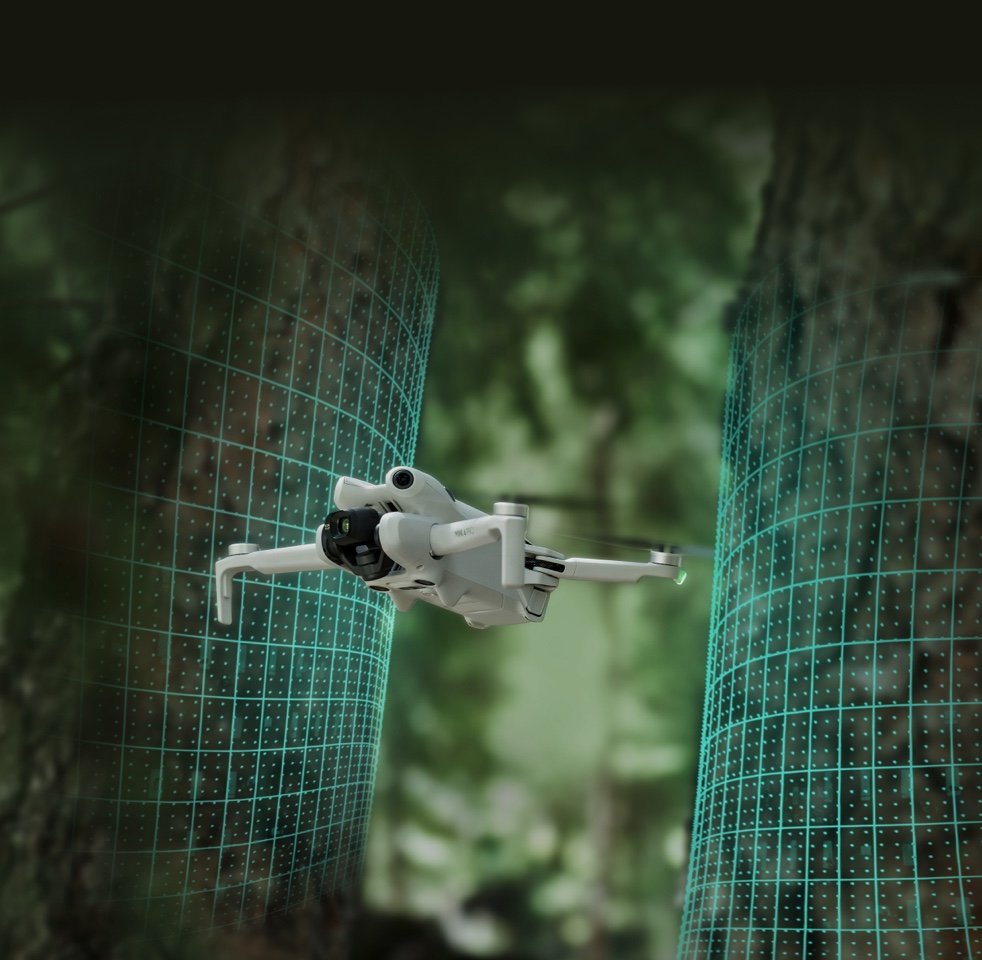
DJI Mini 4 Pro
The lightest capable DJI: a 48 MP camera, 4K/60 HDR video, True Vertical Shooting, omnidirectional sensing, and ActiveTrack 360 in a body under 249 g with the standard battery.
- Full-featured camera and sensing in a sub-250 g body
- True Vertical Shooting for social video without cropping
- Easiest DJI here to travel with and fly recreationally
- Smaller sensor than the Air 3S, so dusk and indoor footage is noisier
- Light body gets pushed around more in strong wind
- The sub-250 g exemption is recreational only: commercial flying still needs Part 107 and registration
- Camera: 48 MP, 1/1.3-inch sensor
- Video: 4K/60 HDR, True Vertical Shooting
- Weight: Under 249 g (standard battery)
- Flight: 34 min standard battery, 45 min Plus battery
- Sensing: Omnidirectional
- Transmission: O4, 20 km open conditions
Best for: Travellers, beginners, and anyone who wants the lightest capable DJI
3. Potensic Atom 2: Best Non-DJI
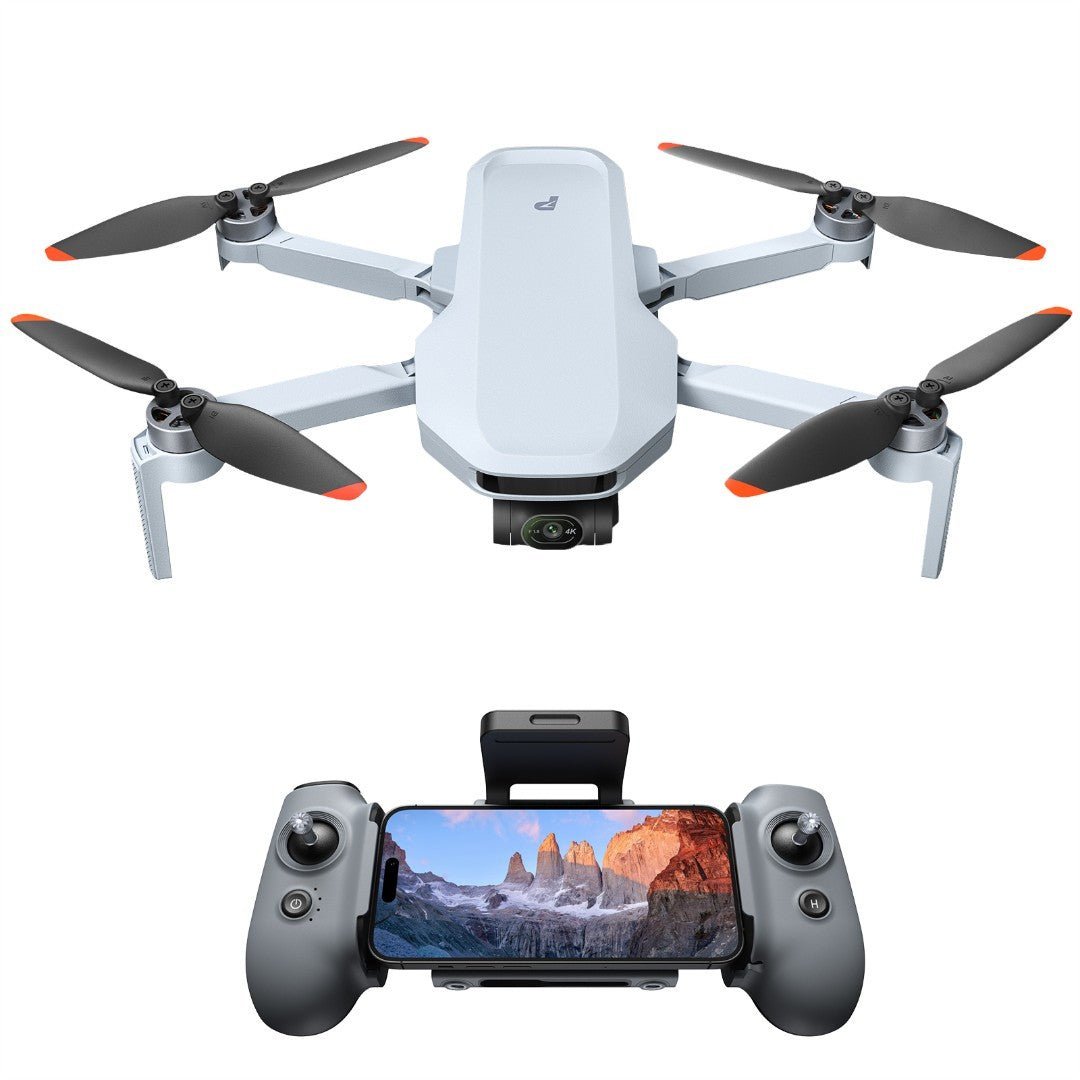
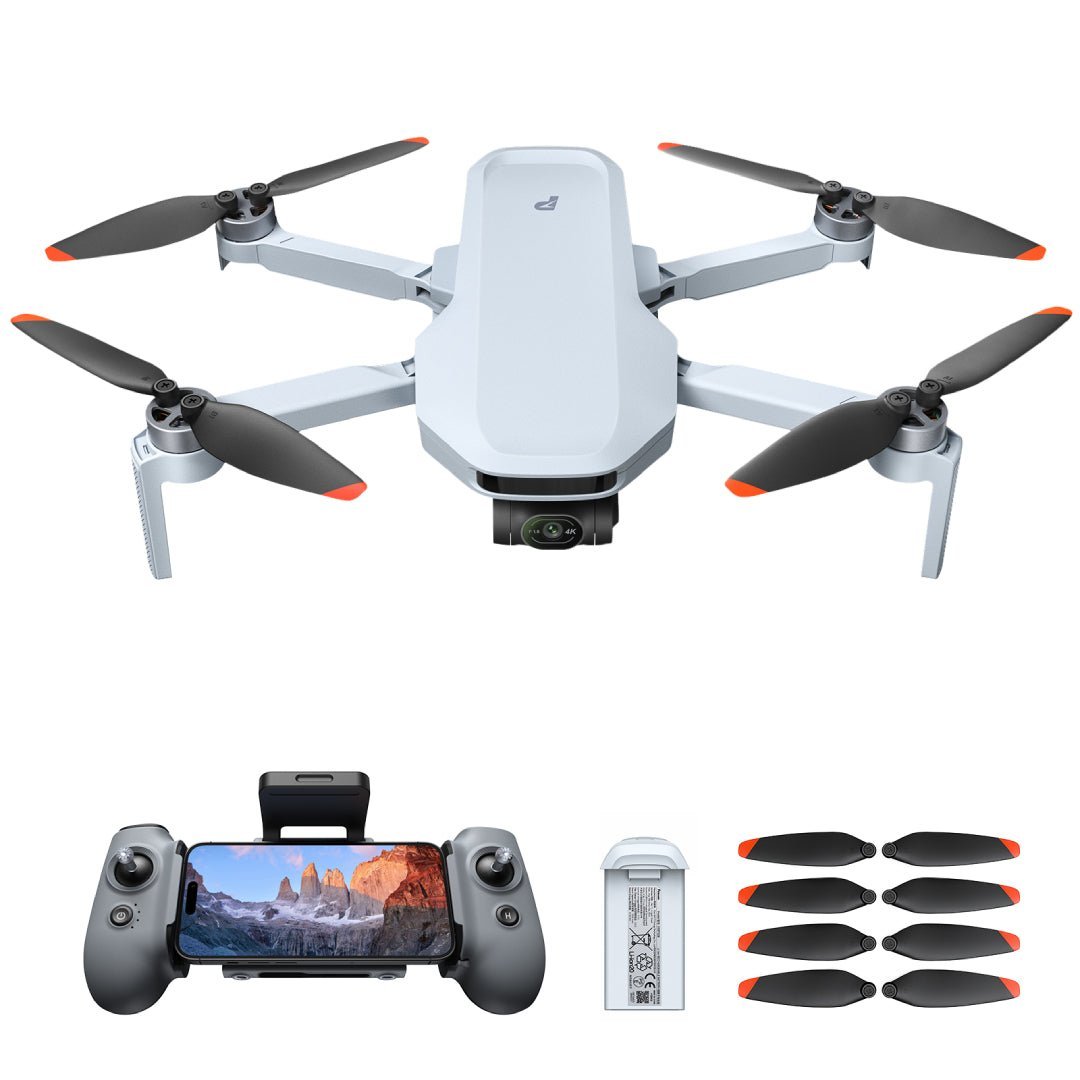
The Atom 2 matters because it is a real alternative, not a token. Its 1/2-inch Sony sensor shoots 48 MP stills, 4K/30 HDR video, and 8K photos, mounted on a 3-axis gimbal, in a 245 g body that flies 32 minutes on the standard battery. PixSync 4.0 transmission reaches 10 km in open conditions, and the software covers the use cases most buyers actually want: AI Track with Spotlight, Follow, and Parallel modes, vertical shooting, QuickShots, Dolly Zoom, and AI Night mode. The Standard Kit in this guide is the single-battery kit with the phone-mount controller, and it is the configuration to buy first.
The honest limitation is obstacle avoidance: there is none. Every DJI in this guide senses obstacles in at least some directions, and the Atom 2 senses nothing, so you fly it with the care that deserves. Video also tops out at 4K/30, with no 4K/60 option, and the accessory and support ecosystem is smaller than DJI's, with long-term firmware support less certain. The Fly More Combo adds two extra batteries and a parallel charging hub if you want longer sessions, but start with the Standard Kit and learn the drone first.
Who should buy it: anyone who wants a capable camera drone without buying into DJI, and anyone who flies mostly in open country where the missing sensors matter least. Who should skip it: beginners who will fly near trees, walls, and water, where the DJI sensing net earns its money.
Best for: buyers who want a capable camera drone without buying into DJI. Watch out for: zero obstacle avoidance, the 4K/30 video ceiling, and a smaller support ecosystem than DJI.
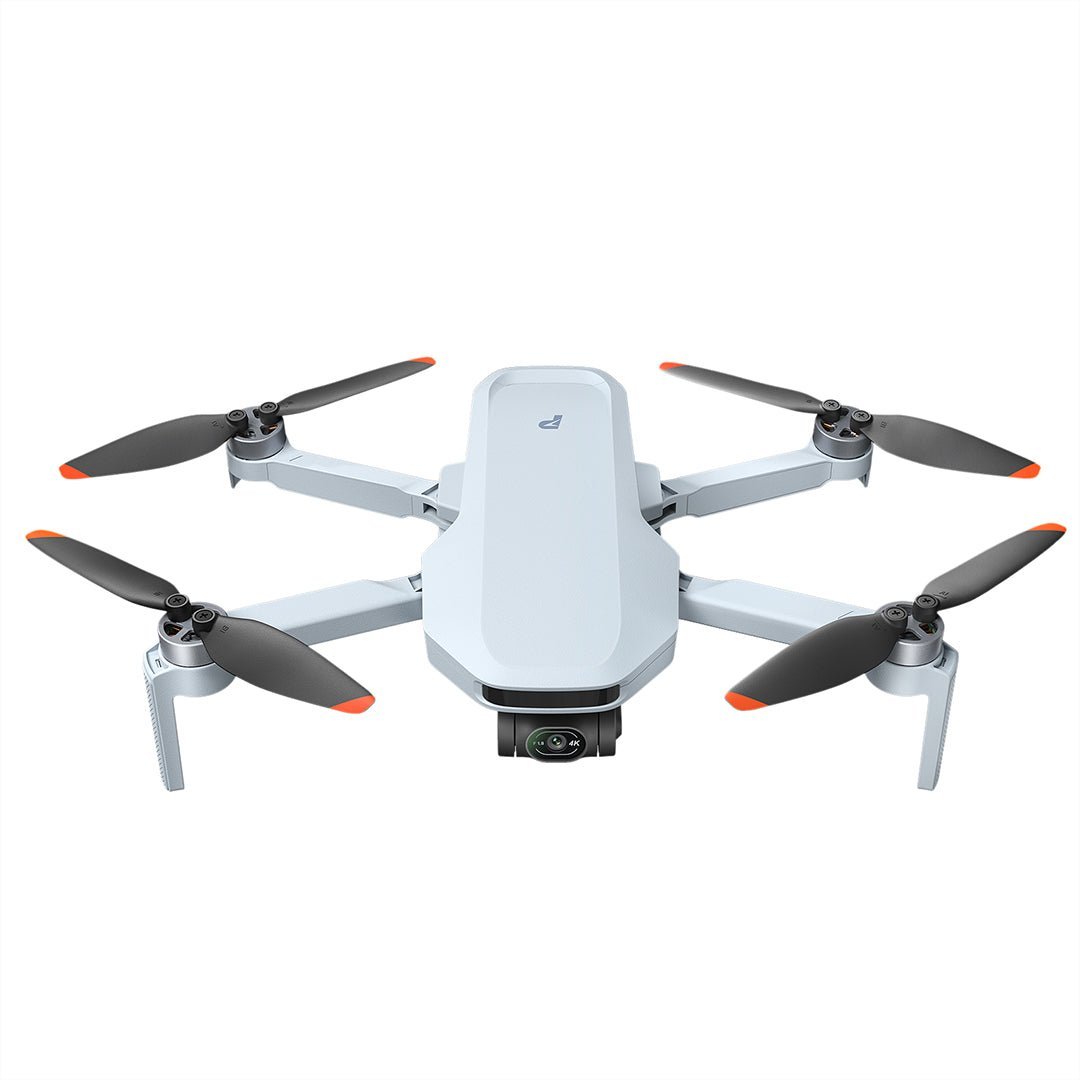
Potensic Atom 2
The only verified non-DJI pick: a 1/2-inch Sony sensor, 4K HDR video, 8K photos, and a 3-axis gimbal in a 245 g body, with AI tracking and vertical shooting included.
- A real alternative, not a token: capable camera and gimbal outside the DJI ecosystem
- 8K photos and 4K HDR from a Sony sensor at a midrange price
- AI tracking, vertical shooting, and QuickShots cover travel and social use
- No obstacle avoidance at all: nothing saves it from a branch
- Video tops out at 4K/30, with no 4K/60 option
- Smaller accessory and support ecosystem than DJI, and long-term firmware support is less certain
- Camera: 48 MP Sony 1/2-inch sensor
- Video: 4K/30 HDR, 8K photo
- Weight: 245 g
- Flight: 32 min (Standard Kit)
- Gimbal: 3-axis mechanical
- Transmission: PixSync 4.0, 10 km open conditions
Best for: Buyers who want a capable camera drone without buying into DJI
4. DJI Mavic 4 Pro: Best Professional
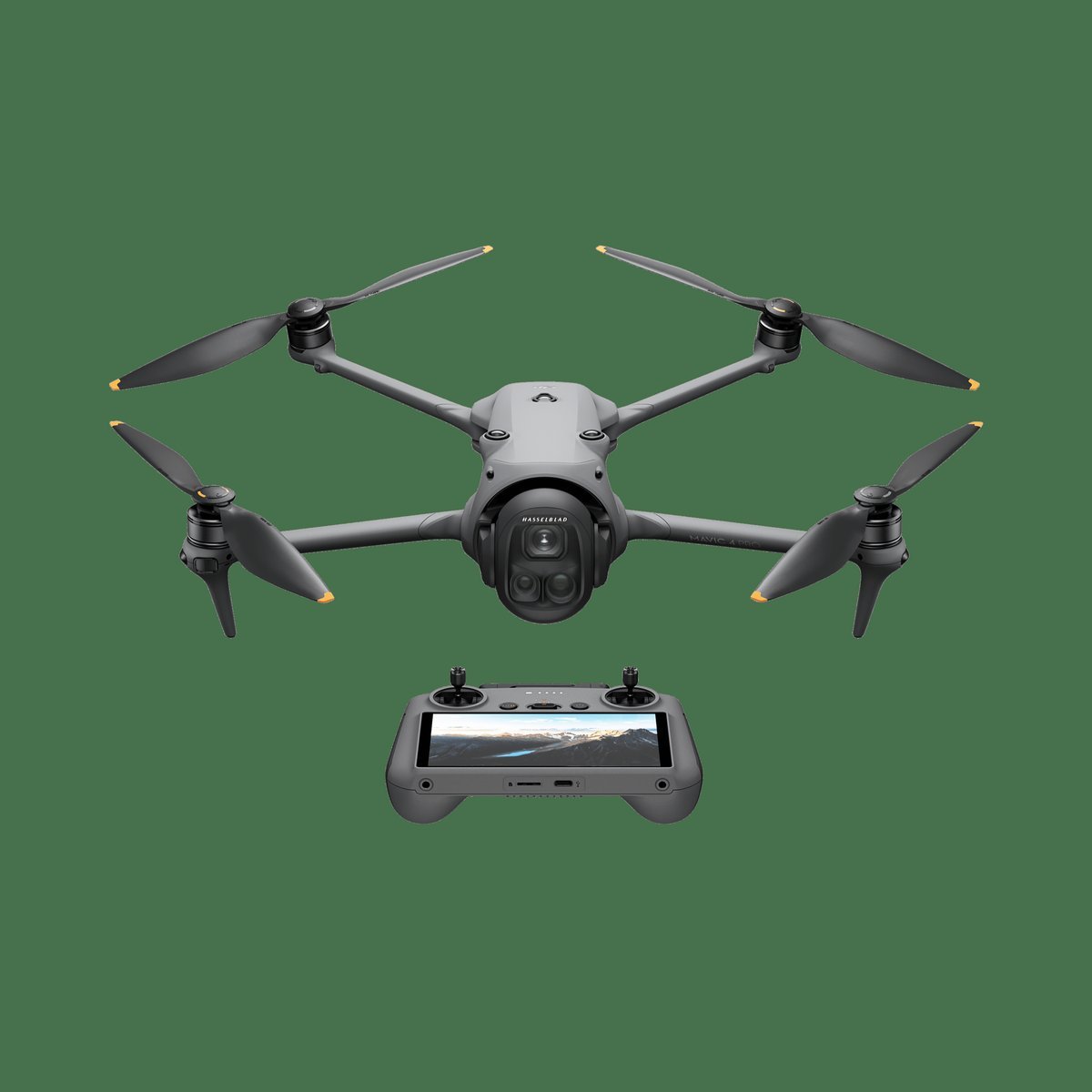
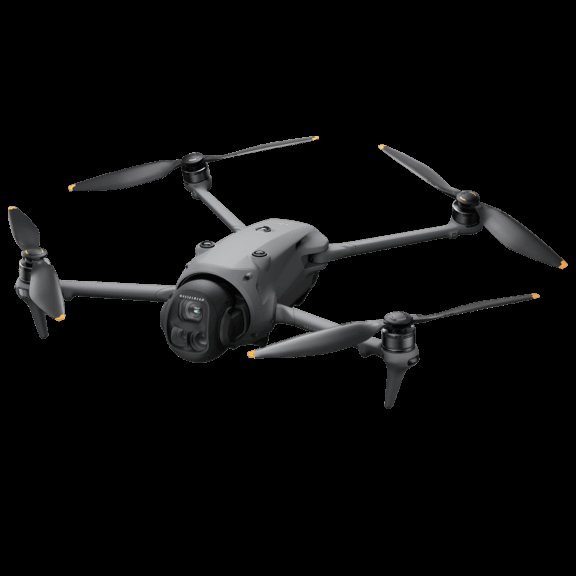
The Mavic 4 Pro is not a better Air 3S. It is a different class of machine, and the triple-camera system is why. The 28 mm Hasselblad main camera uses a 4/3 sensor at 100 MP with 6K/60 HDR video and an adjustable f/2.0 to f/11 aperture, the 70 mm medium tele camera shoots 48 MP, and the 168 mm tele camera shoots 50 MP, so a professional can cover wide, portrait, and compressed detail without landing. The Infinity Gimbal rotates a full 360 degrees, including 70 degrees upward, which opens angles no other drone here can reach, and 64 GB of internal storage in the standard kit means a forgotten memory card does not end the shoot.
Flight time is 51 minutes on paper, the longest here, and O4+ transmission reaches 30 km in open conditions. The price of all this is weight and money: 1,063 g means registration, Remote ID, and the strictest rules wherever you fly, and the standard RC 2 kit costs about twice the Air 3S. The gains are real but specific: if your deliverable is a client video or a large print, the Hasselblad sensor and the three focal lengths justify it. If your deliverable is a phone screen, they mostly will not.
Buy it while authorised inventory exists. Like every DJI here, the Mavic 4 Pro was authorised before the December 2025 Covered List cutoff and remains legal to buy, own, and fly in the US, but future supply depends on inventory while it lasts, so check current listings rather than assuming it stays available.
Best for: professional and serious enthusiast work where image quality justifies the weight and price. Watch out for: the 1,063 g weight class, the travel bulk, and a flagship price for gains most hobbyists will not see on a phone screen.

DJI Mavic 4 Pro
The professional pick: a triple-camera system led by a 100 MP Hasselblad camera, 6K/60 HDR video, a 360-degree Infinity Gimbal, and the longest flight time here.
- The best image quality in this guide by a clear margin
- Three focal lengths without landing to swap lenses
- Longest flight time here, 51 minutes on paper
- 1,063 g means registration, Remote ID, and the strictest rules wherever you fly
- Big and heavy to travel with: a backpack commitment, not a jacket-pocket drone
- Flagship price, about twice the Air 3S, for gains most hobbyists will not see on a phone screen
- Camera: Triple: 100 MP Hasselblad 28 mm + 48 MP 70 mm + 50 MP 168 mm
- Video: 6K/60 HDR
- Weight: 1,063 g
- Flight: 51 min on paper
- Gimbal: Infinity Gimbal, 360-degree rotation
- Transmission: O4+, 30 km open conditions
Best for: Professional and serious enthusiast work where image quality justifies the weight and price
5. HOVERAir X1 Pro: Best Self-Flying
The X1 Pro is the only pick here that is not really a drone you fly. It is a flying camera that films you. It launches from your palm, follows a flight mode you select before launch, and tracks you at up to 42 km/h with AI tracking, so a solo cyclist, runner, or traveller gets moving footage of themselves with no pilot and no controller. The camera shoots 4K/60 video and 12 MP stills with a 104-degree field of view, steadied by a 2-axis gimbal plus electronic stabilisation, and the whole thing folds down to 191.5 g with the battery.
The trade is flight time and control. About 16 minutes per battery is the shortest flight time in this guide, so a day of filming needs spare batteries and a charging plan. There is no real manual piloting to speak of: if you want to fly for the joy of flying, buy a DJI. And the small, light body has limited wind tolerance compared with the DJI picks, so save it for fair weather. What it does, it does better than any conventional drone: it puts you in the shot, alone, with no crew.
Buy the Standard configuration in this guide, not the PROMAX. The PROMAX is a different camera with a larger sensor and 8K video, and its photos and price belong to that model, not this one. The X1 Pro's own strengths are portability, simplicity, and tracking, and they are enough on their own.
Best for: solo athletes and travellers who want themselves in the shot without a pilot. Watch out for: the short flight time, the absence of real manual piloting, and limited wind tolerance.
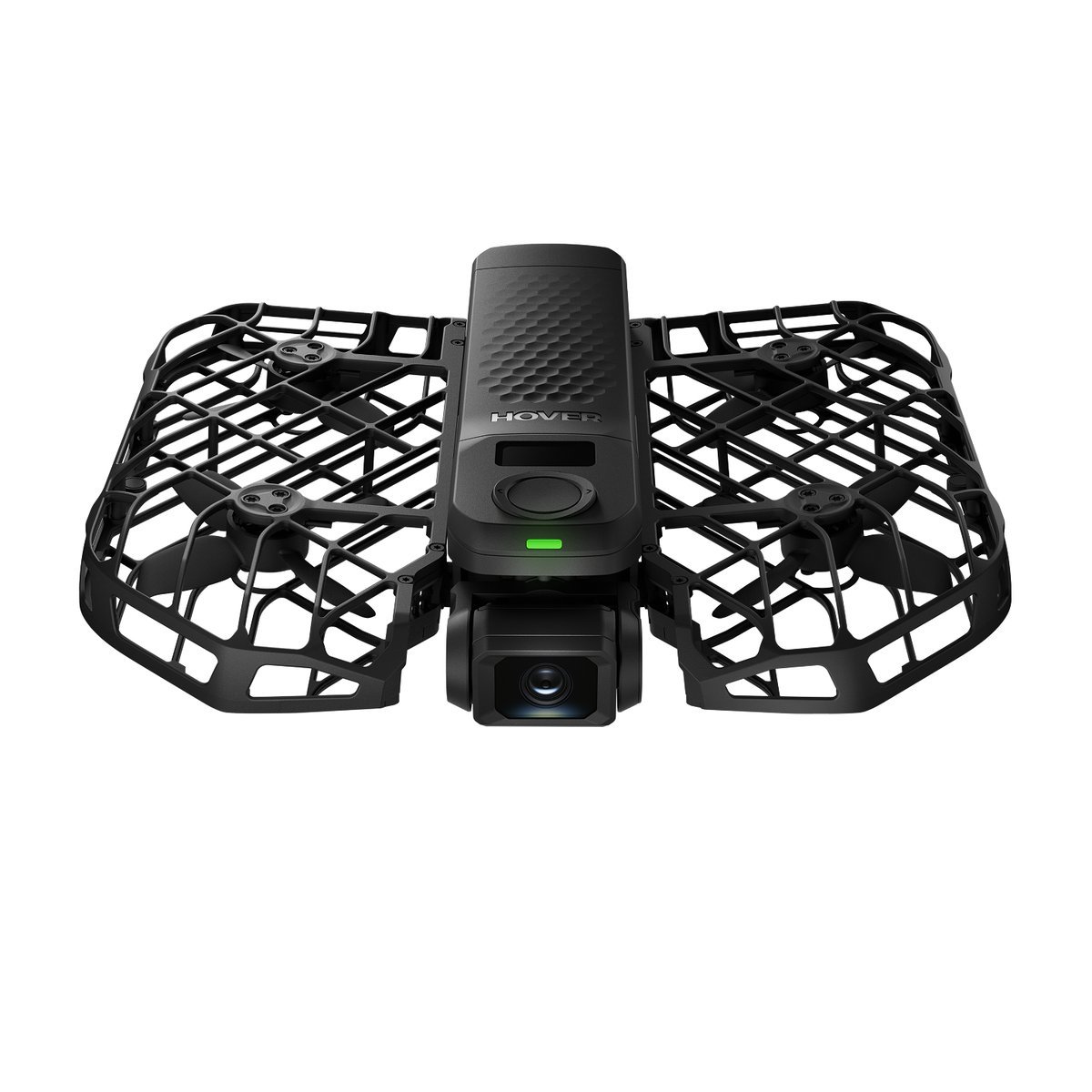
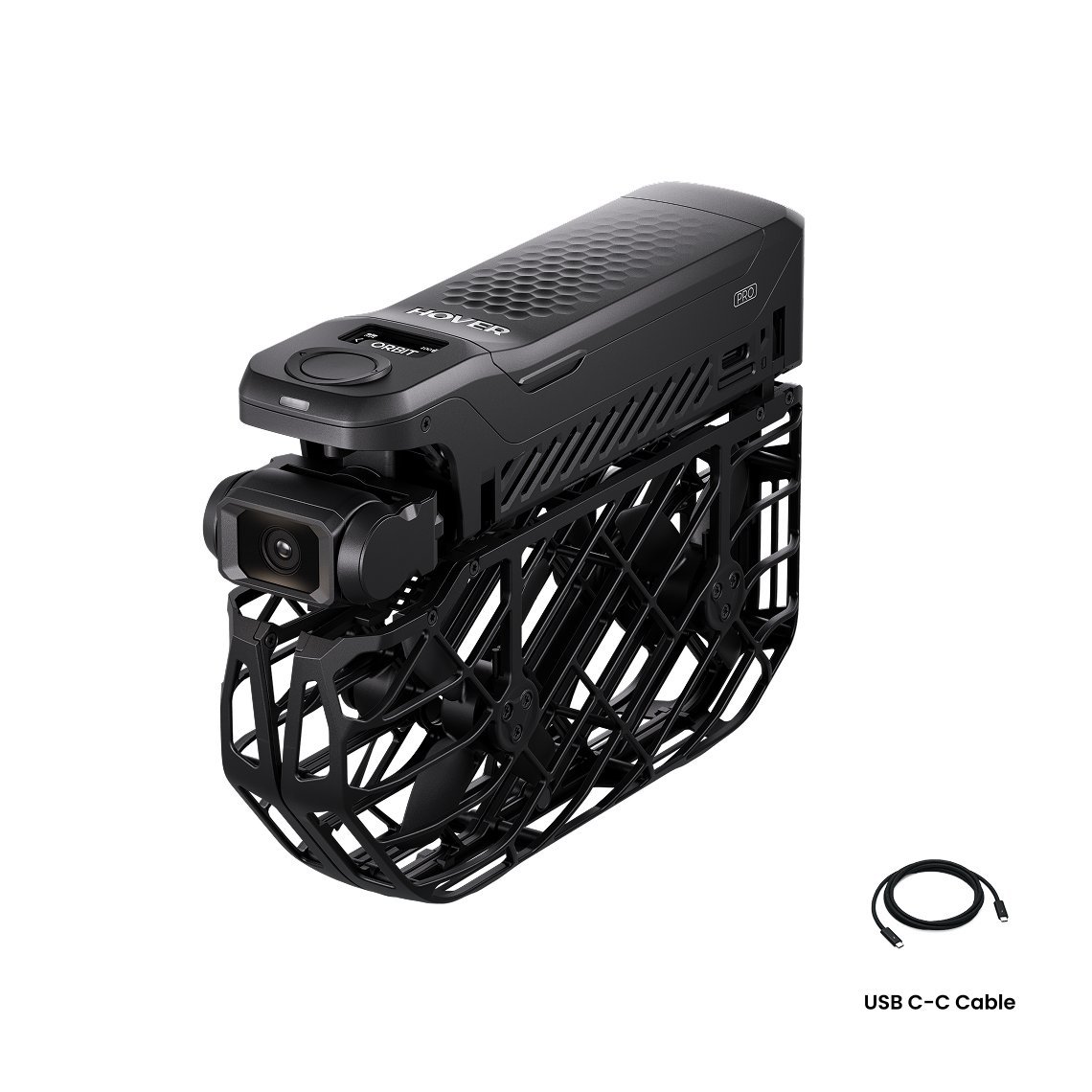
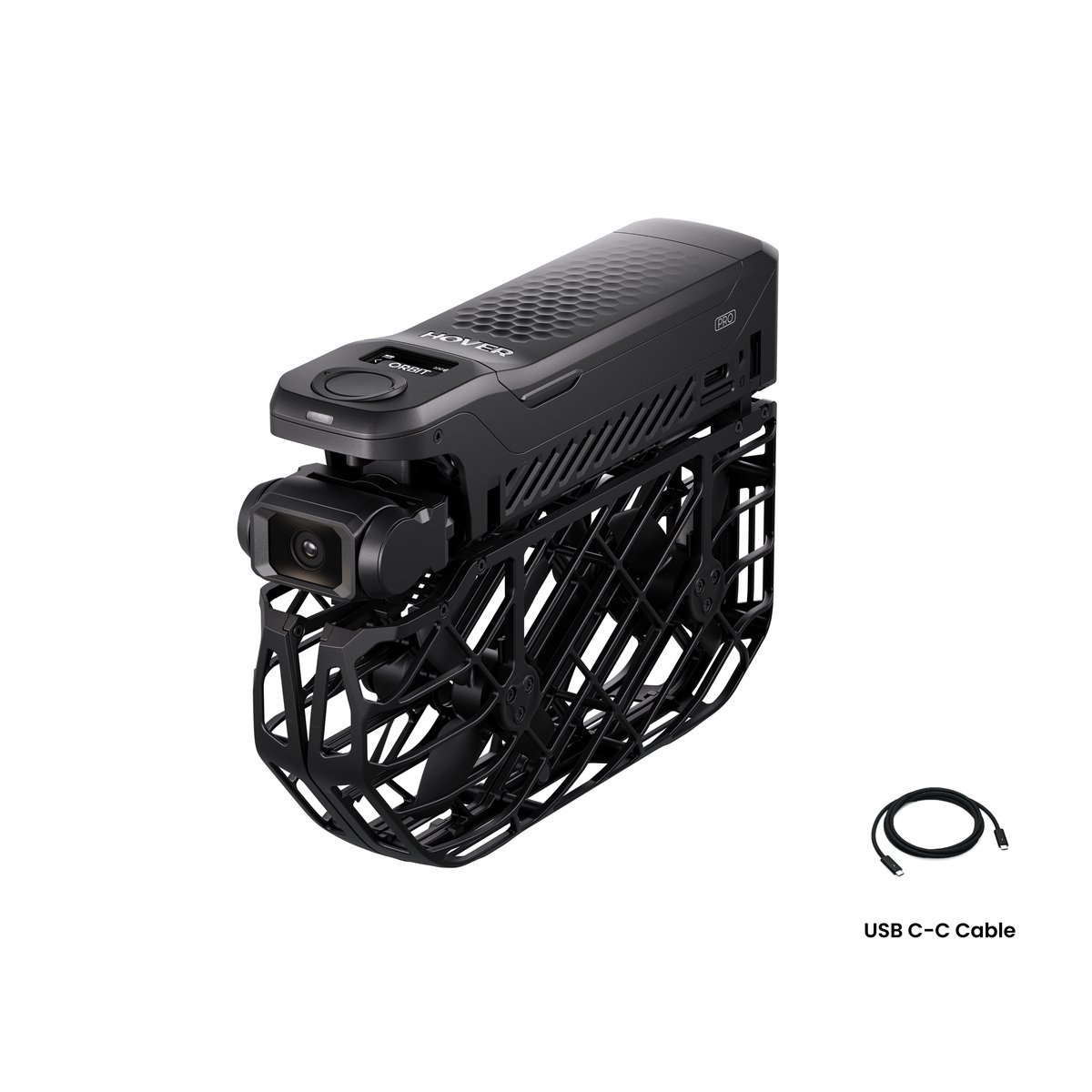
HOVERAir X1 Pro
The self-flying pick: a palm-launched tracking camera with 4K/60 video, AI tracking to 42 km/h, and 15-plus flight modes, folding down to 191.5 g.
- Films you with no controller and no piloting skill needed
- Folds small and weighs 191.5 g: the most portable pick here
- Tracking to 42 km/h covers cycling, running, and most action sports
- About 16 minutes per battery, the shortest flight time here
- No real manual piloting: it is a tracking camera, not a drone you fly for fun
- Small body and light weight mean wind tolerance is limited compared with the DJI picks
- Camera: 12 MP, 104-degree field of view
- Video: 4K/60
- Weight: 191.5 g with battery
- Flight: About 16 min
- Gimbal: 2-axis plus electronic stabilisation
- Tracking: AI tracking to 42 km/h, 15-plus flight modes
Best for: Solo athletes and travellers who want themselves in the shot without a pilot
Buying Guide: How to Choose a Camera Drone
1. Camera first: sensor size beats megapixels
A 1-inch sensor at 50 MP beats a 1/2-inch sensor at 48 MP in low light, because each pixel gathers more light. Megapixels matter for cropping and large prints, not for clean footage. Video resolution matters too, but frame rate matters more for action: 4K/60 looks smoother than 4K/30 for anything moving, and 10-bit colour with a log profile matters if you grade footage. A second focal length, like the Air 3S telephoto or the Mavic 4 Pro triple system, is worth more than a resolution bump, because it changes what you can frame.
2. The gimbal is not optional
Every drone in this guide except the X1 Pro carries a mechanical 3-axis gimbal, and that is the floor for usable footage. The X1 Pro uses a 2-axis gimbal plus electronic stabilisation, which suits its tracking-camera role, where the subject moves slowly and the drone hovers close. Avoid any camera drone that relies on electronic stabilisation alone or has no gimbal at all: the footage will shake, and no software fully fixes it. Also avoid single-axis gimbals, which steady tilt only and leave pan and roll to wobble.
3. Weight decides the paperwork
In the US, drones under 250 g flown recreationally need no FAA registration, while anything at or over 250 g needs registration and Remote ID broadcast. Commercial flying needs a Part 107 certificate whatever the weight, and registration with it. Other countries set their own thresholds, and some require registration for every drone, so check the rules where you will actually fly, not just where you buy. Battery choice can change the takeoff weight, so verify the configuration you actually fly, not just the headline weight.
4. Flight time, honestly
Paper flight times assume hovering in still air until the battery is empty. Real flying with wind, climbing, and manoeuvring returns roughly two thirds of the paper figure, and cold weather cuts it further. Treat the paper number as a ceiling, not a plan: a 45-minute drone gives you about 30 minutes of useful flying, and a 16-minute drone gives you about 11. Carry at least one spare battery for any serious outing, and land at 20 percent remaining, not at zero.
5. DJI in the US in 2026: what actually changed
On December 22, 2025, the FCC added foreign-produced drones and critical components to its Covered List. That blocks new equipment authorisations for new foreign-made models. It does not ground, ban, or confiscate drones that were already authorised, and the FCC's own guidance says already-authorised equipment can still be bought, sold, and flown. All three DJI picks in this guide were authorised before the cutoff and remain legal to buy, own, and fly in the US.
What did change is availability. New DJI models cannot get US authorisation while the listing stands, so future supply depends on inventory of already-authorised models while it lasts, and DJI's own store already lists some variants out of stock. A later FCC proposal would restrict sales of foreign drones in certain capability categories, but it is only a proposal: no final order exists and no sales stop date has been set. The practical advice is simple: check current listings rather than assuming a model stays available, and buy the authorised configuration while it is in stock if you have decided.
6. Transmission and range: paper versus law
The 20 km and 30 km transmission figures in this guide are open-area maxima with no interference. Real range is shorter in cities, near Wi-Fi networks, and behind trees or hills. More importantly, the law limits you further: in the US and most other countries you must keep the drone in visual line of sight, which for a sub-250 g drone is a few hundred metres, not kilometres. Buy transmission strength for link reliability at normal distances, not for flying kilometres away.
7. What to skip
Skip toy-grade drones with no gimbal and Wi-Fi video: the footage is unusable and the controls frustrate beginners more than a proper drone does. Skip no-name brands with no spare parts or support channel: a broken propeller two months in should be a five-minute fix, not a dead drone. Skip FPV kits if your goal is camera work: they are a different hobby with different skills, and a camera drone will serve you better. And skip any listing that cannot name its exact configuration: a drone sold without a clear model, controller, and battery is a bundle lottery, not a purchase.
8. Picking by use
Beginners should start with the Mini 4 Pro or the Atom 2: both are light, forgiving in price, and capable enough to grow into. Travellers should pick the Mini 4 Pro for the lightest capable DJI, or the X1 Pro when the subject is themselves. Serious photographers should pick the Air 3S for the best balance of sensor, lenses, and price. Professionals should pick the Mavic 4 Pro and accept the weight and paperwork. Self-filmed action belongs to the X1 Pro alone: no conventional drone films you this easily. No dedicated beginner pick survived verification, so beginners are covered by the Mini 4 Pro and the Atom 2 rather than by a separate model.
Types of Camera Drones Explained
Sub-250 g drones, here the Mini 4 Pro and the Atom 2, trade sensor size and wind tolerance for the lightest regulation and the smallest bag. They are the travel and beginner class, and the right default for most first buyers. Mid-size drones, here the Air 3S, balance a large sensor, a second lens, and a manageable weight: the sweet spot for enthusiasts. Professional drones, here the Mavic 4 Pro, carry the biggest sensors and multiple lenses at 1 kg and up, with the registration and cost that go with them. Self-flying cameras, here the X1 Pro, drop the controller entirely and trade piloting for autonomy: a different product that happens to fly. FPV drones, with goggles and manual controls, are a separate hobby for acrobatic flying and are not covered here, because their cameras and skills serve racing, not photography.
Head-to-Head: Air 3S vs Mini 4 Pro
The choice between the top two DJI picks comes down to weight against image quality. The Air 3S gives you a 1-inch sensor, a second telephoto lens, and better low-light footage, at 724 g with registration duties. The Mini 4 Pro gives you the same 4K/60 HDR video, the same omnidirectional sensing, and the same tracking, at under 249 g with no recreational registration. If you fly mostly in good light and travel often, the Mini 4 Pro is the smarter buy. If you shoot at dawn, dusk, or indoors, or you want the telephoto lens, the Air 3S earns its weight.
When to Step Up to the Mavic 4 Pro
Step up when the Air 3S limits your work, not before. The Mavic 4 Pro adds a 100 MP Hasselblad main camera, two more lenses, six more minutes of paper flight time, and a 360-degree gimbal, at about 340 g more weight and about twice the money. That trade is right for paid work, large prints, and commercial video. It is wrong for hobby flying, where the Air 3S already exceeds what a phone screen shows. Buy the Mavic 4 Pro for the deliverable, not for the spec sheet.
Claims Worth a Second Look
An 8K drone for very little money usually means 8K photos, not 8K video, or a small sensor with heavy processing: check whether the 8K figure is video or stills, and which sensor produces it. A 60-minute flight time claim usually assumes hovering in still air with no camera load: plan on two thirds of any paper figure. Obstacle avoidance does not mean crash-proof: sensing is assistance, not autopilot, and it misses thin branches, wires, and glass, while the Atom 2 has no sensing at all. And DJI is not banned in the US: the Covered List blocks new authorisations, while already-authorised models remain legal to buy, own, and fly, as explained in the buying guide.
Mistakes to Avoid
- Flying without checking registration: anything at or over 250 g needs FAA registration and Remote ID in the US, and commercial flying needs Part 107 whatever the weight.
- Skipping the pre-flight check: propellers seated, battery charged, compass calibrated, home point set, and firmware current, every flight.
- Trusting the paper flight time: plan on two thirds of it and land at 20 percent remaining.
- Believing DJI is banned: already-authorised models remain legal to buy, own, and fly in the US; only new authorisations are blocked.
- Buying the wrong bundle: confirm the exact controller and battery in the listing, because Fly More and standard kits differ in price and contents.
- Flying in wind beyond the drone's rating: light drones get pushed into obstacles fast, and gusts exceed the headline wind rating.
- Ignoring local rules abroad: weight thresholds, registration, and no-fly zones vary by country, and a US-legal flight can be illegal elsewhere.
Frequently Asked Questions
For recreational flying, drones under 250 g need no FAA registration, while drones at or over 250 g need registration and Remote ID broadcast. Commercial flying needs a Part 107 certificate and registration whatever the weight. Registration for recreational flyers covers all your drones under one number and costs 5 dollars for three years. Check the FAA's current rules before your first flight, because thresholds and Remote ID duties change.
Yes, with rules. Carry batteries in hand luggage, never in checked bags, and tape or cover the terminals. Most airlines cap spare lithium batteries at 100 watt-hours each without approval, which covers every battery in this guide, but check your airline's policy before you fly. Pack the drone itself in hand luggage too: checked bags get thrown, and gimbals do not enjoy it.
The DJI Mini 4 Pro is the best beginner pick here: GPS positioning, return to home, omnidirectional sensing, and a capable camera in a sub-250 g body. The Potensic Atom 2 is the non-DJI alternative, with the caveat that it has no obstacle sensing, so beginners should fly it in open space. Both hold position with GPS, return home on signal loss or low battery, and shoot stabilised 4K video from the first flight.
The O4 system is rated to 20 km in open conditions with no interference, but that is a laboratory maximum, not a flying plan. In practice you are limited by visual line of sight, which for a small drone is a few hundred metres, and by interference in built-up areas. Expect a rock-solid link at normal distances and do not plan flights around the headline range.
It adds two extra batteries and a parallel charging hub over the Standard Kit, which matters if you fly full sessions rather than short outings. The Standard Kit is the right first buy: learn the drone, then add batteries if you keep running out. The Fly More Combo does not add obstacle sensing or a better camera, so it extends sessions without changing what the drone can do.
Because five is the honest count. Two draft picks were cut during verification: one could not be confirmed in two independent sources, and the other had no qualifying source for its exact configuration at all. Recommending them anyway would mean asking you to buy a configuration we could not verify. Five verified drones serve every use case in this guide, from travel to professional work, so nothing is missing except unverified claims.
No. The FCC's December 2025 Covered List action blocks new equipment authorisations for foreign-made drones, which stops new models reaching the US market. It does not ban, ground, or confiscate already-authorised models, and the FCC's own guidance says those models can still be bought, sold, and flown. All three DJI picks here were authorised before the cutoff. A later FCC proposal on certain capability categories has no final order and no sales stop date, so availability, not legality, is the practical question.
Only with caution. The Mavic Air 2 is a capable older drone, but used drones carry battery wear, crash history you cannot see, and no warranty, and its camera and sensing lag the picks here. If the price is very low and you can inspect it flying first, it can be a fair starter. Otherwise the Mini 4 Pro gives you a new drone, a warranty, and better sensing for a comparable outlay once batteries are counted.
Final Recommendations
Best Overall: DJI Air 3S, the best camera drone for most people
Best Sub-250 g: DJI Mini 4 Pro, the lightest capable DJI
Best Non-DJI: Potensic Atom 2, the verified alternative
Best Professional: DJI Mavic 4 Pro, triple cameras for paid work
Best Self-Flying: HOVERAir X1 Pro, palm-launched tracking with no pilot
Final Verdict
Buy the DJI Air 3S if you want the best camera drone for most people, the Mini 4 Pro if you want to stay under 250 g, the Atom 2 if you want out of the DJI ecosystem, the Mavic 4 Pro if you shoot paid work, and the X1 Pro if your subject is yourself. Five picks, each verified to the exact configuration named, each photographed as itself, and each honest about what it cannot do. That is the whole guide, and it is enough: a shorter verified list beats a longer hopeful one every time.
Two cautions before you buy. First, check current availability for the DJI picks: authorised models remain legal in the US, but supply depends on inventory while it lasts, and some variants already show out of stock. Second, check the rules where you will fly, not just where you buy: weight thresholds, registration, and no-fly zones vary, and the drone is only legal where its pilot flies it legally.