
Black-and-white night vision hides the details that matter at 2 a.m.: the color of a car, the color of a jacket, the difference between a shadow and a person. Color night vision fixes that, but only if you buy the right kind. Some "color night vision" is just a spotlight camera that floods your yard with light; some is a genuinely sensitive sensor that sees color by streetlight; and some switches back to black-and-white the moment light drops below a threshold buried in a footnote.
This guide compares two security cameras with real color night vision: a long-life battery camera, and a plug-in camera built for continuous recording. Inside: a direct answer, quick picks, a comparison table, detailed verdicts, a buying guide that explains how the technology actually works, product types, comparisons, common mistakes, FAQs, and a final verdict.
What this guide does not do: no instructions for covert surveillance of other people, no advice on recording audio without consent, nothing that facilitates wrongdoing. These are visible security cameras for lawful use on your own property.
The Short Answer: Best Color Night Vision Security Camera 2026
Buy the Arlo Essential XL (2nd Gen, 2K) if you want to forget about charging. Its 18,600 mAh battery is roughly four times the capacity of the standard model, and it pairs that with 2K color night vision and a built-in spotlight.
Buy the Reolink CX410W if you want 24/7 color night vision from a camera that never sleeps. It's a plug-in powered 2K ColorX camera with a neighbor-friendly warm light, built for continuous recording rather than battery sipping.
At a Glance: Quick Picks
Quick Picks
Short on time? These are our top recommendations: each button takes you to the exact product on Amazon.
Comparison Table
| Product | Key Specs | Best Use Case | Standout Feature | Amazon Link |
|---|---|---|---|---|
| Arlo Essential XL (2nd Gen, 2K) Best battery life |
2K 2560×1440 · 18,600 mAh rechargeable | Battery life: forget-about-charging wire-free coverage | 2K resolution, 130° field of view, integrated spotlight | Check Price |
| Reolink CX410W Best wired 24/7 |
2K (4 MP) with HDR · Dual-band 2.4/5 GHz Wi-Fi | Wired 24/7: continuous recording with color night vision | ColorX: F1.0 aperture + 1/1.8" sensor, 2K HDR | Check Price |
The 2 Best Color Night Vision Security Cameras in Detail
1. Arlo Essential XL (2nd Gen, 2K): Best Battery Life
Night-vision approach: Color night vision + integrated spotlight. Resolution: 2K (2560×1440). Power: 18,600 mAh rechargeable battery. Connectivity: 2.4 GHz Wi-Fi. Rating: IP67.
Battery anxiety is the number one reason wire-free cameras get taken down and left in a drawer. Arlo's answer is blunt force: an 18,600 mAh cell, roughly four times the capacity of the standard Essential model, marketed for multi-month to multi-year life depending on settings. Independent testing (Android Police) found roughly 5% drain per week with heavy motion sensitivity and long spotlight use, which suggests realistic multi-month life at moderate settings; Arlo's headline figures assume quiet scenes and conservative settings. Either way, it's the longest-lived battery camera in this roundup.
The camera itself is a strong all-rounder: 2K resolution with a 130° diagonal field of view, color night vision backed by an integrated spotlight for deterrence, noise-cancelling two-way audio, a built-in siren, 12× zoom, and smart object detection (people, vehicles, animals, packages) through the Arlo app. IP67 and a −4°F to 113°F operating range handle real weather.
The trade-off is the subscription. Live streaming, motion alerts, and two-way audio work free, but cloud video history requires an Arlo Secure plan, and a camera you can't review footage from is of limited use. Budget the subscription into the total cost, or pick a local-storage camera instead.
Buy it if: you want the longest possible interval between charges and you're comfortable with a cloud subscription. Skip it if: you refuse subscriptions or need local-only storage.
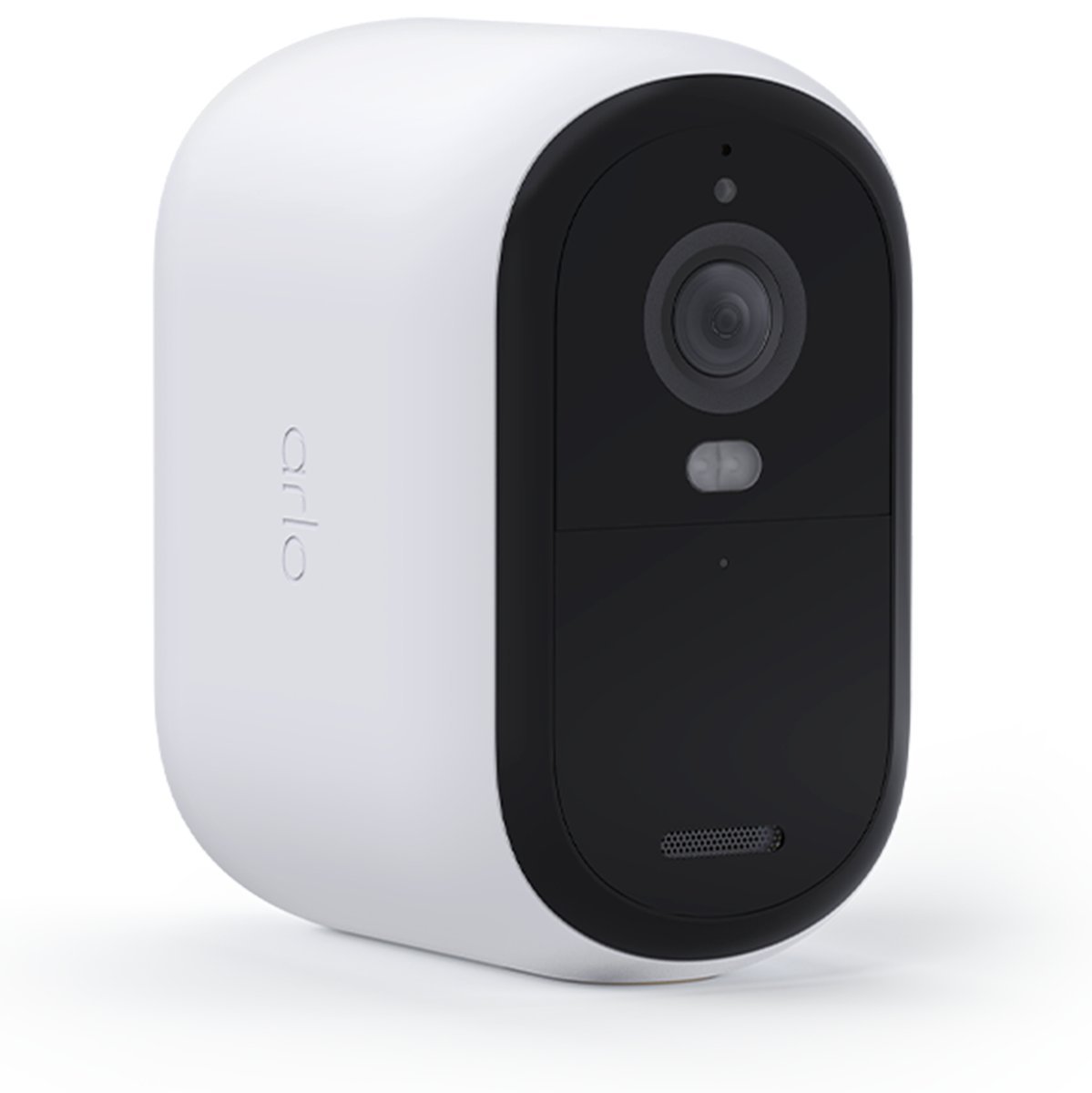
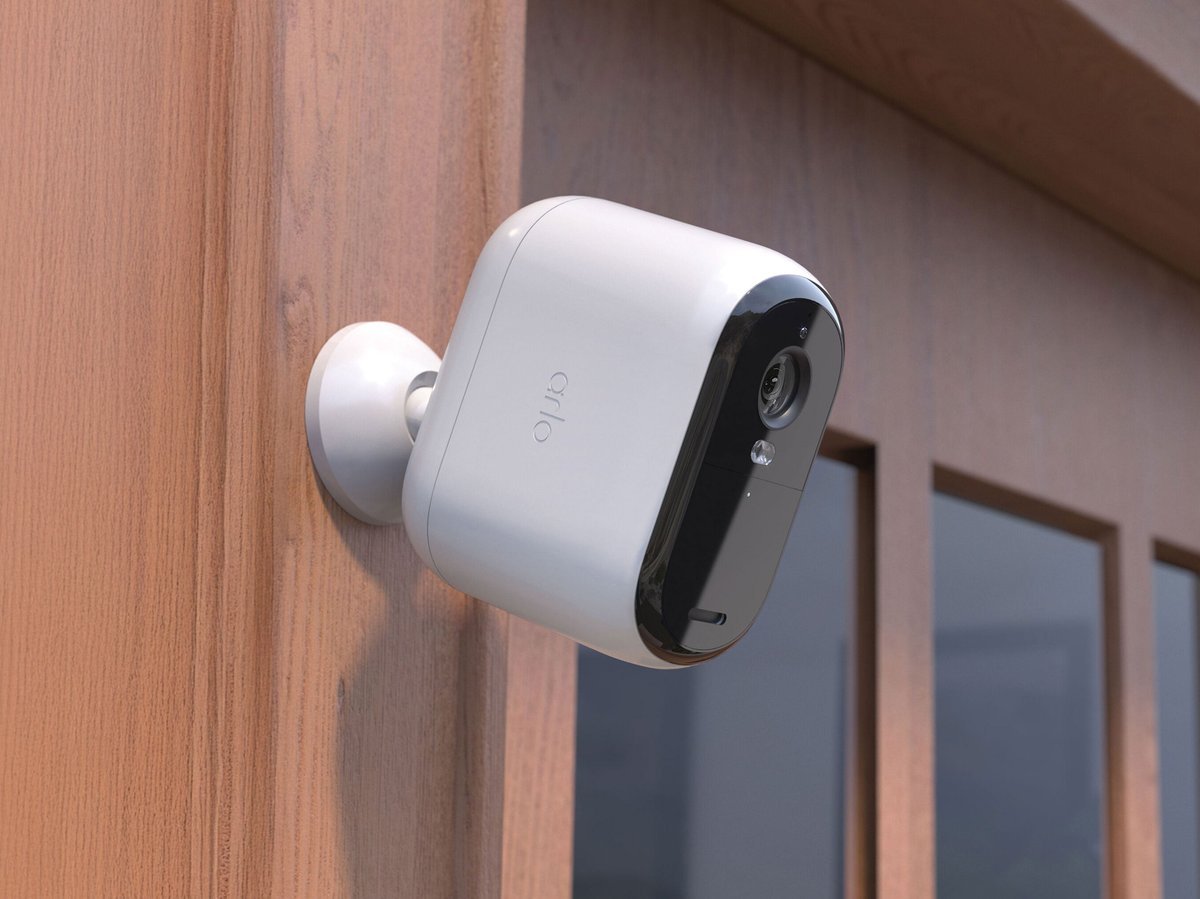
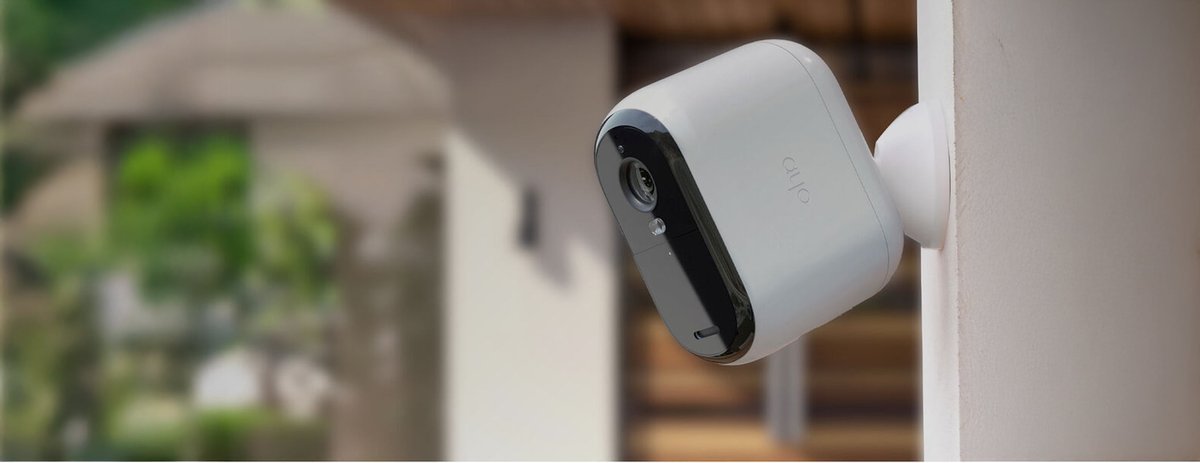
Arlo Essential XL (2nd Gen, 2K)
Brute-force battery life: an 18,600 mAh cell for multi-month intervals between charges, paired with 2K color night vision.
- 2K resolution, 130° field of view, integrated spotlight
- 18,600 mAh battery, about 4× the standard Essential model
- IP67; noise-cancelling two-way audio; built-in siren
Important limitation: Cloud video history requires an Arlo Secure subscription, so budget it into the total cost. As a battery camera it records motion-triggered clips, not continuous 24/7 footage, and real-world battery life depends on motion sensitivity and spotlight use, since headline figures assume quiet scenes.
- Resolution: 2K 2560×1440
- Battery: 18,600 mAh rechargeable
- Weather rating: IP67
Best for: Battery life: forget-about-charging wire-free coverage
2. Reolink CX410W: Best Wired 24/7 ColorX
Night-vision approach: ColorX (F1.0, 1/1.8" sensor); adjustable 3000 K warm light. Resolution: 2K (4 MP) with HDR. Power: Plug-in. Connectivity: Dual-band 2.4/5 GHz Wi-Fi. Rating: IP67.
Battery cameras sip power and wake on motion; this one doesn't sleep. The CX410W is a plug-in ColorX camera, which means it can record around the clock, the right choice for a shopfront, a garage interior, or anywhere motion-triggered clips leave gaps you're not comfortable with. The F1.0 aperture and 1/1.8" sensor formula delivers true color night vision, and the 3000 K adjustable warm light is a thoughtful touch: it gradually ramps up rather than flashing on, giving you color in dim scenes without annoying the neighbors.
HDR keeps bright and dark areas balanced, dual-band Wi-Fi gives you 5 GHz for clean 2K streaming or 2.4 GHz for range, and IP67 sealing handles outdoor duty. The cost of continuity is an outlet, not a camera for a fence post far from power, and at 2K it gives up resolution to 4K models. One more honest note: Reolink lists the CX410W as discontinued, so check remaining stock availability before you order.
Buy it if: you need continuous recording with color night vision and you have power at the mounting point. Skip it if: there's no outlet where you need coverage.


Reolink CX410W
A plug-in ColorX camera that never sleeps: continuous recording with true color night vision and a neighbor-friendly warm light.
- ColorX: F1.0 aperture + 1/1.8" sensor, 2K HDR
- Adjustable 3000 K warm light ramps up gradually
- Plug-in power for 24/7 recording; dual-band Wi-Fi; IP67
Important limitation: Needs an outlet at the mounting point; 2K rather than 4K. Note: Reolink has discontinued the CX410W, so check remaining stock availability before ordering.
- Resolution: 2K (4 MP) with HDR
- Connectivity: Dual-band 2.4/5 GHz Wi-Fi
- Weather rating: IP67
Best for: Wired 24/7: continuous recording with color night vision
Buying Guide: How Color Night Vision Actually Works
What "color night vision" really means
There is no single technology here: "color night vision" is a marketing umbrella over three different approaches, and knowing which one you're buying determines whether you'll be happy:
- Large-aperture, large-sensor cameras (Reolink ColorX). An F1.0 lens gathers roughly four times the light of a typical F2.0 lens, and a 1/1.8" sensor gives each pixel more area to collect photons. The result: real color in low light, but "low light" is doing work in that sentence. Some ambient light (streetlights, porch lights, moonlight on snow) must exist. Some manufacturers are explicit: below about 1 lux, their cameras switch to black-and-white IR.
- Spotlight-assisted color (Arlo's integrated spotlight). When motion is detected, the camera turns on its own white light and records in color. Excellent color and strong deterrence, but the light is visible, it can annoy neighbors, and on battery cameras it drains the battery fast.
- Hybrid systems that combine a sensitive sensor with spotlight and infrared modes and let you, or the camera, choose per situation. The most flexible option, and usually the most expensive.
The honest summary: color night vision means color in low light, not color in no light. Any listing promising vivid full color in "complete darkness" without mentioning a spotlight, warm light, or IR fallback deserves skepticism. When in doubt, look for the lux threshold in the fine print: manufacturers who publish one (around 1 lux) are telling you the truth.
Resolution vs. low-light sensitivity: the trade-off nobody advertises
A 4K sensor has smaller pixels than a 2K sensor of the same size, and smaller pixels collect less light. That's why the best night cameras pair 4K with oversized sensors and F1.0 lenses, which is why a well-built 2K camera with a big sensor can out-see a cheap 4K camera after dark. If your priority is identifying faces at night, sensor size and aperture matter at least as much as the resolution number on the box.
Power: the decision that shapes everything
- Battery (Arlo Essential XL): installs anywhere, records motion clips; cold shortens life; solar panels help if the spot gets sun.
- Plug-in (CX410W): continuous power and recording; needs an outlet in reach.
- Wired systems: cable runs and a recorder, but the most reliable, longest-range, subscription-free setup, the professional standard.
Storage and subscriptions: check before the price
A camera without retrievable footage is a decoration. Check before buying: local microSD recording (Reolink)? Cloud history subscription required (Arlo, yes, practically)? The cheapest camera with a mandatory subscription is rarely the cheapest camera.
Smart-home fit
Alexa / Google: both work with at least one, so verify your ecosystem.
The ambient-light audit (do this before you buy)
Walk your property at night. Wherever you plan to mount a camera, note the light: porch lights, streetlights, neighbor floodlights, moonlight. Any camera relying on sensor-only color (ColorX, MaxColor, CNV) needs some of it. Pitch-black corners need either a spotlight model or IR fallback, so plan accordingly, and don't mount a ColorX camera facing a blank dark wall and expect miracles.
Product Types: Three Ways to Get Color Night Vision
- Wire-free battery cameras: Arlo Essential XL. Install anywhere in minutes; best for renters. Trade-off: motion-triggered clips, charging cycles.
- Plug-in Wi-Fi cameras: Reolink CX410W. Continuous power and recording, local storage options; need an outlet nearby.
- Wired DVR/NVR systems. Maximum reliability, range, and camera count; the only type here suited to a whole-property perimeter.
Comparisons
ColorX: What the Name Means
ColorX is Reolink's brand name for the physics: a fast F1.0-class lens plus a large 1/1.8" sensor. Compare it on everything else: resolution, power, recording style, ecosystem, and price tier. Reolink's ColorX pairs its sensor with an adjustable warm light rather than infrared. Check what the camera does in total darkness before you buy. For genuinely dark zones, a light or IR fallback matters.
Color night vision vs traditional infrared
- Color gives you identifying details IR can't: clothing color, car color, skin tone cues. For evidence and for telling your neighbor's cat from an intruder, color wins.
- Infrared works in total darkness, is invisible to the human eye (850 nm LEDs glow faintly red up close; 940 nm is fully invisible), and uses less power. For unlit areas and discreet monitoring, IR wins.
- The smart money is on cameras that do both and switch automatically, which is why hybrid cameras that do both are the safest recommendations for mixed lighting.
4K vs 2K for night footage
4K's advantage is digital zoom: reading a license plate or a face after the fact. But at night, a 2K camera with a bigger sensor and wider aperture can produce a cleaner image than a cheap 4K sensor struggling in the dark. Priorities: identification at distance points to 4K with an F1.0 lens; general awareness on a budget points to 2K with a good sensor.
Mistakes to Avoid
- Buying "color night vision" for a pitch-black location. Color needs light. If the mounting spot gets zero ambient light, you need a spotlight model, an IR-fallback model, or a camera with an illuminator, not a sensor-only ColorX camera. Do the ambient-light audit first.
- Ignoring the subscription. Arlo's camera is excellent; Arlo's cloud history costs extra. A camera you can't review footage from is a very expensive motion sensor. Total up camera + subscription before comparing prices.
- Ignoring the hub requirement. Some cameras are not standalone units: they need a hub. Buying an add-on camera alone leaves you with a paperweight.
- Mounting too high. Every foot of height costs you facial detail. Mount 7–9 feet where possible, angled slightly down; a 4K camera at 15 feet sees less useful detail than a 2K camera at 8 feet.
- Pointing cameras at neighbors' windows. Beyond being poor neighborliness, it can create legal exposure depending on your state, and audio recording rules are stricter than video rules everywhere. See the legal note at the top.
- Trusting inflated specs on no-name listings. "Full color in total darkness," "47,000 satisfied customers," "9.8/10 expert score": the night-vision category is full of affiliate-spam pages with fabricated numbers (we name one in the FAQ rebuttal below). Stick to manufacturers who publish real specs and independent reviewers who publish real measurements.
- Buying a battery camera for 24/7 coverage. Battery cameras record motion-triggered clips by design. If you need continuous recording, buy a plug-in or wired camera.
Frequently Asked Questions
It's a bit of a misnomer. As safehome.org puts it, what's really happening is that the camera's light sensor is sensitive enough (typically a large 1/1.8" sensor with an F1.0 aperture) to deliver color images in very low light, instead of switching to black-and-white infrared. Most systems add a spotlight or warm light for scenes with almost no ambient light, and fall back to IR in total darkness.
Neither of the two cameras in this guide is 4K, and that is deliberate: after dark, sensor size and aperture matter more than pixel count. Both picks record 2K with large sensors or an integrated spotlight. If 4K is a hard requirement, apply the same checks used here: a large sensor, an F1.0-class lens, and an honest statement of what happens in total darkness.
Five things: (1) sensor size and aperture: 1/1.8" and F1.0-class is the current benchmark; (2) what happens in total darkness: IR fallback, spotlight, or nothing; (3) power: battery (motion clips) vs plug-in/wired (continuous); (4) storage and whether a subscription is required; (5) your actual ambient light: walk the property at night before buying.
Not without help. Color imaging needs photons. Manufacturers document color-to-IR switchovers at around 1 lux, and brand FAQs advise using infrared in complete darkness. Cameras that claim otherwise are relying on a built-in spotlight or warm light (visible), so ask which one before you believe "full color in total darkness."
For identification, yes: color captures clothing, vehicle, and skin-tone details that black-and-white IR loses, which is why police and insurers prefer color footage. For invisible operation in total darkness, IR still wins (no visible light, lower power). Hybrid cameras that do both are the safest all-round choice.
Depends on the brand. Reolink records locally with no required subscription. Arlo's cameras work for live viewing and alerts without one, but cloud video history requires an Arlo Secure plan. Always check the storage story before the price.
Battery and plug-in Wi-Fi cameras (Reolink, Arlo) are designed for DIY: mount, connect to Wi-Fi, done in under half an hour. Wired DVR/NVR systems need cable runs and a recorder; comfortable for a handy homeowner, but many buyers hire an installer.
Yes, and they vary by state and locality. Video of your own property is broadly permitted, but audio recording is regulated separately (several states require all-party consent), and aiming cameras at neighbors' windows or private spaces creates legal exposure. This guide covers products only, so check your state and local laws, and consider it legal advice from a lawyer, not a camera guide, if anything is unclear.
While researching, we found ranking pages making claims no honest reviewer would stand behind. For example, one affiliate page asserting its pick had "over 47,000 satisfied customers," reduced false alarms by "89% compared to standard motion detection," and scored "9.8/10" across made-up categories, complete with invented user testimonials. None of those figures are sourced, and the "review" reads as generated marketing copy.
Red flags for bad night-vision advice anywhere you see it:
- Fabricated precision ("89% fewer false alarms," "47,000 customers") with no methodology or source.
- "Full color in complete darkness" with no mention of spotlights, lux thresholds, or IR fallback, which is physically implausible for a sensor-only system.
- No mention of subscriptions or hub requirements: the two costs that most often surprise buyers after purchase.
- Every product is "the undisputed champion." Real comparisons have trade-offs; if a page has none, it's selling, not reviewing.
Final Verdict
Final Recommendations
Best battery life: Arlo Essential XL (2nd Gen, 2K): brute-force battery life, an 18,600 mAh cell for multi-month intervals between charges, paired with 2K color night vision.
Best wired 24/7: Reolink CX410W: a plug-in ColorX camera that never sleeps, with continuous recording, true color night vision and a neighbor-friendly warm light. Note: Reolink has discontinued this model, so check remaining stock availability.