
Buying your first drone is mostly about avoiding the two mistakes beginners make: picking a toy that cannot hold position in a light breeze, or picking a pro machine with a learning curve that ends in a tree. The drones in this guide sit in the sweet spot between those extremes. Every one holds a stable GPS hover, returns home on its own when the signal drops, and shoots video you will actually want to keep.
We researched the current beginner drone market to find the models worth buying now. Six of the seven picks weigh under 249 grams, which keeps recreational flying simple under FAA rules. Every pick below is a specific model in a specific bundle, with its exact-variant Amazon listing verified through two independent sources. MoleMarket is research-based, not a test lab: our picks come from manufacturer specifications, verified product data, and the consensus of professional reviews and owner reports.
Top 7 at a Glance
| Drone | Best for | Key specs | Amazon |
|---|---|---|---|
| DJI Mini 4K Camera Drone Combo | Best Overall | 4K/30, 3-axis gimbal, 246 g, 31-min battery | Check Price on Amazon |
| DJI Mini 3 (RC-N1) | Best for Social Video | 4K HDR, 1/1.3-inch 48 MP, vertical shooting, 248 g | Check Price on Amazon |
| DJI Neo Three-Battery Combo | Easiest First Drone | 135 g, palm takeoff, AI tracking, 4K/30 | Check Price on Amazon |
| DJI Flip Fly More Combo (RC 2) | Best Safety Pick | 4K/60 HDR, full prop guards, under 249 g, RC 2 screen controller | Check Price on Amazon |
| Potensic ATOM Fly More Combo | Best DJI Alternative | 4K/30, 3-axis gimbal, under 249 g, 96 min total flight | Check Price on Amazon |
| Holy Stone HS175D | Best Budget GPS Drone | GPS return to home, 215 g, 2 batteries, brushless motors | Check Price on Amazon |
| Ruko F11GIM2 | Best Long-Range Pick | 4K/30, 2-axis gimbal plus EIS, 3 km range, 520 g (FAA registration required) | Check Price on Amazon |
1. Best Overall
DJI Mini 4K Camera Drone Combo (2 Batteries, Gray)
Best Overall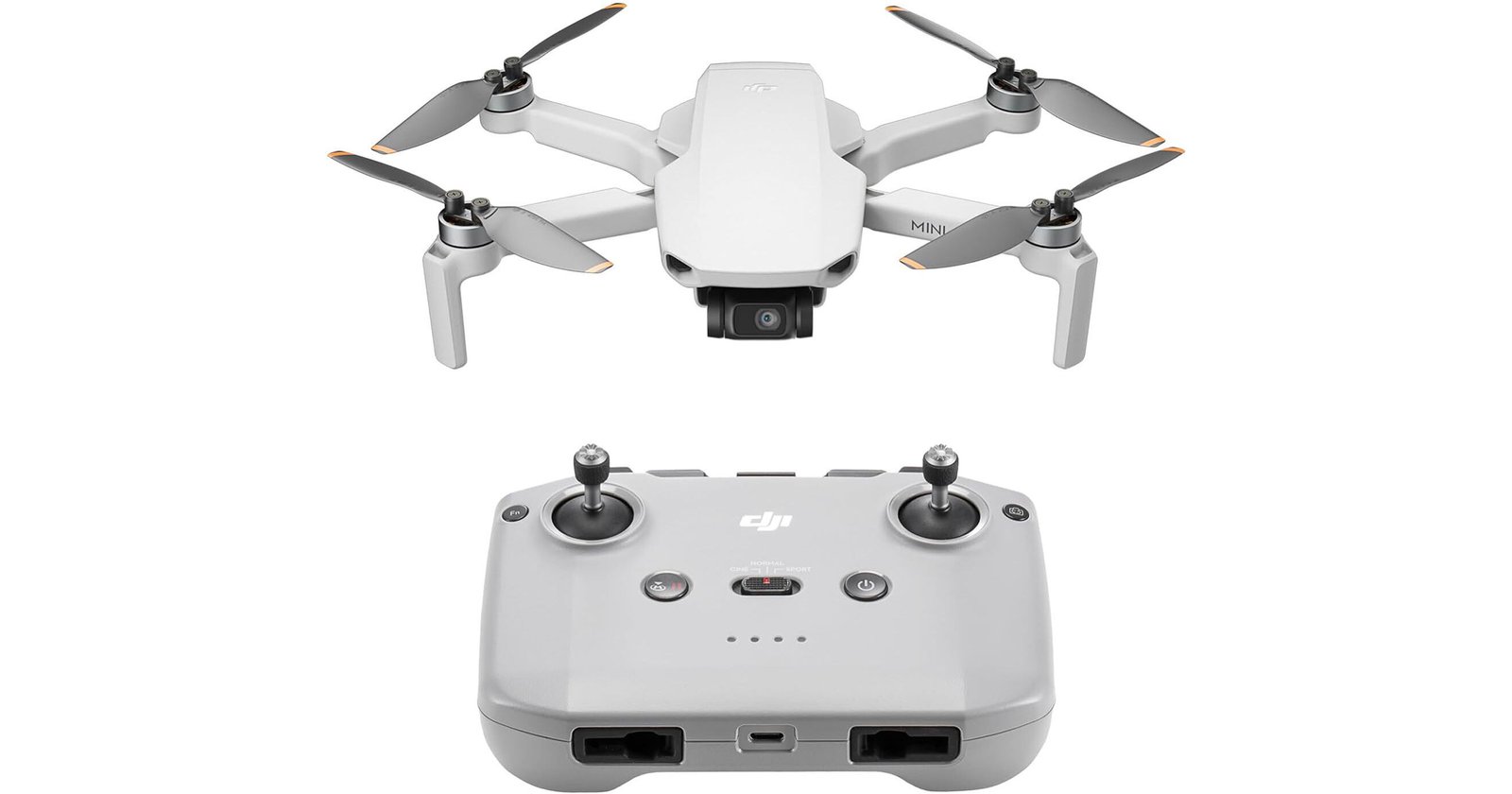
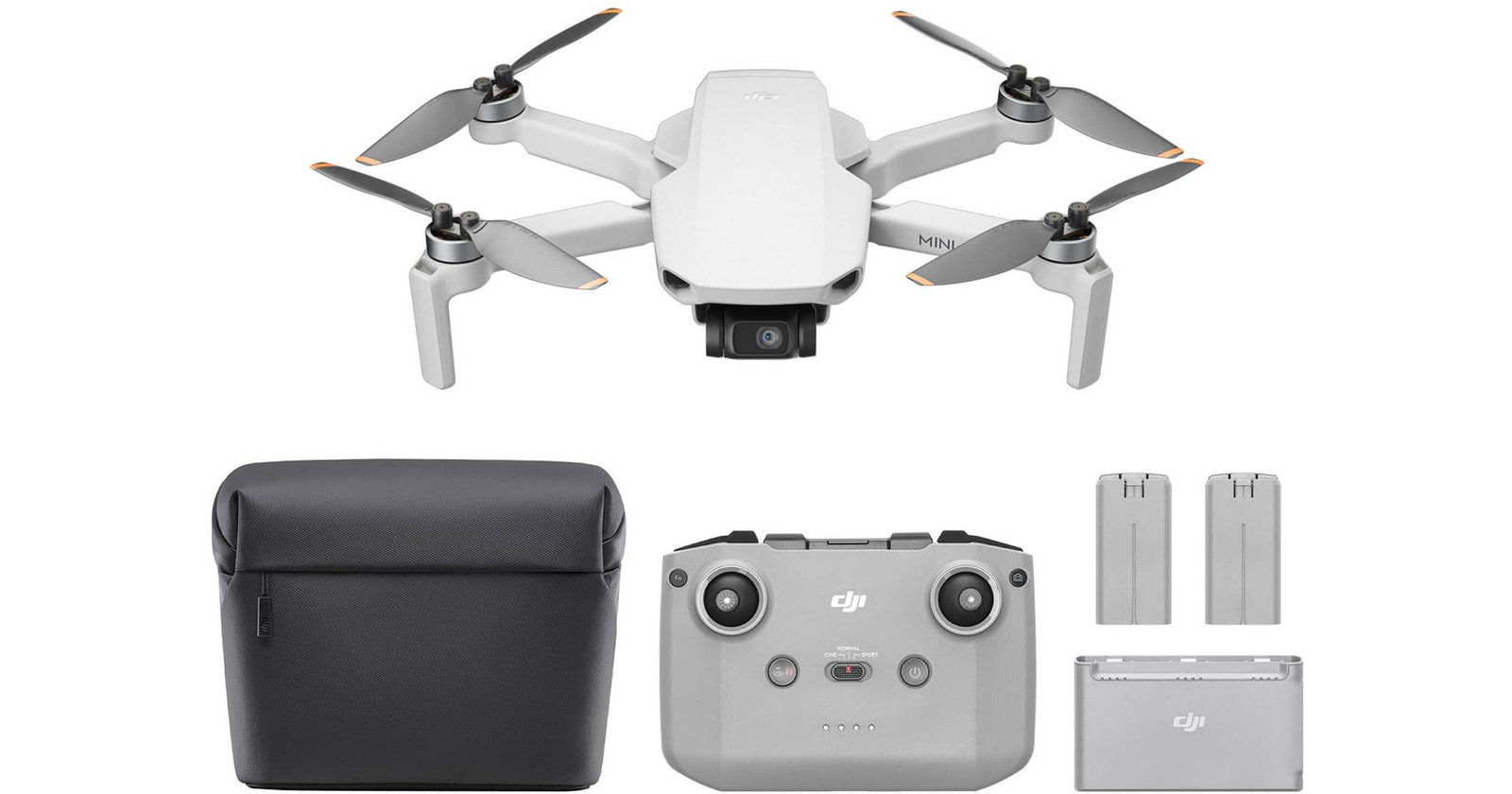
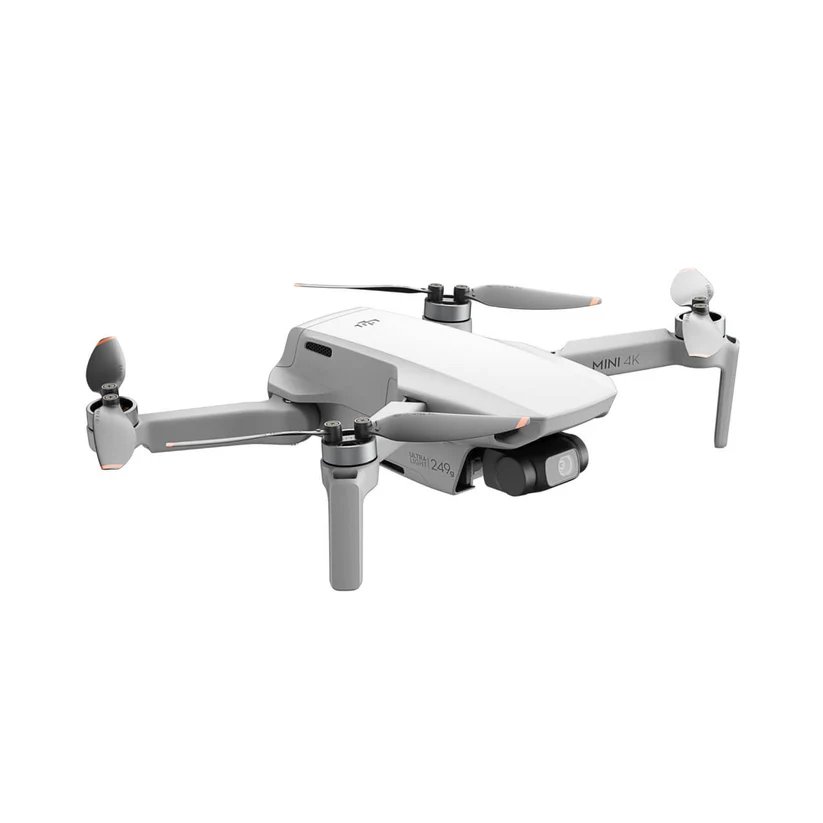
The DJI Mini 4K with its RC-N1 controller and the two-battery Fly More contents.
4K/30 video on a 3-axis gimbal · 246 g · 31 min per battery, two included
3 Reasons to Buy
- A true 3-axis mechanical gimbal shooting 4K/30 from a 12 MP 1/2.3-inch sensor, which is the spec that separates real camera drones from toys.
- At 246 g it stays under the 249 g FAA recreational registration threshold, and DJI rates it for Level 5 wind resistance (up to 38 kph).
- The two-battery combo delivers 31 minutes per battery, while QuickShots and one-tap takeoff and landing make the first flights genuinely easy.
3 Reasons to Avoid
- No obstacle avoidance sensors in any direction, so you are the collision system.
- Video tops out at 4K/30 with no 4K/60 option for smoother motion or slow motion.
- The RC-N1 controller has no built-in screen, so you fly with your phone mounted on top.
Who It's Best For
The DJI Mini 4K Camera Drone Combo is best for the beginner who wants the safest mainstream choice: a DJI Mini with a real 3-axis gimbal, GPS return to home, and enough battery to learn without constant recharging. It suits first-time flyers who care about video quality from day one, travelers who need something that fits in a jacket pocket, and anyone who wants the largest owner community and tutorial library behind their first drone. If your goal is smooth, stable 4K footage with the least possible fuss, this is the rational starting point.
Why We Recommend It
We recommend the Mini 4K because it is the point where DJI's Mini line stops being a compromise. The 3-axis gimbal is the single most important feature for a beginner who wants watchable video, because it mechanically cancels out the small movements and wind gusts that make fixed-camera footage look seasick. The 1/2.3-inch 12 MP sensor shooting 4K/30 is the same class of imaging DJI built its reputation on, and OcuSync 2.0 transmission rated to 10 km means the video feed to your phone stays solid far beyond the distances a beginner should be flying. The consensus among professional reviewers is consistent: this is the default recommendation for first-time buyers, and the two-battery combo specifically because a single 31-minute battery always runs out right when you are getting comfortable.
The beginner-friendly details matter as much as the specs. One-tap takeoff and landing remove the two maneuvers new pilots find most stressful, GPS return to home brings the drone back if the signal drops or the battery runs low, and the automated QuickShots modes (orbits, spirals, tracking shots) produce cinematic-looking clips without any stick skill. Level 5 wind resistance, rated by DJI to 38 kph, means a breezy afternoon does not end your flying session. At 246 g it stays under the FAA's 249 g recreational registration threshold, which removes a paperwork step for US beginners. The owner community is another practical asset: with the Mini series being DJI's best-selling line, setup guides, beginner tutorials, and troubleshooting threads exist for nearly every common question, which shortens the learning curve for a first-time pilot.
Should You Buy It?
Yes, if you want the most proven beginner drone with a real camera and you are comfortable flying with your phone as the screen. Buy it if stable 4K video, long battery life, and the biggest support community matter more to you than having a built-in screen or 4K/60. Skip it if you shoot a lot of vertical video for social apps, in which case the Mini 3 below with its True Vertical Shooting is the better fit, or if you want the absolute simplest possible first flight, in which case the palm-launched DJI Neo is worth a look. The two-battery combo is the bundle to get, since a single battery always seems to run out just as you are getting comfortable, and the spare effectively doubles every outing. Specs: 4K/30 video, 12 MP 1/2.3-inch CMOS, 3-axis gimbal · 246 g · OcuSync 2.0 up to 10 km · 31 min per battery (2 included) · Level 5 wind resistance (38 kph) · GPS return to home · QuickShots
2. Best for Social Video
DJI Mini 3 (RC-N1)
Best for Social Video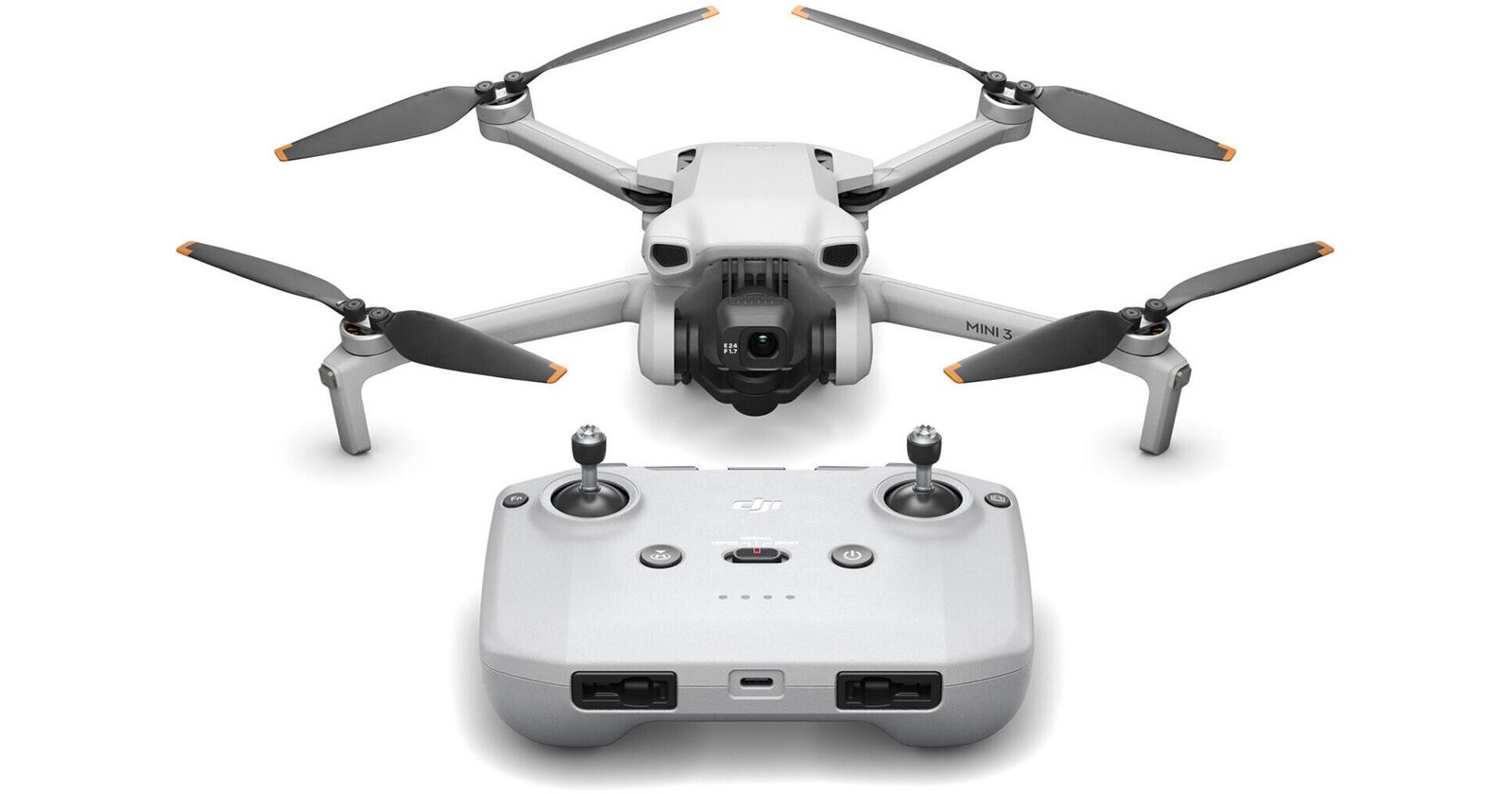
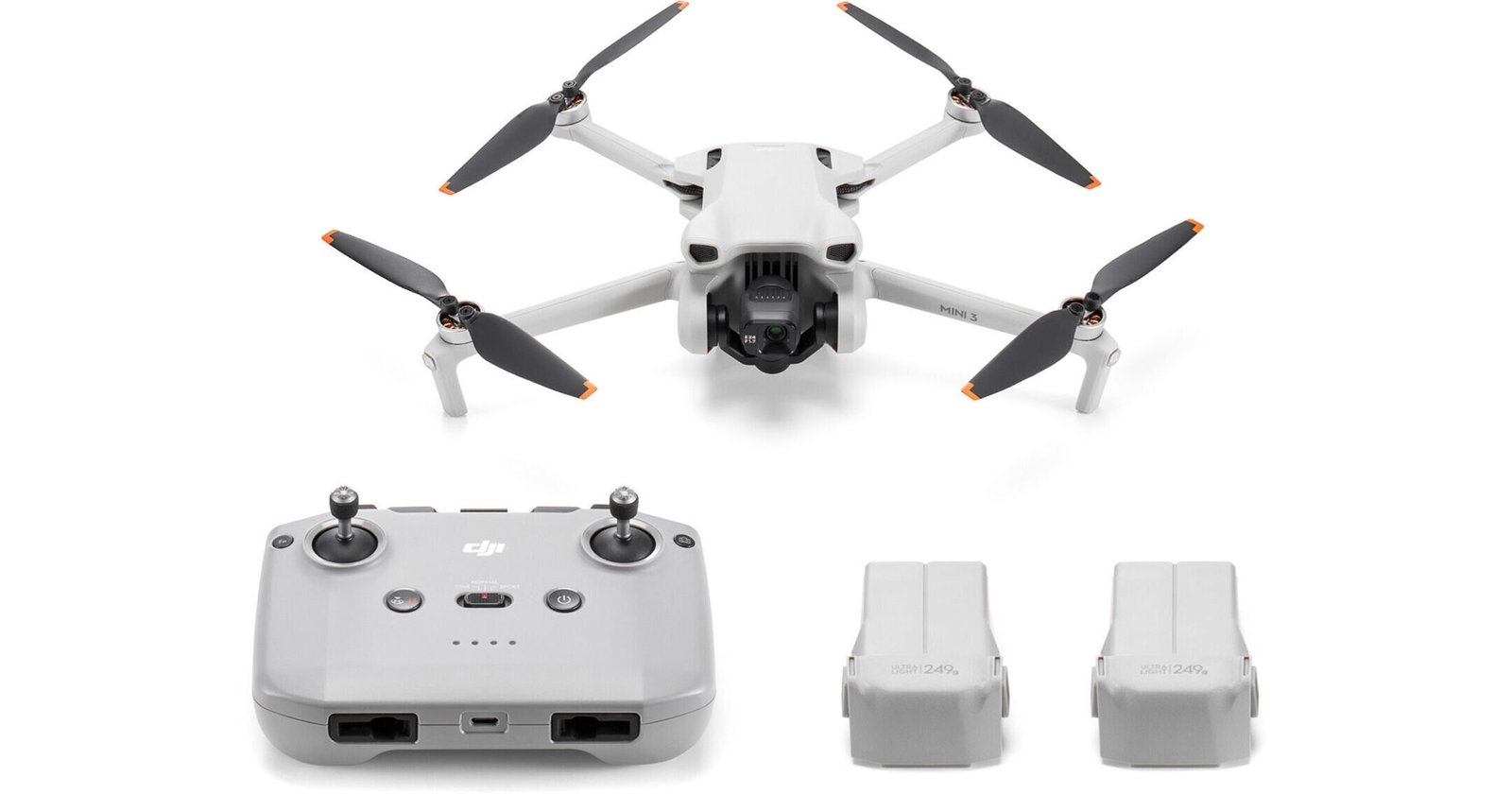
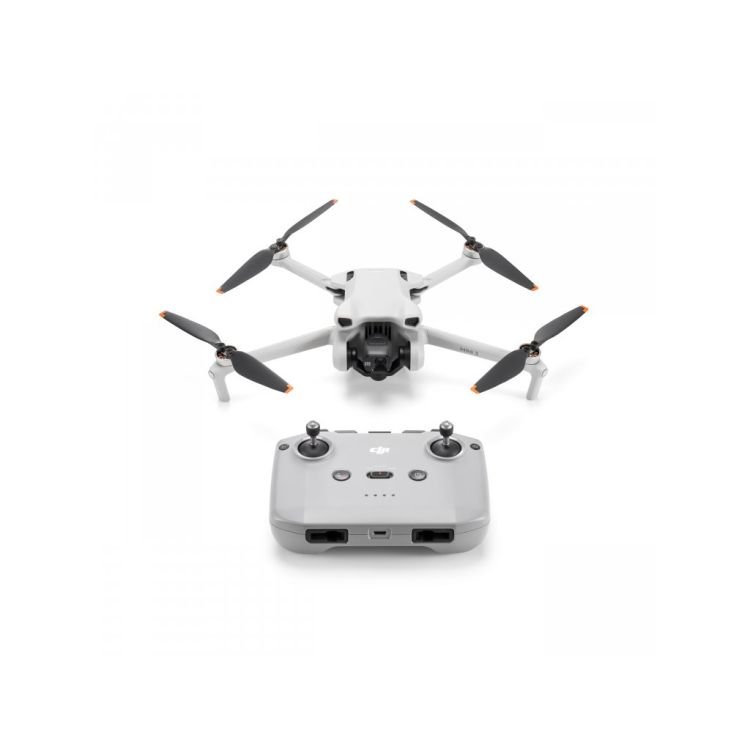
The DJI Mini 3 with the RC-N1 controller and spare batteries.
4K HDR, 1/1.3-inch 48 MP sensor · True Vertical Shooting · 248 g · up to 38 min flight
3 Reasons to Buy
- The 1/1.3-inch 48 MP sensor is the largest in any sub-249 g DJI Mini, and it shoots 4K HDR with noticeably better low-light detail than smaller sensors.
- True Vertical Shooting rotates the camera for native 9:16 video, so clips go straight to social apps without cropping away half the frame.
- Up to 38 minutes of flight time per battery, the longest in the Mini line with the standard battery.
3 Reasons to Avoid
- No obstacle avoidance sensors, same as the Mini 4K.
- No 4K/60 mode, so fast action and slow-motion work are limited.
- The optional Intelligent Flight Battery Plus extends flight to 51 minutes but pushes the drone over 249 g, which triggers FAA registration.
Who It's Best For
The DJI Mini 3 is best for beginners whose footage is destined for a phone screen. If you film for TikTok, Reels, or Shorts, True Vertical Shooting is a genuine workflow advantage: the camera physically rotates to portrait orientation, capturing full-resolution vertical 4K instead of a cropped slice of a horizontal frame. It also suits beginners who fly at dawn or dusk, because the larger 1/1.3-inch sensor gathers more light than the Mini 4K's 1/2.3-inch chip. Travelers benefit too, since the 38-minute flight time means fewer battery swaps on a hike. Beginners upgrading from phone-only filming will find the learning curve gentle, since the flight behavior is identical to the Mini 4K and the camera advantages show up immediately in the first clips.
Why We Recommend It
We recommend the Mini 3 because it is the thinking beginner's Mini. On paper it sits between the Mini 4K and the Pro models, but its specific strengths map directly onto what new pilots actually do with footage. The 48 MP 1/1.3-inch sensor shooting 4K HDR produces the best stills and video of any drone in this guide under 249 g, and professional reviewers consistently note the step up in dynamic range and low-light cleanliness over the smaller-sensor Minis. DJI's O2 transmission, rated to 10 km, keeps the feed stable, and Level 5 wind resistance matches the rest of the Mini family.
True Vertical Shooting deserves emphasis because it is not a software trick. The gimbal rotates the camera 90 degrees, so vertical video uses the full sensor rather than a center crop. For a beginner posting to social platforms, that is the difference between footage that looks native and footage that looks compromised. The 38-minute rated flight time is the longest standard-battery endurance in the Mini line, which matters for learning: longer sessions mean more practice per outing and fewer interruptions. GPS return to home, one-tap takeoff and landing, and the automated QuickShots modes carry over from the Mini 4K, so the easy-flight experience is identical. For beginners who also want stills, the 48 MP sensor captures detailed photos that survive cropping, which is useful while you are still learning to frame shots in the air.
Should You Buy It?
Yes, if your end goal is shareable video and you want the best camera DJI puts in a sub-249 g drone. Buy it if vertical shooting, HDR video, and maximum flight time appeal to you more than the Mini 4K's lower price point. Skip it if you want 4K/60 for action or slow motion, which neither Mini offers, or if you would rather have the simplest possible first drone, in which case the DJI Neo's palm takeoff is the easier on-ramp. Choose between the Mini 3 and the Mini 4K on camera priorities: vertical video and low-light detail favor the Mini 3, while proven value and the same easy flight experience favor the Mini 4K. Specs: 4K HDR video, 48 MP 1/1.3-inch CMOS, 3-axis gimbal · 248 g · True Vertical Shooting · O2 transmission up to 10 km · Up to 38 min flight · Level 5 wind resistance · GPS return to home
3. Easiest First Drone
DJI Neo Three-Battery Combo (Controller-Free)
Easiest First Drone
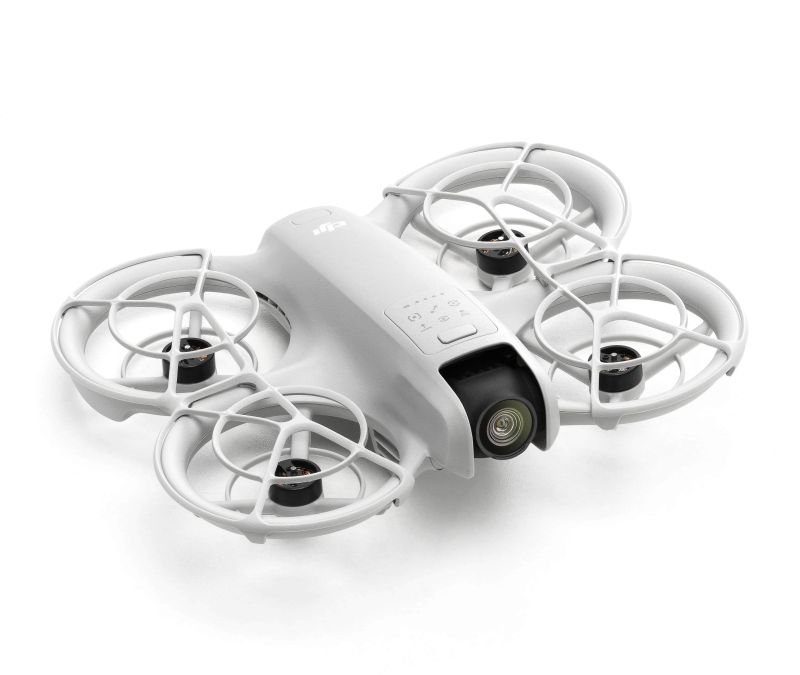

The DJI Neo, a 135 g palm-sized drone with built-in propeller guards.
135 g · palm takeoff and landing · AI subject tracking · 4K/30 · 3 batteries
3 Reasons to Buy
- At 135 g it is the lightest drone in this guide by a wide margin, and it takes off from and lands on your palm with no controller required.
- AI subject tracking follows you automatically, so you can film yourself hiking, cycling, or skating without learning to fly first.
- Full built-in propeller guards make it the most forgiving drone here for indoor practice and close-quarters flying.
3 Reasons to Avoid
- The single-axis gimbal leans on electronic stabilization, so footage is not as smooth as the 3-axis Minis in wind.
- 18 minutes of flight time per battery is the shortest in this guide, though three batteries soften the blow.
- This controller-free combo has no RC included; longer-range flying needs the optional RC-N3 controller.
Who It's Best For
The DJI Neo Three-Battery Combo is best for the complete novice who finds even a standard controller intimidating. If you have never flown anything and want footage of yourself on the first day, the Neo is the answer: place it on your palm, tap a mode, and it lifts off, follows you, and lands back on your hand. It suits vloggers and solo creators who need a flying camera operator, parents who want a safe drone to learn alongside their kids, and travelers who want the smallest possible 4K drone. The three-battery combo is the right bundle because 18 minutes per battery goes fast when you are having fun.
Why We Recommend It
We recommend the Neo because it redefines what "beginner drone" means. Every other pick in this guide assumes you will learn stick controls; the Neo assumes you will not, at least not at first. Its AI subject tracking locks onto you and keeps you framed while you move, and the QuickShots modes capture orbiting and reveal shots automatically. DJI's published specs put it at 135 g with a 4K/30 camera on a single-axis gimbal backed by electronic image stabilization, and professional reviewers consistently describe it as the easiest drone DJI has ever made to get into the air.
The built-in propeller guards are a bigger deal than they look. Beginners crash into things; guards turn most of those crashes into non-events, and they make indoor flying genuinely practical. The palm takeoff and landing remove the ground effect wobble and tip-over risk that plague first flights on grass or uneven ground. Three batteries give 54 minutes of total flight across a session, which is enough for a real outing. And when you are ready to learn manual flying, the Neo pairs with DJI's RC-N3 controller for up to 10 km of O4 transmission range, so the drone grows with you instead of being outgrown. When you are ready for manual control, the optional RC-N3 controller unlocks longer-range flying, so the Neo transitions from autonomous selfie drone to a fully piloted aircraft without requiring a second drone purchase.
Should You Buy It?
Yes, if you want the absolute simplest path to aerial footage and you are happy to trade some camera smoothness for effortlessness. Buy it if self-filming, travel size, and safety around people matter most. Skip it if your priority is the smoothest possible 4K video, in which case the 3-axis gimbals of the Mini 4K or Mini 3 are the better tools, or if you want a traditional controller in the box, in which case look at the Mini 4K combo. Skip it if you mostly fly in windy coastal or hilltop spots, where the 135 g airframe will be pushed around more than the heavier Minis; the Mini 4K handles those conditions with more authority. Specs: 4K/30 video, 12 MP 1/2-inch CMOS, single-axis gimbal plus EIS · 135 g · Palm takeoff and landing · AI subject tracking and QuickShots · 18 min per battery (3 included) · Built-in propeller guards · RC-N3 optional (up to 10 km)
4. Best Safety Pick
DJI Flip Fly More Combo (RC 2)
Best Safety Pick
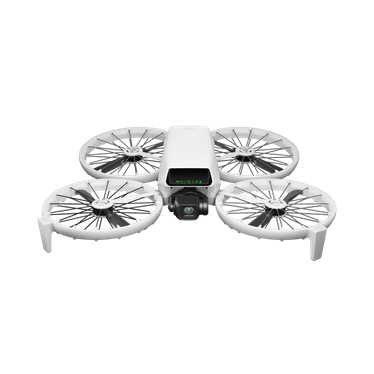
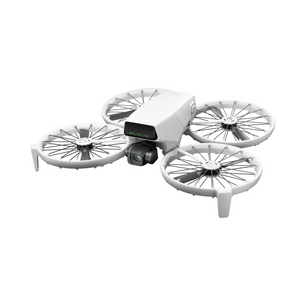
The DJI Flip with its foldable full-coverage propeller guards and the RC 2 controller.
4K/60 HDR · full-coverage prop guards · under 249 g · RC 2 with built-in screen · 3 batteries
3 Reasons to Buy
- The only beginner drone in this guide with 4K/60 HDR video, on a 3-axis gimbal with a 48 MP 1/1.3-inch sensor.
- Foldable full-coverage carbon-fiber propeller guards make it the safest full-size camera drone here for flying near people and obstacles.
- The RC 2 controller has a built-in screen, so you fly without mounting your phone, and the combo includes three batteries.
3 Reasons to Avoid
- The guard structure makes it bulkier than the Mini series when unfolded, and it draws more attention in the air.
- No obstacle avoidance sensors despite the safety-first design.
- It sits above the Mini 4K in DJI's lineup, so it costs more for buyers who do not need 4K/60 or the screen controller.
Who It's Best For
The DJI Flip Fly More Combo is best for beginners who want a real camera drone but are nervous about propellers: around kids, pets, or in tighter spaces like backyards and parks. The full-coverage guards mean a brush with a branch or a wall is far less likely to end the flight. It also suits creators who want 4K/60 for smoother motion and slow-motion options, and anyone who dislikes flying with their phone, since the RC 2's built-in screen removes the mount-and-connect ritual. Palm takeoff works like the Neo's, so the very first launch can be controller-free simple. It is also a strong choice for real-estate or event helpers who need smooth footage in tighter environments where propeller protection is not optional.
Why We Recommend It
We recommend the Flip because it solves the beginner's dilemma differently from the Minis. Where the Minis are minimal and the Neo is tiny, the Flip wraps a serious camera in a protective cage. DJI's published specs give it a 48 MP 1/1.3-inch sensor shooting 4K/60fps HDR on a 3-axis gimbal, which is the best video spec of any drone in this guide, and O4 transmission rated to 13 km. The foldable full-coverage propeller guards are carbon fiber, so they add protection without the weight penalty that would push it over 249 g. Professional reviewers consistently highlight the Flip as the friendliest full-size DJI for nervous first-time pilots.
The RC 2 controller is a meaningful quality-of-life upgrade for beginners. A built-in screen means one less device to charge, no cable to forget, and no phone calls interrupting your flight. Combined with 31 minutes of flight time per battery and three batteries in the Fly More combo, you get long, uninterrupted practice sessions. AI subject tracking and palm takeoff carry over from the Neo's playbook, so self-filming works out of the box. It stays under 249 g, keeping recreational FAA registration out of the picture. The guards fold flat against the body for transport, so the Flip packs down smaller than its unfolded footprint suggests, and the carbon-fiber construction keeps the protection light enough to stay under 249 g.
Should You Buy It?
Yes, if safety around people and obstacles is your top concern and you want the best video specs in the beginner class. Buy it if 4K/60, the built-in screen controller, and full prop guards justify the step up from the Mini 4K. Skip it if maximum portability matters most, since the Mini 4K folds smaller, or if you want the cheapest way into DJI's ecosystem, in which case the Mini 4K remains the value leader. If you want the smallest possible folded drone for travel, the Mini 4K still wins on portability; the Flip trades some of that for protection and the better camera. Specs: 4K/60fps HDR video, 48 MP 1/1.3-inch CMOS, 3-axis gimbal · Under 249 g · Foldable full-coverage carbon-fiber propeller guards · O4 transmission up to 13 km · 31 min per battery (3 included) · RC 2 controller with built-in screen · Palm takeoff and AI tracking
5. Best DJI Alternative
Potensic ATOM Fly More Combo (3 Batteries, White)
Best DJI Alternative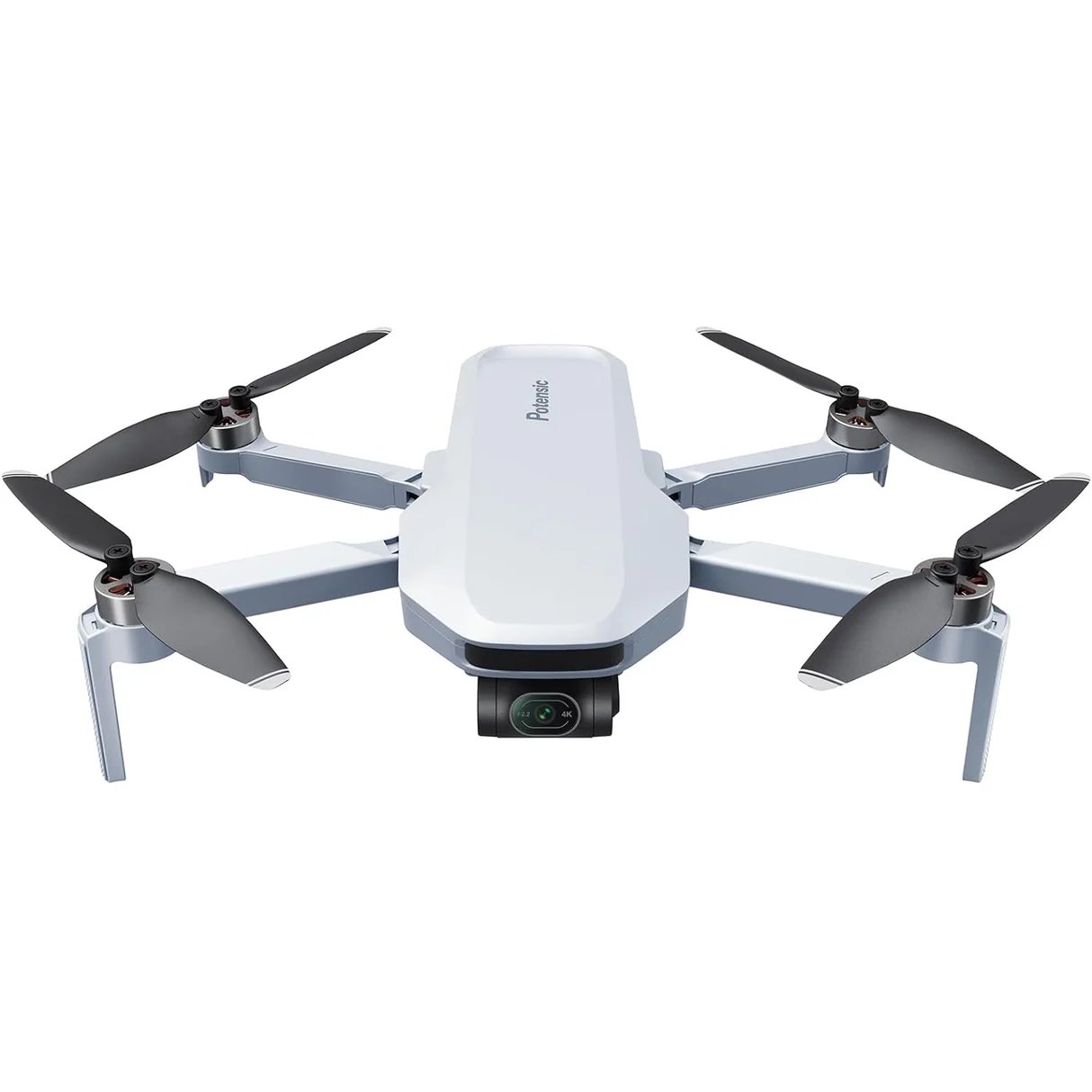
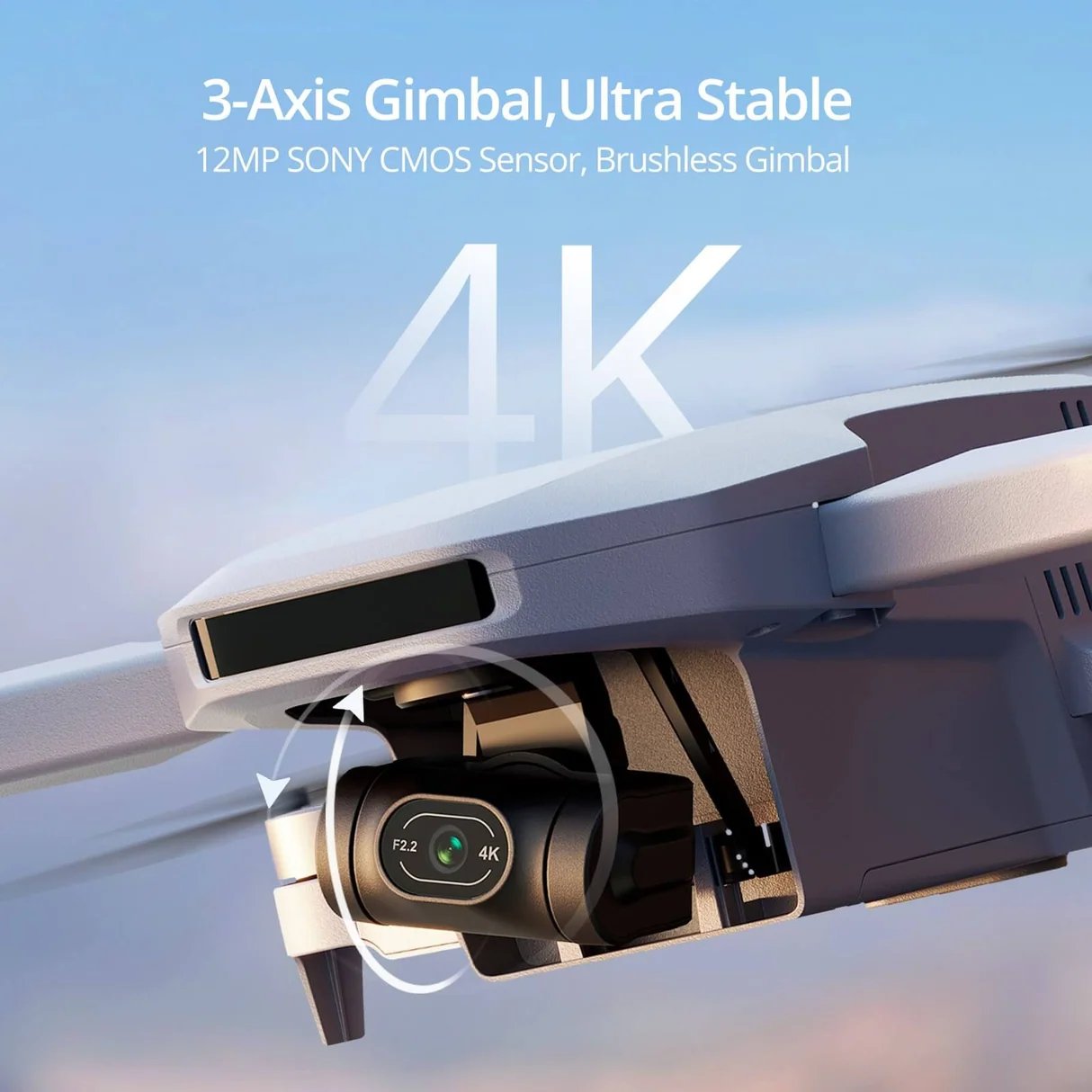
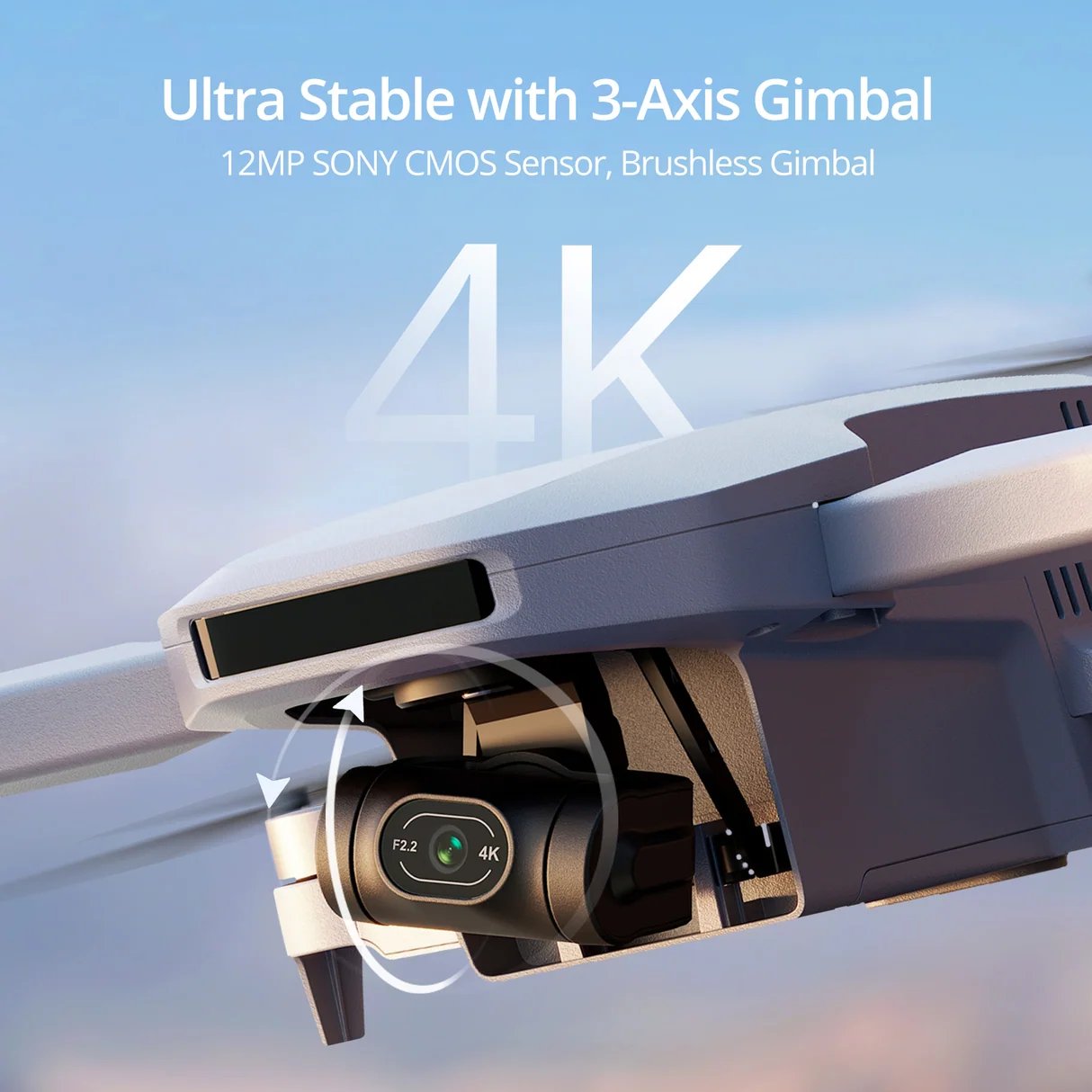
The Potensic ATOM with its 3-axis gimbal camera.
4K/30, Sony 12 MP sensor, 3-axis gimbal · under 249 g · 32 min per battery, 3 included
3 Reasons to Buy
- A genuine 3-axis gimbal with a Sony 12 MP CMOS sensor shooting 4K/30, matching DJI's core camera spec outside DJI's ecosystem.
- Three batteries at 32 minutes each give 96 minutes of total flight time, the most in this guide, with a 60W parallel charging hub included.
- Level 5 wind resistance and a 6 km PixSync 3.0 transmission range keep it stable and connected at real-world distances.
3 Reasons to Avoid
- The owner community, tutorial library, and third-party accessory market are far smaller than DJI's.
- The 6 km transmission range is shorter than the 10 km plus figures DJI publishes for the Mini series.
- Automated flight modes are fewer and less refined than DJI's QuickShots suite, per the consensus of professional reviews.
Who It's Best For
The Potensic ATOM Fly More Combo is best for beginners who want DJI-class camera hardware without buying into DJI. It suits pilots who value maximum airtime per outing, since 96 minutes across three batteries is unmatched here, and anyone who likes the idea of parallel charging all batteries at once through the included 60W hub. The bundled 64GB SD card means you can fly and film the day it arrives. If you are comfortable learning from manuals and a smaller community rather than the ocean of DJI tutorials, the ATOM rewards you with serious specs. It also appeals to buyers who simply prefer not to buy DJI, whether for ecosystem independence or availability, without giving up the stabilized 4K footage that defines this category.
Why We Recommend It
We recommend the ATOM because it is the most credible non-DJI camera drone a beginner can buy. The spec sheet reads like a Mini competitor: 4K/30 video from a Sony 12 MP CMOS sensor on a 3-axis brushless gimbal, under 249 g, with PixSync 3.0 transmission rated to 6 km and Level 5 wind resistance. Potensic's published figures put flight time at 32 minutes per battery, and with three batteries plus a 60W parallel hub, the Fly More combo is clearly designed for people who fly a lot. Visual Tracking follows subjects automatically, and the automated QuickShots-style modes cover the cinematic basics.
The value equation is the point. You get the two features that matter most for watchable beginner footage, a mechanical 3-axis gimbal and a decent Sony sensor, plus the longest total flight time in this guide. Professional reviewers consistently place the ATOM as the leading DJI alternative for first-time buyers, with the honest caveat that the software polish and ecosystem trail DJI. For a beginner who will mostly fly line-of-sight in open areas, that caveat rarely bites. It stays under 249 g, so recreational FAA registration is not required. The Sony sensor is a meaningful trust signal at this price: it is the same class of imaging hardware found in far more expensive drones, and it shows in cleaner footage with less noise in the shadows.
Should You Buy It?
Yes, if you want maximum flight time and DJI-level camera hardware while avoiding the DJI brand. Buy it if three batteries, parallel charging, and the bundled SD card appeal to your practical side. Skip it if you want the biggest tutorial library and the most refined automated modes, in which case the DJI Mini 4K is the safer recommendation, or if palm-takeoff simplicity matters more, in which case the DJI Neo wins. Go in with eyes open about the ecosystem: fewer tutorials and accessories exist than for DJI, so self-reliant learners who are comfortable with manuals get the most from the ATOM. Specs: 4K/30 video, 12 MP Sony CMOS, 3-axis gimbal · Under 249 g · PixSync 3.0 up to 6 km · 32 min per battery (3 included, 96 min total) · 60W parallel charging hub · Level 5 wind resistance · Visual Tracking · 64GB SD card included
6. Best Budget GPS Drone
Holy Stone HS175D
Best Budget GPS Drone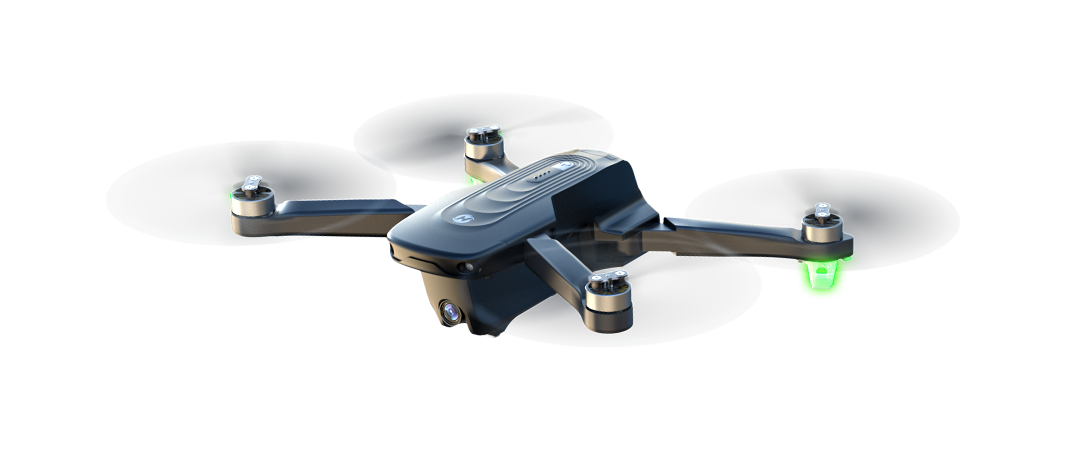
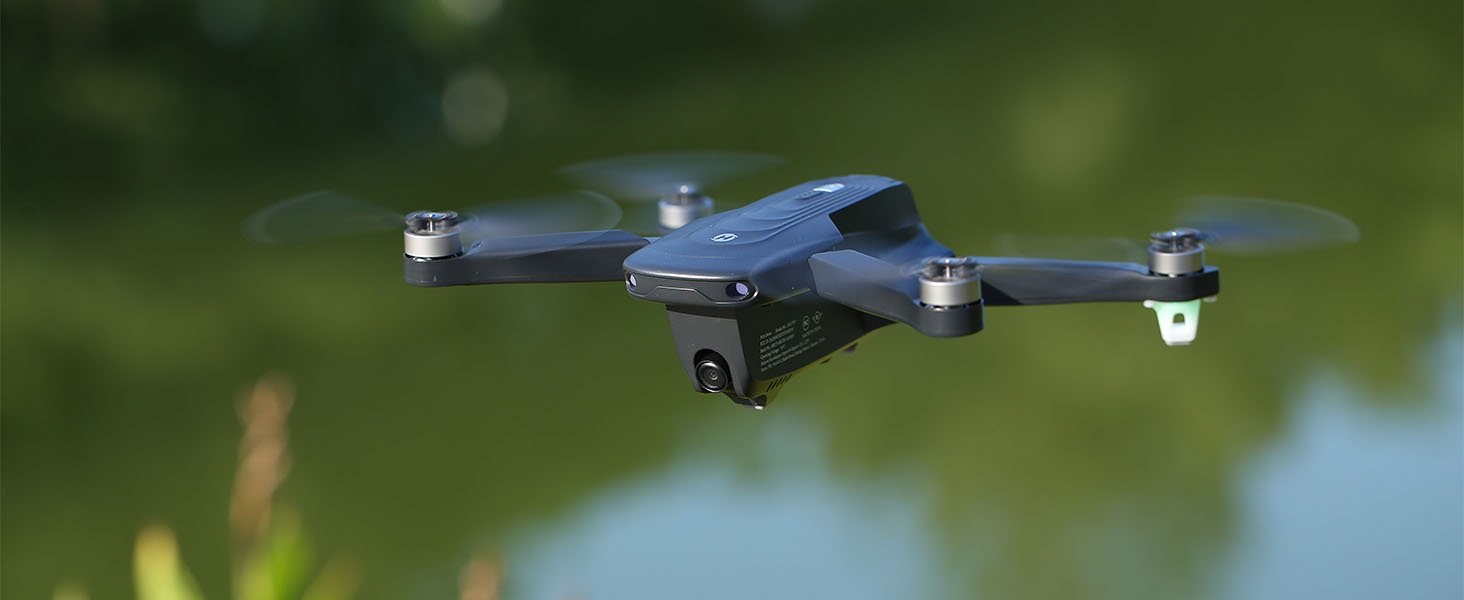
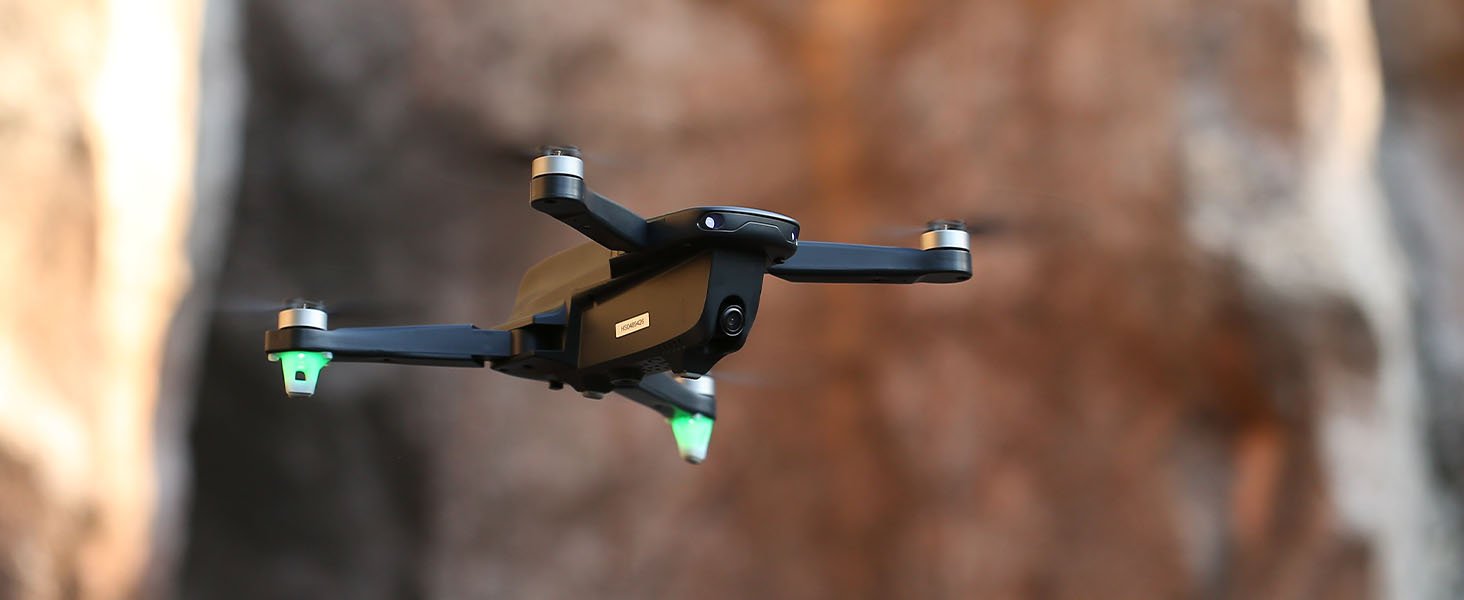
The Holy Stone HS175D, a 215 g GPS drone with brushless motors.
GPS return to home · 215 g · 4K-capable camera · 23 min per battery, 2 included · brushless motors
3 Reasons to Buy
- Full GPS positioning with automatic return to home, the safety feature that matters most, at the most accessible price in this guide.
- Brushless motors are quieter, more efficient, and longer-lasting than the brushed motors in cheaper toy drones.
- Two batteries delivering 23 minutes each, plus GPS-assisted intelligent modes like Follow Me, Circle Fly, and TapFly.
3 Reasons to Avoid
- The camera adjusts 90 degrees and records 4K-capable video, but it is not a 3-axis gimbal, so footage is less smooth than the DJI and Potensic picks.
- Holy Stone's published specs note 1080p video to the phone with higher resolution saved to the onboard TF card, so manage expectations for live-view quality.
- The 500 m control range and 5GHz FPV feed are modest next to the multi-kilometer ranges above.
Who It's Best For
The Holy Stone HS175D is best for beginners who want real GPS drone behavior, stable hover, position hold, and automatic return to home, at the lowest entry cost in this guide. It suits cautious first-time buyers who are not sure the hobby will stick and do not want to overinvest, younger pilots learning the basics under supervision, and anyone who wants a second, beater drone for risky practice. At 215 g it stays under the FAA recreational registration threshold, and the optical flow positioning helps it hold steady even when GPS is weak.
Why We Recommend It
We recommend the HS175D because it is the honest budget floor for a real beginner drone. Below this price point, drones lose GPS, and without GPS a beginner drone cannot hold position, cannot return home on its own, and becomes a constant wrestling match with the wind. Holy Stone's published specs give the HS175D GPS plus GLONASS positioning, optical flow for low-altitude stability, brushless motors, and a 110-degree field-of-view camera adjustable through 90 degrees. The consensus among professional reviewers is that it is the best of the budget GPS class: stable, predictable, and equipped with the intelligent modes beginners actually use.
The details are right for learning. Follow Me, Circle Fly, and TapFly introduce automated flight without overwhelming options. Two batteries at 23 minutes each give a respectable 46 minutes of total airtime. The 5GHz FPV feed to your phone is adequate for line-of-sight learning distances, and the 500 m rated range is further than a beginner should be flying anyway. State the camera honestly: it captures 4K-capable video with 2688 x 1512 recording to the onboard TF card while the phone receives 1080p, per Holy Stone's specifications. That is not DJI-smooth footage, but it is real aerial video from a stable platform, which is exactly what a budget beginner drone should deliver. Brushless motors deserve a final mention because they are the dividing line between a drone that lasts and a toy that wears out: they run cooler and far longer than the brushed motors in cheaper non-GPS drones.
Should You Buy It?
Yes, if you want the cheapest credible way into GPS drone flying and you accept that the camera will not match the gimbal-equipped picks. Buy it if a low-risk first purchase matters more than cinematic footage. Skip it if smooth 4K video is the goal, in which case save for the DJI Mini 4K or the Potensic ATOM, or if you want the simplest possible experience, in which case the DJI Neo's palm takeoff is easier still. Think of the HS175D as a low-risk first step: if you catch the drone bug, the Mini 4K or the ATOM is the natural upgrade once you know you will stick with the hobby. Specs: 4K-capable camera, 110-degree FOV, 90-degree adjustable · 215 g · GPS plus GLONASS plus optical flow positioning · 23 min per battery (2 included) · Brushless motors · Follow Me, Circle Fly, TapFly · 500 m range · 5GHz FPV · GPS return to home
7. Best Long-Range Pick
Ruko F11GIM2
Best Long-Range Pick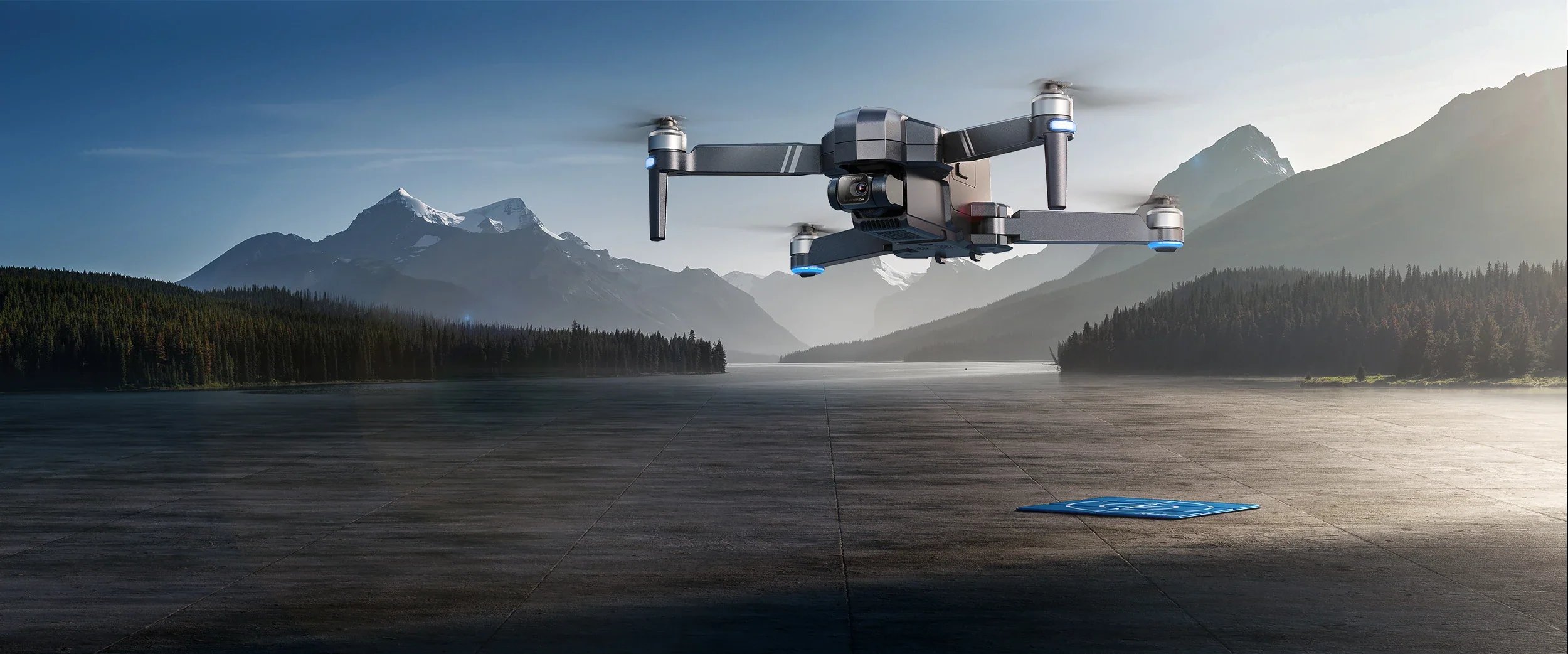

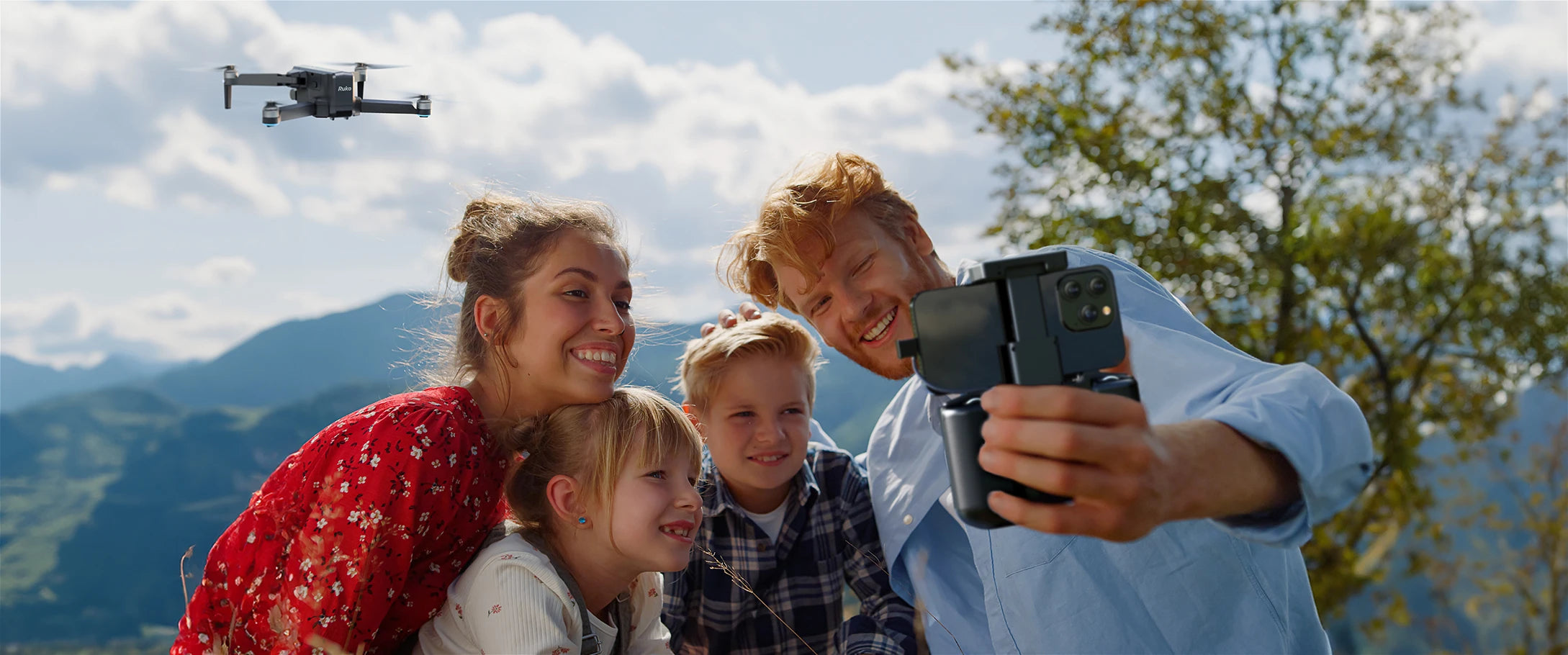
The Ruko F11GIM2 with its 2-axis gimbal camera.
4K/30, 2-axis gimbal plus EIS · 3 km transmission · 28 min per battery, 2 included · Level 6 wind resistance
Important: at 520 g, the F11GIM2 exceeds the FAA's 250 g recreational registration threshold. You must register it with the FAA before flying recreationally in the US.
3 Reasons to Buy
- A 2-axis mechanical gimbal backed by electronic image stabilization shooting 4K/30, a genuine stabilized camera at a non-DJI price.
- Level 6 wind resistance is the highest rating in this guide, and the 3 km transmission range suits open-area flying.
- Waypoint missions let you plan routes on a map, a feature beginners grow into quickly, with 28 minutes per battery across two batteries.
3 Reasons to Avoid
- At 520 g it requires FAA recreational registration, the only drone in this guide that does.
- No obstacle avoidance sensors, so the long range demands responsible line-of-sight flying.
- It is the largest and least portable pick here, closer to a prosumer drone in handling than a pocketable Mini.
Who It's Best For
The Ruko F11GIM2 is best for beginners who already know they want range and wind capability: rural flyers, hikers in exposed terrain, and anyone filming landscapes where a sub-249 g drone gets pushed around. It suits the methodical learner who does not mind registering with the FAA and wants waypoint missions to experiment with. If your flying will happen in big open spaces rather than backyards, the F11GIM2's stability and range make more sense than a lighter drone's portability. Pilots graduating from a sub-249 g drone will appreciate the familiar GPS-assisted handling, since the F11GIM2 flies like a larger, steadier version of what they already know.
Why We Recommend It
We recommend the F11GIM2 because it is the only drone in this guide built for challenging conditions. Ruko's published specs give it a 4K/30 camera on a 2-axis gimbal with electronic image stabilization, GPS plus GLONASS positioning, a 3 km transmission range, and Level 6 wind resistance. The two batteries deliver 28 minutes each for 56 minutes total. Professional reviewers consistently describe it as a stable, confidence-inspiring platform for open-area flying, with waypoint missions and the standard Follow Me and Circle modes covering the automated basics.
Be clear-eyed about the trade-offs. The 2-axis gimbal plus EIS is good but not equal to a 3-axis gimbal in gusty crosswinds; the stabilization is electronic on the third axis, which crops slightly and works best in good light. The 520 g weight is the real consideration: FAA recreational registration is mandatory, which takes a few minutes online and a small fee, but it is a step the other six picks avoid. Sources differ on whether any obstacle sensing is present, so we do not claim it; fly it as a drone with no obstacle avoidance. For the beginner who flies in wind and open space, though, the F11GIM2's stability-first design is the right tool. Waypoint missions are the standout for ambitious beginners: you can draw a route on the map and let the drone fly it while you concentrate on the camera, which teaches shot planning faster than free flying.
Should You Buy It?
Yes, if you fly in wind or open terrain and you are willing to register with the FAA. Buy it if range, wind resistance, and waypoint missions matter more than pocketability. Skip it if you want the simplest legal situation, in which case any of the six sub-249 g picks avoids registration entirely, or if maximum portability is the priority, in which case the DJI Mini 4K or Neo fits better. Registration itself is quick and inexpensive through the FAA's online system, so treat it as a small administrative step rather than a barrier, and always keep the drone within visual line of sight. Specs: 4K/30 video, 2-axis gimbal plus EIS · 520 g (FAA recreational registration required) · 3 km transmission range · 28 min per battery (2 included) · Level 6 wind resistance · GPS plus GLONASS · Follow Me, Circle Fly, Waypoint missions · GPS return to home
How We Chose
We started with the beginner drones most recommended across professional review outlets and owner communities, then filtered for models with verified exact-variant Amazon listings, because a recommendation without a buyable product is not useful. Every ASIN in this guide was verified against two independent non-Amazon sources that print the ASIN, and every product photo is a manufacturer-published image visually matched to the exact model and bundle.
We cut several candidates after honest effort. The Potensic ATOM 2, Holy Stone HS360S, DJI Mini 2 SE, Potensic ATOM SE, and Potensic ATOM LT each had only a single non-Amazon source printing the ASIN, which fails our dual-source rule. The Snaptain S5C and Holy Stone HS110D had no verifiable ASIN at all, the Ryze Tello's ASIN could not be confirmed outside Amazon, and the DEERC D20 showed conflicting ASINs across sources. We also excluded the DJI Mini 5 Pro, which currently has no Amazon listing to link to. The seven drones that remain are the ones we can recommend with full evidence.
How to Choose
Start with weight, because it decides your paperwork. Drones under 249 g, which is six of the seven picks here, do not require FAA recreational registration in the US. The 520 g Ruko F11GIM2 does. If you want the simplest legal situation, stay sub-249 g.
Flight time decides how much you practice. Beginner sessions are stop-start, and a 31-minute battery teaches more than an 18-minute one. Multi-battery combos matter: the Potensic ATOM's three batteries give 96 minutes total, while the DJI Neo's three batteries total 54. Check what the bundle includes, not just the per-battery figure.
Obstacle avoidance is rare in this class, so fly accordingly. None of the seven picks has true obstacle sensing. The DJI Flip's full-coverage prop guards and the Neo's built-in guards are the practical safety features at this level. Assume you are the collision system, keep line of sight, and learn in open areas.
Ease of control varies more than specs suggest. The DJI Neo takes off from your palm with no controller. The Flip and the Minis use standard controllers, with the Flip's RC 2 adding a built-in screen so your phone stays in your pocket. If controllers intimidate you, the Neo is the on-ramp; if you want to learn proper stick flying from the start, any of the controller bundles works.
Match the camera to your output. For social video, the Mini 3's True Vertical Shooting is purpose-built. For the smoothest footage, the 3-axis gimbals of the Mini 4K, Mini 3, Flip, and ATOM lead. For maximum detail and slow motion, the Flip's 4K/60 is unique here. For learning on a budget, the HS175D's camera is honest about what it is.
Frequently Asked Questions
Do I need to register my drone with the FAA?
For recreational flying in the US, drones weighing 250 g or more must be registered with the FAA. Six of the seven drones in this guide weigh under 249 g and do not require registration for recreational use. The Ruko F11GIM2 weighs 520 g and must be registered before you fly it.
What is the best drone for a complete beginner?
The DJI Neo is the easiest first drone in this guide: it takes off from your palm, follows you automatically with AI subject tracking, and lands back on your hand, all without a controller. If you want a more traditional drone with a real 3-axis camera, the DJI Mini 4K is the most proven all-around choice.
How long does a beginner drone battery last?
Published flight times in this guide range from 18 minutes per battery (DJI Neo) to 38 minutes (DJI Mini 3). Real-world flight time is usually a few minutes less than the published figure. Multi-battery combos extend total session time significantly: the Potensic ATOM's three batteries deliver 96 minutes combined.
Can I fly these drones indoors?
The DJI Neo, with its full propeller guards and 135 g weight, is the most practical indoor flyer here. The DJI Flip's full-coverage guards also help. Larger GPS drones rely on satellite positioning that does not work well indoors, so keep indoor flights to the small guarded models and open rooms.
Product photos are the manufacturers' published product images (DJI, Potensic, Holy Stone, and Ruko official channels and authorized retailer listings), visually verified against the exact model and bundle listed. Specifications are the manufacturers' published figures and change over time; check the current listing before buying.